HYPERGLYCEMIA
(HIGH BLOOD SUGAR)
• Hyperglycemia (high blood sugar) is common
in people who have diabetes. If it’s left
untreated, chronic hyperglycemia can lead to
diabetes complications, such as nerve
damage, eye disease and kidney damage.
GLUCOSE
• Glucose is a carbohydrate required for body
metabolism and is the primary source of energy.
Glucoses formed during the breakdown of
polysaccharides and disaccharides. Glucose is then
absorbed by the small intestine and carried by the
portal vein(vein from small intestine to liver). The liver
then breaks down glucose into glycogen for energy
BLOOD SUGAR REGULATION
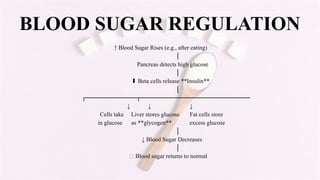
↑ Blood Sugar Rises (e.g., after eating)
│
Pancreas detects high glucose
│
⬇ Beta cells release **Insulin**
│
┌────────────┬──────────────────────────
↓ ↓ ↓
Cells take Liver stores glucose Fat cells store
in glucose as **glycogen** excess glucose
│
↓ Blood Sugar Decreases
│
✅ Blood sugar returns to normal
Cont…
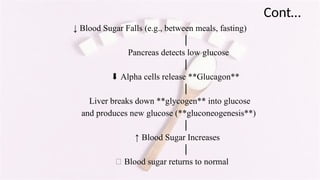
↓ Blood Sugar Falls (e.g., between meals, fasting)
│
Pancreas detects low glucose
│
⬇ Alpha cells release **Glucagon**
│
Liver breaks down **glycogen** into glucose
and produces new glucose (**gluconeogenesis**)
│
↑ Blood Sugar Increases
│
✅ Blood sugar returns to normal
HYPERGLYCEMIA
• Hyperglycemia happens when there’s too
much sugar (glucose) in your blood. It’s also
called high blood sugar or high blood glucose.
This happens when your body has too
little insulin (a hormone) or if your body can’t
use insulin properly(insulin resistance).
Cont…
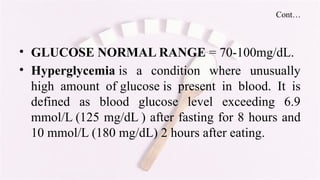
• GLUCOSE NORMAL RANGE = 70-100mg/dL.
• Hyperglycemia is a condition where unusually
high amount of glucose is present in blood. It is
defined as blood glucose level exceeding 6.9
mmol/L (125 mg/dL ) after fasting for 8 hours and
10 mmol/L (180 mg/dL) 2 hours after eating.
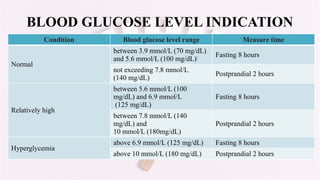
BLOOD GLUCOSE LEVEL INDICATION
Condition Blood glucose level range Measure time
Normal
between 3.9 mmol/L (70 mg/dL)
and 5.6 mmol/L (100 mg/dL)[ Fasting 8 hours
not exceeding 7.8 mmol/L
(140 mg/dL)
Postprandial 2 hours
Relatively high
between 5.6 mmol/L (100
mg/dL) and 6.9 mmol/L
(125 mg/dL)
Fasting 8 hours
between 7.8 mmol/L (140
mg/dL) and
10 mmol/L (180mg/dL)
Postprandial 2 hours
Hyperglycemia
above 6.9 mmol/L (125 mg/dL) Fasting 8 hours
above 10 mmol/L (180 mg/dL) Postprandial 2 hours
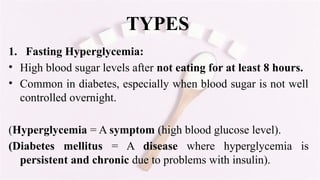
TYPES
1. Fasting Hyperglycemia:
• High blood sugar levels after not eating for at least 8 hours.
• Common in diabetes, especially when blood sugar is not well
controlled overnight.
(Hyperglycemia = A symptom (high blood glucose level).
(Diabetes mellitus = A disease where hyperglycemia is
persistent and chronic due to problems with insulin).
2. Postprandial (Reactive) Hyperglycemia:
• Elevated blood glucose levels after eating (usually 1–2
hours post-meal).
• Often seen in early type 2 diabetes or pre diabetes.
3. Chronic Hyperglycemia:
• Persistent high blood sugar over time.
• Associated with long-term complications of diabetes
(e.g., damage to eyes, kidneys, nerves).
Cont…
4. Stress Hyperglycemia
• Temporary elevation in blood sugar due to physical or
emotional stress (e.g., illness, surgery, trauma).
• Can occur in people without diabetes.
5. Gestational Hyperglycemia
• High blood sugar that develops during pregnancy (may
indicate gestational diabetes).
• Usually resolves after childbirth but increases the risk of type 2
diabetes later.
Cont…
6.Post-transplant Hyperglycemia
• Develops in patients after organ transplantation.
• Often linked to immunosuppressive drugs like
tacrolimus or corticosteroids.
7. Iatrogenic Hyperglycemia
• Caused by medical treatment, especially drugs like
thiazide diuretics, beta blockers, or antipsychotics.
Cont…
8. Post-transplant Hyperglycemia
• Develops in patients after organ
transplantation.
• Often linked to immunosuppressive drugs like
tacrolimus or corticosteroids.
CAUSES
Diabetes Mellitus (Most Common Cause)
Type 2 Diabetes Mellitus
Gestational Diabetes
Medications
Stress and Illness (Stress Hyperglycemia)
Diet and Lifestyle Factors
Hormonal Disorders
Sedentary Lifestyle or Physical Inactivity
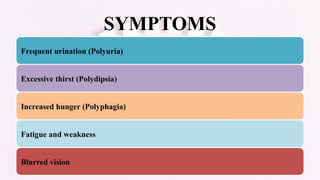
SYMPTOMS
Frequent urination (Polyuria)
Excessive thirst (Polydipsia)
Increased hunger (Polyphagia)
Fatigue and weakness
Blurred vision
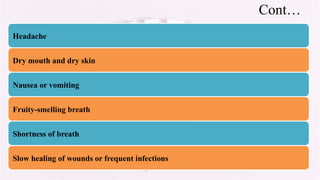
Cont…
Headache
Dry mouth and dry skin
Nausea or vomiting
Fruity-smelling breath
Shortness of breath
Slow healing of wounds or frequent infections
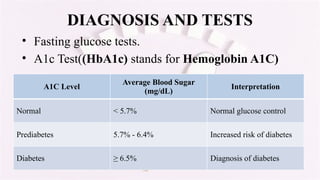
DIAGNOSIS AND TESTS
• Fasting glucose tests.
• A1c Test((HbA1c) stands for Hemoglobin A1C)
A1C Level
Average Blood Sugar
(mg/dL)
Interpretation
Normal < 5.7% Normal glucose control
Prediabetes 5.7% - 6.4% Increased risk of diabetes
Diabetes ≥ 6.5% Diagnosis of diabetes
Cont…
• Glucose tolerance tests.: The Glucose
Tolerance Test measures the body’s ability to
process glucose (sugar) over time after
consuming a specific amount of glucose.
TYPES
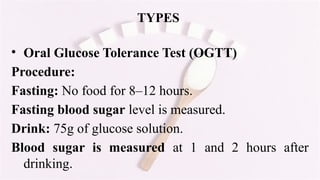
• Oral Glucose Tolerance Test (OGTT)
Procedure:
Fasting: No food for 8–12 hours.
Fasting blood sugar level is measured.
Drink: 75g of glucose solution.
Blood sugar is measured at 1 and 2 hours after
drinking.
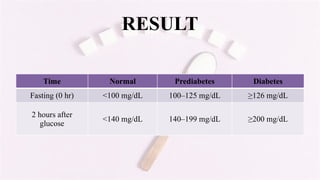
RESULT
Time Normal Prediabetes Diabetes
Fasting (0 hr) <100 mg/dL 100–125 mg/dL ≥126 mg/dL
2 hours after
glucose
<140 mg/dL 140–199 mg/dL ≥200 mg/dL
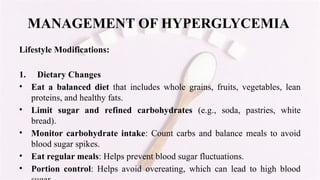
MANAGEMENT OF HYPERGLYCEMIA
Lifestyle Modifications:
1. Dietary Changes
• Eat a balanced diet that includes whole grains, fruits, vegetables, lean
proteins, and healthy fats.
• Limit sugar and refined carbohydrates (e.g., soda, pastries, white
bread).
• Monitor carbohydrate intake: Count carbs and balance meals to avoid
blood sugar spikes.
• Eat regular meals: Helps prevent blood sugar fluctuations.
• Portion control: Helps avoid overeating, which can lead to high blood
Cont…
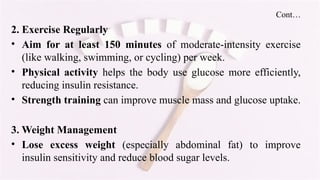
2. Exercise Regularly
• Aim for at least 150 minutes of moderate-intensity exercise
(like walking, swimming, or cycling) per week.
• Physical activity helps the body use glucose more efficiently,
reducing insulin resistance.
• Strength training can improve muscle mass and glucose uptake.
3. Weight Management
• Lose excess weight (especially abdominal fat) to improve
insulin sensitivity and reduce blood sugar levels.
Cont…
Medications: Metformin
Monitoring Blood Glucose
Managing Stress
Hyperglycemia.pptx slides share 2025 april

Hyperglycemia.pptx slides share 2025 april

  • 2.
    HYPERGLYCEMIA (HIGH BLOOD SUGAR) •Hyperglycemia (high blood sugar) is common in people who have diabetes. If it’s left untreated, chronic hyperglycemia can lead to diabetes complications, such as nerve damage, eye disease and kidney damage.
  • 3.
    GLUCOSE • Glucose isa carbohydrate required for body metabolism and is the primary source of energy. Glucoses formed during the breakdown of polysaccharides and disaccharides. Glucose is then absorbed by the small intestine and carried by the portal vein(vein from small intestine to liver). The liver then breaks down glucose into glycogen for energy
  • 4.
    BLOOD SUGAR REGULATION ↑Blood Sugar Rises (e.g., after eating) │ Pancreas detects high glucose │ ⬇ Beta cells release **Insulin** │ ┌────────────┬────────────────────────── ↓ ↓ ↓ Cells take Liver stores glucose Fat cells store in glucose as **glycogen** excess glucose │ ↓ Blood Sugar Decreases │ ✅ Blood sugar returns to normal
  • 5.
    Cont… ↓ Blood SugarFalls (e.g., between meals, fasting) │ Pancreas detects low glucose │ ⬇ Alpha cells release **Glucagon** │ Liver breaks down **glycogen** into glucose and produces new glucose (**gluconeogenesis**) │ ↑ Blood Sugar Increases │ ✅ Blood sugar returns to normal
  • 6.
    HYPERGLYCEMIA • Hyperglycemia happenswhen there’s too much sugar (glucose) in your blood. It’s also called high blood sugar or high blood glucose. This happens when your body has too little insulin (a hormone) or if your body can’t use insulin properly(insulin resistance).
  • 7.
    Cont… • GLUCOSE NORMALRANGE = 70-100mg/dL. • Hyperglycemia is a condition where unusually high amount of glucose is present in blood. It is defined as blood glucose level exceeding 6.9 mmol/L (125 mg/dL ) after fasting for 8 hours and 10 mmol/L (180 mg/dL) 2 hours after eating.
  • 8.
    BLOOD GLUCOSE LEVELINDICATION Condition Blood glucose level range Measure time Normal between 3.9 mmol/L (70 mg/dL) and 5.6 mmol/L (100 mg/dL)[ Fasting 8 hours not exceeding 7.8 mmol/L (140 mg/dL) Postprandial 2 hours Relatively high between 5.6 mmol/L (100 mg/dL) and 6.9 mmol/L (125 mg/dL) Fasting 8 hours between 7.8 mmol/L (140 mg/dL) and 10 mmol/L (180mg/dL) Postprandial 2 hours Hyperglycemia above 6.9 mmol/L (125 mg/dL) Fasting 8 hours above 10 mmol/L (180 mg/dL) Postprandial 2 hours
  • 9.
    TYPES 1. Fasting Hyperglycemia: •High blood sugar levels after not eating for at least 8 hours. • Common in diabetes, especially when blood sugar is not well controlled overnight. (Hyperglycemia = A symptom (high blood glucose level). (Diabetes mellitus = A disease where hyperglycemia is persistent and chronic due to problems with insulin).
  • 10.
    2. Postprandial (Reactive)Hyperglycemia: • Elevated blood glucose levels after eating (usually 1–2 hours post-meal). • Often seen in early type 2 diabetes or pre diabetes. 3. Chronic Hyperglycemia: • Persistent high blood sugar over time. • Associated with long-term complications of diabetes (e.g., damage to eyes, kidneys, nerves).
  • 11.
    Cont… 4. Stress Hyperglycemia •Temporary elevation in blood sugar due to physical or emotional stress (e.g., illness, surgery, trauma). • Can occur in people without diabetes. 5. Gestational Hyperglycemia • High blood sugar that develops during pregnancy (may indicate gestational diabetes). • Usually resolves after childbirth but increases the risk of type 2 diabetes later.
  • 12.
    Cont… 6.Post-transplant Hyperglycemia • Developsin patients after organ transplantation. • Often linked to immunosuppressive drugs like tacrolimus or corticosteroids. 7. Iatrogenic Hyperglycemia • Caused by medical treatment, especially drugs like thiazide diuretics, beta blockers, or antipsychotics.
  • 13.
    Cont… 8. Post-transplant Hyperglycemia •Develops in patients after organ transplantation. • Often linked to immunosuppressive drugs like tacrolimus or corticosteroids.
  • 14.
    CAUSES Diabetes Mellitus (MostCommon Cause) Type 2 Diabetes Mellitus Gestational Diabetes Medications Stress and Illness (Stress Hyperglycemia) Diet and Lifestyle Factors Hormonal Disorders Sedentary Lifestyle or Physical Inactivity
  • 15.
    SYMPTOMS Frequent urination (Polyuria) Excessivethirst (Polydipsia) Increased hunger (Polyphagia) Fatigue and weakness Blurred vision
  • 16.
    Cont… Headache Dry mouth anddry skin Nausea or vomiting Fruity-smelling breath Shortness of breath Slow healing of wounds or frequent infections
  • 17.
    DIAGNOSIS AND TESTS •Fasting glucose tests. • A1c Test((HbA1c) stands for Hemoglobin A1C) A1C Level Average Blood Sugar (mg/dL) Interpretation Normal < 5.7% Normal glucose control Prediabetes 5.7% - 6.4% Increased risk of diabetes Diabetes ≥ 6.5% Diagnosis of diabetes
  • 18.
    Cont… • Glucose tolerancetests.: The Glucose Tolerance Test measures the body’s ability to process glucose (sugar) over time after consuming a specific amount of glucose.
  • 19.
    TYPES • Oral GlucoseTolerance Test (OGTT) Procedure: Fasting: No food for 8–12 hours. Fasting blood sugar level is measured. Drink: 75g of glucose solution. Blood sugar is measured at 1 and 2 hours after drinking.
  • 20.
    RESULT Time Normal PrediabetesDiabetes Fasting (0 hr) <100 mg/dL 100–125 mg/dL ≥126 mg/dL 2 hours after glucose <140 mg/dL 140–199 mg/dL ≥200 mg/dL
  • 21.
    MANAGEMENT OF HYPERGLYCEMIA LifestyleModifications: 1. Dietary Changes • Eat a balanced diet that includes whole grains, fruits, vegetables, lean proteins, and healthy fats. • Limit sugar and refined carbohydrates (e.g., soda, pastries, white bread). • Monitor carbohydrate intake: Count carbs and balance meals to avoid blood sugar spikes. • Eat regular meals: Helps prevent blood sugar fluctuations. • Portion control: Helps avoid overeating, which can lead to high blood
  • 22.
    Cont… 2. Exercise Regularly •Aim for at least 150 minutes of moderate-intensity exercise (like walking, swimming, or cycling) per week. • Physical activity helps the body use glucose more efficiently, reducing insulin resistance. • Strength training can improve muscle mass and glucose uptake. 3. Weight Management • Lose excess weight (especially abdominal fat) to improve insulin sensitivity and reduce blood sugar levels.
  • 23.