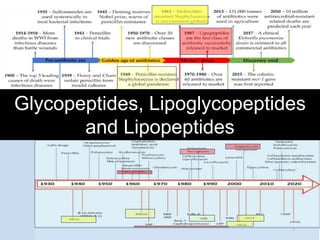
Glycopeptides, Lipoglycopeptides
and Lipopeptides
1
Learning objectives
• Classification of drugs
• Mechanism of action
• Pharmacokinetics/pharmacodynamics
• Spectrum of activity
• Clinical uses
• Adverse effects
• Take home points
2
3
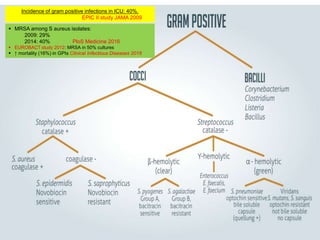
Incidence of gram positive infections in ICU: 40%.
EPIC II study JAMA 2009
 MRSA among S aureus isolates:
2009: 29%
2014: 40% PloS Medicine 2016
 EUROBACT study 2012: MRSA in 50% cultures
 ↑ mortality (16%) in GPIs Clinical Infectious Diseases 2018
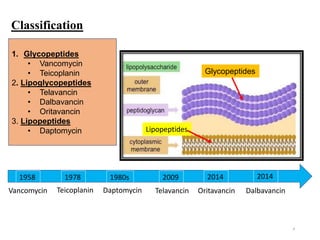
Classification
.
4
1. Glycopeptides
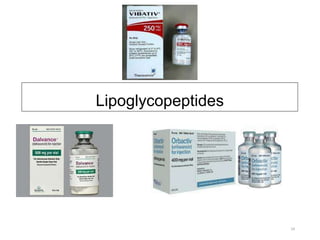
• Vancomycin
• Teicoplanin
2. Lipoglycopeptides
• Telavancin
• Dalbavancin
• Oritavancin
3. Lipopeptides
• Daptomycin
1958
Vancomycin
1978
Teicoplanin
1980s
Daptomycin
2009
Telavancin
2014
Oritavancin
2014
Dalbavancin
Glycopeptides
Lipopeptides
Glycopeptides
5
Vancomycin
• Glycopeptides: glycosylated nonribosmal peptides (cyclic/polycyclic) derived from
filamentous Actinomycetes
• Vancomycin: 1st glycopeptide antibiotic:
isolated from Amycolatopsis orientalis (aka Streptomyces orientalis or Nocardia orientalis)
found in soil sample from Borneo in 1956
• 1958 – introduced against penicillin-resistant Staphylococcus aureus.
• High rate of toxicity observed with initial formulation.
• “Mississippi mud”, owing to colour provided by impurities.
6
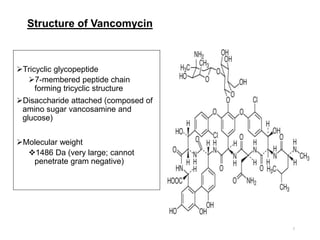
Structure of Vancomycin
Tricyclic glycopeptide
7-membered peptide chain
forming tricyclic structure
Disaccharide attached (composed of
amino sugar vancosamine and
glucose)
Molecular weight
1486 Da (very large; cannot
penetrate gram negative)
7
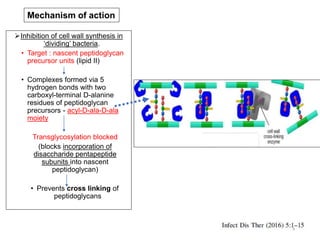
Mechanism of action
Inhibition of cell wall synthesis in
‘dividing’ bacteria.
• Target : nascent peptidoglycan
precursor units (lipid II)
• Complexes formed via 5
hydrogen bonds with two
carboxyl-terminal D-alanine
residues of peptidoglycan
precursors - acyl-D-ala-D-ala
moiety
Transglycosylation blocked
(blocks incorporation of
disaccharide pentapeptide
subunits into nascent
peptidoglycan)
• Prevents cross linking of
peptidoglycans
8
9
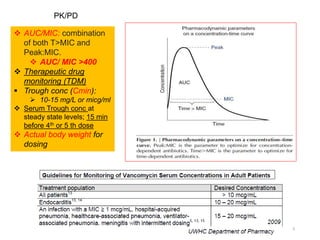
 AUC/MIC: combination
of both T>MIC and
Peak:MIC.
 AUC/ MIC >400
 Therapeutic drug
monitoring (TDM)
 Trough conc (Cmin):
 10-15 mg/L or micg/ml
 Serum Trough conc at
steady state levels; 15 min
before 4th or 5 th dose
 Actual body weight for
dosing
PK/PD
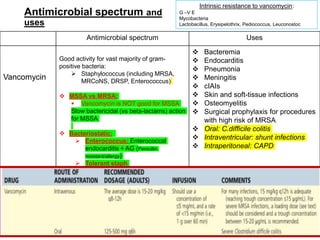
Antimicrobial spectrum and
uses
10
Antimicrobial spectrum Uses
Vancomycin
Good activity for vast majority of gram-
positive bacteria:
 Staphylococcus (including MRSA,
MRCoNS, DRSP, Enterococcus)
 MSSA vs MRSA:
 Vancomycin is NOT good for MSSA
Slow bactericidal (vs beta-lactams) action
for MSSA
 Bacteriostatic:
 Enterococcus: Enterococcal
endocarditis + AG (Penicillin
resistant/allergy)
 Tolerant staph
 Bacteremia
 Endocarditis
 Pneumonia
 Meningitis
 cIAIs
 Skin and soft-tissue infections
 Osteomyelitis
 Surgical prophylaxis for procedures
with high risk of MRSA
 Oral: C.difficile colitis
 Intraventricular: shunt infections
 Intraperitoneal: CAPD
Intrinsic resistance to vancomycin:
G –V E
Mycobacteria
Lactobacillus, Erysipelothrix, Pediococcus, Leuconostoc
11
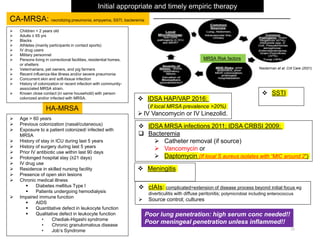
CA-MRSA: necrotizing pneumonia, empyema, SSTI, bacteremia
HA-MRSA
 Age > 60 years
 Previous colonization (nasal/cutaneous)
 Exposure to a patient colonized/ infected with
MRSA
 History of stay in ICU during last 5 years
 History of surgery during last 5 years
 Prior IV antibiotic use within last 90 days
 Prolonged hospital stay (≥21 days)
 IV drug use
 Residence in skilled nursing facility
 Presence of open skin lesions
 Chronic medical illness
 Diabetes mellitus Type I
 Patients undergoing hemodialysis
 Impaired immune function
 AIDS
 Quantitative defect in leukocyte function
 Qualitative defect in leukocyte function
• Chediak-Higashi syndrome
• Chronic granulomatous disease
• Job’s Syndrome
 Children < 2 years old
 Adults ≥ 65 yrs
 Blacks
 Athletes (mainly participants in contact sports)
 IV drug users
 Military personnel
 Persons living in correctional facilities, residential homes,
or shelters
 Veterinarians, pet owners, and pig farmers
 Recent influenza-like illness and/or severe pneumonia
 Concurrent skin and soft-tissue infection
 History of colonization or recent infection with community-
associated MRSA strain.
 Known close contact (in same household) with person
colonized and/or infected with MRSA.
MRSA Risk factors
 IDSA HAP/VAP 2016:
(if local MRSA prevalence >20%)
 IV Vancomycin or IV Linezolid.
Initial appropriate and timely empiric therapy
 IDSA MRSA infections 2011; IDSA CRBSI 2009:
 Bacteremia
 Catheter removal (if source)
 Vancomycin or
 Daptomycin (If local S aureus isolates with “MIC around 2”)
 Meningitis
 cIAIs: complicated=extension of disease process beyond initial focus eg
diverticulitis with diffuse peritonitis; polymicrobial including enterococcus
 Source control; cultures
 SSTI
Niederman et al. Crit Care (2021)
Poor lung penetration: high serum conc needed!!
Poor meningeal penetration unless inflammed!!
12
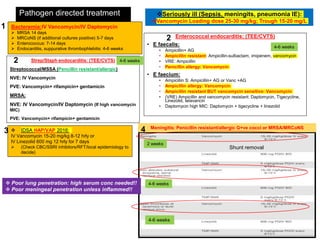
Enterococcal endocarditis: (TEE/CVTS)
• E faecalis:
• Ampicillin+ AG
• Ampicillin resistant: Ampicillin-sulbactam, imipenem, vancomycin
• VRE: Ampicillin
• Penicillin allergy: Vancomycin
• E faecium:
• Ampicillin S: Ampicillin+ AG or Vanc +AG
• Ampicillin allergy: Vancomycin
• Ampicillin resistant BUT vancomycin sensitive: Vancomycin
• (VRE) Ampicillin and vancomycin resistant: Daptomycin, Tigecycline,
Linezolid, telavancin
• Daptomycin high MIC: Daptomycin + tigecycline + linezolid
Strep/Staph endocarditis: (TEE/CVTS)
Streptococcal/MSSA (Pencillin resistant/allergic)
NVE: IV Vancomycin
PVE: Vancomycin+ rifampicin+ gentamicin
MRSA:
NVE: IV Vancomycin/IV Daptomycin (If high vancomycin
MIC)
PVE: Vancomycin+ rifampicin+ gentamicin
Seriously ill (Sepsis, meningits, pneumonia IE):
Vancomycin Loading dose 25-30 mg/kg; Trough 15-20 mg/L
Pathogen directed treatment
4-6 weeks
4-6 weeks
Bacteremia:IV Vancomycin/IV Daptomycin
 MRSA 14 days
 MRCoNS (if additional cultures positive) 5-7 days
 Enterococcus: 7-14 days
 Endocarditis, suppurative thrombophlebitis: 4-6 weeks
 IDSA HAP/VAP 2016:
IV Vancomycin 15-20 mg/kg 8-12 hrly or
IV Linezolid 600 mg 12 hrly for 7 days
 (Check CBC/SSRI inhibitors/RFT/local epidemiology to
decide)
Meningitis: Penicillin resistant/allergic G+ve cocci or MRSA/MRCoNS
2 weeks
4-6 weeks
4-6 weeks
Shunt removal
 Poor lung penetration: high serum conc needed!!
 Poor meningeal penetration unless inflammed!!
1
2
2
3 4
13
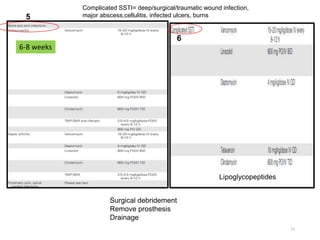
Surgical debridement
Remove prosthesis
Drainage
6-8 weeks
Lipoglycopeptides
Complicated SSTI= deep/surgical/traumatic wound infection,
major abscess,cellulitis, infected ulcers, burns
5
6
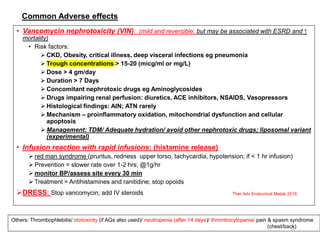
Common Adverse effects
• Vancomycin nephrotoxicity (VIN): (mild and reversible; but may be associated with ESRD and ↑
mortality)
• Risk factors:
 CKD, Obesity, critical illness, deep visceral infections eg pneumonia
 Trough concentrations > 15-20 (micg/ml or mg/L)
 Dose > 4 gm/day
 Duration > 7 Days
 Concomitant nephrotoxic drugs eg Aminoglycosides
 Drugs impairing renal perfusion: diuretics, ACE inhibitors, NSAIDS, Vasopressors
 Histological findings: AIN; ATN rarely
 Mechanism – proinflammatory oxidation, mitochondrial dysfunction and cellular
apoptosis
 Management: TDM/ Adequate hydration/ avoid other nephrotoxic drugs; liposomal variant
(experimental)
• Infusion reaction with rapid infusions: (histamine release)
 red man syndrome (pruritus, redness upper torso, tachycardia, hypotension; if < 1 hr infusion)
 Prevention = slower rate over 1-2 hrs; @1g/hr
 monitor BP/assess site every 30 min
 Treatment = Antihistamines and ranitidine; stop opoids
DRESS: Stop vancomycin; add IV steroids
14
Others: Thrombophlebitis/ ototoxicity (if AGs also used)/ neutropenia (after 14 days)/ thrombocytopenia/ pain & spasm syndrome
(chest/back)
Ther Adv Endocrinol Metab 2016
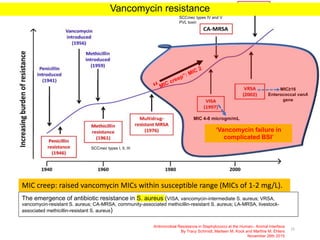
The emergence of antibiotic resistance in S. aureus (VISA, vancomycin-intermediate S. aureus; VRSA,
vancomycin-resistant S. aureus; CA-MRSA, community-associated methicillin-resistant S. aureus; LA-MRSA, livestock-
associated methicillin-resistant S. aureus)
15
Antimicrobial Resistance in Staphylococci at the Human– Animal Interface
By Tracy Schmidt, Marleen M. Kock and Marthie M. Ehlers
November 26th 2015
SCCmec types IV and V
PVL toxin
SCCmec types I, II, III
Vancomycin resistance
‘Vancomycin failure in
complicated BSI’
MIC 4-8 microgm/mL
MIC≥16
Enterococcal vanA
gene
MIC creep: raised vancomycin MICs within susceptible range (MICs of 1-2 mg/L).
16
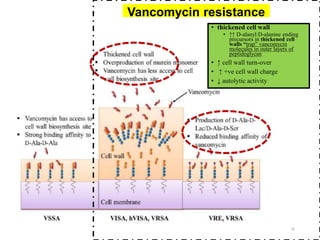
• thickened cell wall
• ↑↑ D-alanyl:D-alanine ending
precursors in thickened cell
walls “trap” vancomycin
molecules in outer layers of
peptidoglycan
• ↑ cell wall turn-over
• ↑ +ve cell wall charge
• ↓ autolytic activity
Vancomycin resistance
17
 Heteroresistance VISA (hVISA):“precursor of VISAs”
Subpopulation of cells which grow at high vancomycin MIC (>2) on vancomycin-containing agar.
• Mutations in 2-component regulatory system that control
several genes involved in cell wall homeostasis:-
1) VraSR system –histidine-kinase (VraS) and response
regulator (VraR) - participate in cell wall turnover and
cell wall envelope stress response.
2) WalkR –decreases autolytic activity in cell walls
When testing isolates at standard inoculum certain
subpopulation of cells are not detected and [“vancomycin
MIC will falsely fall within susceptibility range]”.
Conventional susceptibility tests do not identify
heteroresistance (until much higher fraction of
resistant cells is present)!!!
Population analysis profile (PAP) (determination of number of surviving cells at
increasing antibiotic concentrations) is required for detection.
disk diffusion method only detects strains with very high vancomycin MICs and fails to
detect hVISA isolate.
“MIC determinations by agar or broth dilution or by Etests are recommended for
vancomycin susceptibility.”
Heteroresistance
VISA (hVISA):
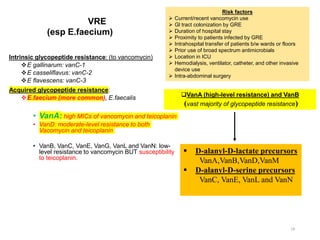
VRE
(esp E.faecium)
Intrinsic glycopeptide resistance: (to vancomycin)
E gallinarum: vanC-1
E casseliflavus: vanC-2
E flavescens: vanC-3
Acquired glycopeptide resistance:
E.faecium (more common), E.faecalis
• VanA: high MICs of vancomycin and teicoplanin
• VanD: moderate-level resistance to both
Vacomycin and teicoplanin
• VanB, VanC, VanE, VanG, VanL and VanN: low-
level resistance to vancomycin BUT susceptibility
to teicoplanin.
18
 D-alanyl-D-lactate precursors
VanA,VanB,VanD,VanM
 D-alanyl-D-serine precursors
VanC, VanE, VanL and VanN
VanA (high-level resistance) and VanB
(vast majority of glycopeptide resistance)
Risk factors
 Current/recent vancomycin use
 Gl tract colonization by GRE
 Duration of hospital stay
 Proximity to patients infected by GRE
 Intrahospital transfer of patients b/w wards or floors
 Prior use of broad spectrum antimicrobials
 Location in ICU
 Hemodialysis, ventilator, catheter, and other invasive
device use
 Intra-abdominal surgery
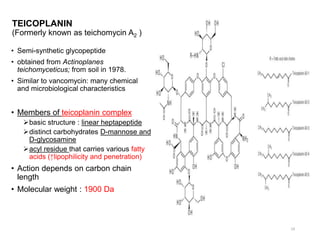
TEICOPLANIN
(Formerly known as teichomycin A2 )
• Semi-synthetic glycopeptide
• obtained from Actinoplanes
teichomyceticus; from soil in 1978.
• Similar to vancomycin: many chemical
and microbiological characteristics
• Members of teicoplanin complex
basic structure : linear heptapeptide
distinct carbohydrates D-mannose and
D-glycosamine
acyl residue that carries various fatty
acids (↑lipophilicity and penetration)
• Action depends on carbon chain
length
• Molecular weight : 1900 Da
19
Antimicrobial spectrum of teicoplanin
20
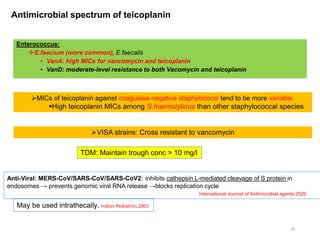
MICs of teicoplanin against coagulase-negative staphylococci tend to be more variable.
High teicoplanin MICs among S.haemolyticus than other staphylococcal species
Enterococcus:
E.faecium (more common), E.faecalis
• VanA: high MICs for vancomycin and teicoplanin
• VanD: moderate-level resistance to both Vacomycin and teicoplanin
VISA strains: Cross resistant to vancomycin
Anti-Viral: MERS-CoV/SARS-CoV/SARS-CoV2: inhibits cathepsin L-mediated cleavage of S protein in
endosomes → prevents genomic viral RNA release →blocks replication cycle
International Journal of Antimicrobial agents 2020
May be used intrathecally. Indian Pediatrics 2001
TDM: Maintain trough conc > 10 mg/l
21
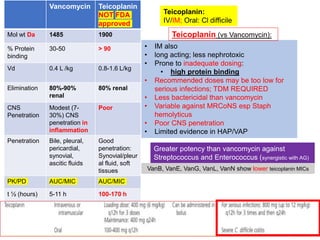
Vancomycin Teicoplanin
NOT FDA
approved
Mol wt Da 1485 1900
% Protein
binding
30-50 > 90
Vd 0.4 L /kg 0.8-1.6 L/kg
Elimination 80%-90%
renal
80% renal
CNS
Penetration
Modest (7-
30%) CNS
penetration in
inflammation
Poor
Penetration Bile, pleural,
pericardial,
synovial,
ascitic fluids
Good
penetration:
Synovial/pleur
al fluid, soft
tissues
PK/PD AUC/MIC AUC/MIC
t ½ (hours) 5-11 h 100-170 h
• IM also
• long acting; less nephrotoxic
• Prone to inadequate dosing:
• high protein binding
• Recommended doses may be too low for
serious infections; TDM REQUIRED
• Less bactericidal than vancomycin
• Variable against MRCoNS esp Staph
hemolyticus
• Poor CNS penetration
• Limited evidence in HAP/VAP
Teicoplanin:
IV/IM; Oral: Cl difficile
Greater potency than vancomycin against
Streptococcus and Enterococcus (synergistic with AG)
VanB, VanE, VanG, VanL, VanN show lower teicoplanin MICs
Teicoplanin (vs Vancomycin):
Adverse effects
• Maculopapular or erythematous rash > 12 mg/kg/day
• Drug-related fever
• Nephrotoxic (less than vancomycin)
• Thrombocytopenia – at higher doses
• Less catheter related phlebitis than vancomycin
• Deranged liver function
22
Hypersensitivity reactions
Ramoplanin: Lipoglycodesipeptide
• Derived from Actinoplanes sp; 1984
• Cell wall synthesis inhibition by binding to Lipid II
• Bactericidal
• Oral: 200mg BD to 400mg BD
• In vitro: Streptococcus, MRSA, VRE, Cl difficile, other G +ve anaerobes
• Well tolerated
• Primary use: Cl difficile; vancomycin-resistant Cl difficile also
23
Lipoglycopeptides
.
24
25
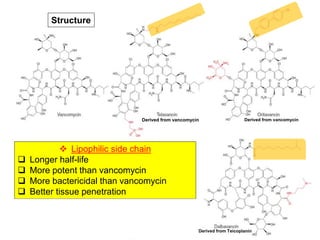
 Lipophilic side chain
 Longer half-life
 More potent than vancomycin
 More bactericidal than vancomycin
 Better tissue penetration
Structure
Derived from vancomycin Derived from vancomycin
Derived from Teicoplanin
Vancomycin
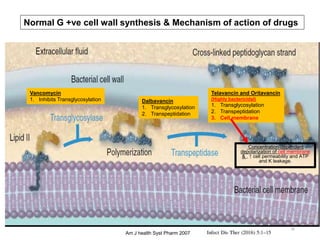
1. Inhibits Transglycosylation
Telavancin and Oritavancin
(Highly bactericidal)
1. Transglycosylation
2. Transpeptidation
3. Cell membrane
Dalbavancin
1. Transglycosylation
2. Transpeptidation
Concentration-dependent
depolarization of cell membrane
& , ↑ cell permeability and ATP
and K leakage.
Normal G +ve cell wall synthesis & Mechanism of action of drugs
Am J health Syst Pharm 2007
26
27
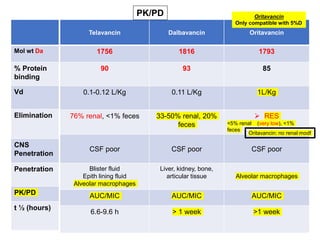
Telavancin Dalbavancin Oritavancin
1756 1816 1793
90 93 85
0.1-0.12 L/Kg 0.11 L/Kg 1L/Kg
76% renal, <1% feces 33-50% renal, 20%
feces
 RES
<5% renal (very low), <1%
feces
CSF poor CSF poor CSF poor
Blister fluid
Epith lining fluid
Alveolar macrophages
Liver, kidney, bone,
articular tissue Alveolar macrophages
AUC/MIC AUC/MIC AUC/MIC
6.6-9.6 h > 1 week >1 week
Mol wt Da
% Protein
binding
Vd
Elimination
CNS
Penetration
Penetration
PK/PD
t ½ (hours)
PK/PD
Oritavancin: no renal modf
Oritavancin
Only compatible with 5%D
28
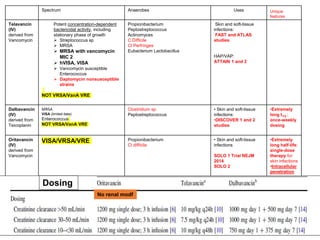
Spectrum Anaerobes Uses Unique
features
Telavancin
(IV)
derived from
Vancomycin
Potent concentration-dependent
bactericidal activity, including
stationary phase of growth
 Streptococcus sp
 MRSA
 MRSA with vancomycin
MIC 2
 hVISA, VISA
 Vancomycin susceptible
Enterococcus
 Daptomycin nonsusceptible
strains
NOT VRSA/VanA VRE
Propionibacterium
Peptostreptococcus
Actinomyces
C.Difficile
Cl Perfringes
Eubacterium Lactobacillus
Skin and soft-tissue
infections:
FAST and ATLAS
studies
HAP/VAP:
ATTAIN 1 and 2
Dalbavancin
(IV)
derived from
Teicoplanin
MRSA
VISA (limited data)
Enterococcus
NOT VRSA/VanA VRE
Clostridium sp
Peptostreptococcus
• Skin and soft-tissue
infections:
•DISCOVER 1 and 2
studies
•Extremely
long t1/2 ;
once-weekly
dosing
Oritavancin
(IV)
derived from
Vancomycin
VISA/VRSA/VRE Propionibacterium
Cl difficile
• Skin and soft-tissue
infections
SOLO 1 Trial NEJM
2014
SOLO 2
•Extremely
long half-life;
single-dose
therapy for
skin infections
•Intracellular
penetration
in
macrophage
s
Dosing
No renal modf
29
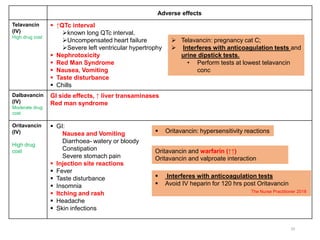
Adverse effects
Telavancin
(IV)
High drug cost
 ↑QTc interval
known long QTc interval.
Uncompensated heart failure
Severe left ventricular hypertrophy
 Nephrotoxicity
 Red Man Syndrome
 Nausea, Vomiting
 Taste disturbance
 Chills
Dalbavancin
(IV)
Moderate drug
cost
GI side effects, ↑ liver transaminases
Red man syndrome
Oritavancin
(IV)
High drug
cost
 GI:
Nausea and Vomiting
Diarrhoea- watery or bloody
Constipation
Severe stomach pain
 Injection site reactions
 Fever
 Taste disturbance
 Insomnia
 Itching and rash
 Headache
 Skin infections
 Oritavancin: hypersensitivity reactions
 Interferes with anticoagulation tests
 Avoid IV heparin for 120 hrs post Oritavancin
The Nurse Practitioner 2018
 Telavancin: pregnancy cat C;
 Interferes with anticoagulation tests and
urine dipstick tests.
• Perform tests at lowest telavancin
conc
Oritavancin and warfarin (↑↑)
Oritavancin and valproate interaction
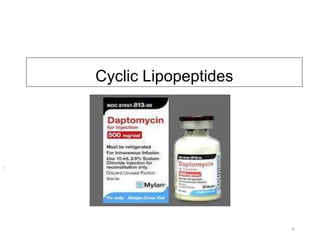
Cyclic Lipopeptides
.
30
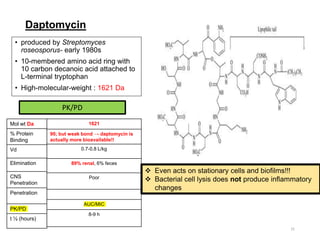
Daptomycin
• produced by Streptomyces
roseosporus- early 1980s
• 10-membered amino acid ring with
10 carbon decanoic acid attached to
L-terminal tryptophan
• High-molecular-weight : 1621 Da
31
1621
90; but weak bond → daptomycin is
actually more bioavailable!!
0.7-0.8 L/kg
89% renal, 6% feces
Poor
AUC/MIC
8-9 h
Mol wt Da
% Protein
Binding
Vd
Elimination
CNS
Penetration
Penetration
PK/PD
t ½ (hours)
PK/PD
 Even acts on stationary cells and biofilms!!!
 Bacterial cell lysis does not produce inflammatory
changes
Daptomycin:
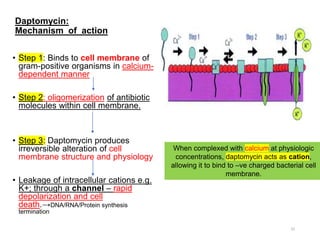
Mechanism of action
• Step 1: Binds to cell membrane of
gram-positive organisms in calcium-
dependent manner
• Step 2: oligomerization of antibiotic
molecules within cell membrane.
• Step 3: Daptomycin produces
irreversible alteration of cell
membrane structure and physiology
• Leakage of intracellular cations e.g.
K+; through a channel – rapid
depolarization and cell
death.→DNA/RNA/Protein synthesis
termination
32
When complexed with calcium at physiologic
concentrations, daptomycin acts as cation,
allowing it to bind to –ve charged bacterial cell
membrane.
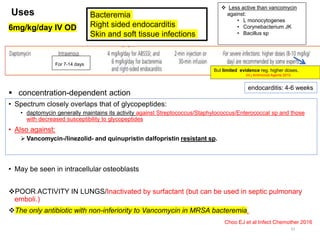
Uses
• Spectrum closely overlaps that of glycopeptides:
• daptomycin generally maintains its activity against Streptococcus/Staphylococcus/Enterococcal sp and those
with decreased susceptibility to glycopeptides
• Also against:
 Vancomycin-/linezolid- and quinupristin dalfopristin resistant sp.
• May be seen in intracellular osteoblasts
POOR ACTIVITY IN LUNGS/Inactivated by surfactant (but can be used in septic pulmonary
emboli.)
The only antibiotic with non-inferiority to Vancomycin in MRSA bacteremia.
Choo EJ et al Infect Chemother 2016
33
Bacteremia
Right sided endocarditis
Skin and soft tissue infections
 Less active than vancomycin
against:
• L monocytogenes
• Corynebacterium JK
• Bacillus sp
6mg/kg/day IV OD
endocarditis: 4-6 weeks
For 7-14 days
 concentration-dependent action
But limited evidence reg. higher doses.
Int j Antimicrob Agents 2010
34
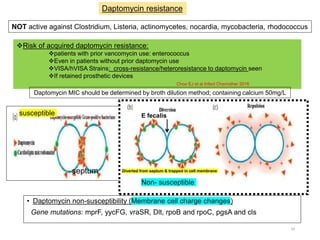
Risk of acquired daptomycin resistance:
patients with prior vancomycin use: enterococcus
Even in patients without prior daptomycin use
VISA/hVISA Strains: cross-resistance/heteroresistance to daptomycin seen
If retained prosthetic devices
Choo EJ et al Infect Chemother 2016
• Daptomycin non-susceptibility (Membrane cell charge changes)
Gene mutations: mprF, yycFG, vraSR, Dlt, rpoB and rpoC, pgsA and cls
NOT active against Clostridium, Listeria, actinomycetes, nocardia, mycobacteria, rhodococcus
Daptomycin resistance
Daptomycin MIC should be determined by broth dilution method; containing calcium 50mg/L
E fecalis
septum
susceptible
Non- susceptible
Diverted from septum & trapped in cell membrane
Common adverse effects
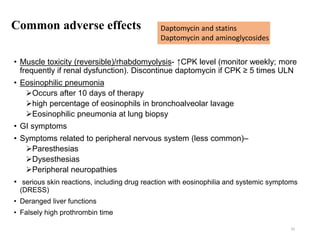
• Muscle toxicity (reversible)/rhabdomyolysis- ↑CPK level (monitor weekly; more
frequently if renal dysfunction). Discontinue daptomycin if CPK ≥ 5 times ULN
• Eosinophilic pneumonia
Occurs after 10 days of therapy
high percentage of eosinophils in bronchoalveolar lavage
Eosinophilic pneumonia at lung biopsy
• GI symptoms
• Symptoms related to peripheral nervous system (less common)–
Paresthesias
Dysesthesias
Peripheral neuropathies
• serious skin reactions, including drug reaction with eosinophilia and systemic symptoms
(DRESS)
• Deranged liver functions
• Falsely high prothrombin time
35
Daptomycin and statins
Daptomycin and aminoglycosides
36
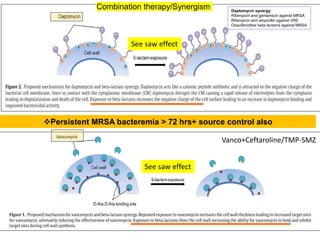
Daptomycin synergy:
Rifampicin and gentamicin against MRSA
Rifampicin and ampicillin against VRE
Oxacillin/other beta lactams against MRSA
Combination therapy/Synergism
Vanco+Ceftaroline/TMP-SMZ
Persistent MRSA bacteremia > 72 hrs+ source control also
See saw effect
See saw effect
Take home points
37
Pk/Pd
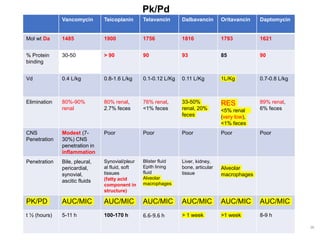
Vancomycin Teicoplanin Telavancin Dalbavancin Oritavancin Daptomycin
Mol wt Da 1485 1900 1756 1816 1793 1621
% Protein
binding
30-50 > 90 90 93 85 90
Vd 0.4 L/kg 0.8-1.6 L/kg 0.1-0.12 L/Kg 0.11 L/Kg 1L/Kg 0.7-0.8 L/kg
Elimination 80%-90%
renal
80% renal,
2.7% feces
76% renal,
<1% feces
33-50%
renal, 20%
feces
RES
<5% renal
(very low),
<1% feces
89% renal,
6% feces
CNS
Penetration
Modest (7-
30%) CNS
penetration in
inflammation
Poor Poor Poor Poor Poor
Penetration Bile, pleural,
pericardial,
synovial,
ascitic fluids
Synovial/pleur
al fluid, soft
tissues
(fatty acid
component in
structure)
Blister fluid
Epith lining
fluid
Alveolar
macrophages
Liver, kidney,
bone, articular
tissue
Alveolar
macrophages
PK/PD AUC/MIC AUC/MIC AUC/MIC AUC/MIC AUC/MIC AUC/MIC
t ½ (hours) 5-11 h 100-170 h 6.6-9.6 h > 1 week >1 week 8-9 h
38
39
Glycopeptides
Vancomycin
Lipoglycopeptides
Telavancin
Lipopeptides
Daptomycin
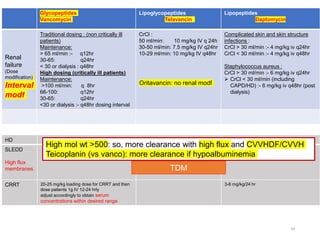
Renal
failure
(Dose
modification)
Interval
modf
Traditional dosing : (non critically ill
patients)
Maintenance:
> 65 ml/min :- q12hr
30-65: q24hr
< 30 or dialysis : q48hr
High dosing (critically ill patients)
Maintenance:
>100 ml/min: q 8hr
66-100: q12hr
30-65: q24hr
<30 or dialysis :- q48hr dosing interval
CrCl :
50 ml/min: 10 mg/kg IV q 24h
30-50 ml/min: 7.5 mg/kg IV q24hr
10-29 ml/min: 10 mg/kg IV q48hr
Complicated skin and skin structure
infections :
CrCl > 30 ml/min :- 4 mg/kg iv q24hr
CrCl < 30 ml/min :- 4 mg/kg iv q48hr
Staphylococcus aureus :
CrCl > 30 ml/min :- 6 mg/kg iv q24hr
 CrCl < 30 ml/min (including
CAPD/HD) :- 6 mg/kg iv q48hr (post
dialysis)
HD
SLEDD
High flux
membranes
CRRT 20-25 mg/kg loading dose for CRRT and then
dose patients 1g IV 12-24 hrly
adjust accordingly to obtain serum
concentrations within desired range
3-8 mg/kg/24 hr
Oritavancin: no renal modf
High mol wt >500: so, more clearance with high flux and CVVHDF/CVVH
Teicoplanin (vs vanco): more clearance if hypoalbuminemia
TDM
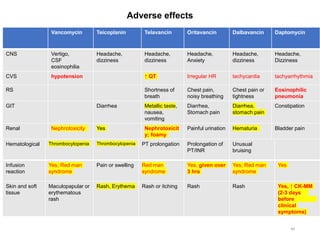
Adverse effects
Vancomycin Teicoplanin Telavancin Oritavancin Dalbavancin Daptomycin
CNS Vertigo,
CSF
eosinophilia
Headache,
dizziness
Headache,
dizziness
Headache,
Anxiety
Headache,
dizziness
Headache,
Dizziness
CVS hypotension ↑ QT Irregular HR tachycardia tachyarrhythmia
RS Shortness of
breath
Chest pain,
noisy breathing
Chest pain or
tightness
Eosinophilic
pneumonia
GIT Diarrhea Metallic taste,
nausea,
vomiting
Diarrhea,
Stomach pain
Diarrhea,
stomach pain
Constipation
Renal Nephrotoxicity Yes Nephrotoxicit
y; foamy
urine
(cyclodextrin)
Painful urination Hematuria Bladder pain
40
Hematological Thrombocytopenia Thrombocytopenia PT prolongation Prolongation of
PT/INR
Unusual
bruising
Infusion
reaction
Yes; Red man
syndrome
Pain or swelling Red man
syndrome
Yes, given over
3 hrs
Yes; Red man
syndrome
Yes
Skin and soft
tissue
Maculopapular or
erythematous
rash
Rash, Erythema Rash or itching Rash Rash Yes, ↑ CK-MM
(2-3 days
before
clinical
symptoms)
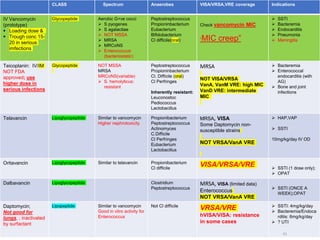
CLASS Spectrum Anaerobes VISA/VRSA,VRE coverage Indications
IV Vancomycin
(prototype)
 Loading dose &
 Trough conc 15-
20 in serious
imfections
Glycopeptide Aerobic G+ve cocci
 S pyogenes
 S agalactiae
 NOT MSSA
 MRSA
 MRCoNS
 Enterococcus
(bacteriostatic)
Peptostreptococcus
Propioninbacterium
Eubacterium
Bifidobacterium
Cl difficile(oral)
Check vancomycin MIC
“MIC creep”
 SSTI
 Bacteremia
 Endocarditis
 Pneumonia
 Meningitis
Teicoplanin: IV/IM
NOT FDA
approved; use
higher dose in
serious infections
Glycopeptide NOT MSSA
MRSA
MRCoNS(variable)
 S. hemolyticus:
resistant
Peptostreptococcus
Propioninbacterium
Cl. Difficile (oral)
Cl Perfringes
Inherently resistant:
Leuconostoc
Pediococcus
Lactobacillus
MRSA
NOT VISA/VRSA
VanA, VanM VRE: high MIC
VanD VRE: intermediate
MIC
 Bacteremia
 Enterococcal
endocarditis (with
AG)
 Bone and joint
infections
Telavancin Lipoglycopeptide Similar to vancomycin
Higher nephrotoxicity
Propionibacterium
Peptostreptococcus
Actinomyces
C.Difficile
Cl Perfringes
Eubacterium
Lactobacillus
MRSA, VISA
Some Daptomycin non-
susceptible strains
NOT VRSA/VanA VRE
 HAP,VAP
 SSTI
10mg/kg/day IV OD
Oritavancin Lipoglycopeptide Similar to telavancin Propionibacterium
Cl difficile
VISA/VRSA/VRE  SSTI (1 dose only);
 OPAT
Dalbavancin Lipoglycopeptide Clostridium
Peptostreptococcus
MRSA, VISA (limited data)
Enterococcus
NOT VRSA/VanA VRE
 SSTI (ONCE A
WEEK);OPAT
Daptomycin;
Not good for
lungs, ; inactivated
by surfactant
Lipopeptide Similar to vancomycin
Good in vitro activity for
Enterococcus
Not Cl difficile
VRSA/VRE
hVISA/VISA: resistance
in some cases
 SSTI: 4mg/kg/day
 Bacteremia/Endoca
rditis: 6mg/kg/day
 ? UTI
41
Thank you
.
42

glycopeptides and lipopeptides

  • 1.
  • 2.
    Learning objectives • Classificationof drugs • Mechanism of action • Pharmacokinetics/pharmacodynamics • Spectrum of activity • Clinical uses • Adverse effects • Take home points 2
  • 3.
    3 Incidence of grampositive infections in ICU: 40%. EPIC II study JAMA 2009  MRSA among S aureus isolates: 2009: 29% 2014: 40% PloS Medicine 2016  EUROBACT study 2012: MRSA in 50% cultures  ↑ mortality (16%) in GPIs Clinical Infectious Diseases 2018
  • 4.
    Classification . 4 1. Glycopeptides • Vancomycin •Teicoplanin 2. Lipoglycopeptides • Telavancin • Dalbavancin • Oritavancin 3. Lipopeptides • Daptomycin 1958 Vancomycin 1978 Teicoplanin 1980s Daptomycin 2009 Telavancin 2014 Oritavancin 2014 Dalbavancin Glycopeptides Lipopeptides
  • 5.
  • 6.
    Vancomycin • Glycopeptides: glycosylatednonribosmal peptides (cyclic/polycyclic) derived from filamentous Actinomycetes • Vancomycin: 1st glycopeptide antibiotic: isolated from Amycolatopsis orientalis (aka Streptomyces orientalis or Nocardia orientalis) found in soil sample from Borneo in 1956 • 1958 – introduced against penicillin-resistant Staphylococcus aureus. • High rate of toxicity observed with initial formulation. • “Mississippi mud”, owing to colour provided by impurities. 6
  • 7.
    Structure of Vancomycin Tricyclicglycopeptide 7-membered peptide chain forming tricyclic structure Disaccharide attached (composed of amino sugar vancosamine and glucose) Molecular weight 1486 Da (very large; cannot penetrate gram negative) 7
  • 8.
    Mechanism of action Inhibitionof cell wall synthesis in ‘dividing’ bacteria. • Target : nascent peptidoglycan precursor units (lipid II) • Complexes formed via 5 hydrogen bonds with two carboxyl-terminal D-alanine residues of peptidoglycan precursors - acyl-D-ala-D-ala moiety Transglycosylation blocked (blocks incorporation of disaccharide pentapeptide subunits into nascent peptidoglycan) • Prevents cross linking of peptidoglycans 8
  • 9.
    9  AUC/MIC: combination ofboth T>MIC and Peak:MIC.  AUC/ MIC >400  Therapeutic drug monitoring (TDM)  Trough conc (Cmin):  10-15 mg/L or micg/ml  Serum Trough conc at steady state levels; 15 min before 4th or 5 th dose  Actual body weight for dosing PK/PD
  • 10.
    Antimicrobial spectrum and uses 10 Antimicrobialspectrum Uses Vancomycin Good activity for vast majority of gram- positive bacteria:  Staphylococcus (including MRSA, MRCoNS, DRSP, Enterococcus)  MSSA vs MRSA:  Vancomycin is NOT good for MSSA Slow bactericidal (vs beta-lactams) action for MSSA  Bacteriostatic:  Enterococcus: Enterococcal endocarditis + AG (Penicillin resistant/allergy)  Tolerant staph  Bacteremia  Endocarditis  Pneumonia  Meningitis  cIAIs  Skin and soft-tissue infections  Osteomyelitis  Surgical prophylaxis for procedures with high risk of MRSA  Oral: C.difficile colitis  Intraventricular: shunt infections  Intraperitoneal: CAPD Intrinsic resistance to vancomycin: G –V E Mycobacteria Lactobacillus, Erysipelothrix, Pediococcus, Leuconostoc
  • 11.
    11 CA-MRSA: necrotizing pneumonia,empyema, SSTI, bacteremia HA-MRSA  Age > 60 years  Previous colonization (nasal/cutaneous)  Exposure to a patient colonized/ infected with MRSA  History of stay in ICU during last 5 years  History of surgery during last 5 years  Prior IV antibiotic use within last 90 days  Prolonged hospital stay (≥21 days)  IV drug use  Residence in skilled nursing facility  Presence of open skin lesions  Chronic medical illness  Diabetes mellitus Type I  Patients undergoing hemodialysis  Impaired immune function  AIDS  Quantitative defect in leukocyte function  Qualitative defect in leukocyte function • Chediak-Higashi syndrome • Chronic granulomatous disease • Job’s Syndrome  Children < 2 years old  Adults ≥ 65 yrs  Blacks  Athletes (mainly participants in contact sports)  IV drug users  Military personnel  Persons living in correctional facilities, residential homes, or shelters  Veterinarians, pet owners, and pig farmers  Recent influenza-like illness and/or severe pneumonia  Concurrent skin and soft-tissue infection  History of colonization or recent infection with community- associated MRSA strain.  Known close contact (in same household) with person colonized and/or infected with MRSA. MRSA Risk factors  IDSA HAP/VAP 2016: (if local MRSA prevalence >20%)  IV Vancomycin or IV Linezolid. Initial appropriate and timely empiric therapy  IDSA MRSA infections 2011; IDSA CRBSI 2009:  Bacteremia  Catheter removal (if source)  Vancomycin or  Daptomycin (If local S aureus isolates with “MIC around 2”)  Meningitis  cIAIs: complicated=extension of disease process beyond initial focus eg diverticulitis with diffuse peritonitis; polymicrobial including enterococcus  Source control; cultures  SSTI Niederman et al. Crit Care (2021) Poor lung penetration: high serum conc needed!! Poor meningeal penetration unless inflammed!!
  • 12.
    12 Enterococcal endocarditis: (TEE/CVTS) •E faecalis: • Ampicillin+ AG • Ampicillin resistant: Ampicillin-sulbactam, imipenem, vancomycin • VRE: Ampicillin • Penicillin allergy: Vancomycin • E faecium: • Ampicillin S: Ampicillin+ AG or Vanc +AG • Ampicillin allergy: Vancomycin • Ampicillin resistant BUT vancomycin sensitive: Vancomycin • (VRE) Ampicillin and vancomycin resistant: Daptomycin, Tigecycline, Linezolid, telavancin • Daptomycin high MIC: Daptomycin + tigecycline + linezolid Strep/Staph endocarditis: (TEE/CVTS) Streptococcal/MSSA (Pencillin resistant/allergic) NVE: IV Vancomycin PVE: Vancomycin+ rifampicin+ gentamicin MRSA: NVE: IV Vancomycin/IV Daptomycin (If high vancomycin MIC) PVE: Vancomycin+ rifampicin+ gentamicin Seriously ill (Sepsis, meningits, pneumonia IE): Vancomycin Loading dose 25-30 mg/kg; Trough 15-20 mg/L Pathogen directed treatment 4-6 weeks 4-6 weeks Bacteremia:IV Vancomycin/IV Daptomycin  MRSA 14 days  MRCoNS (if additional cultures positive) 5-7 days  Enterococcus: 7-14 days  Endocarditis, suppurative thrombophlebitis: 4-6 weeks  IDSA HAP/VAP 2016: IV Vancomycin 15-20 mg/kg 8-12 hrly or IV Linezolid 600 mg 12 hrly for 7 days  (Check CBC/SSRI inhibitors/RFT/local epidemiology to decide) Meningitis: Penicillin resistant/allergic G+ve cocci or MRSA/MRCoNS 2 weeks 4-6 weeks 4-6 weeks Shunt removal  Poor lung penetration: high serum conc needed!!  Poor meningeal penetration unless inflammed!! 1 2 2 3 4
  • 13.
    13 Surgical debridement Remove prosthesis Drainage 6-8weeks Lipoglycopeptides Complicated SSTI= deep/surgical/traumatic wound infection, major abscess,cellulitis, infected ulcers, burns 5 6
  • 14.
    Common Adverse effects •Vancomycin nephrotoxicity (VIN): (mild and reversible; but may be associated with ESRD and ↑ mortality) • Risk factors:  CKD, Obesity, critical illness, deep visceral infections eg pneumonia  Trough concentrations > 15-20 (micg/ml or mg/L)  Dose > 4 gm/day  Duration > 7 Days  Concomitant nephrotoxic drugs eg Aminoglycosides  Drugs impairing renal perfusion: diuretics, ACE inhibitors, NSAIDS, Vasopressors  Histological findings: AIN; ATN rarely  Mechanism – proinflammatory oxidation, mitochondrial dysfunction and cellular apoptosis  Management: TDM/ Adequate hydration/ avoid other nephrotoxic drugs; liposomal variant (experimental) • Infusion reaction with rapid infusions: (histamine release)  red man syndrome (pruritus, redness upper torso, tachycardia, hypotension; if < 1 hr infusion)  Prevention = slower rate over 1-2 hrs; @1g/hr  monitor BP/assess site every 30 min  Treatment = Antihistamines and ranitidine; stop opoids DRESS: Stop vancomycin; add IV steroids 14 Others: Thrombophlebitis/ ototoxicity (if AGs also used)/ neutropenia (after 14 days)/ thrombocytopenia/ pain & spasm syndrome (chest/back) Ther Adv Endocrinol Metab 2016
  • 15.
    The emergence ofantibiotic resistance in S. aureus (VISA, vancomycin-intermediate S. aureus; VRSA, vancomycin-resistant S. aureus; CA-MRSA, community-associated methicillin-resistant S. aureus; LA-MRSA, livestock- associated methicillin-resistant S. aureus) 15 Antimicrobial Resistance in Staphylococci at the Human– Animal Interface By Tracy Schmidt, Marleen M. Kock and Marthie M. Ehlers November 26th 2015 SCCmec types IV and V PVL toxin SCCmec types I, II, III Vancomycin resistance ‘Vancomycin failure in complicated BSI’ MIC 4-8 microgm/mL MIC≥16 Enterococcal vanA gene MIC creep: raised vancomycin MICs within susceptible range (MICs of 1-2 mg/L).
  • 16.
    16 • thickened cellwall • ↑↑ D-alanyl:D-alanine ending precursors in thickened cell walls “trap” vancomycin molecules in outer layers of peptidoglycan • ↑ cell wall turn-over • ↑ +ve cell wall charge • ↓ autolytic activity Vancomycin resistance
  • 17.
    17  Heteroresistance VISA(hVISA):“precursor of VISAs” Subpopulation of cells which grow at high vancomycin MIC (>2) on vancomycin-containing agar. • Mutations in 2-component regulatory system that control several genes involved in cell wall homeostasis:- 1) VraSR system –histidine-kinase (VraS) and response regulator (VraR) - participate in cell wall turnover and cell wall envelope stress response. 2) WalkR –decreases autolytic activity in cell walls When testing isolates at standard inoculum certain subpopulation of cells are not detected and [“vancomycin MIC will falsely fall within susceptibility range]”. Conventional susceptibility tests do not identify heteroresistance (until much higher fraction of resistant cells is present)!!! Population analysis profile (PAP) (determination of number of surviving cells at increasing antibiotic concentrations) is required for detection. disk diffusion method only detects strains with very high vancomycin MICs and fails to detect hVISA isolate. “MIC determinations by agar or broth dilution or by Etests are recommended for vancomycin susceptibility.” Heteroresistance VISA (hVISA):
  • 18.
    VRE (esp E.faecium) Intrinsic glycopeptideresistance: (to vancomycin) E gallinarum: vanC-1 E casseliflavus: vanC-2 E flavescens: vanC-3 Acquired glycopeptide resistance: E.faecium (more common), E.faecalis • VanA: high MICs of vancomycin and teicoplanin • VanD: moderate-level resistance to both Vacomycin and teicoplanin • VanB, VanC, VanE, VanG, VanL and VanN: low- level resistance to vancomycin BUT susceptibility to teicoplanin. 18  D-alanyl-D-lactate precursors VanA,VanB,VanD,VanM  D-alanyl-D-serine precursors VanC, VanE, VanL and VanN VanA (high-level resistance) and VanB (vast majority of glycopeptide resistance) Risk factors  Current/recent vancomycin use  Gl tract colonization by GRE  Duration of hospital stay  Proximity to patients infected by GRE  Intrahospital transfer of patients b/w wards or floors  Prior use of broad spectrum antimicrobials  Location in ICU  Hemodialysis, ventilator, catheter, and other invasive device use  Intra-abdominal surgery
  • 19.
    TEICOPLANIN (Formerly known asteichomycin A2 ) • Semi-synthetic glycopeptide • obtained from Actinoplanes teichomyceticus; from soil in 1978. • Similar to vancomycin: many chemical and microbiological characteristics • Members of teicoplanin complex basic structure : linear heptapeptide distinct carbohydrates D-mannose and D-glycosamine acyl residue that carries various fatty acids (↑lipophilicity and penetration) • Action depends on carbon chain length • Molecular weight : 1900 Da 19
  • 20.
    Antimicrobial spectrum ofteicoplanin 20 MICs of teicoplanin against coagulase-negative staphylococci tend to be more variable. High teicoplanin MICs among S.haemolyticus than other staphylococcal species Enterococcus: E.faecium (more common), E.faecalis • VanA: high MICs for vancomycin and teicoplanin • VanD: moderate-level resistance to both Vacomycin and teicoplanin VISA strains: Cross resistant to vancomycin Anti-Viral: MERS-CoV/SARS-CoV/SARS-CoV2: inhibits cathepsin L-mediated cleavage of S protein in endosomes → prevents genomic viral RNA release →blocks replication cycle International Journal of Antimicrobial agents 2020 May be used intrathecally. Indian Pediatrics 2001 TDM: Maintain trough conc > 10 mg/l
  • 21.
    21 Vancomycin Teicoplanin NOT FDA approved Molwt Da 1485 1900 % Protein binding 30-50 > 90 Vd 0.4 L /kg 0.8-1.6 L/kg Elimination 80%-90% renal 80% renal CNS Penetration Modest (7- 30%) CNS penetration in inflammation Poor Penetration Bile, pleural, pericardial, synovial, ascitic fluids Good penetration: Synovial/pleur al fluid, soft tissues PK/PD AUC/MIC AUC/MIC t ½ (hours) 5-11 h 100-170 h • IM also • long acting; less nephrotoxic • Prone to inadequate dosing: • high protein binding • Recommended doses may be too low for serious infections; TDM REQUIRED • Less bactericidal than vancomycin • Variable against MRCoNS esp Staph hemolyticus • Poor CNS penetration • Limited evidence in HAP/VAP Teicoplanin: IV/IM; Oral: Cl difficile Greater potency than vancomycin against Streptococcus and Enterococcus (synergistic with AG) VanB, VanE, VanG, VanL, VanN show lower teicoplanin MICs Teicoplanin (vs Vancomycin):
  • 22.
    Adverse effects • Maculopapularor erythematous rash > 12 mg/kg/day • Drug-related fever • Nephrotoxic (less than vancomycin) • Thrombocytopenia – at higher doses • Less catheter related phlebitis than vancomycin • Deranged liver function 22 Hypersensitivity reactions
  • 23.
    Ramoplanin: Lipoglycodesipeptide • Derivedfrom Actinoplanes sp; 1984 • Cell wall synthesis inhibition by binding to Lipid II • Bactericidal • Oral: 200mg BD to 400mg BD • In vitro: Streptococcus, MRSA, VRE, Cl difficile, other G +ve anaerobes • Well tolerated • Primary use: Cl difficile; vancomycin-resistant Cl difficile also 23
  • 24.
  • 25.
    25  Lipophilic sidechain  Longer half-life  More potent than vancomycin  More bactericidal than vancomycin  Better tissue penetration Structure Derived from vancomycin Derived from vancomycin Derived from Teicoplanin
  • 26.
    Vancomycin 1. Inhibits Transglycosylation Telavancinand Oritavancin (Highly bactericidal) 1. Transglycosylation 2. Transpeptidation 3. Cell membrane Dalbavancin 1. Transglycosylation 2. Transpeptidation Concentration-dependent depolarization of cell membrane & , ↑ cell permeability and ATP and K leakage. Normal G +ve cell wall synthesis & Mechanism of action of drugs Am J health Syst Pharm 2007 26
  • 27.
    27 Telavancin Dalbavancin Oritavancin 17561816 1793 90 93 85 0.1-0.12 L/Kg 0.11 L/Kg 1L/Kg 76% renal, <1% feces 33-50% renal, 20% feces  RES <5% renal (very low), <1% feces CSF poor CSF poor CSF poor Blister fluid Epith lining fluid Alveolar macrophages Liver, kidney, bone, articular tissue Alveolar macrophages AUC/MIC AUC/MIC AUC/MIC 6.6-9.6 h > 1 week >1 week Mol wt Da % Protein binding Vd Elimination CNS Penetration Penetration PK/PD t ½ (hours) PK/PD Oritavancin: no renal modf Oritavancin Only compatible with 5%D
  • 28.
    28 Spectrum Anaerobes UsesUnique features Telavancin (IV) derived from Vancomycin Potent concentration-dependent bactericidal activity, including stationary phase of growth  Streptococcus sp  MRSA  MRSA with vancomycin MIC 2  hVISA, VISA  Vancomycin susceptible Enterococcus  Daptomycin nonsusceptible strains NOT VRSA/VanA VRE Propionibacterium Peptostreptococcus Actinomyces C.Difficile Cl Perfringes Eubacterium Lactobacillus Skin and soft-tissue infections: FAST and ATLAS studies HAP/VAP: ATTAIN 1 and 2 Dalbavancin (IV) derived from Teicoplanin MRSA VISA (limited data) Enterococcus NOT VRSA/VanA VRE Clostridium sp Peptostreptococcus • Skin and soft-tissue infections: •DISCOVER 1 and 2 studies •Extremely long t1/2 ; once-weekly dosing Oritavancin (IV) derived from Vancomycin VISA/VRSA/VRE Propionibacterium Cl difficile • Skin and soft-tissue infections SOLO 1 Trial NEJM 2014 SOLO 2 •Extremely long half-life; single-dose therapy for skin infections •Intracellular penetration in macrophage s Dosing No renal modf
  • 29.
    29 Adverse effects Telavancin (IV) High drugcost  ↑QTc interval known long QTc interval. Uncompensated heart failure Severe left ventricular hypertrophy  Nephrotoxicity  Red Man Syndrome  Nausea, Vomiting  Taste disturbance  Chills Dalbavancin (IV) Moderate drug cost GI side effects, ↑ liver transaminases Red man syndrome Oritavancin (IV) High drug cost  GI: Nausea and Vomiting Diarrhoea- watery or bloody Constipation Severe stomach pain  Injection site reactions  Fever  Taste disturbance  Insomnia  Itching and rash  Headache  Skin infections  Oritavancin: hypersensitivity reactions  Interferes with anticoagulation tests  Avoid IV heparin for 120 hrs post Oritavancin The Nurse Practitioner 2018  Telavancin: pregnancy cat C;  Interferes with anticoagulation tests and urine dipstick tests. • Perform tests at lowest telavancin conc Oritavancin and warfarin (↑↑) Oritavancin and valproate interaction
  • 30.
  • 31.
    Daptomycin • produced byStreptomyces roseosporus- early 1980s • 10-membered amino acid ring with 10 carbon decanoic acid attached to L-terminal tryptophan • High-molecular-weight : 1621 Da 31 1621 90; but weak bond → daptomycin is actually more bioavailable!! 0.7-0.8 L/kg 89% renal, 6% feces Poor AUC/MIC 8-9 h Mol wt Da % Protein Binding Vd Elimination CNS Penetration Penetration PK/PD t ½ (hours) PK/PD  Even acts on stationary cells and biofilms!!!  Bacterial cell lysis does not produce inflammatory changes
  • 32.
    Daptomycin: Mechanism of action •Step 1: Binds to cell membrane of gram-positive organisms in calcium- dependent manner • Step 2: oligomerization of antibiotic molecules within cell membrane. • Step 3: Daptomycin produces irreversible alteration of cell membrane structure and physiology • Leakage of intracellular cations e.g. K+; through a channel – rapid depolarization and cell death.→DNA/RNA/Protein synthesis termination 32 When complexed with calcium at physiologic concentrations, daptomycin acts as cation, allowing it to bind to –ve charged bacterial cell membrane.
  • 33.
    Uses • Spectrum closelyoverlaps that of glycopeptides: • daptomycin generally maintains its activity against Streptococcus/Staphylococcus/Enterococcal sp and those with decreased susceptibility to glycopeptides • Also against:  Vancomycin-/linezolid- and quinupristin dalfopristin resistant sp. • May be seen in intracellular osteoblasts POOR ACTIVITY IN LUNGS/Inactivated by surfactant (but can be used in septic pulmonary emboli.) The only antibiotic with non-inferiority to Vancomycin in MRSA bacteremia. Choo EJ et al Infect Chemother 2016 33 Bacteremia Right sided endocarditis Skin and soft tissue infections  Less active than vancomycin against: • L monocytogenes • Corynebacterium JK • Bacillus sp 6mg/kg/day IV OD endocarditis: 4-6 weeks For 7-14 days  concentration-dependent action But limited evidence reg. higher doses. Int j Antimicrob Agents 2010
  • 34.
    34 Risk of acquireddaptomycin resistance: patients with prior vancomycin use: enterococcus Even in patients without prior daptomycin use VISA/hVISA Strains: cross-resistance/heteroresistance to daptomycin seen If retained prosthetic devices Choo EJ et al Infect Chemother 2016 • Daptomycin non-susceptibility (Membrane cell charge changes) Gene mutations: mprF, yycFG, vraSR, Dlt, rpoB and rpoC, pgsA and cls NOT active against Clostridium, Listeria, actinomycetes, nocardia, mycobacteria, rhodococcus Daptomycin resistance Daptomycin MIC should be determined by broth dilution method; containing calcium 50mg/L E fecalis septum susceptible Non- susceptible Diverted from septum & trapped in cell membrane
  • 35.
    Common adverse effects •Muscle toxicity (reversible)/rhabdomyolysis- ↑CPK level (monitor weekly; more frequently if renal dysfunction). Discontinue daptomycin if CPK ≥ 5 times ULN • Eosinophilic pneumonia Occurs after 10 days of therapy high percentage of eosinophils in bronchoalveolar lavage Eosinophilic pneumonia at lung biopsy • GI symptoms • Symptoms related to peripheral nervous system (less common)– Paresthesias Dysesthesias Peripheral neuropathies • serious skin reactions, including drug reaction with eosinophilia and systemic symptoms (DRESS) • Deranged liver functions • Falsely high prothrombin time 35 Daptomycin and statins Daptomycin and aminoglycosides
  • 36.
    36 Daptomycin synergy: Rifampicin andgentamicin against MRSA Rifampicin and ampicillin against VRE Oxacillin/other beta lactams against MRSA Combination therapy/Synergism Vanco+Ceftaroline/TMP-SMZ Persistent MRSA bacteremia > 72 hrs+ source control also See saw effect See saw effect
  • 37.
  • 38.
    Pk/Pd Vancomycin Teicoplanin TelavancinDalbavancin Oritavancin Daptomycin Mol wt Da 1485 1900 1756 1816 1793 1621 % Protein binding 30-50 > 90 90 93 85 90 Vd 0.4 L/kg 0.8-1.6 L/kg 0.1-0.12 L/Kg 0.11 L/Kg 1L/Kg 0.7-0.8 L/kg Elimination 80%-90% renal 80% renal, 2.7% feces 76% renal, <1% feces 33-50% renal, 20% feces RES <5% renal (very low), <1% feces 89% renal, 6% feces CNS Penetration Modest (7- 30%) CNS penetration in inflammation Poor Poor Poor Poor Poor Penetration Bile, pleural, pericardial, synovial, ascitic fluids Synovial/pleur al fluid, soft tissues (fatty acid component in structure) Blister fluid Epith lining fluid Alveolar macrophages Liver, kidney, bone, articular tissue Alveolar macrophages PK/PD AUC/MIC AUC/MIC AUC/MIC AUC/MIC AUC/MIC AUC/MIC t ½ (hours) 5-11 h 100-170 h 6.6-9.6 h > 1 week >1 week 8-9 h 38
  • 39.
    39 Glycopeptides Vancomycin Lipoglycopeptides Telavancin Lipopeptides Daptomycin Renal failure (Dose modification) Interval modf Traditional dosing :(non critically ill patients) Maintenance: > 65 ml/min :- q12hr 30-65: q24hr < 30 or dialysis : q48hr High dosing (critically ill patients) Maintenance: >100 ml/min: q 8hr 66-100: q12hr 30-65: q24hr <30 or dialysis :- q48hr dosing interval CrCl : 50 ml/min: 10 mg/kg IV q 24h 30-50 ml/min: 7.5 mg/kg IV q24hr 10-29 ml/min: 10 mg/kg IV q48hr Complicated skin and skin structure infections : CrCl > 30 ml/min :- 4 mg/kg iv q24hr CrCl < 30 ml/min :- 4 mg/kg iv q48hr Staphylococcus aureus : CrCl > 30 ml/min :- 6 mg/kg iv q24hr  CrCl < 30 ml/min (including CAPD/HD) :- 6 mg/kg iv q48hr (post dialysis) HD SLEDD High flux membranes CRRT 20-25 mg/kg loading dose for CRRT and then dose patients 1g IV 12-24 hrly adjust accordingly to obtain serum concentrations within desired range 3-8 mg/kg/24 hr Oritavancin: no renal modf High mol wt >500: so, more clearance with high flux and CVVHDF/CVVH Teicoplanin (vs vanco): more clearance if hypoalbuminemia TDM
  • 40.
    Adverse effects Vancomycin TeicoplaninTelavancin Oritavancin Dalbavancin Daptomycin CNS Vertigo, CSF eosinophilia Headache, dizziness Headache, dizziness Headache, Anxiety Headache, dizziness Headache, Dizziness CVS hypotension ↑ QT Irregular HR tachycardia tachyarrhythmia RS Shortness of breath Chest pain, noisy breathing Chest pain or tightness Eosinophilic pneumonia GIT Diarrhea Metallic taste, nausea, vomiting Diarrhea, Stomach pain Diarrhea, stomach pain Constipation Renal Nephrotoxicity Yes Nephrotoxicit y; foamy urine (cyclodextrin) Painful urination Hematuria Bladder pain 40 Hematological Thrombocytopenia Thrombocytopenia PT prolongation Prolongation of PT/INR Unusual bruising Infusion reaction Yes; Red man syndrome Pain or swelling Red man syndrome Yes, given over 3 hrs Yes; Red man syndrome Yes Skin and soft tissue Maculopapular or erythematous rash Rash, Erythema Rash or itching Rash Rash Yes, ↑ CK-MM (2-3 days before clinical symptoms)
  • 41.
    CLASS Spectrum AnaerobesVISA/VRSA,VRE coverage Indications IV Vancomycin (prototype)  Loading dose &  Trough conc 15- 20 in serious imfections Glycopeptide Aerobic G+ve cocci  S pyogenes  S agalactiae  NOT MSSA  MRSA  MRCoNS  Enterococcus (bacteriostatic) Peptostreptococcus Propioninbacterium Eubacterium Bifidobacterium Cl difficile(oral) Check vancomycin MIC “MIC creep”  SSTI  Bacteremia  Endocarditis  Pneumonia  Meningitis Teicoplanin: IV/IM NOT FDA approved; use higher dose in serious infections Glycopeptide NOT MSSA MRSA MRCoNS(variable)  S. hemolyticus: resistant Peptostreptococcus Propioninbacterium Cl. Difficile (oral) Cl Perfringes Inherently resistant: Leuconostoc Pediococcus Lactobacillus MRSA NOT VISA/VRSA VanA, VanM VRE: high MIC VanD VRE: intermediate MIC  Bacteremia  Enterococcal endocarditis (with AG)  Bone and joint infections Telavancin Lipoglycopeptide Similar to vancomycin Higher nephrotoxicity Propionibacterium Peptostreptococcus Actinomyces C.Difficile Cl Perfringes Eubacterium Lactobacillus MRSA, VISA Some Daptomycin non- susceptible strains NOT VRSA/VanA VRE  HAP,VAP  SSTI 10mg/kg/day IV OD Oritavancin Lipoglycopeptide Similar to telavancin Propionibacterium Cl difficile VISA/VRSA/VRE  SSTI (1 dose only);  OPAT Dalbavancin Lipoglycopeptide Clostridium Peptostreptococcus MRSA, VISA (limited data) Enterococcus NOT VRSA/VanA VRE  SSTI (ONCE A WEEK);OPAT Daptomycin; Not good for lungs, ; inactivated by surfactant Lipopeptide Similar to vancomycin Good in vitro activity for Enterococcus Not Cl difficile VRSA/VRE hVISA/VISA: resistance in some cases  SSTI: 4mg/kg/day  Bacteremia/Endoca rditis: 6mg/kg/day  ? UTI 41
  • 42.

Editor's Notes

  • #13 Complicated bacteremia=endocarditis/prosthesis/persistent bacteremia >72 hrs/metastatic infection/no defervescence within 72 hrs of therapy 2 blood cultures every 24 to 48 hours till blood cultures are negative and start count of antibiotic treatment days after 1st negative blood culture.
  • #23 Trough levels….. Higher doses…… Treatment failure…… RRT……….
  • #33 step 1, daptomycin binds to the cytoplasmic membrane in a calcium-dependent manner; step 2, daptomycin oligomerizes, disrupting the membrane; step 3, the release of intracellular ions and rapid cell death.
  • #37 See saw effect
  • #40 SIEVING COEFFICIENT: VANCOMYCIN 1