


GLP
 Prepared by:
 SHAIMAA OBAID
 AHMADEEN

Supervised by:
DR /
Nahla.s.barakat
a quality system concerned with
the organizational process and the
conditions under which non-clinical
  health and environmental safety
            studies are
planned, performed, monitored, rec
   orded, archived and reported
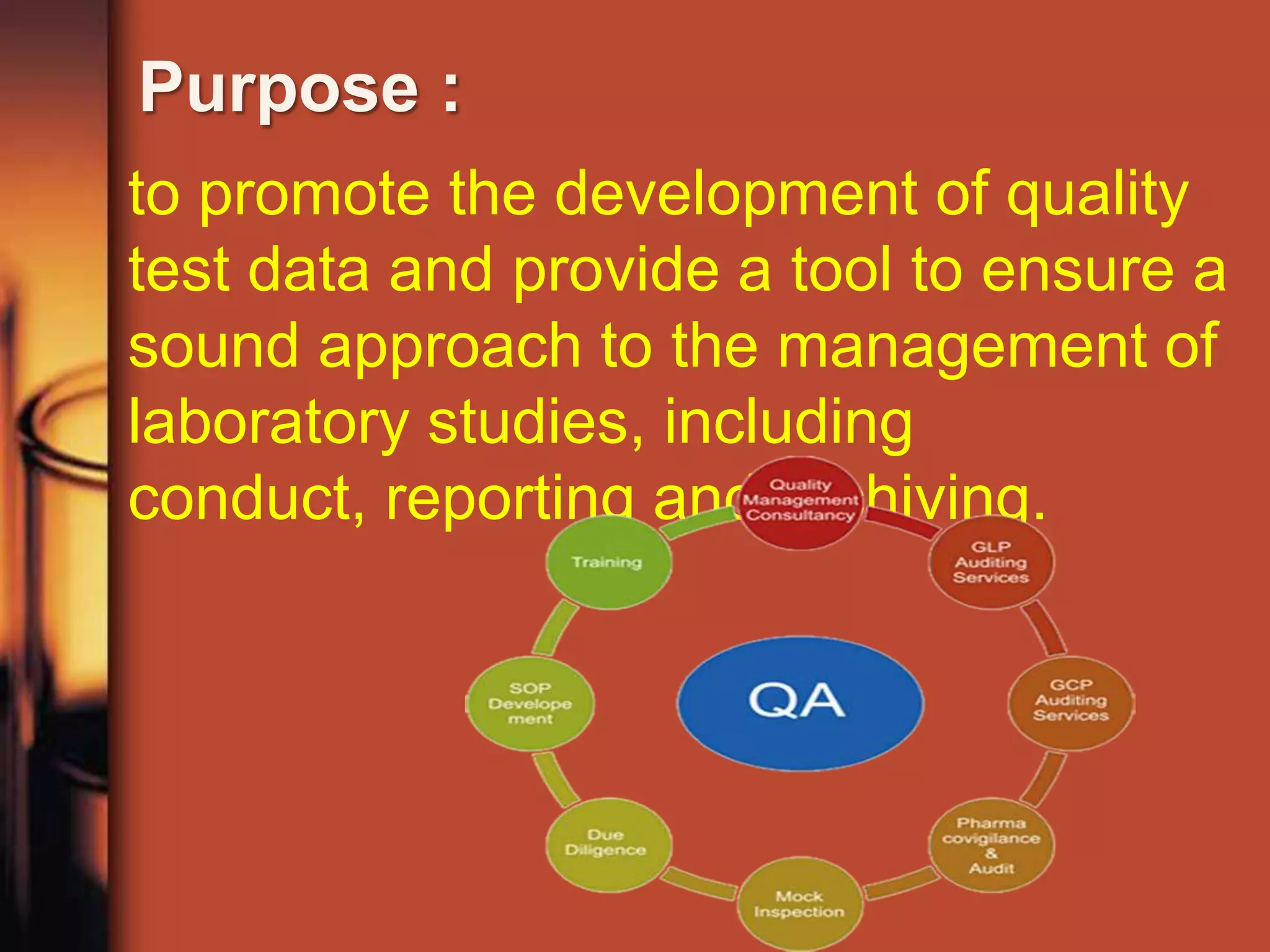
Purpose :
to promote the development of quality
test data and provide a tool to ensure a
sound approach to the management of
laboratory studies, including
conduct, reporting and archiving.
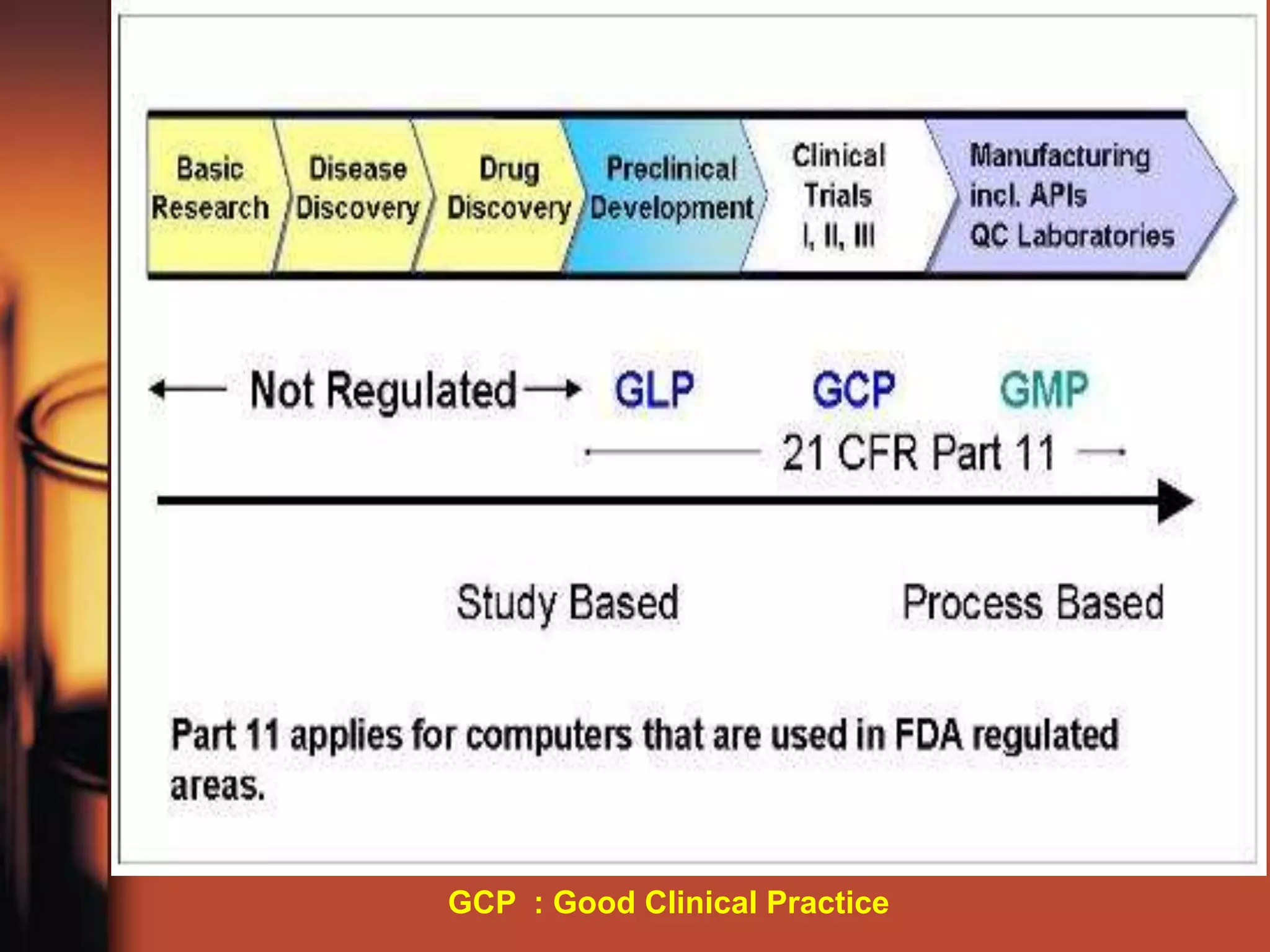
GCP : Good Clinical Practice
GLP apply only to studies
which :
• are non-clinical, i.e. mostly studies on
animals or in vitro, including the
analytical aspects of such studies .
• are designed to obtain data on the
properties and/or the safety of items with
respect to human health and/or the
environment .

• are intended to be submitted to a
national registration authority with the
purpose of registering or licensing the
GLP requirements for non-clinical
laboratory studies conducted to
evaluate drug safety cover the following
classes of toxicity :
• Single dose studies
• Repeated dose toxicity (sub-acute and chronic)
• Reproductive toxicity (fertility, embryo-foetal toxicity
and teratogenicity, peri-/post natal toxicity)
• Mutagenic potential
• Carcinogenic potential
• Toxicokinetics (pharmacokinetic studies which
provide systemic exposure data for the above studies)
• Pharmacodynamic studies designed to test the
potential for adverse effects (Safety pharmacology)
• Local tolerance studies, including
phototoxicity, irritation and sensitisation studies, or
testing for suspected addictive and/or withdrawal
N.B
GLP is not directly concerned with the
scientific design of studies. The scientific
design may be based on test guidelines and
its scientific value is judged by the (Drug)
Regulatory Authority that provides marketing
authorisation.
However, adherence to GLP will remove many
sources of error and uncertainty, adding to the
overall credibility of the study
GLP main
 points:
1. Resources:
   Organisation, personnel, facilities
   and equipment
2. Characterisation: Test items and
test systems
3. Rules: Protocols, standard
operating procedures (SOPs)
4. Results: Raw data, final report and
archives
5. Quality Assurance: Independent
Resources
Organization and
   Personnel
GLP regulations require clear
definitions of the structure of
the research organisation and
the responsibilities of the
research personnel ,
and job descriptions give an
immediate idea of the way in
which the laboratory functions
and the relationships between
the different departments and
the manager of a test facility
has overall responsibility for
 the implementation of both
   good science and good
   organisation, including
    compliance with GLP.
Good Science:

1. • Careful definition of experimental
   design and parameters.
2. • Performance of experiments based
   on valid scientific procedures.
3. • Control and documentation of
   experimental and environmental
   variables.
4. • Careful, complete evaluation and
   reporting of results.
5. • Assuring that results become part of
Good Organization :

1. • Provision of adequate physical
     facilities and qualified staff.
2.   • Planning of studies and allocation
     of resources.
3.   • Definition of staff responsibilities
     and training of staff.
4.   • Good record keeping and organised
     archives.
5.   • Implementation of a process for the
     verification of results.
6.   • Compliance with GLP
The master schedule must ensure
that:
• All studies (contracted and in-house) are included.
• Change control reflects shifts in dates and
workload.
• Time-consuming activities such as protocol review
and report preparation are incorporated.
• The system is the “official” one (i.e. don’t have two
or more competing systems for the same purpose).
• The system is described in an approved SOP.
• Responsibility for its maintenance and updating are
defined.
• The various versions of the master schedule are
approved and maintained in the archive as raw data.
• Distribution is adequate and key responsibilities
are identified.
All quality systems are based on making
people responsible for their actions.

 Definition of tasks and responsibilities

• “Don’t perform a procedure if you don’t
understand the reason, the context and the
consequences of it”.

• “Signing your work means you take full
responsibility for the correct completion of
your task”.
Training
The training system should have
elements common to all GLP
• Formal.
• Approved.
• Documented to a standard format.
• Described in a Standard Operating
Procedure.
• Possible to perform an historical
reconstruction of training through the
archived documents.
Facilities
 Buildings and
  Equipment
Buildings: General Principles
• of suitable size, construction and
location to meet the requirements of
the study and to minimise
disturbances that could interfere
with the study.

• Physical Separation; e.g.
walls, doors, filters or separate
cabinets or isolators. In new
buildings, or those recently
• Organisational Separation; e.g. carrying out
different activities in the same area but at
different times, allowing for cleaning and
preparation between operations, maintaining
separation of staff, or by establishing defined
work areas within a laboratory.
As an illustration of the principles involved we
shall consider:
Pharmacy and Dose Mixing Areas:
concerned with test material control and
mixing with vehicles (although the same
considerations would apply to other areas
such as analytical or histopathology
laboratories).
Animal facilities
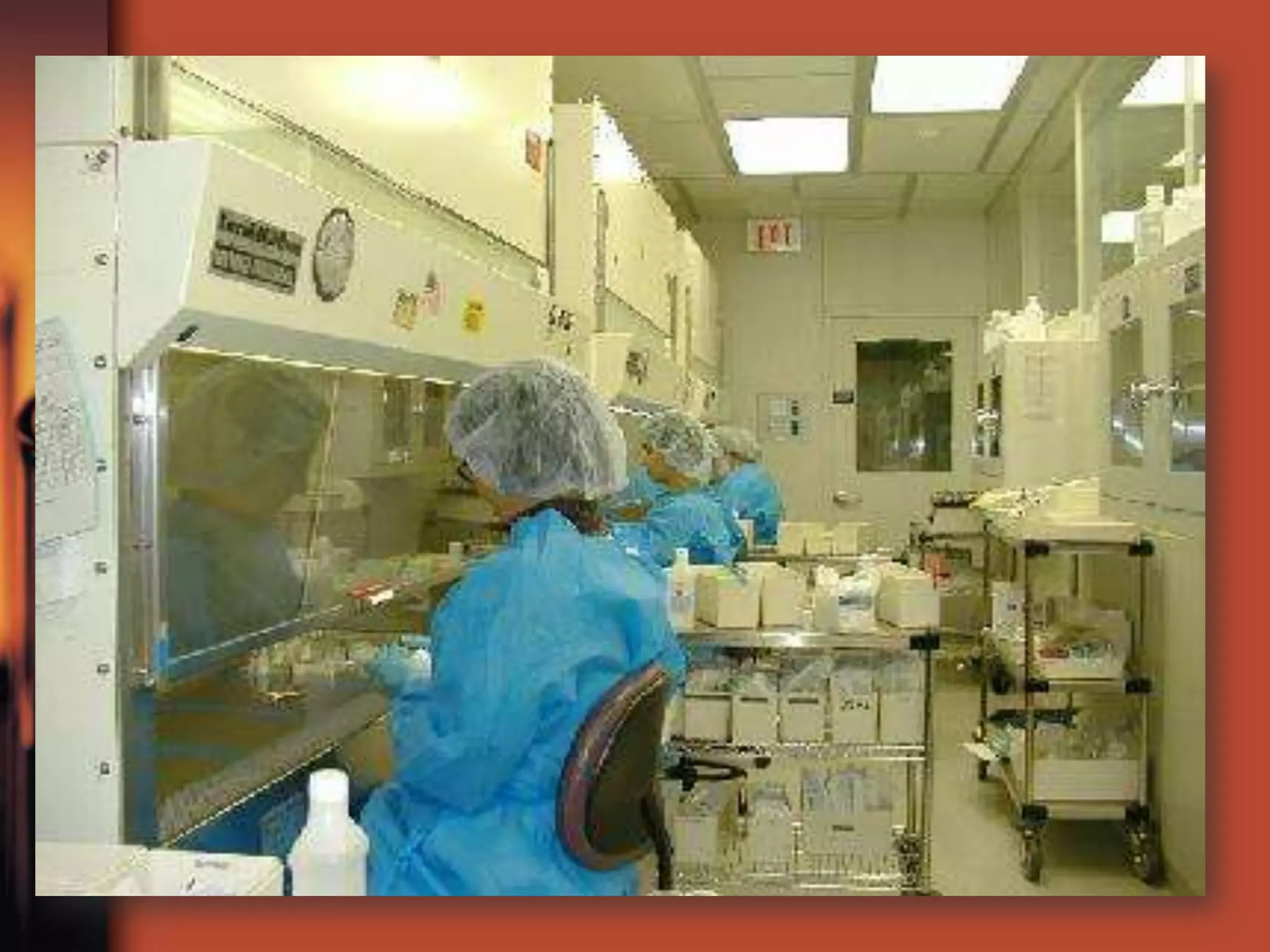
Pharmacy and Dose Mixing Areas
receipt, storage, dispensing, weighing, mixing,
 dispatch to the animal house and waste
disposal
 Size
Construction
Arrangement
There should be separate areas for:
• Storage of test items under different conditions.
• Storage of control items.
• Handling of volatile materials.
• Weighing.
• Mixing of different dose formulations, e.g. in the diet
or as solutions or suspensions.
• Storage of prepared dose formulations.
• Cleaning equipment.
• Offices and refreshment rooms.
• Changing rooms.
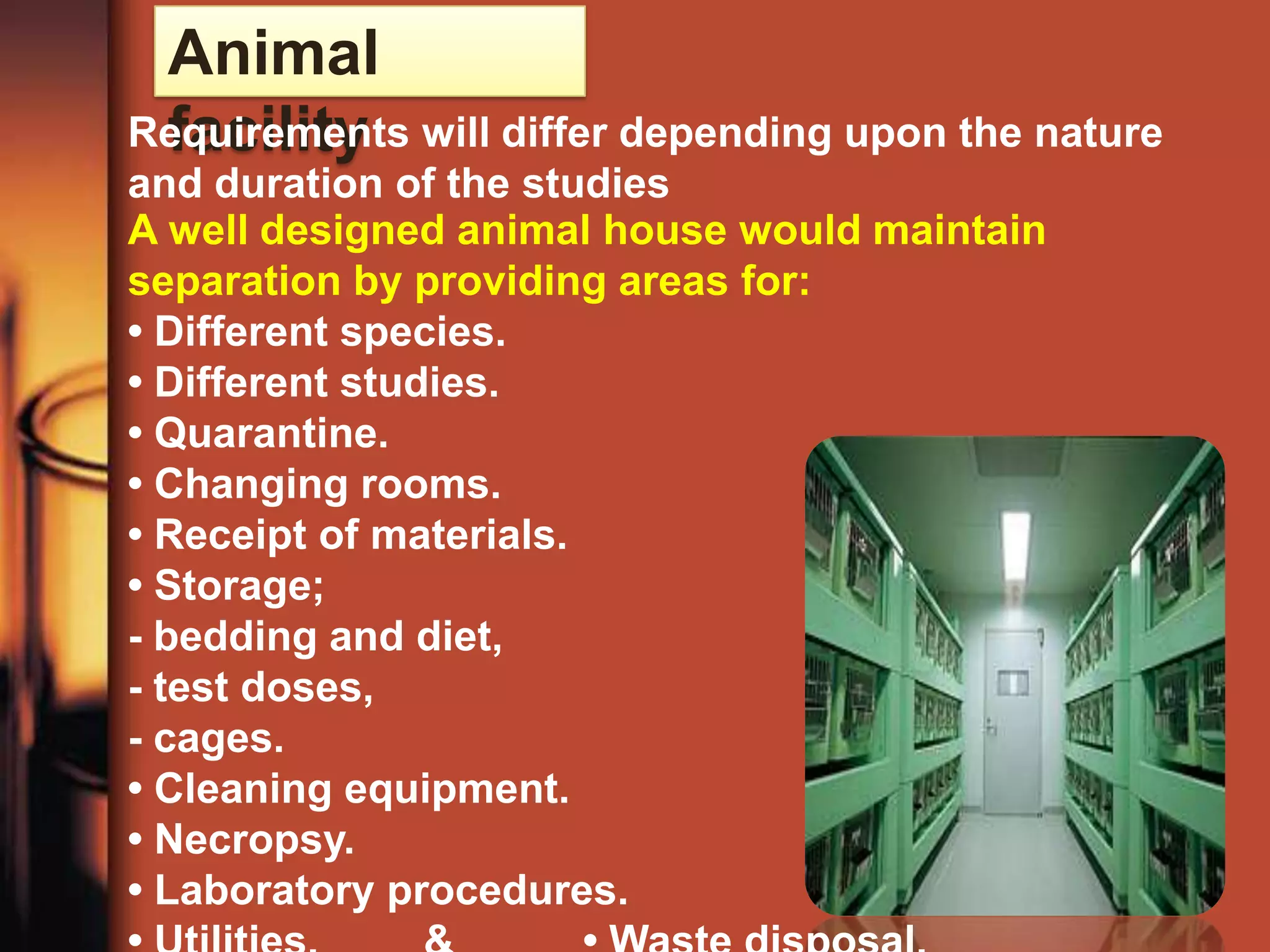
Animal
 facility
Requirements will differ depending upon the nature
and duration of the studies
A well designed animal house would maintain
separation by providing areas for:
• Different species.
• Different studies.
• Quarantine.
• Changing rooms.
• Receipt of materials.
• Storage;
- bedding and diet,
- test doses,
- cages.
• Cleaning equipment.
• Necropsy.
• Laboratory procedures.
Achievement of adequate separation
by:

• Minimising the number of staff allowed to
enter the building.
• Restricting entry into animal rooms.
• Organising work flow so that clean and dirty
material are moved around the facility at
different times of day (if the construction of
the facility does not permit other solutions)
and so that corridors are cleaned between
these times.
• Requiring staff to put on different clothing in
different zones within the facility.
Equipment
GLP requirements is to ensure the reliability
of data generated and to ensure that data are
not invalidated or lost as a result of
inaccurate, inadequate or faulty equipment.
• Equipment suitability
• Calibration
• Maintenance
               Preventive maintenance
               Curative maintenance
               Documentation
Glp

Glp

  • 1.
    GLP Prepared by: SHAIMAA OBAID AHMADEEN Supervised by: DR / Nahla.s.barakat
  • 2.
    a quality systemconcerned with the organizational process and the conditions under which non-clinical health and environmental safety studies are planned, performed, monitored, rec orded, archived and reported
  • 3.
    Purpose : to promotethe development of quality test data and provide a tool to ensure a sound approach to the management of laboratory studies, including conduct, reporting and archiving.
  • 4.
    GCP : GoodClinical Practice
  • 5.
    GLP apply onlyto studies which : • are non-clinical, i.e. mostly studies on animals or in vitro, including the analytical aspects of such studies . • are designed to obtain data on the properties and/or the safety of items with respect to human health and/or the environment . • are intended to be submitted to a national registration authority with the purpose of registering or licensing the
  • 6.
    GLP requirements fornon-clinical laboratory studies conducted to evaluate drug safety cover the following classes of toxicity : • Single dose studies • Repeated dose toxicity (sub-acute and chronic) • Reproductive toxicity (fertility, embryo-foetal toxicity and teratogenicity, peri-/post natal toxicity) • Mutagenic potential • Carcinogenic potential • Toxicokinetics (pharmacokinetic studies which provide systemic exposure data for the above studies) • Pharmacodynamic studies designed to test the potential for adverse effects (Safety pharmacology) • Local tolerance studies, including phototoxicity, irritation and sensitisation studies, or testing for suspected addictive and/or withdrawal
  • 7.
    N.B GLP is notdirectly concerned with the scientific design of studies. The scientific design may be based on test guidelines and its scientific value is judged by the (Drug) Regulatory Authority that provides marketing authorisation. However, adherence to GLP will remove many sources of error and uncertainty, adding to the overall credibility of the study
  • 8.
    GLP main points: 1.Resources: Organisation, personnel, facilities and equipment 2. Characterisation: Test items and test systems 3. Rules: Protocols, standard operating procedures (SOPs) 4. Results: Raw data, final report and archives 5. Quality Assurance: Independent
  • 9.
  • 10.
    GLP regulations requireclear definitions of the structure of the research organisation and the responsibilities of the research personnel , and job descriptions give an immediate idea of the way in which the laboratory functions and the relationships between the different departments and
  • 11.
    the manager ofa test facility has overall responsibility for the implementation of both good science and good organisation, including compliance with GLP.
  • 12.
    Good Science: 1. •Careful definition of experimental design and parameters. 2. • Performance of experiments based on valid scientific procedures. 3. • Control and documentation of experimental and environmental variables. 4. • Careful, complete evaluation and reporting of results. 5. • Assuring that results become part of
  • 13.
    Good Organization : 1.• Provision of adequate physical facilities and qualified staff. 2. • Planning of studies and allocation of resources. 3. • Definition of staff responsibilities and training of staff. 4. • Good record keeping and organised archives. 5. • Implementation of a process for the verification of results. 6. • Compliance with GLP
  • 14.
    The master schedulemust ensure that: • All studies (contracted and in-house) are included. • Change control reflects shifts in dates and workload. • Time-consuming activities such as protocol review and report preparation are incorporated. • The system is the “official” one (i.e. don’t have two or more competing systems for the same purpose). • The system is described in an approved SOP. • Responsibility for its maintenance and updating are defined. • The various versions of the master schedule are approved and maintained in the archive as raw data. • Distribution is adequate and key responsibilities are identified.
  • 15.
    All quality systemsare based on making people responsible for their actions. Definition of tasks and responsibilities • “Don’t perform a procedure if you don’t understand the reason, the context and the consequences of it”. • “Signing your work means you take full responsibility for the correct completion of your task”.
  • 16.
    Training The training systemshould have elements common to all GLP • Formal. • Approved. • Documented to a standard format. • Described in a Standard Operating Procedure. • Possible to perform an historical reconstruction of training through the archived documents.
  • 17.
  • 18.
    Buildings: General Principles •of suitable size, construction and location to meet the requirements of the study and to minimise disturbances that could interfere with the study. • Physical Separation; e.g. walls, doors, filters or separate cabinets or isolators. In new buildings, or those recently
  • 19.
    • Organisational Separation;e.g. carrying out different activities in the same area but at different times, allowing for cleaning and preparation between operations, maintaining separation of staff, or by establishing defined work areas within a laboratory. As an illustration of the principles involved we shall consider: Pharmacy and Dose Mixing Areas: concerned with test material control and mixing with vehicles (although the same considerations would apply to other areas such as analytical or histopathology laboratories). Animal facilities
  • 20.
    Pharmacy and DoseMixing Areas receipt, storage, dispensing, weighing, mixing, dispatch to the animal house and waste disposal Size Construction Arrangement There should be separate areas for: • Storage of test items under different conditions. • Storage of control items. • Handling of volatile materials. • Weighing. • Mixing of different dose formulations, e.g. in the diet or as solutions or suspensions. • Storage of prepared dose formulations. • Cleaning equipment. • Offices and refreshment rooms. • Changing rooms.
  • 22.
    Animal facility Requirements willdiffer depending upon the nature and duration of the studies A well designed animal house would maintain separation by providing areas for: • Different species. • Different studies. • Quarantine. • Changing rooms. • Receipt of materials. • Storage; - bedding and diet, - test doses, - cages. • Cleaning equipment. • Necropsy. • Laboratory procedures.
  • 23.
    Achievement of adequateseparation by: • Minimising the number of staff allowed to enter the building. • Restricting entry into animal rooms. • Organising work flow so that clean and dirty material are moved around the facility at different times of day (if the construction of the facility does not permit other solutions) and so that corridors are cleaned between these times. • Requiring staff to put on different clothing in different zones within the facility.
  • 24.
    Equipment GLP requirements isto ensure the reliability of data generated and to ensure that data are not invalidated or lost as a result of inaccurate, inadequate or faulty equipment. • Equipment suitability • Calibration • Maintenance Preventive maintenance Curative maintenance Documentation