GOOD
LABORATORY
PRACTICE
 K.Aadrika
 B.PHARMACY
A BRIEF INTRODUCTION
TOGOOD LABORATORY
PRACTICE
 In the early 70’s FDA became aware of cases of poor laboratory
practice all over the United States.
 They discovered a lot fraudulent activities and a lot of poor lab
practices.
 Examples of some of these poor lab practices found were :
1.Equipment not been calibrated to standard form , therefore
giving wrong measurements.
2. Incorrect/inaccurate accounts of the actual lab study.
3. Inadequate test systems.
GLP was first introduced in New Zealand and Denmark in 1972, and later
in the US in 1978 in response to the Industrial Bio Test Labs scandal.
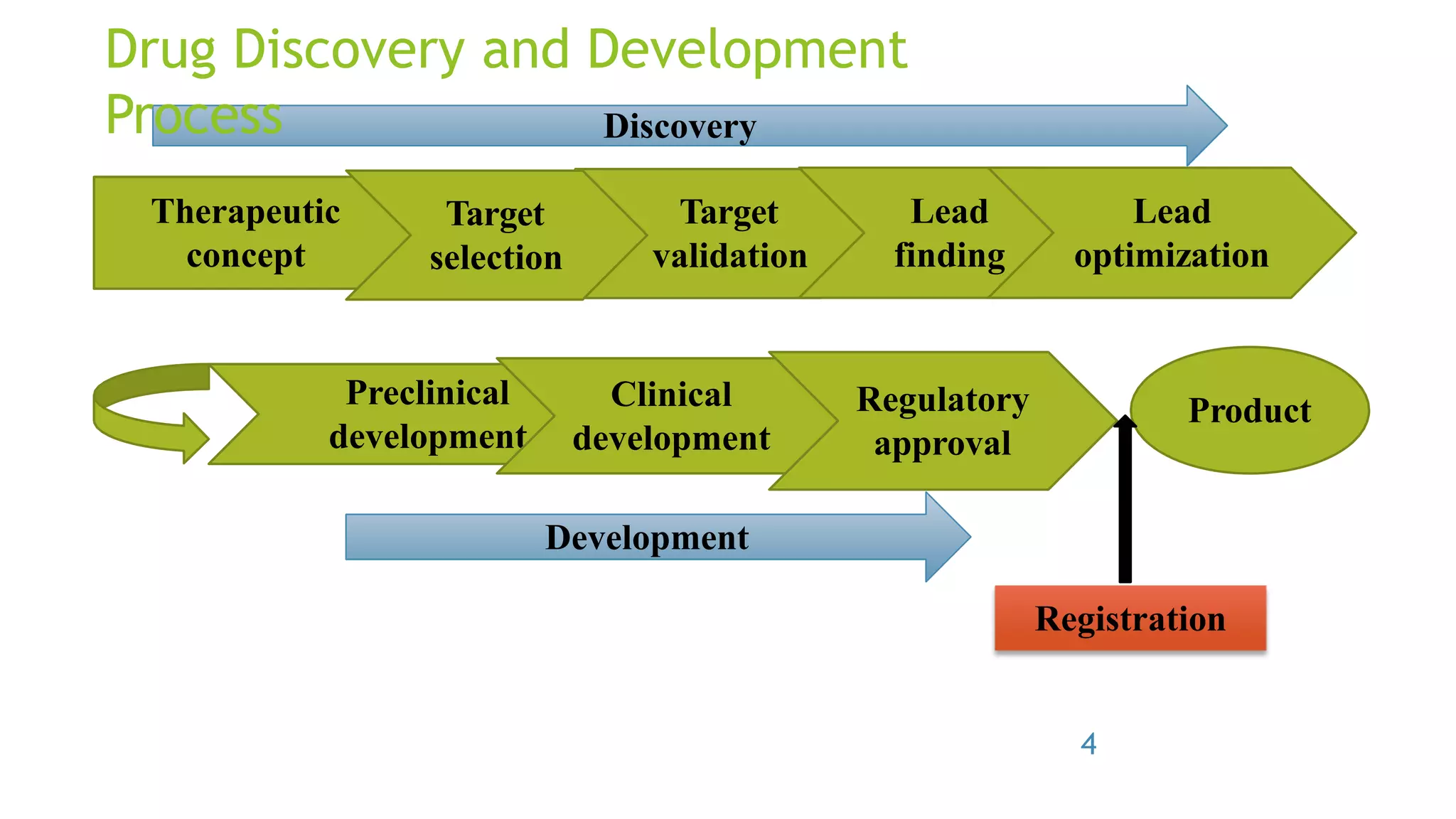
Therapeutic
concept
Target
validation
Lead
finding
Target
selection
Lead
optimization
Preclinical
development
Clinical
development
Regulatory
approval
Product
Registration
Discovery
4
Development
Drug Discovery and Development
Process
Good Laboratory Practice (GLP)
5
 GLP is a formal regulation created by USFDA as these
regulations were proposed on November 19,1976 and designated
as a new part of Chapter 21 of the Code of Federal
Regulations(CFR) as 21 CFR Part 58 in 1979.
 In 1981 an organization named OECD(Organization for
Economic Cooperation and Development) produced GLP
principles that are international standards.
 GLP in OECD principles is defined as “a quality system
concerned with the organizational process and the conditions
under which non-clinical health and environmental safety studies
are planned, performed, monitored, recorded, archived and
reported”.
Why GLP was created?
1) GLPs were initially invoked in a reaction to malpractices in the
laboratories conducting safety experiments of medicines.
2) In the early 1970s,research laboratories in the USA found doing
work in unethical ways ,like:
 Data generation without conduct of the study.
 Falsification of the laboratory work.
 Replacement of dead animals and fabrication of test results etc.
5
Advantages of GLP
 Assures that the data are a true reflection of results obtained from
studies.
 Preclinical safety and residue safety.
 Generation of high quality and reliable test data.
 Mutual acceptance of data
 Increases public confidence.
 Shortens the time-to-market for new products.
Disadvantages of GLP
 More man power is required.
 Expensive process.
 Time consuming process. 6
Objectives of
GLP
1) GLP makes sure that the data submitted are true reflection of the
results obtained from the studies.
2) GLP makes sure that the data is traceable.
3) Promotes international acceptance of tests.
7
GLP
Principles
Testing
facility
organization
and
personnel
Storage
and
retention
of records
and
materials
Reporting
of study
results
Quality
assurance
program
Facilities
Apparatus,
materials
,reagents
Test
systems
Test and
reference
substances
Standard
operating
procedures
Performance
of study 8
How to practice GLP?
10
A. General provisions
B. Organization and Personnel
C. Facilities
D. Equipment
E. Testing facilities operation
F. Test and control articles
G. Protocol for and the conduct of the study
H. Records and Reports
A. General
provisions
11
1) It prescribes GLP for conducting non-clinical laboratory studies
that support research and marketing permits of products
regulated by FDA.
2) Applicability to studies performed under grants and contracts.
3) Inspection of the testing facility.
B. Organization and
Personnel
12
1) Organization
2) Personnel
3) Testing facility management
4) Study director
5) Quality assurance unit
Organization-
Functions
4) Coordinate the work of internal departments and outside agencie1s0.
1) Identification of quality activities.
2) Dividing the jobs among the personnel.
3) Define the authority and responsibility of each job and
relationship of each job with other jobs.
Personne
lEach individual engaged in the conduct or supervision of non-
clinical laboratory study shall have:
1) Education
2) Training:
a) General training
b) Specific training
3) Experience or combination
4) Personal sanitation and health precautions 13
Testing facility
management
1) A sufficient number of qualified personnel, appropriate facilities,
equipment and materials are available for conductance of the
study.
2) Maintenance of records of qualifications, training and experience
of personnel and their job description.
3) Appointment of study director.
4) Quality assurance program with designated personnel. 14
Study
DirectorA scientist or other professional of appropriate education , training
and experience.
Responsibilities of the study director are:
1) Approval of protocol and study plans including amendments.
2) Technical conduct of the study.
3) Ensure that the QA personnel and study personnel are updated
with the study plan and SOPs.
4) Interpretation, analysis, documentation and reporting of the
results.
5) Also checks that experimental data is accurately recorded and
verified.
6) Sign and date the final report for acceptance of data.
15
Quality Assurance Unit
1) An individual or a group designated by management to assure
that the studies are in compliance with GLPprinciples.
2) Monitors the study to assure management that the facilities ,
equipment, personnel, methods, practices, records and controls
are in conformance with the regulations.
3) Maintain the copies of master schedule sheet, protocol and
SOPs.
4) Access to updated study plans and SOPs.
5) Documented verification of compliance of the study with GLP
principles.
16
Cont.…
5) Inspections to determine the compliance of the study with GLP
principles and three type of inspections are:
a) Study based inspections
b) Process based inspections
c) Facility based inspections
6) Determines any deviation from the approved protocol and report
to SD,PI and management.
7) Prepare statements to be included in the final report containing
dates and types of inspection. 17
C.
Facilities
19
1) General facilities:
a) Testing system facilities
b) Archive facilities
c) Waste disposal
2) Animal care facilities
General
facilities
20
a) Testing system facilities
 Suitable size, construction and location.
 Adequate degree of separation of different activities.
 Laboratories should be well ventilated, free of dust, drafts and
extreme temperatures.
 Minimum 150sq.feet of floor space and minimum 6 linear feet of
usable bench space should be provide for each analyst.
b) Archive facilities- Secure storage and retrieval of study plans,
raw data, final report and specimens to prevent untimely
deterioration.
c) Waste disposal- Appropriate collection, storage and disposal
facilities and decontamination procedures.
Animal care
facilities
1) Located away form testing laboratories preferably in a separate building.
2) Contamination risk is reduced by “barrier” system ,as well as by providing
“clean” and “dirty” corridors .
3) Separate areas for animals of different species and studies.
4) Separate areas for diagnosis, treatment and control of laboratory animal
diseases.
5) Lightening should be proper as light intensity and noise level is sufficient.
6) Maintain room temperature, humidity and air changes in animal quarters. 20
D. Equipment
1) Appropriate design and adequate capacity.
2) Equipment shall be adequately inspected,
maintained.
cleaned and
3) Equipment used for generation, measurement or assessment of
data shall be adequately tested, calibrated and standardized.
4) Log books for each equipment should be there.
21
E. Testing Facilities
Operation
1) Standard operating procedures(SOPs)
2) Reagents and solutions
3) Animal care
22
Standard Operating Procedures
(SOPs)
 reference items, apparatus, materials and reagents, record keeping,
reporting, storage and retrieval, test systems and quality assurance
procedures.
 4) Any deviation from SOP should be authorized by SD and documented in the
raw data.
1) Written documents specifying procedures for laboratories
programs.
2) Testing facility should have a written SOP approved by
management.
3) SOPs should be available wherever applicable e.g. test and
5) Routine inspection, cleaning, maintenance,
calibration.
6) Actions to be taken in response to routine failure.
testing and
23
Reagents and
solutions
1) Reagents used in the operation should be specified in the SOPs.
2) Reagents and solutions should be labeled.
3) Deteriorated or outdated reagents and solutions should not be used.
4) Store under ambient temperature. 24
Animal
care
26
1) SOPs - for housing, feeding, handling and care of animals.
2) Animals should be free of any disease and if, during the course
of study, animals contract a disease then the diseased animals
shall be isolated.
3) Diagnosis, authorization of treatment, description and date of
treatment shall be documented and retained.
4) Animals of different species shall be housed in separated rooms
when necessary.
5) The animal cages, racks and accessory equipment shall be
cleaned and sanitized at appropriate intervals.
F. Test and Control Articles
27
1) Test and control article characterization
2) Test and control article handling
3) Mixture of articles with carriers
Test and control article
characterization1) The identity, strength, purity and composition or other
characteristics of test and control article shall be determined and
documented for each batch.
2) Methods of synthesis, fabrication or derivation shall be
documented by the sponsor or the testing facility.
3) Stability of each test and control article is determined.
4) Storage conditions are maintained and each storage container
shall be labeled by name, chemical abstract number or batch
number.
27
Test and control article
handling
29
Handling procedures of test and control articles ensures:
1) Proper storage.
2) Minimum risk of contamination and deterioration or damage.
batch
3) Receipt and distribution of each batch is documented.
4) Documentation include date and quantity of each
distributed or returned.
Mixture of articles with
carriers
30
1) Appropriate analytical methods shall be conducted for
determination of uniformity of mixture and concentration of test
or control article in mixture.
2) Stability of mixture is determined.
3) Expiration date should be written on the container.
G. Protocol for and conduct of
a nonclinical laboratory study
31
1) Protocol
2) Conduct of a nonclinical study
Protoco
lContents of protocol
1.Identification
2.Title and statement of purpose
3.Identification of test(or control) items
4.Names and address of the sponsor, test facility and test site
5.Name of the study director and other personnel
6.Proposed dates
7.Justification for selection of the test system
8.Description of the test system
9. Experimental design 31
Conduct of a nonclinical laboratory
study
33
1) Study shall be conducted in accordance with the protocol.
2) Information of the specimens should be present on the container
to avoid error in recording and storage of data.
3) All the data generated shall be recorded directly, promptly and
legibly by ink.
H. Records and
Reports
34
1) Reporting of nonclinical laboratory results
2) Storage, retrieval and retention of records and data
Reporting of nonclinical laboratory study
results
35
Final report shall contain:
1) Information on sponsor and test facility.
2) Experimental starting and completion dates.
3) Objectives and procedures stated in protocol(including the changes
in protocol).
4) Description of materials and test methods.
5) A Quality Assurance Programstatement.
6) Storage(specimens, reference items, raw data and final report).
Storage, retrieval and retention of
records and data1) Archives should be there for orderly storage and expedient of all
raw data, documentation, protocols, specimens and final reports.
2) Index of materials retained.
3) Master schedule sheet, copies of protocols and records of
Quality Assurance inspections shall be maintained by QAU.
4) Wet specimens and samples of test and control articles shall be
retained until the quality of preparation affords evaluation.
5) If any study plan is disposed of before expiry the reason to be
justified and documented. 35

Glp ppt

  • 1.
  • 2.
    A BRIEF INTRODUCTION TOGOODLABORATORY PRACTICE
  • 3.
     In theearly 70’s FDA became aware of cases of poor laboratory practice all over the United States.  They discovered a lot fraudulent activities and a lot of poor lab practices.  Examples of some of these poor lab practices found were : 1.Equipment not been calibrated to standard form , therefore giving wrong measurements. 2. Incorrect/inaccurate accounts of the actual lab study. 3. Inadequate test systems. GLP was first introduced in New Zealand and Denmark in 1972, and later in the US in 1978 in response to the Industrial Bio Test Labs scandal.
  • 4.
  • 5.
    Good Laboratory Practice(GLP) 5  GLP is a formal regulation created by USFDA as these regulations were proposed on November 19,1976 and designated as a new part of Chapter 21 of the Code of Federal Regulations(CFR) as 21 CFR Part 58 in 1979.  In 1981 an organization named OECD(Organization for Economic Cooperation and Development) produced GLP principles that are international standards.  GLP in OECD principles is defined as “a quality system concerned with the organizational process and the conditions under which non-clinical health and environmental safety studies are planned, performed, monitored, recorded, archived and reported”.
  • 6.
    Why GLP wascreated? 1) GLPs were initially invoked in a reaction to malpractices in the laboratories conducting safety experiments of medicines. 2) In the early 1970s,research laboratories in the USA found doing work in unethical ways ,like:  Data generation without conduct of the study.  Falsification of the laboratory work.  Replacement of dead animals and fabrication of test results etc. 5
  • 7.
    Advantages of GLP Assures that the data are a true reflection of results obtained from studies.  Preclinical safety and residue safety.  Generation of high quality and reliable test data.  Mutual acceptance of data  Increases public confidence.  Shortens the time-to-market for new products. Disadvantages of GLP  More man power is required.  Expensive process.  Time consuming process. 6
  • 8.
    Objectives of GLP 1) GLPmakes sure that the data submitted are true reflection of the results obtained from the studies. 2) GLP makes sure that the data is traceable. 3) Promotes international acceptance of tests. 7
  • 9.
  • 10.
    How to practiceGLP? 10 A. General provisions B. Organization and Personnel C. Facilities D. Equipment E. Testing facilities operation F. Test and control articles G. Protocol for and the conduct of the study H. Records and Reports
  • 11.
    A. General provisions 11 1) Itprescribes GLP for conducting non-clinical laboratory studies that support research and marketing permits of products regulated by FDA. 2) Applicability to studies performed under grants and contracts. 3) Inspection of the testing facility.
  • 12.
    B. Organization and Personnel 12 1)Organization 2) Personnel 3) Testing facility management 4) Study director 5) Quality assurance unit
  • 13.
    Organization- Functions 4) Coordinate thework of internal departments and outside agencie1s0. 1) Identification of quality activities. 2) Dividing the jobs among the personnel. 3) Define the authority and responsibility of each job and relationship of each job with other jobs.
  • 14.
    Personne lEach individual engagedin the conduct or supervision of non- clinical laboratory study shall have: 1) Education 2) Training: a) General training b) Specific training 3) Experience or combination 4) Personal sanitation and health precautions 13
  • 15.
    Testing facility management 1) Asufficient number of qualified personnel, appropriate facilities, equipment and materials are available for conductance of the study. 2) Maintenance of records of qualifications, training and experience of personnel and their job description. 3) Appointment of study director. 4) Quality assurance program with designated personnel. 14
  • 16.
    Study DirectorA scientist orother professional of appropriate education , training and experience. Responsibilities of the study director are: 1) Approval of protocol and study plans including amendments. 2) Technical conduct of the study. 3) Ensure that the QA personnel and study personnel are updated with the study plan and SOPs. 4) Interpretation, analysis, documentation and reporting of the results. 5) Also checks that experimental data is accurately recorded and verified. 6) Sign and date the final report for acceptance of data. 15
  • 17.
    Quality Assurance Unit 1)An individual or a group designated by management to assure that the studies are in compliance with GLPprinciples. 2) Monitors the study to assure management that the facilities , equipment, personnel, methods, practices, records and controls are in conformance with the regulations. 3) Maintain the copies of master schedule sheet, protocol and SOPs. 4) Access to updated study plans and SOPs. 5) Documented verification of compliance of the study with GLP principles. 16
  • 18.
    Cont.… 5) Inspections todetermine the compliance of the study with GLP principles and three type of inspections are: a) Study based inspections b) Process based inspections c) Facility based inspections 6) Determines any deviation from the approved protocol and report to SD,PI and management. 7) Prepare statements to be included in the final report containing dates and types of inspection. 17
  • 19.
    C. Facilities 19 1) General facilities: a)Testing system facilities b) Archive facilities c) Waste disposal 2) Animal care facilities
  • 20.
    General facilities 20 a) Testing systemfacilities  Suitable size, construction and location.  Adequate degree of separation of different activities.  Laboratories should be well ventilated, free of dust, drafts and extreme temperatures.  Minimum 150sq.feet of floor space and minimum 6 linear feet of usable bench space should be provide for each analyst. b) Archive facilities- Secure storage and retrieval of study plans, raw data, final report and specimens to prevent untimely deterioration. c) Waste disposal- Appropriate collection, storage and disposal facilities and decontamination procedures.
  • 21.
    Animal care facilities 1) Locatedaway form testing laboratories preferably in a separate building. 2) Contamination risk is reduced by “barrier” system ,as well as by providing “clean” and “dirty” corridors . 3) Separate areas for animals of different species and studies. 4) Separate areas for diagnosis, treatment and control of laboratory animal diseases. 5) Lightening should be proper as light intensity and noise level is sufficient. 6) Maintain room temperature, humidity and air changes in animal quarters. 20
  • 22.
    D. Equipment 1) Appropriatedesign and adequate capacity. 2) Equipment shall be adequately inspected, maintained. cleaned and 3) Equipment used for generation, measurement or assessment of data shall be adequately tested, calibrated and standardized. 4) Log books for each equipment should be there. 21
  • 23.
    E. Testing Facilities Operation 1)Standard operating procedures(SOPs) 2) Reagents and solutions 3) Animal care 22
  • 24.
    Standard Operating Procedures (SOPs) reference items, apparatus, materials and reagents, record keeping, reporting, storage and retrieval, test systems and quality assurance procedures.  4) Any deviation from SOP should be authorized by SD and documented in the raw data. 1) Written documents specifying procedures for laboratories programs. 2) Testing facility should have a written SOP approved by management. 3) SOPs should be available wherever applicable e.g. test and 5) Routine inspection, cleaning, maintenance, calibration. 6) Actions to be taken in response to routine failure. testing and 23
  • 25.
    Reagents and solutions 1) Reagentsused in the operation should be specified in the SOPs. 2) Reagents and solutions should be labeled. 3) Deteriorated or outdated reagents and solutions should not be used. 4) Store under ambient temperature. 24
  • 26.
    Animal care 26 1) SOPs -for housing, feeding, handling and care of animals. 2) Animals should be free of any disease and if, during the course of study, animals contract a disease then the diseased animals shall be isolated. 3) Diagnosis, authorization of treatment, description and date of treatment shall be documented and retained. 4) Animals of different species shall be housed in separated rooms when necessary. 5) The animal cages, racks and accessory equipment shall be cleaned and sanitized at appropriate intervals.
  • 27.
    F. Test andControl Articles 27 1) Test and control article characterization 2) Test and control article handling 3) Mixture of articles with carriers
  • 28.
    Test and controlarticle characterization1) The identity, strength, purity and composition or other characteristics of test and control article shall be determined and documented for each batch. 2) Methods of synthesis, fabrication or derivation shall be documented by the sponsor or the testing facility. 3) Stability of each test and control article is determined. 4) Storage conditions are maintained and each storage container shall be labeled by name, chemical abstract number or batch number. 27
  • 29.
    Test and controlarticle handling 29 Handling procedures of test and control articles ensures: 1) Proper storage. 2) Minimum risk of contamination and deterioration or damage. batch 3) Receipt and distribution of each batch is documented. 4) Documentation include date and quantity of each distributed or returned.
  • 30.
    Mixture of articleswith carriers 30 1) Appropriate analytical methods shall be conducted for determination of uniformity of mixture and concentration of test or control article in mixture. 2) Stability of mixture is determined. 3) Expiration date should be written on the container.
  • 31.
    G. Protocol forand conduct of a nonclinical laboratory study 31 1) Protocol 2) Conduct of a nonclinical study
  • 32.
    Protoco lContents of protocol 1.Identification 2.Titleand statement of purpose 3.Identification of test(or control) items 4.Names and address of the sponsor, test facility and test site 5.Name of the study director and other personnel 6.Proposed dates 7.Justification for selection of the test system 8.Description of the test system 9. Experimental design 31
  • 33.
    Conduct of anonclinical laboratory study 33 1) Study shall be conducted in accordance with the protocol. 2) Information of the specimens should be present on the container to avoid error in recording and storage of data. 3) All the data generated shall be recorded directly, promptly and legibly by ink.
  • 34.
    H. Records and Reports 34 1)Reporting of nonclinical laboratory results 2) Storage, retrieval and retention of records and data
  • 35.
    Reporting of nonclinicallaboratory study results 35 Final report shall contain: 1) Information on sponsor and test facility. 2) Experimental starting and completion dates. 3) Objectives and procedures stated in protocol(including the changes in protocol). 4) Description of materials and test methods. 5) A Quality Assurance Programstatement. 6) Storage(specimens, reference items, raw data and final report).
  • 36.
    Storage, retrieval andretention of records and data1) Archives should be there for orderly storage and expedient of all raw data, documentation, protocols, specimens and final reports. 2) Index of materials retained. 3) Master schedule sheet, copies of protocols and records of Quality Assurance inspections shall be maintained by QAU. 4) Wet specimens and samples of test and control articles shall be retained until the quality of preparation affords evaluation. 5) If any study plan is disposed of before expiry the reason to be justified and documented. 35