Giving Presentations
  Openings, Signposting
Effective Openings
• The first three minutes of a presentation
  are the most important.
• The speaker needs a ‘hook’, a simple
  technique for getting attention.
• A good start makes the speaker feel
  confident.
Effective Openings
• Three ways of ‘hooking’ your audience:

  – Give them a problem to think about.
  – Give them some amazing facts.
  – Give them a story or a personal anecdote.
Effective Openings
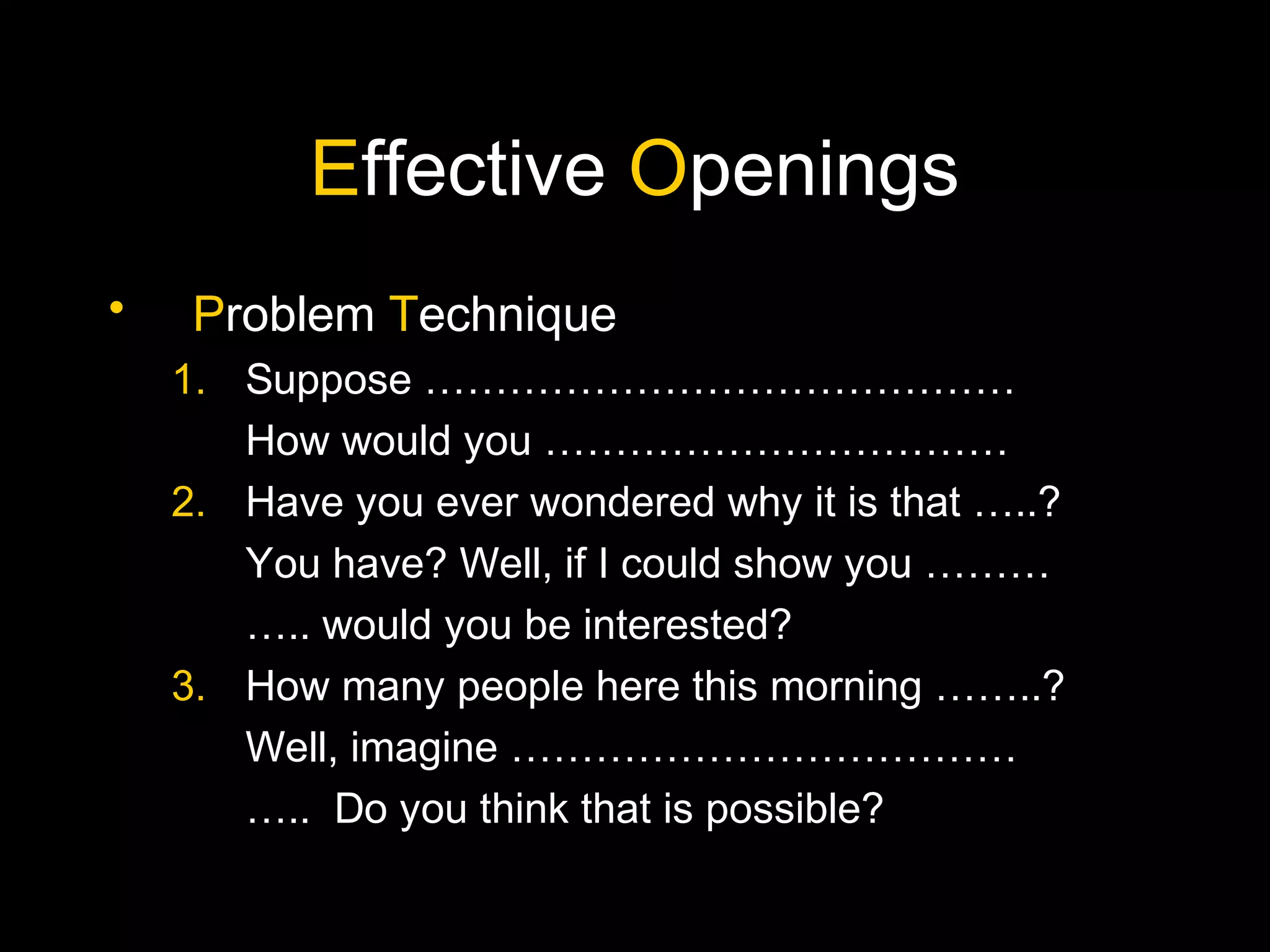
•    Problem Technique
    1. Suppose ……………………………………
       How would you ……………………………
    2. Have you ever wondered why it is that …..?
       You have? Well, if I could show you ………
       ….. would you be interested?
    3. How many people here this morning ……..?
       Well, imagine ………………………………
       ….. Do you think that is possible?
Effective Openings
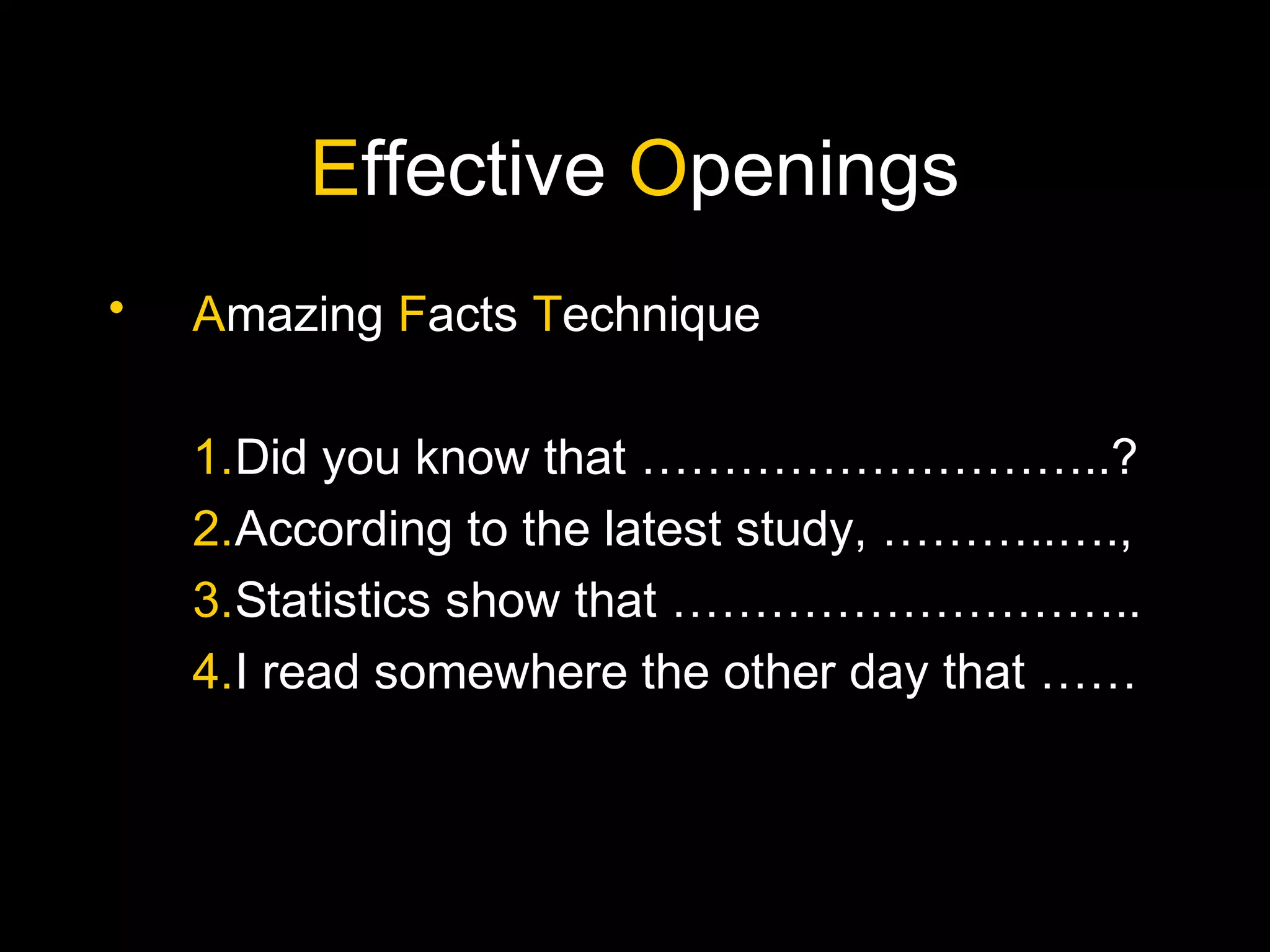
•   Amazing Facts Technique

    1.Did you know that ………………………..?
    2.According to the latest study, ………..….,
    3.Statistics show that ………………………..
    4.I read somewhere the other day that ……
Effective Openings
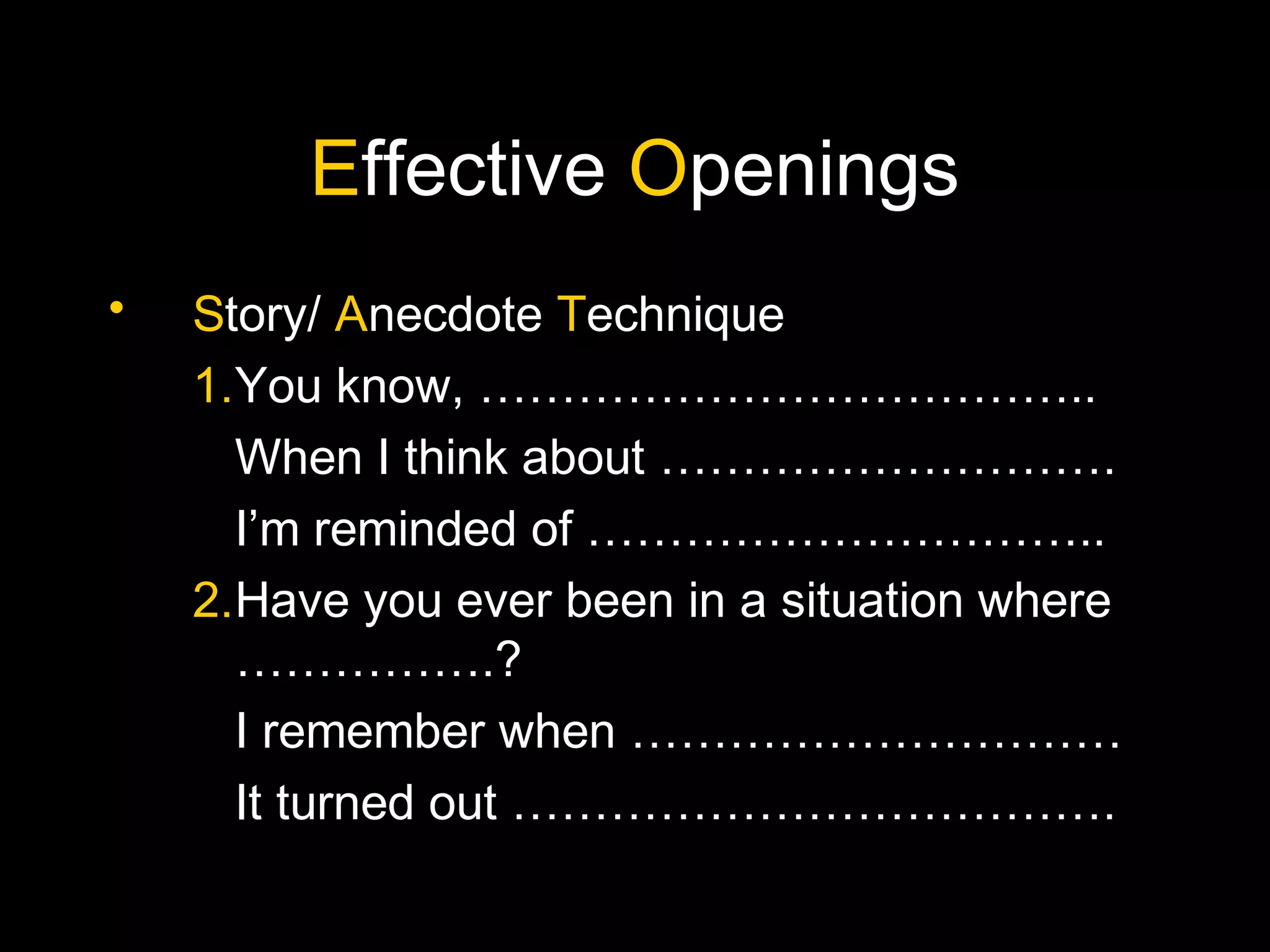
•   Story/ Anecdote Technique
    1.You know, ………………………………..
      When I think about ……………………….
      I’m reminded of …………………………..
    2.Have you ever been in a situation where
      …………….?
      I remember when …………………………
      It turned out ……………………………….
Signposting
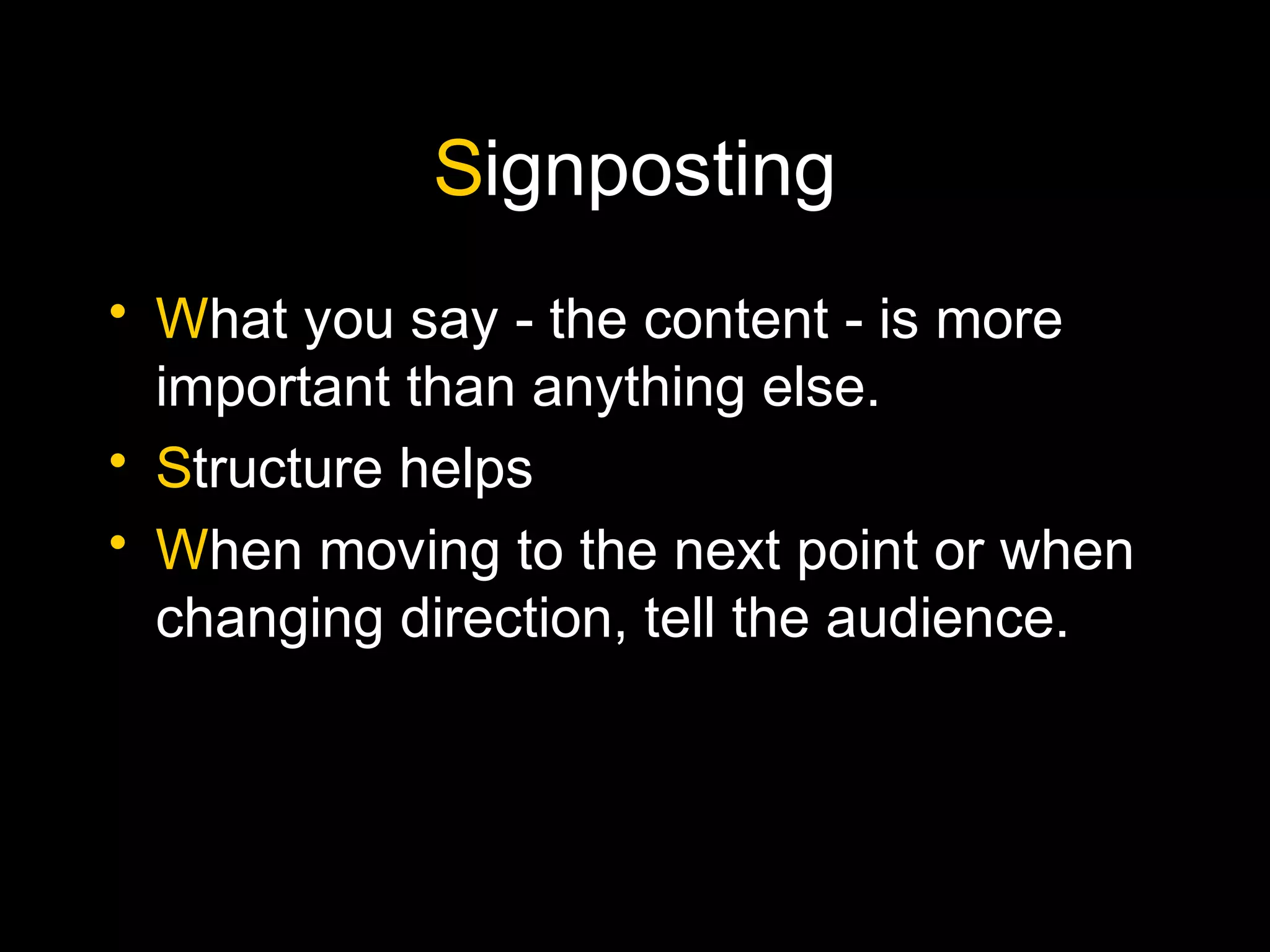
• What you say - the content - is more
  important than anything else.
• Structure helps
• When moving to the next point or when
  changing direction, tell the audience.
Signposting
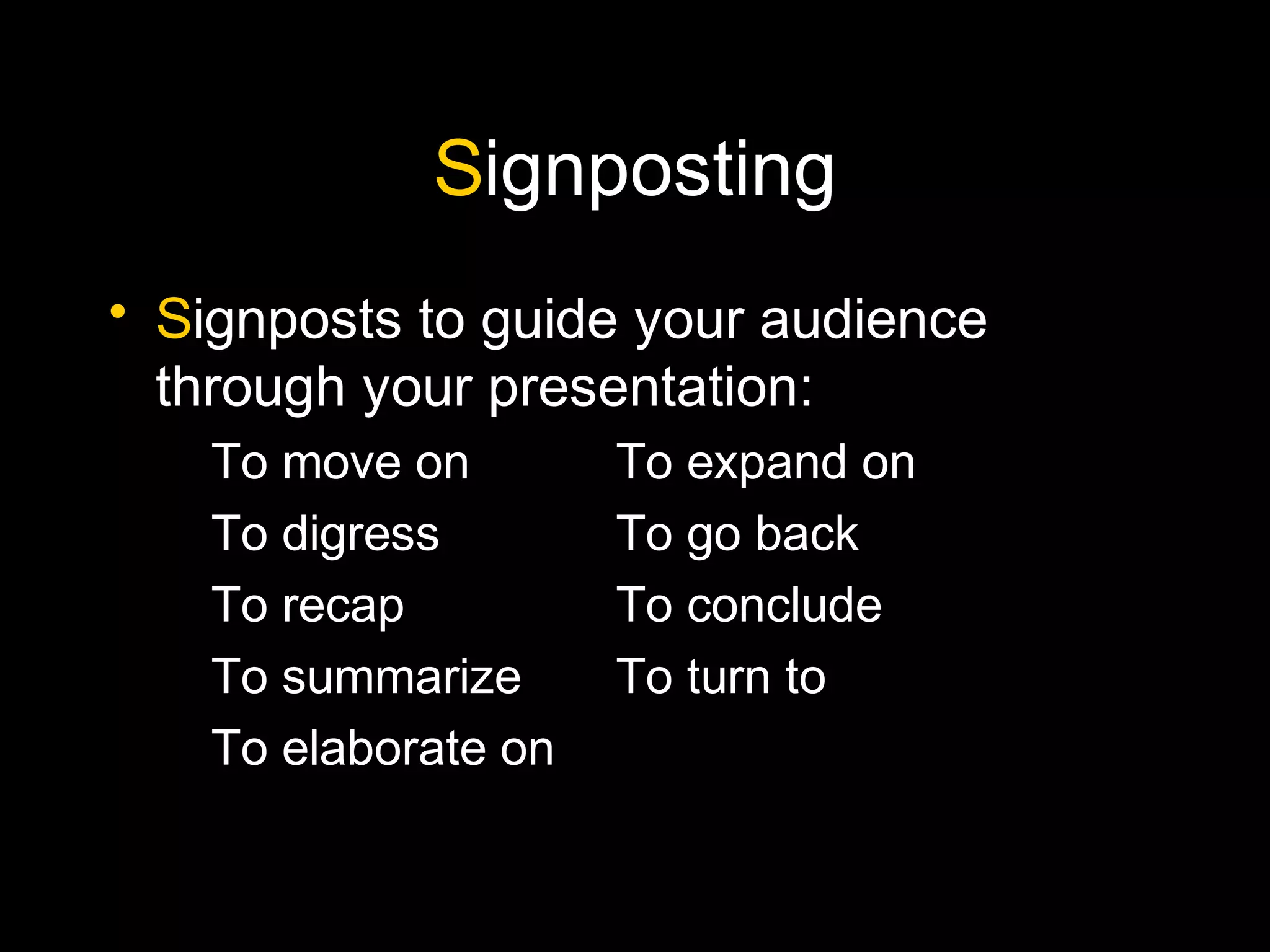
• Signposts to guide your audience
  through your presentation:
   To move on        To expand on
   To digress        To go back
   To recap          To conclude
   To summarize      To turn to
   To elaborate on
Signposting
• Neat, short signposts are more
  effective.
• Keep it simple
    OK. So ……………..
Signposting
• Neat, short signposts are more
  effective.
• Keep it simple
    OK. So ……………..

Presentations: Openings and signposting

  • 1.
    Giving Presentations Openings, Signposting
  • 2.
    Effective Openings • Thefirst three minutes of a presentation are the most important. • The speaker needs a ‘hook’, a simple technique for getting attention. • A good start makes the speaker feel confident.
  • 3.
    Effective Openings • Threeways of ‘hooking’ your audience: – Give them a problem to think about. – Give them some amazing facts. – Give them a story or a personal anecdote.
  • 4.
    Effective Openings • Problem Technique 1. Suppose …………………………………… How would you …………………………… 2. Have you ever wondered why it is that …..? You have? Well, if I could show you ……… ….. would you be interested? 3. How many people here this morning ……..? Well, imagine ……………………………… ….. Do you think that is possible?
  • 5.
    Effective Openings • Amazing Facts Technique 1.Did you know that ………………………..? 2.According to the latest study, ………..…., 3.Statistics show that ……………………….. 4.I read somewhere the other day that ……
  • 6.
    Effective Openings • Story/ Anecdote Technique 1.You know, ……………………………….. When I think about ………………………. I’m reminded of ………………………….. 2.Have you ever been in a situation where …………….? I remember when ………………………… It turned out ……………………………….
  • 7.
    Signposting • What yousay - the content - is more important than anything else. • Structure helps • When moving to the next point or when changing direction, tell the audience.
  • 8.
    Signposting • Signposts toguide your audience through your presentation: To move on To expand on To digress To go back To recap To conclude To summarize To turn to To elaborate on
  • 9.
    Signposting • Neat, shortsignposts are more effective. • Keep it simple OK. So ……………..
  • 10.
    Signposting • Neat, shortsignposts are more effective. • Keep it simple OK. So ……………..