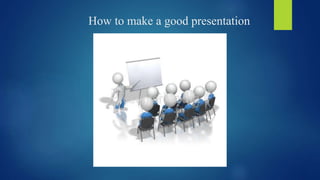
How to make a good presentation
1. Preparation and planning 
 Essential questions- what is the aim? 
- what is my title? 
- who am I speaking to? 
- what are the main points I want to make? 
- what do I want the audience to do after listening 
to my presentation?
 Questions concerning physical aspects 
- who is the audience? 
- where will it take place? 
- what equipment do I need? 
- can the information be seen? 
- how much will the presentation last?
2. Structure of the speech 
 Three parts: 
A. Introduction- get the audience's attention and signal the beginning 
- greet the audience 
- introduce yourself, (name, position and company) 
- give the title and introduce the subject 
- give your objectives (purpose, aim, goals) 
- announce your outline 
- questions and comments from the audience 
- make a transition between the introduction and the 
body
B. The body of the presentation 
- content 
- quantity 
- sequencing your ideas 
- keeping the audience's attention 
- signposting or signaling where you are 
- list information 
- link ideas/ make transitions 
- outline options, give examples 
- rephrase, summarize, emphasize
C. The end or the conclusion 
- content 
- dealing with difficult questions
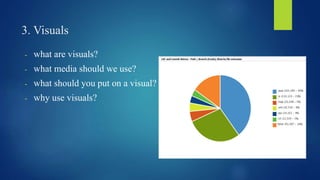
3. Visuals 
- what are visuals? 
- what media should we use? 
- what should you put on a visual? 
- why use visuals?
4. How to create interest, establish and mantain a 
relationship with the audience 
- catch listeners' attention from the beginning 
- rhetorical questions 
- emphasizing/highlighting 
- other techniques: illustrate with a real life story or 
anecdote, use words like you, we, us, our, etc.
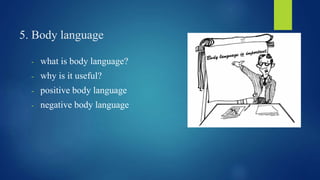
5. Body language 
- what is body language? 
- why is it useful? 
- positive body language 
- negative body language
6. Voice and pronunciation 
- make sure you know the correct pronunciation 
- qualities of the voice should be used to their fullest
REMEMBER! 
Anyone can give a good presentation. Don’t worry if you 
are not naturally extrovert. Preparation and practice are the 
keys to success!

How to make a good presentation

  • 1.
    How to makea good presentation
  • 2.
    1. Preparation andplanning  Essential questions- what is the aim? - what is my title? - who am I speaking to? - what are the main points I want to make? - what do I want the audience to do after listening to my presentation?
  • 3.
     Questions concerningphysical aspects - who is the audience? - where will it take place? - what equipment do I need? - can the information be seen? - how much will the presentation last?
  • 4.
    2. Structure ofthe speech  Three parts: A. Introduction- get the audience's attention and signal the beginning - greet the audience - introduce yourself, (name, position and company) - give the title and introduce the subject - give your objectives (purpose, aim, goals) - announce your outline - questions and comments from the audience - make a transition between the introduction and the body
  • 5.
    B. The bodyof the presentation - content - quantity - sequencing your ideas - keeping the audience's attention - signposting or signaling where you are - list information - link ideas/ make transitions - outline options, give examples - rephrase, summarize, emphasize
  • 6.
    C. The endor the conclusion - content - dealing with difficult questions
  • 7.
    3. Visuals -what are visuals? - what media should we use? - what should you put on a visual? - why use visuals?
  • 8.
    4. How tocreate interest, establish and mantain a relationship with the audience - catch listeners' attention from the beginning - rhetorical questions - emphasizing/highlighting - other techniques: illustrate with a real life story or anecdote, use words like you, we, us, our, etc.
  • 9.
    5. Body language - what is body language? - why is it useful? - positive body language - negative body language
  • 10.
    6. Voice andpronunciation - make sure you know the correct pronunciation - qualities of the voice should be used to their fullest
  • 11.
    REMEMBER! Anyone cangive a good presentation. Don’t worry if you are not naturally extrovert. Preparation and practice are the keys to success!