Submitted by:Bhagyashri B.Shinde
DEFINITION
Its also known as hepatic dysfunction, benign
familial icterus, constitutional hepatic
dysfunction, unconjugated benign
bilirubinemia and familial nonhemolytic
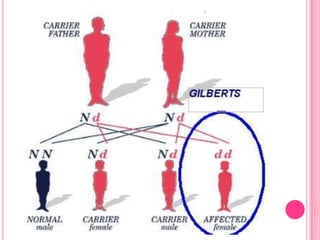
jaundice, is a genetic condition. It’s a Autosomal
Dominant variant of familial adenomatous
polyposis,caused by mutation in APC gene.
 It is a mild liver disorder in which bloodstream
levels of bilirubin are abnormal.

Genetic mutation causes underactivity of conjugating
enzyme system bilirubin-uridine diphosphate glucoronyl
transferase(bilirubin UGT).This is the only enzyme that
detoxifies bilirubin,a toxic product of natural breakdown of
RBC.
 Bilirubin UGT responsible for conjugating bilirubin into
bilirubin monoglucoronides and diglucuronoids and is
located primarily in endoplasmic reticulum.
 Bilirubin UGT is one of several UGT enzyme isoform
responsible for conjugation ofwide array of substrate that
includes
carcinogens,drugs,hormones,neurotransmitters.This
enzymatic shortage leads to excess of bilirubin in blood
serum.

Patients with Gilbert syndrome have mildly elevated
levels of bilirubin pigment which can sometimes
give them jaundice of the eyes and sometimes the
skin. The condition is harmless and patients do not
usually need treatment.
 The liver does not properly process bilirubin. They
do not remove it properly and it builds up.



In the United States approximately 3% to 7% of the
population has Gilbert syndrome, according to the
National Institutes of Health (NIH).
 The National Health Service (NHS) estimates that
about 5% of the UK population is affected. It is more
common among males than females.

Mortality/Morbidity
 GS is a benign condition with no associated
morbidity or mortality.Although it’s one of most
common cause of unconjugated
hyperbilirubinemia,not causing harm,there are
others to rule out such as Crigler-Najjar Syndrome
which is dangerous and inherited from the same
gene.


It occurs Most predominantly in Male,
 Male :Female
2-7:1



According to Medilexicon's medical dictionary,
familial nonhemolytic jaundice, benign familial icterus,
constitutional hepatic dysfunction, or Gilbert syndrome
is "mild jaundice due to increased amounts of
unconjugated bilirubin in the plasma without evidence
of liver damage, biliary obstruction, or hemolysis;
thought to be due to an inborn error of metabolism in
which the excretion of bilirubin by the liver is defective,
ascribed to decreased conjugation of bilirubin as a
glucuronide or impaired uptake of hepatic bilirubin;
autosomal dominant inheritance."
SYMPTOMS
Jaundice - there may be a yellow tinge to eyes and
the skin when bilirubin levels go up too high.
 bilirubin levels hardly ever reach dangerous levels,
the resulting jaundice can be disturbing.
 It has been reported that GS may contribute to an
accelerated onset of neonatal jaundice, especially
in the presence of increased hemolysis due to
diseases like G6PD deficiency. This situation can
be especially dangerous if not quickly treated as the
high bilirubin causes irreversible neurological
disability in the form of kernicterus.

Infection
 Dehydration
 Stress
 Menstruation
 Overdoing things (overexertion)
 Fatigue
 Loss of appetite
 IBS
 Difficulty maintaining concentration
 Very dark urine
 Abdominal discomfort & cramps

The enzymes that are defective in GS (UGT1A1)
are also responsible for some of the liver's ability
to detoxify certain drugs. For example, Gilbert's
syndrome is associated with severe diarrhea
andneutropenia in patients who are treated
with irinotecan, which is metabolized by UGT1A1.
 While paracetamol (acetaminophen or brand
names Panadol, Tylenol) is not metabolized
by UGT1A1,it is metabolized by one of the other
enzymes also deficient in some people with GS.[A
subset of people with GS may have an increased
risk of paracetamol toxicity.

CAUSES


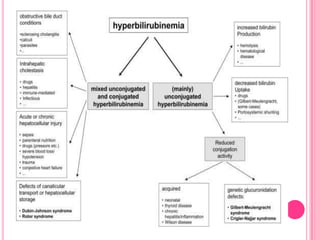
1. Hyperbilirubinemia :Due to the reduced activity of
the enzyme glucuronyltransferase,
which conjugates bilirubin and a few other lipophilic
molecules. Conjugation renders the bilirubin watersoluble, after which it is excreted in bile into
the duodenum.


2. Gilbert's syndrome is caused by a faulty gene - a
mutation of the UDP-glucuronosyltransferase gene.
People inherit the syndrome from a parent. The
bilirubin does not conjugate at the normal rate and
accumulates in the bloodstream. When levels reach
a certain point the patient may have symptoms of
jaundice.
DIAGNOSIS







CBC
The level of total bilirubin is often further increased if the
blood sample is taken after fasting for two days, and a
fast can therefore be useful diagnostically. A further
conceptual step that is rarely necessary or appropriate
is to give a low dose of phenobarbital:[ the bilirubin will
decrease substantially.
There are also tests that detect DNA mutations of
UGT1A1 by polymerase chain reaction or DNA fragment
sequencing.
Lactate dehydrogenase ELEVATED(in pts with
hemolysis ;normal in GS.)
 LFT-Familial increase in serum alkaline
phosphatase level.
 Blood test before and after a meal in which a diet is
presribed on reduced calorie intake for 48 hrs.Gs
pts shows increased level of bilirubin.
 Imaging and biopsy are not needed.

DIFFERENTIAL DIAGNOSIS








While this syndrome is considered harmless, it is
clinically important because it may give rise to a concern
about a blood or liver condition, which could be more
dangerous. However, these conditions have additional
indicators:
Hemolysis can be excluded by a full blood count,
haptoglobin, lactate dehydrogenase levels and the
absence of reticulocytosis (elevated reticulocytes in the
blood would usually be observed in haemolytic
anaemia).
Viral hepatitis can be excluded by negative blood
samples for antigens specific to the different hepatitis
viruses.
Cholestasis can be excluded by the absence of lactate
dehydrogenase, low levels of conjugated bilirubin
and ultrasound scan of the bile ducts.
More severe types of glucuronyl transferase
disorders like Crigler–Najjar syndrome (types I and
II). These are much more severe, with 0–10%
UGT1A1 activity, with sufferers at risk of brain
damage in infancy (type I) and teenage years (type
II).
 Dubin–Johnson syndrome and Rotor syndrome,
which are rarer autosomal recessive disorders that
are characterized by an increase of conjugated
bilirubin.
 In GS, unless another disease of the liver is also
present, the liver enzymes ALAT and ASAT, as well
as albumin, are within normal ranges.

TREATMENT
Usually doesn’t need treatment
 Supportive care.
 Diet:-Normal.

Gilbert syndrome

Gilbert syndrome

  • 1.
  • 2.
    DEFINITION Its also knownas hepatic dysfunction, benign familial icterus, constitutional hepatic dysfunction, unconjugated benign bilirubinemia and familial nonhemolytic jaundice, is a genetic condition. It’s a Autosomal Dominant variant of familial adenomatous polyposis,caused by mutation in APC gene.  It is a mild liver disorder in which bloodstream levels of bilirubin are abnormal. 
  • 4.
    Genetic mutation causesunderactivity of conjugating enzyme system bilirubin-uridine diphosphate glucoronyl transferase(bilirubin UGT).This is the only enzyme that detoxifies bilirubin,a toxic product of natural breakdown of RBC.  Bilirubin UGT responsible for conjugating bilirubin into bilirubin monoglucoronides and diglucuronoids and is located primarily in endoplasmic reticulum.  Bilirubin UGT is one of several UGT enzyme isoform responsible for conjugation ofwide array of substrate that includes carcinogens,drugs,hormones,neurotransmitters.This enzymatic shortage leads to excess of bilirubin in blood serum. 
  • 5.
    Patients with Gilbertsyndrome have mildly elevated levels of bilirubin pigment which can sometimes give them jaundice of the eyes and sometimes the skin. The condition is harmless and patients do not usually need treatment.  The liver does not properly process bilirubin. They do not remove it properly and it builds up.  
  • 6.
    In the UnitedStates approximately 3% to 7% of the population has Gilbert syndrome, according to the National Institutes of Health (NIH).  The National Health Service (NHS) estimates that about 5% of the UK population is affected. It is more common among males than females. 
  • 7.
    Mortality/Morbidity  GS isa benign condition with no associated morbidity or mortality.Although it’s one of most common cause of unconjugated hyperbilirubinemia,not causing harm,there are others to rule out such as Crigler-Najjar Syndrome which is dangerous and inherited from the same gene.  It occurs Most predominantly in Male,  Male :Female 2-7:1 
  • 8.
     According to Medilexicon'smedical dictionary, familial nonhemolytic jaundice, benign familial icterus, constitutional hepatic dysfunction, or Gilbert syndrome is "mild jaundice due to increased amounts of unconjugated bilirubin in the plasma without evidence of liver damage, biliary obstruction, or hemolysis; thought to be due to an inborn error of metabolism in which the excretion of bilirubin by the liver is defective, ascribed to decreased conjugation of bilirubin as a glucuronide or impaired uptake of hepatic bilirubin; autosomal dominant inheritance."
  • 9.
    SYMPTOMS Jaundice - theremay be a yellow tinge to eyes and the skin when bilirubin levels go up too high.  bilirubin levels hardly ever reach dangerous levels, the resulting jaundice can be disturbing.  It has been reported that GS may contribute to an accelerated onset of neonatal jaundice, especially in the presence of increased hemolysis due to diseases like G6PD deficiency. This situation can be especially dangerous if not quickly treated as the high bilirubin causes irreversible neurological disability in the form of kernicterus. 
  • 10.
    Infection  Dehydration  Stress Menstruation  Overdoing things (overexertion)  Fatigue  Loss of appetite  IBS  Difficulty maintaining concentration  Very dark urine  Abdominal discomfort & cramps 
  • 11.
    The enzymes thatare defective in GS (UGT1A1) are also responsible for some of the liver's ability to detoxify certain drugs. For example, Gilbert's syndrome is associated with severe diarrhea andneutropenia in patients who are treated with irinotecan, which is metabolized by UGT1A1.  While paracetamol (acetaminophen or brand names Panadol, Tylenol) is not metabolized by UGT1A1,it is metabolized by one of the other enzymes also deficient in some people with GS.[A subset of people with GS may have an increased risk of paracetamol toxicity. 
  • 12.
    CAUSES  1. Hyperbilirubinemia :Dueto the reduced activity of the enzyme glucuronyltransferase, which conjugates bilirubin and a few other lipophilic molecules. Conjugation renders the bilirubin watersoluble, after which it is excreted in bile into the duodenum.
  • 14.
     2. Gilbert's syndromeis caused by a faulty gene - a mutation of the UDP-glucuronosyltransferase gene. People inherit the syndrome from a parent. The bilirubin does not conjugate at the normal rate and accumulates in the bloodstream. When levels reach a certain point the patient may have symptoms of jaundice.
  • 15.
    DIAGNOSIS     CBC The level oftotal bilirubin is often further increased if the blood sample is taken after fasting for two days, and a fast can therefore be useful diagnostically. A further conceptual step that is rarely necessary or appropriate is to give a low dose of phenobarbital:[ the bilirubin will decrease substantially. There are also tests that detect DNA mutations of UGT1A1 by polymerase chain reaction or DNA fragment sequencing.
  • 16.
    Lactate dehydrogenase ELEVATED(inpts with hemolysis ;normal in GS.)  LFT-Familial increase in serum alkaline phosphatase level.  Blood test before and after a meal in which a diet is presribed on reduced calorie intake for 48 hrs.Gs pts shows increased level of bilirubin.  Imaging and biopsy are not needed. 
  • 17.
    DIFFERENTIAL DIAGNOSIS     While thissyndrome is considered harmless, it is clinically important because it may give rise to a concern about a blood or liver condition, which could be more dangerous. However, these conditions have additional indicators: Hemolysis can be excluded by a full blood count, haptoglobin, lactate dehydrogenase levels and the absence of reticulocytosis (elevated reticulocytes in the blood would usually be observed in haemolytic anaemia). Viral hepatitis can be excluded by negative blood samples for antigens specific to the different hepatitis viruses. Cholestasis can be excluded by the absence of lactate dehydrogenase, low levels of conjugated bilirubin and ultrasound scan of the bile ducts.
  • 18.
    More severe typesof glucuronyl transferase disorders like Crigler–Najjar syndrome (types I and II). These are much more severe, with 0–10% UGT1A1 activity, with sufferers at risk of brain damage in infancy (type I) and teenage years (type II).  Dubin–Johnson syndrome and Rotor syndrome, which are rarer autosomal recessive disorders that are characterized by an increase of conjugated bilirubin.  In GS, unless another disease of the liver is also present, the liver enzymes ALAT and ASAT, as well as albumin, are within normal ranges. 
  • 19.
    TREATMENT Usually doesn’t needtreatment  Supportive care.  Diet:-Normal. 