ABNORMAL LIVER
FUNCTION TESTS
Serina Farzin-Nasab, MD
Emory University
Family Medicine Residency Program
3 Categories:
1- Direct hepatocellular damage (transaminases)
2-Cholestasis ( bilirubin, alkaline phosphates)
3-Liver’s synthetic ability ( albumin, PT)
Transaminitis
Hepatocyte necrosis leads to leakage of enzyme
 Hepatitis
 Toxic injury
 Ischemic injury
 Hep C: liver cell death by apoptosis
(programmed cell death) and by necrosis
 1/3 pt’s with Hep C have persistently normal
serum transaminases
 Levels of aminotransferases can rise in Severe
muscular exertion or other muscle injuries,
polymyositis
 Hypothyroidism
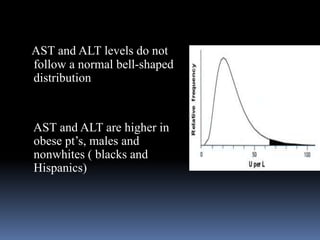
AST and ALT levels do not
follow a normal bell-shaped
distribution
AST and ALT are higher in
obese pt’s, males and
nonwhites ( blacks and
Hispanics)
Causes of Elevated ALT or AST Values in
Asymptomatic Patients
A) Autoimmune hepatitis
B) Hepatitis B
C) Hepatitis C
D) Drugs or toxins
E) Ethanol
F) Fatty liver
G) Growths (tumors)
H) Hemodynamic disorder (congestive heart failure)
I) Iron (hemochromatosis), copper (Wilson's
disease) or alpha1-antitrypsin deficiency
M) Muscle injury
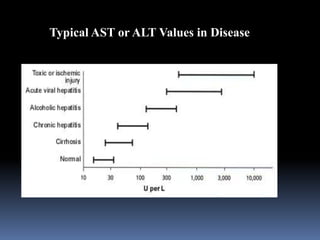
Typical AST or ALT Values in Disease
 Cholestasis reflected in abnormal bilirubin and
AP levels
 In acute bile duct obstruction from a gallstone,
AST and ALT levels often reach 500 U per L or
more in the first hours , whereas AP and GGT
levels can take several days to rise.
MARKERS OF CHOLESTASIS
 Elevation of GGT alone results from enzyme
induction by alcohol or aromatic medicatios
 GGT is elevated in persons who drink 3 or more
per day
Direct/conjugated hyperbilirubinemia
 Conjugated bilirubin levels do not rise until the
liver has lost approximately half of its excretory
ability.
 The presence of conjugated bilirubin in the urine (
urine dipstick), is always indicative of
hepatobiliary disease .
Indirect/uncongealed Hyperbilirubinemia:
Gilbert syndrome
 Common benign inherited disorder
 Levels between 2 and 3 mg/d
 Patients develop detectable jaundice during
acute illness or starvation
Hemolysis
 Confirmed by an elevated retic count & increased
haptoglobin levels.
 In adults, no serious liver disease will
cause elevation of indirect bili alone without a
concurrent rise in direct bili levels.
AP
 Elevated levels are found in adolescents, children
(secondary to bone growth), and pregnant women
 Women with persistently elevated AP levels
primary biliary cirrhosis
 Confirmed by a serum antimitochondrial antibody
test
Hepatic Cause of elevatedAP
Hepatocellular disease (usually <3-fold
increase)
• Alcoholic hepatitis
• Viral hepatitis
• Fatty infiltration of liver
• Cirrhosis
Hepatic Cause of elevatedAP
Obstructive processes (usually >3-fold increase)
 Choledocholithiasis
 Cancer of head of pancreas
 Cholangiocarcinoma
 Cholestatic hepatitis
Hepatic Cause of elevatedAP
Infiltrative, neoplastic, Primary or metastatic
carcinomas (15- to 20-fold increase)
 Primary biliary cirrhosis
 Amyloidosis
 Hepatic congestion caused by heart disease
 Infectious mononucleosis
Hepatic Cause of elevatedAP
Medications:
Captopril
Erythromycin
Gold salts
Phenothiazines
Trimethoprimand-sulfamethoxazole
Anticonvulsants
 Increased synthesis of AP in Diabetes mellitus
 44% of patients with DM have increased AP
Common Non hepatic Causes of
Elevated GGT
 Acetaminophen overdose
 Acute myocardial infarction
 Acute pancreatitis
 Anticonvulsants (phenytoin, phenobarbital,
 carbamazepine)
 Brain tumor
 Diabetes mellitus
 Hyperthyroidism
 Infectious mononucleosis
 Epilepsy
Albumin
 An Index of liver synthetic capacity
 Low albumin level and no other LFT
abnormalities are likely to have a non hepatic
cause
Albumin
Non hepatic causes of low Albumin:
 Inflammatory states such as burns, trauma,
& sepsis
 Active rheumatic disorders
 Severe end-stage malnutrition
 Pregnancy
 Proteinuria
PT
 Does not become abnormal until more than
80%of liver synthetic capacity is lost
 Useful to be followed in acute hepatic failure
(Factor 7 has very short half life)
PT
 Vitamin K deficiency
 Chronic cholestasis or fat malabsorption
 A trial of vitamin K injections ( 5 mg /day SQ x 3
days) practical way to exclude vitamin K
deficiency
 PT should improve within a few days
Ammonia
 Concentrations are much higher in the brain than
in the blood and therefore do not correlate well
 It is not unusual for the blood ammonia to be
normal in a patient who is in a coma from hepatic
encephalopathy.
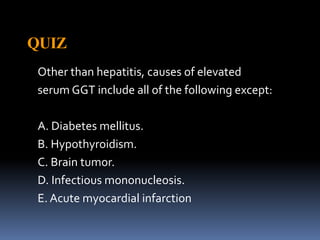
QUIZ
Other than hepatitis, causes of elevated
serum GGT include all of the following except:
A. Diabetes mellitus.
B. Hypothyroidism.
C. Brain tumor.
D. Infectious mononucleosis.
E. Acute myocardial infarction
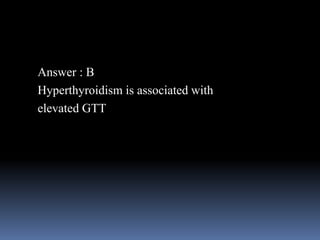
Answer : B
Hyperthyroidism is associated with
elevated GTT
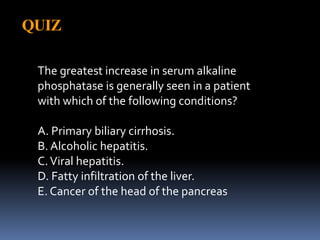
QUIZ
The greatest increase in serum alkaline
phosphatase is generally seen in a patient
with which of the following conditions?
A. Primary biliary cirrhosis.
B. Alcoholic hepatitis.
C.Viral hepatitis.
D. Fatty infiltration of the liver.
E. Cancer of the head of the pancreas
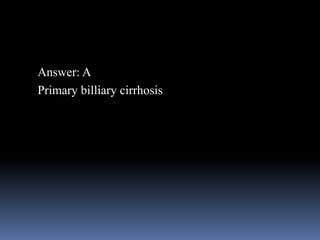
Answer: A
Primary billiary cirrhosis
QUIZ
In patients with viral hepatitis, the serum
AST level is usually higher than the serum
ALT level
A. True.
B. False
False
QUIZ
Normally, most of the total bilirubin is
conjugated.
A. True
B. False
False
70% of total Billi is non conjugated

Abnormal Liver Function Tests.ppt

  • 1.
    ABNORMAL LIVER FUNCTION TESTS SerinaFarzin-Nasab, MD Emory University Family Medicine Residency Program
  • 2.
    3 Categories: 1- Directhepatocellular damage (transaminases) 2-Cholestasis ( bilirubin, alkaline phosphates) 3-Liver’s synthetic ability ( albumin, PT)
  • 3.
    Transaminitis Hepatocyte necrosis leadsto leakage of enzyme  Hepatitis  Toxic injury  Ischemic injury
  • 4.
     Hep C:liver cell death by apoptosis (programmed cell death) and by necrosis  1/3 pt’s with Hep C have persistently normal serum transaminases
  • 5.
     Levels ofaminotransferases can rise in Severe muscular exertion or other muscle injuries, polymyositis  Hypothyroidism
  • 6.
    AST and ALTlevels do not follow a normal bell-shaped distribution AST and ALT are higher in obese pt’s, males and nonwhites ( blacks and Hispanics)
  • 7.
    Causes of ElevatedALT or AST Values in Asymptomatic Patients A) Autoimmune hepatitis B) Hepatitis B C) Hepatitis C D) Drugs or toxins E) Ethanol F) Fatty liver
  • 8.
    G) Growths (tumors) H)Hemodynamic disorder (congestive heart failure) I) Iron (hemochromatosis), copper (Wilson's disease) or alpha1-antitrypsin deficiency M) Muscle injury
  • 9.
    Typical AST orALT Values in Disease
  • 10.
     Cholestasis reflectedin abnormal bilirubin and AP levels  In acute bile duct obstruction from a gallstone, AST and ALT levels often reach 500 U per L or more in the first hours , whereas AP and GGT levels can take several days to rise. MARKERS OF CHOLESTASIS
  • 11.
     Elevation ofGGT alone results from enzyme induction by alcohol or aromatic medicatios  GGT is elevated in persons who drink 3 or more per day
  • 12.
    Direct/conjugated hyperbilirubinemia  Conjugatedbilirubin levels do not rise until the liver has lost approximately half of its excretory ability.  The presence of conjugated bilirubin in the urine ( urine dipstick), is always indicative of hepatobiliary disease .
  • 13.
    Indirect/uncongealed Hyperbilirubinemia: Gilbert syndrome Common benign inherited disorder  Levels between 2 and 3 mg/d  Patients develop detectable jaundice during acute illness or starvation
  • 14.
    Hemolysis  Confirmed byan elevated retic count & increased haptoglobin levels.  In adults, no serious liver disease will cause elevation of indirect bili alone without a concurrent rise in direct bili levels.
  • 15.
    AP  Elevated levelsare found in adolescents, children (secondary to bone growth), and pregnant women  Women with persistently elevated AP levels primary biliary cirrhosis  Confirmed by a serum antimitochondrial antibody test
  • 16.
    Hepatic Cause ofelevatedAP Hepatocellular disease (usually <3-fold increase) • Alcoholic hepatitis • Viral hepatitis • Fatty infiltration of liver • Cirrhosis
  • 17.
    Hepatic Cause ofelevatedAP Obstructive processes (usually >3-fold increase)  Choledocholithiasis  Cancer of head of pancreas  Cholangiocarcinoma  Cholestatic hepatitis
  • 18.
    Hepatic Cause ofelevatedAP Infiltrative, neoplastic, Primary or metastatic carcinomas (15- to 20-fold increase)  Primary biliary cirrhosis  Amyloidosis  Hepatic congestion caused by heart disease  Infectious mononucleosis
  • 19.
    Hepatic Cause ofelevatedAP Medications: Captopril Erythromycin Gold salts Phenothiazines Trimethoprimand-sulfamethoxazole Anticonvulsants
  • 20.
     Increased synthesisof AP in Diabetes mellitus  44% of patients with DM have increased AP
  • 21.
    Common Non hepaticCauses of Elevated GGT  Acetaminophen overdose  Acute myocardial infarction  Acute pancreatitis  Anticonvulsants (phenytoin, phenobarbital,  carbamazepine)
  • 22.
     Brain tumor Diabetes mellitus  Hyperthyroidism  Infectious mononucleosis  Epilepsy
  • 23.
    Albumin  An Indexof liver synthetic capacity  Low albumin level and no other LFT abnormalities are likely to have a non hepatic cause
  • 24.
    Albumin Non hepatic causesof low Albumin:  Inflammatory states such as burns, trauma, & sepsis  Active rheumatic disorders  Severe end-stage malnutrition  Pregnancy  Proteinuria
  • 25.
    PT  Does notbecome abnormal until more than 80%of liver synthetic capacity is lost  Useful to be followed in acute hepatic failure (Factor 7 has very short half life)
  • 26.
    PT  Vitamin Kdeficiency  Chronic cholestasis or fat malabsorption  A trial of vitamin K injections ( 5 mg /day SQ x 3 days) practical way to exclude vitamin K deficiency  PT should improve within a few days
  • 27.
    Ammonia  Concentrations aremuch higher in the brain than in the blood and therefore do not correlate well  It is not unusual for the blood ammonia to be normal in a patient who is in a coma from hepatic encephalopathy.
  • 28.
    QUIZ Other than hepatitis,causes of elevated serum GGT include all of the following except: A. Diabetes mellitus. B. Hypothyroidism. C. Brain tumor. D. Infectious mononucleosis. E. Acute myocardial infarction
  • 29.
    Answer : B Hyperthyroidismis associated with elevated GTT
  • 30.
    QUIZ The greatest increasein serum alkaline phosphatase is generally seen in a patient with which of the following conditions? A. Primary biliary cirrhosis. B. Alcoholic hepatitis. C.Viral hepatitis. D. Fatty infiltration of the liver. E. Cancer of the head of the pancreas
  • 31.
  • 32.
    QUIZ In patients withviral hepatitis, the serum AST level is usually higher than the serum ALT level A. True. B. False
  • 33.
  • 34.
    QUIZ Normally, most ofthe total bilirubin is conjugated. A. True B. False
  • 35.
    False 70% of totalBilli is non conjugated