Passive Voice 
Name: Nuria Gil Rodríguez
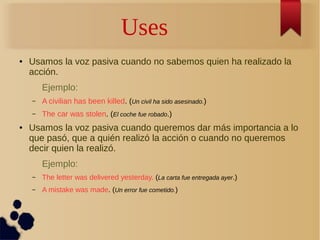
Uses 
● Usamos la voz pasiva cuando no sabemos quien ha realizado la 
acción. 
Ejemplo: 
– A civilian has been killed. (Un civil ha sido asesinado.) 
– The car was stolen. (El coche fue robado.) 
● Usamos la voz pasiva cuando queremos dar más importancia a lo 
que pasó, que a quién realizó la acción o cuando no queremos 
decir quien la realizó. 
Ejemplo: 
– The letter was delivered yesterday. (La carta fue entregada ayer.) 
– A mistake was made. (Un error fue cometido.)
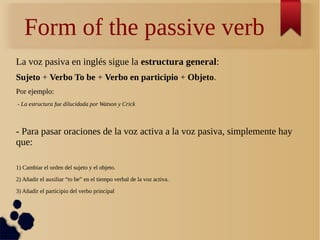
Form of the passive verb 
La voz pasiva en inglés sigue la estructura general: 
Sujeto + Verbo To be + Verbo en participio + Objeto. 
Por ejemplo: 
- La estructura fue dilucidada por Watson y Crick 
- Para pasar oraciones de la voz activa a la voz pasiva, simplemente hay 
que: 
1) Cambiar el orden del sujeto y el objeto. 
2) Añadir el auxiliar “to be” en el tiempo verbal de la voz activa. 
3) Añadir el participio del verbo principal
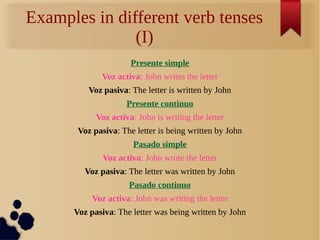
Examples in different verb tenses 
(I) 
Presente simple 
Voz activa: John writes the letter 
Voz pasiva: The letter is written by John 
Presente continuo 
Voz activa: John is writing the letter 
Voz pasiva: The letter is being written by John 
Pasado simple 
Voz activa: John wrote the letter 
Voz pasiva: The letter was written by John 
Pasado continuo 
Voz activa: John was writing the letter 
Voz pasiva: The letter was being written by John
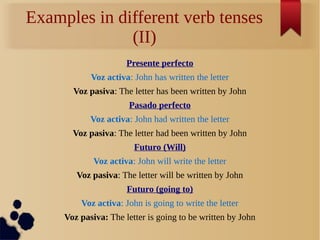
Examples in different verb tenses 
(II) 
Presente perfecto 
Voz activa: John has written the letter 
Voz pasiva: The letter has been written by John 
Pasado perfecto 
Voz activa: John had written the letter 
Voz pasiva: The letter had been written by John 
Futuro (Will) 
Voz activa: John will write the letter 
Voz pasiva: The letter will be written by John 
Futuro (going to) 
Voz activa: John is going to write the letter 
Voz pasiva: The letter is going to be written by John
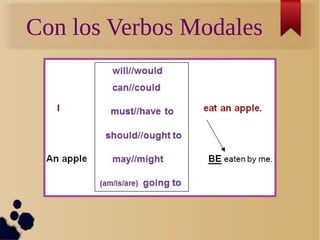
Con los Verbos Modales
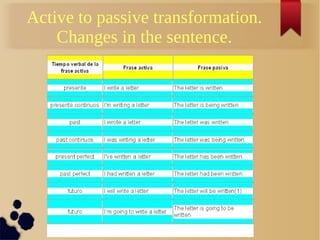
Active to passive transformation. 
Changes in the sentence.
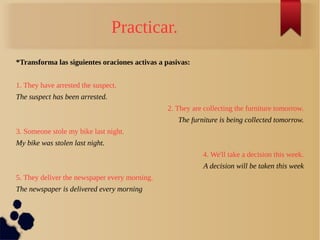
Practicar. 
*Transforma las siguientes oraciones activas a pasivas: 
1. They have arrested the suspect. 
The suspect has been arrested. 
2. They are collecting the furniture tomorrow. 
The furniture is being collected tomorrow. 
3. Someone stole my bike last night. 
My bike was stolen last night. 
4. We'll take a decision this week. 
A decision will be taken this week 
5. They deliver the newspaper every morning. 
The newspaper is delivered every morning

Gil Rodriguez Nuria_Presentacion_Actividad7

  • 1.
    Passive Voice Name:Nuria Gil Rodríguez
  • 2.
    Uses ● Usamosla voz pasiva cuando no sabemos quien ha realizado la acción. Ejemplo: – A civilian has been killed. (Un civil ha sido asesinado.) – The car was stolen. (El coche fue robado.) ● Usamos la voz pasiva cuando queremos dar más importancia a lo que pasó, que a quién realizó la acción o cuando no queremos decir quien la realizó. Ejemplo: – The letter was delivered yesterday. (La carta fue entregada ayer.) – A mistake was made. (Un error fue cometido.)
  • 3.
    Form of thepassive verb La voz pasiva en inglés sigue la estructura general: Sujeto + Verbo To be + Verbo en participio + Objeto. Por ejemplo: - La estructura fue dilucidada por Watson y Crick - Para pasar oraciones de la voz activa a la voz pasiva, simplemente hay que: 1) Cambiar el orden del sujeto y el objeto. 2) Añadir el auxiliar “to be” en el tiempo verbal de la voz activa. 3) Añadir el participio del verbo principal
  • 4.
    Examples in differentverb tenses (I) Presente simple Voz activa: John writes the letter Voz pasiva: The letter is written by John Presente continuo Voz activa: John is writing the letter Voz pasiva: The letter is being written by John Pasado simple Voz activa: John wrote the letter Voz pasiva: The letter was written by John Pasado continuo Voz activa: John was writing the letter Voz pasiva: The letter was being written by John
  • 5.
    Examples in differentverb tenses (II) Presente perfecto Voz activa: John has written the letter Voz pasiva: The letter has been written by John Pasado perfecto Voz activa: John had written the letter Voz pasiva: The letter had been written by John Futuro (Will) Voz activa: John will write the letter Voz pasiva: The letter will be written by John Futuro (going to) Voz activa: John is going to write the letter Voz pasiva: The letter is going to be written by John
  • 6.
  • 7.
    Active to passivetransformation. Changes in the sentence.
  • 8.
    Practicar. *Transforma lassiguientes oraciones activas a pasivas: 1. They have arrested the suspect. The suspect has been arrested. 2. They are collecting the furniture tomorrow. The furniture is being collected tomorrow. 3. Someone stole my bike last night. My bike was stolen last night. 4. We'll take a decision this week. A decision will be taken this week 5. They deliver the newspaper every morning. The newspaper is delivered every morning