Prepared by Jason WongPrepared by Jason Wong
Relative ClauseRelative Clause
(Revision)(Revision)
Relative ClauseRelative Clause
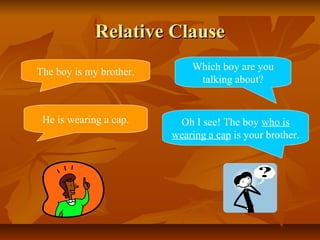
The boy is my brother. Which boy are you
talking about?
He is wearing a cap. Oh I see! The boy who is
wearing a cap is your brother.
Relative ClauseRelative Clause
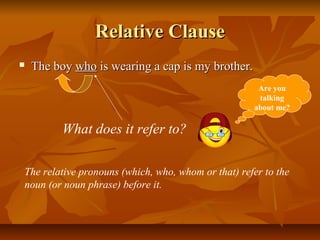
 The boyThe boy whowho is wearing a cap is my brother.is wearing a cap is my brother.
What does it refer to?
The relative pronouns (which, who, whom or that) refer to the
noun (or noun phrase) before it.
Are you
talking
about me?
Relative ClauseRelative Clause
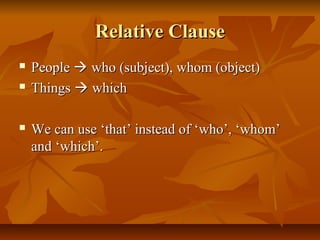
 PeoplePeople  who (subject), whom (object)who (subject), whom (object)
 ThingsThings  whichwhich
 We can use ‘that’ instead of ‘who’, ‘whom’We can use ‘that’ instead of ‘who’, ‘whom’
and ‘which’.and ‘which’.
Relative ClauseRelative Clause
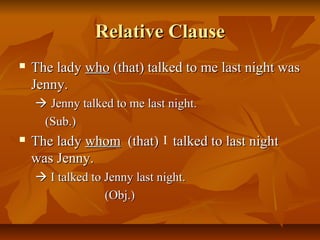
 The ladyThe lady whowho (that) talked to me last night was(that) talked to me last night was
Jenny.Jenny.
 Jenny talked to me last night.Jenny talked to me last night.
(Sub.)(Sub.)
 The ladyThe lady whomwhom (that) talked to last night(that) talked to last night
was Jenny.was Jenny.
 I talked to Jenny last night.I talked to Jenny last night.
(Obj.)(Obj.)
I
Relative ClauseRelative Clause
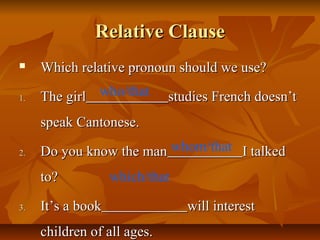
 Which relative pronoun should we use?Which relative pronoun should we use?
1.1. The girlThe girl studies French doesn’tstudies French doesn’t
speak Cantonese.speak Cantonese.
2.2. Do you know the manDo you know the man I talkedI talked
to?to?
3.3. It’s a bookIt’s a book will interestwill interest
children of all ages.children of all ages.
who/that
whom/that
which/that
Relative ClauseRelative Clause
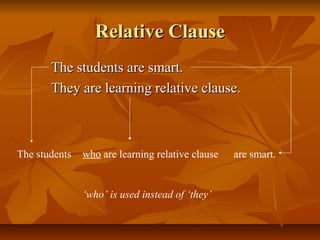
The students are smart.The students are smart.
They are learning relative clause.They are learning relative clause.
The students are smart.who are learning relative clause
‘who’ is used instead of ‘they’
Relative ClauseRelative Clause
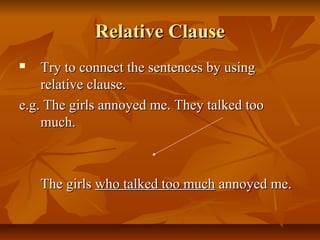
 Try to connect the sentences by usingTry to connect the sentences by using
relative clause.relative clause.
e.g. The girls annoyed me. They talked tooe.g. The girls annoyed me. They talked too
much.much.
The girlsThe girls who talked too muchwho talked too much annoyed me.annoyed me.
Relative ClauseRelative Clause
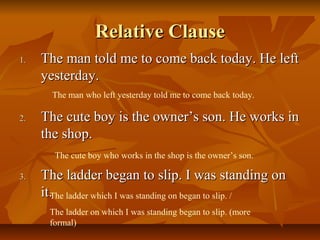
1.1. The man told me to come back today. He leftThe man told me to come back today. He left
yesterday.yesterday.
2.2. The cute boy is the owner’s son. He works inThe cute boy is the owner’s son. He works in
the shop.the shop.
3.3. The ladder began to slip. I was standing onThe ladder began to slip. I was standing on
it.it.
The man who left yesterday told me to come back today.
The cute boy who works in the shop is the owner’s son.
The ladder which I was standing on began to slip. /
The ladder on which I was standing began to slip. (more
formal)
Relative ClauseRelative Clause
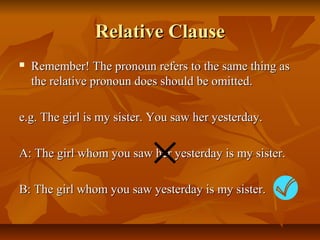
 Remember! The pronoun refers to the same thing asRemember! The pronoun refers to the same thing as
the relative pronoun does should be omitted.the relative pronoun does should be omitted.
e.g. The girl is my sister. You saw her yesterday.e.g. The girl is my sister. You saw her yesterday.
A: The girl whom you saw her yesterday is my sister.A: The girl whom you saw her yesterday is my sister.
B: The girl whom you saw yesterday is my sister.B: The girl whom you saw yesterday is my sister.
Exercise TimeExercise Time
ExerciseExercise
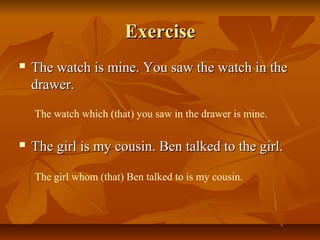
 The watch is mine. You saw the watch in theThe watch is mine. You saw the watch in the
drawer.drawer.
 The girl is my cousin. Ben talked to the girl.The girl is my cousin. Ben talked to the girl.
The watch which (that) you saw in the drawer is mine.
The girl whom (that) Ben talked to is my cousin.
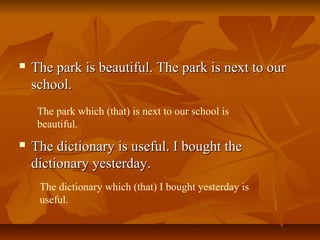
 The park is beautiful. The park is next to ourThe park is beautiful. The park is next to our
school.school.
 The dictionary is useful. I bought theThe dictionary is useful. I bought the
dictionary yesterday.dictionary yesterday.
The park which (that) is next to our school is
beautiful.
The dictionary which (that) I bought yesterday is
useful.
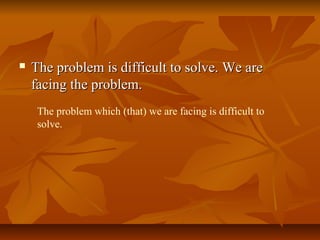
 The problem is difficult to solve. We areThe problem is difficult to solve. We are
facing the problem.facing the problem.
The problem which (that) we are facing is difficult to
solve.
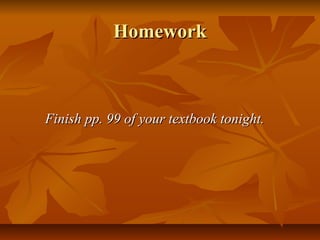
HomeworkHomework
Finish pp. 99 of your textbook tonight.Finish pp. 99 of your textbook tonight.

Relative clause

  • 1.
    Prepared by JasonWongPrepared by Jason Wong Relative ClauseRelative Clause (Revision)(Revision)
  • 2.
    Relative ClauseRelative Clause Theboy is my brother. Which boy are you talking about? He is wearing a cap. Oh I see! The boy who is wearing a cap is your brother.
  • 3.
    Relative ClauseRelative Clause The boyThe boy whowho is wearing a cap is my brother.is wearing a cap is my brother. What does it refer to? The relative pronouns (which, who, whom or that) refer to the noun (or noun phrase) before it. Are you talking about me?
  • 4.
    Relative ClauseRelative Clause PeoplePeople  who (subject), whom (object)who (subject), whom (object)  ThingsThings  whichwhich  We can use ‘that’ instead of ‘who’, ‘whom’We can use ‘that’ instead of ‘who’, ‘whom’ and ‘which’.and ‘which’.
  • 5.
    Relative ClauseRelative Clause The ladyThe lady whowho (that) talked to me last night was(that) talked to me last night was Jenny.Jenny.  Jenny talked to me last night.Jenny talked to me last night. (Sub.)(Sub.)  The ladyThe lady whomwhom (that) talked to last night(that) talked to last night was Jenny.was Jenny.  I talked to Jenny last night.I talked to Jenny last night. (Obj.)(Obj.) I
  • 6.
    Relative ClauseRelative Clause Which relative pronoun should we use?Which relative pronoun should we use? 1.1. The girlThe girl studies French doesn’tstudies French doesn’t speak Cantonese.speak Cantonese. 2.2. Do you know the manDo you know the man I talkedI talked to?to? 3.3. It’s a bookIt’s a book will interestwill interest children of all ages.children of all ages. who/that whom/that which/that
  • 7.
    Relative ClauseRelative Clause Thestudents are smart.The students are smart. They are learning relative clause.They are learning relative clause. The students are smart.who are learning relative clause ‘who’ is used instead of ‘they’
  • 8.
    Relative ClauseRelative Clause Try to connect the sentences by usingTry to connect the sentences by using relative clause.relative clause. e.g. The girls annoyed me. They talked tooe.g. The girls annoyed me. They talked too much.much. The girlsThe girls who talked too muchwho talked too much annoyed me.annoyed me.
  • 9.
    Relative ClauseRelative Clause 1.1.The man told me to come back today. He leftThe man told me to come back today. He left yesterday.yesterday. 2.2. The cute boy is the owner’s son. He works inThe cute boy is the owner’s son. He works in the shop.the shop. 3.3. The ladder began to slip. I was standing onThe ladder began to slip. I was standing on it.it. The man who left yesterday told me to come back today. The cute boy who works in the shop is the owner’s son. The ladder which I was standing on began to slip. / The ladder on which I was standing began to slip. (more formal)
  • 10.
    Relative ClauseRelative Clause Remember! The pronoun refers to the same thing asRemember! The pronoun refers to the same thing as the relative pronoun does should be omitted.the relative pronoun does should be omitted. e.g. The girl is my sister. You saw her yesterday.e.g. The girl is my sister. You saw her yesterday. A: The girl whom you saw her yesterday is my sister.A: The girl whom you saw her yesterday is my sister. B: The girl whom you saw yesterday is my sister.B: The girl whom you saw yesterday is my sister.
  • 11.
  • 12.
    ExerciseExercise  The watchis mine. You saw the watch in theThe watch is mine. You saw the watch in the drawer.drawer.  The girl is my cousin. Ben talked to the girl.The girl is my cousin. Ben talked to the girl. The watch which (that) you saw in the drawer is mine. The girl whom (that) Ben talked to is my cousin.
  • 13.
     The parkis beautiful. The park is next to ourThe park is beautiful. The park is next to our school.school.  The dictionary is useful. I bought theThe dictionary is useful. I bought the dictionary yesterday.dictionary yesterday. The park which (that) is next to our school is beautiful. The dictionary which (that) I bought yesterday is useful.
  • 14.
     The problemis difficult to solve. We areThe problem is difficult to solve. We are facing the problem.facing the problem. The problem which (that) we are facing is difficult to solve.
  • 15.
    HomeworkHomework Finish pp. 99of your textbook tonight.Finish pp. 99 of your textbook tonight.