WELCOME DELHI IT PROShttp://groups.msn.com/itdelhiug
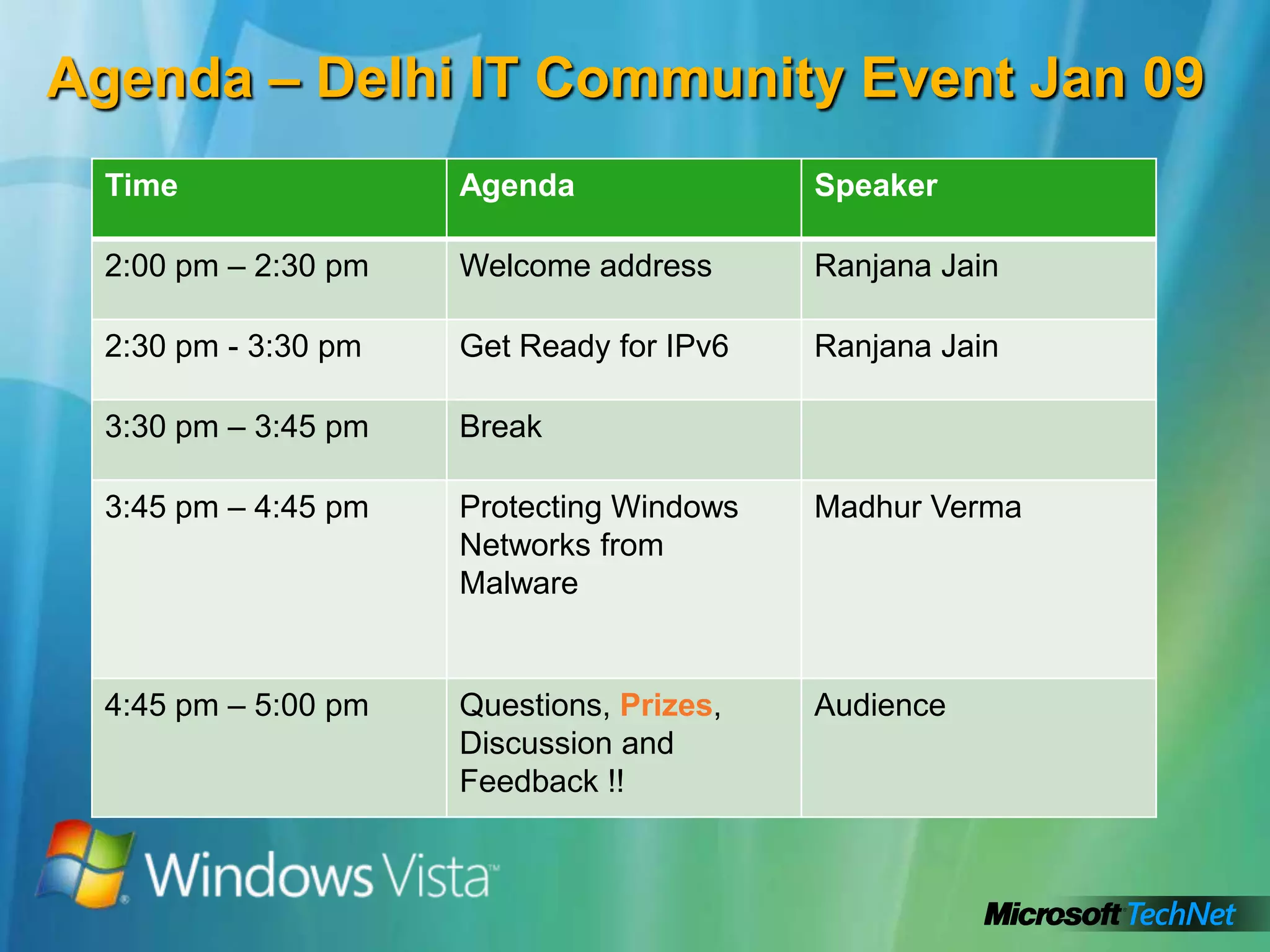
Agenda – Delhi IT Community Event Jan 09
Get Ready for IPv6?Ranjana JainIT Pro EvangelistMicrosoft IndiaMCSE, MCT, RHCE, CISSP, CIW Security AnalystBlog: http://ranjanajain.spaces.live.com
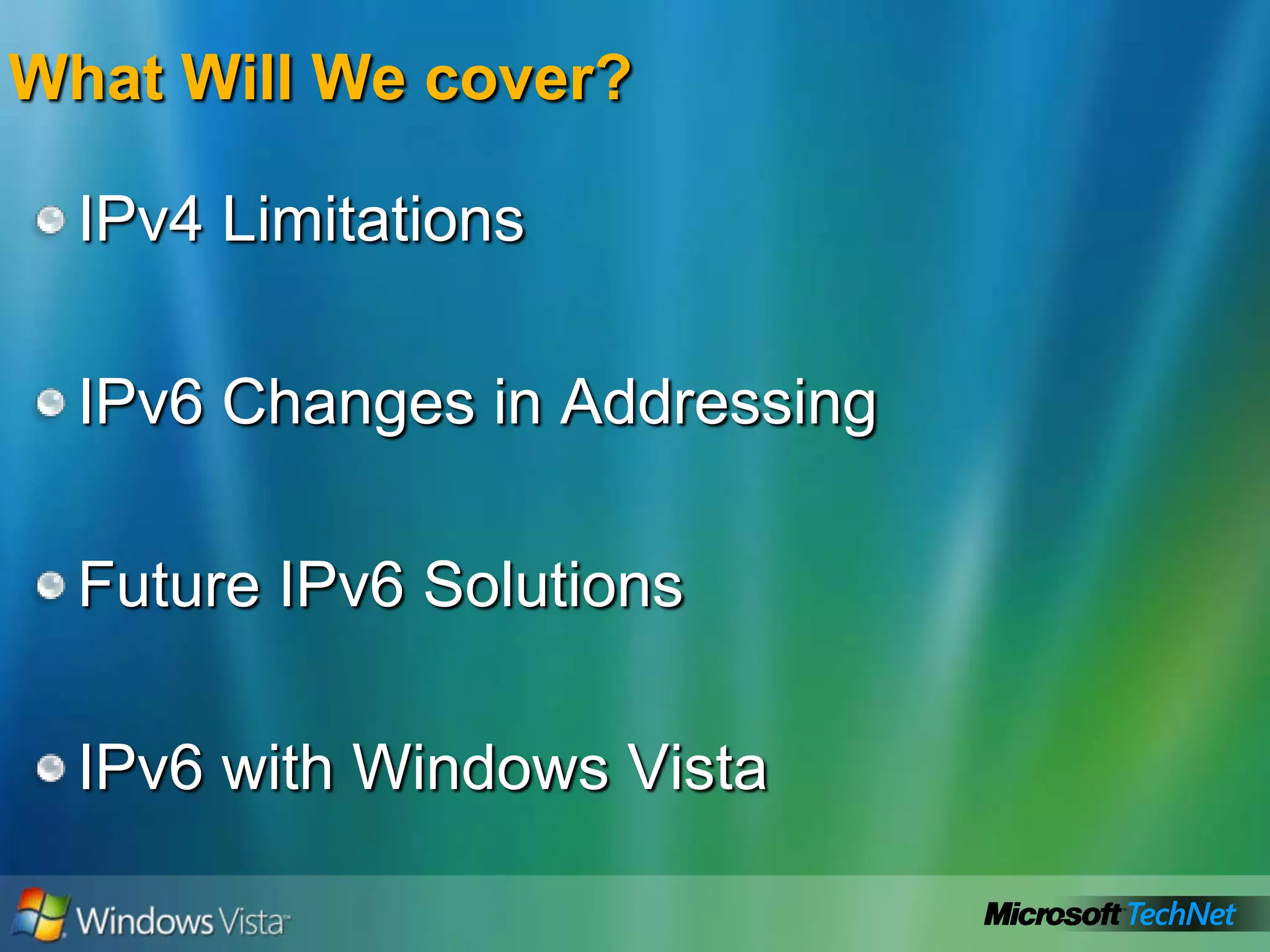
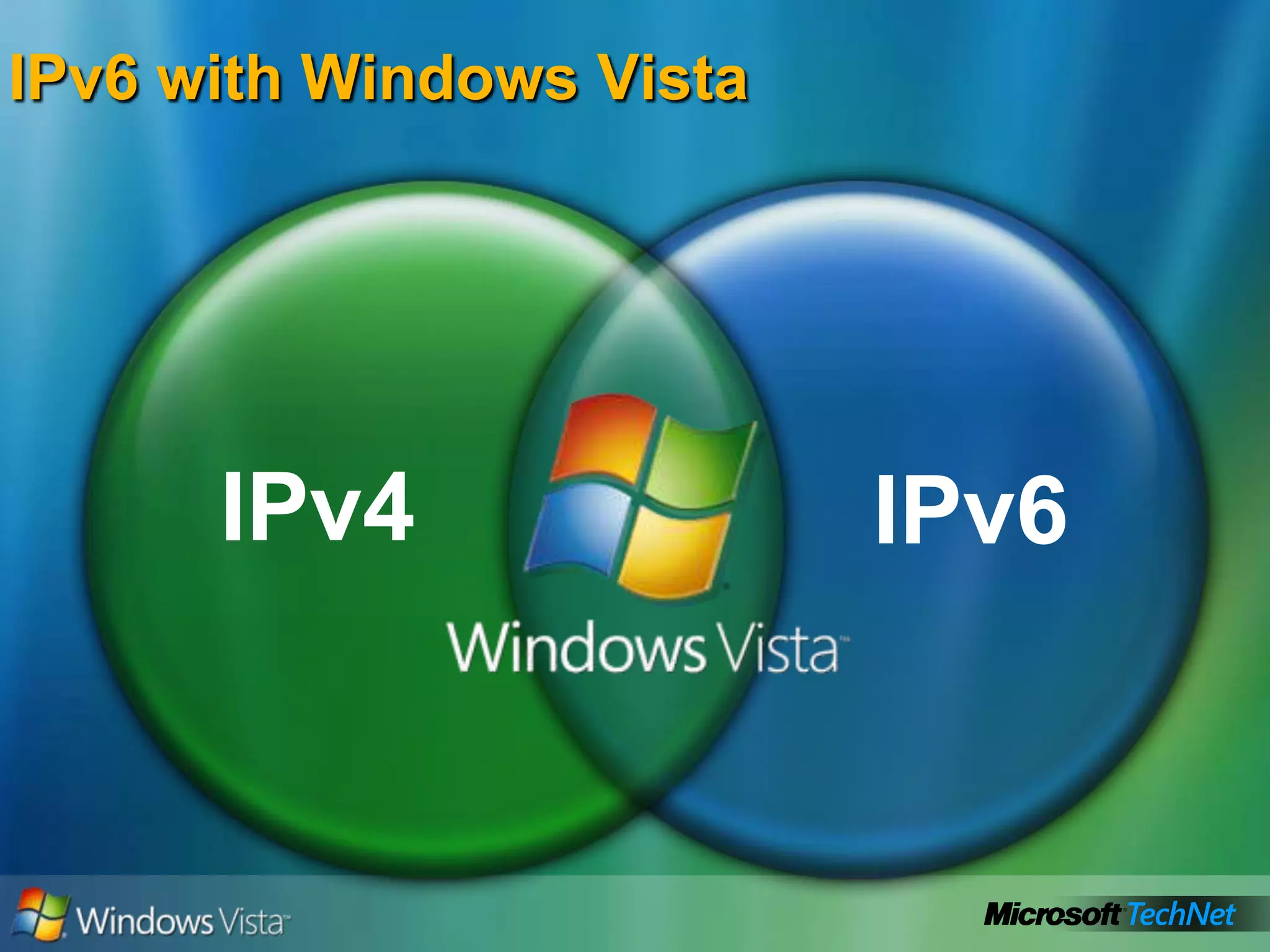
IPv4 LimitationsIPv6 Changes in AddressingFuture IPv6 SolutionsIPv6 with Windows VistaWhat Will We cover?
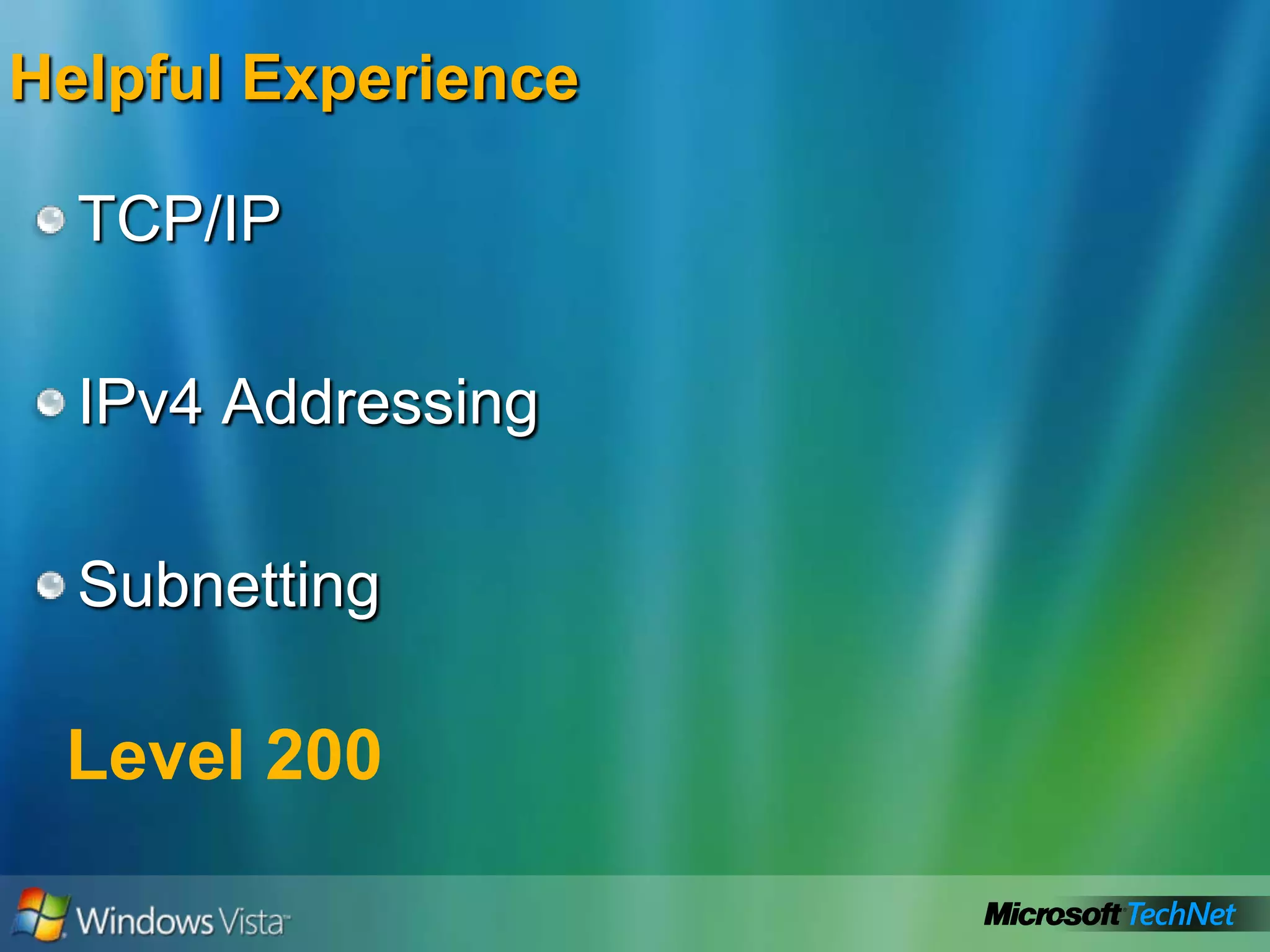
TCP/IPIPv4 AddressingSubnettingLevel 200Helpful Experience
Introducing IPv6Addressing with IPv6Transitioning to IPv6Exploring IPv6 ScenariosAgenda
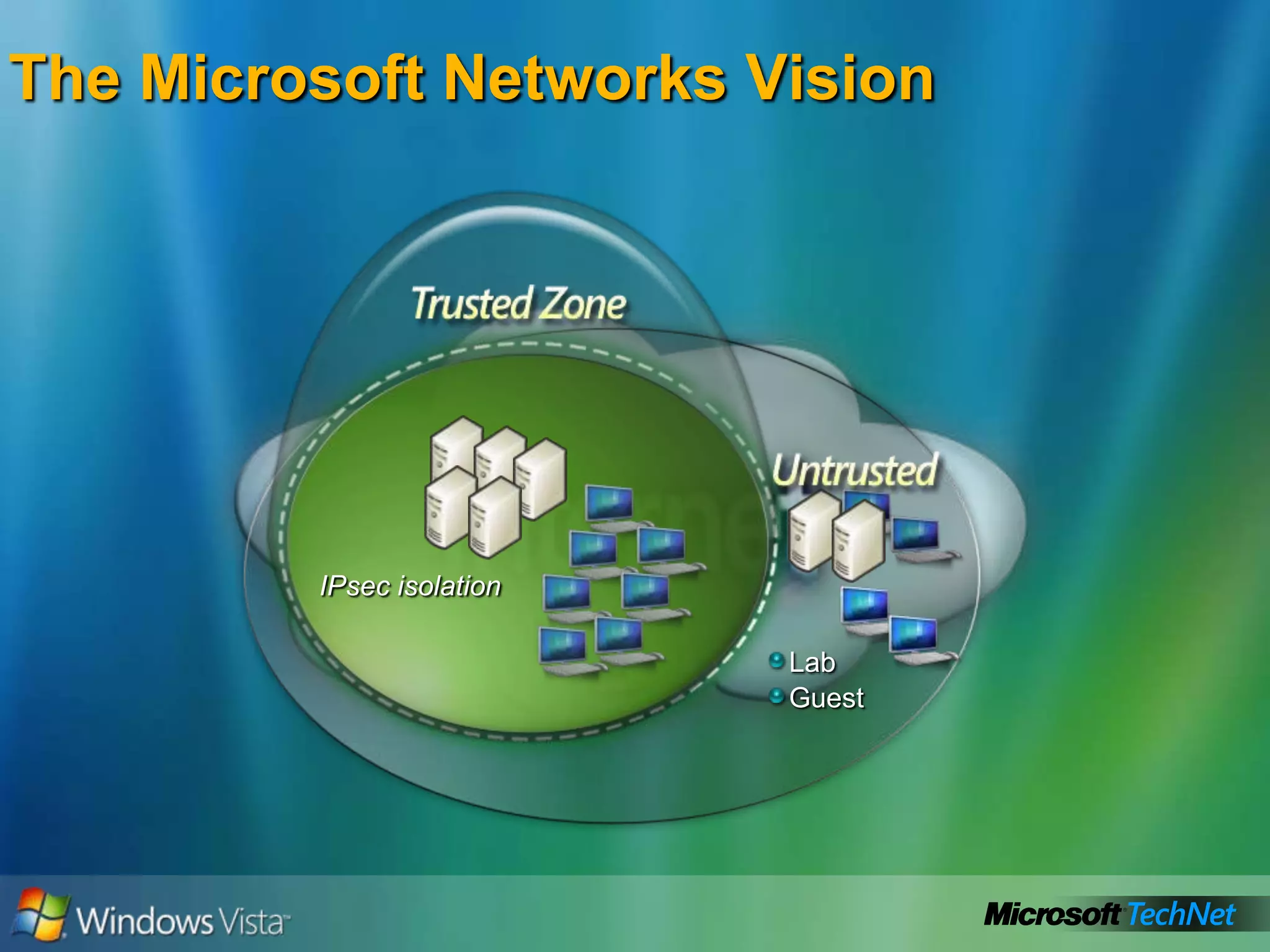
The Microsoft Networks VisionIPsec isolationLabGuest
The Microsoft Networks Vision - NotesIPsec isolationLabGuest

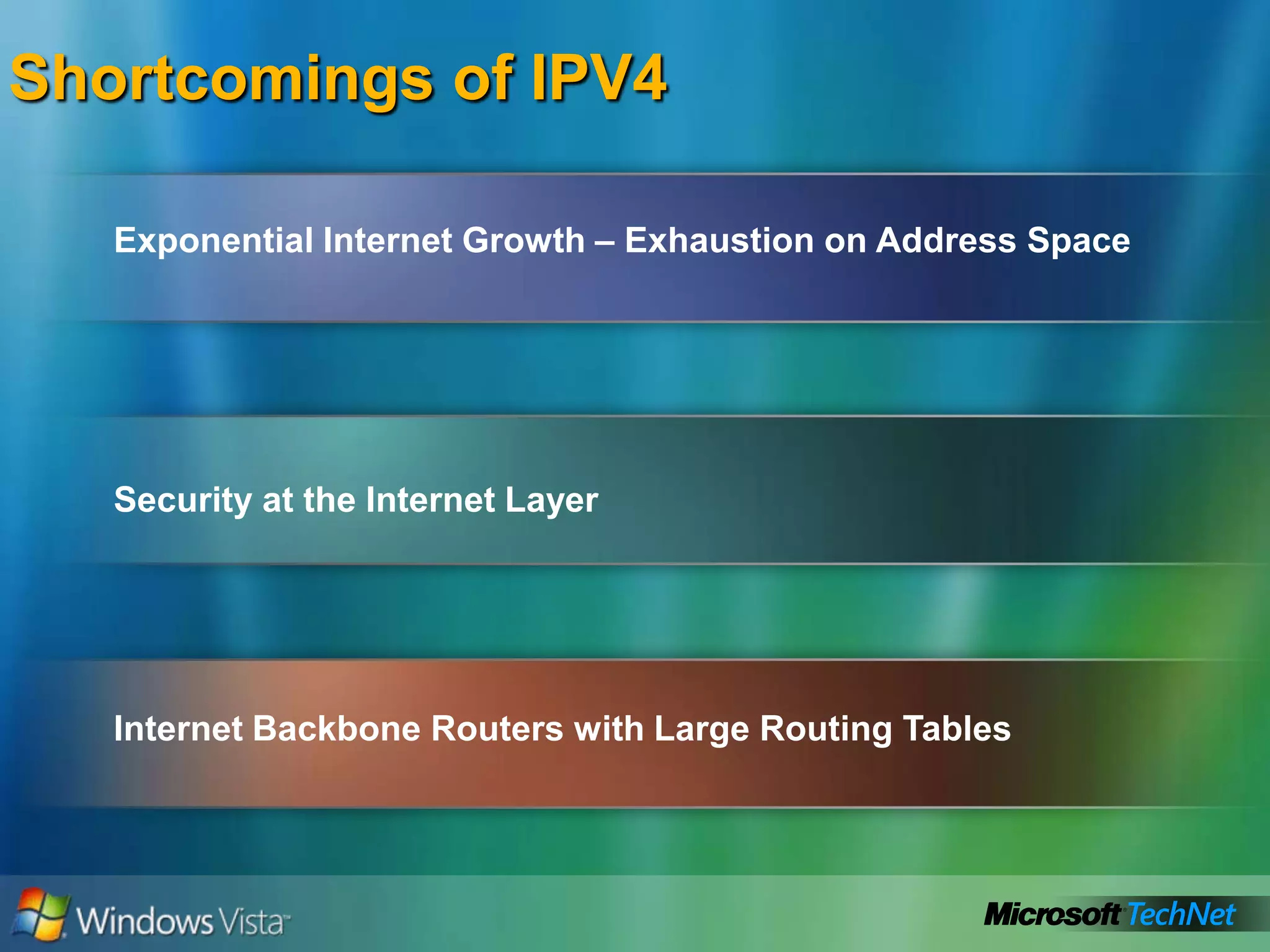
Shortcomings of IPV4Exponential Internet Growth – Exhaustion on Address SpaceSecurity at the Internet LayerInternet Backbone Routers with Large Routing Tables
Shortcomings of IPV4 - NotesExponential Internet Growth – Exhaustion on Address SpaceSecurity at the Internet LayerInternet Backbone Routers with Large Routing Tables
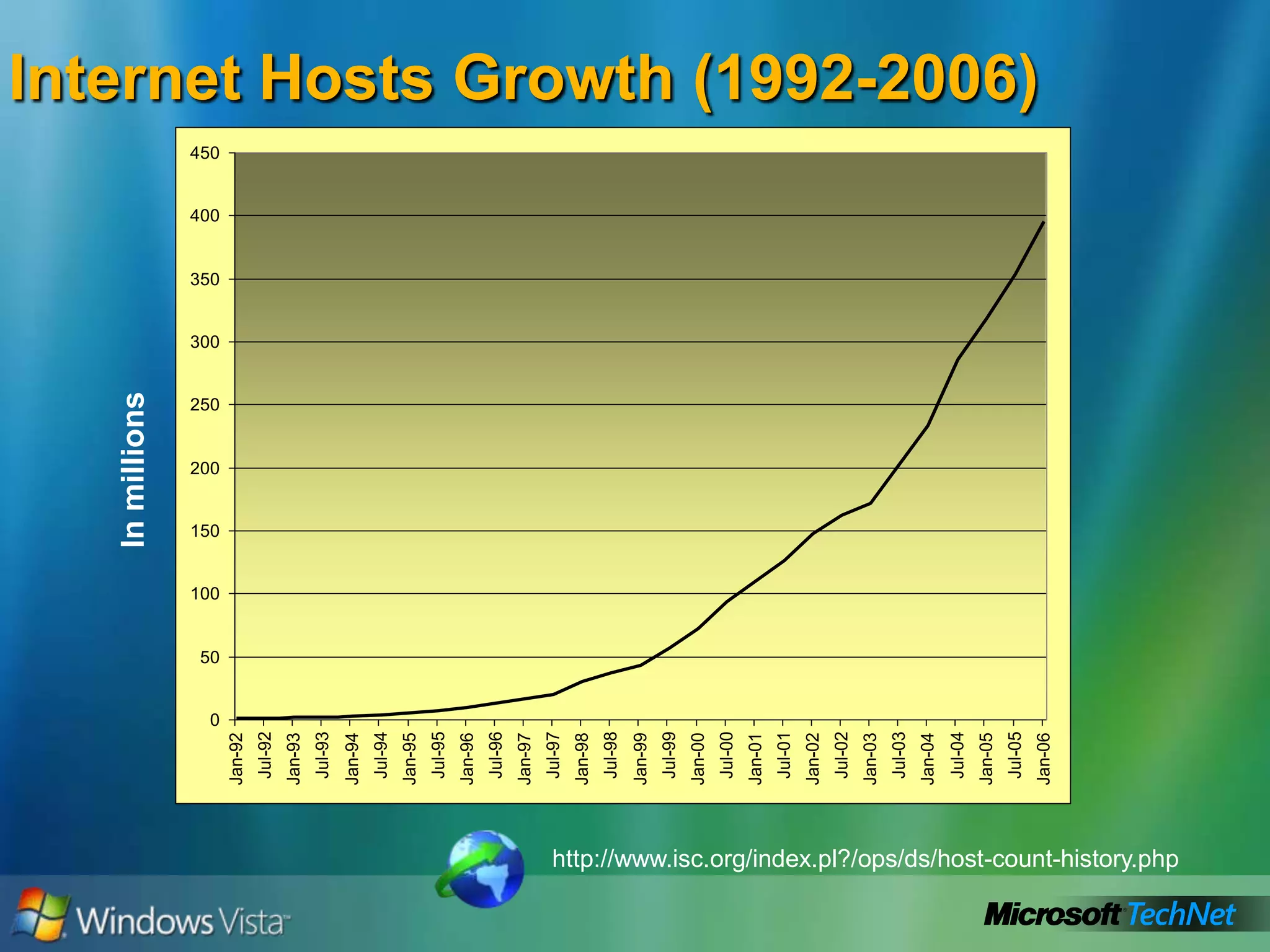
Internet Hosts Growth (1992-2006)In millionshttp://www.isc.org/index.pl?/ops/ds/host-count-history.php
IPv6 as a Global Solution
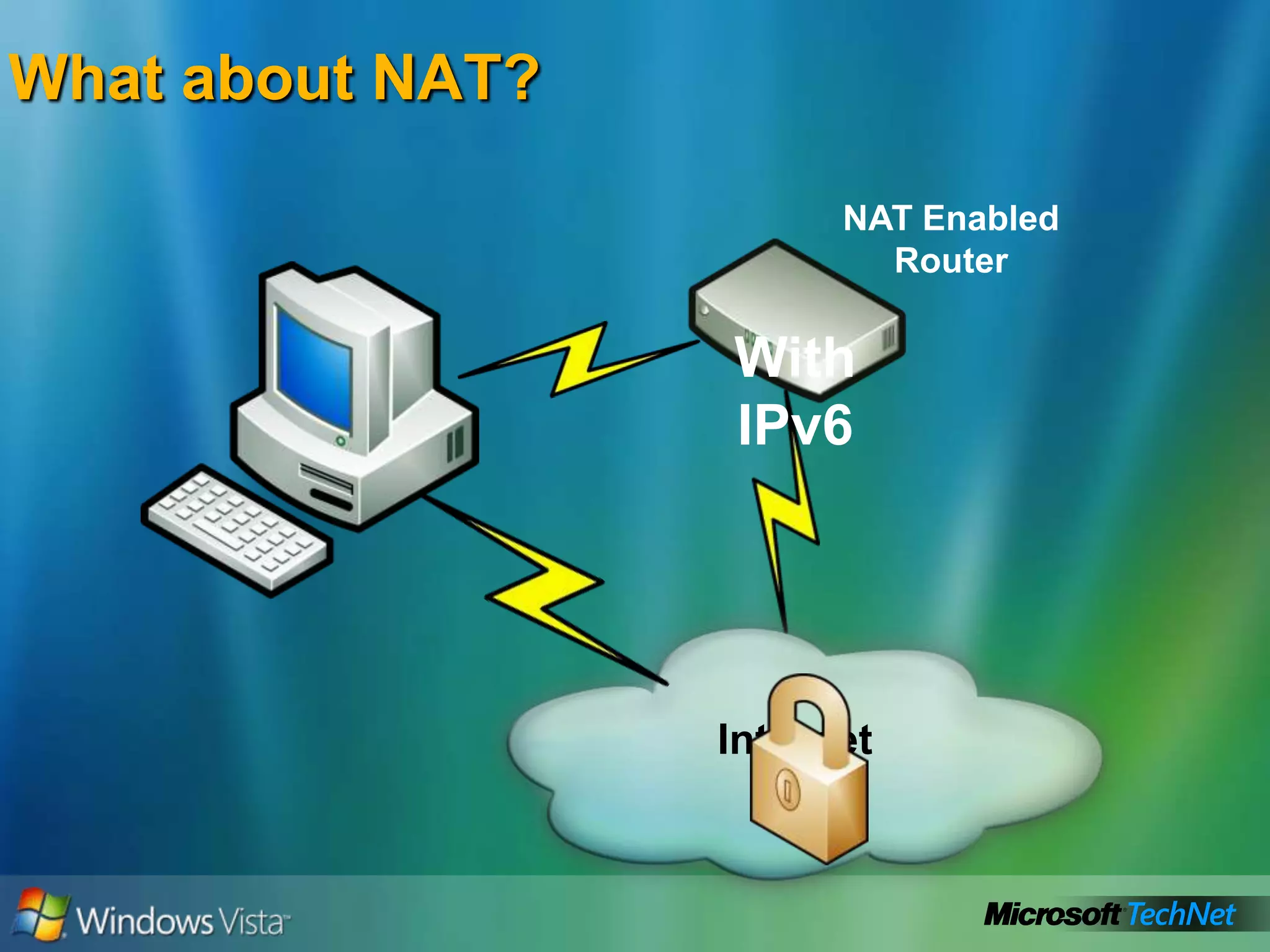
What about NAT?NAT Enabled RouterInternetWith IPv6
Introducing IPv6Addressing with IPv6Transitioning to IPv6Exploring IPv6 ScenariosAgenda
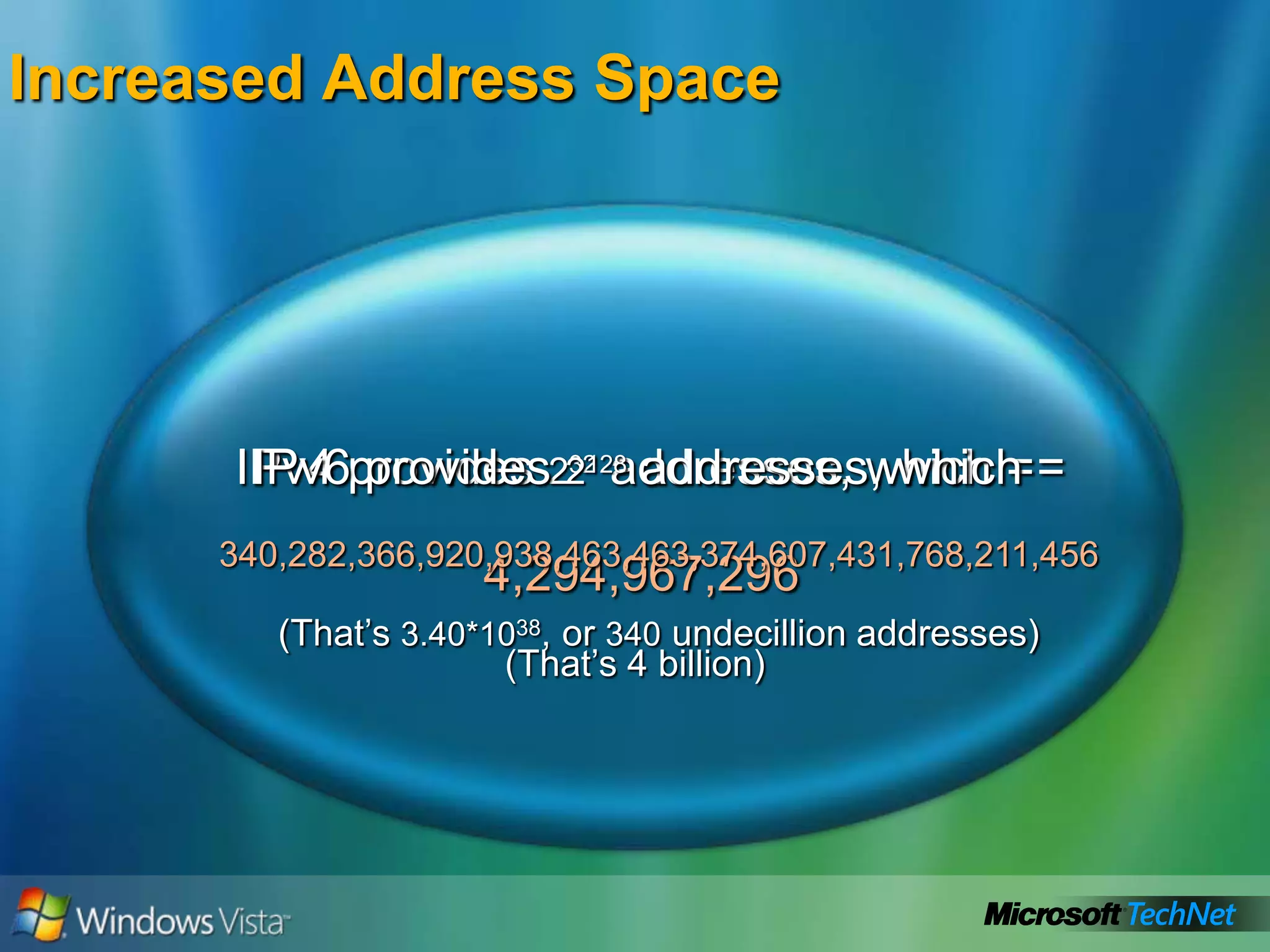
Increased Address SpaceIPv4 provides 232 addresses, which =4,294,967,296(That’s 4 billion)IPv6 provides 2128 addresses, which = 340,282,366,920,938,463,463,374,607,431,768,211,456(That’s 3.40*1038, or 340 undecillion addresses)
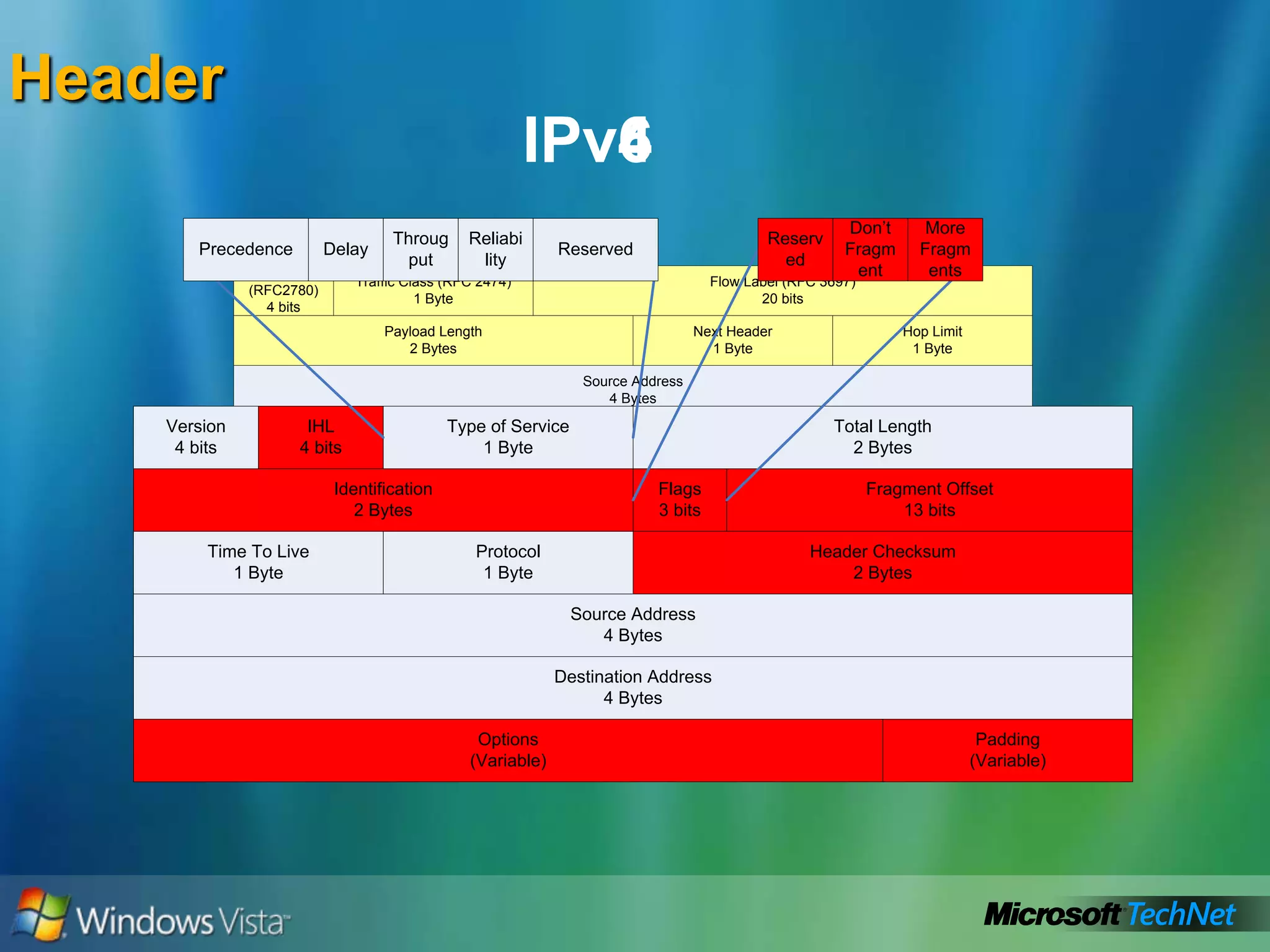
HeaderIPv4IPv6
Header - NotesIPv4IPv6
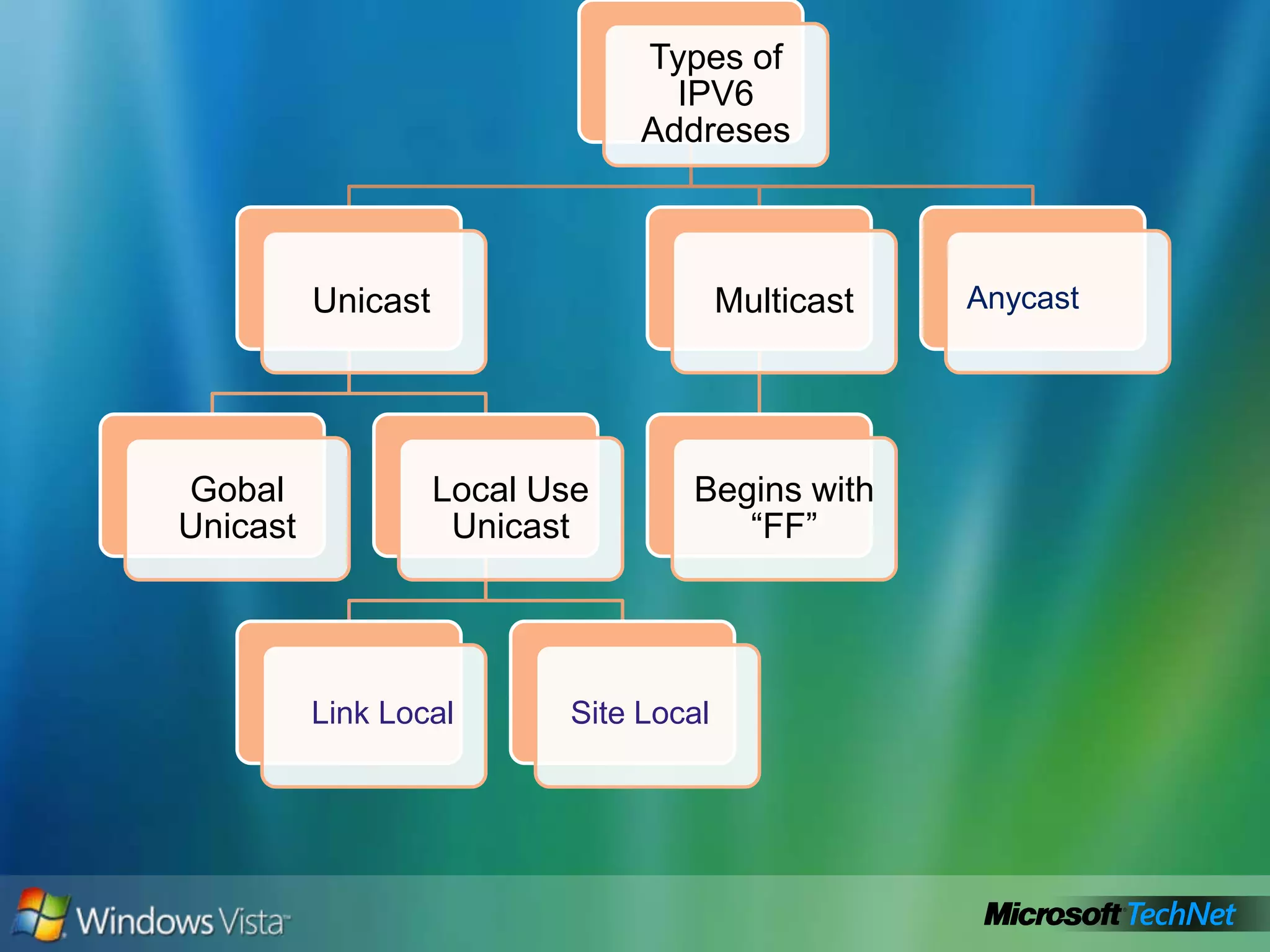
AnycastLink LocalSite Local
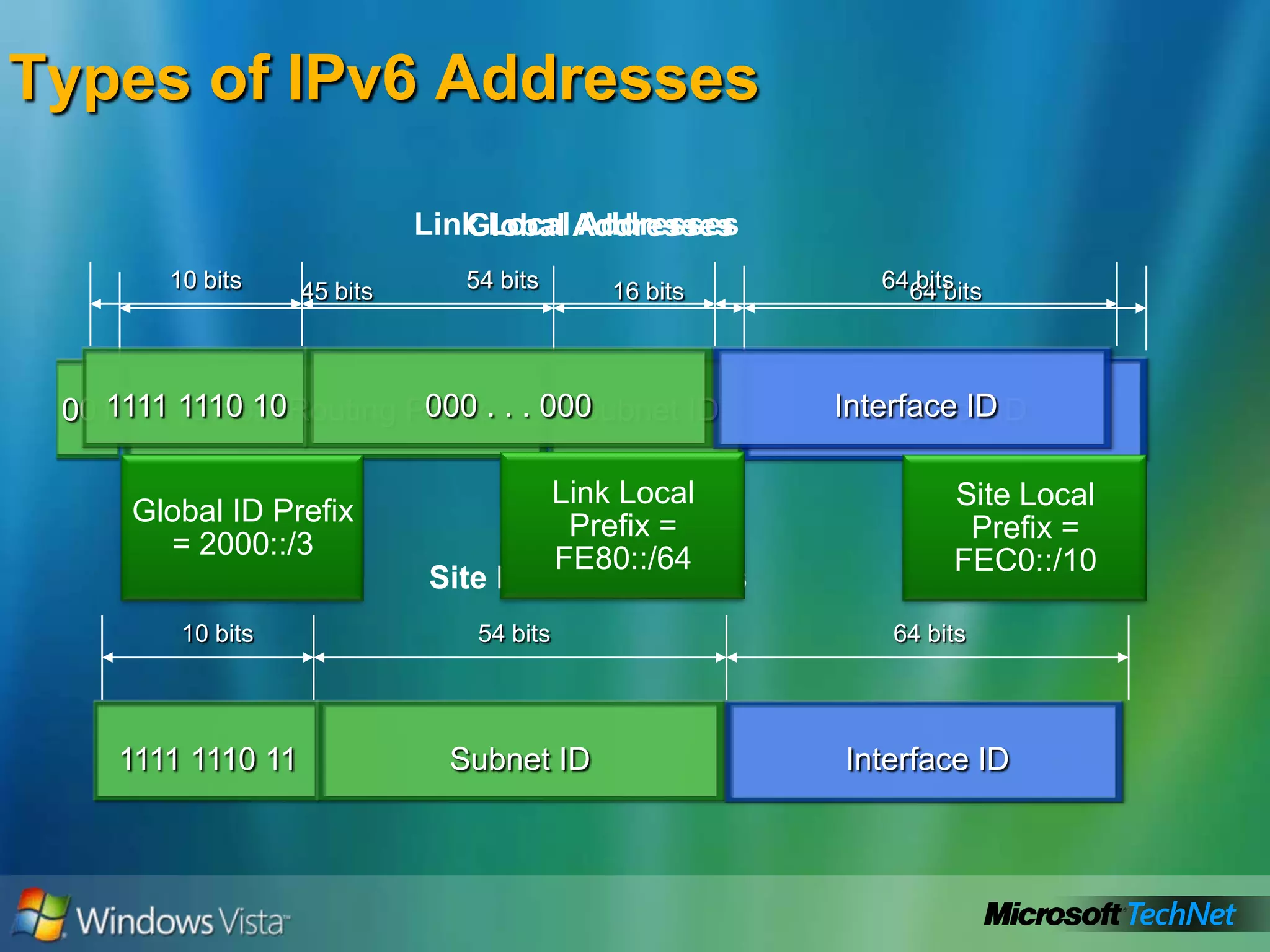
Types of IPv6 AddressesLink Local AddressesSite Local Addresses10 bits64 bits54 bits10 bits64 bits54 bitsGlobal Addresses1111 1110 10Interface ID000 . . . 0001111 1110 11Interface IDSubnet ID64 bits45 bits16 bitsInterface IDSubnet ID001Global Routing Prefix
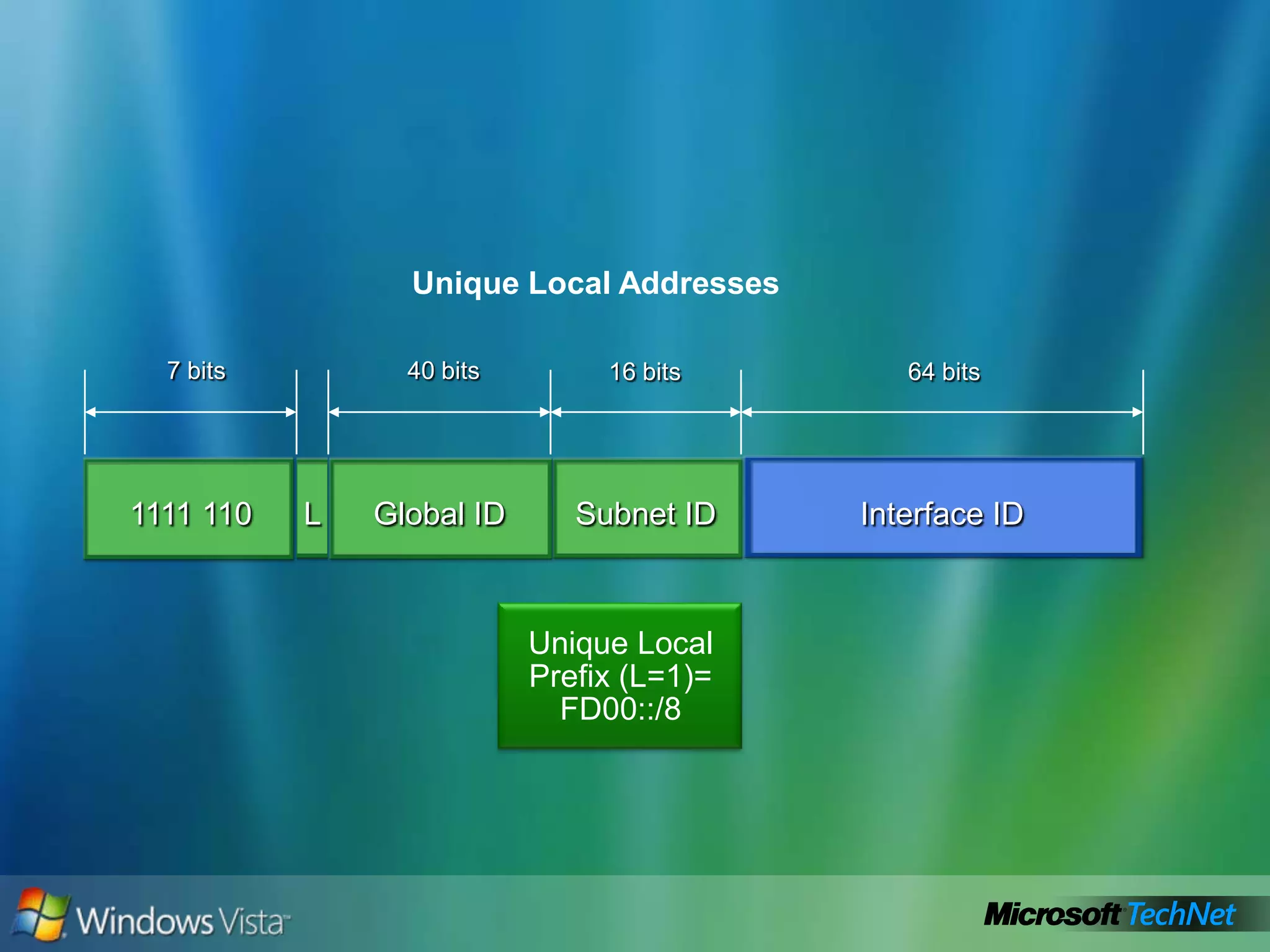
Unique Local Addresses7 bits40 bits64 bits16 bits1111 110Interface IDGlobal IDSubnet IDL
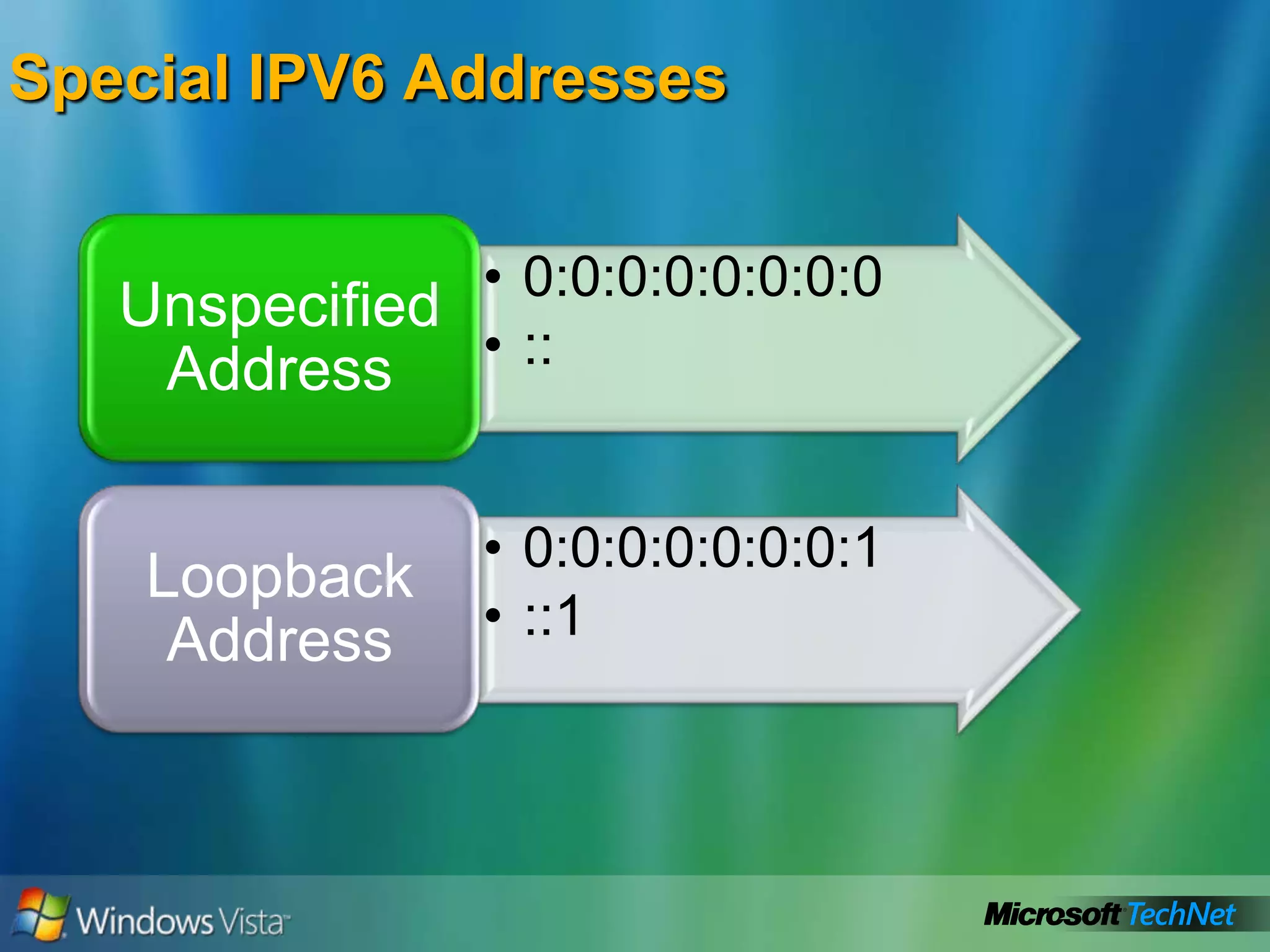
Special IPV6 Addresses
Types of IPv6 Addresses - NotesLocal Link AddressesUnique Local Addresses10 bits64 bits54 bitsGlobal Addresses7 bits40 bits64 bits16 bits1111 1110 10Interface ID000 . . . 00064 bits45 bits16 bitsInterface IDSubnet ID001Global Routing Prefix1111 110Interface IDGlobal IDSubnet IDL
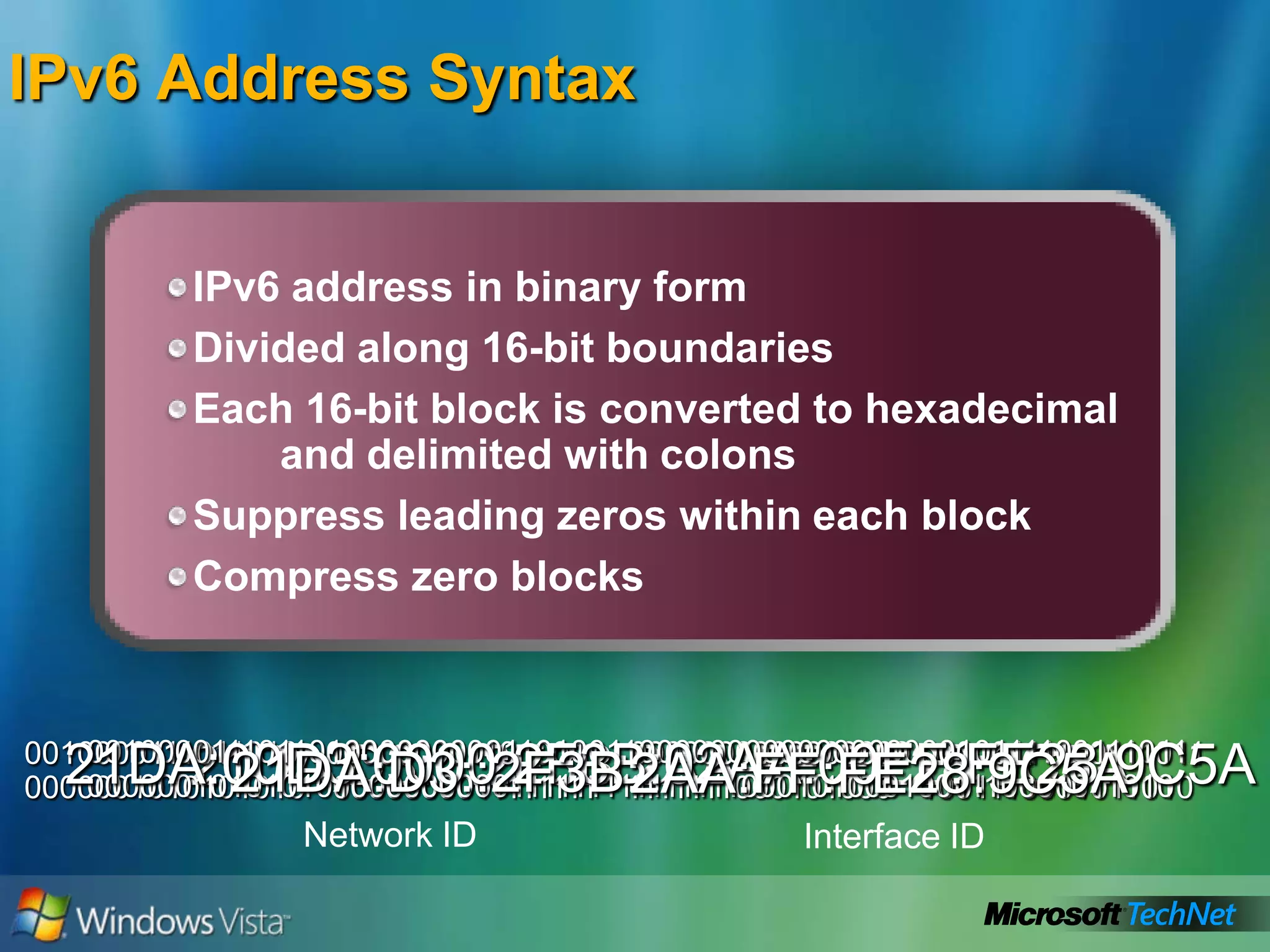
IPv6 Address SyntaxIPv6 address in binary formDivided along 16-bit boundariesEach 16-bit block is converted to hexadecimal           and delimited with colonsSuppress leading zeros within each blockCompress zero blocks0010000111011010000000001101001100000000000000000010111100111011 000000101010101000000000111111111111111000101000100111000101101021DA:00D3:0000:2F3B:02AA:00FF:FE28:9C5A21DA:D3:0:2F3B:2AA:FF:FE28:9C5A0010000111011010   0000000011010011   0000000000000000   0010111100111011 0000001010101010   0000000011111111   1111111000101000   10011100010110102AA:FF:FE28:9C5A21DA:D3::2F3B:Network IDInterface ID
IPv6 Address Syntax - NotesIPv6 address in binary formDivided along 16-bit boundariesEach 16-bit block is converted to hexadecimal           and delimited with colonsSuppress leading zeros within each blockCompress zero blocks0010000111011010000000001101001100000000000000000010111100111011 000000101010101000000000111111111111111000101000100111000101101021DA:00D3:0000:2F3B:02AA:00FF:FE28:9C5A21DA:D3:0:2F3B:2AA:FF:FE28:9C5A0010000111011010   0000000011010011   0000000000000000   0010111100111011 0000001010101010   0000000011111111   1111111000101000   10011100010110102AA:FF:FE28:9C5A21DA:D3::2F3B:Network IDInterface ID
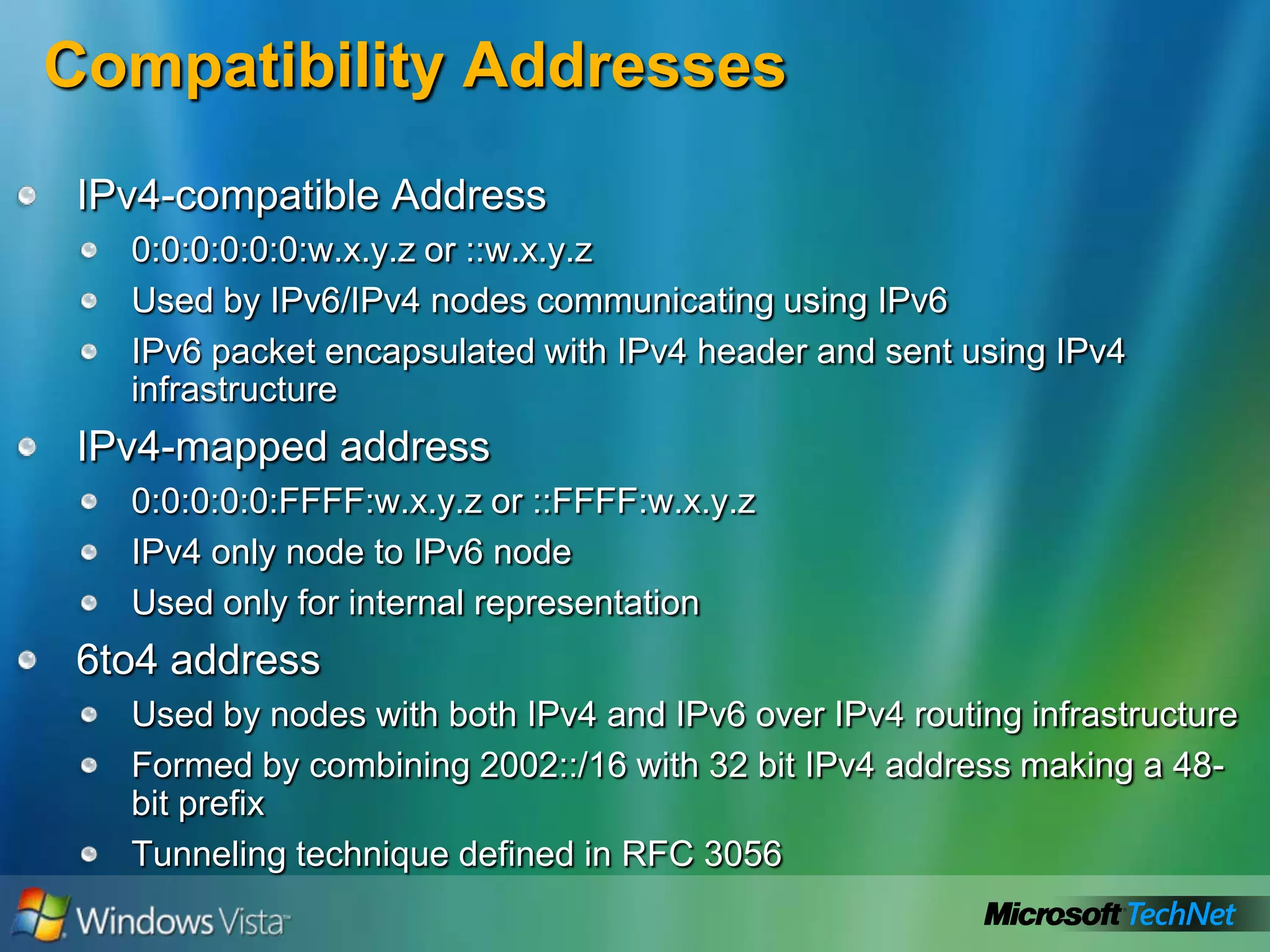
Compatibility AddressesIPv4-compatible Address0:0:0:0:0:0:w.x.y.z or ::w.x.y.zUsed by IPv6/IPv4 nodes communicating using IPv6IPv6 packet encapsulated with IPv4 header and sent using IPv4 infrastructureIPv4-mapped address0:0:0:0:0:FFFF:w.x.y.z or ::FFFF:w.x.y.zIPv4 only node to IPv6 nodeUsed only for internal representation6to4 addressUsed by nodes with both IPv4 and IPv6 over IPv4 routing infrastructureFormed by combining 2002::/16 with 32 bit IPv4 address making a 48-bit prefixTunneling technique defined in RFC 3056
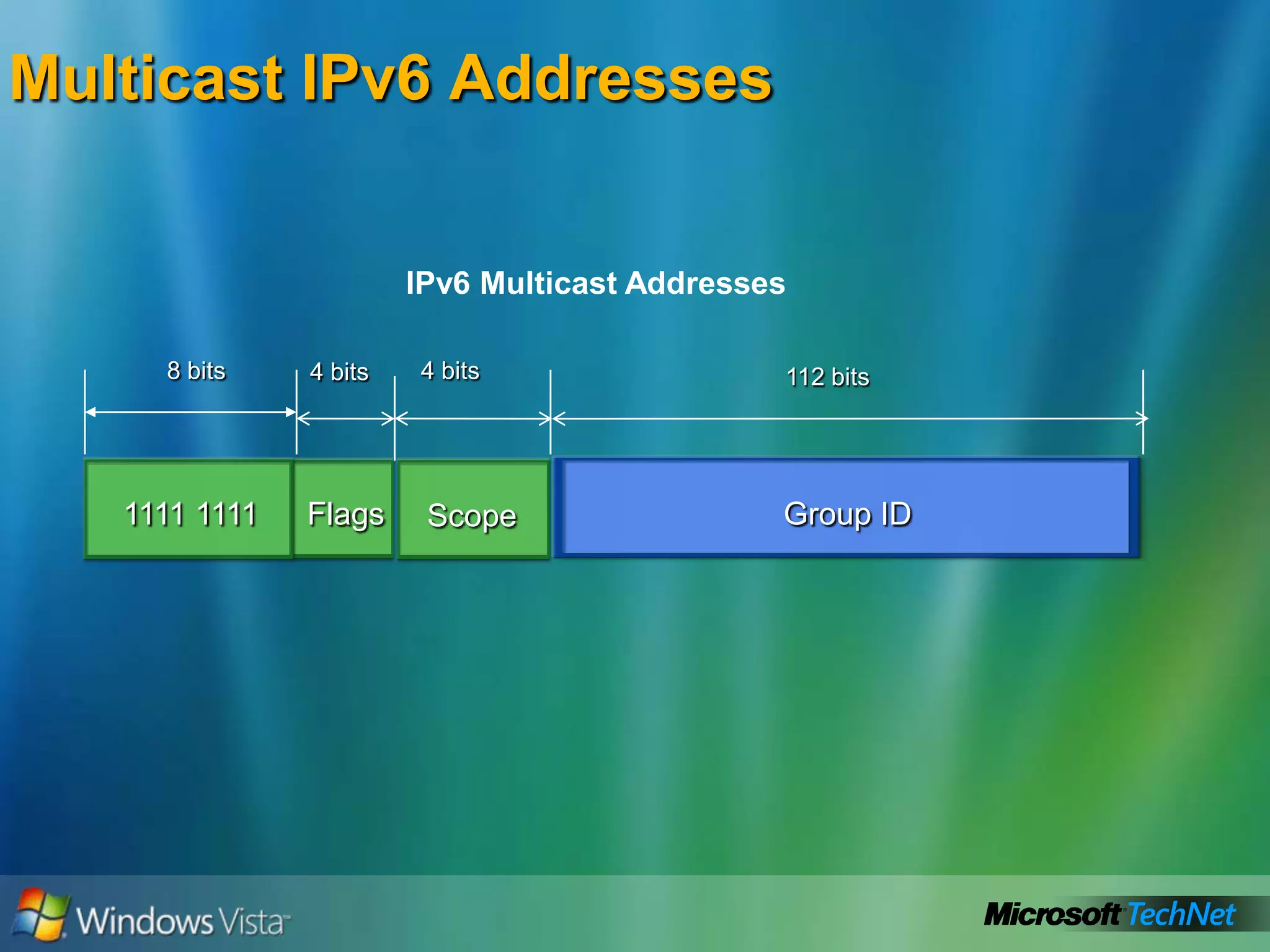
Multicast IPv6 AddressesIPv6 Multicast Addresses8 bits4 bits112 bits1111 1111Group IDFlagsScope4 bits
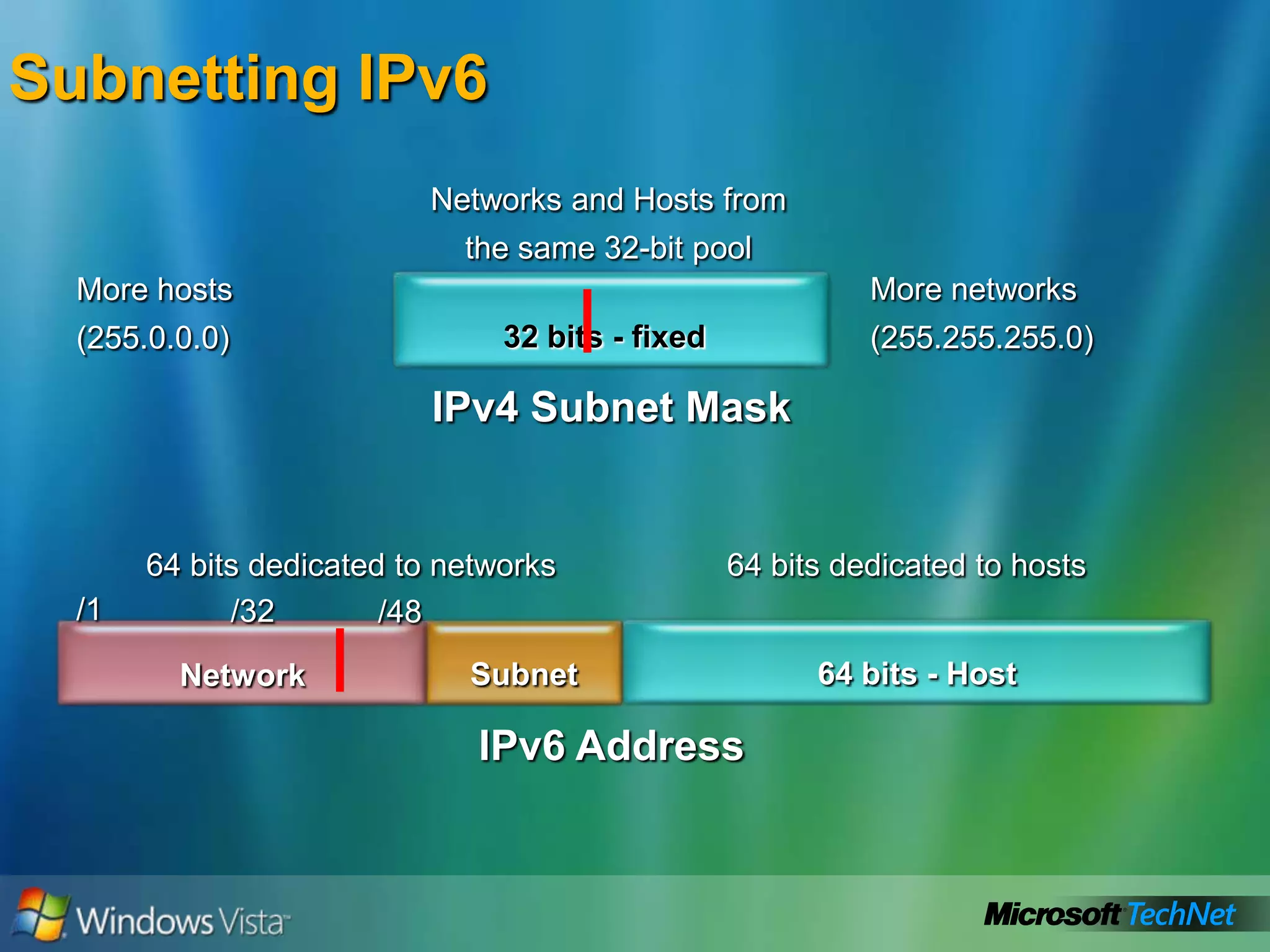
Subnetting IPv664 bits - HostSubnetNetworkNetworks and Hosts from  the same 32-bit poolMore networks (255.255.255.0)More hosts (255.0.0.0)32 bits - fixedIPv4 Subnet Mask64 bits dedicated to hosts64 bits dedicated to networks/1/32/48IPv6 Address
Introducing IPv6Addressing with IPv6Transitioning to IPv6Exploring IPv6 ScenariosAgenda
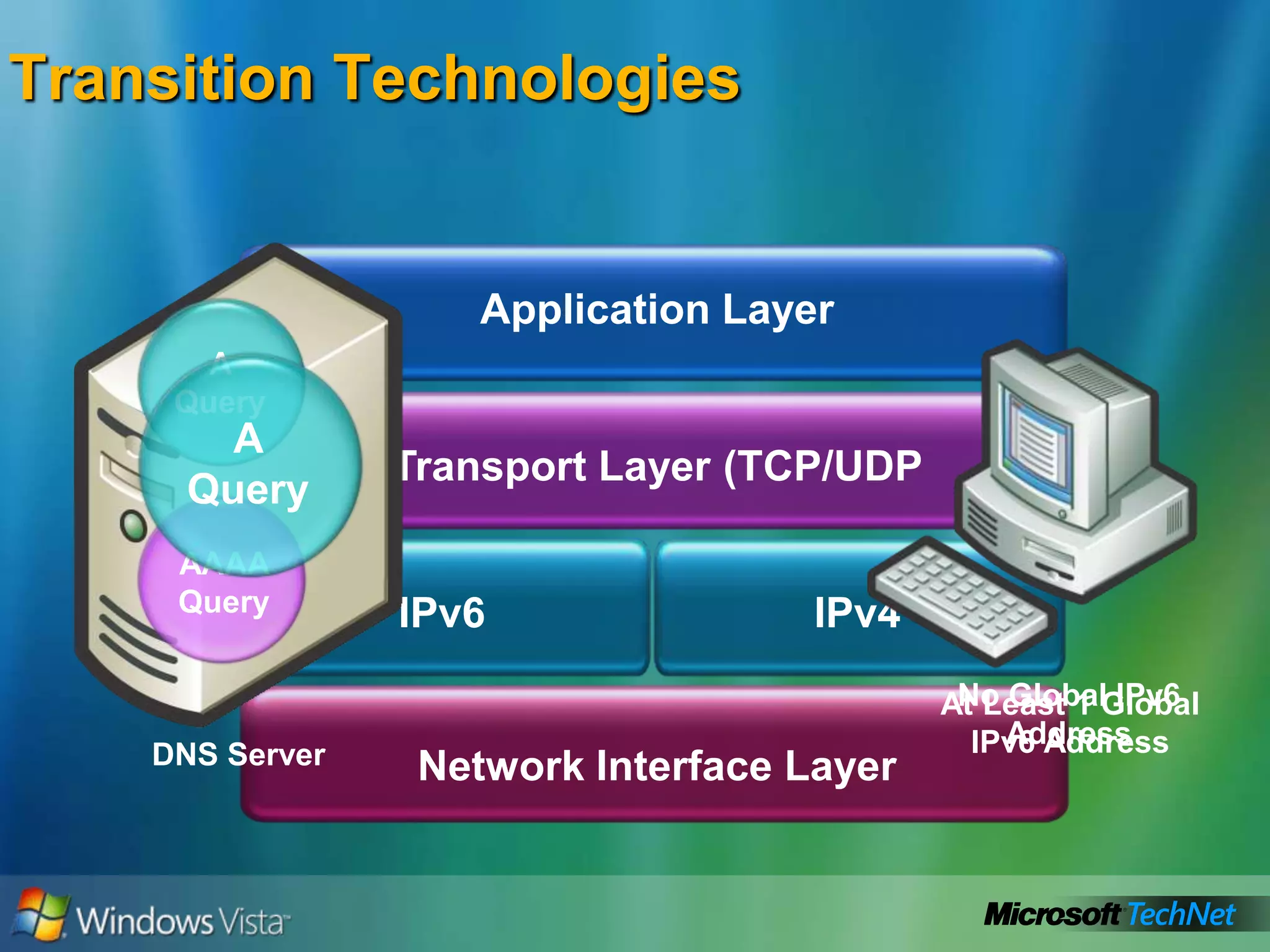
Transition TechnologiesApplication LayerTransport Layer (TCP/UDPIPv6IPv4AAAA QueryA QueryA QueryNetwork Interface LayerNo Global IPv6 AddressAt Least 1 Global IPv6 AddressDNS Server
Transition Technologies - NotesApplication LayerTransport Layer (TCP/UDPIPv6IPv4AAAA QueryA QueryA QueryNetwork Interface LayerNo Global IPv6 AddressAt Least 1 Global IPv6 AddressDNS Server
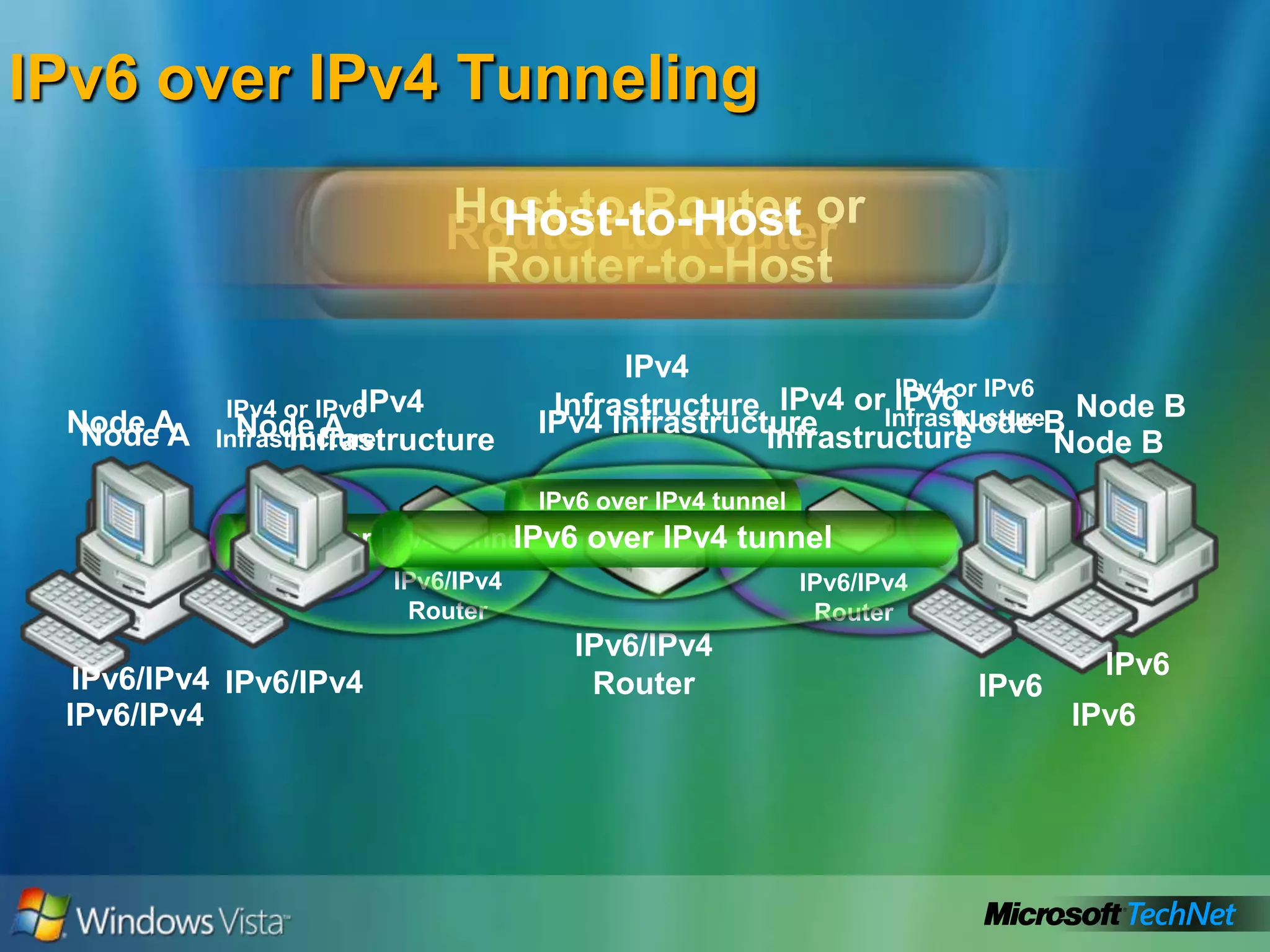
IPv6 over IPv4 TunnelingRouter to RouterHost-to-Router or Router-to-HostIPv4 or IPv6 InfrastructureIPv4 InfrastructureNode ANode BIPv4 InfrastructureIPv4 or IPv6 InfrastructureNode BIPv6 over IPv4 tunnelIPv4 or IPv6 InfrastructureNode AHost-to-HostIPv4 InfrastructureNode BIPv6 over IPv4 tunnelNode AIPv6/IPv4 RouterIPv6/IPv4 RouterIPv6/IPv4IPv6IPv6/IPv4 RouterIPv6 over IPv4 tunnelIPv6IPv6/IPv4IPv6IPv6/IPv4

Get Ready For Ipv6

  • 1.
    WELCOME DELHI ITPROShttp://groups.msn.com/itdelhiug
  • 2.
    Agenda – DelhiIT Community Event Jan 09
  • 3.
    Get Ready forIPv6?Ranjana JainIT Pro EvangelistMicrosoft IndiaMCSE, MCT, RHCE, CISSP, CIW Security AnalystBlog: http://ranjanajain.spaces.live.com
  • 4.
    IPv4 LimitationsIPv6 Changesin AddressingFuture IPv6 SolutionsIPv6 with Windows VistaWhat Will We cover?
  • 5.
  • 6.
    Introducing IPv6Addressing withIPv6Transitioning to IPv6Exploring IPv6 ScenariosAgenda
  • 7.
    The Microsoft NetworksVisionIPsec isolationLabGuest
  • 8.
    The Microsoft NetworksVision - NotesIPsec isolationLabGuest
  • 9.
    Shortcomings of IPV4ExponentialInternet Growth – Exhaustion on Address SpaceSecurity at the Internet LayerInternet Backbone Routers with Large Routing Tables
  • 10.
    Shortcomings of IPV4- NotesExponential Internet Growth – Exhaustion on Address SpaceSecurity at the Internet LayerInternet Backbone Routers with Large Routing Tables
  • 11.
    Internet Hosts Growth(1992-2006)In millionshttp://www.isc.org/index.pl?/ops/ds/host-count-history.php
  • 12.
    IPv6 as aGlobal Solution
  • 13.
    What about NAT?NATEnabled RouterInternetWith IPv6
  • 14.
    Introducing IPv6Addressing withIPv6Transitioning to IPv6Exploring IPv6 ScenariosAgenda
  • 15.
    Increased Address SpaceIPv4provides 232 addresses, which =4,294,967,296(That’s 4 billion)IPv6 provides 2128 addresses, which = 340,282,366,920,938,463,463,374,607,431,768,211,456(That’s 3.40*1038, or 340 undecillion addresses)
  • 16.
  • 17.
  • 18.
  • 19.
    Types of IPv6AddressesLink Local AddressesSite Local Addresses10 bits64 bits54 bits10 bits64 bits54 bitsGlobal Addresses1111 1110 10Interface ID000 . . . 0001111 1110 11Interface IDSubnet ID64 bits45 bits16 bitsInterface IDSubnet ID001Global Routing Prefix
  • 20.
    Unique Local Addresses7bits40 bits64 bits16 bits1111 110Interface IDGlobal IDSubnet IDL
  • 21.
  • 22.
    Types of IPv6Addresses - NotesLocal Link AddressesUnique Local Addresses10 bits64 bits54 bitsGlobal Addresses7 bits40 bits64 bits16 bits1111 1110 10Interface ID000 . . . 00064 bits45 bits16 bitsInterface IDSubnet ID001Global Routing Prefix1111 110Interface IDGlobal IDSubnet IDL
  • 23.
    IPv6 Address SyntaxIPv6address in binary formDivided along 16-bit boundariesEach 16-bit block is converted to hexadecimal and delimited with colonsSuppress leading zeros within each blockCompress zero blocks0010000111011010000000001101001100000000000000000010111100111011 000000101010101000000000111111111111111000101000100111000101101021DA:00D3:0000:2F3B:02AA:00FF:FE28:9C5A21DA:D3:0:2F3B:2AA:FF:FE28:9C5A0010000111011010 0000000011010011 0000000000000000 0010111100111011 0000001010101010 0000000011111111 1111111000101000 10011100010110102AA:FF:FE28:9C5A21DA:D3::2F3B:Network IDInterface ID
  • 24.
    IPv6 Address Syntax- NotesIPv6 address in binary formDivided along 16-bit boundariesEach 16-bit block is converted to hexadecimal and delimited with colonsSuppress leading zeros within each blockCompress zero blocks0010000111011010000000001101001100000000000000000010111100111011 000000101010101000000000111111111111111000101000100111000101101021DA:00D3:0000:2F3B:02AA:00FF:FE28:9C5A21DA:D3:0:2F3B:2AA:FF:FE28:9C5A0010000111011010 0000000011010011 0000000000000000 0010111100111011 0000001010101010 0000000011111111 1111111000101000 10011100010110102AA:FF:FE28:9C5A21DA:D3::2F3B:Network IDInterface ID
  • 25.
    Compatibility AddressesIPv4-compatible Address0:0:0:0:0:0:w.x.y.zor ::w.x.y.zUsed by IPv6/IPv4 nodes communicating using IPv6IPv6 packet encapsulated with IPv4 header and sent using IPv4 infrastructureIPv4-mapped address0:0:0:0:0:FFFF:w.x.y.z or ::FFFF:w.x.y.zIPv4 only node to IPv6 nodeUsed only for internal representation6to4 addressUsed by nodes with both IPv4 and IPv6 over IPv4 routing infrastructureFormed by combining 2002::/16 with 32 bit IPv4 address making a 48-bit prefixTunneling technique defined in RFC 3056
  • 26.
    Multicast IPv6 AddressesIPv6Multicast Addresses8 bits4 bits112 bits1111 1111Group IDFlagsScope4 bits
  • 27.
    Subnetting IPv664 bits- HostSubnetNetworkNetworks and Hosts from the same 32-bit poolMore networks (255.255.255.0)More hosts (255.0.0.0)32 bits - fixedIPv4 Subnet Mask64 bits dedicated to hosts64 bits dedicated to networks/1/32/48IPv6 Address
  • 28.
    Introducing IPv6Addressing withIPv6Transitioning to IPv6Exploring IPv6 ScenariosAgenda
  • 29.
    Transition TechnologiesApplication LayerTransportLayer (TCP/UDPIPv6IPv4AAAA QueryA QueryA QueryNetwork Interface LayerNo Global IPv6 AddressAt Least 1 Global IPv6 AddressDNS Server
  • 30.
    Transition Technologies -NotesApplication LayerTransport Layer (TCP/UDPIPv6IPv4AAAA QueryA QueryA QueryNetwork Interface LayerNo Global IPv6 AddressAt Least 1 Global IPv6 AddressDNS Server
  • 31.
    IPv6 over IPv4TunnelingRouter to RouterHost-to-Router or Router-to-HostIPv4 or IPv6 InfrastructureIPv4 InfrastructureNode ANode BIPv4 InfrastructureIPv4 or IPv6 InfrastructureNode BIPv6 over IPv4 tunnelIPv4 or IPv6 InfrastructureNode AHost-to-HostIPv4 InfrastructureNode BIPv6 over IPv4 tunnelNode AIPv6/IPv4 RouterIPv6/IPv4 RouterIPv6/IPv4IPv6IPv6/IPv4 RouterIPv6 over IPv4 tunnelIPv6IPv6/IPv4IPv6IPv6/IPv4
  • 32.
    IPv6 over IPv4TunnelingRouter to RouterHost-to-Router or Router-to-HostIPv4 or IPv6 InfrastructureIPv4 InfrastructureNode ANode BIPv4 InfrastructureIPv4 or IPv6 InfrastructureNode BIPv6 over IPv4 tunnelIPv4 or IPv6 InfrastructureNode AHost-to-HostIPv4 InfrastructureNode BIPv6 over IPv4 tunnelNode AIPv6/IPv4 RouterIPv6/IPv4 RouterIPv6/IPv4IPv6IPv6/IPv4 RouterIPv6 over IPv4 tunnelIPv6IPv6/IPv4IPv6IPv6/IPv4
  • 33.
    IPv6 with WindowsVistaIPv4IPv6
  • 34.
    IPv4 and NATIntroduce ProblemsIPv6 Eliminates ProblemsMicrosoft Provides IPv6 SolutionsSession Summary
  • 35.
  • 36.
    For the latesttitles, visit:www.microsoft.com/learning/books/itpro/Microsoft Press Publications
  • 37.
    This book canbe purchased at all major bookstores and online retailersNon-Microsoft Publications
  • 38.
    Become a MicrosoftCertified ProfessionalWhat are MCP certifications?Validation in performing critical IT functionsWhy certify?Worldwide recognition of skills gained through experienceMore effective deployments with reduced costsWhat certifications are there for IT pros?MCP, MCSE, MCSA, MCDST, MCDBAwww.microsoft.com/learning/mcp
  • 39.
    Where Else CanI Get Help? Live Events and Online Webcast series Microsoft Professional Blogs Directory Chats, Newsgroups, Forums and Virtual Labs Local Locator for Professional User GroupsGroups.msn.com/itdelhiugRanjanaJain.spaces.live.com