WELCOME TO OUR
PRESENTATION
Presented to :
Mr. Asif Uz Zaman Asif
Lecturer , Department of Computer
Science and Engineering
IPv4 VS IPv6
● Group Members :
1.Humayra Khanum
ID : 161-15-7325
2.Rezwana Islam Ria
ID : 161-15-7071
3.Sifat Jaber Ahmed
ID : 153-15-6702
2
What is IP?
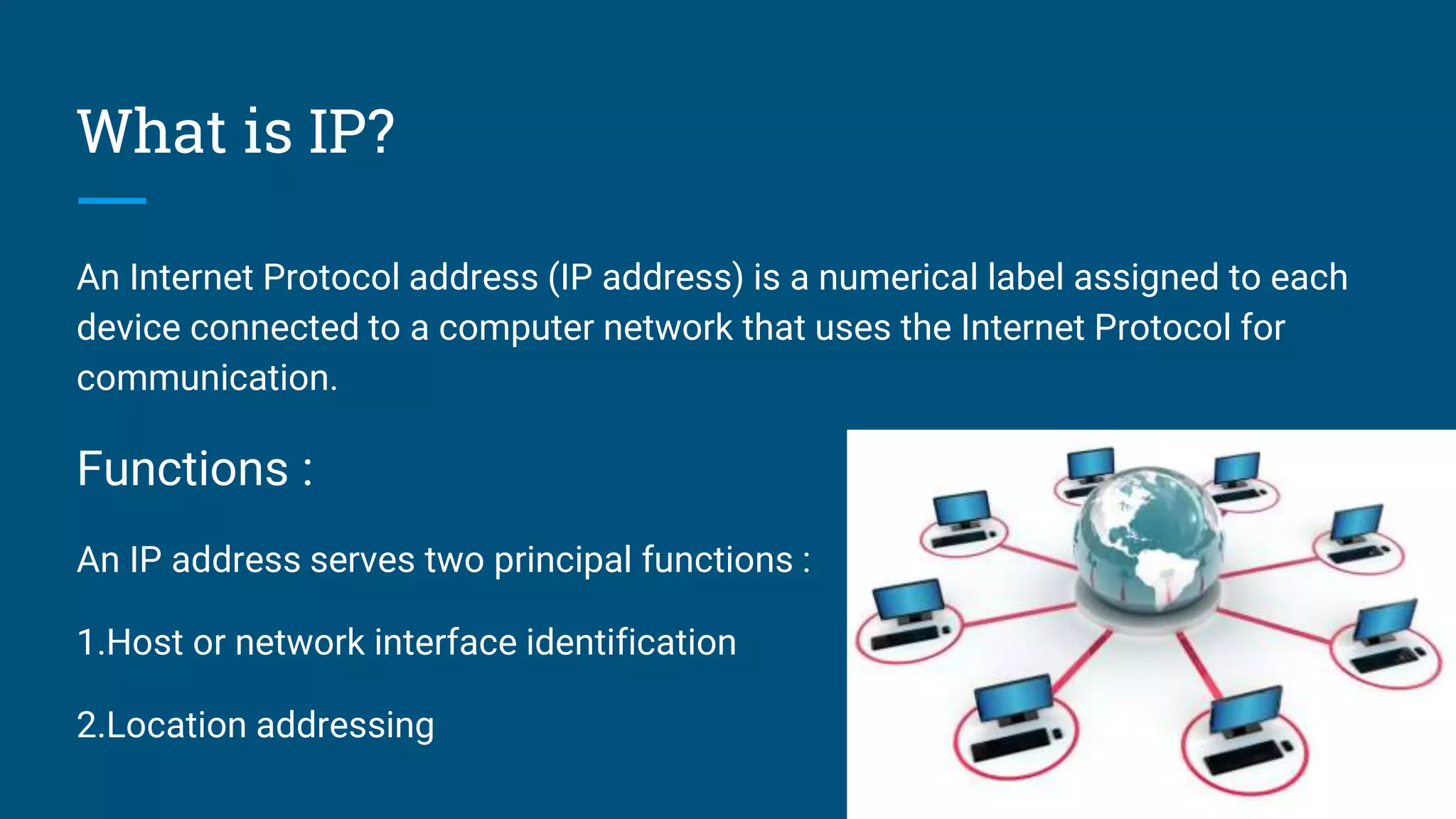
An Internet Protocol address (IP address) is a numerical label assigned to each
device connected to a computer network that uses the Internet Protocol for
communication.
Functions :
An IP address serves two principal functions :
1.Host or network interface identification
2.Location addressing
3
IP versions : Journey from IPv1 to IPv6
1.Internet Protocol version 1-3 were not formally assigned
2.Internet Protocol version 4 (IPv4)
3.Internet Protocol version 5 (IPv5) was an experimental protocol in the 1980s
4.Internet Protocol version 6 (IPv6)
4
Introduction of IPv4 :
Internet Protocol version 4 is the fourth version of the Internet Protocol (IP)
which uses 32 bit .IPv4 allows 2^32 (4294967296 ) unique address .
5
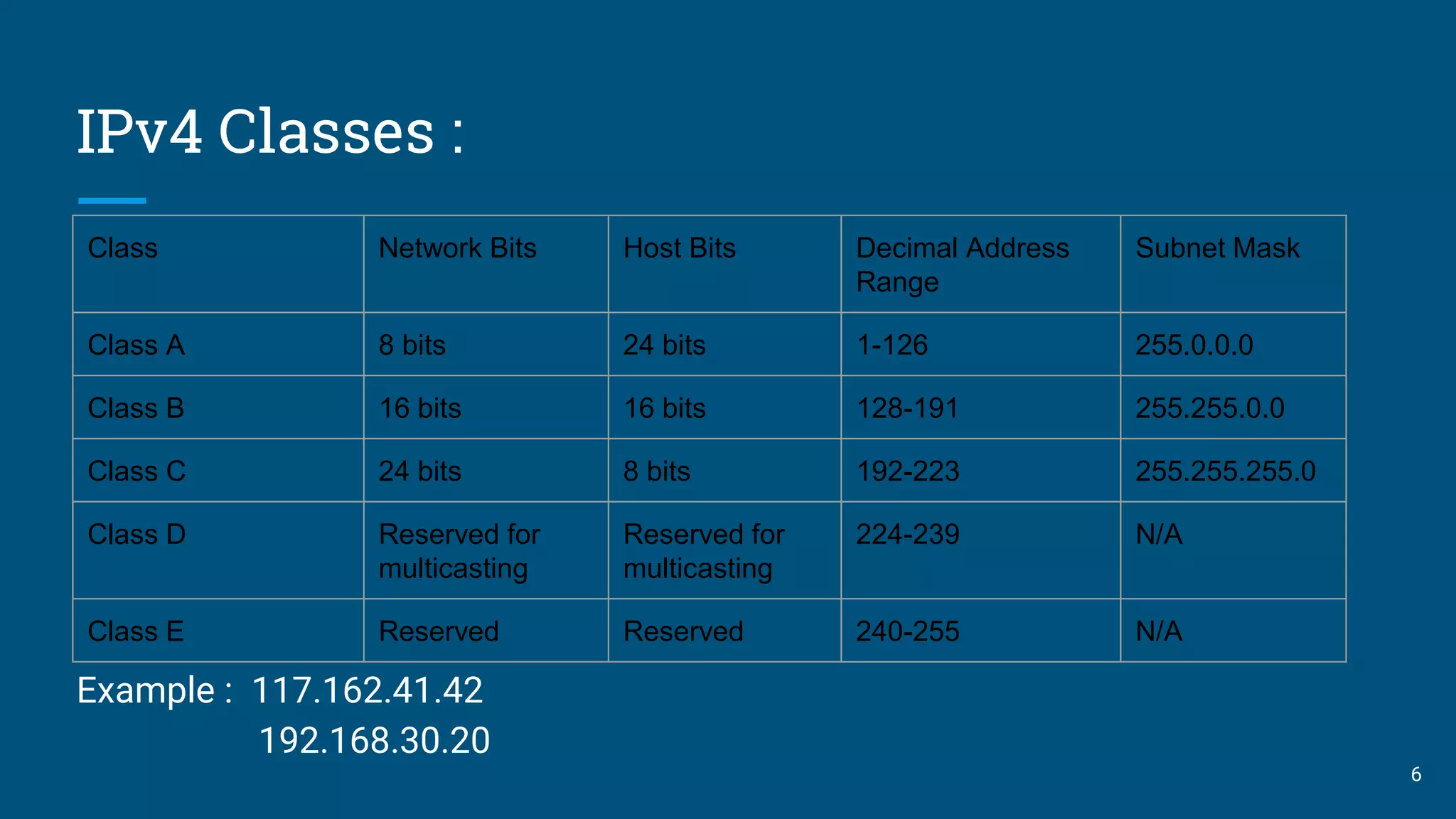
IPv4 Classes :
Example : 117.162.41.42
192.168.30.20
Class Network Bits Host Bits Decimal Address
Range
Subnet Mask
Class A 8 bits 24 bits 1-126 255.0.0.0
Class B 16 bits 16 bits 128-191 255.255.0.0
Class C 24 bits 8 bits 192-223 255.255.255.0
Class D Reserved for
multicasting
Reserved for
multicasting
224-239 N/A
Class E Reserved Reserved 240-255 N/A
6
What are the advantages of IPv4?
1. Connectionless Protocol and Best effort
based
2.Widely supported
3.Support of all OS
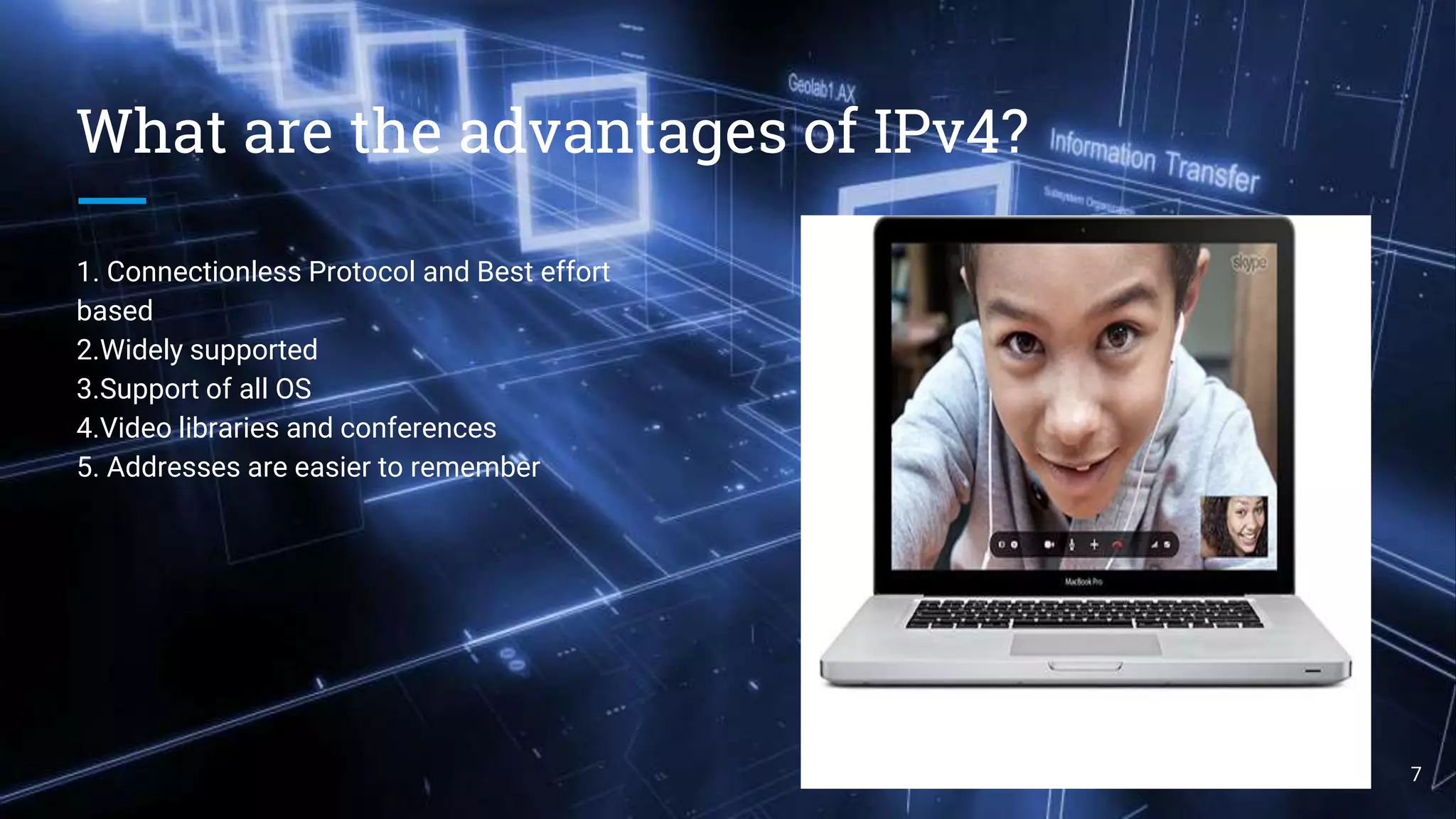
4.Video libraries and conferences
5. Addresses are easier to remember
7
Name: Rezwana Islam Ria
ID: 161-15-7071
8
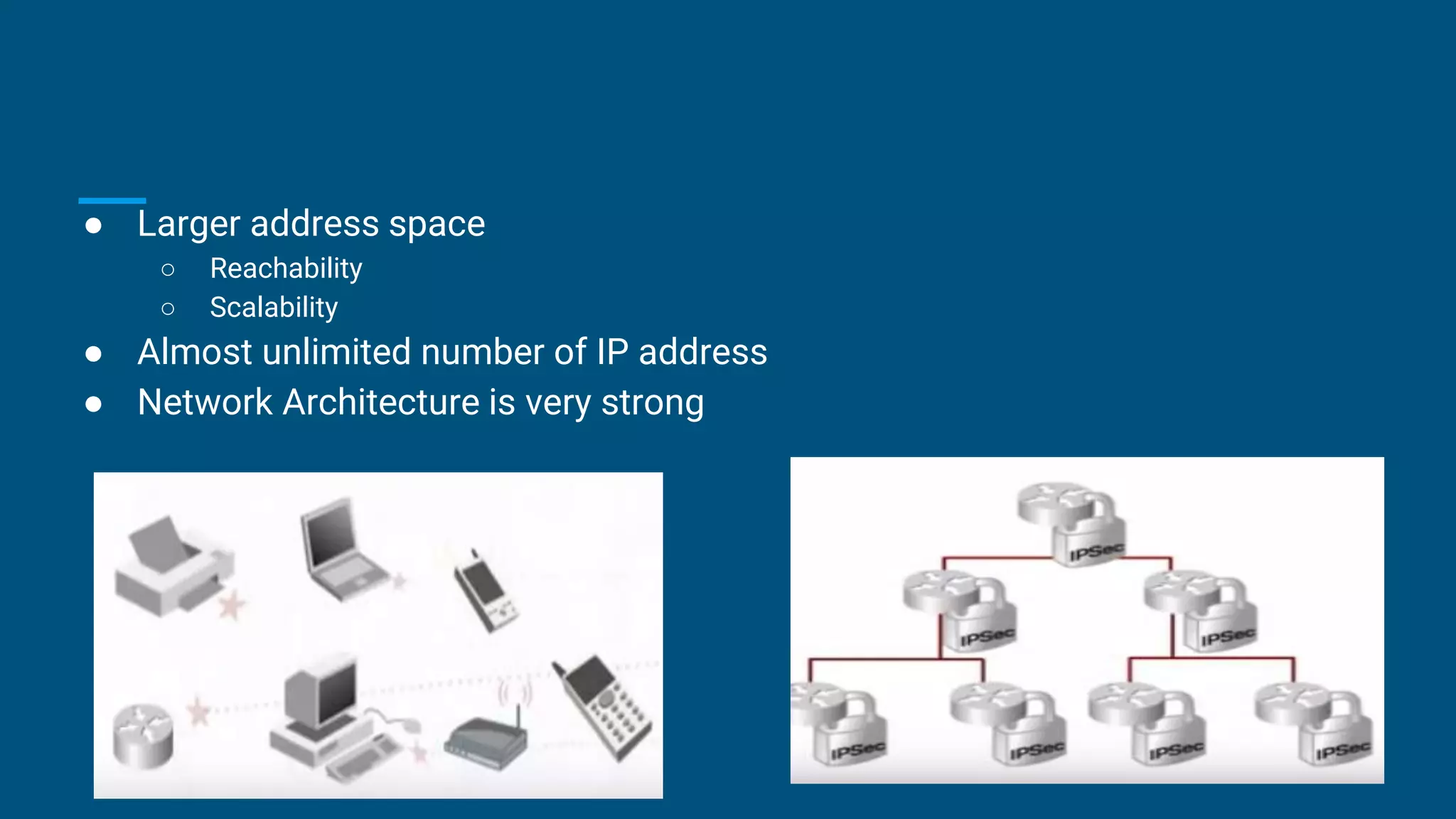
IPv6 :
● Next generation of IP address
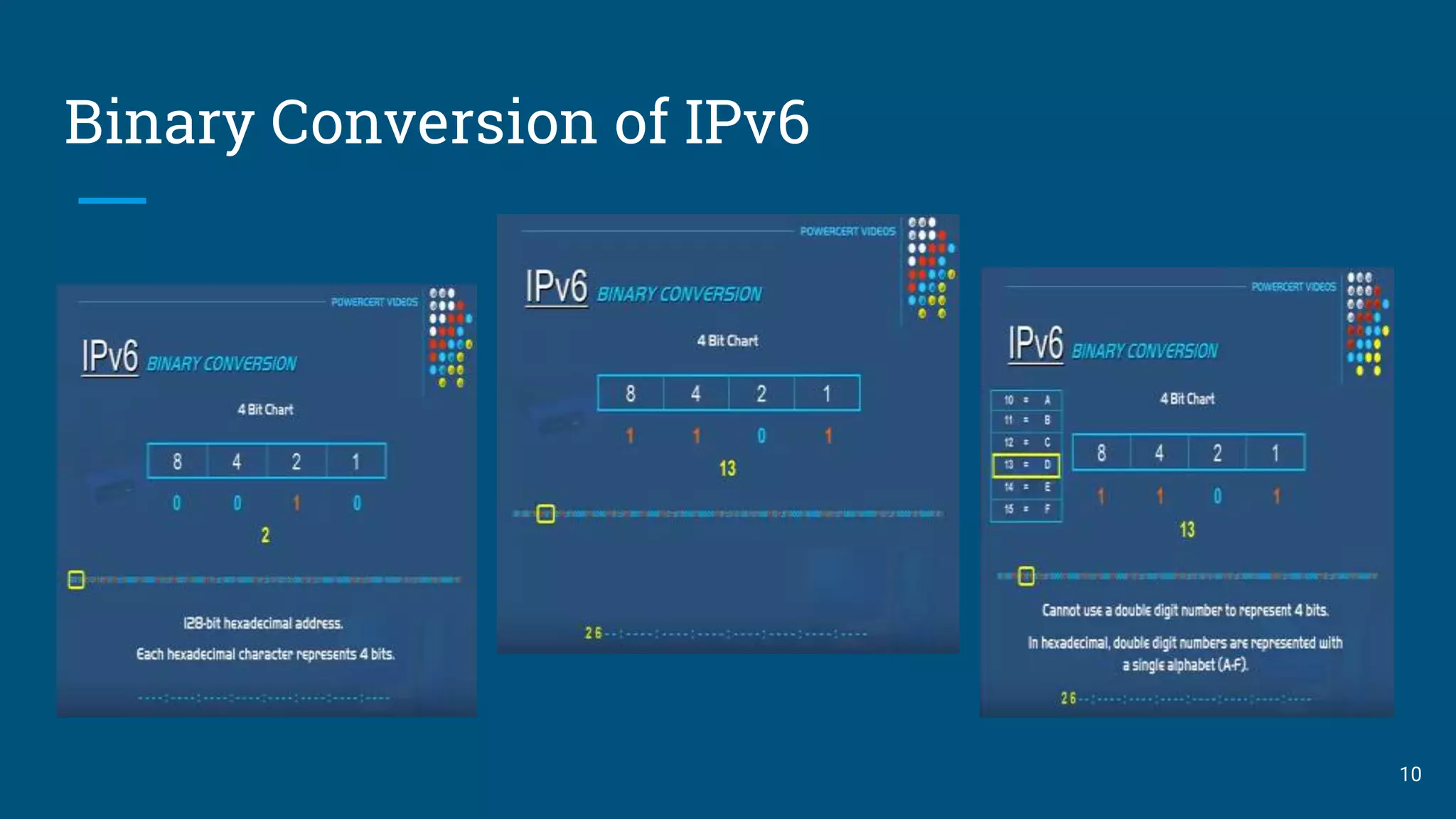
● 128 bit Hexadecimal address
● Used both numbers & alphabets
● Example: 76DC ,34EF etc
9
Binary Conversion of IPv6
10
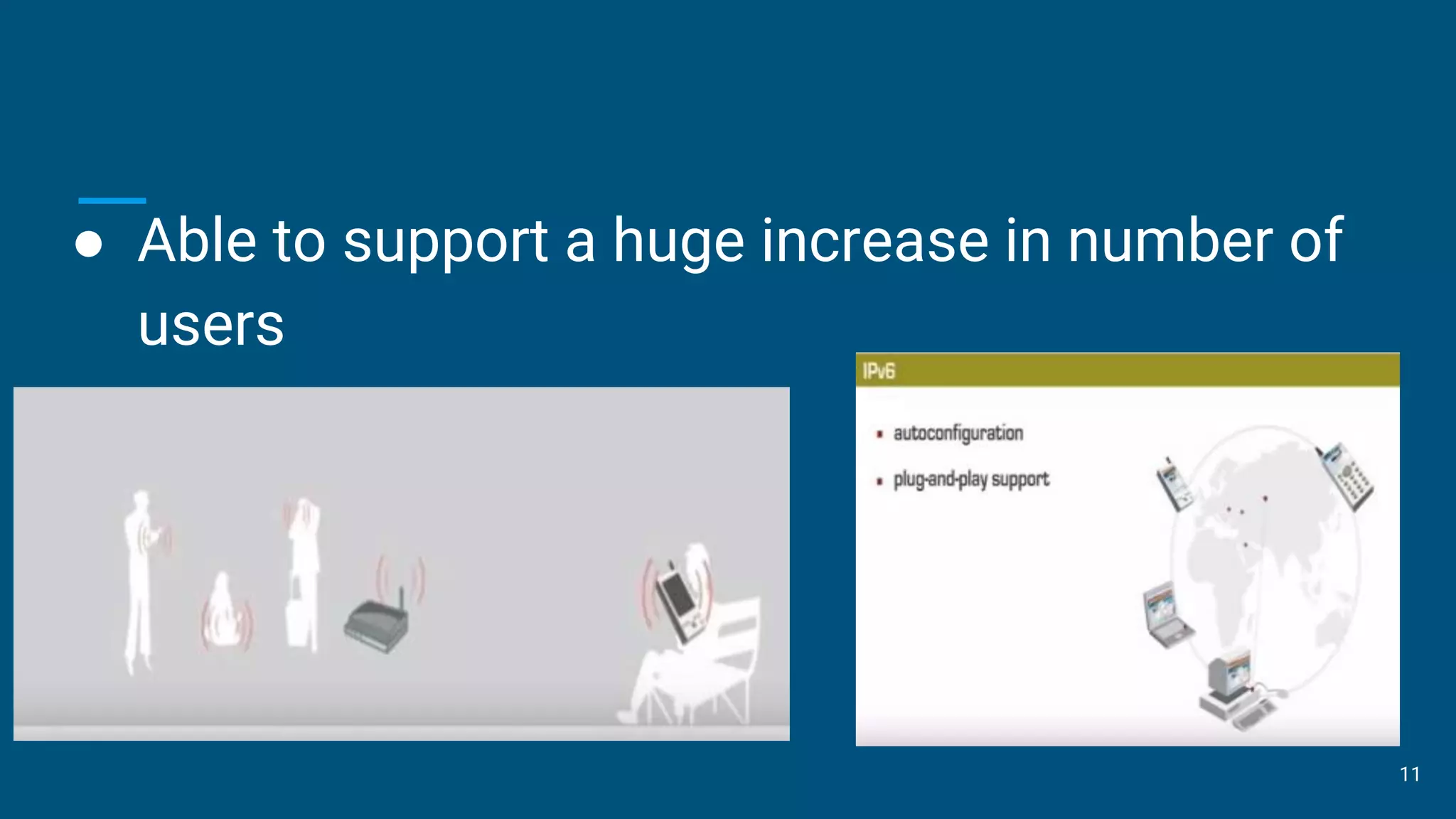
● Able to support a huge increase in number of
users
11
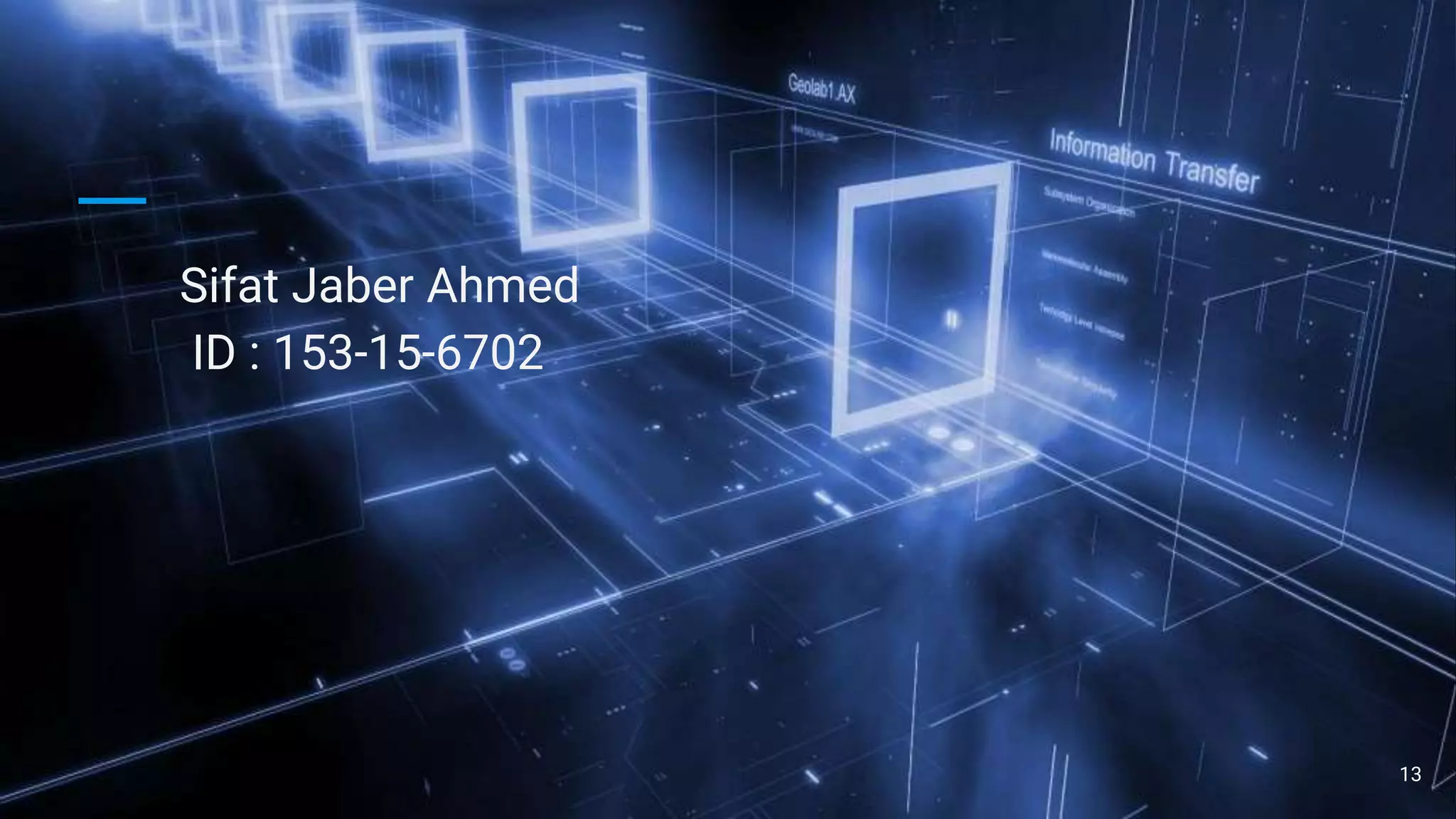
● Larger address space
○ Reachability
○ Scalability
● Almost unlimited number of IP address
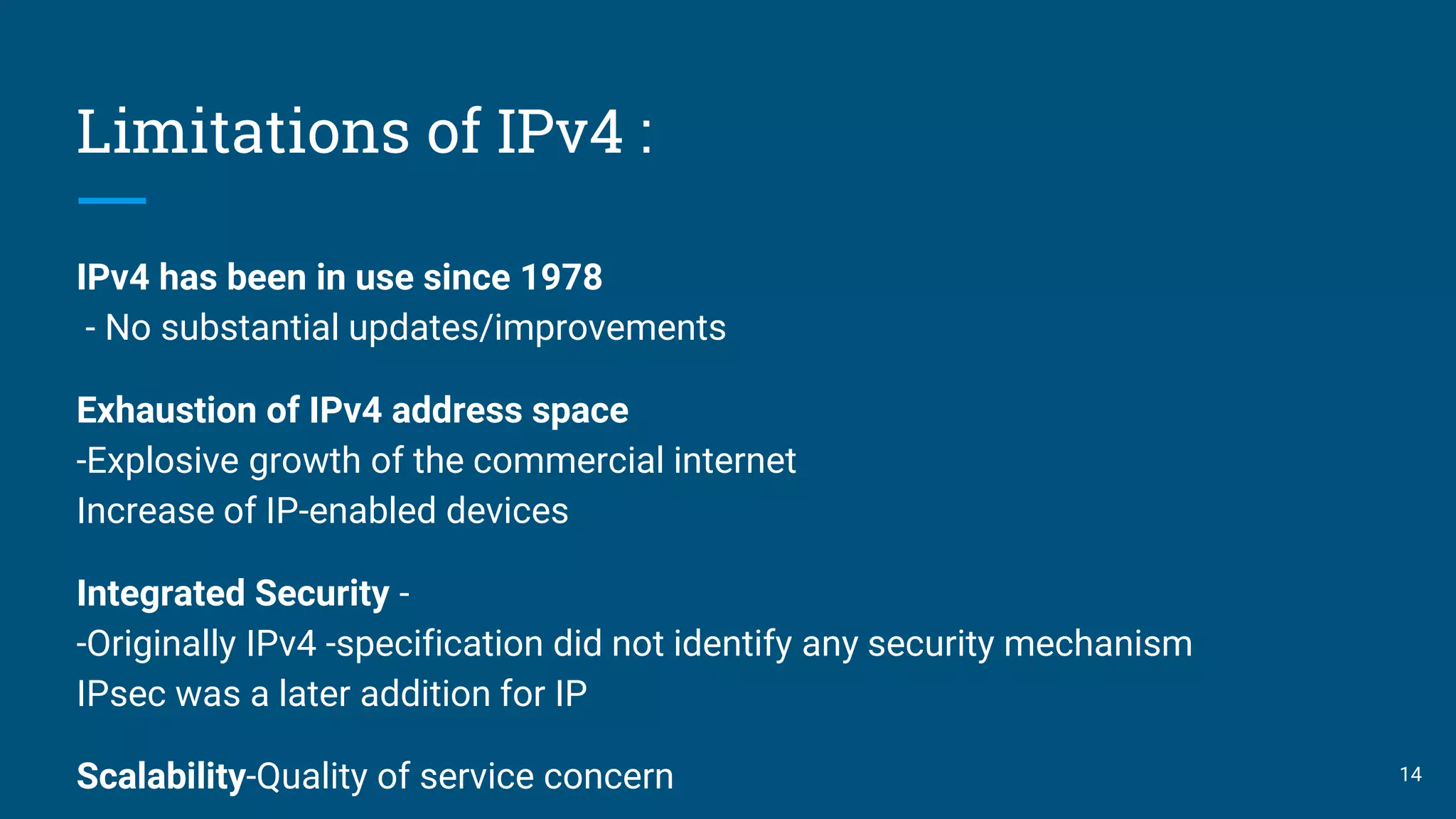
● Network Architecture is very strong
Sifat Jaber Ahmed
ID : 153-15-6702
13
Limitations of IPv4 :
IPv4 has been in use since 1978
- No substantial updates/improvements
Exhaustion of IPv4 address space
-Explosive growth of the commercial internet
Increase of IP-enabled devices
Integrated Security -
-Originally IPv4 -specification did not identify any security mechanism
IPsec was a later addition for IP
Scalability-Quality of service concern 14
Why no IPv5?
●Version 5 of the IP family was an
experimental Protocol
●Internet Stream Protocol
●Never introduced for public use
●Number 5 was already allocated,this
number was not considered for the
successor to IPv4
15
IPv4 and IPv6 are not cpmpatible :
1.IPv4 and IPv6 can not talk to each other
2.But they can exist together on the same network
3.Known as “Dual Stack”
-Computer has both an IPv4 and IPv6 address
-Uses one of the two when communicating
-If IPv6 is a available it usually has preferences
16
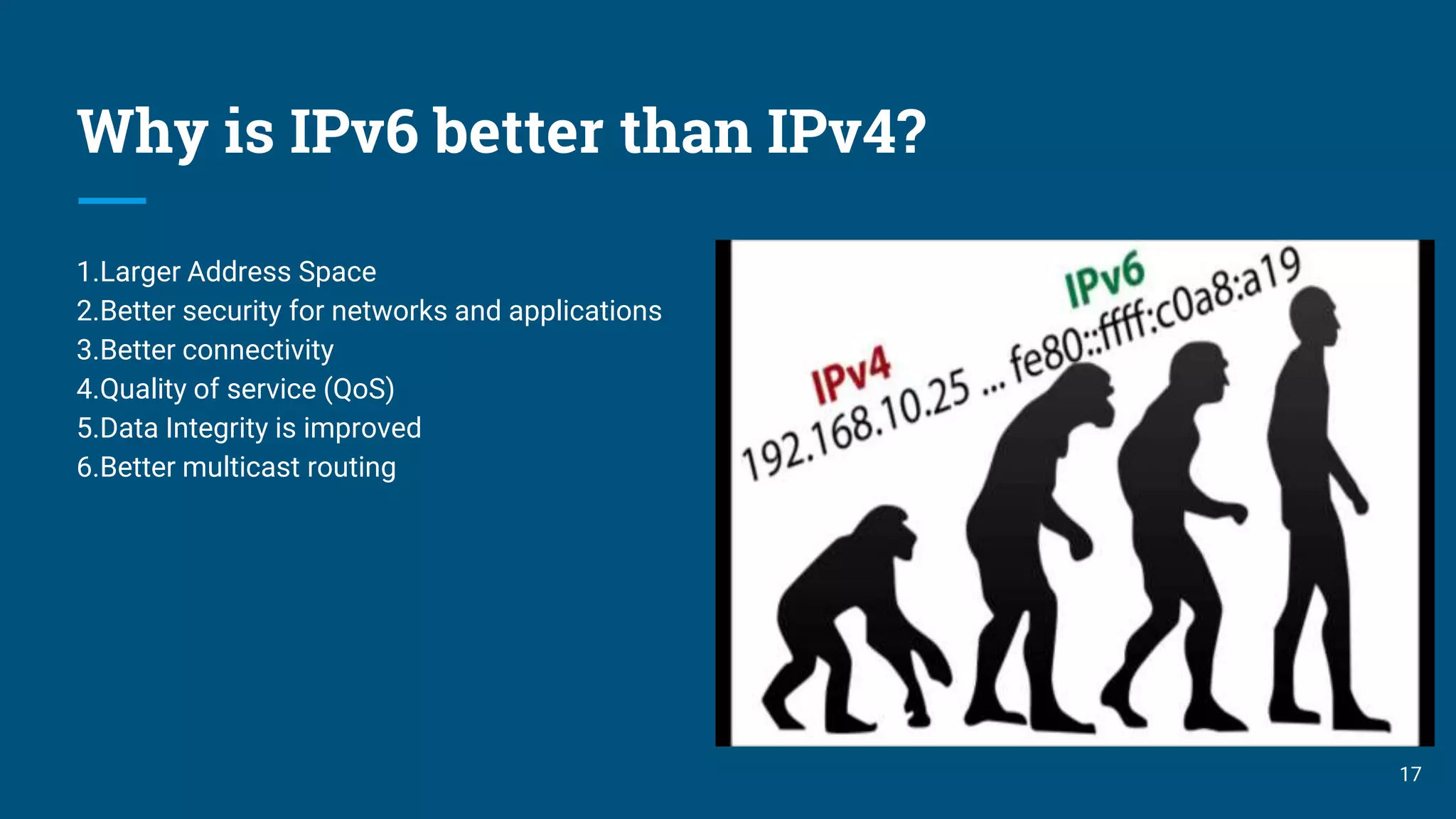
Why is IPv6 better than IPv4?
1.Larger Address Space
2.Better security for networks and applications
3.Better connectivity
4.Quality of service (QoS)
5.Data Integrity is improved
6.Better multicast routing
17
18

IPv4 VS IPv6

  • 1.
    WELCOME TO OUR PRESENTATION Presentedto : Mr. Asif Uz Zaman Asif Lecturer , Department of Computer Science and Engineering
  • 2.
    IPv4 VS IPv6 ●Group Members : 1.Humayra Khanum ID : 161-15-7325 2.Rezwana Islam Ria ID : 161-15-7071 3.Sifat Jaber Ahmed ID : 153-15-6702 2
  • 3.
    What is IP? AnInternet Protocol address (IP address) is a numerical label assigned to each device connected to a computer network that uses the Internet Protocol for communication. Functions : An IP address serves two principal functions : 1.Host or network interface identification 2.Location addressing 3
  • 4.
    IP versions :Journey from IPv1 to IPv6 1.Internet Protocol version 1-3 were not formally assigned 2.Internet Protocol version 4 (IPv4) 3.Internet Protocol version 5 (IPv5) was an experimental protocol in the 1980s 4.Internet Protocol version 6 (IPv6) 4
  • 5.
    Introduction of IPv4: Internet Protocol version 4 is the fourth version of the Internet Protocol (IP) which uses 32 bit .IPv4 allows 2^32 (4294967296 ) unique address . 5
  • 6.
    IPv4 Classes : Example: 117.162.41.42 192.168.30.20 Class Network Bits Host Bits Decimal Address Range Subnet Mask Class A 8 bits 24 bits 1-126 255.0.0.0 Class B 16 bits 16 bits 128-191 255.255.0.0 Class C 24 bits 8 bits 192-223 255.255.255.0 Class D Reserved for multicasting Reserved for multicasting 224-239 N/A Class E Reserved Reserved 240-255 N/A 6
  • 7.
    What are theadvantages of IPv4? 1. Connectionless Protocol and Best effort based 2.Widely supported 3.Support of all OS 4.Video libraries and conferences 5. Addresses are easier to remember 7
  • 8.
    Name: Rezwana IslamRia ID: 161-15-7071 8
  • 9.
    IPv6 : ● Nextgeneration of IP address ● 128 bit Hexadecimal address ● Used both numbers & alphabets ● Example: 76DC ,34EF etc 9
  • 10.
  • 11.
    ● Able tosupport a huge increase in number of users 11
  • 12.
    ● Larger addressspace ○ Reachability ○ Scalability ● Almost unlimited number of IP address ● Network Architecture is very strong
  • 13.
    Sifat Jaber Ahmed ID: 153-15-6702 13
  • 14.
    Limitations of IPv4: IPv4 has been in use since 1978 - No substantial updates/improvements Exhaustion of IPv4 address space -Explosive growth of the commercial internet Increase of IP-enabled devices Integrated Security - -Originally IPv4 -specification did not identify any security mechanism IPsec was a later addition for IP Scalability-Quality of service concern 14
  • 15.
    Why no IPv5? ●Version5 of the IP family was an experimental Protocol ●Internet Stream Protocol ●Never introduced for public use ●Number 5 was already allocated,this number was not considered for the successor to IPv4 15
  • 16.
    IPv4 and IPv6are not cpmpatible : 1.IPv4 and IPv6 can not talk to each other 2.But they can exist together on the same network 3.Known as “Dual Stack” -Computer has both an IPv4 and IPv6 address -Uses one of the two when communicating -If IPv6 is a available it usually has preferences 16
  • 17.
    Why is IPv6better than IPv4? 1.Larger Address Space 2.Better security for networks and applications 3.Better connectivity 4.Quality of service (QoS) 5.Data Integrity is improved 6.Better multicast routing 17
  • 18.