IPv6
-Parthiban N
Quick Start Guide
Contents:
 IPv6
 IPv4
 IPv6
 SIP stack/VoIP
IPv6
 Why IPv6?
 IPv6 Protocol
 IPv6 Addressing
 IPv6 Address types
 ICMPv6
 NDP
 DHCP (v4 & v6)
 Dual stack
 Tunneling
IPv6
 Why IPv6?
 IPv6 Protocol
 IPv6 Addressing
 IPv6 Address types
 ICMPv6
 NDP
 DHCP (v4 & v6)
 Dual stack
 Tunneling
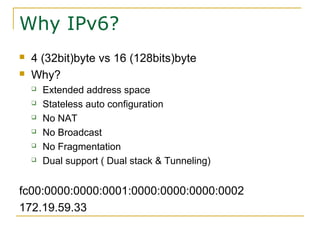
Why IPv6?
 4 (32bit)byte vs 16 (128bits)byte
 Why?
 Extended address space
 Stateless auto configuration
 No NAT
 No Broadcast
 No Fragmentation
 Dual support ( Dual stack & Tunneling)
fc00:0000:0000:0001:0000:0000:0000:0002
172.19.59.33
IPv6
 Why IPv6?
 IPv6 Protocol
 IPv6 Addressing
 IPv6 Address types
 ICMPv6
 NDP
 DHCP (v4 & v6)
 Dual stack
 Tunneling
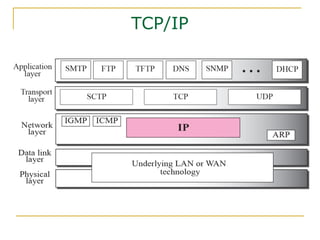
TCP/IP
Connection
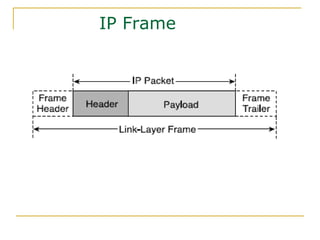
IP Frame
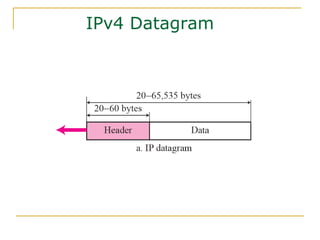
IPv4 Datagram
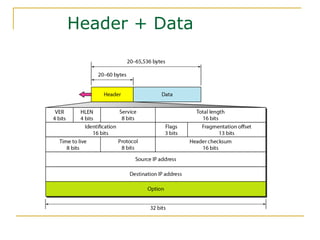
Header + Data
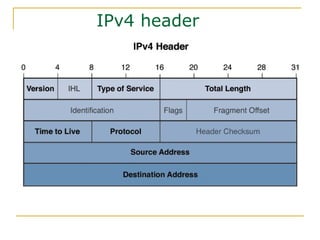
IPv4 header
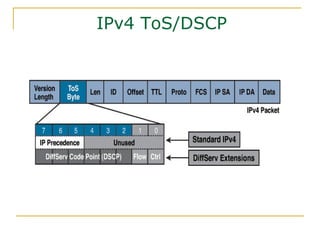
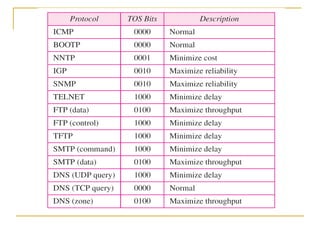
IPv4 ToS/DSCP
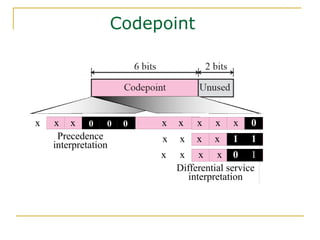
Codepoint
Precedence
interpretation
0 0 0xxx 0
0
1
xx
x
x
x
x
x
x
x
x
x
x
1
1
Differential service
interpretation
x
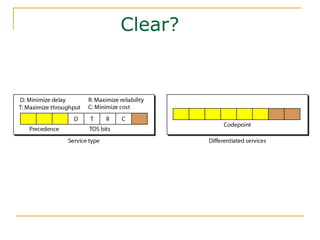
Clear?
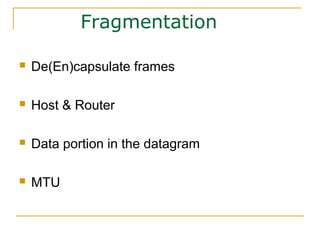
Fragmentation
 De(En)capsulate frames
 Host & Router
 Data portion in the datagram
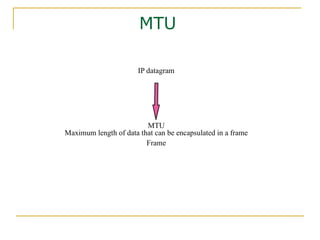
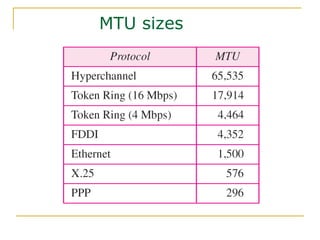
 MTU
MTU
IP datagram
Frame
Header TrailerMTU
Maximum length of data that can be encapsulated in a frame
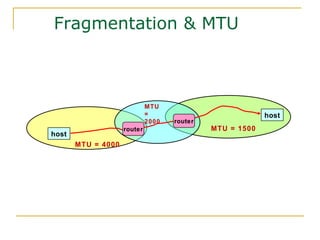
Fragmentation & MTU
host
host
router
router
MTU = 4000
MTU = 1500
MTU
=
2000
MTU sizes
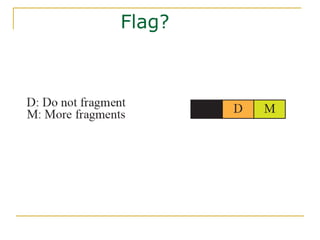
Flag?
000
4020
14,567
Bytes 0000–3999
Original datagram
0
175
1420
14,567
Bytes 1400–2799
Fragment 2
1
350
1220
14,567
Bytes 2800–3999
Fragment 3
0
175
820
14,567
Bytes 1400–2199
Fragment 2.1
1
Fragment 1
000
1420
14,567
Bytes 0000–1399
1
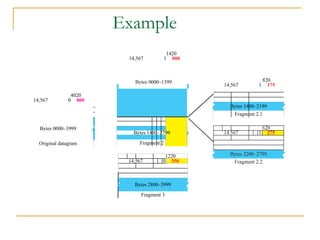
Example
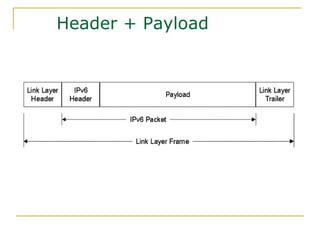
Header + Payload
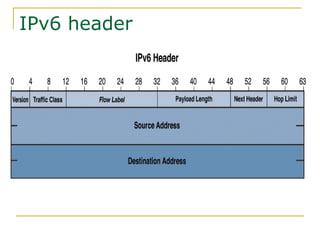
IPv6 header
Header
 Version (IPv4:0100 & IPv6: 0110)
 ToS = Traffic Class (6 bits for DSCP)
 Flow Label (20bits):
 Identifies flow
 Router to treat in same fashion
 No processing overhead in routers
 Real-time? (VoIP, Video Streaming etc.,)
Header contd.,
 Payload length: Fixed 40bytes header –
Length of entire packet
 HOP = TTL ?
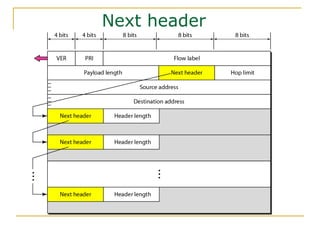
 Next header – Shown next 
Extension header
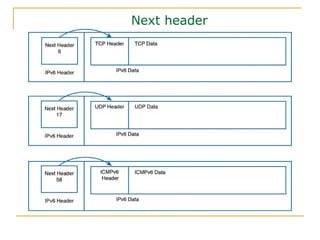
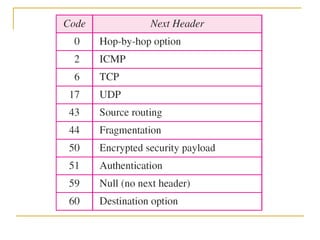
 Identify data portion of the packet
 Presence of extension header
Next header
Next header
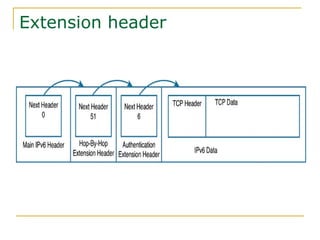
Extension header
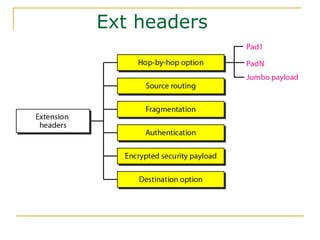
Ext headers
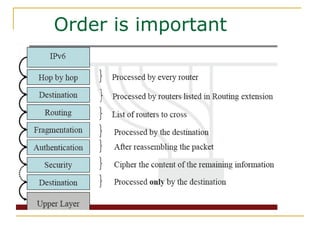
Order is important
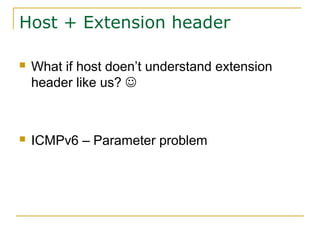
Host + Extension header
 What if host doen’t understand extension
header like us? 
 ICMPv6 – Parameter problem
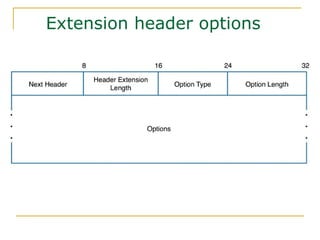
Extension header options
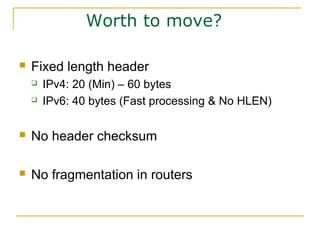
Worth to move?
 Fixed length header
 IPv4: 20 (Min) – 60 bytes
 IPv6: 40 bytes (Fast processing & No HLEN)
 No header checksum
 No fragmentation in routers
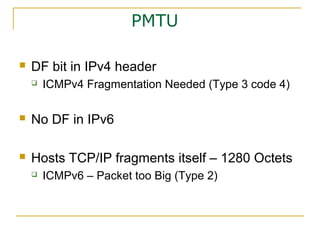
PMTU
 DF bit in IPv4 header
 ICMPv4 Fragmentation Needed (Type 3 code 4)
 No DF in IPv6
 Hosts TCP/IP fragments itself – 1280 Octets
 ICMPv6 – Packet too Big (Type 2)
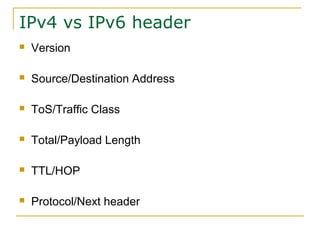
IPv4 vs IPv6 header
 Version
 Source/Destination Address
 ToS/Traffic Class
 Total/Payload Length
 TTL/HOP
 Protocol/Next header
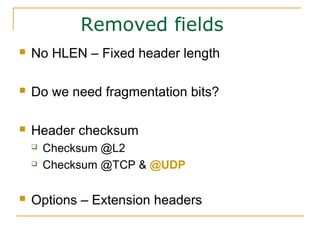
Removed fields
 No HLEN – Fixed header length
 Do we need fragmentation bits?
 Header checksum
 Checksum @L2
 Checksum @TCP & @UDP
 Options – Extension headers
Show headers?
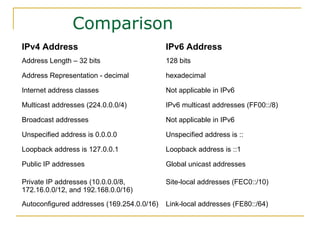
Comparison
IPv4 Address IPv6 Address
Address Length – 32 bits 128 bits
Address Representation - decimal hexadecimal
Internet address classes Not applicable in IPv6
Multicast addresses (224.0.0.0/4) IPv6 multicast addresses (FF00::/8)
Broadcast addresses Not applicable in IPv6
Unspecified address is 0.0.0.0 Unspecified address is ::
Loopback address is 127.0.0.1 Loopback address is ::1
Public IP addresses Global unicast addresses
Private IP addresses (10.0.0.0/8,
172.16.0.0/12, and 192.168.0.0/16)
Site-local addresses (FEC0::/10)
Autoconfigured addresses (169.254.0.0/16) Link-local addresses (FE80::/64)
IPv6
 Why IPv6?
 IPv6 Protocol
 IPv6 Addressing
 IPv6 Address types
 ICMPv6
 NDP
 DHCP (v4 & v6)
 Dual stack
 Tunneling
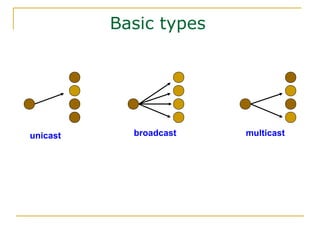
Basic types
unicast broadcast multicast
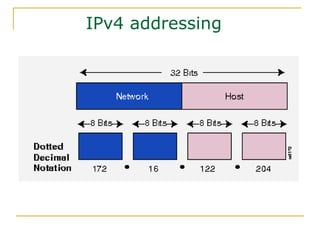
IPv4 addressing
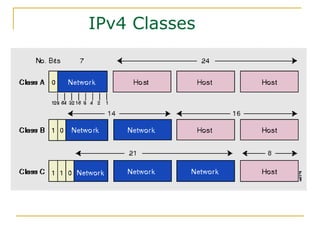
IPv4 Classes
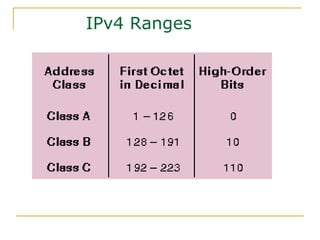
IPv4 Ranges
IPv6 Addressing
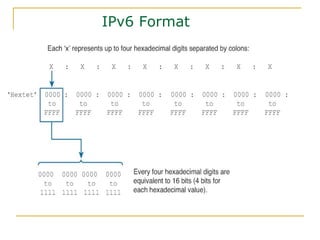
 Hex numbering system
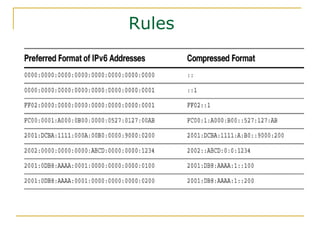
 Rules
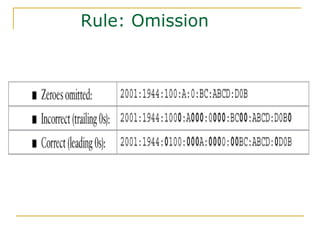
 Omission of leading 0s
 Omission of all-0s hextets
IPv6 Format
Rule: Omission
Rules
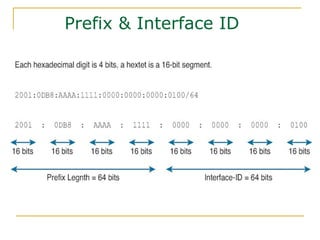
Prefix & Interface ID
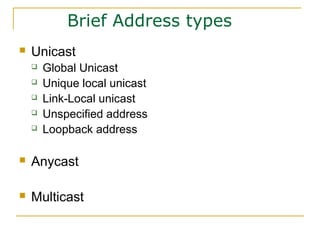
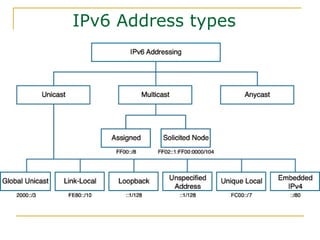
Brief Address types
 Unicast
 Global Unicast
 Unique local unicast
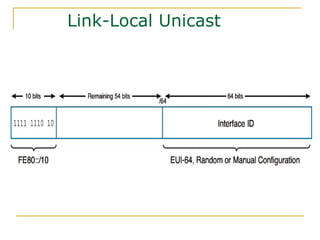
 Link-Local unicast
 Unspecified address
 Loopback address
 Anycast
 Multicast
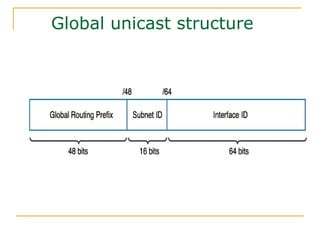
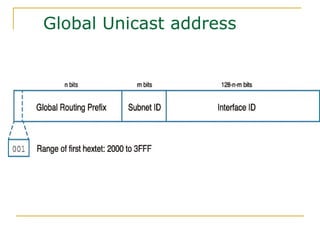
Global unicast structure
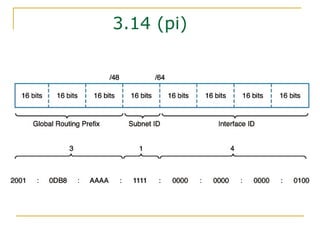
3.14 (pi)
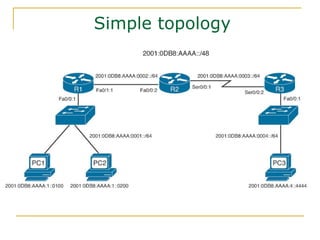
Simple topology
Subnetting IPv4
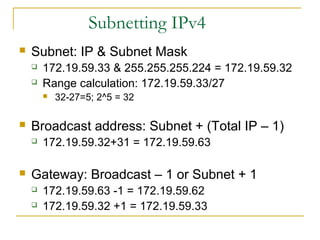
 Subnet: IP & Subnet Mask
 172.19.59.33 & 255.255.255.224 = 172.19.59.32
 Range calculation: 172.19.59.33/27
 32-27=5; 2^5 = 32
 Broadcast address: Subnet + (Total IP – 1)
 172.19.59.32+31 = 172.19.59.63
 Gateway: Broadcast – 1 or Subnet + 1
 172.19.59.63 -1 = 172.19.59.62
 172.19.59.32 +1 = 172.19.59.33
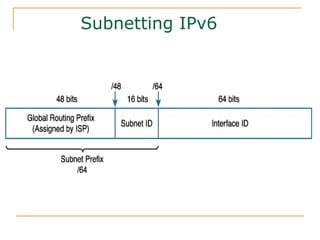
Subnetting IPv6
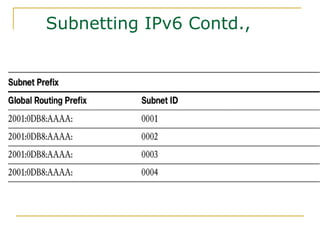
Subnetting IPv6 Contd.,
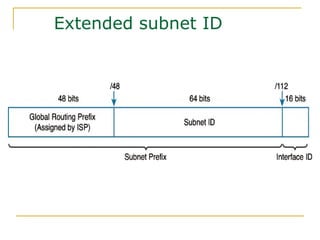
Extended subnet ID
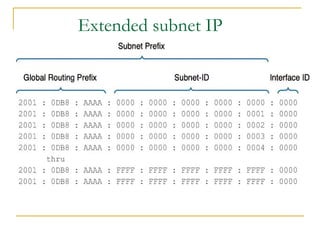
Extended subnet IP
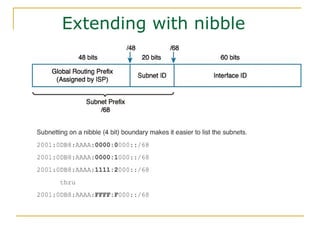
Extending with nibble
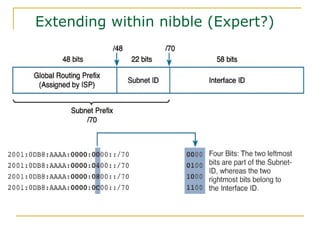
Extending within nibble (Expert?)
Why do I extend subnet?
 IPv6 NDP Table Exhaustion attach
 NDP Table Exhaustion Attack
 DoS attack
 Refer
01HW264569SharedTrainingPresentationsPa
IPv6
 Why IPv6?
 IPv6 Protocol
 IPv6 Addressing
 IPv6 Address types
 ICMPv6
 NDP
 DHCP (v4 & v6)
 Dual stack
 Tunneling
IPv6 Address types
Global Unicast address
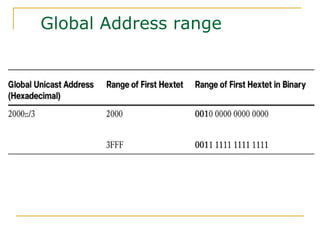
Global Address range
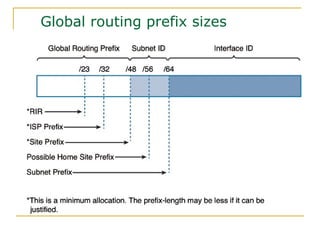
Global routing prefix sizes
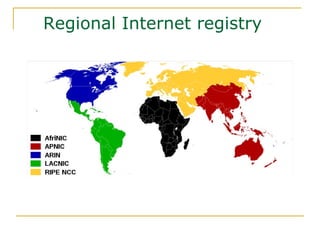
Regional Internet registry
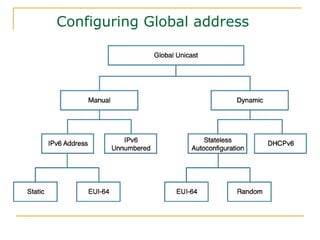
Configuring Global address
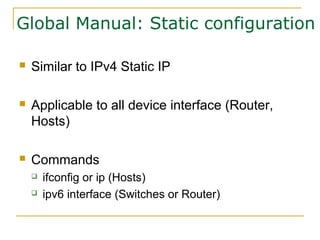
Global Manual: Static configuration
 Similar to IPv4 Static IP
 Applicable to all device interface (Router,
Hosts)
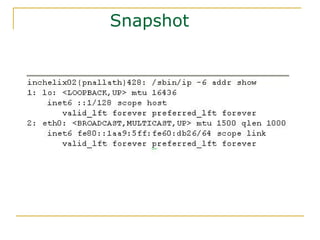
 Commands
 ifconfig or ip (Hosts)
 ipv6 interface (Switches or Router)
Snapshot
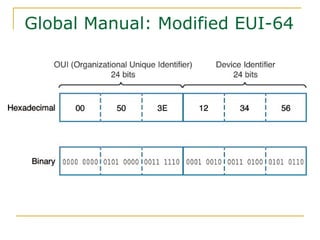
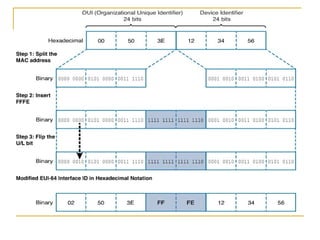
Global Manual: Modified EUI-64
Global Manual: Unnumbered IPv6
 Configuring IP of another interface
 Not compatible with Alcatel Switch
 Further info?
Global dynamic
 Global dynamic can be done using
 SLAAC
 DHCPv6
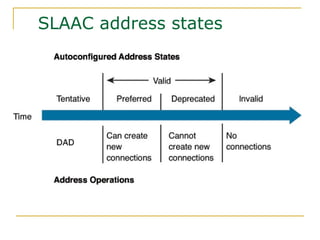
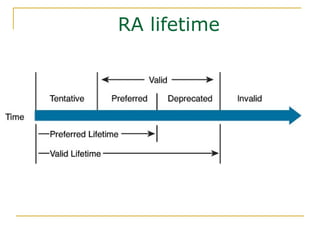
 SLAAC IP address states
 Tentative
 Preferred
 Deprecated
 Valid
 Invalid
SLAAC address states
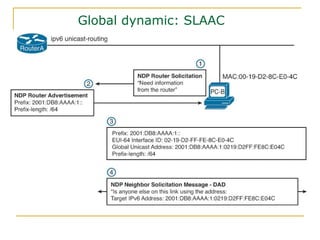
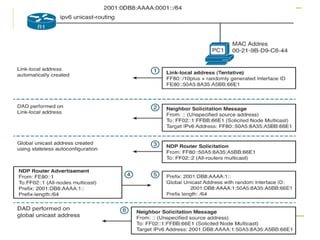
Global dynamic: SLAAC
 Involves following ICMPv6 message
 Router Solicitation
 Router Advertisement
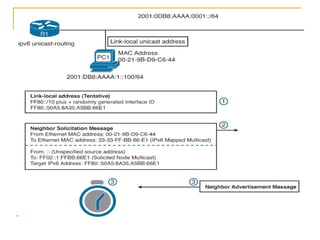
 Neighbor solicitation
 Neighbor advertisement
Global dynamic: SLAAC
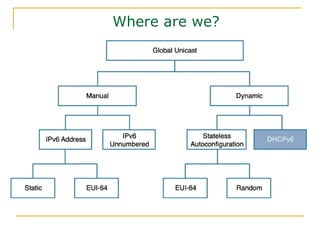
Where are we?
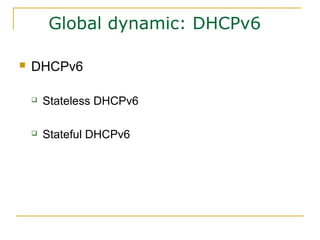
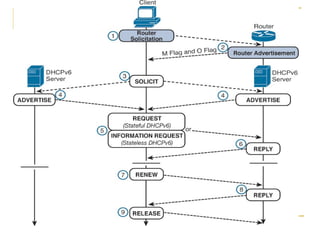
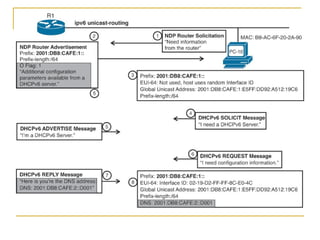
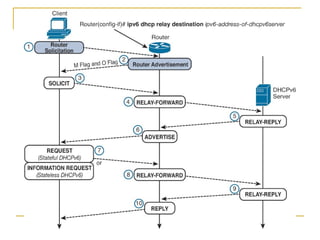
Global dynamic: DHCPv6
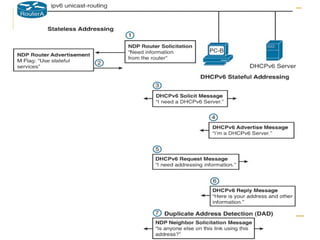
 DHCPv6
 Stateless DHCPv6
 Stateful DHCPv6
Where are we?
Link-Local Unicast
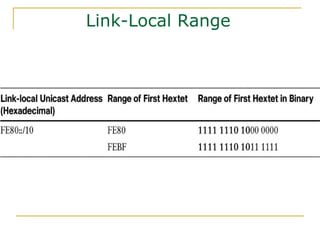
Link-Local Range
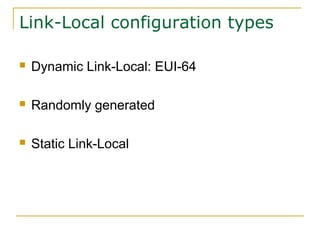
Link-Local configuration types
 Dynamic Link-Local: EUI-64
 Randomly generated
 Static Link-Local
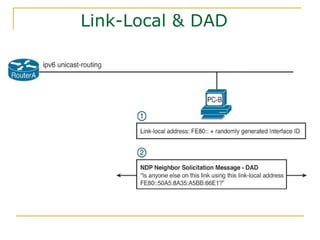
Link-Local & DAD
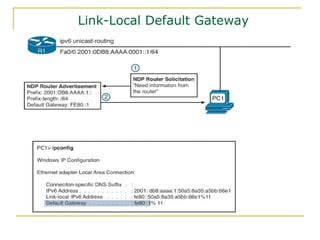
Link-Local Default Gateway
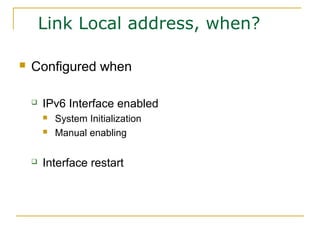
Link Local address, when?
 Configured when
 IPv6 Interface enabled
 System Initialization
 Manual enabling
 Interface restart
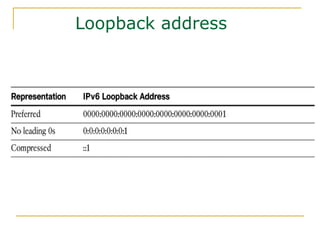
Loopback address
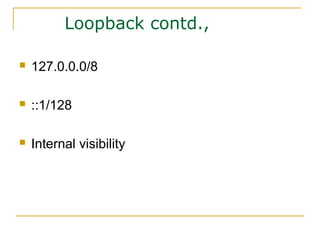
Loopback contd.,
 127.0.0.0/8
 ::1/128
 Internal visibility
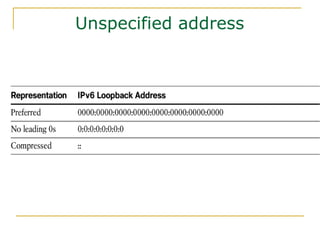
Unspecified address
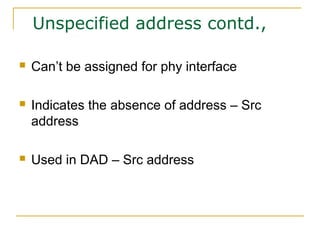
Unspecified address contd.,
 Can’t be assigned for phy interface
 Indicates the absence of address – Src
address
 Used in DAD – Src address
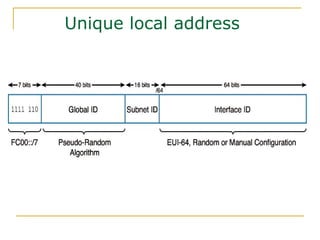
Unique local address
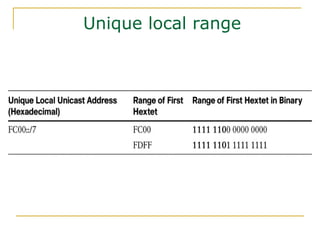
Unique local range
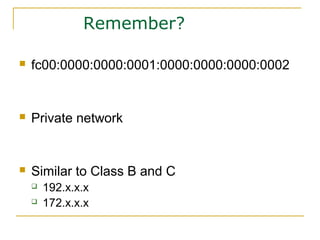
Remember?
 fc00:0000:0000:0001:0000:0000:0000:0002
 Private network
 Similar to Class B and C
 192.x.x.x
 172.x.x.x
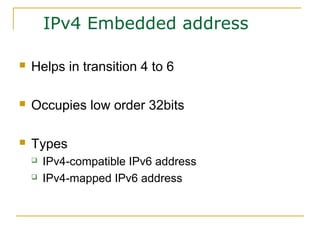
IPv4 Embedded address
 Helps in transition 4 to 6
 Occupies low order 32bits
 Types
 IPv4-compatible IPv6 address
 IPv4-mapped IPv6 address
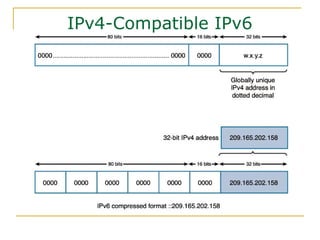
IPv4-Compatible IPv6
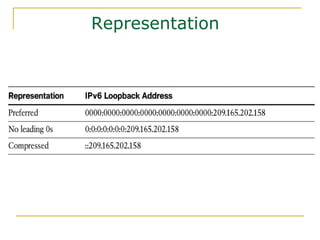
Representation
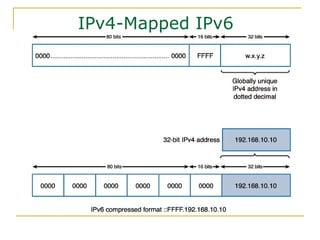
IPv4-Mapped IPv6
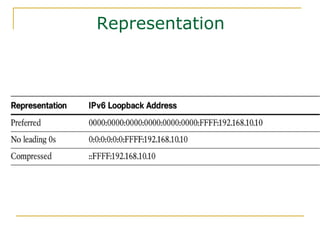
Representation
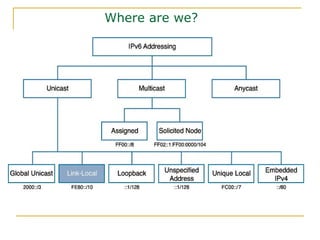
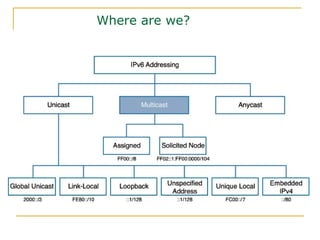
Where are we?
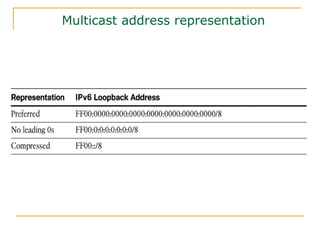
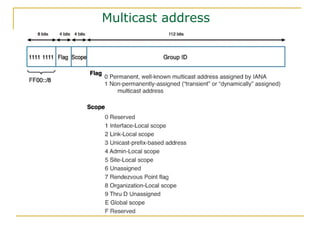
Multicast address representation
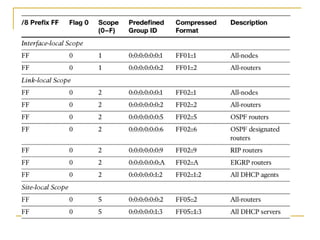
Multicast address
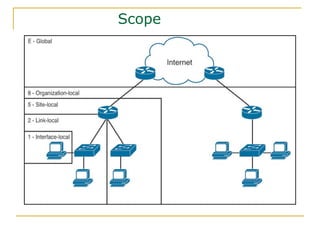
Scope
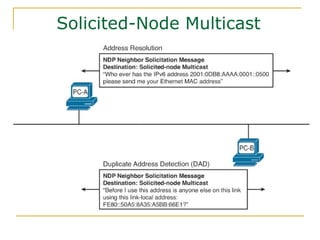
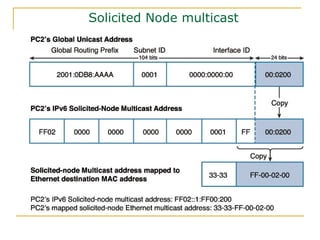
Solicited-Node Multicast
 Will be explored in NDP
 Used for,
 Address resolution
 Duplicate Address Detection
Solicited-Node Multicast
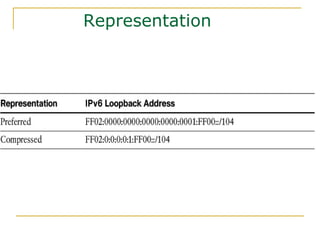
Representation
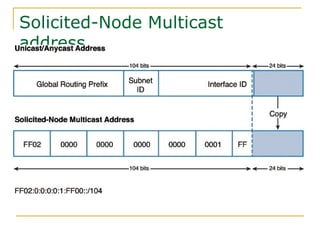
Solicited-Node Multicast
address
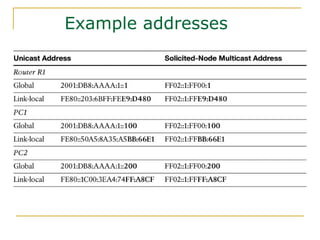
Example addresses
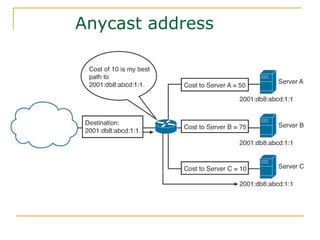
Anycast address
IPv6
 Why IPv6?
 IPv6 Protocol
 IPv6 Addressing
 IPv6 Address types
 ICMPv6
 NDP
 DHCP (v4 & v6)
 Dual stack
 Tunneling
ICMPv6
 Similar to ICMP for v4
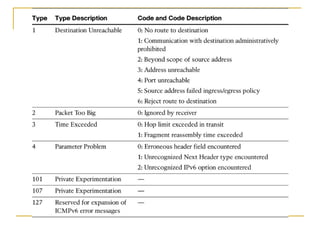
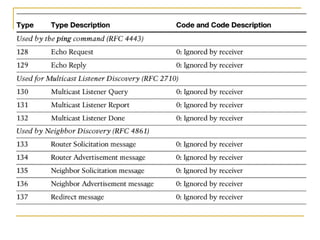
 Error message (Code: 0-127)
 Information message (Code: 128-255)
 Multicast Listener Discovery
 Neighbor Discovery Protocol
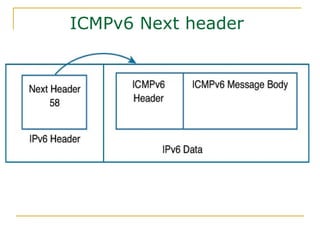
ICMPv6 Next header
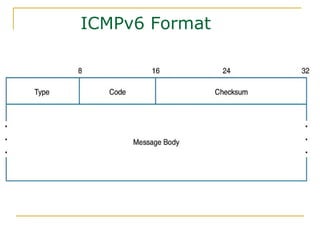
ICMPv6 Format
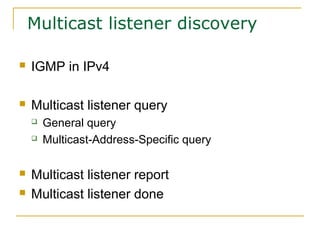
Multicast listener discovery
 IGMP in IPv4
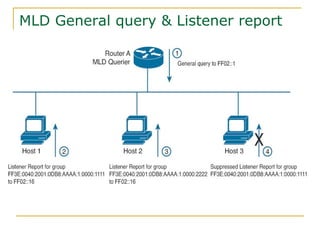
 Multicast listener query
 General query
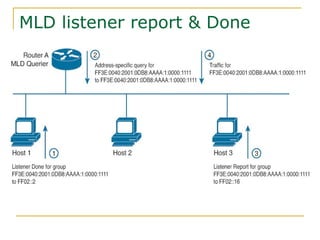
 Multicast-Address-Specific query
 Multicast listener report
 Multicast listener done
MLD General query & Listener report
MLD listener report & Done
IPv6
 Why IPv6?
 IPv6 Protocol
 IPv6 Addressing
 IPv6 Address types
 ICMPv6
 NDP
 DHCP (v4 & v6)
 Dual stack
 Tunneling
Neighbor Discovery Protocol
 Heart of IPv6 TCP/IP stack
 Used for,
 SLAAC
 DAD
 Address resolution
 NUD
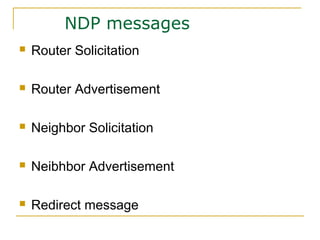
NDP messages
 Router Solicitation
 Router Advertisement
 Neighbor Solicitation
 Neibhbor Advertisement
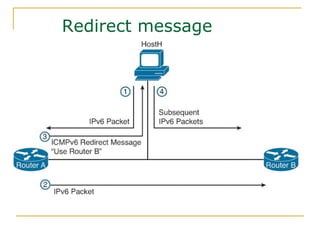
 Redirect message
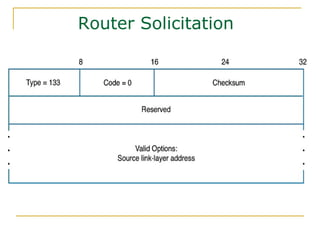
Router Solicitation
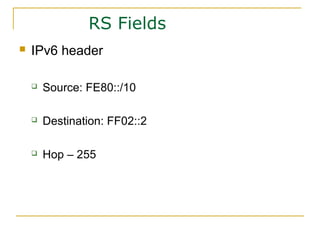
RS Fields
 IPv6 header
 Source: FE80::/10
 Destination: FF02::2
 Hop – 255
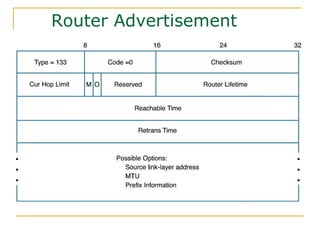
Router Advertisement
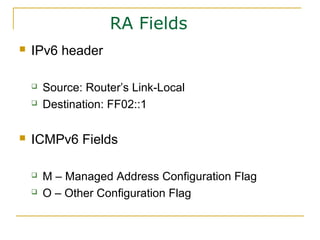
RA Fields
 IPv6 header
 Source: Router’s Link-Local
 Destination: FF02::1
 ICMPv6 Fields
 M – Managed Address Configuration Flag
 O – Other Configuration Flag
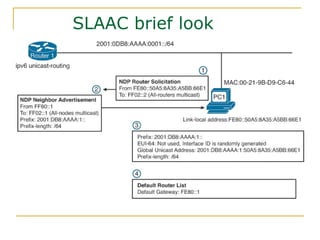
SLAAC brief look
RA lifetime
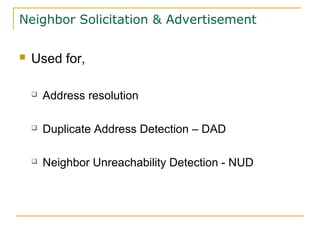
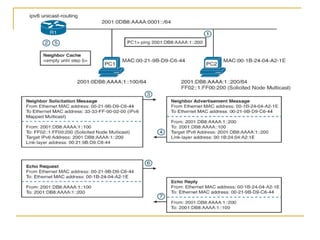
Neighbor Solicitation & Advertisement
 Used for,
 Address resolution
 Duplicate Address Detection – DAD
 Neighbor Unreachability Detection - NUD
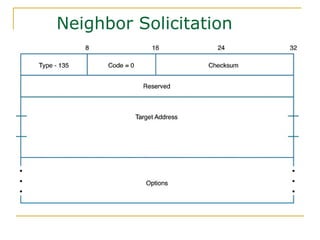
Neighbor Solicitation
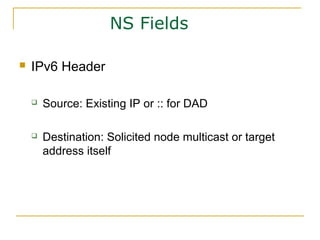
NS Fields
 IPv6 Header
 Source: Existing IP or :: for DAD
 Destination: Solicited node multicast or target
address itself
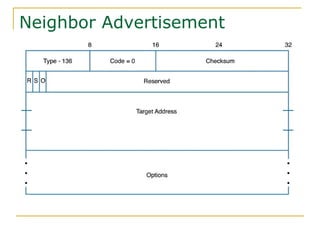
Neighbor Advertisement
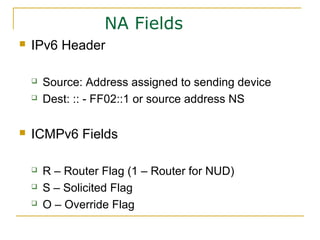
NA Fields
 IPv6 Header
 Source: Address assigned to sending device
 Dest: :: - FF02::1 or source address NS
 ICMPv6 Fields
 R – Router Flag (1 – Router for NUD)
 S – Solicited Flag
 O – Override Flag
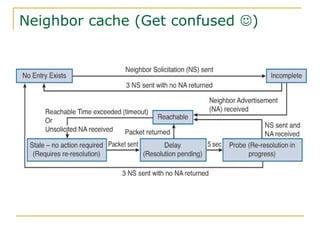
Neighbor cache (Get confused )
Solicited Node multicast
Redirect message
IPv6
 Why IPv6?
 IPv6 Protocol
 IPv6 Addressing
 IPv6 Address types
 ICMPv6
 NDP
 DHCP (v4 & v6)
 Dual stack
 Tunneling
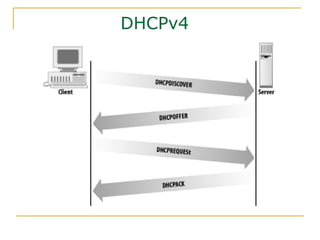
DHCPv4
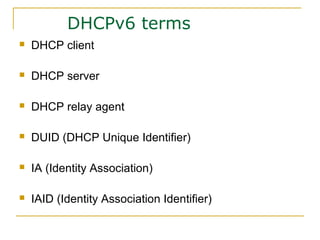
DHCPv6 terms
 DHCP client
 DHCP server
 DHCP relay agent
 DUID (DHCP Unique Identifier)
 IA (Identity Association)
 IAID (Identity Association Identifier)
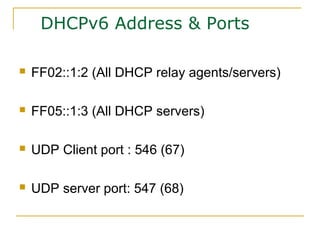
DHCPv6 Address & Ports
 FF02::1:2 (All DHCP relay agents/servers)
 FF05::1:3 (All DHCP servers)
 UDP Client port : 546 (67)
 UDP server port: 547 (68)
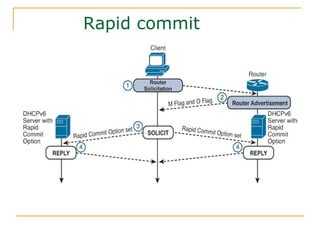
Rapid commit
IPv6
 Why IPv6?
 IPv6 Protocol
 IPv6 Addressing
 IPv6 Address types
 ICMPv6
 NDP
 DHCP (v4 & v6)
 Dual stack
 Tunneling
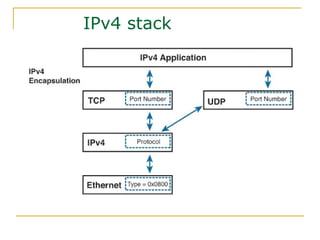
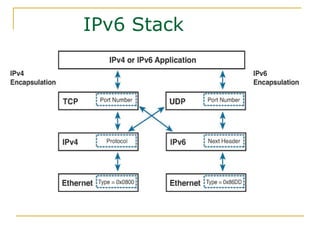
IPv4 stack
IPv6 Stack
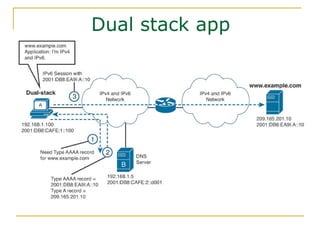
Dual stack app
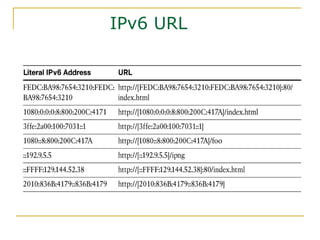
IPv6 URL
IPv6
 Why IPv6?
 IPv6 Protocol
 IPv6 Addressing
 IPv6 Address types
 ICMPv6
 NDP
 DHCP (v4 & v6)
 Dual stack
 Tunneling
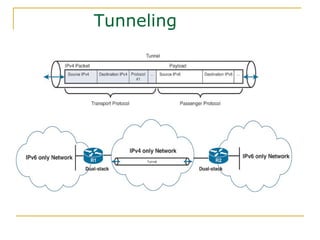
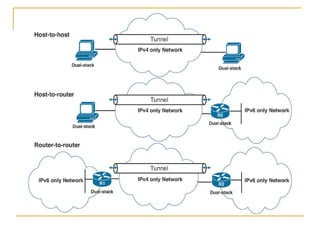
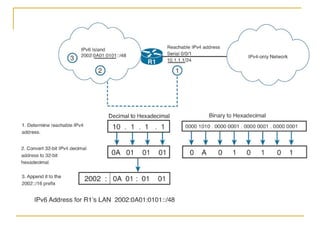
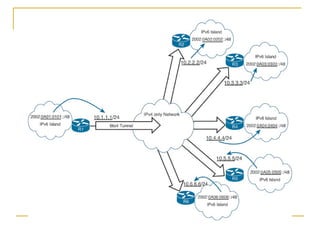
Tunneling
IPv6_Quick_Start_Guide

IPv6_Quick_Start_Guide