





WELCOME DELHI IT PROShttp://groups.msn.com/itdelhiug
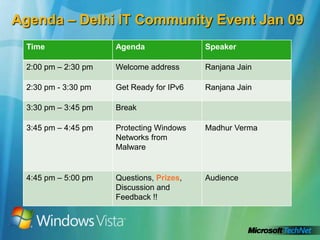
Agenda – Delhi IT Community Event Jan 09
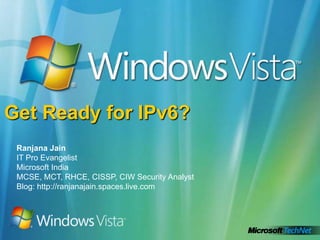
Get Ready for IPv6?Ranjana JainIT Pro EvangelistMicrosoft IndiaMCSE, MCT, RHCE, CISSP, CIW Security AnalystBlog: http://ranjanajain.spaces.live.com
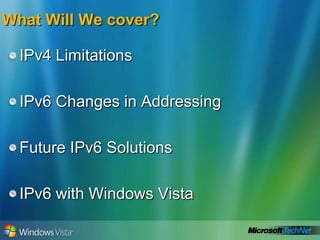
IPv4 LimitationsIPv6 Changes in AddressingFuture IPv6 SolutionsIPv6 with Windows VistaWhat Will We cover?
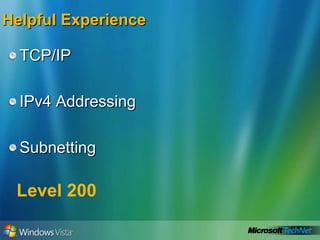
TCP/IPIPv4 AddressingSubnettingLevel 200Helpful Experience
Introducing IPv6Addressing with IPv6Transitioning to IPv6Exploring IPv6 ScenariosAgenda
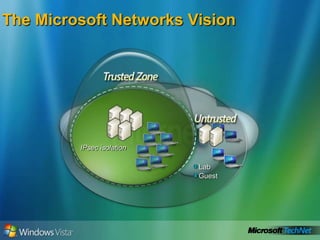
The Microsoft Networks VisionIPsec isolationLabGuest
The Microsoft Networks Vision - NotesIPsec isolationLabGuest
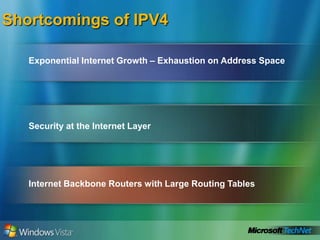
Shortcomings of IPV4Exponential Internet Growth – Exhaustion on Address SpaceSecurity at the Internet LayerInternet Backbone Routers with Large Routing Tables
Shortcomings of IPV4 - NotesExponential Internet Growth – Exhaustion on Address SpaceSecurity at the Internet LayerInternet Backbone Routers with Large Routing Tables
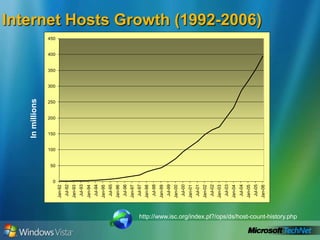
Internet Hosts Growth (1992-2006)In millionshttp://www.isc.org/index.pl?/ops/ds/host-count-history.php
IPv6 as a Global Solution
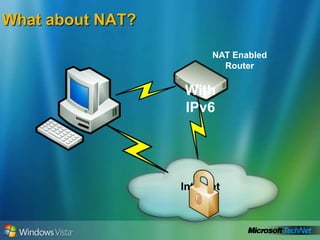
What about NAT?NAT Enabled RouterInternetWith IPv6
Introducing IPv6Addressing with IPv6Transitioning to IPv6Exploring IPv6 ScenariosAgenda
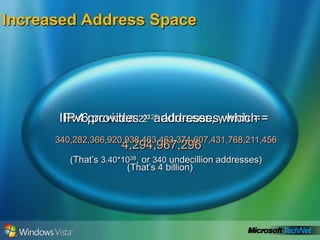
Increased Address SpaceIPv4 provides 232 addresses, which =4,294,967,296(That’s 4 billion)IPv6 provides 2128 addresses, which = 340,282,366,920,938,463,463,374,607,431,768,211,456(That’s 3.40*1038, or 340 undecillion addresses)
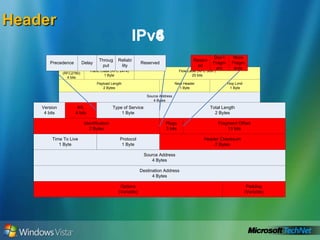
HeaderIPv4IPv6
Header - NotesIPv4IPv6
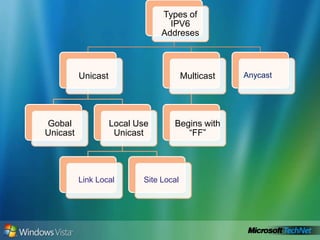
AnycastLink LocalSite Local
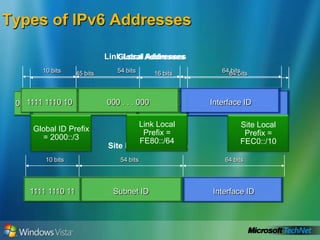
Types of IPv6 AddressesLink Local AddressesSite Local Addresses10 bits64 bits54 bits10 bits64 bits54 bitsGlobal Addresses1111 1110 10Interface ID000 . . . 0001111 1110 11Interface IDSubnet ID64 bits45 bits16 bitsInterface IDSubnet ID001Global Routing Prefix
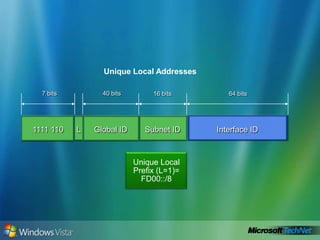
Unique Local Addresses7 bits40 bits64 bits16 bits1111 110Interface IDGlobal IDSubnet IDL
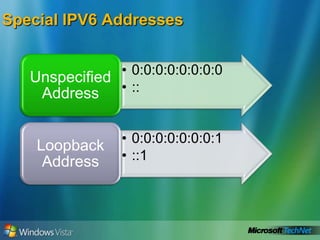
Special IPV6 Addresses
Types of IPv6 Addresses - NotesLocal Link AddressesUnique Local Addresses10 bits64 bits54 bitsGlobal Addresses7 bits40 bits64 bits16 bits1111 1110 10Interface ID000 . . . 00064 bits45 bits16 bitsInterface IDSubnet ID001Global Routing Prefix1111 110Interface IDGlobal IDSubnet IDL
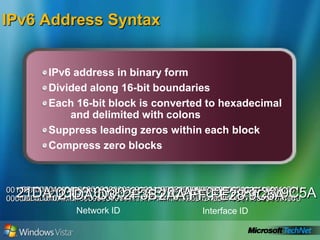
IPv6 Address SyntaxIPv6 address in binary formDivided along 16-bit boundariesEach 16-bit block is converted to hexadecimal           and delimited with colonsSuppress leading zeros within each blockCompress zero blocks0010000111011010000000001101001100000000000000000010111100111011 000000101010101000000000111111111111111000101000100111000101101021DA:00D3:0000:2F3B:02AA:00FF:FE28:9C5A21DA:D3:0:2F3B:2AA:FF:FE28:9C5A0010000111011010   0000000011010011   0000000000000000   0010111100111011 0000001010101010   0000000011111111   1111111000101000   10011100010110102AA:FF:FE28:9C5A21DA:D3::2F3B:Network IDInterface ID
IPv6 Address Syntax - NotesIPv6 address in binary formDivided along 16-bit boundariesEach 16-bit block is converted to hexadecimal           and delimited with colonsSuppress leading zeros within each blockCompress zero blocks0010000111011010000000001101001100000000000000000010111100111011 000000101010101000000000111111111111111000101000100111000101101021DA:00D3:0000:2F3B:02AA:00FF:FE28:9C5A21DA:D3:0:2F3B:2AA:FF:FE28:9C5A0010000111011010   0000000011010011   0000000000000000   0010111100111011 0000001010101010   0000000011111111   1111111000101000   10011100010110102AA:FF:FE28:9C5A21DA:D3::2F3B:Network IDInterface ID
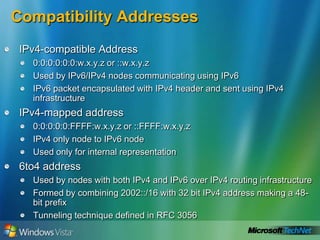
Compatibility AddressesIPv4-compatible Address0:0:0:0:0:0:w.x.y.z or ::w.x.y.zUsed by IPv6/IPv4 nodes communicating using IPv6IPv6 packet encapsulated with IPv4 header and sent using IPv4 infrastructureIPv4-mapped address0:0:0:0:0:FFFF:w.x.y.z or ::FFFF:w.x.y.zIPv4 only node to IPv6 nodeUsed only for internal representation6to4 addressUsed by nodes with both IPv4 and IPv6 over IPv4 routing infrastructureFormed by combining 2002::/16 with 32 bit IPv4 address making a 48-bit prefixTunneling technique defined in RFC 3056
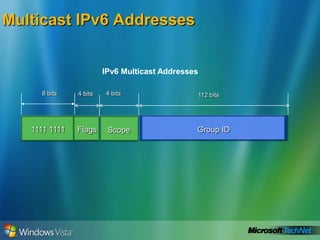
Multicast IPv6 AddressesIPv6 Multicast Addresses8 bits4 bits112 bits1111 1111Group IDFlagsScope4 bits
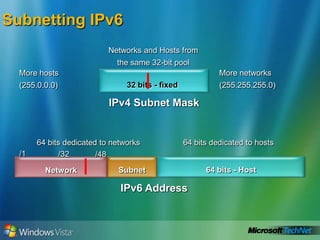
Subnetting IPv664 bits - HostSubnetNetworkNetworks and Hosts from  the same 32-bit poolMore networks (255.255.255.0)More hosts (255.0.0.0)32 bits - fixedIPv4 Subnet Mask64 bits dedicated to hosts64 bits dedicated to networks/1/32/48IPv6 Address
Introducing IPv6Addressing with IPv6Transitioning to IPv6Exploring IPv6 ScenariosAgenda
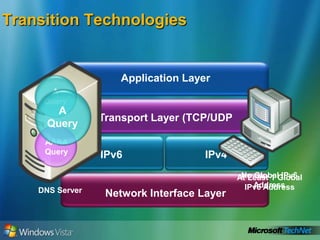
Transition TechnologiesApplication LayerTransport Layer (TCP/UDPIPv6IPv4AAAA QueryA QueryA QueryNetwork Interface LayerNo Global IPv6 AddressAt Least 1 Global IPv6 AddressDNS Server
Transition Technologies - NotesApplication LayerTransport Layer (TCP/UDPIPv6IPv4AAAA QueryA QueryA QueryNetwork Interface LayerNo Global IPv6 AddressAt Least 1 Global IPv6 AddressDNS Server
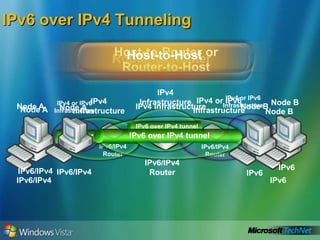
IPv6 over IPv4 TunnelingRouter to RouterHost-to-Router or Router-to-HostIPv4 or IPv6 InfrastructureIPv4 InfrastructureNode ANode BIPv4 InfrastructureIPv4 or IPv6 InfrastructureNode BIPv6 over IPv4 tunnelIPv4 or IPv6 InfrastructureNode AHost-to-HostIPv4 InfrastructureNode BIPv6 over IPv4 tunnelNode AIPv6/IPv4 RouterIPv6/IPv4 RouterIPv6/IPv4IPv6IPv6/IPv4 RouterIPv6 over IPv4 tunnelIPv6IPv6/IPv4IPv6IPv6/IPv4

Get Ready For Ipv6

  • 1.
    WELCOME DELHI ITPROShttp://groups.msn.com/itdelhiug
  • 2.
    Agenda – DelhiIT Community Event Jan 09
  • 3.
    Get Ready forIPv6?Ranjana JainIT Pro EvangelistMicrosoft IndiaMCSE, MCT, RHCE, CISSP, CIW Security AnalystBlog: http://ranjanajain.spaces.live.com
  • 4.
    IPv4 LimitationsIPv6 Changesin AddressingFuture IPv6 SolutionsIPv6 with Windows VistaWhat Will We cover?
  • 5.
  • 6.
    Introducing IPv6Addressing withIPv6Transitioning to IPv6Exploring IPv6 ScenariosAgenda
  • 7.
    The Microsoft NetworksVisionIPsec isolationLabGuest
  • 8.
    The Microsoft NetworksVision - NotesIPsec isolationLabGuest
  • 9.
    Shortcomings of IPV4ExponentialInternet Growth – Exhaustion on Address SpaceSecurity at the Internet LayerInternet Backbone Routers with Large Routing Tables
  • 10.
    Shortcomings of IPV4- NotesExponential Internet Growth – Exhaustion on Address SpaceSecurity at the Internet LayerInternet Backbone Routers with Large Routing Tables
  • 11.
    Internet Hosts Growth(1992-2006)In millionshttp://www.isc.org/index.pl?/ops/ds/host-count-history.php
  • 12.
    IPv6 as aGlobal Solution
  • 13.
    What about NAT?NATEnabled RouterInternetWith IPv6
  • 14.
    Introducing IPv6Addressing withIPv6Transitioning to IPv6Exploring IPv6 ScenariosAgenda
  • 15.
    Increased Address SpaceIPv4provides 232 addresses, which =4,294,967,296(That’s 4 billion)IPv6 provides 2128 addresses, which = 340,282,366,920,938,463,463,374,607,431,768,211,456(That’s 3.40*1038, or 340 undecillion addresses)
  • 16.
  • 17.
  • 18.
  • 19.
    Types of IPv6AddressesLink Local AddressesSite Local Addresses10 bits64 bits54 bits10 bits64 bits54 bitsGlobal Addresses1111 1110 10Interface ID000 . . . 0001111 1110 11Interface IDSubnet ID64 bits45 bits16 bitsInterface IDSubnet ID001Global Routing Prefix
  • 20.
    Unique Local Addresses7bits40 bits64 bits16 bits1111 110Interface IDGlobal IDSubnet IDL
  • 21.
  • 22.
    Types of IPv6Addresses - NotesLocal Link AddressesUnique Local Addresses10 bits64 bits54 bitsGlobal Addresses7 bits40 bits64 bits16 bits1111 1110 10Interface ID000 . . . 00064 bits45 bits16 bitsInterface IDSubnet ID001Global Routing Prefix1111 110Interface IDGlobal IDSubnet IDL
  • 23.
    IPv6 Address SyntaxIPv6address in binary formDivided along 16-bit boundariesEach 16-bit block is converted to hexadecimal and delimited with colonsSuppress leading zeros within each blockCompress zero blocks0010000111011010000000001101001100000000000000000010111100111011 000000101010101000000000111111111111111000101000100111000101101021DA:00D3:0000:2F3B:02AA:00FF:FE28:9C5A21DA:D3:0:2F3B:2AA:FF:FE28:9C5A0010000111011010 0000000011010011 0000000000000000 0010111100111011 0000001010101010 0000000011111111 1111111000101000 10011100010110102AA:FF:FE28:9C5A21DA:D3::2F3B:Network IDInterface ID
  • 24.
    IPv6 Address Syntax- NotesIPv6 address in binary formDivided along 16-bit boundariesEach 16-bit block is converted to hexadecimal and delimited with colonsSuppress leading zeros within each blockCompress zero blocks0010000111011010000000001101001100000000000000000010111100111011 000000101010101000000000111111111111111000101000100111000101101021DA:00D3:0000:2F3B:02AA:00FF:FE28:9C5A21DA:D3:0:2F3B:2AA:FF:FE28:9C5A0010000111011010 0000000011010011 0000000000000000 0010111100111011 0000001010101010 0000000011111111 1111111000101000 10011100010110102AA:FF:FE28:9C5A21DA:D3::2F3B:Network IDInterface ID
  • 25.
    Compatibility AddressesIPv4-compatible Address0:0:0:0:0:0:w.x.y.zor ::w.x.y.zUsed by IPv6/IPv4 nodes communicating using IPv6IPv6 packet encapsulated with IPv4 header and sent using IPv4 infrastructureIPv4-mapped address0:0:0:0:0:FFFF:w.x.y.z or ::FFFF:w.x.y.zIPv4 only node to IPv6 nodeUsed only for internal representation6to4 addressUsed by nodes with both IPv4 and IPv6 over IPv4 routing infrastructureFormed by combining 2002::/16 with 32 bit IPv4 address making a 48-bit prefixTunneling technique defined in RFC 3056
  • 26.
    Multicast IPv6 AddressesIPv6Multicast Addresses8 bits4 bits112 bits1111 1111Group IDFlagsScope4 bits
  • 27.
    Subnetting IPv664 bits- HostSubnetNetworkNetworks and Hosts from the same 32-bit poolMore networks (255.255.255.0)More hosts (255.0.0.0)32 bits - fixedIPv4 Subnet Mask64 bits dedicated to hosts64 bits dedicated to networks/1/32/48IPv6 Address
  • 28.
    Introducing IPv6Addressing withIPv6Transitioning to IPv6Exploring IPv6 ScenariosAgenda
  • 29.
    Transition TechnologiesApplication LayerTransportLayer (TCP/UDPIPv6IPv4AAAA QueryA QueryA QueryNetwork Interface LayerNo Global IPv6 AddressAt Least 1 Global IPv6 AddressDNS Server
  • 30.
    Transition Technologies -NotesApplication LayerTransport Layer (TCP/UDPIPv6IPv4AAAA QueryA QueryA QueryNetwork Interface LayerNo Global IPv6 AddressAt Least 1 Global IPv6 AddressDNS Server
  • 31.
    IPv6 over IPv4TunnelingRouter to RouterHost-to-Router or Router-to-HostIPv4 or IPv6 InfrastructureIPv4 InfrastructureNode ANode BIPv4 InfrastructureIPv4 or IPv6 InfrastructureNode BIPv6 over IPv4 tunnelIPv4 or IPv6 InfrastructureNode AHost-to-HostIPv4 InfrastructureNode BIPv6 over IPv4 tunnelNode AIPv6/IPv4 RouterIPv6/IPv4 RouterIPv6/IPv4IPv6IPv6/IPv4 RouterIPv6 over IPv4 tunnelIPv6IPv6/IPv4IPv6IPv6/IPv4
  • 32.
    IPv6 over IPv4TunnelingRouter to RouterHost-to-Router or Router-to-HostIPv4 or IPv6 InfrastructureIPv4 InfrastructureNode ANode BIPv4 InfrastructureIPv4 or IPv6 InfrastructureNode BIPv6 over IPv4 tunnelIPv4 or IPv6 InfrastructureNode AHost-to-HostIPv4 InfrastructureNode BIPv6 over IPv4 tunnelNode AIPv6/IPv4 RouterIPv6/IPv4 RouterIPv6/IPv4IPv6IPv6/IPv4 RouterIPv6 over IPv4 tunnelIPv6IPv6/IPv4IPv6IPv6/IPv4