Could
COULD 
 Ability 
 I could speak China when I was seven. 
 Could you swim when you was nine? 
 She couldn’t get a job anywhere.
COULD 
 Possibility 
 This team has good performance this 
season. They could be a champion. 
 You should take an umbrella, it could rain 
later. 
 Mary couldn't be the one who stole the 
money.
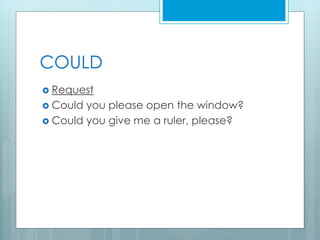
COULD 
 Request 
 Could you please open the window? 
 Could you give me a ruler, please?
May
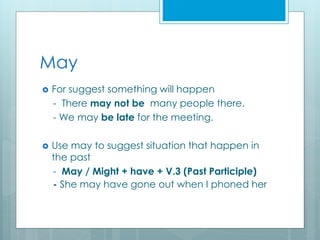
May 
 For suggest something will happen 
- There may not be many people there. 
- We may be late for the meeting. 
 Use may to suggest situation that happen in 
the past 
- May / Might + have + V.3 (Past Participle) 
- She may have gone out when I phoned her
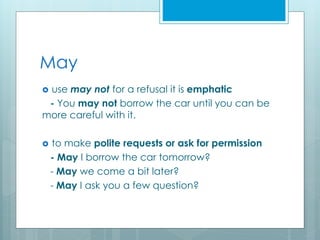
May 
 use may not for a refusal it is emphatic 
- You may not borrow the car until you can be 
more careful with it. 
 to make polite requests or ask for permission 
- May I borrow the car tomorrow? 
- May we come a bit later? 
- May I ask you a few question?
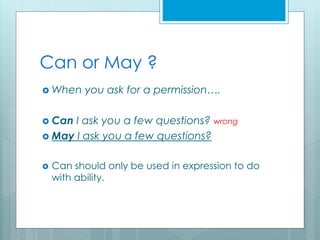
Can or May ? 
 When you ask for a permission…. 
 Can I ask you a few questions? wrong 
 May I ask you a few questions? 
 Can should only be used in expression to do 
with ability.
Might 
 More usual than may 
When we are not sure about something. 
Structure: S + might(not) + infinitive/V.ing 
Examples: 
- I might not be there tomorrow. 
- It might rain today.
Might 
 Use might to suggest small possibility. 
- We might have a party next week. 
 As the past tense of may for requests 
Example: 
- She asked if she might borrow the pen. 
 As the conditional of may 
Example: 
- If I entered the contest, I might win.
Might 
 For permission 
Examples: 
- Might I sit here? 
- Might I ask you a question?
Might 
 Might not 
 It suggests you don’t know if something 
happens. 
 Example: 
- She might not be at the school today.

May Might Could

  • 1.
  • 2.
    COULD  Ability  I could speak China when I was seven.  Could you swim when you was nine?  She couldn’t get a job anywhere.
  • 3.
    COULD  Possibility  This team has good performance this season. They could be a champion.  You should take an umbrella, it could rain later.  Mary couldn't be the one who stole the money.
  • 4.
    COULD  Request  Could you please open the window?  Could you give me a ruler, please?
  • 5.
  • 6.
    May  Forsuggest something will happen - There may not be many people there. - We may be late for the meeting.  Use may to suggest situation that happen in the past - May / Might + have + V.3 (Past Participle) - She may have gone out when I phoned her
  • 7.
    May  usemay not for a refusal it is emphatic - You may not borrow the car until you can be more careful with it.  to make polite requests or ask for permission - May I borrow the car tomorrow? - May we come a bit later? - May I ask you a few question?
  • 8.
    Can or May?  When you ask for a permission….  Can I ask you a few questions? wrong  May I ask you a few questions?  Can should only be used in expression to do with ability.
  • 9.
    Might  Moreusual than may When we are not sure about something. Structure: S + might(not) + infinitive/V.ing Examples: - I might not be there tomorrow. - It might rain today.
  • 10.
    Might  Usemight to suggest small possibility. - We might have a party next week.  As the past tense of may for requests Example: - She asked if she might borrow the pen.  As the conditional of may Example: - If I entered the contest, I might win.
  • 11.
    Might  Forpermission Examples: - Might I sit here? - Might I ask you a question?
  • 12.
    Might  Mightnot  It suggests you don’t know if something happens.  Example: - She might not be at the school today.