1.
GEOGRAPHY AS A DISCIPLINE
Geography is concerned with the
description and explanation of the areal
differentiation of the earth surface
Richard Hartshorne
ERATOSTHENESE
The term first coined Greek Scholar
The word geography derived from Greek language
GEO -- EARTH
GRAPHOS -- DESCRIPTION
Geography is the description of the earth
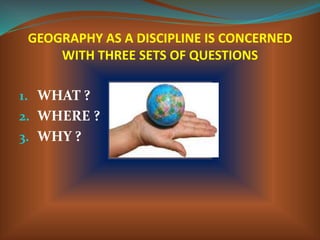
GEOGRAPHY AS A DISCIPLINE IS CONCERNED
WITH THREE SETS OF QUESTIONS
1. WHAT ?
2. WHERE ?
3. WHY ?
WHAT are the patterns of natural and
cultural features found over the surface of
the earth ?
WHERE are these features distributed
over the surface of the earth ?
WHY such relationships between
features, processes and phenomena
take place?
Geography as an integrating discipline -
spatial Synthesis
The shape of the earth is GEOID
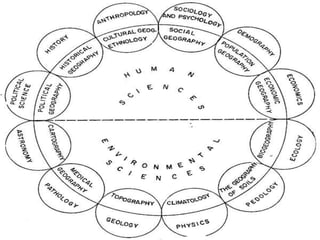
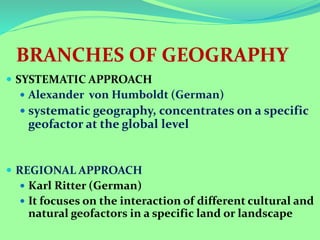
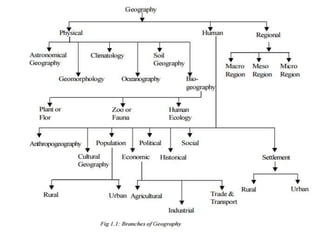
BRANCHES OF GEOGRAPHY
 SYSTEMATIC APPROACH
 Alexander von Humboldt (German)
 systematic geography, concentrates on a specific
geofactor at the global level
 REGIONAL APPROACH
 Karl Ritter (German)
 It focuses on the interaction of different cultural and
natural geofactors in a specific land or landscape
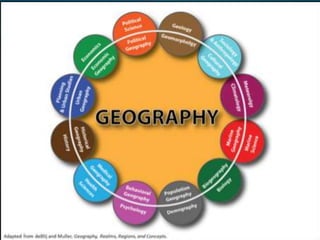
SYSTEMATIC GEOGRAPHY
1. PHYSICAL GEOGRAPHY
2. HUMAN GEOGRAPHY
3. BIOGEOGRAPHY
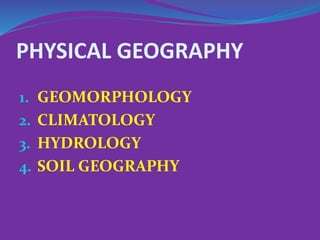
PHYSICAL GEOGRAPHY
1. GEOMORPHOLOGY
2. CLIMATOLOGY
3. HYDROLOGY
4. SOIL GEOGRAPHY
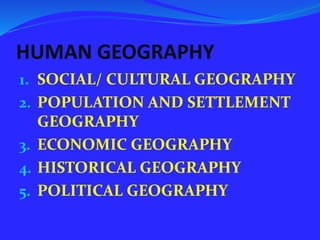
HUMAN GEOGRAPHY
1. SOCIAL/ CULTURAL GEOGRAPHY
2. POPULATION AND SETTLEMENT
GEOGRAPHY
3. ECONOMIC GEOGRAPHY
4. HISTORICAL GEOGRAPHY
5. POLITICAL GEOGRAPHY
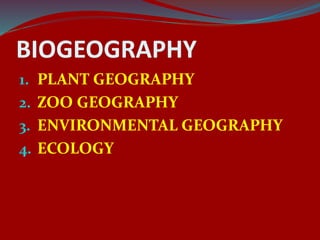
BIOGEOGRAPHY
1. PLANT GEOGRAPHY
2. ZOO GEOGRAPHY
3. ENVIRONMENTAL GEOGRAPHY
4. ECOLOGY
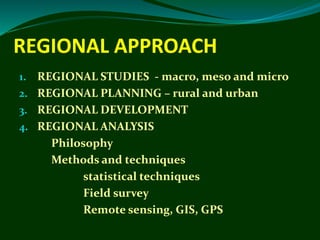
REGIONAL APPROACH
1. REGIONAL STUDIES - macro, meso and micro
2. REGIONAL PLANNING – rural and urban
3. REGIONAL DEVELOPMENT
4. REGIONAL ANALYSIS
Philosophy
Methods and techniques
statistical techniques
Field survey
Remote sensing, GIS, GPS
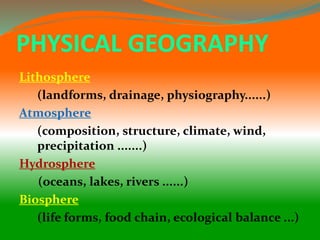
PHYSICAL GEOGRAPHY
Lithosphere
(landforms, drainage, physiography......)
Atmosphere
(composition, structure, climate, wind,
precipitation .......)
Hydrosphere
(oceans, lakes, rivers ......)
Biosphere
(life forms, food chain, ecological balance ...)

GEOGRAPHY AS DISCIPLINE for beginners .pptx

  • 2.
  • 3.
    Geography is concernedwith the description and explanation of the areal differentiation of the earth surface Richard Hartshorne
  • 4.
    ERATOSTHENESE The term firstcoined Greek Scholar The word geography derived from Greek language GEO -- EARTH GRAPHOS -- DESCRIPTION Geography is the description of the earth
  • 5.
    GEOGRAPHY AS ADISCIPLINE IS CONCERNED WITH THREE SETS OF QUESTIONS 1. WHAT ? 2. WHERE ? 3. WHY ?
  • 6.
    WHAT are thepatterns of natural and cultural features found over the surface of the earth ? WHERE are these features distributed over the surface of the earth ? WHY such relationships between features, processes and phenomena take place?
  • 7.
    Geography as anintegrating discipline - spatial Synthesis The shape of the earth is GEOID
  • 10.
    BRANCHES OF GEOGRAPHY SYSTEMATIC APPROACH  Alexander von Humboldt (German)  systematic geography, concentrates on a specific geofactor at the global level  REGIONAL APPROACH  Karl Ritter (German)  It focuses on the interaction of different cultural and natural geofactors in a specific land or landscape
  • 11.
    SYSTEMATIC GEOGRAPHY 1. PHYSICALGEOGRAPHY 2. HUMAN GEOGRAPHY 3. BIOGEOGRAPHY
  • 12.
    PHYSICAL GEOGRAPHY 1. GEOMORPHOLOGY 2.CLIMATOLOGY 3. HYDROLOGY 4. SOIL GEOGRAPHY
  • 13.
    HUMAN GEOGRAPHY 1. SOCIAL/CULTURAL GEOGRAPHY 2. POPULATION AND SETTLEMENT GEOGRAPHY 3. ECONOMIC GEOGRAPHY 4. HISTORICAL GEOGRAPHY 5. POLITICAL GEOGRAPHY
  • 14.
    BIOGEOGRAPHY 1. PLANT GEOGRAPHY 2.ZOO GEOGRAPHY 3. ENVIRONMENTAL GEOGRAPHY 4. ECOLOGY
  • 15.
    REGIONAL APPROACH 1. REGIONALSTUDIES - macro, meso and micro 2. REGIONAL PLANNING – rural and urban 3. REGIONAL DEVELOPMENT 4. REGIONAL ANALYSIS Philosophy Methods and techniques statistical techniques Field survey Remote sensing, GIS, GPS
  • 17.
    PHYSICAL GEOGRAPHY Lithosphere (landforms, drainage,physiography......) Atmosphere (composition, structure, climate, wind, precipitation .......) Hydrosphere (oceans, lakes, rivers ......) Biosphere (life forms, food chain, ecological balance ...)