Human Geography
Nature and Scope
 GEOGRAPHY IS A FIELD OF STUDY IS INTEGRATIVE, EMPIRICAL AND PRACTICAL
 IT STUDIES EACH AND EVERY EVENT ON THE EARTH OVER THE SPACE AND TIME
 HUMAN GEOGRAPHY STUDIES THE RELATIONSHIP BETWEEN MAN AND NATURE
 GEO. CAN BE STUDIED THROUGH LAW MAKING OR DESCRIPTIVE
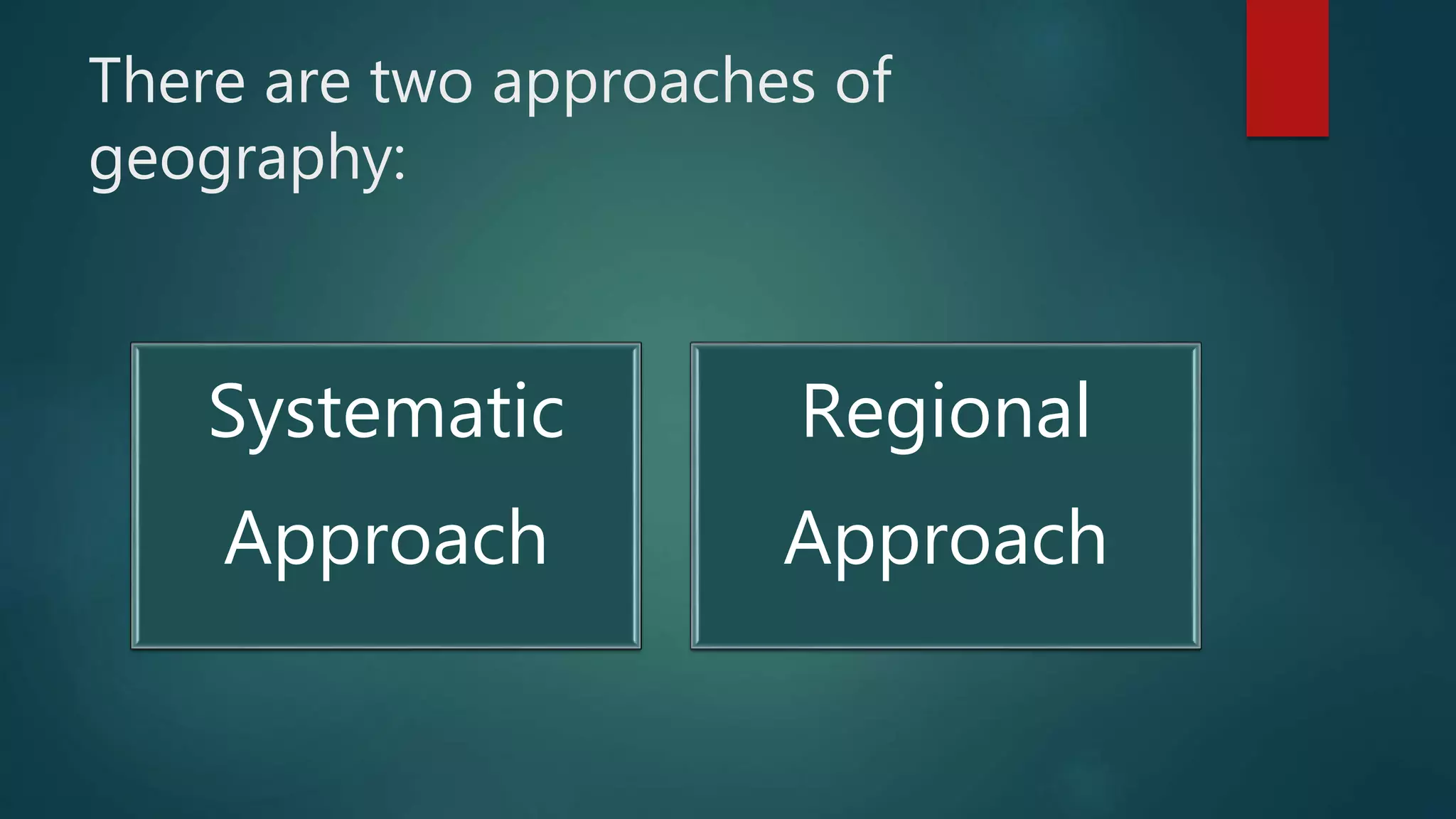
There are two approaches of
geography:
Systematic
Approach
Regional
Approach
Human Geography Defined
 “Human geography is the synthetic study of relationship between human societies
and earth’s surface”. Ratzel
Synthesis has been emphasized in the above definition.
 “Human geography is the study of “the changing relationship between the unresting
man and the unstable earth.” Ellen C. Semple Dynamism in the
relationship is the keyword in Semple’s definition.
 “Conception resulting from a more synthetic knowledge of the physical laws
governing our earth and of the relations between the living beings which inhabit it”.
Paul Vidal de la Blache
Human geography offers a new conception of the interrelationships between earth
and human beings
Nature of Human Geography:
 Human geography studies the inter relationship between the physical
environment and socio-cultural environment created by man.
 Elements of physical are land, water, soil, climate, vegetation, fauna
 Elements of cultural are transport and communication, settlements, crops
Naturalization of Humans:
1) Man interact with nature with the help of technology
2) It is not important that what he creates but with what tools he used to create
3) Technology indicates the level of cultural development of society d.
Understanding the nature helps to create technology
i. Understanding of friction and heat helped to discover fire
ii. Understanding DNA helped to eradicate diseases
iii. Laws of thermodynamics helped to develop fast planes
iv. Knowledge about nature is extremely important to develop technology and
technology loosens the shackles of environment on human being.
v. The interaction between primitive society and nature is called Environmental
Determinism.
Humanizations of Nature
1. With the development of technology people understood the nature well
2. They move from state of necessity to state of possibilities
3. Human activities created cultural landscape
4. So it is called as possibilism
Non-determinism/ Stop and go
Determinism
1. Developed by Griffith Taylor
2. It is a middle path between environmental determinism and possibilism
3. The concept shows that neither is there a situation of absolute necessity
nor is there a
condition of absolute freedom.
4. Sustainable development is the main aim
5. The Neo determinism maintains balance between development and nature
Human Geography Through the
Corridors of Time
Schools of human geography
Welfare School:- Concerned with social well-being of the people:
(a) housing
(b) Health
(c) Education
Radical School:- Concerned with causes of poverty, deprivation and social
Inequality
Behavioral School:- Given importance to lived experience, perception of space
by Social
categories
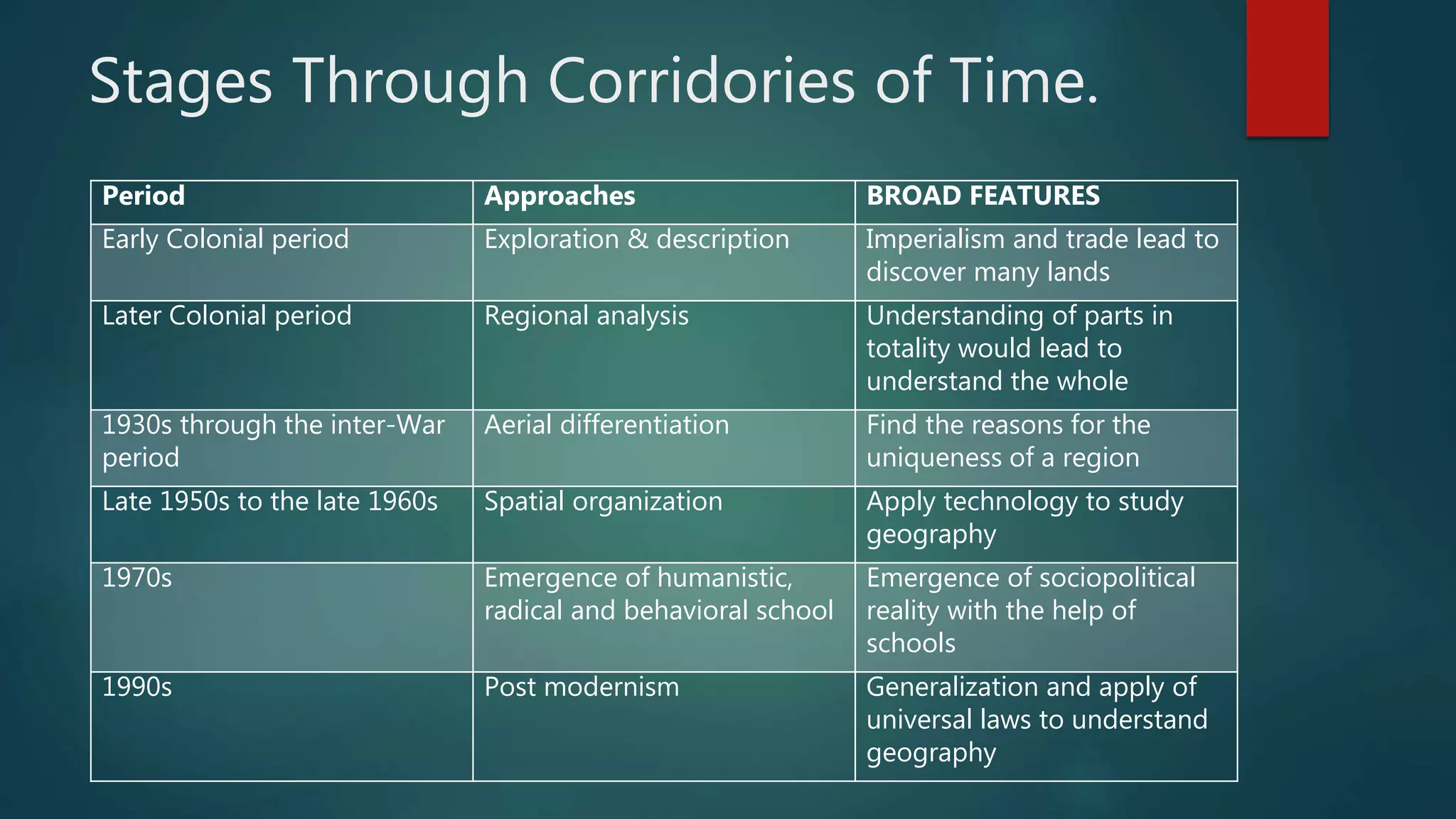
Stages Through Corridories of Time.
Period Approaches BROAD FEATURES
Early Colonial period Exploration & description Imperialism and trade lead to
discover many lands
Later Colonial period Regional analysis Understanding of parts in
totality would lead to
understand the whole
1930s through the inter-War
period
Aerial differentiation Find the reasons for the
uniqueness of a region
Late 1950s to the late 1960s Spatial organization Apply technology to study
geography
1970s Emergence of humanistic,
radical and behavioral school
Emergence of sociopolitical
reality with the help of
schools
1990s Post modernism Generalization and apply of
universal laws to understand
geography
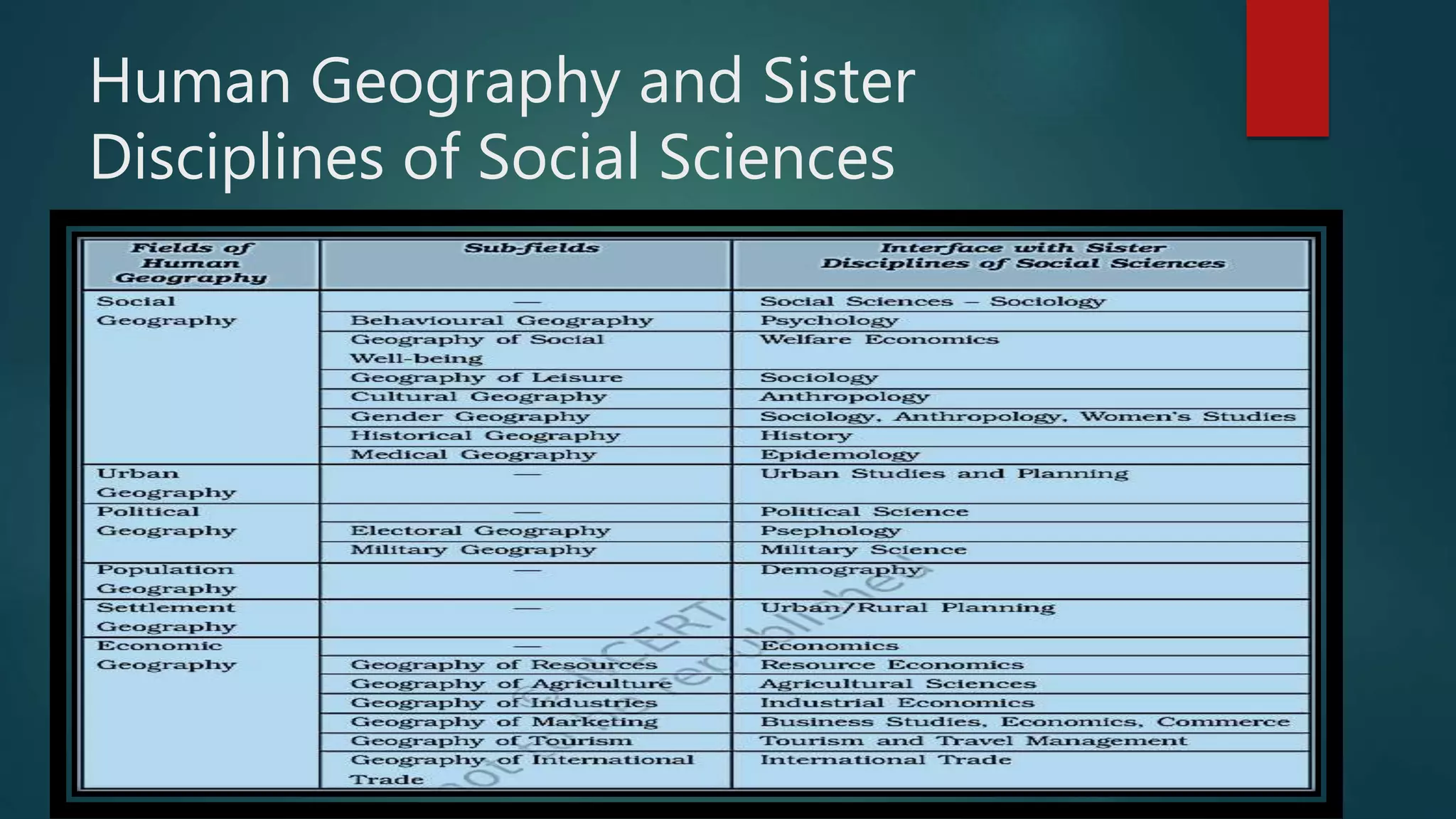
Human Geography and Sister
Disciplines of Social Sciences
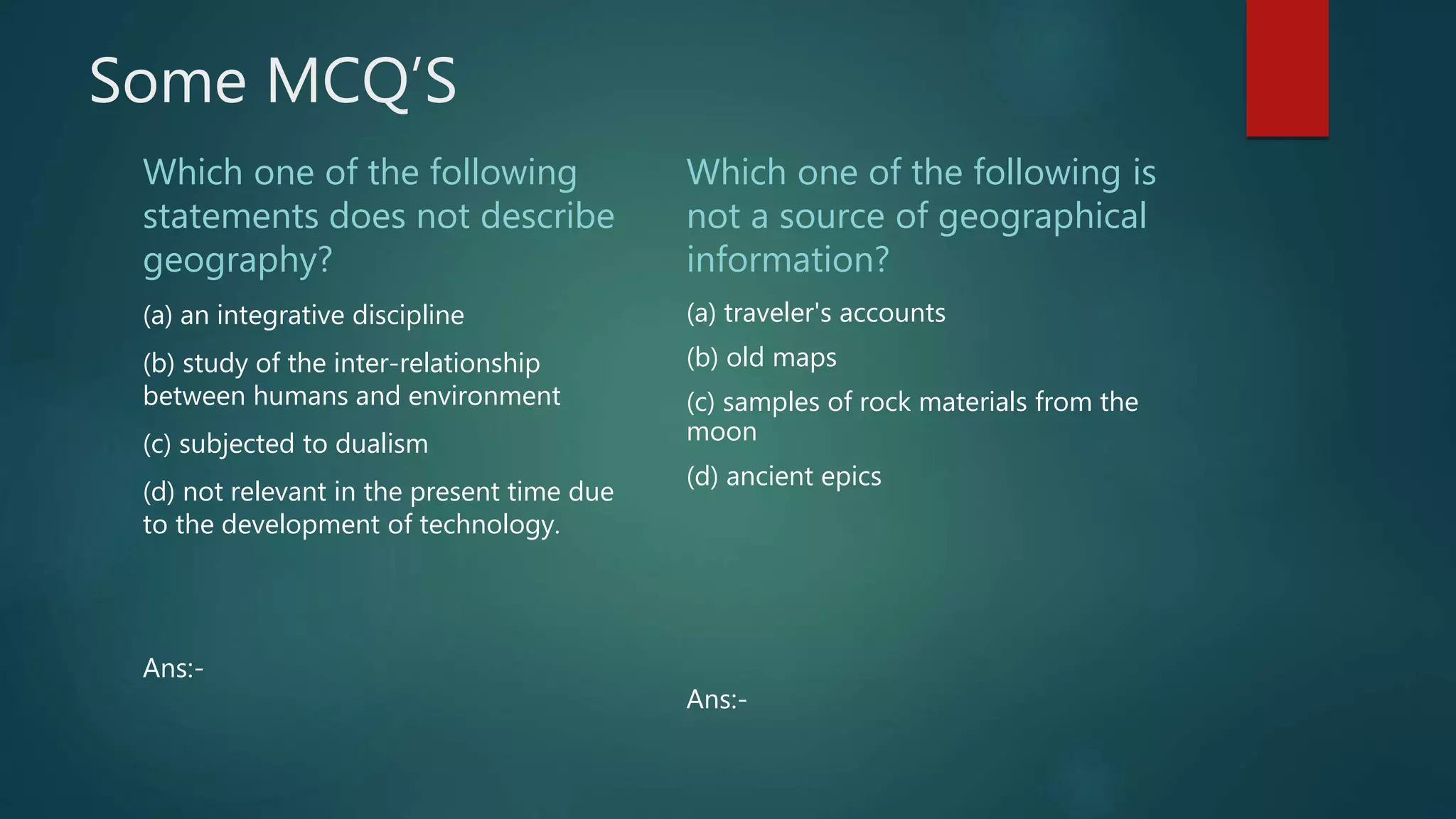
Some MCQ’S
Which one of the following
statements does not describe
geography?
(a) an integrative discipline
(b) study of the inter-relationship
between humans and environment
(c) subjected to dualism
(d) not relevant in the present time due
to the development of technology.
Ans:-
Which one of the following is
not a source of geographical
information?
(a) traveler's accounts
(b) old maps
(c) samples of rock materials from the
moon
(d) ancient epics
Ans:-
Some MCQ’S
Which one of the following is
the most important factor in
the interaction between people
and environment?
(a) human intelligence
(b) people’s perception
(c) technology
(d) human brotherhood
Ans:-
Which one of the following is
not an approach in human
geography?
a) Areal differentiation
b) Spatial organisation
c) Quantitative revolution
d) Exploration and description
Ans:-
THANKS YOU
Efforts by:- Guruvansh Gulati

Chapter 1 human geography nature and scope

  • 1.
    Human Geography Nature andScope  GEOGRAPHY IS A FIELD OF STUDY IS INTEGRATIVE, EMPIRICAL AND PRACTICAL  IT STUDIES EACH AND EVERY EVENT ON THE EARTH OVER THE SPACE AND TIME  HUMAN GEOGRAPHY STUDIES THE RELATIONSHIP BETWEEN MAN AND NATURE  GEO. CAN BE STUDIED THROUGH LAW MAKING OR DESCRIPTIVE
  • 2.
    There are twoapproaches of geography: Systematic Approach Regional Approach
  • 3.
    Human Geography Defined “Human geography is the synthetic study of relationship between human societies and earth’s surface”. Ratzel Synthesis has been emphasized in the above definition.  “Human geography is the study of “the changing relationship between the unresting man and the unstable earth.” Ellen C. Semple Dynamism in the relationship is the keyword in Semple’s definition.  “Conception resulting from a more synthetic knowledge of the physical laws governing our earth and of the relations between the living beings which inhabit it”. Paul Vidal de la Blache Human geography offers a new conception of the interrelationships between earth and human beings
  • 4.
    Nature of HumanGeography:  Human geography studies the inter relationship between the physical environment and socio-cultural environment created by man.  Elements of physical are land, water, soil, climate, vegetation, fauna  Elements of cultural are transport and communication, settlements, crops
  • 5.
    Naturalization of Humans: 1)Man interact with nature with the help of technology 2) It is not important that what he creates but with what tools he used to create 3) Technology indicates the level of cultural development of society d. Understanding the nature helps to create technology i. Understanding of friction and heat helped to discover fire ii. Understanding DNA helped to eradicate diseases iii. Laws of thermodynamics helped to develop fast planes iv. Knowledge about nature is extremely important to develop technology and technology loosens the shackles of environment on human being. v. The interaction between primitive society and nature is called Environmental Determinism.
  • 6.
    Humanizations of Nature 1.With the development of technology people understood the nature well 2. They move from state of necessity to state of possibilities 3. Human activities created cultural landscape 4. So it is called as possibilism
  • 7.
    Non-determinism/ Stop andgo Determinism 1. Developed by Griffith Taylor 2. It is a middle path between environmental determinism and possibilism 3. The concept shows that neither is there a situation of absolute necessity nor is there a condition of absolute freedom. 4. Sustainable development is the main aim 5. The Neo determinism maintains balance between development and nature
  • 8.
    Human Geography Throughthe Corridors of Time Schools of human geography Welfare School:- Concerned with social well-being of the people: (a) housing (b) Health (c) Education Radical School:- Concerned with causes of poverty, deprivation and social Inequality Behavioral School:- Given importance to lived experience, perception of space by Social categories
  • 9.
    Stages Through Corridoriesof Time. Period Approaches BROAD FEATURES Early Colonial period Exploration & description Imperialism and trade lead to discover many lands Later Colonial period Regional analysis Understanding of parts in totality would lead to understand the whole 1930s through the inter-War period Aerial differentiation Find the reasons for the uniqueness of a region Late 1950s to the late 1960s Spatial organization Apply technology to study geography 1970s Emergence of humanistic, radical and behavioral school Emergence of sociopolitical reality with the help of schools 1990s Post modernism Generalization and apply of universal laws to understand geography
  • 10.
    Human Geography andSister Disciplines of Social Sciences
  • 11.
    Some MCQ’S Which oneof the following statements does not describe geography? (a) an integrative discipline (b) study of the inter-relationship between humans and environment (c) subjected to dualism (d) not relevant in the present time due to the development of technology. Ans:- Which one of the following is not a source of geographical information? (a) traveler's accounts (b) old maps (c) samples of rock materials from the moon (d) ancient epics Ans:-
  • 12.
    Some MCQ’S Which oneof the following is the most important factor in the interaction between people and environment? (a) human intelligence (b) people’s perception (c) technology (d) human brotherhood Ans:- Which one of the following is not an approach in human geography? a) Areal differentiation b) Spatial organisation c) Quantitative revolution d) Exploration and description Ans:-
  • 13.
    THANKS YOU Efforts by:-Guruvansh Gulati