CHAPTER 1 geography grade 9 part 1 PowerPoint presentation
1.
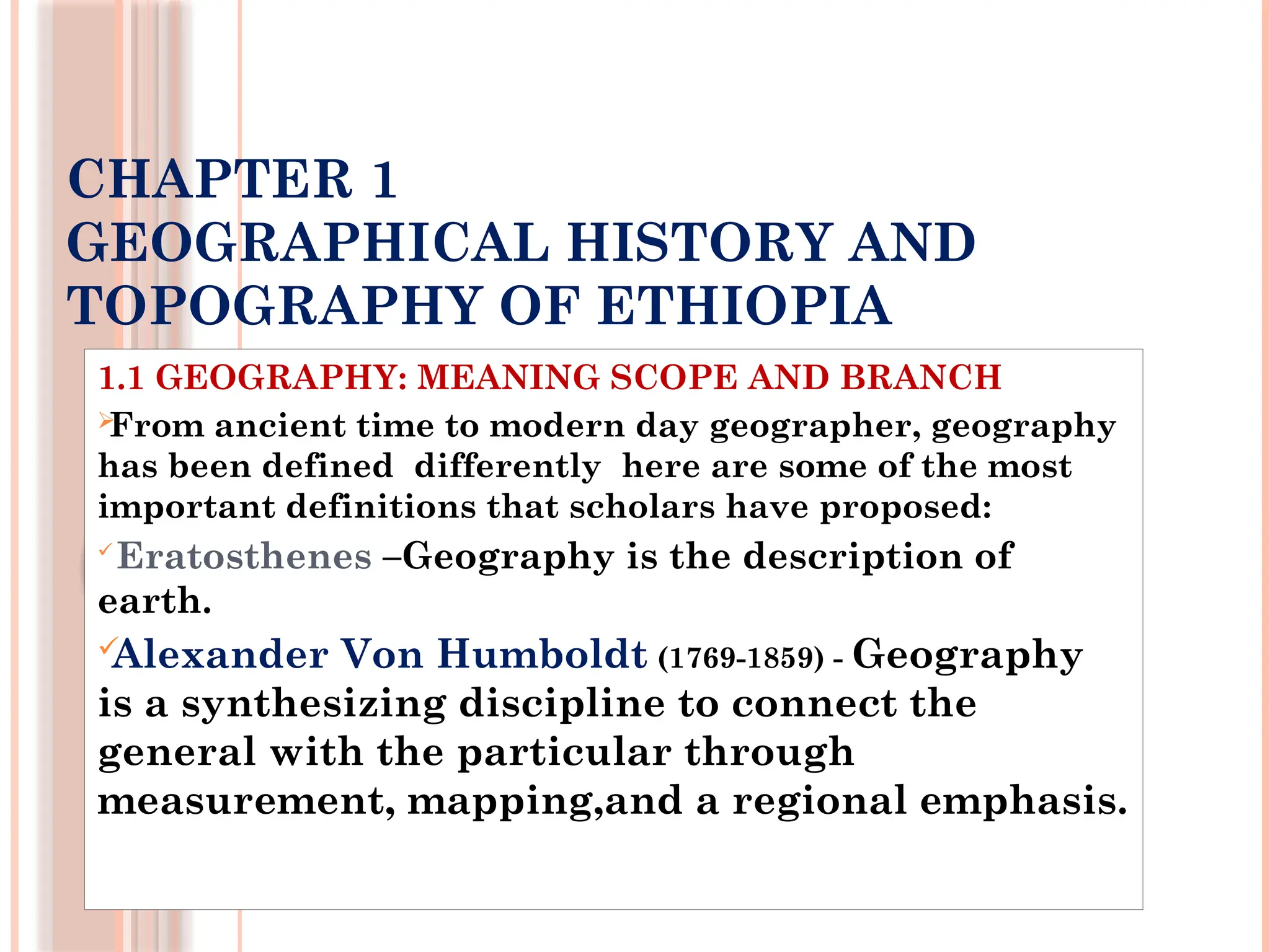
CHAPTER 1
GEOGRAPHICAL HISTORYAND
TOPOGRAPHY OF ETHIOPIA
1.1 GEOGRAPHY: MEANING SCOPE AND BRANCH
From ancient time to modern day geographer, geography
has been defined differently here are some of the most
important definitions that scholars have proposed:
Eratosthenes –Geography is the description of
earth.
Alexander Von Humboldt (1769-1859) - Geography
is a synthesizing discipline to connect the
general with the particular through
measurement, mapping,and a regional emphasis.
2.
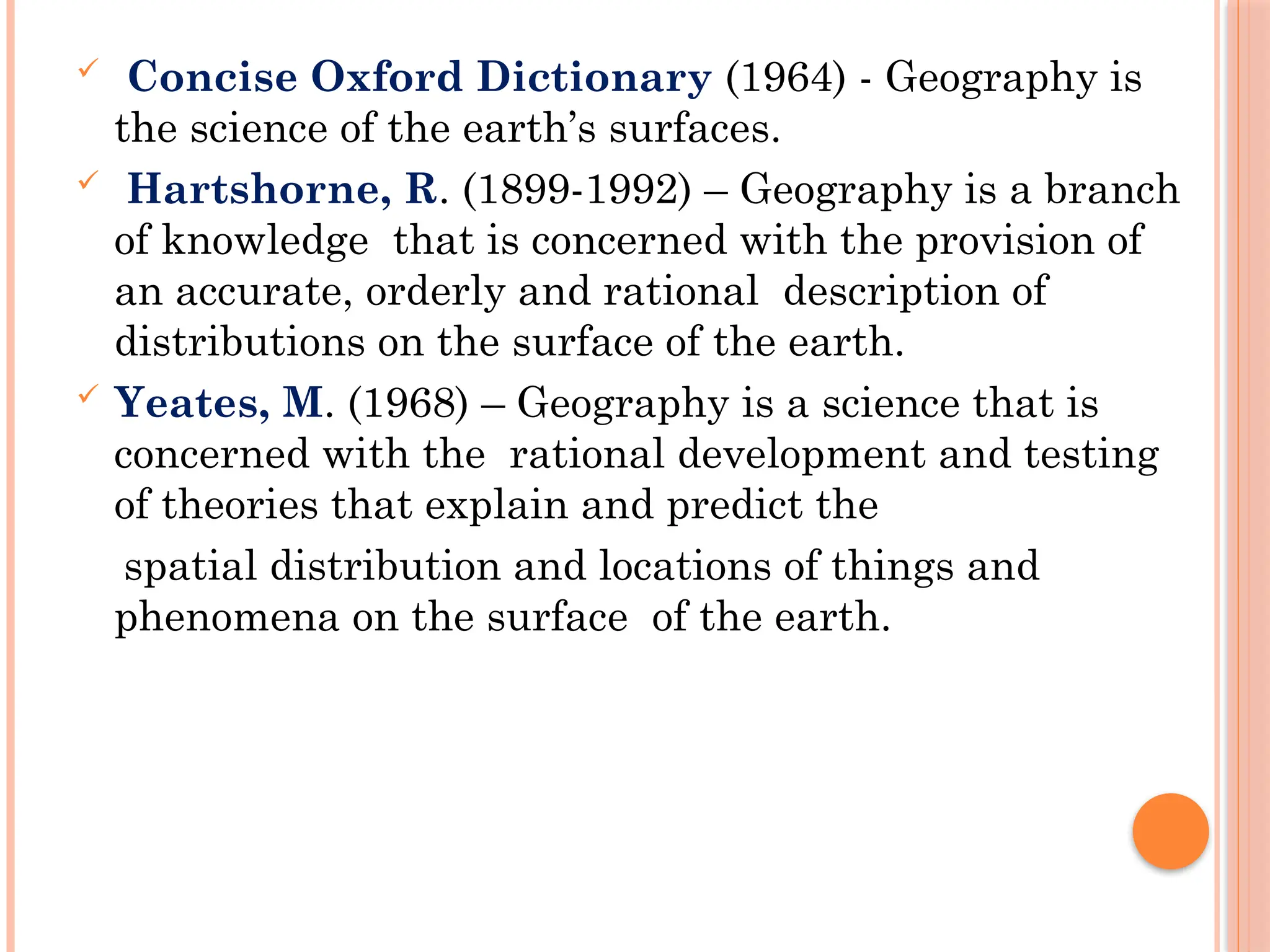
Concise OxfordDictionary (1964) - Geography is
the science of the earth’s surfaces.
Hartshorne, R. (1899-1992) – Geography is a branch
of knowledge that is concerned with the provision of
an accurate, orderly and rational description of
distributions on the surface of the earth.
Yeates, M. (1968) – Geography is a science that is
concerned with the rational development and testing
of theories that explain and predict the
spatial distribution and locations of things and
phenomena on the surface of the earth.
3.
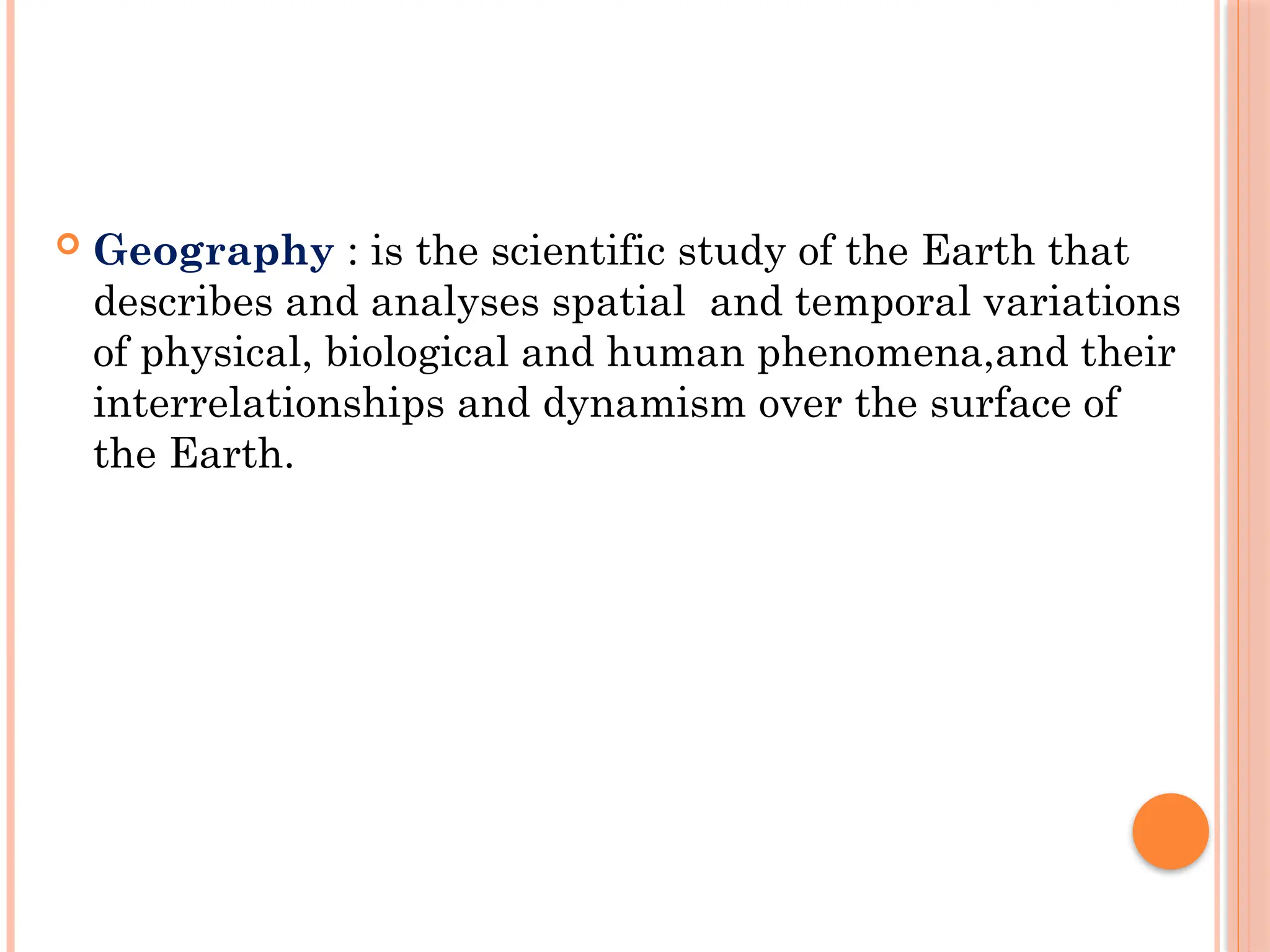
Geography :is the scientific study of the Earth that
describes and analyses spatial and temporal variations
of physical, biological and human phenomena,and their
interrelationships and dynamism over the surface of
the Earth.
4.
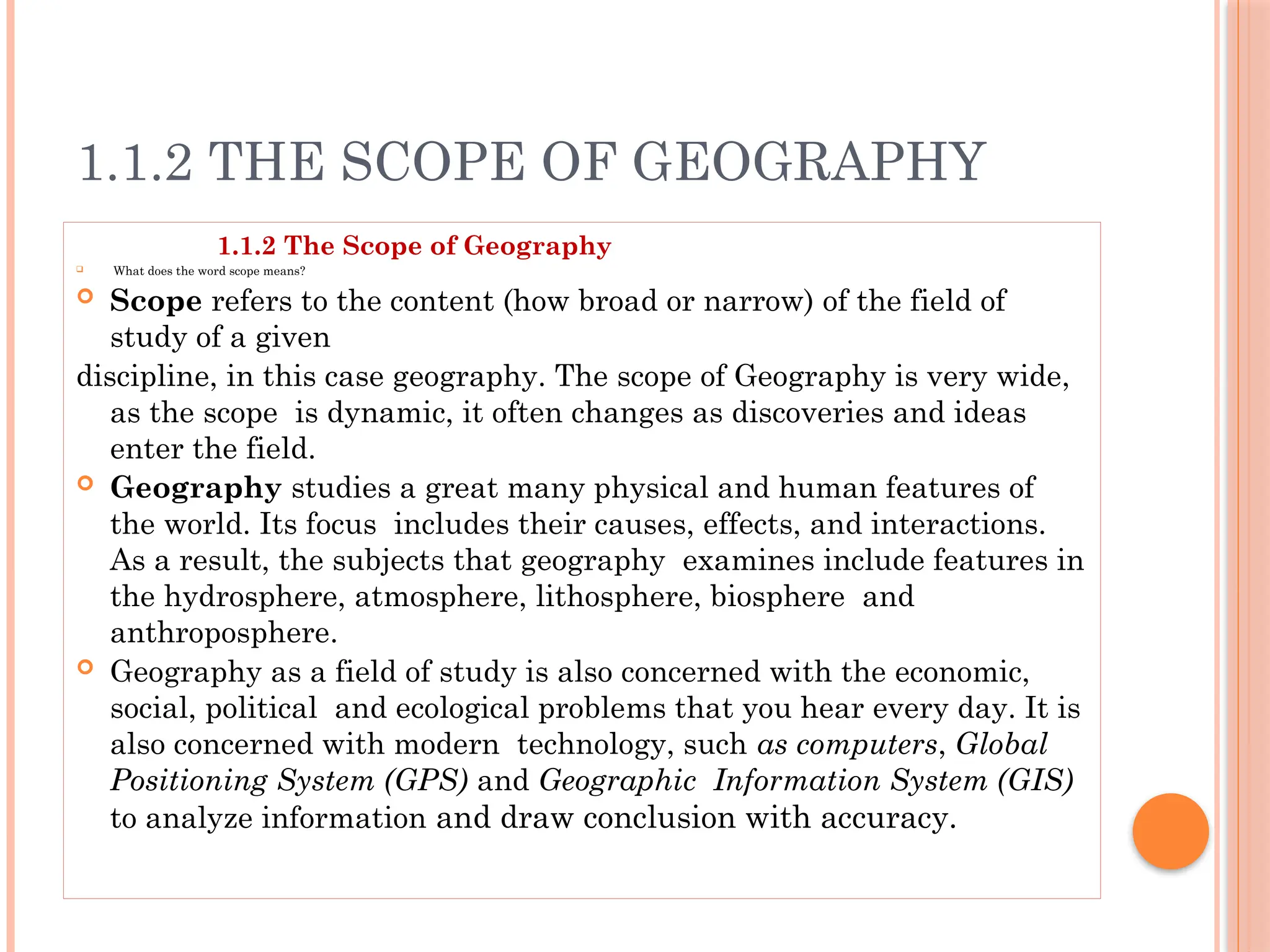
1.1.2 THE SCOPEOF GEOGRAPHY
1.1.2 The Scope of Geography
What does the word scope means?
Scope refers to the content (how broad or narrow) of the field of
study of a given
discipline, in this case geography. The scope of Geography is very wide,
as the scope is dynamic, it often changes as discoveries and ideas
enter the field.
Geography studies a great many physical and human features of
the world. Its focus includes their causes, effects, and interactions.
As a result, the subjects that geography examines include features in
the hydrosphere, atmosphere, lithosphere, biosphere and
anthroposphere.
Geography as a field of study is also concerned with the economic,
social, political and ecological problems that you hear every day. It is
also concerned with modern technology, such as computers, Global
Positioning System (GPS) and Geographic Information System (GIS)
to analyze information and draw conclusion with accuracy.
5.
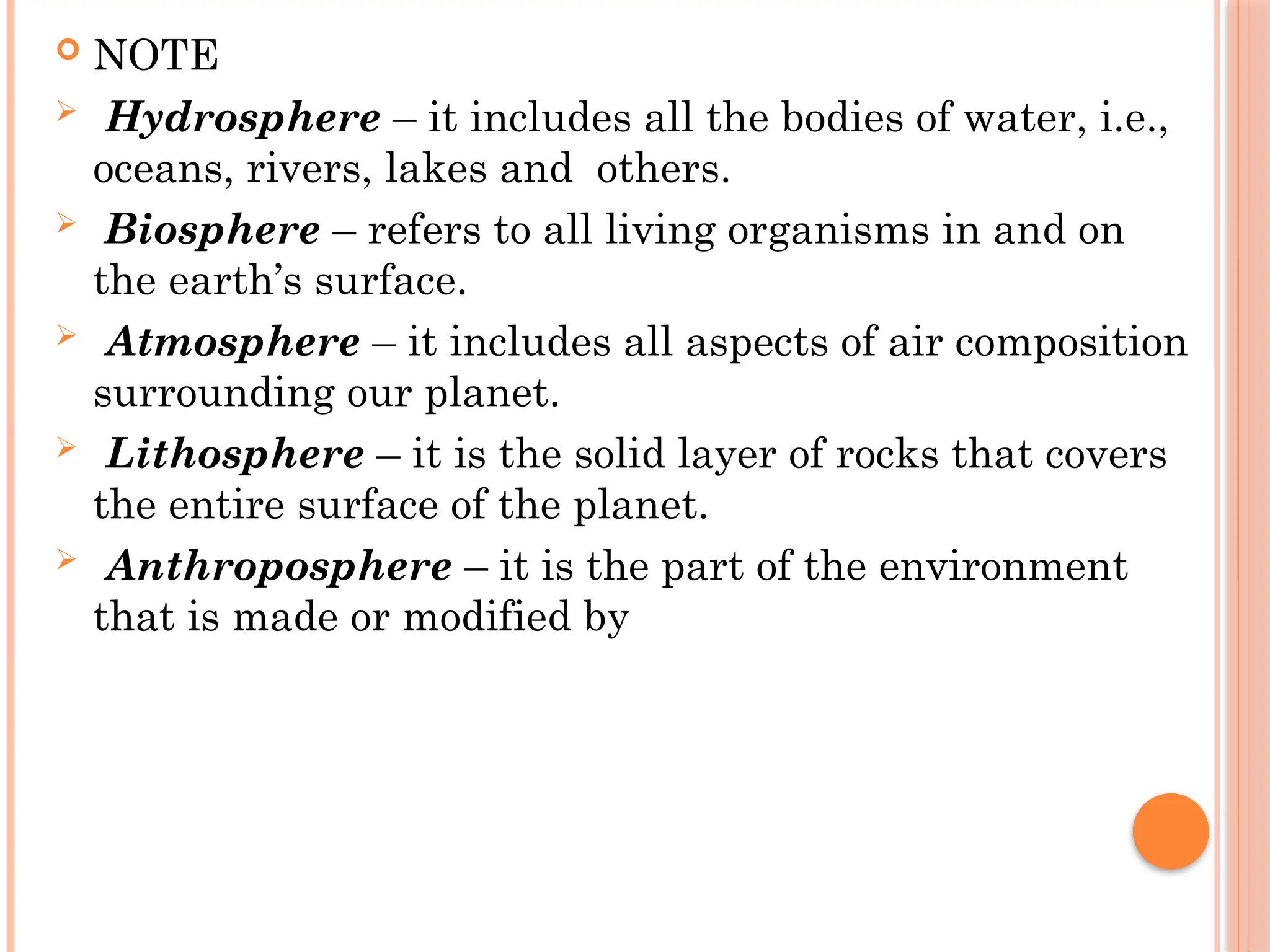
NOTE
Hydrosphere– it includes all the bodies of water, i.e.,
oceans, rivers, lakes and others.
Biosphere – refers to all living organisms in and on
the earth’s surface.
Atmosphere – it includes all aspects of air composition
surrounding our planet.
Lithosphere – it is the solid layer of rocks that covers
the entire surface of the planet.
Anthroposphere – it is the part of the environment
that is made or modified by



![GEOGRAPHY-WPS-Office [Autosav.....ed].pptx](https://cdn.slidesharecdn.com/ss_thumbnails/geography-wps-officeautosaved-250309073130-b5d8c98e-thumbnail.jpg?width=640&height=640&fit=bounds)


