a Genome Editing Tools | JULY | 2013
Abstract:
Personalized medicine proposes customization of medication to individuals based on their
genome (i.e. sum total of all the genes in their body). With the completion of human genome
project the anticipation for personalized medicine and gene therapy rose. This can be
analogous to locating a typographical error by a word processor and replacing the error
with the correct letters, thereby ensuring correct meaning.
Genome editing tools form the basis for personalized medicine, especially for therapies
requiring change in genome. Currently there are four contenders to this – Meganucleases,
ZNF Nucleases, TALENs and CRISPRs. Although, the technologies are many, there are very
few commercial providers of this technology. This is attributed to the fact that select few
possess the intellectual property rights of turning these technologies to valid form of
therapy; for example, ZFN patent with Sangamo BioSciences and TALENs with Cellectis,
Transposagen and Life Technologies
Genome Editing Tools
Copyright © Beroe Inc., 2013. All Rights Reserved
Meenakshi L
Research Analyst
Introduction
Personalized medicine proposes customization of medication to individuals based on their genome (i.e. sum total of all the genes in their body). With the
completion of human genome project the anticipation for personalized medicine and gene therapy rose. This can be boiled down to simply identifying and
locating the defective gene, removing the defective gene and insert a fully functional gene. It can be analogous to locating a typographical error by a word
processor and replacing the error with the correct letters, thereby ensuring correct meaning.
This is a very simplistic view of the whole process, which is, quite complex and requires a lot of science as well as technological tools and expertise. One
such tool is Genome Editing Tool.
The genome editing was earlier done in experimental animals through the venerable molecular scissors “RESTRICTION ENDONUCLEASES”. Their
specificity to slice at a particular site is determined by a short recognition 4-8 base pairs (bp) residue. But, the human genome is quite large consisting of 3
billion bp, a restriction digestion results in many fragments. This lead the scientific community on lookout for endonuclease having longer recognition
sequence, for, it would lower the chance of having more than one cleavage site.
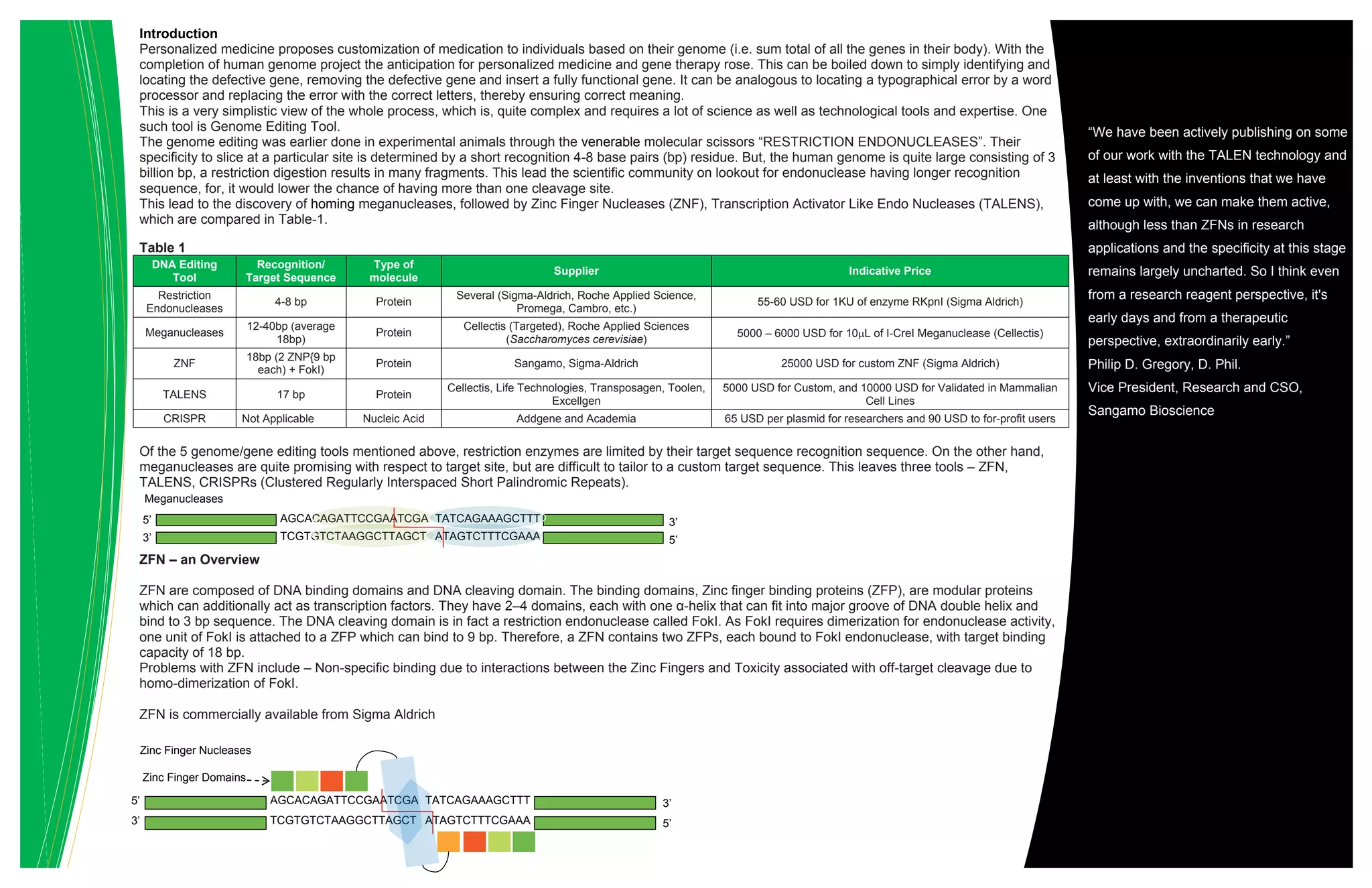
This lead to the discovery of homing meganucleases, followed by Zinc Finger Nucleases (ZNF), Transcription Activator Like Endo Nucleases (TALENS),
which are compared in Table-1.
Table 1
DNA Editing
Tool
Recognition/
Target Sequence
Type of
molecule
Supplier Indicative Price
Restriction
Endonucleases
4-8 bp Protein
Several (Sigma-Aldrich, Roche Applied Science,
Promega, Cambro, etc.)
55-60 USD for 1KU of enzyme RKpnI (Sigma Aldrich)
Meganucleases
12-40bp (average
18bp)
Protein
Cellectis (Targeted), Roche Applied Sciences
(Saccharomyces cerevisiae)
5000 – 6000 USD for 10L of I-CreI Meganuclease (Cellectis)
ZNF
18bp (2 ZNP{9 bp
each) + FokI)
Protein Sangamo, Sigma-Aldrich 25000 USD for custom ZNF (Sigma Aldrich)
TALENS 17 bp Protein
Cellectis, Life Technologies, Transposagen, Toolen,
Excellgen
5000 USD for Custom, and 10000 USD for Validated in Mammalian
Cell Lines
CRISPR Not Applicable Nucleic Acid Addgene and Academia 65 USD per plasmid for researchers and 90 USD to for-profit users
Of the 5 genome/gene editing tools mentioned above, restriction enzymes are limited by their target sequence recognition sequence. On the other hand,
meganucleases are quite promising with respect to target site, but are difficult to tailor to a custom target sequence. This leaves three tools – ZFN,
TALENS, CRISPRs (Clustered Regularly Interspaced Short Palindromic Repeats).
ZFN – an Overview
ZFN are composed of DNA binding domains and DNA cleaving domain. The binding domains, Zinc finger binding proteins (ZFP), are modular proteins
which can additionally act as transcription factors. They have 2–4 domains, each with one α-helix that can fit into major groove of DNA double helix and
bind to 3 bp sequence. The DNA cleaving domain is in fact a restriction endonuclease called FokI. As FokI requires dimerization for endonuclease activity,
one unit of FokI is attached to a ZFP which can bind to 9 bp. Therefore, a ZFN contains two ZFPs, each bound to FokI endonuclease, with target binding
capacity of 18 bp.
Problems with ZFN include – Non-specific binding due to interactions between the Zinc Fingers and Toxicity associated with off-target cleavage due to
homo-dimerization of FokI.
ZFN is commercially available from Sigma Aldrich
AGCACAGATTCCGAATCGA TATCAGAAAGCTTT
TCGTGTCTAAGGCTTAGCT ATAGTCTTTCGAAA
3’
5’
5’
3’
Zinc Finger Nucleases
Zinc Finger Domains
“We have been actively publishing on some
of our work with the TALEN technology and
at least with the inventions that we have
come up with, we can make them active,
although less than ZFNs in research
applications and the specificity at this stage
remains largely uncharted. So I think even
from a research reagent perspective, it's
early days and from a therapeutic
perspective, extraordinarily early.”
Philip D. Gregory, D. Phil.
Vice President, Research and CSO,
Sangamo Bioscience
AGCACAGATTCCGAATCGA TATCAGAAAGCTTT
TCGTGTCTAAGGCTTAGCT ATAGTCTTTCGAAA
3’
5’
5’
3’
Meganucleases
The Tale of TALEN:
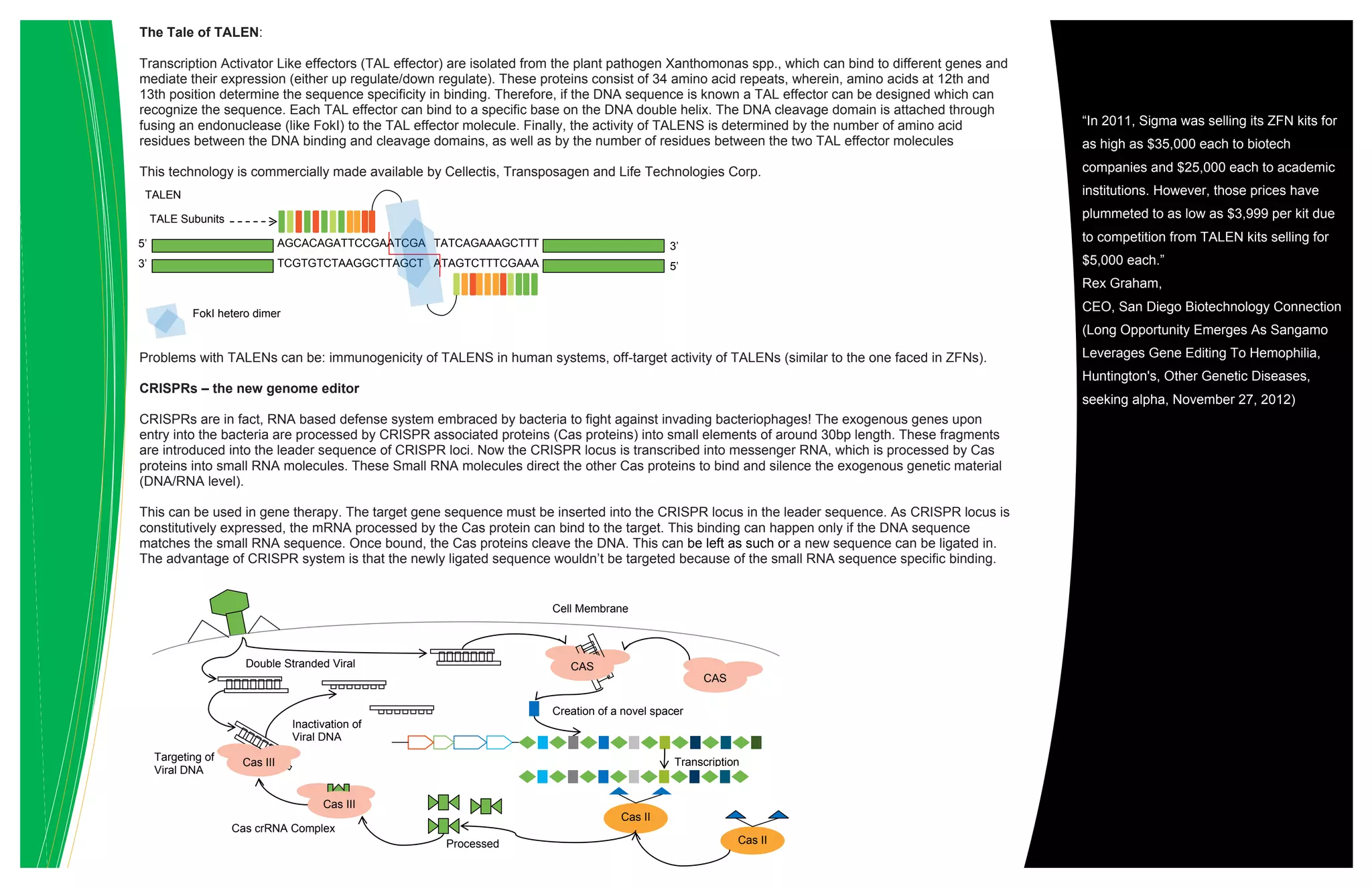
Transcription Activator Like effectors (TAL effector) are isolated from the plant pathogen Xanthomonas spp., which can bind to different genes and
mediate their expression (either up regulate/down regulate). These proteins consist of 34 amino acid repeats, wherein, amino acids at 12th and
13th position determine the sequence specificity in binding. Therefore, if the DNA sequence is known a TAL effector can be designed which can
recognize the sequence. Each TAL effector can bind to a specific base on the DNA double helix. The DNA cleavage domain is attached through
fusing an endonuclease (like FokI) to the TAL effector molecule. Finally, the activity of TALENS is determined by the number of amino acid
residues between the DNA binding and cleavage domains, as well as by the number of residues between the two TAL effector molecules
This technology is commercially made available by Cellectis, Transposagen and Life Technologies Corp.
Problems with TALENs can be: immunogenicity of TALENS in human systems, off-target activity of TALENs (similar to the one faced in ZFNs).
CRISPRs – the new genome editor
CRISPRs are in fact, RNA based defense system embraced by bacteria to fight against invading bacteriophages! The exogenous genes upon
entry into the bacteria are processed by CRISPR associated proteins (Cas proteins) into small elements of around 30bp length. These fragments
are introduced into the leader sequence of CRISPR loci. Now the CRISPR locus is transcribed into messenger RNA, which is processed by Cas
proteins into small RNA molecules. These Small RNA molecules direct the other Cas proteins to bind and silence the exogenous genetic material
(DNA/RNA level).
This can be used in gene therapy. The target gene sequence must be inserted into the CRISPR locus in the leader sequence. As CRISPR locus is
constitutively expressed, the mRNA processed by the Cas protein can bind to the target. This binding can happen only if the DNA sequence
matches the small RNA sequence. Once bound, the Cas proteins cleave the DNA. This can be left as such or a new sequence can be ligated in.
The advantage of CRISPR system is that the newly ligated sequence wouldn’t be targeted because of the small RNA sequence specific binding.
AGCACAGATTCCGAATCGA TATCAGAAAGCTTT
TCGTGTCTAAGGCTTAGCT ATAGTCTTTCGAAA
3’
5’
5’
3’
TALEN
TALE Subunits
FokI hetero dimer
Cas III
Cas III
Cas II
Cas II
CAS
CAS
Double Stranded Viral
DNA
Inactivation of
Viral DNA
Targeting of
Viral DNA
Cas crRNA Complex
Processed
crRNA
Transcription
Creation of a novel spacer
Cell Membrane
“In 2011, Sigma was selling its ZFN kits for
as high as $35,000 each to biotech
companies and $25,000 each to academic
institutions. However, those prices have
plummeted to as low as $3,999 per kit due
to competition from TALEN kits selling for
$5,000 each.”
Rex Graham,
CEO, San Diego Biotechnology Connection
(Long Opportunity Emerges As Sangamo
Leverages Gene Editing To Hemophilia,
Huntington's, Other Genetic Diseases,
seeking alpha, November 27, 2012)
Other Technologies:
rAAV: This technology employs the genome of a virus to bring about genome editing. This tool relies on homologous recombination capability of the viral
genome, without causing any breaks. Simply put, it causes the correction of the gene by replacing the aberrant gene with the correct gene. The
advantage lies in the fact that, there are no possibilities of promiscuous cuts in the genome as there are no nucleases!
This technology is currently offered by Horizon Discovery for as a genome tool and to develop custom isogenic cell lines for manufacture of biologics.
RiboSlice: This technology is currently being offered by Factor Biosciences. This method employs synthetic RNA carrying the sequence of a TALEN for
a specific target to be delivered to the cell as well as correct copy of gene, the RNA is then translated into protein (TALEN) that can then perform the
necessary genome editing, and inserts the correct gene. Cellectis offers delivery of its custom TALENs in form of mRNA as well.
Genome Editing tools and Large Pharma:
Sangamo is exploring the ZFN as a therapeutic agent for hemophilia and Huntingdon’s disease, through collaboration with Shire Plc. Sangamo is also
pursuing potential therapeutic applications of ZFN in hemoglobinopathies, lysosomal storage disorders and other genetically inherited disorders.
Which technology to go for
Zinc Finger Nucleases is the oldest of the three but most of the know-how is under patent held by Sangamo /Sigma-Aldrich, however, the market for
ZFN and associated reagents has almost doubled since 2011 and the price is still too high(25000 USD for a customized ZNF).
On the other hand, TALENS, albeit a newer technology, derived from plant pathogen, has found commercialization through Cellectis and LifeScience
Technologies. This technology is comparatively lower in price at 5000 USD for customized and at 10000 USD for a validated custom TALEN in
mammalian cell lines.
Both ZFN and TALENS are protein based and hence take at least a couple of days to design and synthesize, as very minute change in the amino acid
stereo chemical properties can result in an entirely different fold and may alter their specificity. Further both the technologies use FokI endonuclease
which lacks sequence specificity and on formation of homo-dimer may result in off-target cleavage.
Although we are aiming at a DNA editing system with high precision, after the cleavage the way the homologous recombination occurs is not yet
monitorable. Hence, after using ZFN/TALENs, the DNA must be sequenced to check whether edits were successfully integrated.
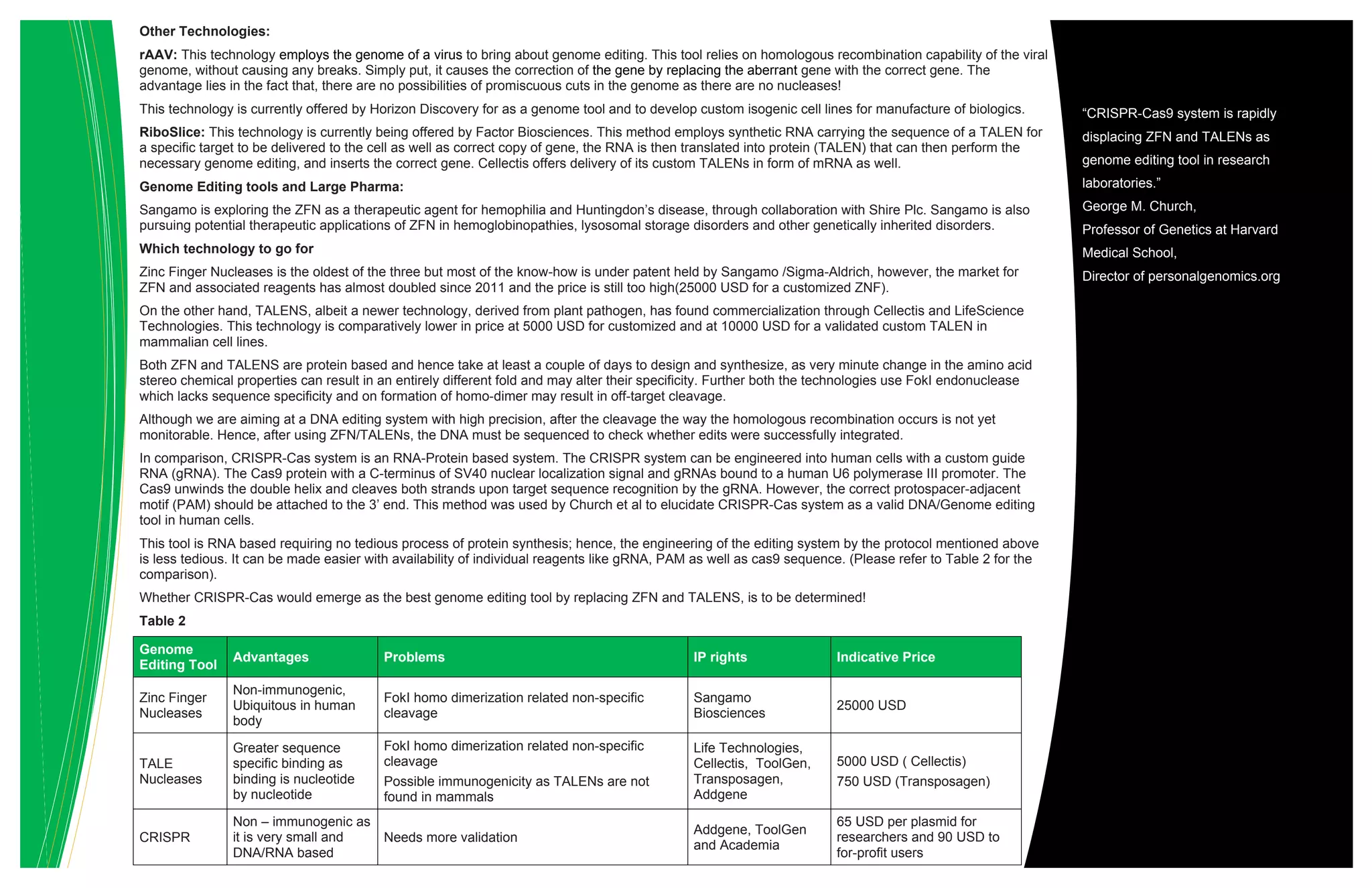
In comparison, CRISPR-Cas system is an RNA-Protein based system. The CRISPR system can be engineered into human cells with a custom guide
RNA (gRNA). The Cas9 protein with a C-terminus of SV40 nuclear localization signal and gRNAs bound to a human U6 polymerase III promoter. The
Cas9 unwinds the double helix and cleaves both strands upon target sequence recognition by the gRNA. However, the correct protospacer-adjacent
motif (PAM) should be attached to the 3’ end. This method was used by Church et al to elucidate CRISPR-Cas system as a valid DNA/Genome editing
tool in human cells.
This tool is RNA based requiring no tedious process of protein synthesis; hence, the engineering of the editing system by the protocol mentioned above
is less tedious. It can be made easier with availability of individual reagents like gRNA, PAM as well as cas9 sequence. (Please refer to Table 2 for the
comparison).
Whether CRISPR-Cas would emerge as the best genome editing tool by replacing ZFN and TALENS, is to be determined!
Table 2
Genome
Editing Tool
Advantages Problems IP rights Indicative Price
Zinc Finger
Nucleases
Non-immunogenic,
Ubiquitous in human
body
FokI homo dimerization related non-specific
cleavage
Sangamo
Biosciences
25000 USD
TALE
Nucleases
Greater sequence
specific binding as
binding is nucleotide
by nucleotide
FokI homo dimerization related non-specific
cleavage
Possible immunogenicity as TALENs are not
found in mammals
Life Technologies,
Cellectis, ToolGen,
Transposagen,
Addgene
5000 USD ( Cellectis)
750 USD (Transposagen)
CRISPR
Non – immunogenic as
it is very small and
DNA/RNA based
Needs more validation
Addgene, ToolGen
and Academia
65 USD per plasmid for
researchers and 90 USD to
for-profit users
“CRISPR-Cas9 system is rapidly
displacing ZFN and TALENs as
genome editing tool in research
laboratories.”
George M. Church,
Professor of Genetics at Harvard
Medical School,
Director of personalgenomics.org
References:
1. http://www.nature.com/nrm/journal/v14/n1/full/nrm3486.html
2. http://www.genengnews.com/insight-and-intelligenceand153/accessible-talens/77899689/
3. http://www.broadinstitute.org/blog/genetic-causes-disease-within-reach-talens
4. http://www.nature.com/nbt/journal/v30/n5/full/nbt.2170.html
5. http://www.sciencemag.org/content/333/6040/307.abstract
6. http://pubs.rsc.org/en/Content/ArticleLanding/2012/MB/c2mb05461b
7. http://phys.org/news/2012-10-talens-technology-site-specific-gene-mutation.html
8. http://www.dddmag.com/news/2012/08/bringing-stem-cells-forefront
9. http://www.nature.com/nbt/journal/v28/n9/full/nbt0910-927.html
10. http://www.ddw-online.com/summer-2012-full-articles/p149526-
editing%20the%20human%20genome%3A%20role%20in%20functional%20genomics%20and%20translational%20medicine.%20%20summer%2
012.html
11. http://lib.bioinfo.pl/paper:12750739
12. http://www.nature.com/nbt/collections/talen/index.html
13. http://en.wikipedia.org/wiki/Transcription_Activator-Like_Effector_Nuclease
14. http://www.talendesign.org/
15. http://www.ncbi.nlm.nih.gov/pmc/articles/PMC3575288/
16. http://seekingalpha.com/article/352451-sangamo-biosciences-ceo-discusses-q4-2011-results-earnings-call-transcript?part=single
17. http://lifescienceleader.com/magazine/past-issues3/item/3572-zinc-fingers-point-the-way?list=n
18. http://seekingalpha.com/article/1030161-long-opportunity-emerges-as-sangamo-leverages-gene-editing-to-hemophilia-huntington-s-other-genetic-
diseases
Supplier Related:
1. http://www.addgene.org/talengineering/TALENzebrafish/
2. http://www.transposagenbio.com/content/overview.php
3. http://www.cellectis-bioresearch.com/applications/drug-discovery
4. http://www.horizondiscovery.com/about-us/our-story/personalized-medicine
5. http://www.lifetechnologies.com/in/en/home/new-ideas/new-ground/stem-cells/highlights.html
6. http://www.addgene.org/crispr/church/
7. http://www.bmb.uga.edu/rterns/Terns.html
8. http://www.sangamo.com/technology/zf-nucleases.html
9. http://www.sigmaaldrich.com/united-states.html
10. http://www.genomics.agilent.com/en/Ladders-Markers-Restriction-Enzymes/Restriction-Enzymes/?cid=AG-PT-141&tabId=AG-PR-1170
11. http://www.factorbio.com/news.html
Disclaimer: Strictly no photocopying or redistribution is allowed without prior written consent from Beroe Inc. The information contained in this
publication was derived from carefully selected sources. Any opinions expressed reflect the current judgment of the author and are subject to change
without notice. Beroe Inc accepts no responsibility for any liability arising from use of this document or its contents.
For more information, please contact: info@beroe-inc.com

Genome editing tools article

  • 1.
    a Genome EditingTools | JULY | 2013 Abstract: Personalized medicine proposes customization of medication to individuals based on their genome (i.e. sum total of all the genes in their body). With the completion of human genome project the anticipation for personalized medicine and gene therapy rose. This can be analogous to locating a typographical error by a word processor and replacing the error with the correct letters, thereby ensuring correct meaning. Genome editing tools form the basis for personalized medicine, especially for therapies requiring change in genome. Currently there are four contenders to this – Meganucleases, ZNF Nucleases, TALENs and CRISPRs. Although, the technologies are many, there are very few commercial providers of this technology. This is attributed to the fact that select few possess the intellectual property rights of turning these technologies to valid form of therapy; for example, ZFN patent with Sangamo BioSciences and TALENs with Cellectis, Transposagen and Life Technologies Genome Editing Tools Copyright © Beroe Inc., 2013. All Rights Reserved Meenakshi L Research Analyst
  • 2.
    Introduction Personalized medicine proposescustomization of medication to individuals based on their genome (i.e. sum total of all the genes in their body). With the completion of human genome project the anticipation for personalized medicine and gene therapy rose. This can be boiled down to simply identifying and locating the defective gene, removing the defective gene and insert a fully functional gene. It can be analogous to locating a typographical error by a word processor and replacing the error with the correct letters, thereby ensuring correct meaning. This is a very simplistic view of the whole process, which is, quite complex and requires a lot of science as well as technological tools and expertise. One such tool is Genome Editing Tool. The genome editing was earlier done in experimental animals through the venerable molecular scissors “RESTRICTION ENDONUCLEASES”. Their specificity to slice at a particular site is determined by a short recognition 4-8 base pairs (bp) residue. But, the human genome is quite large consisting of 3 billion bp, a restriction digestion results in many fragments. This lead the scientific community on lookout for endonuclease having longer recognition sequence, for, it would lower the chance of having more than one cleavage site. This lead to the discovery of homing meganucleases, followed by Zinc Finger Nucleases (ZNF), Transcription Activator Like Endo Nucleases (TALENS), which are compared in Table-1. Table 1 DNA Editing Tool Recognition/ Target Sequence Type of molecule Supplier Indicative Price Restriction Endonucleases 4-8 bp Protein Several (Sigma-Aldrich, Roche Applied Science, Promega, Cambro, etc.) 55-60 USD for 1KU of enzyme RKpnI (Sigma Aldrich) Meganucleases 12-40bp (average 18bp) Protein Cellectis (Targeted), Roche Applied Sciences (Saccharomyces cerevisiae) 5000 – 6000 USD for 10L of I-CreI Meganuclease (Cellectis) ZNF 18bp (2 ZNP{9 bp each) + FokI) Protein Sangamo, Sigma-Aldrich 25000 USD for custom ZNF (Sigma Aldrich) TALENS 17 bp Protein Cellectis, Life Technologies, Transposagen, Toolen, Excellgen 5000 USD for Custom, and 10000 USD for Validated in Mammalian Cell Lines CRISPR Not Applicable Nucleic Acid Addgene and Academia 65 USD per plasmid for researchers and 90 USD to for-profit users Of the 5 genome/gene editing tools mentioned above, restriction enzymes are limited by their target sequence recognition sequence. On the other hand, meganucleases are quite promising with respect to target site, but are difficult to tailor to a custom target sequence. This leaves three tools – ZFN, TALENS, CRISPRs (Clustered Regularly Interspaced Short Palindromic Repeats). ZFN – an Overview ZFN are composed of DNA binding domains and DNA cleaving domain. The binding domains, Zinc finger binding proteins (ZFP), are modular proteins which can additionally act as transcription factors. They have 2–4 domains, each with one α-helix that can fit into major groove of DNA double helix and bind to 3 bp sequence. The DNA cleaving domain is in fact a restriction endonuclease called FokI. As FokI requires dimerization for endonuclease activity, one unit of FokI is attached to a ZFP which can bind to 9 bp. Therefore, a ZFN contains two ZFPs, each bound to FokI endonuclease, with target binding capacity of 18 bp. Problems with ZFN include – Non-specific binding due to interactions between the Zinc Fingers and Toxicity associated with off-target cleavage due to homo-dimerization of FokI. ZFN is commercially available from Sigma Aldrich AGCACAGATTCCGAATCGA TATCAGAAAGCTTT TCGTGTCTAAGGCTTAGCT ATAGTCTTTCGAAA 3’ 5’ 5’ 3’ Zinc Finger Nucleases Zinc Finger Domains “We have been actively publishing on some of our work with the TALEN technology and at least with the inventions that we have come up with, we can make them active, although less than ZFNs in research applications and the specificity at this stage remains largely uncharted. So I think even from a research reagent perspective, it's early days and from a therapeutic perspective, extraordinarily early.” Philip D. Gregory, D. Phil. Vice President, Research and CSO, Sangamo Bioscience AGCACAGATTCCGAATCGA TATCAGAAAGCTTT TCGTGTCTAAGGCTTAGCT ATAGTCTTTCGAAA 3’ 5’ 5’ 3’ Meganucleases
  • 3.
    The Tale ofTALEN: Transcription Activator Like effectors (TAL effector) are isolated from the plant pathogen Xanthomonas spp., which can bind to different genes and mediate their expression (either up regulate/down regulate). These proteins consist of 34 amino acid repeats, wherein, amino acids at 12th and 13th position determine the sequence specificity in binding. Therefore, if the DNA sequence is known a TAL effector can be designed which can recognize the sequence. Each TAL effector can bind to a specific base on the DNA double helix. The DNA cleavage domain is attached through fusing an endonuclease (like FokI) to the TAL effector molecule. Finally, the activity of TALENS is determined by the number of amino acid residues between the DNA binding and cleavage domains, as well as by the number of residues between the two TAL effector molecules This technology is commercially made available by Cellectis, Transposagen and Life Technologies Corp. Problems with TALENs can be: immunogenicity of TALENS in human systems, off-target activity of TALENs (similar to the one faced in ZFNs). CRISPRs – the new genome editor CRISPRs are in fact, RNA based defense system embraced by bacteria to fight against invading bacteriophages! The exogenous genes upon entry into the bacteria are processed by CRISPR associated proteins (Cas proteins) into small elements of around 30bp length. These fragments are introduced into the leader sequence of CRISPR loci. Now the CRISPR locus is transcribed into messenger RNA, which is processed by Cas proteins into small RNA molecules. These Small RNA molecules direct the other Cas proteins to bind and silence the exogenous genetic material (DNA/RNA level). This can be used in gene therapy. The target gene sequence must be inserted into the CRISPR locus in the leader sequence. As CRISPR locus is constitutively expressed, the mRNA processed by the Cas protein can bind to the target. This binding can happen only if the DNA sequence matches the small RNA sequence. Once bound, the Cas proteins cleave the DNA. This can be left as such or a new sequence can be ligated in. The advantage of CRISPR system is that the newly ligated sequence wouldn’t be targeted because of the small RNA sequence specific binding. AGCACAGATTCCGAATCGA TATCAGAAAGCTTT TCGTGTCTAAGGCTTAGCT ATAGTCTTTCGAAA 3’ 5’ 5’ 3’ TALEN TALE Subunits FokI hetero dimer Cas III Cas III Cas II Cas II CAS CAS Double Stranded Viral DNA Inactivation of Viral DNA Targeting of Viral DNA Cas crRNA Complex Processed crRNA Transcription Creation of a novel spacer Cell Membrane “In 2011, Sigma was selling its ZFN kits for as high as $35,000 each to biotech companies and $25,000 each to academic institutions. However, those prices have plummeted to as low as $3,999 per kit due to competition from TALEN kits selling for $5,000 each.” Rex Graham, CEO, San Diego Biotechnology Connection (Long Opportunity Emerges As Sangamo Leverages Gene Editing To Hemophilia, Huntington's, Other Genetic Diseases, seeking alpha, November 27, 2012)
  • 4.
    Other Technologies: rAAV: Thistechnology employs the genome of a virus to bring about genome editing. This tool relies on homologous recombination capability of the viral genome, without causing any breaks. Simply put, it causes the correction of the gene by replacing the aberrant gene with the correct gene. The advantage lies in the fact that, there are no possibilities of promiscuous cuts in the genome as there are no nucleases! This technology is currently offered by Horizon Discovery for as a genome tool and to develop custom isogenic cell lines for manufacture of biologics. RiboSlice: This technology is currently being offered by Factor Biosciences. This method employs synthetic RNA carrying the sequence of a TALEN for a specific target to be delivered to the cell as well as correct copy of gene, the RNA is then translated into protein (TALEN) that can then perform the necessary genome editing, and inserts the correct gene. Cellectis offers delivery of its custom TALENs in form of mRNA as well. Genome Editing tools and Large Pharma: Sangamo is exploring the ZFN as a therapeutic agent for hemophilia and Huntingdon’s disease, through collaboration with Shire Plc. Sangamo is also pursuing potential therapeutic applications of ZFN in hemoglobinopathies, lysosomal storage disorders and other genetically inherited disorders. Which technology to go for Zinc Finger Nucleases is the oldest of the three but most of the know-how is under patent held by Sangamo /Sigma-Aldrich, however, the market for ZFN and associated reagents has almost doubled since 2011 and the price is still too high(25000 USD for a customized ZNF). On the other hand, TALENS, albeit a newer technology, derived from plant pathogen, has found commercialization through Cellectis and LifeScience Technologies. This technology is comparatively lower in price at 5000 USD for customized and at 10000 USD for a validated custom TALEN in mammalian cell lines. Both ZFN and TALENS are protein based and hence take at least a couple of days to design and synthesize, as very minute change in the amino acid stereo chemical properties can result in an entirely different fold and may alter their specificity. Further both the technologies use FokI endonuclease which lacks sequence specificity and on formation of homo-dimer may result in off-target cleavage. Although we are aiming at a DNA editing system with high precision, after the cleavage the way the homologous recombination occurs is not yet monitorable. Hence, after using ZFN/TALENs, the DNA must be sequenced to check whether edits were successfully integrated. In comparison, CRISPR-Cas system is an RNA-Protein based system. The CRISPR system can be engineered into human cells with a custom guide RNA (gRNA). The Cas9 protein with a C-terminus of SV40 nuclear localization signal and gRNAs bound to a human U6 polymerase III promoter. The Cas9 unwinds the double helix and cleaves both strands upon target sequence recognition by the gRNA. However, the correct protospacer-adjacent motif (PAM) should be attached to the 3’ end. This method was used by Church et al to elucidate CRISPR-Cas system as a valid DNA/Genome editing tool in human cells. This tool is RNA based requiring no tedious process of protein synthesis; hence, the engineering of the editing system by the protocol mentioned above is less tedious. It can be made easier with availability of individual reagents like gRNA, PAM as well as cas9 sequence. (Please refer to Table 2 for the comparison). Whether CRISPR-Cas would emerge as the best genome editing tool by replacing ZFN and TALENS, is to be determined! Table 2 Genome Editing Tool Advantages Problems IP rights Indicative Price Zinc Finger Nucleases Non-immunogenic, Ubiquitous in human body FokI homo dimerization related non-specific cleavage Sangamo Biosciences 25000 USD TALE Nucleases Greater sequence specific binding as binding is nucleotide by nucleotide FokI homo dimerization related non-specific cleavage Possible immunogenicity as TALENs are not found in mammals Life Technologies, Cellectis, ToolGen, Transposagen, Addgene 5000 USD ( Cellectis) 750 USD (Transposagen) CRISPR Non – immunogenic as it is very small and DNA/RNA based Needs more validation Addgene, ToolGen and Academia 65 USD per plasmid for researchers and 90 USD to for-profit users “CRISPR-Cas9 system is rapidly displacing ZFN and TALENs as genome editing tool in research laboratories.” George M. Church, Professor of Genetics at Harvard Medical School, Director of personalgenomics.org
  • 5.
    References: 1. http://www.nature.com/nrm/journal/v14/n1/full/nrm3486.html 2. http://www.genengnews.com/insight-and-intelligenceand153/accessible-talens/77899689/ 3.http://www.broadinstitute.org/blog/genetic-causes-disease-within-reach-talens 4. http://www.nature.com/nbt/journal/v30/n5/full/nbt.2170.html 5. http://www.sciencemag.org/content/333/6040/307.abstract 6. http://pubs.rsc.org/en/Content/ArticleLanding/2012/MB/c2mb05461b 7. http://phys.org/news/2012-10-talens-technology-site-specific-gene-mutation.html 8. http://www.dddmag.com/news/2012/08/bringing-stem-cells-forefront 9. http://www.nature.com/nbt/journal/v28/n9/full/nbt0910-927.html 10. http://www.ddw-online.com/summer-2012-full-articles/p149526- editing%20the%20human%20genome%3A%20role%20in%20functional%20genomics%20and%20translational%20medicine.%20%20summer%2 012.html 11. http://lib.bioinfo.pl/paper:12750739 12. http://www.nature.com/nbt/collections/talen/index.html 13. http://en.wikipedia.org/wiki/Transcription_Activator-Like_Effector_Nuclease 14. http://www.talendesign.org/ 15. http://www.ncbi.nlm.nih.gov/pmc/articles/PMC3575288/ 16. http://seekingalpha.com/article/352451-sangamo-biosciences-ceo-discusses-q4-2011-results-earnings-call-transcript?part=single 17. http://lifescienceleader.com/magazine/past-issues3/item/3572-zinc-fingers-point-the-way?list=n 18. http://seekingalpha.com/article/1030161-long-opportunity-emerges-as-sangamo-leverages-gene-editing-to-hemophilia-huntington-s-other-genetic- diseases Supplier Related: 1. http://www.addgene.org/talengineering/TALENzebrafish/ 2. http://www.transposagenbio.com/content/overview.php 3. http://www.cellectis-bioresearch.com/applications/drug-discovery 4. http://www.horizondiscovery.com/about-us/our-story/personalized-medicine 5. http://www.lifetechnologies.com/in/en/home/new-ideas/new-ground/stem-cells/highlights.html 6. http://www.addgene.org/crispr/church/ 7. http://www.bmb.uga.edu/rterns/Terns.html 8. http://www.sangamo.com/technology/zf-nucleases.html 9. http://www.sigmaaldrich.com/united-states.html 10. http://www.genomics.agilent.com/en/Ladders-Markers-Restriction-Enzymes/Restriction-Enzymes/?cid=AG-PT-141&tabId=AG-PR-1170 11. http://www.factorbio.com/news.html Disclaimer: Strictly no photocopying or redistribution is allowed without prior written consent from Beroe Inc. The information contained in this publication was derived from carefully selected sources. Any opinions expressed reflect the current judgment of the author and are subject to change without notice. Beroe Inc accepts no responsibility for any liability arising from use of this document or its contents. For more information, please contact: info@beroe-inc.com