

Please take a note 
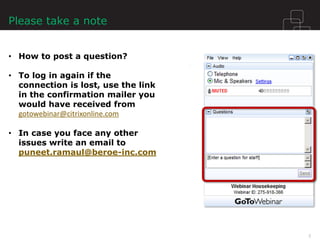
•How to post a question? 
•To log in again if the connection is lost, use the link in the confirmation mailer you would have received from gotowebinar@citrixonline.com 
•In case you face any other issues write an email to puneet.ramaul@beroe-inc.com
Abhijeet Chaudhary 
Research Analyst 
Beroe Inc. 
Dialing in from: 
India 
Anup Agrawal 
Engagement Manager 
Beroe Inc. 
Dialing in from: 
India
5 
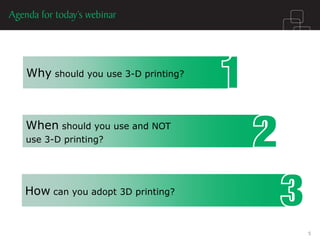
Why should you use 3-D printing? 
When should you use and NOT 
use 3-D printing? 
How can you adopt 3D printing?
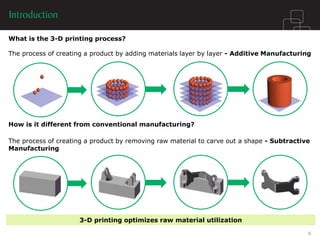
What is the 3-D printing process? 
3-D printing optimizes raw material utilization 
How is it different from conventional manufacturing? 
The process of creating a product by adding materials layer by layer - Additive Manufacturing 
The process of creating a product by removing raw material to carve out a shape - Subtractive 
Manufacturing 
6
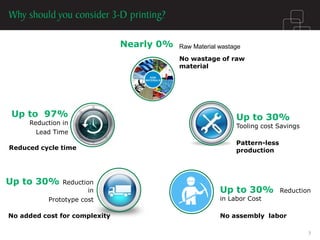
Up to 30% 
Tooling cost Savings 
Up to 97% 
Reduction in 
Lead Time 
Nearly 0% 
Up to 30% Reduction in 
Prototype cost 
Up to 30% Reduction in Labor Cost 
No assembly labor 
Raw Material wastage 
No wastage of raw 
material 
Pattern-less production 
No added cost for complexity 
Reduced cycle time 
7
Yes, the benefits are revolutionary indeed… 
Wow, the benefits 
seem too good 
to be true! 
But can everyone shift to 3-D printing? 
8
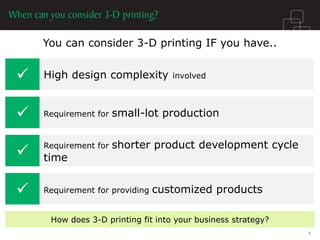
You can consider 3-D printing IF you have.. 
 
High design complexity involved 
 
Requirement for small-lot production 
 
Requirement for shorter product development cycle time 
 
Requirement for providing customized products 
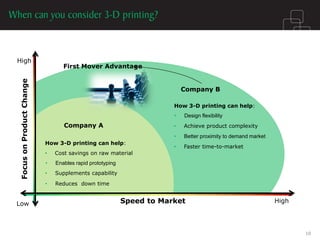
How does 3-D printing fit into your business strategy? 
9
Speed to Market 
Focus on Product Change 
Low 
High 
High 
How 3-D printing can help: 
•Achieve product complexity 
•Faster time-to-market 
Company B 
Company A 
How 3-D printing can help: 
• Cost savings on raw material 
•Enables rapid prototyping 
•Supplements capability 
•Reduces down time 
First Mover Advantage 
•Better proximity to demand market 
10 
•Design flexibility
•Manufacturer’s control over the raw material used 
•Premium charged for processing cost of the raw material to make it ready for 3D printing. 
High Raw material cost 
•Cost of industrial 3D printers range from $50,000- $200,000+ 
•Prices are expected to come down with increasing application. 
High Cost of 
3D Printer 
•High Speed Sintering (HSS) technology is the upcoming technology to overcome the slow speed of printing. 
Slow 3D 
Printing Speed 
These three challenges are bound to reduce as 3D printing is widely adopted 
11
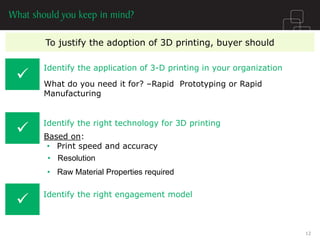
To justify the adoption of 3D printing, buyer should 
 
Identify the application of 3-D printing in your organization 
Identify the right technology for 3D printing 
What do you need it for? –Rapid Prototyping or Rapid Manufacturing 
Based on: 
•Print speed and accuracy 
Identify the right engagement model 
 
 
•Resolution 
•Raw Material Properties required 
12
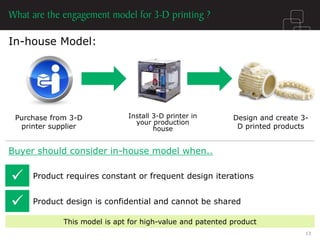
In-house Model: 
Purchase from 3-D 
printer supplier 
Install 3-D printer in your production house 
Design and create 3- D printed products 
Buyer should consider in-house model when.. 
Product requires constant or frequent design iterations 
Product design is confidential and cannot be shared 
 
 
This model is apt for high-value and patented product 
13
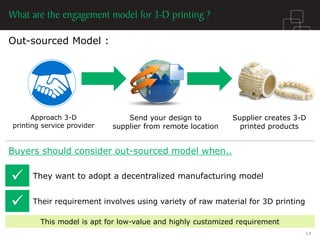
Out-sourced Model : 
Approach 3-D 
printing service provider 
Send your design to 
supplier from remote location 
Supplier creates 3-D printed products 
Buyers should consider out-sourced model when.. 
They want to adopt a decentralized manufacturing model 
Their requirement involves using variety of raw material for 3D printing 
 
 
This model is apt for low-value and highly customized requirement 
14
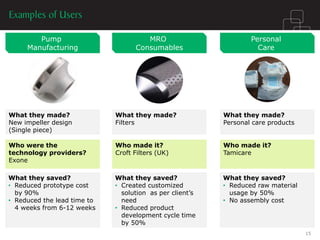
MRO 
Consumables 
Pump 
Manufacturing 
Personal 
Care 
What they made? 
New impeller design 
(Single piece) 
What they made? 
Filters 
What they made? 
Personal care products 
Who were the 
technology providers? 
Exone 
Who made it? 
Croft Filters (UK) 
Who made it? 
Tamicare 
What they saved? 
•Reduced prototype cost by 90% 
•Reduced the lead time to 4 weeks from 6-12 weeks 
What they saved? 
•Created customized solution as per client’s need 
•Reduced product development cycle time by 50% 
What they saved? 
•Reduced raw material usage by 50% 
•No assembly cost 
15
3 
2 
1 
Identify if and where 3-D printing can fit in your organization 
Roadmap to adopt 3-D printing 
Estimate the potential savings 
Identify the right engagement model 
4 
Identify the right technology and supplier 
16
17

3D Printing: An emerging trend and its impact on the MRO supply chain | Beroe Webinar Presentation

  • 2.
    Please take anote •How to post a question? •To log in again if the connection is lost, use the link in the confirmation mailer you would have received from gotowebinar@citrixonline.com •In case you face any other issues write an email to puneet.ramaul@beroe-inc.com
  • 3.
    Abhijeet Chaudhary ResearchAnalyst Beroe Inc. Dialing in from: India Anup Agrawal Engagement Manager Beroe Inc. Dialing in from: India
  • 5.
    5 Why shouldyou use 3-D printing? When should you use and NOT use 3-D printing? How can you adopt 3D printing?
  • 6.
    What is the3-D printing process? 3-D printing optimizes raw material utilization How is it different from conventional manufacturing? The process of creating a product by adding materials layer by layer - Additive Manufacturing The process of creating a product by removing raw material to carve out a shape - Subtractive Manufacturing 6
  • 7.
    Up to 30% Tooling cost Savings Up to 97% Reduction in Lead Time Nearly 0% Up to 30% Reduction in Prototype cost Up to 30% Reduction in Labor Cost No assembly labor Raw Material wastage No wastage of raw material Pattern-less production No added cost for complexity Reduced cycle time 7
  • 8.
    Yes, the benefitsare revolutionary indeed… Wow, the benefits seem too good to be true! But can everyone shift to 3-D printing? 8
  • 9.
    You can consider3-D printing IF you have..  High design complexity involved  Requirement for small-lot production  Requirement for shorter product development cycle time  Requirement for providing customized products How does 3-D printing fit into your business strategy? 9
  • 10.
    Speed to Market Focus on Product Change Low High High How 3-D printing can help: •Achieve product complexity •Faster time-to-market Company B Company A How 3-D printing can help: • Cost savings on raw material •Enables rapid prototyping •Supplements capability •Reduces down time First Mover Advantage •Better proximity to demand market 10 •Design flexibility
  • 11.
    •Manufacturer’s control overthe raw material used •Premium charged for processing cost of the raw material to make it ready for 3D printing. High Raw material cost •Cost of industrial 3D printers range from $50,000- $200,000+ •Prices are expected to come down with increasing application. High Cost of 3D Printer •High Speed Sintering (HSS) technology is the upcoming technology to overcome the slow speed of printing. Slow 3D Printing Speed These three challenges are bound to reduce as 3D printing is widely adopted 11
  • 12.
    To justify theadoption of 3D printing, buyer should  Identify the application of 3-D printing in your organization Identify the right technology for 3D printing What do you need it for? –Rapid Prototyping or Rapid Manufacturing Based on: •Print speed and accuracy Identify the right engagement model   •Resolution •Raw Material Properties required 12
  • 13.
    In-house Model: Purchasefrom 3-D printer supplier Install 3-D printer in your production house Design and create 3- D printed products Buyer should consider in-house model when.. Product requires constant or frequent design iterations Product design is confidential and cannot be shared   This model is apt for high-value and patented product 13
  • 14.
    Out-sourced Model : Approach 3-D printing service provider Send your design to supplier from remote location Supplier creates 3-D printed products Buyers should consider out-sourced model when.. They want to adopt a decentralized manufacturing model Their requirement involves using variety of raw material for 3D printing   This model is apt for low-value and highly customized requirement 14
  • 15.
    MRO Consumables Pump Manufacturing Personal Care What they made? New impeller design (Single piece) What they made? Filters What they made? Personal care products Who were the technology providers? Exone Who made it? Croft Filters (UK) Who made it? Tamicare What they saved? •Reduced prototype cost by 90% •Reduced the lead time to 4 weeks from 6-12 weeks What they saved? •Created customized solution as per client’s need •Reduced product development cycle time by 50% What they saved? •Reduced raw material usage by 50% •No assembly cost 15
  • 16.
    3 2 1 Identify if and where 3-D printing can fit in your organization Roadmap to adopt 3-D printing Estimate the potential savings Identify the right engagement model 4 Identify the right technology and supplier 16
  • 17.