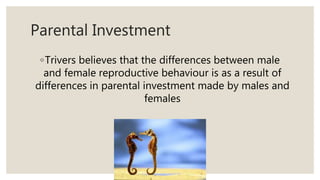
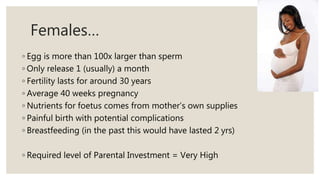
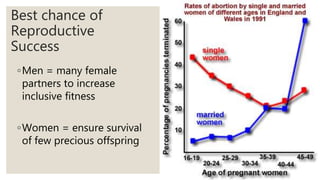
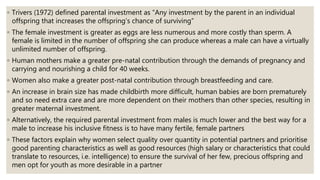
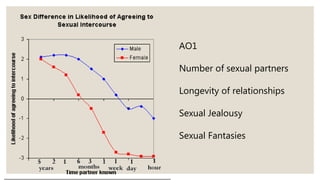
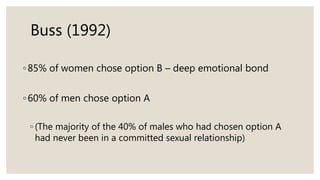
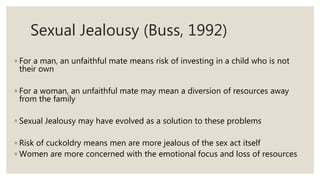
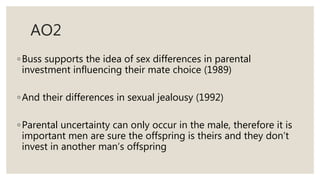
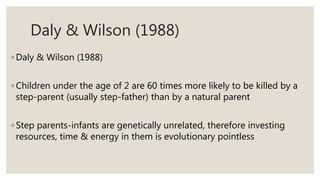
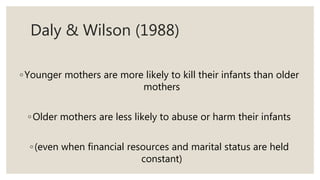
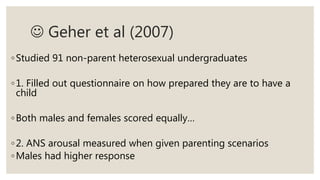
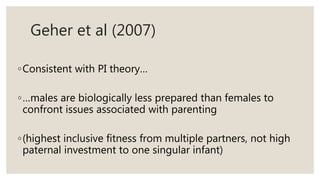
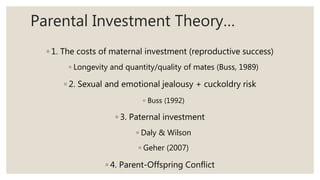
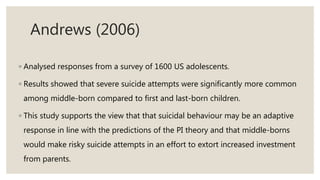
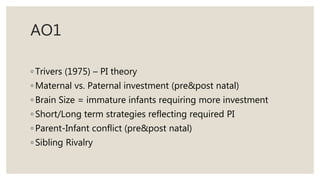
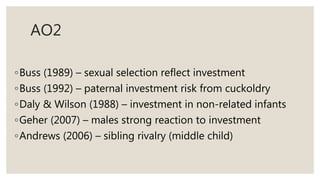
Parental investment theory proposes that the differences in reproductive strategies between males and females stem from their differing levels of minimal parental investment. For females, pregnancy and lactation require extensive energetic resources, limiting the number of offspring that can be produced. In contrast, males can father many offspring with minimal investment. As a result, females evolve to be more selective in choosing mates who can provide resources, while males benefit from pursuing multiple mating partners. This theory helps explain sex differences in mate preferences, jealousy, and parent-offspring conflicts as organisms strive to maximize their inclusive fitness within the constraints of their biological roles.







![Neural_control_of_animal_behaviour[1]789.pptx](https://cdn.slidesharecdn.com/ss_thumbnails/neuralcontrolofanimalbehaviour1789-230207172442-5de82c6f-thumbnail.jpg?width=640&height=640&fit=bounds)


