Objective 10/12/16
 Provided notes, SWBAT evaluate the role genetics
plays in determining behavior.
Agenda:
-Do Now: what makes you who you are?
-Notes: genetics
-Review
Do Now: 10/12/16
1. Read the article on genetics
2. Once you have read, write a brief summary on your
thoughts about what you have read (be ready to
share) You may also include what you believe
makes us who we are.
A P P S Y C H O L O G Y : U N I T I I
Introductory Psychology:
Biological Bases of Behavior
“We share half of our genes with a banana…” – Robert May
Topic: Behavior Genetics
What is Behavior Genetics?
 Behavior Genetics
 The study of the relative
power & limits of genetics
and environmental
influences on
behavior
 Nature v.
nurture
P A R T O N E
The Biological Bases:
Basic Genetic Principles
Basics: Genes – Our Code for Life
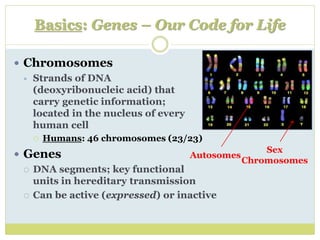
 Chromosomes
 Strands of DNA
(deoxyribonucleic acid) that
carry genetic information;
located in the nucleus of every
human cell
 Humans: 46 chromosomes (23/23)
 Genes
 DNA segments; key functional
units in hereditary transmission
 Can be active (expressed) or inactive
Autosomes
Sex
Chromosomes
Basics: Genes – Our Code for Life
 Like chromosomes, genes operate in pairs,
with one gene in each pair coming from each
parent
 Homozygous Condition
 Paired genes are the same
 Heterozygous Condition
 Paired genes are different
 In this case, one gene in the pair masks the other
Basics: Genes – Our Code for Life
 Genotype
 A person’s genetic makeup; determined at conception
and fixed forever
 Phenotype
 The ways in which a person’s genotype is manifested
in observable characteristics; may change over time
 **Different genotypes can yield the same phenotype
 **Genes are pliable
 Polygenic Inheritance
 Characteristics that are influenced by more than one
pair of genes
Basics: Genes – Our Code for Life
 Genetic & Chromosomal Problems
 Cystic Fibrosis
 Two recessive genes; respiratory & digestive tract
 Sickle Cell Anemia
 Two recessive genes; blood disorder
 Tay-Sachs Disorder
 Two recessive genes; fatal neurological disorder
 Phenylketonuria
 Two recessive genes; difficulty digesting a certain amino
acid – phenylalanine
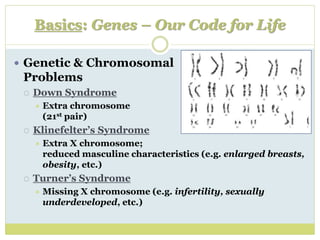
Basics: Genes – Our Code for Life
 Genetic & Chromosomal
Problems
 Down Syndrome
 Extra chromosome
(21st pair)
 Klinefelter’s Syndrome
 Extra X chromosome;
reduced masculine characteristics (e.g. enlarged breasts,
obesity, etc.)
 Turner’s Syndrome
 Missing X chromosome (e.g. infertility, sexually
underdeveloped, etc.)
P A R T T W O
The Biological Bases:
Heritability
The ultimate nature-
versus-nurture laboratory
What is Heritability?
 The extent to which the
differences among people
are attributable to their
differing genes
 What percentage of the difference
among height can be attributed
to genes?
 90%
 Individual differences v.
group differences?
 Nature v. Nurture?
Heritability: Twin Studies
Monozygotic
Dizygotic
Heritability: Twin Studies
Used to determine the heritability of a trait
Heritability: Jim Lewis
 Middle class
 Wife: Betty
 Son: James Alan
 Dog: Toy
 Hobby: Woodworking
 Bad Habits: Chain smoker, fingernail biter…
 Other: Drove a Chevy, watched stock-car
racing & drank Miller…
 Conditions: High blood pressure &
migraines…
Heritability: Jim Springer
 In 1980, Jim Springer called
Jim Lewis (37 year separation)
 Everything down to their dog’s
name was the same (except sons
James Allan & James Alan)
 When listening to each other's voices, they
would mistake themselves for the other
 First in Thomas Bouchard’s “Minnesota
Twin Study”
Heritability: Adoption Studies
 Compare children's’
traits with those of their
biological and adopted
parents
 Studies suggest that
adoptees tend to be more
similar to their biological parents
 Two adopted children in the same household bear no
more resemblance to each other than two biological
siblings (in terms of personality)
Heritability: Adoption Studies
 S0 does parenting even
have an effect?
 YES!
 It has an effect on
biologically related and
unrelated children alike
 Effects attitudes, values,
manners, beliefs, faith,
etc.
 Different from personality…
 “Heredity deals the cards, environment plays the
hand…”
P A R T T H R E E
The Biological Bases:
Molecular Genetics
DEFINITION: A branch
extension of behavior genetics
that asks the question, “Do
specific genes influence
behavior?”
GOAL: To find some of the many genes that influence
normal human traits (e.g. body weight, sexual
orientation, extraversion)

Genetics (1).ppt

  • 1.
    Objective 10/12/16  Providednotes, SWBAT evaluate the role genetics plays in determining behavior. Agenda: -Do Now: what makes you who you are? -Notes: genetics -Review
  • 2.
    Do Now: 10/12/16 1.Read the article on genetics 2. Once you have read, write a brief summary on your thoughts about what you have read (be ready to share) You may also include what you believe makes us who we are.
  • 3.
    A P PS Y C H O L O G Y : U N I T I I Introductory Psychology: Biological Bases of Behavior “We share half of our genes with a banana…” – Robert May Topic: Behavior Genetics
  • 4.
    What is BehaviorGenetics?  Behavior Genetics  The study of the relative power & limits of genetics and environmental influences on behavior  Nature v. nurture
  • 5.
    P A RT O N E The Biological Bases: Basic Genetic Principles
  • 6.
    Basics: Genes –Our Code for Life  Chromosomes  Strands of DNA (deoxyribonucleic acid) that carry genetic information; located in the nucleus of every human cell  Humans: 46 chromosomes (23/23)  Genes  DNA segments; key functional units in hereditary transmission  Can be active (expressed) or inactive Autosomes Sex Chromosomes
  • 7.
    Basics: Genes –Our Code for Life  Like chromosomes, genes operate in pairs, with one gene in each pair coming from each parent  Homozygous Condition  Paired genes are the same  Heterozygous Condition  Paired genes are different  In this case, one gene in the pair masks the other
  • 8.
    Basics: Genes –Our Code for Life  Genotype  A person’s genetic makeup; determined at conception and fixed forever  Phenotype  The ways in which a person’s genotype is manifested in observable characteristics; may change over time  **Different genotypes can yield the same phenotype  **Genes are pliable  Polygenic Inheritance  Characteristics that are influenced by more than one pair of genes
  • 9.
    Basics: Genes –Our Code for Life  Genetic & Chromosomal Problems  Cystic Fibrosis  Two recessive genes; respiratory & digestive tract  Sickle Cell Anemia  Two recessive genes; blood disorder  Tay-Sachs Disorder  Two recessive genes; fatal neurological disorder  Phenylketonuria  Two recessive genes; difficulty digesting a certain amino acid – phenylalanine
  • 11.
    Basics: Genes –Our Code for Life  Genetic & Chromosomal Problems  Down Syndrome  Extra chromosome (21st pair)  Klinefelter’s Syndrome  Extra X chromosome; reduced masculine characteristics (e.g. enlarged breasts, obesity, etc.)  Turner’s Syndrome  Missing X chromosome (e.g. infertility, sexually underdeveloped, etc.)
  • 12.
    P A RT T W O The Biological Bases: Heritability The ultimate nature- versus-nurture laboratory
  • 13.
    What is Heritability? The extent to which the differences among people are attributable to their differing genes  What percentage of the difference among height can be attributed to genes?  90%  Individual differences v. group differences?  Nature v. Nurture?
  • 14.
  • 16.
    Heritability: Twin Studies Usedto determine the heritability of a trait
  • 17.
    Heritability: Jim Lewis Middle class  Wife: Betty  Son: James Alan  Dog: Toy  Hobby: Woodworking  Bad Habits: Chain smoker, fingernail biter…  Other: Drove a Chevy, watched stock-car racing & drank Miller…  Conditions: High blood pressure & migraines…
  • 18.
    Heritability: Jim Springer In 1980, Jim Springer called Jim Lewis (37 year separation)  Everything down to their dog’s name was the same (except sons James Allan & James Alan)  When listening to each other's voices, they would mistake themselves for the other  First in Thomas Bouchard’s “Minnesota Twin Study”
  • 19.
    Heritability: Adoption Studies Compare children's’ traits with those of their biological and adopted parents  Studies suggest that adoptees tend to be more similar to their biological parents  Two adopted children in the same household bear no more resemblance to each other than two biological siblings (in terms of personality)
  • 20.
    Heritability: Adoption Studies S0 does parenting even have an effect?  YES!  It has an effect on biologically related and unrelated children alike  Effects attitudes, values, manners, beliefs, faith, etc.  Different from personality…  “Heredity deals the cards, environment plays the hand…”
  • 21.
    P A RT T H R E E The Biological Bases: Molecular Genetics DEFINITION: A branch extension of behavior genetics that asks the question, “Do specific genes influence behavior?” GOAL: To find some of the many genes that influence normal human traits (e.g. body weight, sexual orientation, extraversion)