Moderator:Dr. D. J. Bhuyan
Associate professor
Presenter : Dr. Ripa Das
PGT Psychiatry
GENETICS IN PSYCHIATRY
PLAN OF PRESENTATION
 Introduction
 History
 Basic Genetics
 Inheritance
 Studies related to Psychiatry
 Psychiatric Relevance
 Implications of Genetics
 Future Implications of Genetics
INTRODUCTION
Genetics:
The science that attempts to correlate the difference in DNA
sequence (genotypes) with difference in observable traits (
phenotypes).
 Psychiatric Genetics:
Application of genetic principles & methods to study of
mental disorders.
History
 Imre Festetics, a Hungerian noble first used the word‘genetics’ in
hereditarian context.
 Willium Bateson popularised the term‘ genetics’ &‘allele’.
 Inheritance of acquired characteristics given by Jean Baptiste
Lamarck.
 Gregor Mendel is the father of inheritance. He gave 3 laws of
inheritance: 1)The Law of Segregation,2)The Law of Independent
Assortment,3)The Law of Dominance
 Thomas Morgan showed that genes reside on specific
chromosomes.
 Rudin & Kallman showed that schizophrenia was transmitted by
recessive genes.
BASIC GENETICS
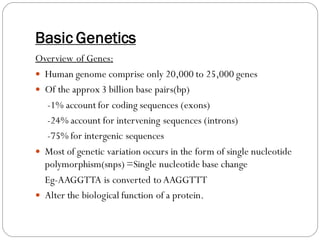
Basic Genetics
Overview of Genes:
 Human genome comprise only 20,000 to 25,000 genes
 Of the approx 3 billion base pairs(bp)
-1% account for coding sequences (exons)
-24% account for intervening sequences (introns)
-75% for intergenic sequences
 Most of genetic variation occurs in the form of single nucleotide
polymorphism(snps) =Single nucleotide base change
Eg-AAGGTTA is converted to AAGGTTT
 Alter the biological function of a protein.
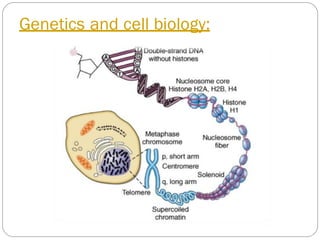
Genetics and cell biology:
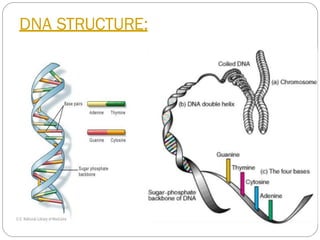
DNA STRUCTURE:
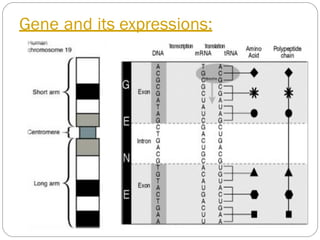
Gene and its expressions:
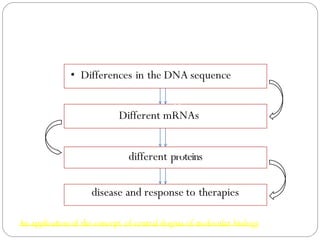
GvariaENETICVARIATIONS
Different mRNAs
• Differences in the DNA sequence
TRANSCRIPTIO
N
TRANSLATIO
different proteins
disease and response to therapies
An application of the concept of central dogma of molecular biology
Basic Genetics
 Gene:
Ordered sequence of nucleotides located in a particular position
on a particular chromosome that encodes a specific functional
product.
 Genome:
All the genetic material in the chromosomes of a particular
organism ;size is usually given as its total number of base pairs.
 Genomics:
The study of genes & their function
• Locus: the specific location of a gene.
Basic Genetics
• Penetrance:
Probability of a gene or genetic trait being expressed.
Complete –expressed in all who have the genes;eg:AR
Incomplete-expressed in only part of the population;eg:AD
 Allele:
Different variants of a gene, at a particular locus or location of
chromosome.
 Polygenic:
Genetic disorder resulting from combind action of more than
one gene.
• Gene Mapping:the process of determining the locus for a
particular biological trait.
Epigenetics
 Literal meaning something above the gene.
 Certain factors transmitted to progeny cells, but not directly
attributable to genetic factors, just altering the function of gene.
 Important epigenetic mechanism-
 Gene silencing:
- DNA Methylation: X chromosome
inactivation
fragile X syndrome
-phosphorylation
-histone deacetylation
Genomic Imprinting :
Eg-genomic imprinting in prader willi & angelman syndrome
Epigenetics
Phenomenon that may me explained by epigenetics in
psychiatry:
 1.familial & sporadic cases.
 2.discordance in monozygotic twin.
 3.course & resolution of treatment.
 4.effects of gender.
 5.resistance of illness.
INHERITANCE
Types of Inheritance
The mode of biological inheritance consist of three main categories:
➢ 1)No of involved foci
 -monogenic (one locus)
 -oligogenic (few loci)
 -polygenic (many loci)
➢ 2)Involved chromosomes
 -autosomal (loci are not situated on a sex chromosome)
 -gonosomal ( loci are situated on sex chromosomal,eg: X-
chromosomal,Y-chromosomal)
 -mitochondrial ( loci are situated on the mitochondrial DNA)
Types of Inheritance
➢ 3) Correlation genotype-phenotype
 -dominant
 -co-dominant
 -recessive
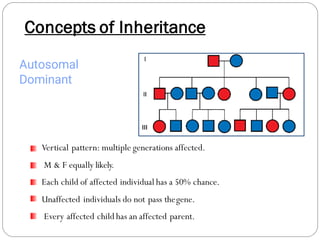
Vertical pattern: multiple generations affected.
M & F equally likely.
Each child of affected individual has a 50% chance.
Unaffected individuals do not pass thegene.
Every affected child has an affected parent.
Autosomal
Dominant
Concepts of Inheritance
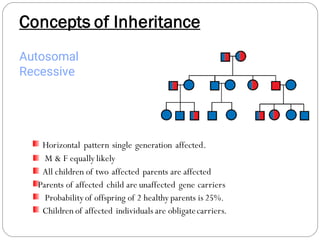
Autosomal
Recessive
Horizontal pattern single generation affected.
M & F equally likely
All children of two affected parents are affected
Parents of affected child are unaffected gene carriers
Probabilityof offspring of 2 healthy parents is 25%.
Children of affected individuals are obligatecarriers.
Concepts of Inheritance
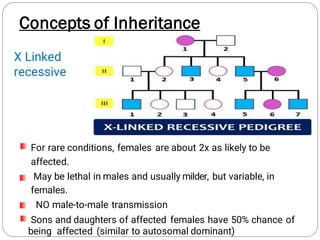
For rare conditions, females are about 2x as likely to be
affected.
May be lethal in males and usually milder, but variable, in
females.
NO male-to-male transmission
Sons and daughters of affected females have 50% chance of
being affected (similar to autosomal dominant)
X Linked
recessive
Concepts of Inheritance
POLYGENIC INHERITANCE
 Aka mutigenetic/quantitive inheritance.
 Joseph Koleuter is known as father of polygenic inheritance.
 A type of non-mendelian inheritance.
 Single characteristic controlled by many non allelic genes .
 All the alleles neither dominate nor suppress other
alleles,each allele contributes its share & shows continuous
variation.
 Phenotype influenced by environment.
 Genetic analysis done by statistical methods (GWAS),shows
bell shaped curve.
 Psychiatric diseases are mainly follows polygenic inheritance.
Studies Related to Psychiatry
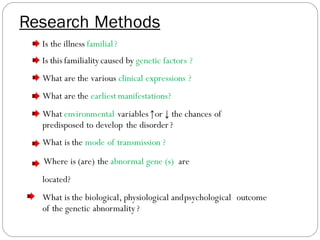
Is the illness familial?
Is this familialitycaused by genetic factors ?
What are the various clinical expressions ?of theabnormal gene ?
What are the earliest manifestations? of the predispositionto illness ?
What environmental variables↑or ↓ the chances of
predisposed to develop the disorder?
What is the mode of transmission ?
Where is (are) the abnormal gene (s) ?are
located?
What is the biological, physiological andpsychological outcome
of the genetic abnormality?
Research Methods
STUDY DESIGNS FOR GENETIC
RESEARCH IN MENTAL DISORDERS
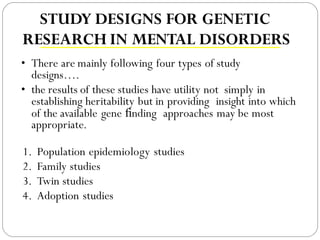
• There are mainly following four types of study
designs….
• the results of these studies have utility not simply in
establishing heritability but in providing insight into which
of the available gene finding approaches may be most
appropriate.
1. Population epidemiology studies
2. Family studies
3. Twin studies
4. Adoption studies
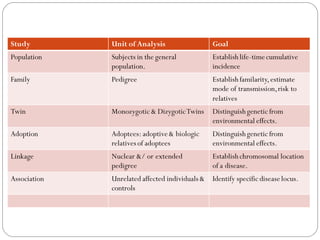
Study Unit of Analysis Goal
Population Subjects in the general
population.
Establishlife-timecumulative
incidence
Family Pedigree Establish familarity,estimate
mode of transmission,risk to
relatives
Twin Monozygotic & DizygoticTwins Distinguishgenetic from
environmental effects.
Adoption Adoptees: adoptive& biologic
relativesof adoptees
Distinguishgenetic from
environmental effects.
Linkage Nuclear &/ or extended
pedigree
Establishchromosomal location
of a disease.
Association Unrelated affected individuals&
controls
Identify specific diseaselocus.
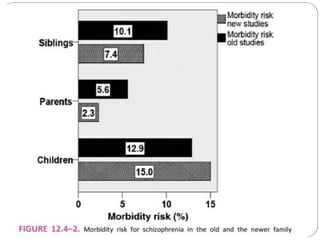
Family Study
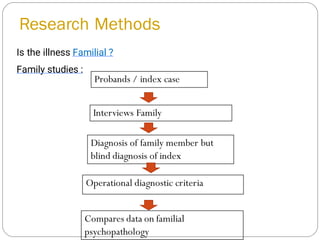
Is the illness Familial ?
Family studies :
Research Methods
Probands / index case
Interviews Family
Diagnosis of family member but
blind diagnosis of index
Operational diagnostic criteria
Compares data on familial
psychopathology
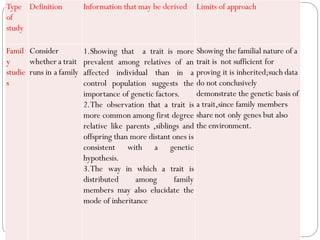
Type
of
study
Definition Information that may be derived Limits of approach
Famil
y
studie
s
Consider
whether a trait
runs in a family
1.Showing that a trait is more
prevalent among relatives of an
affected individual than in a
control population suggests the
importance of genetic factors.
2.The observation that a trait is
more common among first degree
relative like parents ,siblings and
offspring than more distant ones is
consistent with a genetic
hypothesis.
3.The way in which a trait is
distributed among family
members may also elucidate the
mode of inheritance
Showing the familial nature of a
trait is not sufficient for
proving it is inherited;such data
do not conclusively
demonstrate the genetic basis of
a trait,since family members
share not only genes but also
the environment.
Twin Study
Type of study Definition Information that may be
derived
Limits of
approach
Twin studies Compare how
often identical
twins, who are
genetically
identical, and
fraternal twins,
who have the
genetic similarity
of nontwin
siblings, are
similar or
concordant,for a
trait.
1.A higher concordance
rate for a trait among
identical twins versus
fraternal twins usually
demonstrates a genetic
basis for a trait.
2.The absence of 100
percent concordance
among identical twins
shows that nongenetic
factors also play a role in
producing the trait.
1.Sampling
method
;The assumption
that identical and
fraternal twins
experience the
environment
identically;
2.The definition
of
concordance;
3.the statistical
method for
measuring
concordance.
Schizophreni
a
Schizoaffective Bipolardisorder
Risk in
general
population
0.8-1% 0.3% 0.3-1%
Risk to
siblings/ first
degree rels
10% 2-3% 5-10%
Monozygotic
(MZ) twin
concordance
45% 40% 40%
Dizygotic (DZ)
twin
concordance
5-10% 5% 5%
Approximate risks
Adoption Study
Type of
study
Definition Information
that may be
derived
Limits of
approach
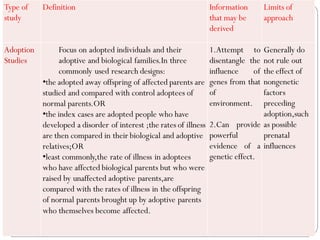
Adoption
Studies
Focus on adopted individuals and their
adoptive and biological families.In three
commonly used research designs:
•the adopted away offspring of affected parents are
studied and compared with control adoptees of
normal parents.OR
•the index cases are adopted people who have
developed a disorder of interest ;the rates of illness
are then compared in their biological and adoptive
relatives;OR
•least commonly,the rate of illness in adoptees
who have affected biological parents but who were
raised by unaffected adoptive parents,are
compared with the rates of illness in the offspring
of normal parents brought up by adoptive parents
who themselves become affected.
1.Attempt to
disentangle the
influence of
genes from that
of
environment.
2.Can provide
powerful
evidence of a
genetic effect.
Generally do
not rule out
the effect of
nongenetic
factors
preceding
adoption,such
as possible
prenatal
influences
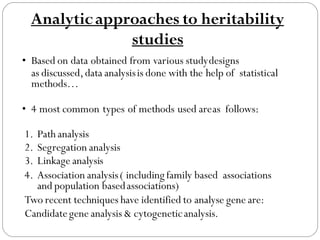
Analyticapproaches to heritability
studies
• Based on data obtained from various studydesigns
as discussed,data analysisis done with the help of statistical
methods…
• 4 most common types of methods used areas follows:
1. Path analysis
2. Segregation analysis
3. Linkage analysis
4. Association analysis( including family based associations
and population basedassociations)
Two recent techniques have identified to analyse gene are:
Candidategene analysis & cytogeneticanalysis.
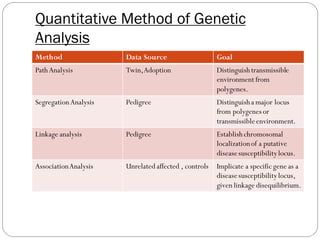
Quantitative Method of Genetic
Analysis
Method Data Source Goal
PathAnalysis Twin,Adoption Distinguishtransmissible
environment from
polygenes.
SegregationAnalysis Pedigree Distinguisha major locus
from polygenes or
transmissibleenvironment.
Linkage analysis Pedigree Establishchromosomal
localizationof a putative
diseasesusceptibilitylocus.
AssociationAnalysis Unrelated affected , controls Implicate a specific gene as a
diseasesusceptibilitylocus,
given linkage disequilibrium.
Linkage Analysis
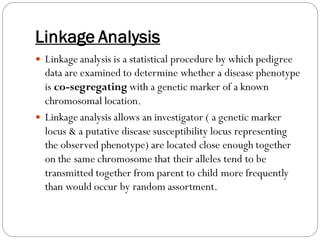
 Linkage analysis is a statistical procedure by which pedigree
data are examined to determine whether a disease phenotype
is co-segregating with a genetic marker of a known
chromosomal location.
 Linkage analysis allows an investigator ( a genetic marker
locus & a putative disease susceptibility locus representing
the observed phenotype) are located close enough together
on the same chromosome that their alleles tend to be
transmitted together from parent to child more frequently
than would occur by random assortment.
 The demonstration of linkage between a putative disease
susceptibility locus & one or more genetic markers thus
determines in which chromosomal region the disease locus
lies.
 At least one parent must be doubly heterozygous.
 There are two types of linkage analysis:
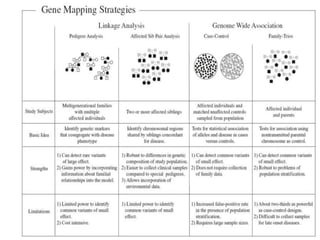
PEDIGREE ANALYSIS AFFECTED SIBLING PAIR ANALYSIS
1.Done on multigenerational families.
2. Identify genetic markers that
cosegregate with the disease.
3.Can detect rare variants of large
effect.
1.Done on two or more affected siblings.
2.Identify chromosomal regions shared by
siblings concordant for the disease.
3.Allow incorporation of environmental
data.
Genetic Markers of Linkage Study
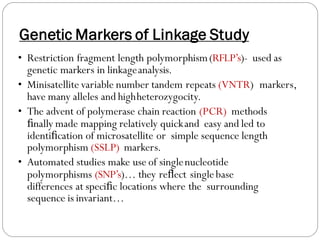
• Restriction fragment length polymorphism(RFLP’s)- used as
genetic markers in linkageanalysis.
• Minisatellite variable number tandem repeats (VNTR) markers,
have many alleles and highheterozygocity.
• The advent of polymerase chain reaction (PCR) methods
finally made mapping relatively quickand easy and led to
identification of microsatellite or simple sequence length
polymorphism (SSLP) markers.
• Automated studies make use of singlenucleotide
polymorphisms (SNP’s)… they reflect singlebase
differences at specific locations where the surrounding
sequence is invariant…
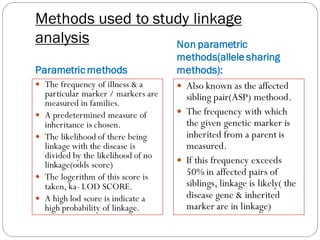
Methods used to study linkage
analysis
Parametric methods
Non parametric
methods(allele sharing
methods):
 The frequency of illness & a
particular marker / markers are
measured in families.
 A predetermined measure of
inheritance is chosen.
 The likelihood of there being
linkage with the disease is
divided by the likelihood of no
linkage(odds score)
 The logerithm of this score is
taken, ka- LOD SCORE.
 A high lod score is indicate a
high probability of linkage.
 Also known as the affected
sibling pair(ASP) methood.
 The frequency with which
the given genetic marker is
inherited from a parent is
measured.
 If this frequency exceeds
50% in affected pairs of
siblings, linkage is likely( the
disease gene & inherited
marker are in linkage)
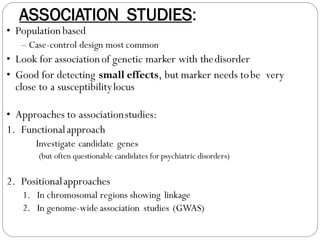
ASSOCIATION STUDIES:
• Populationbased
– Case-control design most common
• Look for associationof genetic marker with thedisorder
• Good for detecting small effects, but marker needs tobe very
close to a susceptibilitylocus
• Approaches to associationstudies:
1. Functionalapproach
Investigate candidate genes
(but often questionable candidates for psychiatric disorders)
2. Positionalapproaches
1. In chromosomal regions showing linkage
2. In genome-wide association studies (GWAS)
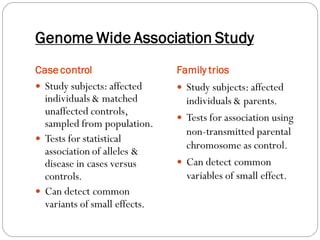
Genome Wide Association Study
Case control Family trios
 Study subjects: affected
individuals & matched
unaffected controls,
sampled from population.
 Tests for statistical
association of alleles &
disease in cases versus
controls.
 Can detect common
variants of small effects.
 Study subjects: affected
individuals & parents.
 Tests for association using
non-transmitted parental
chromosome as control.
 Can detect common
variables of small effect.
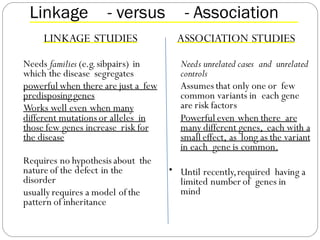
Linkage - versus - Association
•
•
•
•
•
LINKAGE STUDIES
Needs families (e.g.sibpairs) in
which the disease segregates
powerful when there are just a few
predisposinggenes
Works well even when many
different mutations or alleles in
those few genes increase risk for
the disease
•
•
•
Requires no hypothesis about the
nature of the defect in the •
disorder
usuallyrequires a model ofthe
pattern of inheritance
ASSOCIATION STUDIES
Needs unrelated cases and unrelated
controls
Assumes that only one or few
common variants in each gene
are risk factors
Powerful even when there are
many different genes, each with a
small effect, as long as the variant
in each gene is common.
Until recently,required having a
limited number of genes in
mind
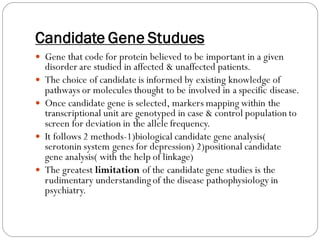
Candidate Gene Studues
 Gene that code for protein believed to be important in a given
disorder are studied in affected & unaffected patients.
 The choice of candidate is informed by existing knowledge of
pathways or molecules thought to be involved in a specific disease.
 Once candidate gene is selected, markers mapping within the
transcriptional unit are genotyped in case & control population to
screen for deviation in the allele frequency.
 It follows 2 methods-1)biological candidate gene analysis(
serotonin system genes for depression) 2)positional candidate
gene analysis( with the help of linkage)
 The greatest limitation of the candidate gene studies is the
rudimentary understandingof the disease pathophysiology in
psychiatry.
PSYCHIATRIC RELEVANCE
Psychiatric Relevance
1.ALZHEIMER’S DISEASE:
• Monozygotic twin concordance rate is 50%
• Chromosome 21-beta-amyloid precursor protein (APP)
• 70-80% of hereditary cases Presenillin-1on Ch.14q24.3(onsetat 40 yrs of
age)
• 20-30% of hereditary cases Presenilin-2on Ch 1q ( onset at 50 yrs of age)
• Non parametriclinkage study shows E4 allele of apolipoprotein E gene on
ch.19 has strongassociated with late onset alzheimer disease ( 50% in familial
late onset,40% in sporadiclate onset)
Psychiatric Relevance
AUTISM:
 The sibling recurrence risk for autism &/orASD is between 2-
6%.
 For a given population prevalence is 1 in 2000 (0.4%).
 Siblings of autistic individual 50-100 times more likely to develop
autism than general population.
 Monozygotic twin concordance of 80-92%.
 Copy no variation account for 5-8% of syndromic cases of autism.
 3-5% cases associated with fragile X syndrome –FMR1gene on
ch.Xq27.
 , rett syndrome(ch.X)
Psychiatric Relevance
AUTISM:
 2-10% cases are a/w tuberous sclerosis,due to mutations in
tumour suppressor geneTSC1 on ch.9q34,&TSC2 on ch.16p13.
 Linked to chromosome 7-RELN &WNT -2 genes whose
expression play a role in neuronal development.
 Linked to ch15 for GABA receptor duplication.
 Recent researchers have identified roles for de novo EXONIC
mutation in SODIUM channel protein 2 subunit alpha , katanin
p60 subunitA like 2 & chromodomain helicase DNA-binding
protein 8 in the pathogenesis ofASD( Sanders et al.,2012)
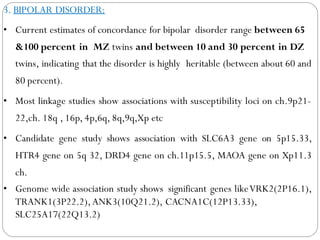
3. BIPOLAR DISORDER:
• Current estimates of concordance for bipolar disorder range between 65
&100 percent in MZ twins and between 10 and 30 percent in DZ
twins, indicating that the disorder is highly heritable (between about 60 and
80 percent).
• Most linkage studies show associations with susceptibility loci on ch.9p21-
22,ch. 18q , 16p, 4p,6q, 8q,9q,Xp etc
• Candidate gene study shows association with SLC6A3 gene on 5p15.33,
HTR4 gene on 5q 32, DRD4 gene on ch.11p15.5, MAOA gene on Xp11.3
ch.
• Genome wide association study shows significant genes likeVRK2(2P16.1),
TRANK1(3P22.2),ANK3(10Q21.2), CACNA1C(12P13.33),
SLC25A17(22Q13.2)
Psychiatric Relevance
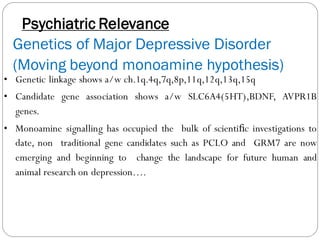
Genetics of Major Depressive Disorder
(Moving beyond monoamine hypothesis)
• Genetic linkage shows a/w ch.1q.4q,7q,8p,11q,12q,13q,15q
• Candidate gene association shows a/w SLC6A4(5HT),BDNF, AVPR1B
genes.
• Monoamine signalling has occupied the bulk of scientific investigations to
date, non traditional gene candidates such as PCLO and GRM7 are now
emerging and beginning to change the landscape for future human and
animal research on depression….
Psychiatric Relevance
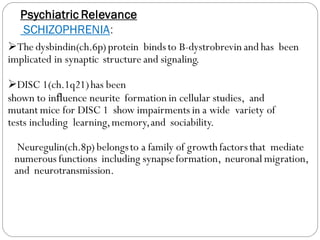
SCHIZOPHRENIA:
➢The dysbindin(ch.6p)protein bindsto B-dystrobrevin and has been
implicated in synaptic structure and signaling.
➢DISC 1(ch.1q21)has been
shown to influence neurite formation in cellular studies, and
mutant mice for DISC 1 show impairments in a wide variety of
tests including learning,memory,and sociability.
➢Neuregulin(ch.8p) belongsto a family of growth factorsthat mediate
numerous functions including synapseformation, neuronal migration,
and neurotransmission.
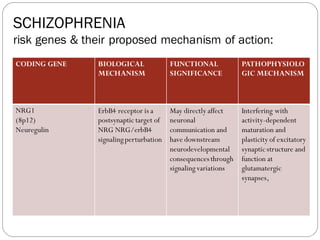
SCHIZOPHRENIA
risk genes & their proposed mechanism of action:
CODING GENE BIOLOGICAL
MECHANISM
FUNCTIONAL
SIGNIFICANCE
PATHOPHYSIOLO
GIC MECHANISM
NRG1
(8p12)
Neuregulin
ErbB4 receptor is a
postsynaptic target of
NRG NRG/erbB4
signalingperturbation
May directly affect
neuronal
communication and
have downstream
neurodevelopmental
consequencesthrough
signalingvariations
Interfering with
activity-dependent
maturation and
plasticity of excitatory
synaptic structure and
function at
glutamatergic
synapses,
SCHIZOPHRENIA
CODING GENE BIOLOGICAL
MECHANISM
FUNCTIONAL
SIGNIFICANCE
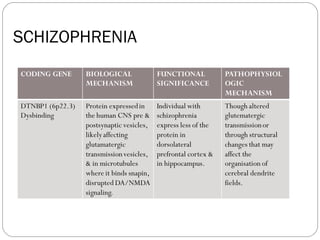
PATHOPHYSIOL
OGIC
MECHANISM
DTNBP1 (6p22.3)
Dysbinding
Protein expressedin
the human CNS pre &
postsynaptic vesicles,
likelyaffecting
glutamatergic
transmissionvesicles,
& in microtubules
where it binds snapin,
disrupted DA/NMDA
signaling.
Individual with
schizophrenia
express less of the
protein in
dorsolateral
prefrontal cortex &
in hippocampus.
Though altered
glutematergic
transmissionor
through structural
changes that may
affect the
organisation of
cerebral dendrite
fields.
SCHIZOPHRENIA
CODING GENE BIOLOGICAL
MECHANISM
FUNCTIONAL
SIGNIFICANCE
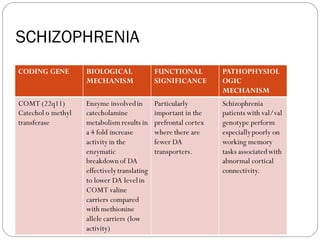
PATHOPHYSIOL
OGIC
MECHANISM
COMT (22q11)
Catechol o methyl
transferase
Enzyme involvedin
catecholamine
metabolism results in
a 4 fold increase
activity in the
enzymatic
breakdown of DA
effectivelytranslating
to lower DA levelin
COMT valine
carriers compared
with methionine
allele carriers (low
activity)
Particularly
important in the
prefrontal cortex
where there are
fewer DA
transporters.
Schizophrenia
patients with val/val
genotype perform
especiallypoorly on
working memory
tasks associatedwith
abnormal cortical
connectivity.
SCHIZOPHRENIA
CODING GENE BIOLOGICAL
MECHANISM
FUNCTIONAL
SIGNIFICANCE
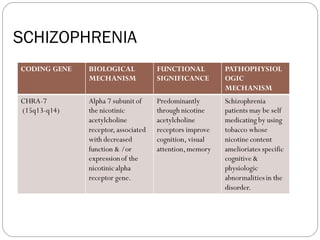
PATHOPHYSIOL
OGIC
MECHANISM
CHRA-7
(15q13-q14)
Alpha 7 subunit of
the nicotinic
acetylcholine
receptor, associated
with decreased
function & /or
expressionof the
nicotinic alpha
receptor gene.
Predominantly
through nicotine
acetylcholine
receptors improve
cognition, visual
attention,memory
Schizophrenia
patients may be self
medicating by using
tobacco whose
nicotine content
amelioriates specific
cognitive &
physiologic
abnormalitiesin the
disorder.
Psychiatric Relevance
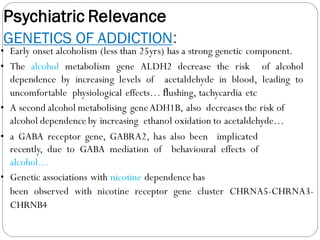
GENETICS OF ADDICTION:
• Early onset alcoholism (less than 25yrs) has a strong genetic component.
• The alcohol metabolism gene ALDH2 decrease the risk of alcohol
dependence by increasing levels of acetaldehyde in blood, leading to
uncomfortable physiological effects… flushing, tachycardia etc
• A second alcohol metabolising geneADH1B, also decreases the risk of
alcohol dependence by increasing ethanol oxidation to acetaldehyde…
• a GABA receptor gene, GABRA2, has also been implicated
recently, due to GABA mediation of behavioural effects of
alcohol…
• Genetic associations with nicotine dependence has
been observed with nicotine receptor gene cluster CHRNA5-CHRNA3-
CHRNB4
Psychiatric Relevance
Genetics of Addiction
Opioid :
 Twin study estimates that around 50-60% of the liability for
heroin addiction is genetic.
 Linkage study for opioid dependence shows clustered linkage on
ch.17.
 As well as linkage on the region of ch.14 overlying the neurexin 3
gene.
 Male specific linkage peak on ch.10q.
Cocaine :
 A genome wide association study identified the locus FAM53b
a/w risk for cocaine use disorder
 Butyrylcholinesterase genetic variants & dopamine transporter
SLC6A3 are specifically a/w crack cocaine use.
Psychiatric Relevance
ANXIETY DISORDERS
 Panic disorder:
 linkage & candidate gene association study shows a/w
ch.4q,9q,13q,14q,22q.
 Agarophobia:3q
 Social phobia: 16q
 Special phobia: 14q
 Genome wide association study shows a/w two single nucleotide
polymorphism located inTMEM132D on ch.12q24.3 with panic
disorder,
 A GWAS tentatively identified ‘ a noncoding RNA locus
LOC15225 on 3q12.3 & CAMKMT gene on 2p21 a/w anxiety
disorder.
Psychiatric Relevance
 Genetic linkage ofADHD are:5p,6q,9q,10q,12q,16p,17p
 Candidate gene a/wADHD are:SLC6A3(DAT1), DRD4, DRD5,
5HT1B, SNAP25, DBH, SLC6A4(5HTT)
 Linkage with ch.1q, 3q,6q, 7p,9p,15q seen in OBSESSIVE
COMPULSIVE DISORDER.
 Candidate gene association seen are: SLC1A1,5HTT, HTR2A
 Linkage with ch.1p & Candidate gene association like GHRL are
seen in BULIMIA NERVOSA.
 ANOREXIA NERVOSA: Linkage in ch.1q, 2p,13q
Candidate gene association seen are:OPRD1, HTR1D, COMT,
DRD2, SLC6A4
Psychiatric Relevance
ENDOPHENOTYPES:
 Are internal/ intermediate phenotype( between genotype &
phenotype)
 Term coined by Bernard John & Kenneth R. Lewis.
 They interact with environmental factors to produce a complex
phenotype/ disorder.
 Types of endophenotypes are:
 1. Structural anatomical
 2. neuroanatomicalphysiological
 3.cognitive
 4.Biochemical
 5. Neuroendocrine
 6.Neuropsychological
Criteria for an Endophenotype:
(Gottesman & Gould,2003)
 It must segregate with illness.
 Must be heritable
 It must be manifest both in disease active & in remission condition.
 Must co-segregate with illness within families.
 Must be present at a higher ratewithin affected families than population.
 Must be amenable to reliable measurement,& be specific to the illness of
interest.
➢ Examples of Endophenotypes:deficit in sensory motor gating & decline in
working memory in schizophrenia,rapid auditory processing & visuo-
auditory spacial attention in developmental Dyslexia,deficit in facial emotion
labeling in BPD, personality characteristics in suicide
IMPLICATIONS OF GENETICS
PHARMACOGENOMICS
 Pharmacogenetics: Study of how genetic differences in a single gene
influence variability in drug response ( Efficacy and toxicity).
 Pharmacogenomics: Study of how genetic(genome) differences in
multiple genes influence variability in drug response (Efficacy and
toxicity).
These two terms are often used synonymously .
 Goals of Pharmacogenomics:
1. Maximize drug efficacy.
2. Minimize drug toxicity.
3. Predict patients who will respond to intervention.
4. Aid in new drug development.
 The foundationsof Pharmacogenomics:
 Mutation:The difference in the DNA code that occurs in less than 1%
of populations.Often associated with rare diseases i.e. Cystic
fibrosis,Sickle cell anemia.
 Polymorphism:Difference in the DNA code that occurs in more than
1% of the populations.A single polymorphism is less likely to be the
main cause of a disease. Often have no visible clinical impact.
Types of polymorphisms:
1. Single nucleotide polymorphism
2. Insertion/Deletion polymorphism
3. Gene duplication
4. Gene deletion
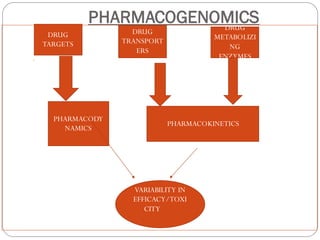
PHARMACOGENOMICS
DRUG
TARGETS
DRUG
TRANSPORT
ERS
DRUG
METABOLIZI
NG
ENZYMES
PHARMACODY
NAMICS
PHARMACOKINETICS
VARIABILITY IN
EFFICACY/TOXI
CITY
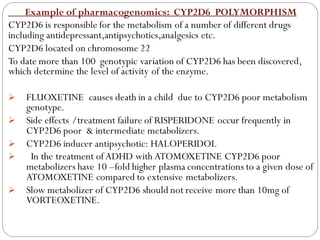
Example of pharmacogenomics: CYP2D6 POLYMORPHISM
CYP2D6 is responsible for the metabolism of a number of different drugs
including antidepressant,antipsychotics,analgesics etc.
CYP2D6 located on chromosome 22
To date more than 100 genotypic variation of CYP2D6 has been discovered,
which determine the level of activity of the enzyme.
➢ FLUOXETINE causes death in a child due to CYP2D6 poor metabolism
genotype.
➢ Side effects /treatment failure of RISPERIDONE occur frequently in
CYP2D6 poor & intermediate metabolizers.
➢ CYP2D6 inducer antipsychotic: HALOPERIDOL
➢ In the treatment ofADHD with ATOMOXETINE CYP2D6 poor
metabolizers have 10 –fold higher plasma concentrations to a given dose of
ATOMOXETINE compared to extensive metabolizers.
➢ Slow metabolizer of CYP2D6 should not receive more than 10mg of
VORTEOXETINE.
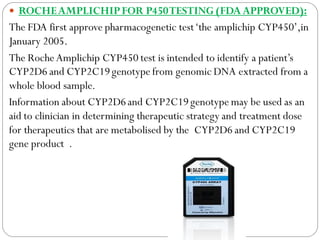
 ROCHEAMPLICHIPFOR P450TESTING (FDAAPPROVED):
The FDA first approve pharmacogenetic test‘the amplichip CYP450’,in
January 2005.
The RocheAmplichip CYP450 test is intended to identify a patient’s
CYP2D6 and CYP2C19genotype from genomic DNA extracted from a
whole blood sample.
Information about CYP2D6and CYP2C19genotype may be used as an
aid to clinician in determining therapeutic strategy and treatment dose
for therapeutics that are metabolised by the CYP2D6 and CYP2C19
gene product .
Examples of Pharmacogenomics
 FDA recommends that patients ofAsian descent be screened
for HLA-B1502allele testing before prescribing
Carbamazapineto reduce risk for Steven Johnson Syndrome.
 CYP2C19has mainly three allelic variants.
 Slow CYP2C19metabolizer should not receive more than
20mg daily dose of Citalopram.
 Association between 5HT2A (C102/C102)variants &
response to CLOZAPINE& RISPERIDONE.
 FDA recommended drug level for poor CYP2D6 metaboliser
forARIPIPRAZOLE.
EUGENICS
 DEFINITION: the study which deals with all influences that
improve the inborn qualities of race, also with those that develop
them to the utmost advantage.
 Term coined by Francis Galton.
 Types :
 1) Positive Eugenics: measure to increase reproduction in families
with desirable traits.(i.e. Encouraging the fit to have more
children )
 2) Negative Eugenics: measure to limit reproduction in families
with undesirable traits ( eg. Sterilisation via vasectomy & tubal
ligation). Negative eugenics was the predominant view.
EUGENICS
 Eugenics was influenced by ;-Origin Of Species- Natural
Selection, Survival of the Fittest, Mendel’s Study of
Inheritance ofTraits,Agriculture / Animal Breeding.
 GOALS:Toimprove the genetic composition of population.
 AIMS:
 1. to save resources
 2. to create healthy people
 3.to have the community free from mentally retarded
people.
 4. to decrease the human sufferings
 5. to decrease the economic burden of nation due to disease.
EUGENICS
 Eugenics in 21st century:
 Focus has turned from nrgative to positive eugenics.
 Steady advances are being made in the area of somatic &
germline engineering.
 SomaticTherapy- changes only take place in somatic cells of
the body & consequently do not transfer into the offspring.
 Germ Line- genetic changes are made to the sperm, egg or
embryonic cells & are passed to the offspring.
EUGENICS
 FLAWS:
 1. failure to recognise the complexity of human traits.
 2. disregard of environmental/ social factors.
 3. skewed results.
 4. linking undesirable traits with racial & ethnic groups.
 5. disregard of effects on genetic diversity.
 6. flawed IQ testing.
 7. Deemed a pseudo-science: mainly a social movement.
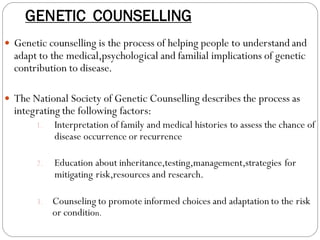
GENETIC COUNSELLING
 Genetic counselling is the process of helping people to understand and
adapt to the medical,psychological and familial implications of genetic
contribution to disease.
 The National Society of Genetic Counselling describes the process as
integrating the following factors:
1. Interpretation of family and medical histories to assess the chance of
disease occurrence or recurrence
2. Education about inheritance,testing,management,strategies for
mitigating risk,resources and research.
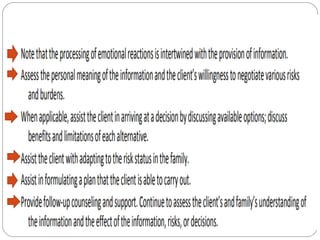
3. Counseling to promote informed choices and adaptation to the risk
or condition.
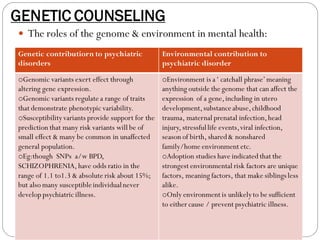
GENETIC COUNSELING
 The roles of the genome & environment in mental health:
Genetic contributiorn to psychiatric
disorders
Environmental contribution to
psychiatric disorder
oGenomic variants exert effect through
altering gene expression.
oGenomic variants regulate a range of traits
that demonstrate phenotypic variability.
oSusceptibilityvariants provide support for the
prediction that many risk variants will be of
small effect & many be common in unaffected
general population.
oEg:though SNPs a/w BPD,
SCHIZOPHRENIA, have odds ratio in the
range of 1.1 to1.3 & absolute risk about 15%;
but also many susceptibleindividualnever
develop psychiatric illness.
oEnvironment is a‘ catchall phrase’meaning
anything outside the genome that can affect the
expression of a gene,including in utero
development,substanceabuse,childhood
trauma, maternal prenatal infection,head
injury, stressfullife events,viral infection,
season of birth, shared& nonshared
family/home environment etc.
oAdoption studies have indicated that the
strongest environmental risk factors are unique
factors, meaning factors, that make siblingsless
alike.
oOnly environment is unlikelyto be sufficient
to either cause / prevent psychiatric illness.
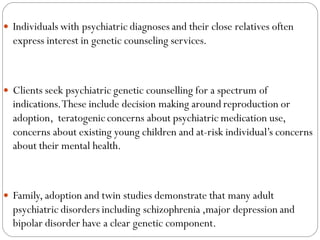
 Individuals with psychiatric diagnoses and their close relatives often
express interest in genetic counseling services.
 Clients seek psychiatric genetic counselling for a spectrum of
indications.These include decision making around reproduction or
adoption, teratogenic concerns about psychiatric medication use,
concerns about existing young children and at-risk individual’s concerns
about their mental health.
 Family, adoption and twin studies demonstrate that many adult
psychiatric disorders including schizophrenia ,major depression and
bipolar disorder have a clear genetic component.
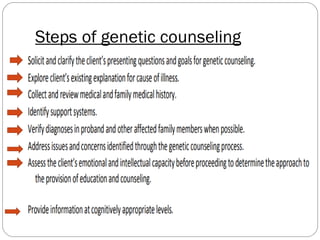
Steps of genetic counseling
FUTURE IMPLICATIONS
PRECISION PSYCHIATRY
 DEFINITION:Precisionmedicine is an emerging approach
for treatment and prevention that takes into account each
person’s variability in genes ,environment and lifestyle.
 The dictionary definition of precision is “the quality ,condition
or fact being exact and accurate and refinement in a
measurement ,calculation or specification”
 Research claims that precision psychiatry would not only be
quantitatively different but would be different qualitatively
also,thereby leading to a paradigm shift.
 For example ,is has been quite common experience to clinicians that two
patients suffering from depression do not respond identically to an
antidepressant despite identical socio-demographic and clinical
profiles.With the help of‘BIG DATA’ ,one would be able to predict and be
precise to choose an antidepressant molecule individualized and precised
for an index patient.
 Recently the advent of brain imaging techniques with enough spatial and
temporal resolution to quantify neural connections gives a thrust towards
heterogenity of depression and anxiety.
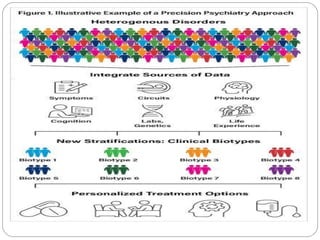
 To achieve aforementioned goal “precision psychiatry”deals with several
domains which are designed to cover physiology,environmental
characteristics ,cognitive neuroscience and neurophysiology ,neural circuits
,big data ,molecular bio-signature.
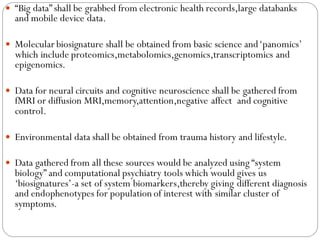
 “Big data” shall be grabbed from electronic health records,large databanks
and mobile device data.
 Molecular biosignature shall be obtained from basic science and‘panomics’
which include proteomics,metabolomics,genomics,transcriptomics and
epigenomics.
 Data for neural circuits and cognitive neuroscience shall be gathered from
fMRI or diffusion MRI,memory,attention,negative affect and cognitive
control.
 Environmental data shall be obtained from trauma history and lifestyle.
 Data gathered from all these sources would be analyzed using “system
biology” and computational psychiatry tools which would gives us
‘biosignatures’-a set of system biomarkers,thereby giving different diagnosis
and endophenotypes for population of interest with similar cluster of
symptoms.
RECENT ADVANCES IN PSYCHIATRIC
GENETICS:
• Remarkable new tools are available now that can screen the whole genome for two
types of genetic variations….
1. Single nucleotide polymorphisms: places where a single nucleotide commonly
varies across individuals.. (10 million in total genome)
2. Copy number variations: hundreds of thousands to millions of nucleotides of the
genetic code may be missing, duplicated, having multiple copies within a single
individual without having any adverse effects, ka CNVs.
• Now nearly 111 scientists from 48 institutions and 11 countries have banded
together forming a Psychiatric Genome-Wide Association Consortium(PGC),
led by Patrick Sullivan.
• Discoveries of Endophenotypes helping & will help to unravel the complexity
of the mental disorders.
Future Implications
 Estimating emperical risk in the presence of specific copy
number variants & single nucleotide variants.
 Ordering & interpreting genetic tests for rare variants in
schizophrenia & BPD.
 Applying genetic risk profiles for patients & interpretation
for treatment decisions & personal prognosis.
 Beta-amyloid‘vaccine’ designed to induce an immunogenic
response to pathogenic amyloid are now in advanced clinical
trial.
 Gamma- secretase modulator have been developed to target
dysfunction of presenilin gene products.
PROBLEMS FACED IN PSYCHIATRIC
GENETICS:
• The largest hurdle in the process ofassigning behavioural traits to
specific genes is rigrous definition of psychiatrictraits…
• The situation becomes difficult because of lack of objective, quantifiable tests
for psychiatricdisorders
• Moreover,the familial clustering of certain behavioural traits can result from
either genetics(nature)or upbringing(nurture),constructing accurate
pedigreesstrictly according to genetic criteria is very difficult….
• Finally the multigeneticdeterminationof behavioural traits serves to increase
the complexityof analysis exponentially….
From psychological theories to exploration of genes for
mental illness, psychiatry has evolved a lot. The field of
genetics has developed a great deal in the last several
years, and continues to grow at a rapid pace. Capabilities
of pharmacogenetics,precision medicine, genetic
counseling might lead to the correction of genes that
help cause psychiatric disorders. But the picture of how
far these techniques will replace the existing treatment
strategies is still foggy.
CONCLUSION
BIBLIOGRAPHY
 Sadock B. J, Sadock V.A. , Ruiz P., Molecular Genetics ,Kaplan and
SaddockComprehensive Textbook of Psychiatry,Wolters
Kluwer,12thedition,volume one,pages 147
 Sadock B. J, Sadock V.A. , Ruiz P.,Genetics in
Schizophrenia,Kaplanand SaddockComprehensive Textbook of
Psychiatry,WoltersKluwer,12thedition,volume one,pages 1437
 Sadock B. J, Sadock V.A. , Ruiz P.,Genetics in Mood
Disorder,Kaplan and SaddockComprehensive Textbook of
Psychiatry,WoltersKluwer,12thedition,volume one,pages 1619
 Sadock B. J, Sadock V.A. , Ruiz P.,Genetic Counseling,Kaplanand
SaddockComprehensive Textbook of Psychiatry,WoltersKluwer,12th
edition,volume one,pages 2525-2537
BIBLIOGRAPHY
 Nimgaonkar VL, Deshpande SN. The future of psychiatricgenetics. Indian J
Psychiatry.2003 Oct;45(4):198-9. PMID: 21206857; PMCID: PMC2952363.
 Nurnberger,John. (2018).Why should a psychiatrist know about
genetics. tHE JOURNAL OF CLINICAL PSYCHIATRY.
https://www.ncbi.nlm.nih.gov/pmc/articles/PMC6480395/.Date
of access: 18 Nov 2022.
 TSUANG, MINGT.(2002). MOLECULARAND POPULATION
GENETICS OF SCHIZOPHRENIA.American college og
neuropsychopharmacology.
https://www.google.com/url?sa=t&source=web&rct=j&url=https:/
/acnp.org/wp-content/uploads/2017/11/CH49_671-
688.pdf&ved=2ahUKEwisvZrit9P7AhXsr5UCHRwrD5AQFnoECAsQ
AQ&usg=AOvVaw1U82LZoqQdb78PFd3RnQ5p.Date of access: 25
Nov 2022.
BIBLIOGRAPHY
 Pearlson,Godfrey D. (2007).Schizophrenia,Psychiatric Genetics, and
Darwinian Psychiatry:An Evolutionary Framework. Schizophrenia
bulletin vol.34.
https://www.ncbi.nlm.nih.gov/pmc/articles/PMC2632450/.Date of
access: 20 Nov 2022.
 Umesh, Shreekantiah.(2014). Genetics in Psychiatry.Indian Journal of
Human Genetics.
https://www.ncbi.nlm.nih.gov/pmc/articles/PMC4228562/.Date of
access: 21 Nov 2022.
 Juli, Giada.(2021). Endophenotype and psychiatry:An interesting
combination.Psychiatria
Danubina.https://pubmed.ncbi.nlm.nih.gov/34559774/.Date of
access: 24 Nov 2022.
List
NAME FUNCTION AUTHOR
Apo E gene on Ch.2
(ALZHEIMER DISEASE)
Metabolism& transport of
lipid & clearance of beta-
amyloid from brain.

GENETICS IN PSYCHIATRY.pdf

  • 1.
    Moderator:Dr. D. J.Bhuyan Associate professor Presenter : Dr. Ripa Das PGT Psychiatry GENETICS IN PSYCHIATRY
  • 2.
    PLAN OF PRESENTATION Introduction  History  Basic Genetics  Inheritance  Studies related to Psychiatry  Psychiatric Relevance  Implications of Genetics  Future Implications of Genetics
  • 3.
    INTRODUCTION Genetics: The science thatattempts to correlate the difference in DNA sequence (genotypes) with difference in observable traits ( phenotypes).  Psychiatric Genetics: Application of genetic principles & methods to study of mental disorders.
  • 4.
    History  Imre Festetics,a Hungerian noble first used the word‘genetics’ in hereditarian context.  Willium Bateson popularised the term‘ genetics’ &‘allele’.  Inheritance of acquired characteristics given by Jean Baptiste Lamarck.  Gregor Mendel is the father of inheritance. He gave 3 laws of inheritance: 1)The Law of Segregation,2)The Law of Independent Assortment,3)The Law of Dominance  Thomas Morgan showed that genes reside on specific chromosomes.  Rudin & Kallman showed that schizophrenia was transmitted by recessive genes.
  • 5.
  • 6.
    Basic Genetics Overview ofGenes:  Human genome comprise only 20,000 to 25,000 genes  Of the approx 3 billion base pairs(bp) -1% account for coding sequences (exons) -24% account for intervening sequences (introns) -75% for intergenic sequences  Most of genetic variation occurs in the form of single nucleotide polymorphism(snps) =Single nucleotide base change Eg-AAGGTTA is converted to AAGGTTT  Alter the biological function of a protein.
  • 7.
  • 8.
  • 9.
    Gene and itsexpressions:
  • 10.
    GvariaENETICVARIATIONS Different mRNAs • Differencesin the DNA sequence TRANSCRIPTIO N TRANSLATIO different proteins disease and response to therapies An application of the concept of central dogma of molecular biology
  • 11.
    Basic Genetics  Gene: Orderedsequence of nucleotides located in a particular position on a particular chromosome that encodes a specific functional product.  Genome: All the genetic material in the chromosomes of a particular organism ;size is usually given as its total number of base pairs.  Genomics: The study of genes & their function • Locus: the specific location of a gene.
  • 12.
    Basic Genetics • Penetrance: Probabilityof a gene or genetic trait being expressed. Complete –expressed in all who have the genes;eg:AR Incomplete-expressed in only part of the population;eg:AD  Allele: Different variants of a gene, at a particular locus or location of chromosome.  Polygenic: Genetic disorder resulting from combind action of more than one gene. • Gene Mapping:the process of determining the locus for a particular biological trait.
  • 13.
    Epigenetics  Literal meaningsomething above the gene.  Certain factors transmitted to progeny cells, but not directly attributable to genetic factors, just altering the function of gene.  Important epigenetic mechanism-  Gene silencing: - DNA Methylation: X chromosome inactivation fragile X syndrome -phosphorylation -histone deacetylation Genomic Imprinting : Eg-genomic imprinting in prader willi & angelman syndrome
  • 14.
    Epigenetics Phenomenon that mayme explained by epigenetics in psychiatry:  1.familial & sporadic cases.  2.discordance in monozygotic twin.  3.course & resolution of treatment.  4.effects of gender.  5.resistance of illness.
  • 15.
  • 16.
    Types of Inheritance Themode of biological inheritance consist of three main categories: ➢ 1)No of involved foci  -monogenic (one locus)  -oligogenic (few loci)  -polygenic (many loci) ➢ 2)Involved chromosomes  -autosomal (loci are not situated on a sex chromosome)  -gonosomal ( loci are situated on sex chromosomal,eg: X- chromosomal,Y-chromosomal)  -mitochondrial ( loci are situated on the mitochondrial DNA)
  • 17.
    Types of Inheritance ➢3) Correlation genotype-phenotype  -dominant  -co-dominant  -recessive
  • 18.
    Vertical pattern: multiplegenerations affected. M & F equally likely. Each child of affected individual has a 50% chance. Unaffected individuals do not pass thegene. Every affected child has an affected parent. Autosomal Dominant Concepts of Inheritance
  • 19.
    Autosomal Recessive Horizontal pattern singlegeneration affected. M & F equally likely All children of two affected parents are affected Parents of affected child are unaffected gene carriers Probabilityof offspring of 2 healthy parents is 25%. Children of affected individuals are obligatecarriers. Concepts of Inheritance
  • 20.
    For rare conditions,females are about 2x as likely to be affected. May be lethal in males and usually milder, but variable, in females. NO male-to-male transmission Sons and daughters of affected females have 50% chance of being affected (similar to autosomal dominant) X Linked recessive Concepts of Inheritance
  • 21.
    POLYGENIC INHERITANCE  Akamutigenetic/quantitive inheritance.  Joseph Koleuter is known as father of polygenic inheritance.  A type of non-mendelian inheritance.  Single characteristic controlled by many non allelic genes .  All the alleles neither dominate nor suppress other alleles,each allele contributes its share & shows continuous variation.  Phenotype influenced by environment.  Genetic analysis done by statistical methods (GWAS),shows bell shaped curve.  Psychiatric diseases are mainly follows polygenic inheritance.
  • 22.
  • 23.
    Is the illnessfamilial? Is this familialitycaused by genetic factors ? What are the various clinical expressions ?of theabnormal gene ? What are the earliest manifestations? of the predispositionto illness ? What environmental variables↑or ↓ the chances of predisposed to develop the disorder? What is the mode of transmission ? Where is (are) the abnormal gene (s) ?are located? What is the biological, physiological andpsychological outcome of the genetic abnormality? Research Methods
  • 24.
    STUDY DESIGNS FORGENETIC RESEARCH IN MENTAL DISORDERS • There are mainly following four types of study designs…. • the results of these studies have utility not simply in establishing heritability but in providing insight into which of the available gene finding approaches may be most appropriate. 1. Population epidemiology studies 2. Family studies 3. Twin studies 4. Adoption studies
  • 25.
    Study Unit ofAnalysis Goal Population Subjects in the general population. Establishlife-timecumulative incidence Family Pedigree Establish familarity,estimate mode of transmission,risk to relatives Twin Monozygotic & DizygoticTwins Distinguishgenetic from environmental effects. Adoption Adoptees: adoptive& biologic relativesof adoptees Distinguishgenetic from environmental effects. Linkage Nuclear &/ or extended pedigree Establishchromosomal location of a disease. Association Unrelated affected individuals& controls Identify specific diseaselocus.
  • 26.
  • 27.
    Is the illnessFamilial ? Family studies : Research Methods Probands / index case Interviews Family Diagnosis of family member but blind diagnosis of index Operational diagnostic criteria Compares data on familial psychopathology
  • 28.
    Type of study Definition Information thatmay be derived Limits of approach Famil y studie s Consider whether a trait runs in a family 1.Showing that a trait is more prevalent among relatives of an affected individual than in a control population suggests the importance of genetic factors. 2.The observation that a trait is more common among first degree relative like parents ,siblings and offspring than more distant ones is consistent with a genetic hypothesis. 3.The way in which a trait is distributed among family members may also elucidate the mode of inheritance Showing the familial nature of a trait is not sufficient for proving it is inherited;such data do not conclusively demonstrate the genetic basis of a trait,since family members share not only genes but also the environment.
  • 31.
  • 32.
    Type of studyDefinition Information that may be derived Limits of approach Twin studies Compare how often identical twins, who are genetically identical, and fraternal twins, who have the genetic similarity of nontwin siblings, are similar or concordant,for a trait. 1.A higher concordance rate for a trait among identical twins versus fraternal twins usually demonstrates a genetic basis for a trait. 2.The absence of 100 percent concordance among identical twins shows that nongenetic factors also play a role in producing the trait. 1.Sampling method ;The assumption that identical and fraternal twins experience the environment identically; 2.The definition of concordance; 3.the statistical method for measuring concordance.
  • 33.
    Schizophreni a Schizoaffective Bipolardisorder Risk in general population 0.8-1%0.3% 0.3-1% Risk to siblings/ first degree rels 10% 2-3% 5-10% Monozygotic (MZ) twin concordance 45% 40% 40% Dizygotic (DZ) twin concordance 5-10% 5% 5% Approximate risks
  • 34.
  • 35.
    Type of study Definition Information thatmay be derived Limits of approach Adoption Studies Focus on adopted individuals and their adoptive and biological families.In three commonly used research designs: •the adopted away offspring of affected parents are studied and compared with control adoptees of normal parents.OR •the index cases are adopted people who have developed a disorder of interest ;the rates of illness are then compared in their biological and adoptive relatives;OR •least commonly,the rate of illness in adoptees who have affected biological parents but who were raised by unaffected adoptive parents,are compared with the rates of illness in the offspring of normal parents brought up by adoptive parents who themselves become affected. 1.Attempt to disentangle the influence of genes from that of environment. 2.Can provide powerful evidence of a genetic effect. Generally do not rule out the effect of nongenetic factors preceding adoption,such as possible prenatal influences
  • 36.
    Analyticapproaches to heritability studies •Based on data obtained from various studydesigns as discussed,data analysisis done with the help of statistical methods… • 4 most common types of methods used areas follows: 1. Path analysis 2. Segregation analysis 3. Linkage analysis 4. Association analysis( including family based associations and population basedassociations) Two recent techniques have identified to analyse gene are: Candidategene analysis & cytogeneticanalysis.
  • 37.
    Quantitative Method ofGenetic Analysis Method Data Source Goal PathAnalysis Twin,Adoption Distinguishtransmissible environment from polygenes. SegregationAnalysis Pedigree Distinguisha major locus from polygenes or transmissibleenvironment. Linkage analysis Pedigree Establishchromosomal localizationof a putative diseasesusceptibilitylocus. AssociationAnalysis Unrelated affected , controls Implicate a specific gene as a diseasesusceptibilitylocus, given linkage disequilibrium.
  • 38.
    Linkage Analysis  Linkageanalysis is a statistical procedure by which pedigree data are examined to determine whether a disease phenotype is co-segregating with a genetic marker of a known chromosomal location.  Linkage analysis allows an investigator ( a genetic marker locus & a putative disease susceptibility locus representing the observed phenotype) are located close enough together on the same chromosome that their alleles tend to be transmitted together from parent to child more frequently than would occur by random assortment.
  • 39.
     The demonstrationof linkage between a putative disease susceptibility locus & one or more genetic markers thus determines in which chromosomal region the disease locus lies.  At least one parent must be doubly heterozygous.  There are two types of linkage analysis: PEDIGREE ANALYSIS AFFECTED SIBLING PAIR ANALYSIS 1.Done on multigenerational families. 2. Identify genetic markers that cosegregate with the disease. 3.Can detect rare variants of large effect. 1.Done on two or more affected siblings. 2.Identify chromosomal regions shared by siblings concordant for the disease. 3.Allow incorporation of environmental data.
  • 40.
    Genetic Markers ofLinkage Study • Restriction fragment length polymorphism(RFLP’s)- used as genetic markers in linkageanalysis. • Minisatellite variable number tandem repeats (VNTR) markers, have many alleles and highheterozygocity. • The advent of polymerase chain reaction (PCR) methods finally made mapping relatively quickand easy and led to identification of microsatellite or simple sequence length polymorphism (SSLP) markers. • Automated studies make use of singlenucleotide polymorphisms (SNP’s)… they reflect singlebase differences at specific locations where the surrounding sequence is invariant…
  • 41.
    Methods used tostudy linkage analysis Parametric methods Non parametric methods(allele sharing methods):  The frequency of illness & a particular marker / markers are measured in families.  A predetermined measure of inheritance is chosen.  The likelihood of there being linkage with the disease is divided by the likelihood of no linkage(odds score)  The logerithm of this score is taken, ka- LOD SCORE.  A high lod score is indicate a high probability of linkage.  Also known as the affected sibling pair(ASP) methood.  The frequency with which the given genetic marker is inherited from a parent is measured.  If this frequency exceeds 50% in affected pairs of siblings, linkage is likely( the disease gene & inherited marker are in linkage)
  • 42.
    ASSOCIATION STUDIES: • Populationbased –Case-control design most common • Look for associationof genetic marker with thedisorder • Good for detecting small effects, but marker needs tobe very close to a susceptibilitylocus • Approaches to associationstudies: 1. Functionalapproach Investigate candidate genes (but often questionable candidates for psychiatric disorders) 2. Positionalapproaches 1. In chromosomal regions showing linkage 2. In genome-wide association studies (GWAS)
  • 43.
    Genome Wide AssociationStudy Case control Family trios  Study subjects: affected individuals & matched unaffected controls, sampled from population.  Tests for statistical association of alleles & disease in cases versus controls.  Can detect common variants of small effects.  Study subjects: affected individuals & parents.  Tests for association using non-transmitted parental chromosome as control.  Can detect common variables of small effect.
  • 44.
    Linkage - versus- Association • • • • • LINKAGE STUDIES Needs families (e.g.sibpairs) in which the disease segregates powerful when there are just a few predisposinggenes Works well even when many different mutations or alleles in those few genes increase risk for the disease • • • Requires no hypothesis about the nature of the defect in the • disorder usuallyrequires a model ofthe pattern of inheritance ASSOCIATION STUDIES Needs unrelated cases and unrelated controls Assumes that only one or few common variants in each gene are risk factors Powerful even when there are many different genes, each with a small effect, as long as the variant in each gene is common. Until recently,required having a limited number of genes in mind
  • 46.
    Candidate Gene Studues Gene that code for protein believed to be important in a given disorder are studied in affected & unaffected patients.  The choice of candidate is informed by existing knowledge of pathways or molecules thought to be involved in a specific disease.  Once candidate gene is selected, markers mapping within the transcriptional unit are genotyped in case & control population to screen for deviation in the allele frequency.  It follows 2 methods-1)biological candidate gene analysis( serotonin system genes for depression) 2)positional candidate gene analysis( with the help of linkage)  The greatest limitation of the candidate gene studies is the rudimentary understandingof the disease pathophysiology in psychiatry.
  • 47.
  • 48.
    Psychiatric Relevance 1.ALZHEIMER’S DISEASE: •Monozygotic twin concordance rate is 50% • Chromosome 21-beta-amyloid precursor protein (APP) • 70-80% of hereditary cases Presenillin-1on Ch.14q24.3(onsetat 40 yrs of age) • 20-30% of hereditary cases Presenilin-2on Ch 1q ( onset at 50 yrs of age) • Non parametriclinkage study shows E4 allele of apolipoprotein E gene on ch.19 has strongassociated with late onset alzheimer disease ( 50% in familial late onset,40% in sporadiclate onset)
  • 49.
    Psychiatric Relevance AUTISM:  Thesibling recurrence risk for autism &/orASD is between 2- 6%.  For a given population prevalence is 1 in 2000 (0.4%).  Siblings of autistic individual 50-100 times more likely to develop autism than general population.  Monozygotic twin concordance of 80-92%.  Copy no variation account for 5-8% of syndromic cases of autism.  3-5% cases associated with fragile X syndrome –FMR1gene on ch.Xq27.  , rett syndrome(ch.X)
  • 50.
    Psychiatric Relevance AUTISM:  2-10%cases are a/w tuberous sclerosis,due to mutations in tumour suppressor geneTSC1 on ch.9q34,&TSC2 on ch.16p13.  Linked to chromosome 7-RELN &WNT -2 genes whose expression play a role in neuronal development.  Linked to ch15 for GABA receptor duplication.  Recent researchers have identified roles for de novo EXONIC mutation in SODIUM channel protein 2 subunit alpha , katanin p60 subunitA like 2 & chromodomain helicase DNA-binding protein 8 in the pathogenesis ofASD( Sanders et al.,2012)
  • 51.
    3. BIPOLAR DISORDER: •Current estimates of concordance for bipolar disorder range between 65 &100 percent in MZ twins and between 10 and 30 percent in DZ twins, indicating that the disorder is highly heritable (between about 60 and 80 percent). • Most linkage studies show associations with susceptibility loci on ch.9p21- 22,ch. 18q , 16p, 4p,6q, 8q,9q,Xp etc • Candidate gene study shows association with SLC6A3 gene on 5p15.33, HTR4 gene on 5q 32, DRD4 gene on ch.11p15.5, MAOA gene on Xp11.3 ch. • Genome wide association study shows significant genes likeVRK2(2P16.1), TRANK1(3P22.2),ANK3(10Q21.2), CACNA1C(12P13.33), SLC25A17(22Q13.2)
  • 52.
    Psychiatric Relevance Genetics ofMajor Depressive Disorder (Moving beyond monoamine hypothesis) • Genetic linkage shows a/w ch.1q.4q,7q,8p,11q,12q,13q,15q • Candidate gene association shows a/w SLC6A4(5HT),BDNF, AVPR1B genes. • Monoamine signalling has occupied the bulk of scientific investigations to date, non traditional gene candidates such as PCLO and GRM7 are now emerging and beginning to change the landscape for future human and animal research on depression….
  • 53.
    Psychiatric Relevance SCHIZOPHRENIA: ➢The dysbindin(ch.6p)proteinbindsto B-dystrobrevin and has been implicated in synaptic structure and signaling. ➢DISC 1(ch.1q21)has been shown to influence neurite formation in cellular studies, and mutant mice for DISC 1 show impairments in a wide variety of tests including learning,memory,and sociability. ➢Neuregulin(ch.8p) belongsto a family of growth factorsthat mediate numerous functions including synapseformation, neuronal migration, and neurotransmission.
  • 54.
    SCHIZOPHRENIA risk genes &their proposed mechanism of action: CODING GENE BIOLOGICAL MECHANISM FUNCTIONAL SIGNIFICANCE PATHOPHYSIOLO GIC MECHANISM NRG1 (8p12) Neuregulin ErbB4 receptor is a postsynaptic target of NRG NRG/erbB4 signalingperturbation May directly affect neuronal communication and have downstream neurodevelopmental consequencesthrough signalingvariations Interfering with activity-dependent maturation and plasticity of excitatory synaptic structure and function at glutamatergic synapses,
  • 55.
    SCHIZOPHRENIA CODING GENE BIOLOGICAL MECHANISM FUNCTIONAL SIGNIFICANCE PATHOPHYSIOL OGIC MECHANISM DTNBP1(6p22.3) Dysbinding Protein expressedin the human CNS pre & postsynaptic vesicles, likelyaffecting glutamatergic transmissionvesicles, & in microtubules where it binds snapin, disrupted DA/NMDA signaling. Individual with schizophrenia express less of the protein in dorsolateral prefrontal cortex & in hippocampus. Though altered glutematergic transmissionor through structural changes that may affect the organisation of cerebral dendrite fields.
  • 56.
    SCHIZOPHRENIA CODING GENE BIOLOGICAL MECHANISM FUNCTIONAL SIGNIFICANCE PATHOPHYSIOL OGIC MECHANISM COMT(22q11) Catechol o methyl transferase Enzyme involvedin catecholamine metabolism results in a 4 fold increase activity in the enzymatic breakdown of DA effectivelytranslating to lower DA levelin COMT valine carriers compared with methionine allele carriers (low activity) Particularly important in the prefrontal cortex where there are fewer DA transporters. Schizophrenia patients with val/val genotype perform especiallypoorly on working memory tasks associatedwith abnormal cortical connectivity.
  • 57.
    SCHIZOPHRENIA CODING GENE BIOLOGICAL MECHANISM FUNCTIONAL SIGNIFICANCE PATHOPHYSIOL OGIC MECHANISM CHRA-7 (15q13-q14) Alpha7 subunit of the nicotinic acetylcholine receptor, associated with decreased function & /or expressionof the nicotinic alpha receptor gene. Predominantly through nicotine acetylcholine receptors improve cognition, visual attention,memory Schizophrenia patients may be self medicating by using tobacco whose nicotine content amelioriates specific cognitive & physiologic abnormalitiesin the disorder.
  • 58.
    Psychiatric Relevance GENETICS OFADDICTION: • Early onset alcoholism (less than 25yrs) has a strong genetic component. • The alcohol metabolism gene ALDH2 decrease the risk of alcohol dependence by increasing levels of acetaldehyde in blood, leading to uncomfortable physiological effects… flushing, tachycardia etc • A second alcohol metabolising geneADH1B, also decreases the risk of alcohol dependence by increasing ethanol oxidation to acetaldehyde… • a GABA receptor gene, GABRA2, has also been implicated recently, due to GABA mediation of behavioural effects of alcohol… • Genetic associations with nicotine dependence has been observed with nicotine receptor gene cluster CHRNA5-CHRNA3- CHRNB4
  • 59.
    Psychiatric Relevance Genetics ofAddiction Opioid :  Twin study estimates that around 50-60% of the liability for heroin addiction is genetic.  Linkage study for opioid dependence shows clustered linkage on ch.17.  As well as linkage on the region of ch.14 overlying the neurexin 3 gene.  Male specific linkage peak on ch.10q. Cocaine :  A genome wide association study identified the locus FAM53b a/w risk for cocaine use disorder  Butyrylcholinesterase genetic variants & dopamine transporter SLC6A3 are specifically a/w crack cocaine use.
  • 60.
    Psychiatric Relevance ANXIETY DISORDERS Panic disorder:  linkage & candidate gene association study shows a/w ch.4q,9q,13q,14q,22q.  Agarophobia:3q  Social phobia: 16q  Special phobia: 14q  Genome wide association study shows a/w two single nucleotide polymorphism located inTMEM132D on ch.12q24.3 with panic disorder,  A GWAS tentatively identified ‘ a noncoding RNA locus LOC15225 on 3q12.3 & CAMKMT gene on 2p21 a/w anxiety disorder.
  • 61.
    Psychiatric Relevance  Geneticlinkage ofADHD are:5p,6q,9q,10q,12q,16p,17p  Candidate gene a/wADHD are:SLC6A3(DAT1), DRD4, DRD5, 5HT1B, SNAP25, DBH, SLC6A4(5HTT)  Linkage with ch.1q, 3q,6q, 7p,9p,15q seen in OBSESSIVE COMPULSIVE DISORDER.  Candidate gene association seen are: SLC1A1,5HTT, HTR2A  Linkage with ch.1p & Candidate gene association like GHRL are seen in BULIMIA NERVOSA.  ANOREXIA NERVOSA: Linkage in ch.1q, 2p,13q Candidate gene association seen are:OPRD1, HTR1D, COMT, DRD2, SLC6A4
  • 62.
    Psychiatric Relevance ENDOPHENOTYPES:  Areinternal/ intermediate phenotype( between genotype & phenotype)  Term coined by Bernard John & Kenneth R. Lewis.  They interact with environmental factors to produce a complex phenotype/ disorder.  Types of endophenotypes are:  1. Structural anatomical  2. neuroanatomicalphysiological  3.cognitive  4.Biochemical  5. Neuroendocrine  6.Neuropsychological
  • 63.
    Criteria for anEndophenotype: (Gottesman & Gould,2003)  It must segregate with illness.  Must be heritable  It must be manifest both in disease active & in remission condition.  Must co-segregate with illness within families.  Must be present at a higher ratewithin affected families than population.  Must be amenable to reliable measurement,& be specific to the illness of interest. ➢ Examples of Endophenotypes:deficit in sensory motor gating & decline in working memory in schizophrenia,rapid auditory processing & visuo- auditory spacial attention in developmental Dyslexia,deficit in facial emotion labeling in BPD, personality characteristics in suicide
  • 64.
  • 65.
    PHARMACOGENOMICS  Pharmacogenetics: Studyof how genetic differences in a single gene influence variability in drug response ( Efficacy and toxicity).  Pharmacogenomics: Study of how genetic(genome) differences in multiple genes influence variability in drug response (Efficacy and toxicity). These two terms are often used synonymously .  Goals of Pharmacogenomics: 1. Maximize drug efficacy. 2. Minimize drug toxicity. 3. Predict patients who will respond to intervention. 4. Aid in new drug development.
  • 66.
     The foundationsofPharmacogenomics:  Mutation:The difference in the DNA code that occurs in less than 1% of populations.Often associated with rare diseases i.e. Cystic fibrosis,Sickle cell anemia.  Polymorphism:Difference in the DNA code that occurs in more than 1% of the populations.A single polymorphism is less likely to be the main cause of a disease. Often have no visible clinical impact. Types of polymorphisms: 1. Single nucleotide polymorphism 2. Insertion/Deletion polymorphism 3. Gene duplication 4. Gene deletion
  • 67.
  • 68.
    Example of pharmacogenomics:CYP2D6 POLYMORPHISM CYP2D6 is responsible for the metabolism of a number of different drugs including antidepressant,antipsychotics,analgesics etc. CYP2D6 located on chromosome 22 To date more than 100 genotypic variation of CYP2D6 has been discovered, which determine the level of activity of the enzyme. ➢ FLUOXETINE causes death in a child due to CYP2D6 poor metabolism genotype. ➢ Side effects /treatment failure of RISPERIDONE occur frequently in CYP2D6 poor & intermediate metabolizers. ➢ CYP2D6 inducer antipsychotic: HALOPERIDOL ➢ In the treatment ofADHD with ATOMOXETINE CYP2D6 poor metabolizers have 10 –fold higher plasma concentrations to a given dose of ATOMOXETINE compared to extensive metabolizers. ➢ Slow metabolizer of CYP2D6 should not receive more than 10mg of VORTEOXETINE.
  • 69.
     ROCHEAMPLICHIPFOR P450TESTING(FDAAPPROVED): The FDA first approve pharmacogenetic test‘the amplichip CYP450’,in January 2005. The RocheAmplichip CYP450 test is intended to identify a patient’s CYP2D6 and CYP2C19genotype from genomic DNA extracted from a whole blood sample. Information about CYP2D6and CYP2C19genotype may be used as an aid to clinician in determining therapeutic strategy and treatment dose for therapeutics that are metabolised by the CYP2D6 and CYP2C19 gene product .
  • 70.
    Examples of Pharmacogenomics FDA recommends that patients ofAsian descent be screened for HLA-B1502allele testing before prescribing Carbamazapineto reduce risk for Steven Johnson Syndrome.  CYP2C19has mainly three allelic variants.  Slow CYP2C19metabolizer should not receive more than 20mg daily dose of Citalopram.  Association between 5HT2A (C102/C102)variants & response to CLOZAPINE& RISPERIDONE.  FDA recommended drug level for poor CYP2D6 metaboliser forARIPIPRAZOLE.
  • 71.
    EUGENICS  DEFINITION: thestudy which deals with all influences that improve the inborn qualities of race, also with those that develop them to the utmost advantage.  Term coined by Francis Galton.  Types :  1) Positive Eugenics: measure to increase reproduction in families with desirable traits.(i.e. Encouraging the fit to have more children )  2) Negative Eugenics: measure to limit reproduction in families with undesirable traits ( eg. Sterilisation via vasectomy & tubal ligation). Negative eugenics was the predominant view.
  • 72.
    EUGENICS  Eugenics wasinfluenced by ;-Origin Of Species- Natural Selection, Survival of the Fittest, Mendel’s Study of Inheritance ofTraits,Agriculture / Animal Breeding.  GOALS:Toimprove the genetic composition of population.  AIMS:  1. to save resources  2. to create healthy people  3.to have the community free from mentally retarded people.  4. to decrease the human sufferings  5. to decrease the economic burden of nation due to disease.
  • 73.
    EUGENICS  Eugenics in21st century:  Focus has turned from nrgative to positive eugenics.  Steady advances are being made in the area of somatic & germline engineering.  SomaticTherapy- changes only take place in somatic cells of the body & consequently do not transfer into the offspring.  Germ Line- genetic changes are made to the sperm, egg or embryonic cells & are passed to the offspring.
  • 74.
    EUGENICS  FLAWS:  1.failure to recognise the complexity of human traits.  2. disregard of environmental/ social factors.  3. skewed results.  4. linking undesirable traits with racial & ethnic groups.  5. disregard of effects on genetic diversity.  6. flawed IQ testing.  7. Deemed a pseudo-science: mainly a social movement.
  • 75.
    GENETIC COUNSELLING  Geneticcounselling is the process of helping people to understand and adapt to the medical,psychological and familial implications of genetic contribution to disease.  The National Society of Genetic Counselling describes the process as integrating the following factors: 1. Interpretation of family and medical histories to assess the chance of disease occurrence or recurrence 2. Education about inheritance,testing,management,strategies for mitigating risk,resources and research. 3. Counseling to promote informed choices and adaptation to the risk or condition.
  • 76.
    GENETIC COUNSELING  Theroles of the genome & environment in mental health: Genetic contributiorn to psychiatric disorders Environmental contribution to psychiatric disorder oGenomic variants exert effect through altering gene expression. oGenomic variants regulate a range of traits that demonstrate phenotypic variability. oSusceptibilityvariants provide support for the prediction that many risk variants will be of small effect & many be common in unaffected general population. oEg:though SNPs a/w BPD, SCHIZOPHRENIA, have odds ratio in the range of 1.1 to1.3 & absolute risk about 15%; but also many susceptibleindividualnever develop psychiatric illness. oEnvironment is a‘ catchall phrase’meaning anything outside the genome that can affect the expression of a gene,including in utero development,substanceabuse,childhood trauma, maternal prenatal infection,head injury, stressfullife events,viral infection, season of birth, shared& nonshared family/home environment etc. oAdoption studies have indicated that the strongest environmental risk factors are unique factors, meaning factors, that make siblingsless alike. oOnly environment is unlikelyto be sufficient to either cause / prevent psychiatric illness.
  • 77.
     Individuals withpsychiatric diagnoses and their close relatives often express interest in genetic counseling services.  Clients seek psychiatric genetic counselling for a spectrum of indications.These include decision making around reproduction or adoption, teratogenic concerns about psychiatric medication use, concerns about existing young children and at-risk individual’s concerns about their mental health.  Family, adoption and twin studies demonstrate that many adult psychiatric disorders including schizophrenia ,major depression and bipolar disorder have a clear genetic component.
  • 78.
    Steps of geneticcounseling
  • 80.
  • 81.
    PRECISION PSYCHIATRY  DEFINITION:Precisionmedicineis an emerging approach for treatment and prevention that takes into account each person’s variability in genes ,environment and lifestyle.  The dictionary definition of precision is “the quality ,condition or fact being exact and accurate and refinement in a measurement ,calculation or specification”  Research claims that precision psychiatry would not only be quantitatively different but would be different qualitatively also,thereby leading to a paradigm shift.
  • 82.
     For example,is has been quite common experience to clinicians that two patients suffering from depression do not respond identically to an antidepressant despite identical socio-demographic and clinical profiles.With the help of‘BIG DATA’ ,one would be able to predict and be precise to choose an antidepressant molecule individualized and precised for an index patient.  Recently the advent of brain imaging techniques with enough spatial and temporal resolution to quantify neural connections gives a thrust towards heterogenity of depression and anxiety.  To achieve aforementioned goal “precision psychiatry”deals with several domains which are designed to cover physiology,environmental characteristics ,cognitive neuroscience and neurophysiology ,neural circuits ,big data ,molecular bio-signature.
  • 83.
     “Big data”shall be grabbed from electronic health records,large databanks and mobile device data.  Molecular biosignature shall be obtained from basic science and‘panomics’ which include proteomics,metabolomics,genomics,transcriptomics and epigenomics.  Data for neural circuits and cognitive neuroscience shall be gathered from fMRI or diffusion MRI,memory,attention,negative affect and cognitive control.  Environmental data shall be obtained from trauma history and lifestyle.  Data gathered from all these sources would be analyzed using “system biology” and computational psychiatry tools which would gives us ‘biosignatures’-a set of system biomarkers,thereby giving different diagnosis and endophenotypes for population of interest with similar cluster of symptoms.
  • 85.
    RECENT ADVANCES INPSYCHIATRIC GENETICS: • Remarkable new tools are available now that can screen the whole genome for two types of genetic variations…. 1. Single nucleotide polymorphisms: places where a single nucleotide commonly varies across individuals.. (10 million in total genome) 2. Copy number variations: hundreds of thousands to millions of nucleotides of the genetic code may be missing, duplicated, having multiple copies within a single individual without having any adverse effects, ka CNVs. • Now nearly 111 scientists from 48 institutions and 11 countries have banded together forming a Psychiatric Genome-Wide Association Consortium(PGC), led by Patrick Sullivan. • Discoveries of Endophenotypes helping & will help to unravel the complexity of the mental disorders.
  • 86.
    Future Implications  Estimatingemperical risk in the presence of specific copy number variants & single nucleotide variants.  Ordering & interpreting genetic tests for rare variants in schizophrenia & BPD.  Applying genetic risk profiles for patients & interpretation for treatment decisions & personal prognosis.  Beta-amyloid‘vaccine’ designed to induce an immunogenic response to pathogenic amyloid are now in advanced clinical trial.  Gamma- secretase modulator have been developed to target dysfunction of presenilin gene products.
  • 87.
    PROBLEMS FACED INPSYCHIATRIC GENETICS: • The largest hurdle in the process ofassigning behavioural traits to specific genes is rigrous definition of psychiatrictraits… • The situation becomes difficult because of lack of objective, quantifiable tests for psychiatricdisorders • Moreover,the familial clustering of certain behavioural traits can result from either genetics(nature)or upbringing(nurture),constructing accurate pedigreesstrictly according to genetic criteria is very difficult…. • Finally the multigeneticdeterminationof behavioural traits serves to increase the complexityof analysis exponentially….
  • 88.
    From psychological theoriesto exploration of genes for mental illness, psychiatry has evolved a lot. The field of genetics has developed a great deal in the last several years, and continues to grow at a rapid pace. Capabilities of pharmacogenetics,precision medicine, genetic counseling might lead to the correction of genes that help cause psychiatric disorders. But the picture of how far these techniques will replace the existing treatment strategies is still foggy. CONCLUSION
  • 89.
    BIBLIOGRAPHY  Sadock B.J, Sadock V.A. , Ruiz P., Molecular Genetics ,Kaplan and SaddockComprehensive Textbook of Psychiatry,Wolters Kluwer,12thedition,volume one,pages 147  Sadock B. J, Sadock V.A. , Ruiz P.,Genetics in Schizophrenia,Kaplanand SaddockComprehensive Textbook of Psychiatry,WoltersKluwer,12thedition,volume one,pages 1437  Sadock B. J, Sadock V.A. , Ruiz P.,Genetics in Mood Disorder,Kaplan and SaddockComprehensive Textbook of Psychiatry,WoltersKluwer,12thedition,volume one,pages 1619  Sadock B. J, Sadock V.A. , Ruiz P.,Genetic Counseling,Kaplanand SaddockComprehensive Textbook of Psychiatry,WoltersKluwer,12th edition,volume one,pages 2525-2537
  • 90.
    BIBLIOGRAPHY  Nimgaonkar VL,Deshpande SN. The future of psychiatricgenetics. Indian J Psychiatry.2003 Oct;45(4):198-9. PMID: 21206857; PMCID: PMC2952363.  Nurnberger,John. (2018).Why should a psychiatrist know about genetics. tHE JOURNAL OF CLINICAL PSYCHIATRY. https://www.ncbi.nlm.nih.gov/pmc/articles/PMC6480395/.Date of access: 18 Nov 2022.  TSUANG, MINGT.(2002). MOLECULARAND POPULATION GENETICS OF SCHIZOPHRENIA.American college og neuropsychopharmacology. https://www.google.com/url?sa=t&source=web&rct=j&url=https:/ /acnp.org/wp-content/uploads/2017/11/CH49_671- 688.pdf&ved=2ahUKEwisvZrit9P7AhXsr5UCHRwrD5AQFnoECAsQ AQ&usg=AOvVaw1U82LZoqQdb78PFd3RnQ5p.Date of access: 25 Nov 2022.
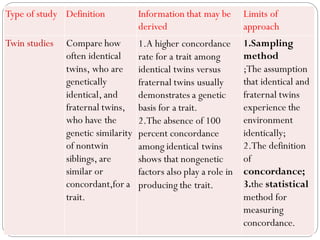
  • 91.
    BIBLIOGRAPHY  Pearlson,Godfrey D.(2007).Schizophrenia,Psychiatric Genetics, and Darwinian Psychiatry:An Evolutionary Framework. Schizophrenia bulletin vol.34. https://www.ncbi.nlm.nih.gov/pmc/articles/PMC2632450/.Date of access: 20 Nov 2022.  Umesh, Shreekantiah.(2014). Genetics in Psychiatry.Indian Journal of Human Genetics. https://www.ncbi.nlm.nih.gov/pmc/articles/PMC4228562/.Date of access: 21 Nov 2022.  Juli, Giada.(2021). Endophenotype and psychiatry:An interesting combination.Psychiatria Danubina.https://pubmed.ncbi.nlm.nih.gov/34559774/.Date of access: 24 Nov 2022.
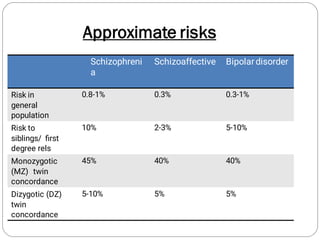
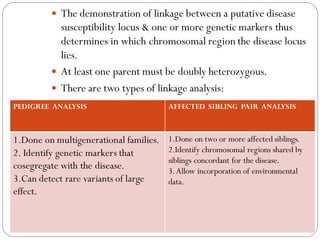
  • 92.
    List NAME FUNCTION AUTHOR ApoE gene on Ch.2 (ALZHEIMER DISEASE) Metabolism& transport of lipid & clearance of beta- amyloid from brain.