Hardy-Weinberg Equilibrium
 If there are two alleles for a particular gene
 Then
 dominant alleles + recessive alleles = 100%
 100% can also also be represented as 1.0
 The proportion of each allele is also called its
FREQUENCY
 % = proportion = frequency
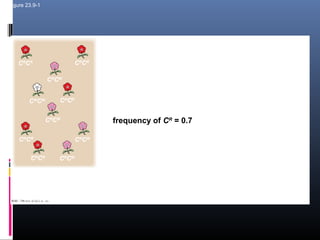
Figure 23.9-1
Generation 1
p (frequency of CR
) = 0.7
q (frequency of CW
) = 0.3
CR
CR CR
CR
CR
CW
CW
CW CR
CR
CR
CW
CR
CR
CR
CW
CR
CR
CR
CW
frequency of CR
= 0.7
q (frequency of CW
) = 0.3
Hardy-Weinberg Equilibrium
 With two alleles, there are
three possible genotypes:
 XX
 Xx
 xx
Hardy-Weinberg Equlibrium
If a population is not evolving, then you should
have the same number of
XX , Xx, and xx individuals in every generation.
But if the proportions of XX, Xx, and xx change
from one generation to the next, then the
population is EVOLVING.
Hardy-Weinberg Equlibrium
 Let’s call the frequency of the dominant allele
(X)… p.
 Let’s call the frequency of the recessive allele
(x)… q.
 If only X and x alleles exist, then p + q = 1.0
 If you know q, you can figure out p.
Hardy-Weinberg Equilibrium
 If the relative frequencies of X and x change
from one generation to the next, then the
population is evolving.
 If the proportion of XX, Xx and xx individuals
in a population changes from one generation
to the next, then the population is evolving.
Hardy-Weinberg Equilibrium
 A population that is NOT
EVOLVING is said to be in
Hardy-Weinberg equilibrium.
 We can use HW calculations to
measure microevolution in
populations.
 Three major factors alter allele frequencies and bring
about most evolutionary change:
 Natural selection
 Genetic drift
 Gene flow
© 2011 Pearson Education, Inc.
Natural Selection
 Differential success in reproduction results in
certain alleles being passed to the next
generation in greater proportions
 For example, an allele that confers resistance to
DDT increased in frequency after DDT was used
widely in agriculture
© 2011 Pearson Education, Inc.
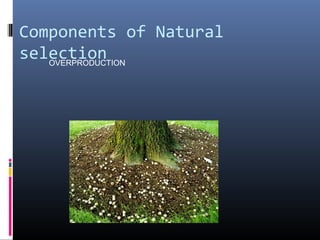
Components of Natural
selectionOVERPRODUCTION
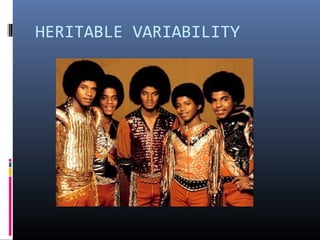
HERITABLE VARIABILITY
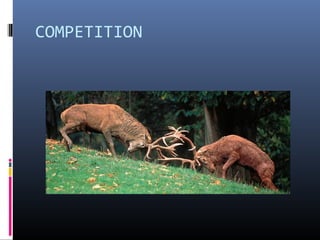
COMPETITION
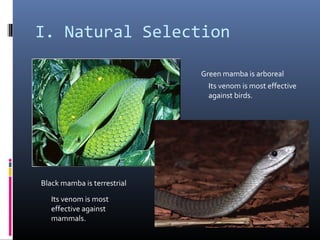
I. Natural Selection
Green mamba is arboreal
Its venom is most effective
against birds.
Black mamba is terrestrial
Its venom is most
effective against
mammals.
Genetic drift
 Genetic drift also called as
 allelic drift or the Sewall Wright effect
 is the change in the frequency of
a gene variant (allele) in a population due to
random sampling of organisms.
Genetic drift
 One of the requirements for the maintenance
of allele frequencies in populations is a very
large population size.
 Genetic drift is the consequence of small
population size.
GENETIC DRIFT
 The smaller the population, the less genetic
variety it has.
 In a very small population, alleles can be lost
from one generation to the next, simply by
random chance.
 When a population evolves only because of
this type of random sampling error,
GENETIC DRIFT is taking place.
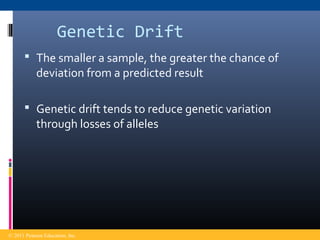
Genetic Drift
 The smaller a sample, the greater the chance of
deviation from a predicted result
 Genetic drift tends to reduce genetic variation
through losses of alleles
© 2011 Pearson Education, Inc.
Effects of Genetic Drift
1. significant in small populations
2. causes allele frequencies to change at
random
3. can lead to a loss of genetic variation within
populations
4. can cause harmful alleles to become fixed
© 2011 Pearson Education, Inc.
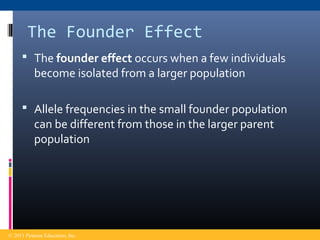
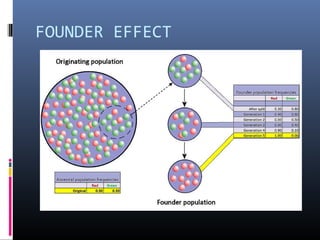
The Founder Effect
 The founder effect occurs when a few individuals
become isolated from a larger population
 Allele frequencies in the small founder population
can be different from those in the larger parent
population
© 2011 Pearson Education, Inc.
FOUNDER EFFECT
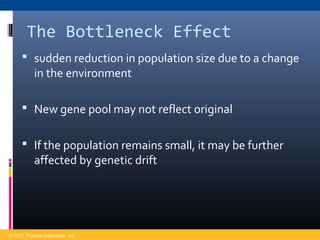
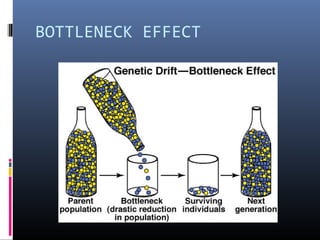
The Bottleneck Effect
 sudden reduction in population size due to a change
in the environment
 New gene pool may not reflect original
 If the population remains small, it may be further
affected by genetic drift
© 2011 Pearson Education, Inc.
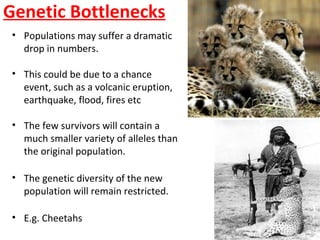
Genetic Bottlenecks
• Populations may suffer a dramatic
drop in numbers.
• This could be due to a chance
event, such as a volcanic eruption,
earthquake, flood, fires etc
• The few survivors will contain a
much smaller variety of alleles than
the original population.
• The genetic diversity of the new
population will remain restricted.
• E.g. Cheetahs
Gene Flow
 Gene flow consists of the movement of alleles among
populations
 Alleles can be transferred through the movement of
fertile individuals or gametes (for example, pollen)
© 2011 Pearson Education, Inc.
BOTTLENECK EFFECT
 Gene flow can increase the fitness of a population
 Consider, for example, the spread of alleles for
resistance to insecticides
 Insecticides have been used to target mosquitoes that
carry West Nile virus and malaria
 Alleles have evolved in some populations that confer
insecticide resistance to these mosquitoes
 The flow of insecticide resistance alleles into a
population can cause an increase in fitness
© 2011 Pearson Education, Inc.
Hardy-Weinberg equilibrium
describes populations that are
not evolving.
 Genotype frequencies stay the same if five
conditions are met.
 very large population: no genetic drift
 no emigration or immigration: no gene flow
 no mutations: no new alleles added to gene pool
 random mating:
no sexual selection
 no natural selection:
all traits aid equally
in survival

Genetic drift & hardy weinberg equilibrium

  • 1.
    Hardy-Weinberg Equilibrium  Ifthere are two alleles for a particular gene  Then  dominant alleles + recessive alleles = 100%  100% can also also be represented as 1.0  The proportion of each allele is also called its FREQUENCY  % = proportion = frequency
  • 2.
    Figure 23.9-1 Generation 1 p(frequency of CR ) = 0.7 q (frequency of CW ) = 0.3 CR CR CR CR CR CW CW CW CR CR CR CW CR CR CR CW CR CR CR CW frequency of CR = 0.7 q (frequency of CW ) = 0.3
  • 3.
    Hardy-Weinberg Equilibrium  Withtwo alleles, there are three possible genotypes:  XX  Xx  xx
  • 4.
    Hardy-Weinberg Equlibrium If apopulation is not evolving, then you should have the same number of XX , Xx, and xx individuals in every generation. But if the proportions of XX, Xx, and xx change from one generation to the next, then the population is EVOLVING.
  • 5.
    Hardy-Weinberg Equlibrium  Let’scall the frequency of the dominant allele (X)… p.  Let’s call the frequency of the recessive allele (x)… q.  If only X and x alleles exist, then p + q = 1.0  If you know q, you can figure out p.
  • 6.
    Hardy-Weinberg Equilibrium  Ifthe relative frequencies of X and x change from one generation to the next, then the population is evolving.  If the proportion of XX, Xx and xx individuals in a population changes from one generation to the next, then the population is evolving.
  • 7.
    Hardy-Weinberg Equilibrium  Apopulation that is NOT EVOLVING is said to be in Hardy-Weinberg equilibrium.  We can use HW calculations to measure microevolution in populations.
  • 8.
     Three majorfactors alter allele frequencies and bring about most evolutionary change:  Natural selection  Genetic drift  Gene flow © 2011 Pearson Education, Inc.
  • 9.
    Natural Selection  Differentialsuccess in reproduction results in certain alleles being passed to the next generation in greater proportions  For example, an allele that confers resistance to DDT increased in frequency after DDT was used widely in agriculture © 2011 Pearson Education, Inc.
  • 10.
  • 11.
  • 12.
  • 13.
    I. Natural Selection Greenmamba is arboreal Its venom is most effective against birds. Black mamba is terrestrial Its venom is most effective against mammals.
  • 14.
    Genetic drift  Geneticdrift also called as  allelic drift or the Sewall Wright effect  is the change in the frequency of a gene variant (allele) in a population due to random sampling of organisms.
  • 15.
    Genetic drift  Oneof the requirements for the maintenance of allele frequencies in populations is a very large population size.  Genetic drift is the consequence of small population size.
  • 16.
    GENETIC DRIFT  Thesmaller the population, the less genetic variety it has.  In a very small population, alleles can be lost from one generation to the next, simply by random chance.  When a population evolves only because of this type of random sampling error, GENETIC DRIFT is taking place.
  • 17.
    Genetic Drift  Thesmaller a sample, the greater the chance of deviation from a predicted result  Genetic drift tends to reduce genetic variation through losses of alleles © 2011 Pearson Education, Inc.
  • 18.
    Effects of GeneticDrift 1. significant in small populations 2. causes allele frequencies to change at random 3. can lead to a loss of genetic variation within populations 4. can cause harmful alleles to become fixed © 2011 Pearson Education, Inc.
  • 19.
    The Founder Effect The founder effect occurs when a few individuals become isolated from a larger population  Allele frequencies in the small founder population can be different from those in the larger parent population © 2011 Pearson Education, Inc.
  • 20.
  • 21.
    The Bottleneck Effect sudden reduction in population size due to a change in the environment  New gene pool may not reflect original  If the population remains small, it may be further affected by genetic drift © 2011 Pearson Education, Inc.
  • 22.
    Genetic Bottlenecks • Populationsmay suffer a dramatic drop in numbers. • This could be due to a chance event, such as a volcanic eruption, earthquake, flood, fires etc • The few survivors will contain a much smaller variety of alleles than the original population. • The genetic diversity of the new population will remain restricted. • E.g. Cheetahs
  • 23.
    Gene Flow  Geneflow consists of the movement of alleles among populations  Alleles can be transferred through the movement of fertile individuals or gametes (for example, pollen) © 2011 Pearson Education, Inc.
  • 24.
  • 25.
     Gene flowcan increase the fitness of a population  Consider, for example, the spread of alleles for resistance to insecticides  Insecticides have been used to target mosquitoes that carry West Nile virus and malaria  Alleles have evolved in some populations that confer insecticide resistance to these mosquitoes  The flow of insecticide resistance alleles into a population can cause an increase in fitness © 2011 Pearson Education, Inc.
  • 26.
    Hardy-Weinberg equilibrium describes populationsthat are not evolving.  Genotype frequencies stay the same if five conditions are met.  very large population: no genetic drift  no emigration or immigration: no gene flow  no mutations: no new alleles added to gene pool  random mating: no sexual selection  no natural selection: all traits aid equally in survival

Editor's Notes

  • #3 Figure 23.9 Genetic drift.