Molecular Biology
 In prokaryotes, the coding sequences of
genes are continuous. i.e, uninterrupted with
a very few exceptions.
 In addition, the genes are organized into
groups, each such groups forms a single
transcription unit. i.e, Operon

 Generally, the different genes occur as
discrete unit separate from each other , but
some prokaryotic genes may be overlapping.
 Eukaryotic genes present some interesting
organisations. Such as split genes,
Overlapping genes , pseudogenes etc.
 Genes with interrupted sequence of
nucleotides are referred to as split genes.
 Usually a gene has a continuous sequence of
nucleotides.
 In other words, there is no interruption in the
nucleotides sequence of a gene. such
nucleotide sequence codes for a particular
single polypeptide chain.
 In other words, there is no interruption in the
nucleotides sequence of a gene. such
nucleotide sequence codes for a particular
single polypeptide chain.
 However, it was were observed that the
sequence of nucleotides was not contains in
case of some genes, the sequences of
nucleotides were interrupted by intervening
sequences.
 Split genes were independently discovered by
Richard J. Roberts and Philip A. Sharp in
1977,for which they shared the 1993 Nobel
prize in Physiology or Medicine.
 The first observations of interrupted genes,
i.e, genes in which there are noncoding intron
sequences between the coding exon
sequences ,were made in animal viruses in
1977.
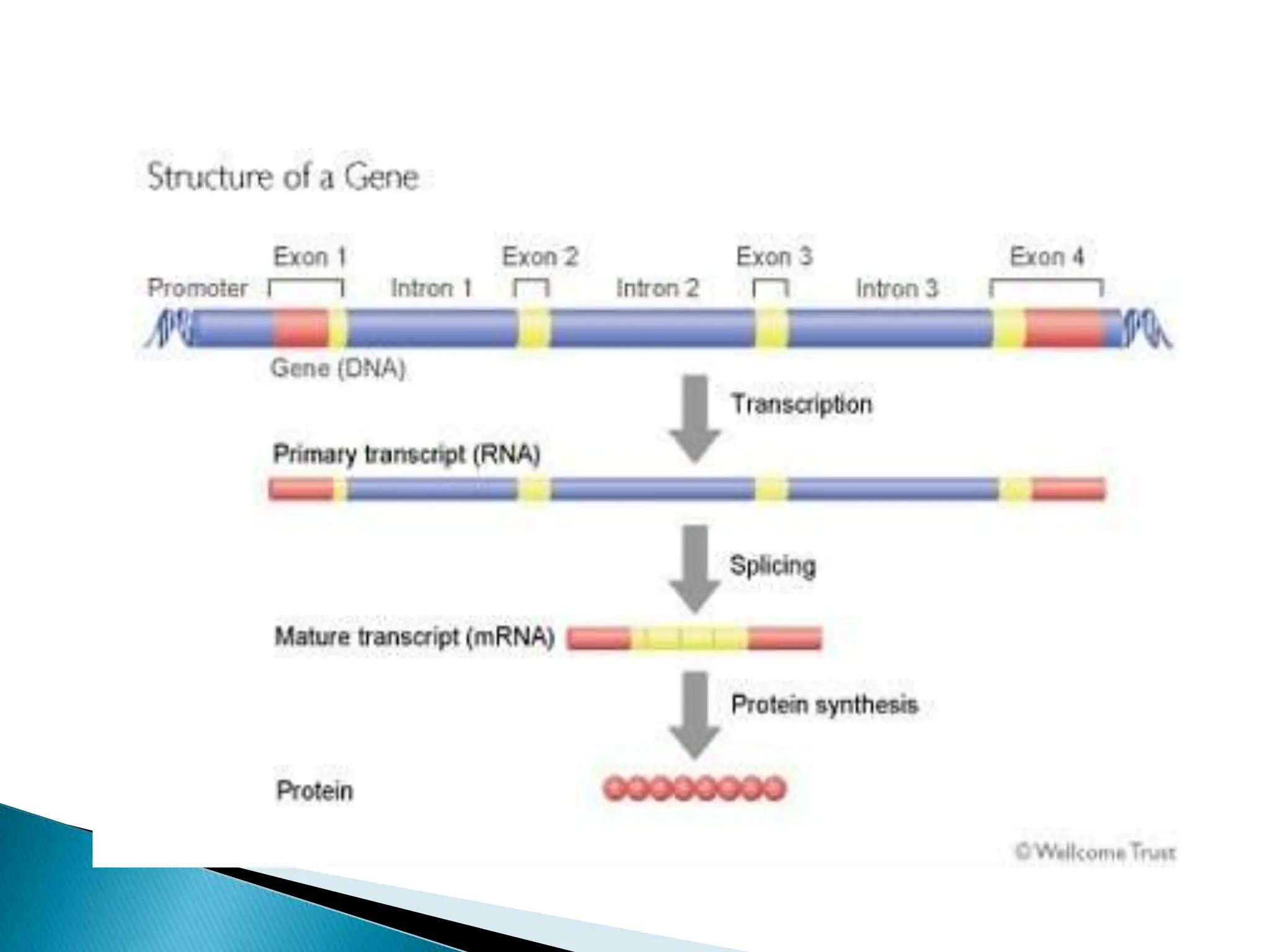
 Split Genes have two types of sequences:
 1 ) Normal sequences ( exons)
 2 ) Interrupted sequence ( introns)
1) Normal sequence: This represents the
sequence of nucleotides which are included in
the mRNA is translated from DNA of split gene.
These sequences code for a particular
polypeptides chain and are known as exons
2) The intervening or interrupted sequences of
split gene are known as introns. These
sequences do not code for any peptide chain.
Moreover, interrupted sequences are not
included into mRNA which is transcribed from
DNA of split genes.
 Each interrupted gene begins with an exon
and ends with an exon.
 The exons occur in the same precise order in
the mRNA in which they occur in the gene.
 The same interrupted gene organization is
consistently presented in all the tissues of
organisms.
 The significance of split organisation of
eukaryotic genes is not clear.
 Introns may also provide for increased
recombination rates between exons of a gene
and thus may be of some significance in
genetic variation.
 Introns are known to code for enzymes
involved in the processing of hn RNA.
( heterogeneous RNA).

Genetic concept types of gene...........

  • 1.
  • 2.
     In prokaryotes,the coding sequences of genes are continuous. i.e, uninterrupted with a very few exceptions.  In addition, the genes are organized into groups, each such groups forms a single transcription unit. i.e, Operon 
  • 3.
     Generally, thedifferent genes occur as discrete unit separate from each other , but some prokaryotic genes may be overlapping.  Eukaryotic genes present some interesting organisations. Such as split genes, Overlapping genes , pseudogenes etc.
  • 4.
     Genes withinterrupted sequence of nucleotides are referred to as split genes.  Usually a gene has a continuous sequence of nucleotides.  In other words, there is no interruption in the nucleotides sequence of a gene. such nucleotide sequence codes for a particular single polypeptide chain.
  • 5.
     In otherwords, there is no interruption in the nucleotides sequence of a gene. such nucleotide sequence codes for a particular single polypeptide chain.  However, it was were observed that the sequence of nucleotides was not contains in case of some genes, the sequences of nucleotides were interrupted by intervening sequences.
  • 6.
     Split geneswere independently discovered by Richard J. Roberts and Philip A. Sharp in 1977,for which they shared the 1993 Nobel prize in Physiology or Medicine.  The first observations of interrupted genes, i.e, genes in which there are noncoding intron sequences between the coding exon sequences ,were made in animal viruses in 1977.
  • 7.
     Split Geneshave two types of sequences:  1 ) Normal sequences ( exons)  2 ) Interrupted sequence ( introns)
  • 8.
    1) Normal sequence:This represents the sequence of nucleotides which are included in the mRNA is translated from DNA of split gene. These sequences code for a particular polypeptides chain and are known as exons
  • 11.
    2) The interveningor interrupted sequences of split gene are known as introns. These sequences do not code for any peptide chain. Moreover, interrupted sequences are not included into mRNA which is transcribed from DNA of split genes.
  • 12.
     Each interruptedgene begins with an exon and ends with an exon.  The exons occur in the same precise order in the mRNA in which they occur in the gene.  The same interrupted gene organization is consistently presented in all the tissues of organisms.
  • 13.
     The significanceof split organisation of eukaryotic genes is not clear.  Introns may also provide for increased recombination rates between exons of a gene and thus may be of some significance in genetic variation.  Introns are known to code for enzymes involved in the processing of hn RNA. ( heterogeneous RNA).