Generations of Computer
Presented by
D.Seethalakshmi MCA.,M.Phil.,
Assistant Professor
Bon Secours College for women
Thanjavur.
Introduction
A computer is an electronic device that manipulates
information or data. It has the ability to store, retrieve,
and process data.
Nowadays, a computer can be used to type documents,
send email, play games, and browse the Web. It can also
be used to edit or create spreadsheets, presentations, and
even videos. But the evolution of this complex system
started around 1940 with the first Generation of
Computer and evolving ever since.
FIRST GENERATION
Introduction:
 1946-1959 is the period of first generation computer.
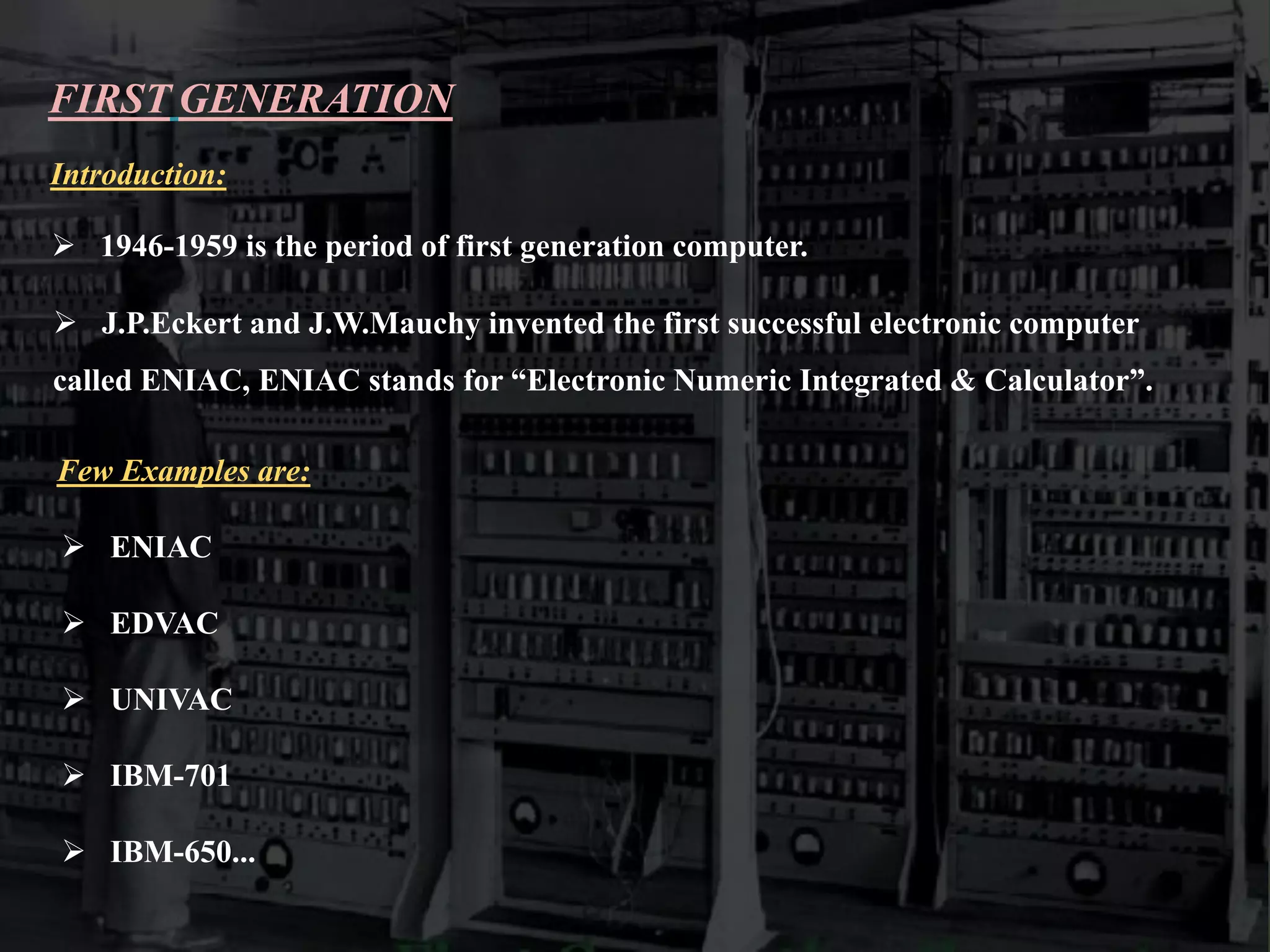
 J.P.Eckert and J.W.Mauchy invented the first successful electronic computer
called ENIAC, ENIAC stands for “Electronic Numeric Integrated & Calculator”.
Few Examples are:
 ENIAC
 EDVAC
 UNIVAC
 IBM-701
 IBM-650...
 It made use of vacuum tubes which are the only electronic component available
during those days.
 These computers could calculate in milliseconds.
Advantages :
 These were very big in size, weight was about 30 tones.
 These computers were based on vacuum tubes.
 These computers were very costly.
 It could store only a small amount of information due to the presence of
magnetic drums.
 As the invention of first generation computers involves vacuum tubes, so another
disadvantage of these computers was, vacuum tubes require a large cooling system.
 Very less work efficiency.
 Limited programming capabilities and punch cards were used to take inputs.
 Large amount of energy consumption.
 Not reliable and constant maintenance is required.
Disadvantages :
SECOND GENERATION
Introduction:
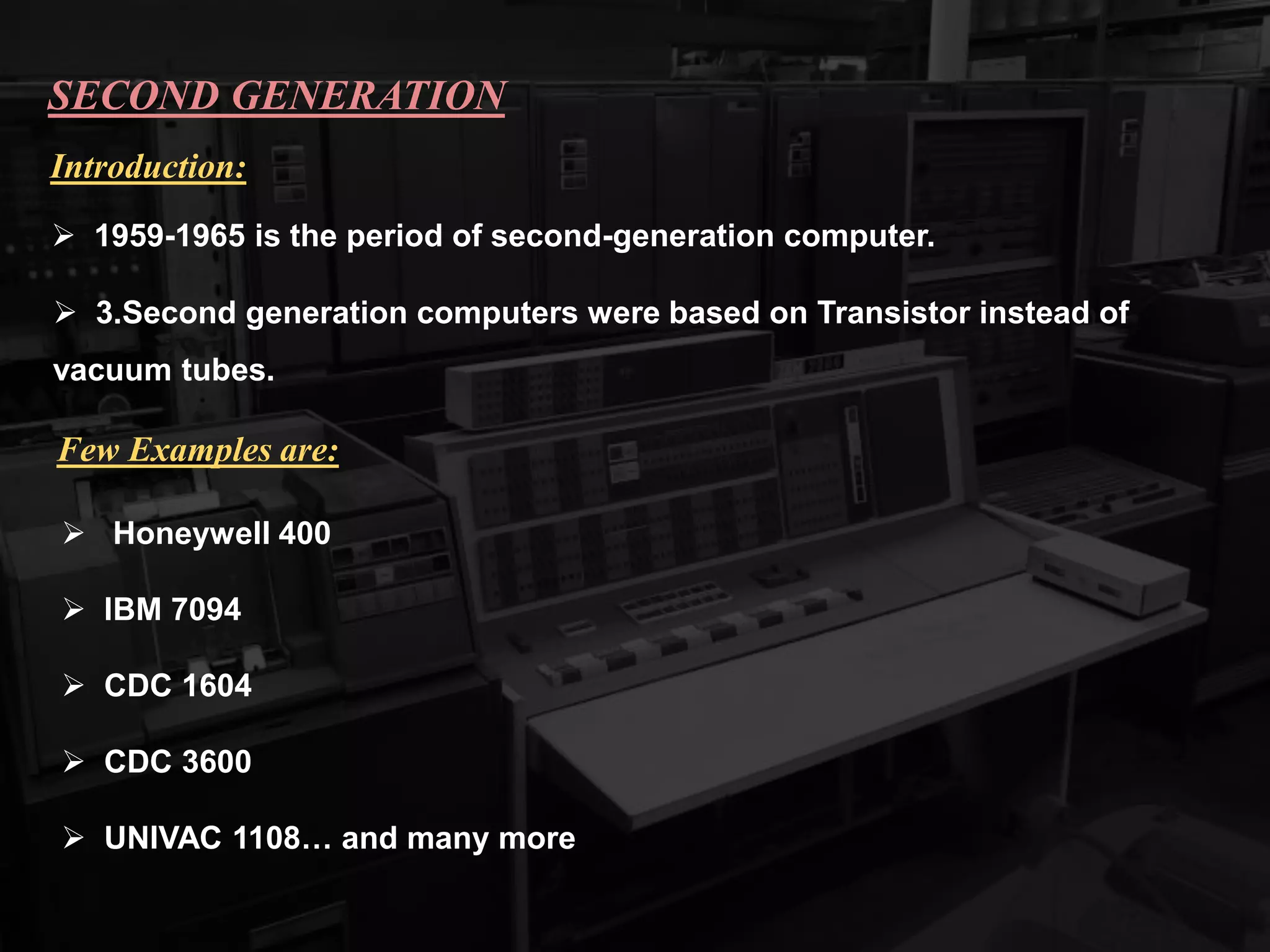
 1959-1965 is the period of second-generation computer.
 3.Second generation computers were based on Transistor instead of
vacuum tubes.
Few Examples are:
 Honeywell 400
 IBM 7094
 CDC 1604
 CDC 3600
 UNIVAC 1108… and many more
 Due to the presence of transistors instead of vacuum tubes, the size of electron
component decreased. This resulted in reducing the size of a computer as compared
to first generation computers.
 Less energy and not produce as much heat as the first generation.
 Assembly language and punch cards were used for input.
 Low cost than first generation computers.
 Better speed, calculate data in microseconds.
 Better portability as compared to first generation
Advantages :
 A cooling system was required.
 Constant maintenance was required.
 Only used for specific purposes.
Disadvantages :
THIRD GENERATION
Introduction:
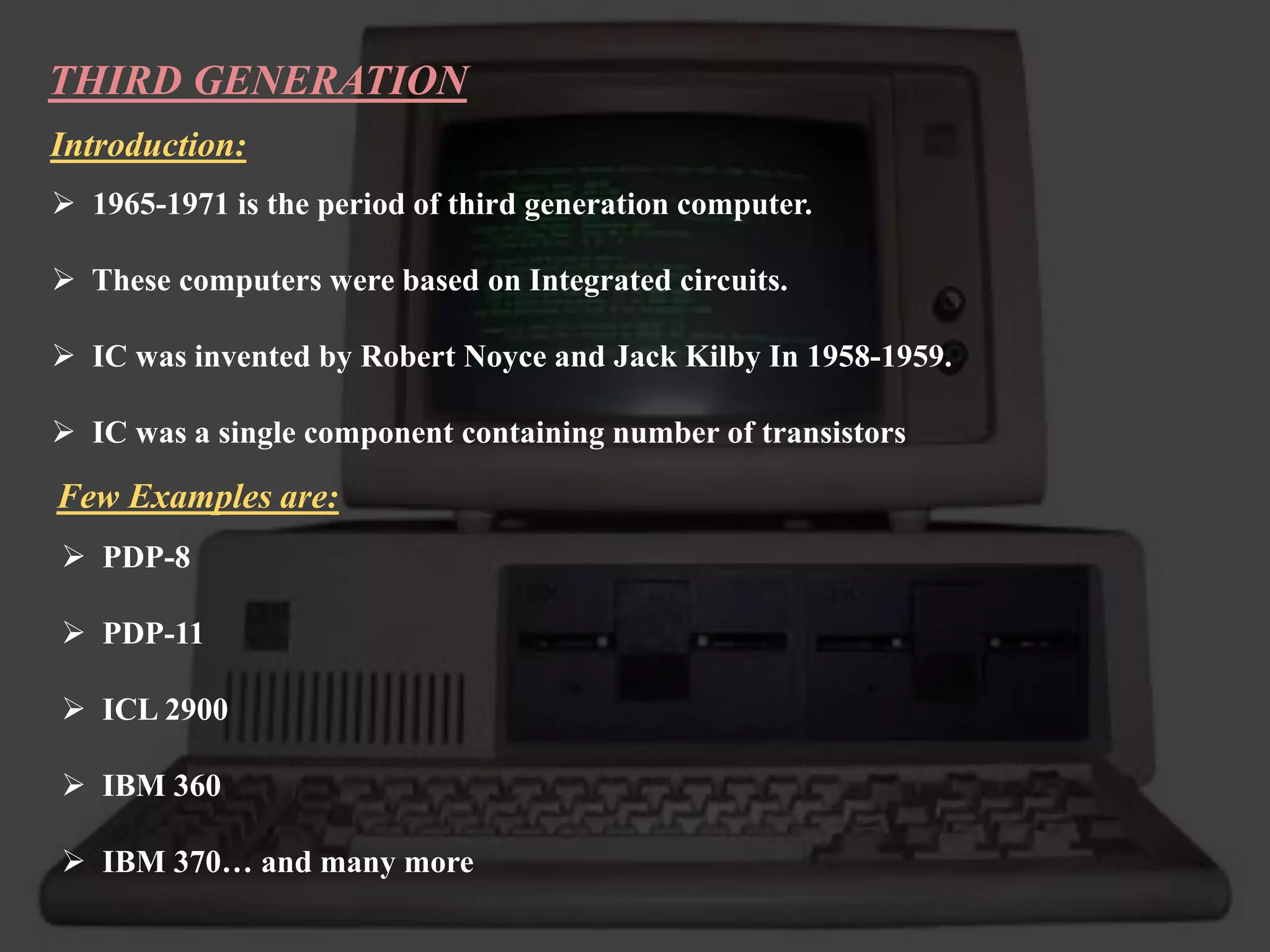
 1965-1971 is the period of third generation computer.
 These computers were based on Integrated circuits.
 IC was invented by Robert Noyce and Jack Kilby In 1958-1959.
 IC was a single component containing number of transistors
Few Examples are:
 PDP-8
 PDP-11
 ICL 2900
 IBM 360
 IBM 370… and many more
 These computers were cheaper as compared to second-generation computers.
 They were fast and reliable.
 Use of IC in the computer provides the small size of the computer.
 IC not only reduce the size of the computer but it also improves the performance of
the computer as compared to previous computers.
 This generation of computers has big storage capacity.
 Instead of punch cards, mouse and keyboard are used for input.
 They used an operating system for better resource management and used the
concept of time-sharing and multiple programming.
 These computers reduce the computational time from microseconds to nanoseconds.
Advantages :
 IC chips are difficult to maintain.
 The highly sophisticated technology required for the manufacturing of IC chips.
 Air conditioning is required.
Disadvantages :
FOURTH GENERATION
Introduction:
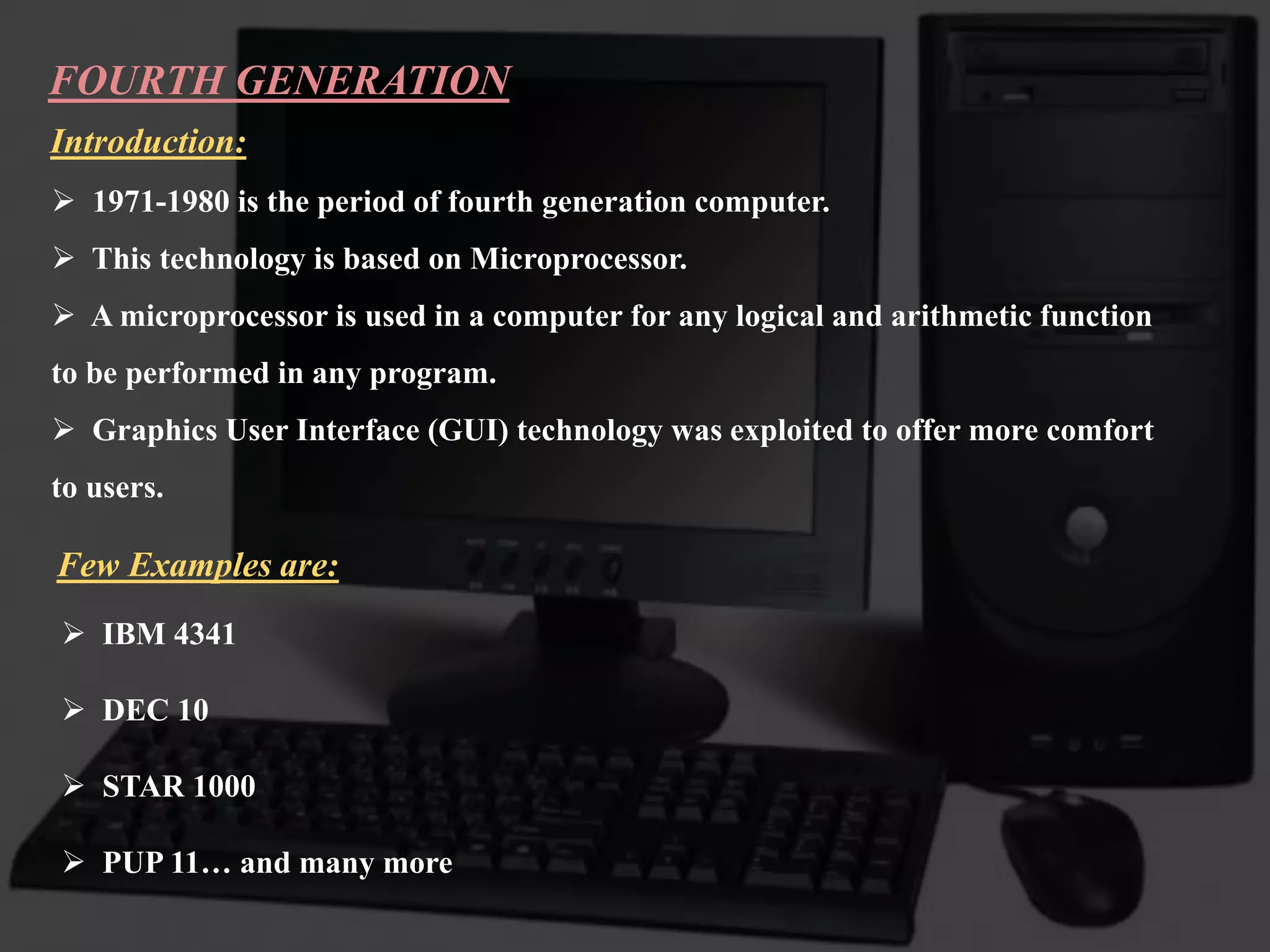
 1971-1980 is the period of fourth generation computer.
 This technology is based on Microprocessor.
 A microprocessor is used in a computer for any logical and arithmetic function
to be performed in any program.
 Graphics User Interface (GUI) technology was exploited to offer more comfort
to users.
Few Examples are:
 IBM 4341
 DEC 10
 STAR 1000
 PUP 11… and many more
 Fastest in computation and size get reduced as compared to the previous generation of
computer.
 Heat generated is negligible.
 Small in size as compared to previous generation computers.
 Less maintenance is required.
 All types of high-level language can be used in this type of computers.
Advantages :
 The Microprocessor design and fabrication are very complex.
 Air conditioning is required in many cases due to the presence of ICs.
 Advance technology is required to make the ICs.
Disadvantages :
FIFTH GENERATION
Introduction:
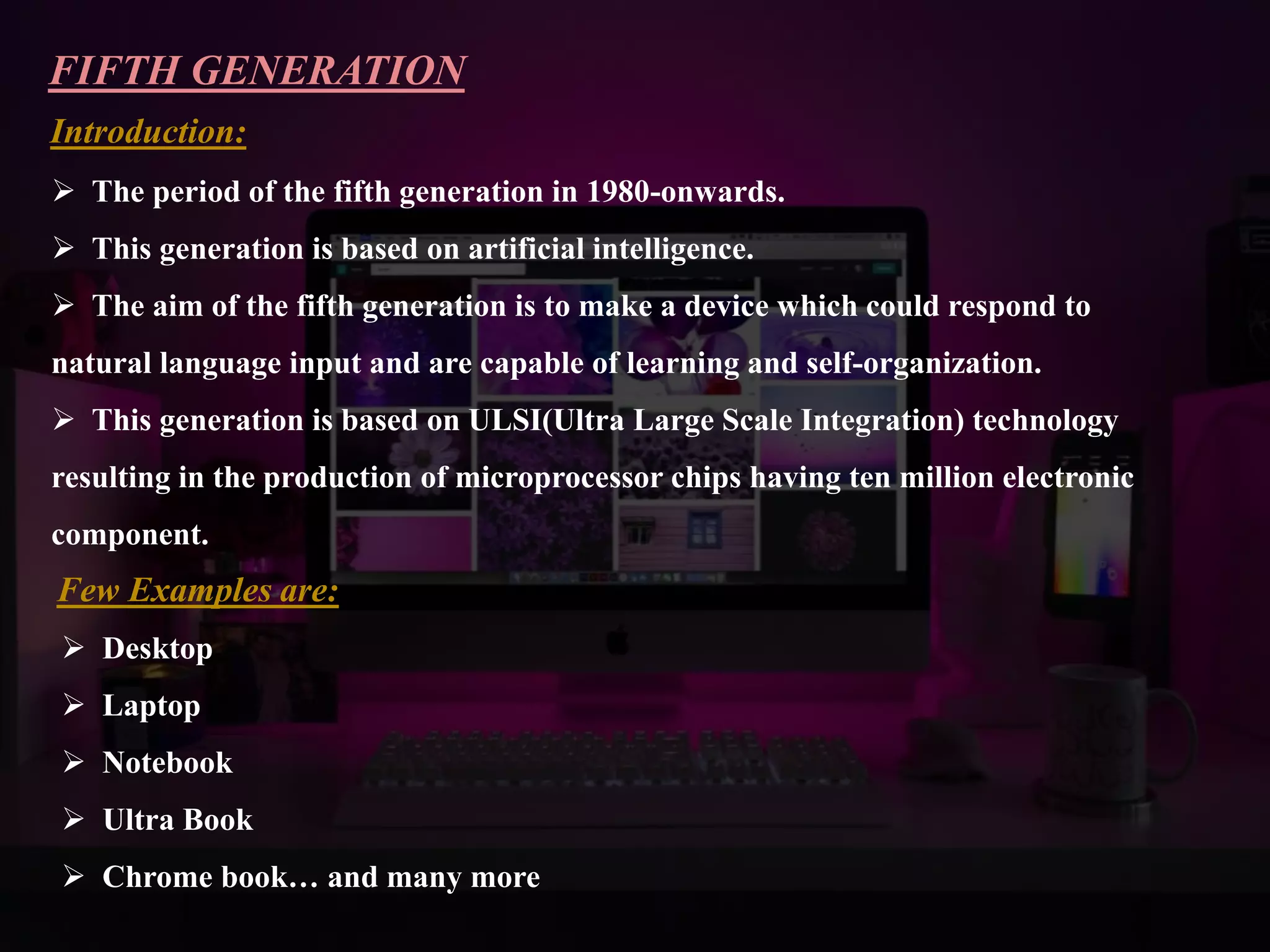
 The period of the fifth generation in 1980-onwards.
 This generation is based on artificial intelligence.
 The aim of the fifth generation is to make a device which could respond to
natural language input and are capable of learning and self-organization.
 This generation is based on ULSI(Ultra Large Scale Integration) technology
resulting in the production of microprocessor chips having ten million electronic
component.
Few Examples are:
 Desktop
 Laptop
 Notebook
 Ultra Book
 Chrome book… and many more
It is more reliable and works faster.
It is available in different sizes and unique features.
It provides computers with more user-friendly interfaces with multimedia features.
Advantages :
 They need very low-level languages.
 They may make the human brains dull and doomed.
Disadvantages :

Generations of computer

  • 1.
    Generations of Computer Presentedby D.Seethalakshmi MCA.,M.Phil., Assistant Professor Bon Secours College for women Thanjavur.
  • 2.
    Introduction A computer isan electronic device that manipulates information or data. It has the ability to store, retrieve, and process data. Nowadays, a computer can be used to type documents, send email, play games, and browse the Web. It can also be used to edit or create spreadsheets, presentations, and even videos. But the evolution of this complex system started around 1940 with the first Generation of Computer and evolving ever since.
  • 3.
    FIRST GENERATION Introduction:  1946-1959is the period of first generation computer.  J.P.Eckert and J.W.Mauchy invented the first successful electronic computer called ENIAC, ENIAC stands for “Electronic Numeric Integrated & Calculator”. Few Examples are:  ENIAC  EDVAC  UNIVAC  IBM-701  IBM-650...
  • 4.
     It madeuse of vacuum tubes which are the only electronic component available during those days.  These computers could calculate in milliseconds. Advantages :  These were very big in size, weight was about 30 tones.  These computers were based on vacuum tubes.  These computers were very costly.  It could store only a small amount of information due to the presence of magnetic drums.  As the invention of first generation computers involves vacuum tubes, so another disadvantage of these computers was, vacuum tubes require a large cooling system.  Very less work efficiency.  Limited programming capabilities and punch cards were used to take inputs.  Large amount of energy consumption.  Not reliable and constant maintenance is required. Disadvantages :
  • 5.
    SECOND GENERATION Introduction:  1959-1965is the period of second-generation computer.  3.Second generation computers were based on Transistor instead of vacuum tubes. Few Examples are:  Honeywell 400  IBM 7094  CDC 1604  CDC 3600  UNIVAC 1108… and many more
  • 6.
     Due tothe presence of transistors instead of vacuum tubes, the size of electron component decreased. This resulted in reducing the size of a computer as compared to first generation computers.  Less energy and not produce as much heat as the first generation.  Assembly language and punch cards were used for input.  Low cost than first generation computers.  Better speed, calculate data in microseconds.  Better portability as compared to first generation Advantages :  A cooling system was required.  Constant maintenance was required.  Only used for specific purposes. Disadvantages :
  • 7.
    THIRD GENERATION Introduction:  1965-1971is the period of third generation computer.  These computers were based on Integrated circuits.  IC was invented by Robert Noyce and Jack Kilby In 1958-1959.  IC was a single component containing number of transistors Few Examples are:  PDP-8  PDP-11  ICL 2900  IBM 360  IBM 370… and many more
  • 8.
     These computerswere cheaper as compared to second-generation computers.  They were fast and reliable.  Use of IC in the computer provides the small size of the computer.  IC not only reduce the size of the computer but it also improves the performance of the computer as compared to previous computers.  This generation of computers has big storage capacity.  Instead of punch cards, mouse and keyboard are used for input.  They used an operating system for better resource management and used the concept of time-sharing and multiple programming.  These computers reduce the computational time from microseconds to nanoseconds. Advantages :  IC chips are difficult to maintain.  The highly sophisticated technology required for the manufacturing of IC chips.  Air conditioning is required. Disadvantages :
  • 9.
    FOURTH GENERATION Introduction:  1971-1980is the period of fourth generation computer.  This technology is based on Microprocessor.  A microprocessor is used in a computer for any logical and arithmetic function to be performed in any program.  Graphics User Interface (GUI) technology was exploited to offer more comfort to users. Few Examples are:  IBM 4341  DEC 10  STAR 1000  PUP 11… and many more
  • 10.
     Fastest incomputation and size get reduced as compared to the previous generation of computer.  Heat generated is negligible.  Small in size as compared to previous generation computers.  Less maintenance is required.  All types of high-level language can be used in this type of computers. Advantages :  The Microprocessor design and fabrication are very complex.  Air conditioning is required in many cases due to the presence of ICs.  Advance technology is required to make the ICs. Disadvantages :
  • 11.
    FIFTH GENERATION Introduction:  Theperiod of the fifth generation in 1980-onwards.  This generation is based on artificial intelligence.  The aim of the fifth generation is to make a device which could respond to natural language input and are capable of learning and self-organization.  This generation is based on ULSI(Ultra Large Scale Integration) technology resulting in the production of microprocessor chips having ten million electronic component. Few Examples are:  Desktop  Laptop  Notebook  Ultra Book  Chrome book… and many more
  • 12.
    It is morereliable and works faster. It is available in different sizes and unique features. It provides computers with more user-friendly interfaces with multimedia features. Advantages :  They need very low-level languages.  They may make the human brains dull and doomed. Disadvantages :