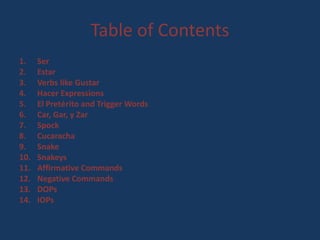
Table of ContentsSer  EstarVerbs like GustarHacer ExpressionsEl Pretérito and Trigger WordsCar, Gar, y ZarSpock Cucaracha SnakeSnakeysAffirmative CommandsNegative CommandsDOPsIOPs
SerDescription				OriginCharacteristics				TimeOccupation				RelationshipPossession		Event		Date
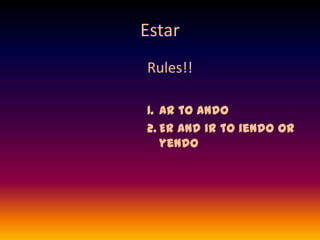
EstarRules!!Ar to andoEr and ir to iendoor yendo
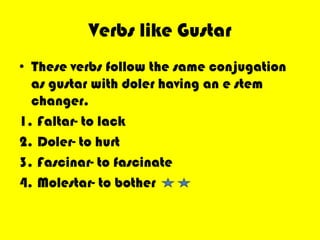
Verbs like GustarThese verbs follow the same conjugation as gustar with doler having an e stem changer.Faltar- to lackDoler- to hurtFascinar- to fascinateMolestar- to bother
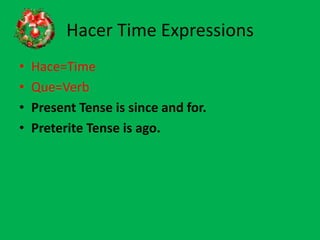
Hacer Time ExpressionsHace=TimeQue=VerbPresent Tense is since and for.Preterite Tense is ago.
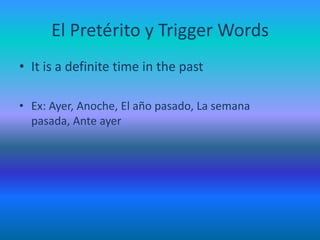
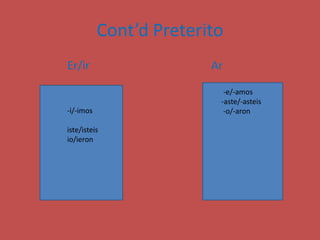
El Pretérito y Trigger WordsIt is a definite time in the pastEx: Ayer,Anoche, El añopasado, La semanapasada, Ante ayerCont’d PreteritoEr/irAr        -e/-amos       -aste/-asteis        -o/-aron	-i/-imosiste/isteisio/ieron
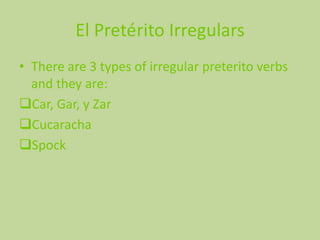
El Pretérito IrregularsThere are 3 types of irregular preterito verbs and they are:Car, Gar, y Zar
Cucaracha
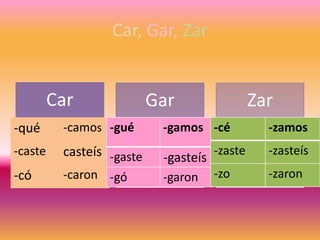
SpockCar, Gar, Zar
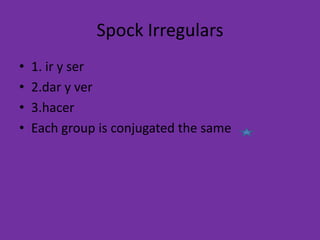
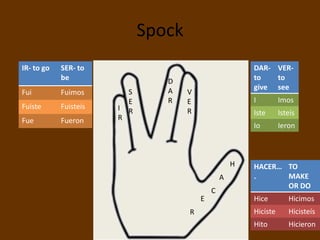
Spock Irregulars1. ir y ser2.dar y ver3.hacerEach group is conjugated the same
SpockDARSERVERIRHACER
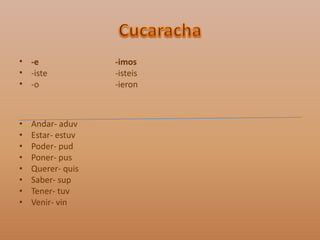
Cucaracha-e			-imos-iste			-isteis-o			-ieronAndar- aduvEstar- estuvPoder- pudPoner- pusQuerer- quisSaber- supTener- tuvVenir- vin
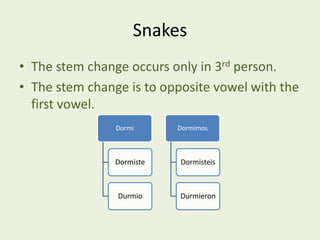
SnakesThe stem change occurs only in 3rd person.The stem change is to opposite vowel with the first vowel.
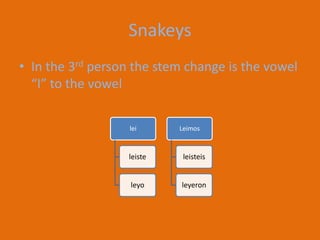
SnakeysIn the 3rd person the stem change is the vowel “I” to the vowel “y”.
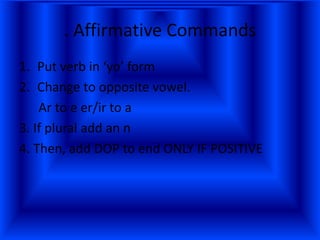
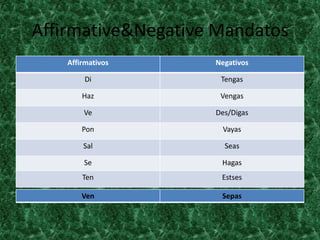
. Affirmative CommandsPut verb in ‘yo’ formChange to opposite vowel.Ar to e er/ir to a3. If plural add an n4. Then, add DOP to end ONLY IF POSITIVE
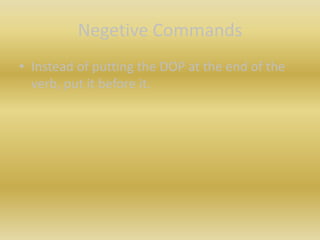
Negetive CommandsInstead of putting the DOP at the end of the verb, put it before it.
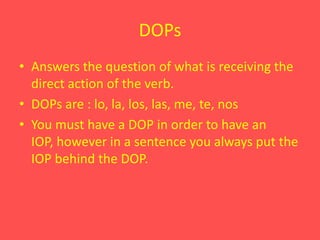
DOPsAnswers the question of what is receiving the direct action of the verb.DOPs are : lo, la, los, las, me, te, nosYou must have a DOP in order to have an IOP, however in a sentence you always put the IOP behind the DOP.
IOPsAnswers the question to whom or for whom. IOPs are: me, te, le, nos, os, les.
Se ImpersonalUse se to avoid specifying a person who is doing the action of the verb.When using se, the verb is always in the 3rd personSe can be used in all tenses
Past Participles Add-ado for-ar verbsAdd-ido for-ir/-er verbsHas to agree with nouns they modify in gender and number.
Irregular Past ParticiplesAbrir-abierto			resolver-resueltoCubrir-cubierto			romper-rotoDecir-dichover-vistoEscribir-escritovolver-vueltoFreir-fritoHacer-hechoMorir-muertoPoner-puesto
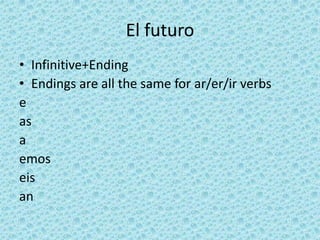
El futuroInfinitive+EndingEndings are all the same for ar/er/ir verbseasaemoseisan
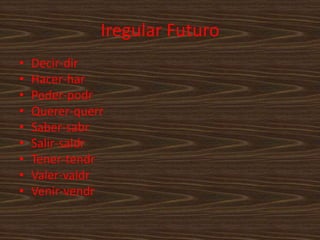
IregularFuturoDecir-dirHacer-harPoder-podrQuerer-querrSaber-sabrSalir-saldrTener-tendrValer-valdrVenir-vendr
Extended el futuroIr + A + Infinitive (going to do something)
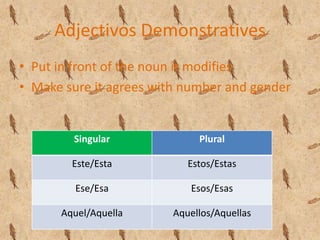
Adjectivos DemonstrativesPut in front of the noun it modifiesMake sure it agrees with number and gender
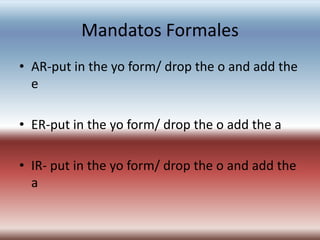
Mandatos FormalesAR-put in the yo form/ drop the o and add the eER-put in the yo form/ drop the o add the aIR- put in the yo form/ drop the o and add the a
Affirmative&Negative Mandatos
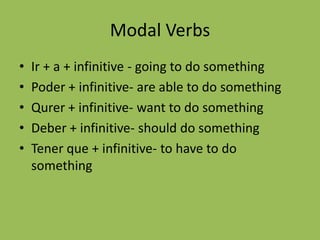
Modal VerbsIr + a + infinitive - going to do somethingPoder + infinitive- are able to do somethingQurer + infinitive- want to do somethingDeber + infinitive- should do somethingTenerque + infinitive- to have to do something
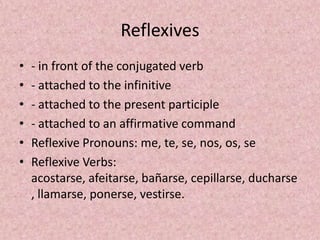
Reflexives-in front of the conjugated verb- attached to the infinitive- attached to the present participle- attached to an affirmative commandReflexive Pronouns: me, te, se, nos, os, seReflexive Verbs: acostarse, afeitarse, bañarse, cepillarse, ducharse, llamarse, ponerse, vestirse.
Saber vs. ConocerSaber is used to express knowledge of informationConocer is used to express knowledge of a person, place, thing, etc.

Gbk2[1]