“ Standards and it’s importance in
   Garment testing and Quality
            control ”

                    M.Ravishankar
Standards . . .
   It is a document that has been prepared, approved,
    and published by a recognized standards
    organization, and contains rules, requirements, or
    procedures for an orderly approach to a specific
    activity. It may include product design
    requirements, test methods, classifications,
    recommended practices, and other considerations.
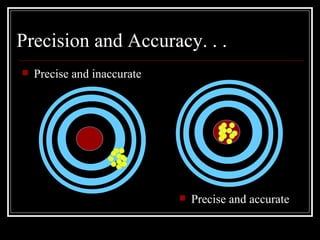
Precision and Accuracy. . .
   Precise and inaccurate


                                Precise and accurate
Types . . .
   Company Standard

   Industry Standard

   Government Standard

   Full consensus Standard
Benefits . . .
   It defines safety requirements intended to
    reduce the risk of accident.

   It sets a level of performance for products.

   They are a framework for quality processes.

   It reduces cost and saves money.
   Encapsulation of best practice - avoids
    repetition of past mistakes.

   It facilitates communication and prevents
    misunderstanding.

   They provide continuity.
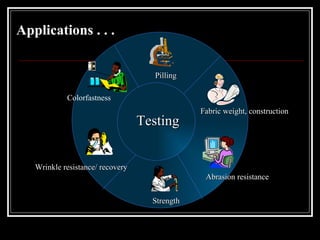
Applications . . .


                                     Pilling

            Colorfastness
                                               Fabric weight, construction
                                  Testing


   Wrinkle resistance/ recovery
                                                Abrasion resistance


                                    Strength
Instruments . . .
Quality Control . . .

   A set of activities or techniques whose
    purpose is to ensure that all quality
    requirements are being met by monitoring of
    processes and solving performance problems
    through Inspecting and Testing.
Sources . . .
   AATCC          BIS

   ASTM           JIN

   ANSI           CSA

   BSI            DIN

   ISO            Others. . .
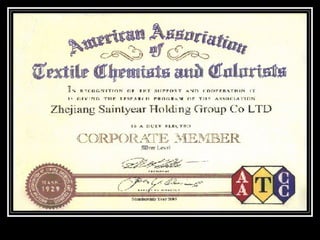
( American Association for
            textile Chemists and Colorists )
   It began developing and establishing testing
    procedures in 1921.

   It represent a broad spectrum of expertise in textile
    research, manufacturing, design and marketing.

   The Association is internationally recognized for its
    standard methods of testing dyed and chemically
    treated fibers and fabrics.
Equipments associated with them . . .

   Gray scale
   Chromatic transference scale
   Launderometer
   Atlas fade o meter
   Carbon arc lamp etc.
( American Society for Testing
            and Materials )
   It was started in the year 1898.

   It have made products and services safer, better and more
    cost-effective.

   A trusted source for technical standards for materials,
    products, systems, and services. Known for their high
    technical quality and market relevancy,
Each ASTM test methods has a numerical designations

For e.g.
 D5034-9 refers to standard test method for Breaking
  strength and elongation of Textile fabrics (Grab test)

   These methods are contained in volumes of (ASTM
    book of Stds).
   Vol.7.01,7.02 Contains textile testing standards
(American National Standard
            Institute )
   It adopted its present name in 1969.

   It steadily increasing its efforts to coordinate
    and approve voluntary national standards

   Domestic programs were expanding and being
    modified to meet the changing needs of
    industry, government and other sectors.
( British Standard Institute )

   The world's first management systems quality
    standard, BS 5750, was published by BSI in 1979.

   It produces standards and information products that
    promote and share best practice.

   over 30,000 BSI standards and publications are
    created.
Numbering British Standards . . .
The British Standards are titled as,
BS XXX:Year Title
Where,
XXX is the number of the standard

Example:
  BS EN ISO 9001:2000 Quality management systems
  Requirements
  BS EN ISO 9004:2000 Quality management systems.
  Guidelines for performance improvements
(International Organisation for
               Standardisation )
   It is the world's largest developer of standards, their principal
    activity is to develop technical and economical standards.

   The work is normally carried out through IS0 technical
    committees.

   In addition may European and Domestic versions be publishes
    as:
    EN ISO xxx:year = European version of the International
    Standard
    BS EN ISO xxx:year = British version of the International
    Standard
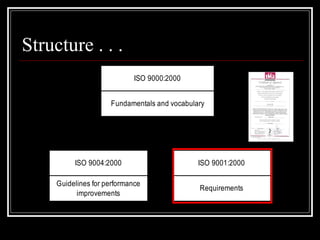
Structure . . .
                             ISO 9000:2000


                     Fundamentals and vocabulary


          ISO 9004:2000                       ISO 9001:2000

     Guidelines for performance
                                              Requirements
           improvements
( Bureau of Indian Standards )
   It is a statutory body set up, established in 1986.

   The Bureau is a body corporate and responsible for
    formulating National Standards.

   It interests the field of standardization, quality control,
    quality management system, environmental
    management system, laboratory management, etc
It has formulated a plan which emphasizes on :

   Development of complementary level of
    standardization, namely, company standardization and
    association level standardization - Effective
    implementation of standards through sectoral
    committees, such as, textiles, power, etc.

   State Level Committees on Standardization and
    Quality Systems to ensure better
    implementation of Indian Standards.
JIN ( Japanese Industrial Standard )

   It specifies the standards used for industrial activities
    in Japan.

   The standardization process is coordinated by
    Japanese Industrial Standards Committee (JISC)

   It mainly focuses on Textile Engineering.
It Focuses on . . .
   General
   Test and Inspection
   Thread
   Woven Fabric, Braided Goods Braided Goods
   Textile Product
   Yarn Reeling Machine
   Textile Machine, Braiding Machine
   Dyeing Finishing Machine
( Canada Standard Association )

    These standards falls into the following classifications:

   Dimensional: to secure uniformity, interchangeability
    and simplification of the types and sizes of one product.
   Qualitative: to assess fitness for purpose.
   Methods of test: to provide a uniform, efficient and
    economic basis of comparison between products.
   Methods of use (Codes of Practice): to define the correct
    application of methods, materials and appliances.
DIN (German Standards Institute -
Deutsches Institut fuer Normung )

   It has been based in Berlin since 1917.

   It’s primary task is to work closely with its
    stakeholders to develop consensus-based
    standards that meet market requirements.
( Some Other Standards) . . .
   EN ( European Standards )

   AS ( Australian Standards )
M.RAVISHANKAR
MBA(AB) 2008-2010 Batch
NIFT-TEA KNITWEAR FASHION INSTITUTE
TIRUPUR

OXYGEN024@GMAIL.COM

Garment testing-and-quality-control

  • 1.
    “ Standards andit’s importance in Garment testing and Quality control ” M.Ravishankar
  • 2.
    Standards . ..  It is a document that has been prepared, approved, and published by a recognized standards organization, and contains rules, requirements, or procedures for an orderly approach to a specific activity. It may include product design requirements, test methods, classifications, recommended practices, and other considerations.
  • 3.
    Precision and Accuracy.. .  Precise and inaccurate  Precise and accurate
  • 4.
    Types . ..  Company Standard  Industry Standard  Government Standard  Full consensus Standard
  • 5.
    Benefits . ..  It defines safety requirements intended to reduce the risk of accident.  It sets a level of performance for products.  They are a framework for quality processes.  It reduces cost and saves money.
  • 6.
    Encapsulation of best practice - avoids repetition of past mistakes.  It facilitates communication and prevents misunderstanding.  They provide continuity.
  • 7.
    Applications . .. Pilling Colorfastness Fabric weight, construction Testing Wrinkle resistance/ recovery Abrasion resistance Strength
  • 8.
  • 9.
    Quality Control .. .  A set of activities or techniques whose purpose is to ensure that all quality requirements are being met by monitoring of processes and solving performance problems through Inspecting and Testing.
  • 10.
    Sources . ..  AATCC  BIS  ASTM  JIN  ANSI  CSA  BSI  DIN  ISO  Others. . .
  • 11.
    ( American Associationfor textile Chemists and Colorists )  It began developing and establishing testing procedures in 1921.  It represent a broad spectrum of expertise in textile research, manufacturing, design and marketing.  The Association is internationally recognized for its standard methods of testing dyed and chemically treated fibers and fabrics.
  • 12.
    Equipments associated withthem . . .  Gray scale  Chromatic transference scale  Launderometer  Atlas fade o meter  Carbon arc lamp etc.
  • 14.
    ( American Societyfor Testing and Materials )  It was started in the year 1898.  It have made products and services safer, better and more cost-effective.  A trusted source for technical standards for materials, products, systems, and services. Known for their high technical quality and market relevancy,
  • 15.
    Each ASTM testmethods has a numerical designations For e.g.  D5034-9 refers to standard test method for Breaking strength and elongation of Textile fabrics (Grab test)  These methods are contained in volumes of (ASTM book of Stds).  Vol.7.01,7.02 Contains textile testing standards
  • 16.
    (American National Standard Institute )  It adopted its present name in 1969.  It steadily increasing its efforts to coordinate and approve voluntary national standards  Domestic programs were expanding and being modified to meet the changing needs of industry, government and other sectors.
  • 17.
    ( British StandardInstitute )  The world's first management systems quality standard, BS 5750, was published by BSI in 1979.  It produces standards and information products that promote and share best practice.  over 30,000 BSI standards and publications are created.
  • 18.
    Numbering British Standards. . . The British Standards are titled as, BS XXX:Year Title Where, XXX is the number of the standard Example: BS EN ISO 9001:2000 Quality management systems Requirements BS EN ISO 9004:2000 Quality management systems. Guidelines for performance improvements
  • 19.
    (International Organisation for Standardisation )  It is the world's largest developer of standards, their principal activity is to develop technical and economical standards.  The work is normally carried out through IS0 technical committees.  In addition may European and Domestic versions be publishes as: EN ISO xxx:year = European version of the International Standard BS EN ISO xxx:year = British version of the International Standard
  • 20.
    Structure . .. ISO 9000:2000 Fundamentals and vocabulary ISO 9004:2000 ISO 9001:2000 Guidelines for performance Requirements improvements
  • 21.
    ( Bureau ofIndian Standards )  It is a statutory body set up, established in 1986.  The Bureau is a body corporate and responsible for formulating National Standards.  It interests the field of standardization, quality control, quality management system, environmental management system, laboratory management, etc
  • 22.
    It has formulateda plan which emphasizes on :  Development of complementary level of standardization, namely, company standardization and association level standardization - Effective implementation of standards through sectoral committees, such as, textiles, power, etc.  State Level Committees on Standardization and Quality Systems to ensure better implementation of Indian Standards.
  • 23.
    JIN ( JapaneseIndustrial Standard )  It specifies the standards used for industrial activities in Japan.  The standardization process is coordinated by Japanese Industrial Standards Committee (JISC)  It mainly focuses on Textile Engineering.
  • 24.
    It Focuses on. . .  General  Test and Inspection  Thread  Woven Fabric, Braided Goods Braided Goods  Textile Product  Yarn Reeling Machine  Textile Machine, Braiding Machine  Dyeing Finishing Machine
  • 25.
    ( Canada StandardAssociation ) These standards falls into the following classifications:  Dimensional: to secure uniformity, interchangeability and simplification of the types and sizes of one product.  Qualitative: to assess fitness for purpose.  Methods of test: to provide a uniform, efficient and economic basis of comparison between products.  Methods of use (Codes of Practice): to define the correct application of methods, materials and appliances.
  • 26.
    DIN (German StandardsInstitute - Deutsches Institut fuer Normung )  It has been based in Berlin since 1917.  It’s primary task is to work closely with its stakeholders to develop consensus-based standards that meet market requirements.
  • 27.
    ( Some OtherStandards) . . .  EN ( European Standards )  AS ( Australian Standards )
  • 28.
    M.RAVISHANKAR MBA(AB) 2008-2010 Batch NIFT-TEAKNITWEAR FASHION INSTITUTE TIRUPUR OXYGEN024@GMAIL.COM