Models of Organizational behavior


          Oxygen024@gmail.com
Organizational behavior


 Thestudy of individual behavior and
 group dynamics in organizations

 Understand
 Predict
 Manage
Value of Organizational behavior


   It helps the people to attain the
    competencies needed to become effective
    employees, team leaders/members, or
    managers
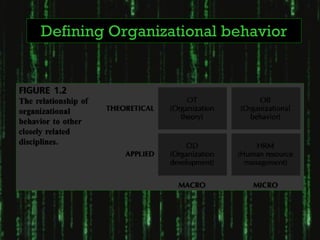
Defining Organizational behavior
Representation of Model functions

 Help
     us to organize individual’s
 knowledge

 Summarize  diverse findings & highlight
 relationships

 Tellus what to pay attention to (and what
 to ignore)
Representation of Model functions


 Help us to understand why events occur
 as they do

 Gives
      guidance about how to bring about
 change
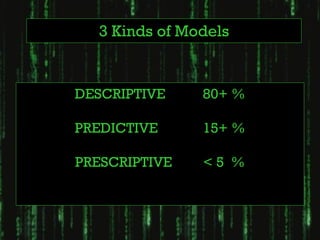
3 Kinds of Models


DESCRIPTIVE    80+ %

PREDICTIVE     15+ %

PRESCRIPTIVE   <5 %
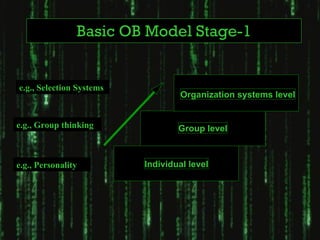
Basic OB Model Stage-1


e.g., Selection Systems
                                   Organization systems level


e.g., Group thinking              Group level


e.g., Personality         Individual level
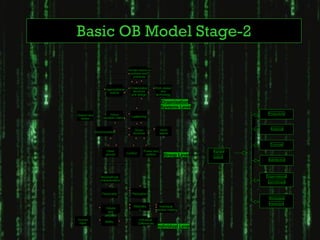
Basic OB Model Stage-2

                                     Human resource
                                      policies and
                                        practices


                   Organizational      Organization          Work design
                      culture           structure               and
                                       and design            technology

                                                                Organization
                                                                Systems Level
Change and             Group                                                               Productivity
                  decision making       Leadership
  stress


                                          Group                  Work                        Absence
             Communication               structure              teams


                                                                                            Turnover

                    Other                         Power and                      Human
                                    Conflict
                    groups                         politics       Group Level    output
                                                                                           Satisfaction


                 Biographical                                                             Organizational
                characteristics
                                                                                           commitment


                 Personality            Perception
                                                                                            Workplace
                                                                                           interaction
                                         Motivatio              Individual
                    Values
                                            n                decision making
                      and
                   attitudes
Human                                          Individual
 input             Ability
                                               Differences
                                                              Individual Level
M.Ravishankar
    MBA(AB) 2008-2010 batch
Nift-tea Knitwear Fashion Institute
             Tirupur.


      Oxygen024@gmail.com

Organisational behavior

  • 2.
    Models of Organizationalbehavior  Oxygen024@gmail.com
  • 3.
    Organizational behavior  Thestudyof individual behavior and group dynamics in organizations  Understand  Predict  Manage
  • 4.
    Value of Organizationalbehavior  It helps the people to attain the competencies needed to become effective employees, team leaders/members, or managers
  • 5.
  • 6.
    Representation of Modelfunctions  Help us to organize individual’s knowledge  Summarize diverse findings & highlight relationships  Tellus what to pay attention to (and what to ignore)
  • 7.
    Representation of Modelfunctions  Help us to understand why events occur as they do  Gives guidance about how to bring about change
  • 8.
    3 Kinds ofModels DESCRIPTIVE 80+ % PREDICTIVE 15+ % PRESCRIPTIVE <5 %
  • 9.
    Basic OB ModelStage-1 e.g., Selection Systems Organization systems level e.g., Group thinking Group level e.g., Personality Individual level
  • 10.
    Basic OB ModelStage-2 Human resource policies and practices Organizational Organization Work design culture structure and and design technology Organization Systems Level Change and Group Productivity decision making Leadership stress Group Work Absence Communication structure teams Turnover Other Power and Human Conflict groups politics Group Level output Satisfaction Biographical Organizational characteristics commitment Personality Perception Workplace interaction Motivatio Individual Values n decision making and attitudes Human Individual input Ability Differences Individual Level
  • 11.
    M.Ravishankar MBA(AB) 2008-2010 batch Nift-tea Knitwear Fashion Institute Tirupur. Oxygen024@gmail.com