Downloaded 149 times
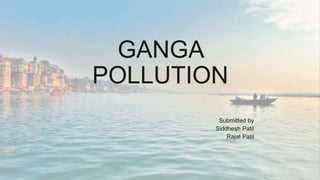
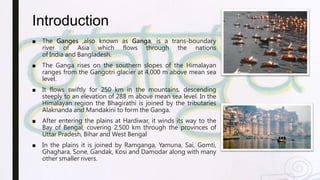

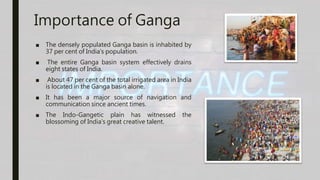
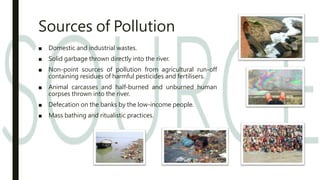
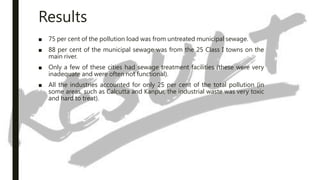
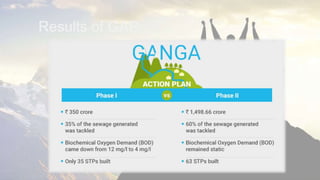


The document discusses the pollution of the Ganges River, detailing its geographical significance, pollution sources, and actions taken under the Ganga Action Plan (GAP) initiated in 1986. It highlights that over 80% of the pollution is domestic waste, with major contributions from untreated sewage and industrial discharges. The GAP aims to improve the river’s water quality through waste management and community awareness, though it has encountered implementation challenges and requires ongoing research and technological developments.


