Ganga action plan
case study by…
sardar chanderdeep singh
cse-c
15k41a05g8
case study by Chanderdeep Singh Gaur
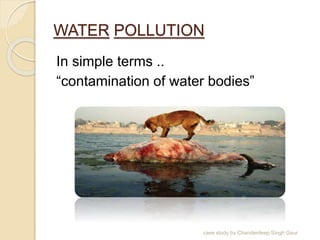
WATER POLLUTION
In simple terms ..
“contamination of water bodies”
case study by Chanderdeep Singh Gaur
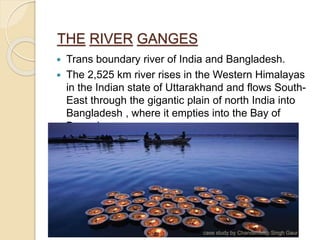
THE RIVER GANGES
 Trans boundary river of India and Bangladesh.
 The 2,525 km river rises in the Western Himalayas
in the Indian state of Uttarakhand and flows South-
East through the gigantic plain of north India into
Bangladesh , where it empties into the Bay of
Bengal.
case study by Chanderdeep Singh Gaur
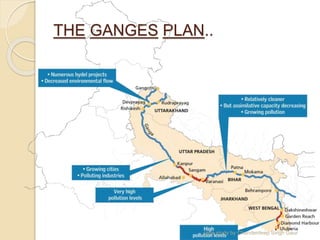
THE GANGES PLAN..
case study by Chanderdeep Singh Gaur
SCIENTIFIC SIGNIFICANCE OF
GANGA
 According to reports by environmental engineers if
IIT RHOORKE E , the Ganga decomposes the
organic waste 15 to 25 times faster than other river.
 Scientists and religious leaders have speculated on
causes of rivers apparent self purification effect in
which water borne bacteria such as dysentery and
cholera are killed off . thus preventing large scale
epidemics .
 According to NBRI(national botanical research
institute) the river Ganga has a anti bacterial
quality.
case study by Chanderdeep Singh Gaur
ENVIRONMENTAL PROBLEMS
• The Ganges was ranked among the top
five most polluted rivers of the world in
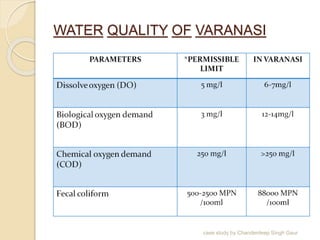
2007, with fecal coliform levels in the river
near Varanasi more than hundred times in
the official Indian government limits
• Pollution threatens not only humans, but
also more than 140 fish species, 90
amphibian species and the endangered
Ganges river dolphin.
case study by Chanderdeep Singh Gaur
VARANASI ,THE SPIRITIUAL CAPITAL
OF INDIA..
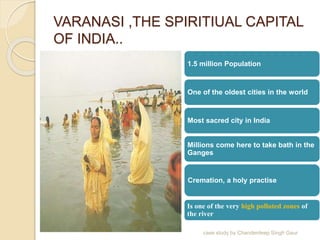
1.5 million Population
One of the oldest cities in the world
Most sacred city in India
Millions come here to take bath in the
Ganges
Cremation, a holy practise
Is one of the very high polluted zones of
the river
case study by Chanderdeep Singh Gaur
WATER QUALITY OF VARANASI
case study by Chanderdeep Singh Gaur
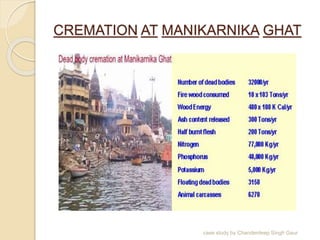
CREMATION AT MANIKARNIKA GHAT
case study by Chanderdeep Singh Gaur
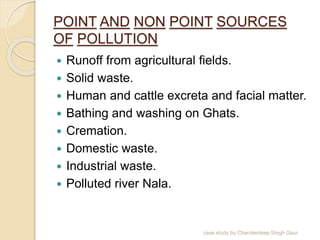
POINT AND NON POINT SOURCES
OF POLLUTION
 Runoff from agricultural fields.
 Solid waste.
 Human and cattle excreta and facial matter.
 Bathing and washing on Ghats.
 Cremation.
 Domestic waste.
 Industrial waste.
 Polluted river Nala.
case study by Chanderdeep Singh Gaur
GANGA ACTION PLAN
 In 1986, the government had launched the
first phase of GANGA ACTION PLAN (GAP
1) to protect the country’s largest river
basin. It selected stretches of the river
along 25 cities in Uttar Pradesh, Bihar and
West Bengal. In 1993,
GAP-11 was initiated which included the
river’s tributes-the Yamuna, Gomti,
Damodar and the Mahanadi.
 On Feb 20, 2009, the Union government
gave the Ganga the status of a National
River and relaunched GAP.
case study by Chanderdeep Singh Gaur
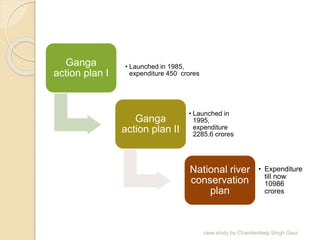
Ganga
action plan I
• Launched in 1985,
expenditure 450 crores
Ganga
action plan II
• Launched in
1995,
expenditure
2285.6 crores
National river
conservation
plan
• Expenditure
till now
10986
crores
case study by Chanderdeep Singh Gaur
FAILURE OF GAP-1 AND GAP-11
 Non availability of environmental state of
the art.
 In appropriate environmental planning.
 Establishment of non specific sewage
treatment plans on highly productive crop
lands.
 Least political dedication and vision to save
the river GANGA.
case study by Chanderdeep Singh Gaur
GOVERNMENT IN ACTION AGAIN
 The Ganges river considered to be sacred
in India is getting a $1 billion clean up loan
from world bank.
 Clean up efforts that includes building water
treatment plants , fixing dams and other
fixing water quality improvement methords.
case study by Chanderdeep Singh Gaur
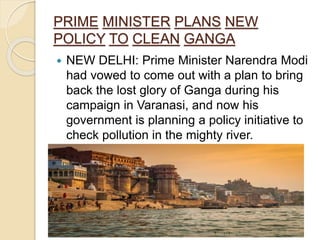
PRIME MINISTER PLANS NEW
POLICY TO CLEAN GANGA
 NEW DELHI: Prime Minister Narendra Modi
had vowed to come out with a plan to bring
back the lost glory of Ganga during his
campaign in Varanasi, and now his
government is planning a policy initiative to
check pollution in the mighty river.
case study by Chanderdeep Singh Gaur
MEDIUM AND LONG TERM
STRATEGY
MEDIUM TERM PLAN:
 Sanitation measures in 1649 Gram
Panchayats as identified by ministry of
drinking water and sanitations.
 Sewerage infrastructure coverage for 118
towns near by.
case study by Chanderdeep Singh Gaur
LONG TERM PLAN:
 To emerge Ganga river basin management
plan(GRBMP) being prepared by
consortium of 7 IITs.
--(a report received by IIT
consortium).
case study by Chanderdeep Singh Gaur
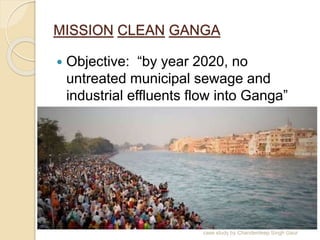
MISSION CLEAN GANGA
 Objective: “by year 2020, no
untreated municipal sewage and
industrial effluents flow into Ganga”
case study by Chanderdeep Singh Gaur
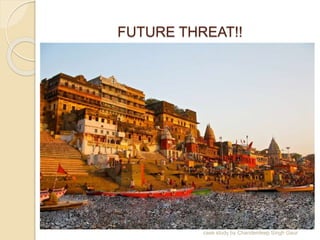
FUTURE THREAT!!
case study by Chanderdeep Singh Gaur
ANY QUIRIES!!?
case study by Chanderdeep Singh Gaur
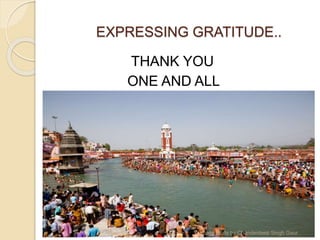
EXPRESSING GRATITUDE..
THANK YOU
ONE AND ALL
case study by Chanderdeep Singh Gaur
BIBILOGRAPHY..
 www.slideshare.com
 www.tskchander.blogspot.in
 www.wikipedia.com
 www.namamigangeplan.com
 www.gangaactionplan.com
 STATUS PAPER ON RIVER
GANGA..national river conservation
directorate ministry of forest and
environment VARANASI ,
UTTAR PRADESH
case study by Chanderdeep Singh Gaur

Case study ganga action plan

  • 1.
    Ganga action plan casestudy by… sardar chanderdeep singh cse-c 15k41a05g8 case study by Chanderdeep Singh Gaur
  • 2.
    WATER POLLUTION In simpleterms .. “contamination of water bodies” case study by Chanderdeep Singh Gaur
  • 3.
    THE RIVER GANGES Trans boundary river of India and Bangladesh.  The 2,525 km river rises in the Western Himalayas in the Indian state of Uttarakhand and flows South- East through the gigantic plain of north India into Bangladesh , where it empties into the Bay of Bengal. case study by Chanderdeep Singh Gaur
  • 4.
    THE GANGES PLAN.. casestudy by Chanderdeep Singh Gaur
  • 5.
    SCIENTIFIC SIGNIFICANCE OF GANGA According to reports by environmental engineers if IIT RHOORKE E , the Ganga decomposes the organic waste 15 to 25 times faster than other river.  Scientists and religious leaders have speculated on causes of rivers apparent self purification effect in which water borne bacteria such as dysentery and cholera are killed off . thus preventing large scale epidemics .  According to NBRI(national botanical research institute) the river Ganga has a anti bacterial quality. case study by Chanderdeep Singh Gaur
  • 6.
    case study byChanderdeep Singh Gaur
  • 7.
    ENVIRONMENTAL PROBLEMS • TheGanges was ranked among the top five most polluted rivers of the world in 2007, with fecal coliform levels in the river near Varanasi more than hundred times in the official Indian government limits • Pollution threatens not only humans, but also more than 140 fish species, 90 amphibian species and the endangered Ganges river dolphin. case study by Chanderdeep Singh Gaur
  • 8.
    VARANASI ,THE SPIRITIUALCAPITAL OF INDIA.. 1.5 million Population One of the oldest cities in the world Most sacred city in India Millions come here to take bath in the Ganges Cremation, a holy practise Is one of the very high polluted zones of the river case study by Chanderdeep Singh Gaur
  • 9.
    WATER QUALITY OFVARANASI case study by Chanderdeep Singh Gaur
  • 10.
    CREMATION AT MANIKARNIKAGHAT case study by Chanderdeep Singh Gaur
  • 11.
    POINT AND NONPOINT SOURCES OF POLLUTION  Runoff from agricultural fields.  Solid waste.  Human and cattle excreta and facial matter.  Bathing and washing on Ghats.  Cremation.  Domestic waste.  Industrial waste.  Polluted river Nala. case study by Chanderdeep Singh Gaur
  • 12.
    GANGA ACTION PLAN In 1986, the government had launched the first phase of GANGA ACTION PLAN (GAP 1) to protect the country’s largest river basin. It selected stretches of the river along 25 cities in Uttar Pradesh, Bihar and West Bengal. In 1993, GAP-11 was initiated which included the river’s tributes-the Yamuna, Gomti, Damodar and the Mahanadi.  On Feb 20, 2009, the Union government gave the Ganga the status of a National River and relaunched GAP. case study by Chanderdeep Singh Gaur
  • 13.
    Ganga action plan I •Launched in 1985, expenditure 450 crores Ganga action plan II • Launched in 1995, expenditure 2285.6 crores National river conservation plan • Expenditure till now 10986 crores case study by Chanderdeep Singh Gaur
  • 14.
    FAILURE OF GAP-1AND GAP-11  Non availability of environmental state of the art.  In appropriate environmental planning.  Establishment of non specific sewage treatment plans on highly productive crop lands.  Least political dedication and vision to save the river GANGA. case study by Chanderdeep Singh Gaur
  • 15.
    GOVERNMENT IN ACTIONAGAIN  The Ganges river considered to be sacred in India is getting a $1 billion clean up loan from world bank.  Clean up efforts that includes building water treatment plants , fixing dams and other fixing water quality improvement methords. case study by Chanderdeep Singh Gaur
  • 16.
    PRIME MINISTER PLANSNEW POLICY TO CLEAN GANGA  NEW DELHI: Prime Minister Narendra Modi had vowed to come out with a plan to bring back the lost glory of Ganga during his campaign in Varanasi, and now his government is planning a policy initiative to check pollution in the mighty river. case study by Chanderdeep Singh Gaur
  • 17.
    MEDIUM AND LONGTERM STRATEGY MEDIUM TERM PLAN:  Sanitation measures in 1649 Gram Panchayats as identified by ministry of drinking water and sanitations.  Sewerage infrastructure coverage for 118 towns near by. case study by Chanderdeep Singh Gaur
  • 18.
    LONG TERM PLAN: To emerge Ganga river basin management plan(GRBMP) being prepared by consortium of 7 IITs. --(a report received by IIT consortium). case study by Chanderdeep Singh Gaur
  • 19.
    MISSION CLEAN GANGA Objective: “by year 2020, no untreated municipal sewage and industrial effluents flow into Ganga” case study by Chanderdeep Singh Gaur
  • 20.
    FUTURE THREAT!! case studyby Chanderdeep Singh Gaur
  • 21.
    ANY QUIRIES!!? case studyby Chanderdeep Singh Gaur
  • 22.
    EXPRESSING GRATITUDE.. THANK YOU ONEAND ALL case study by Chanderdeep Singh Gaur
  • 23.
    BIBILOGRAPHY..  www.slideshare.com  www.tskchander.blogspot.in www.wikipedia.com  www.namamigangeplan.com  www.gangaactionplan.com  STATUS PAPER ON RIVER GANGA..national river conservation directorate ministry of forest and environment VARANASI , UTTAR PRADESH case study by Chanderdeep Singh Gaur

Editor's Notes

  • #4  It is the longest river of India and is the second greatest river in the world by water Discharge. The Ganges basin is the most heavily populated river basin in the world, with over 400 million people and a population density of about 1,000 inhabitants per square mile. Ganga, has been enlisted on the list of 10 most endangered rivers of the world.
  • #6 Some studies have reported that the river retains more oxygen than is typical for comparable rivers; this could be a factor leading to fewer disease agents being present in the water. The waters of the Ganga carry one of the highest sediment loads anywhere in the world, with a mean annual total of 1.6 billion tonnes, compared to 0.4 billion tonnes for the Amazon
  • #8 It is filled with chemical wastes, sewage and even human and animal remains which carry major health risks by either direct bathing in the dirty water, or by drinking.  
  • #13 . The re-launched GAP took into account the entire river basin and emphasised the river’s need to have adequate water to maintain its ecological flow. But five years after the re-launch, pollution levels are still, to say the least, grim. Rivers have the ability to clean themselves—to assimilate and treat biological waste using sunlight and oxygen. But the Ganga gets no time to breathe and revive
  • #16 VARANASI is all set to witness establishment of National Ganga River Basin Research Institute for sustainable development of the Ganga river basin in the region. The Centre has expressed confidence that by 2020 the polluted River Ganga would be cleaned and Rs 15,000 crore will be spent on it. 
  • #17 “The government will work out a policy initiative for the rejuvenation of Ganga as well as the cleaning up of other important rivers in the country. Efforts will be made to make it clean and pious as it was in the past,” Union Minister of Water Resources and Ganga Rejuvenation Uma Bharti said after taking charge of the ministry. Promising an early review the status of various river projects, including fund allocation, Bharti said all the rivers should be made free from the source of pollution and people should get clean water.