GamificationDigital Integration & InnovationAugust 2011
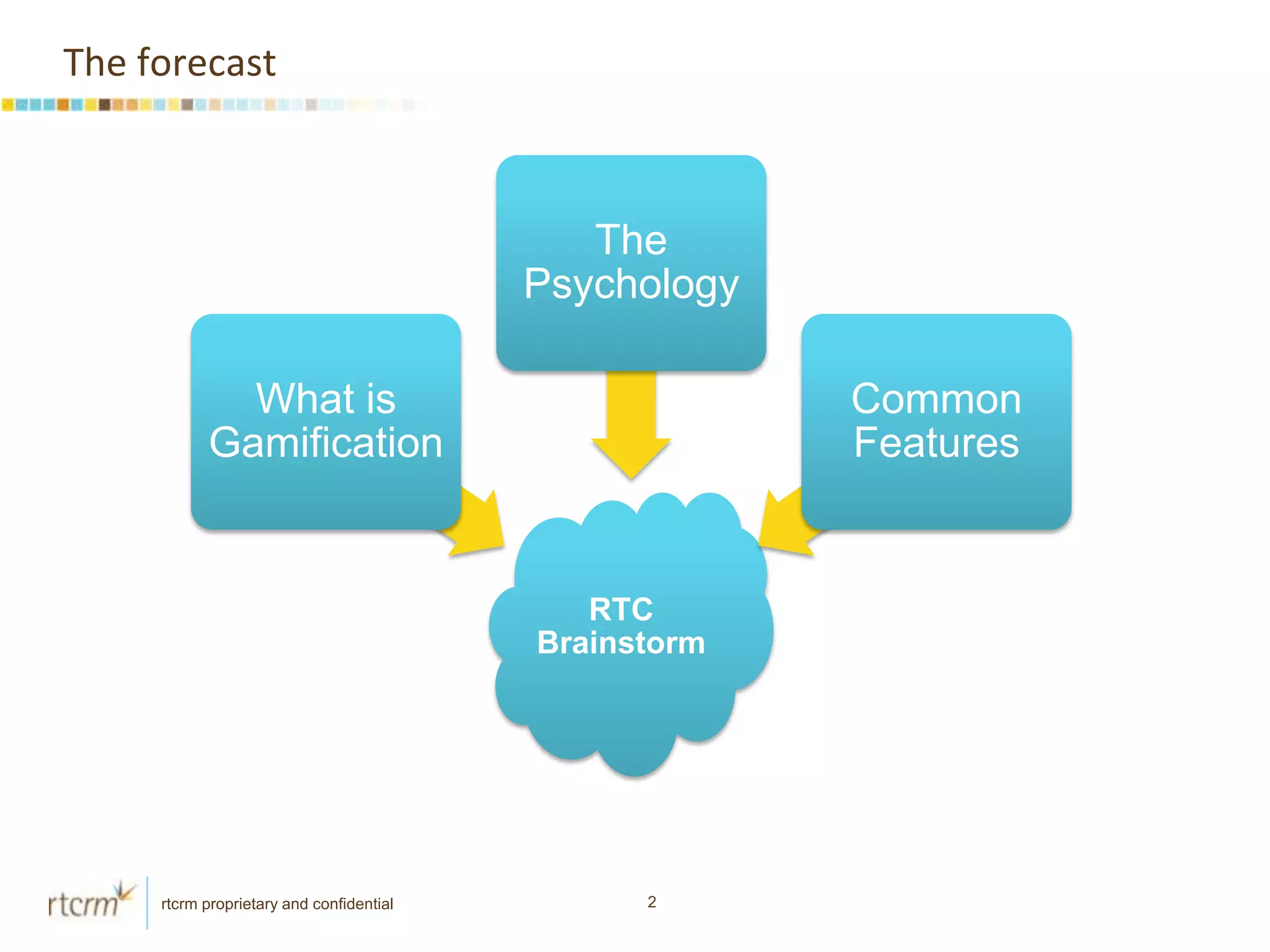
The forecast
Before We Begin…
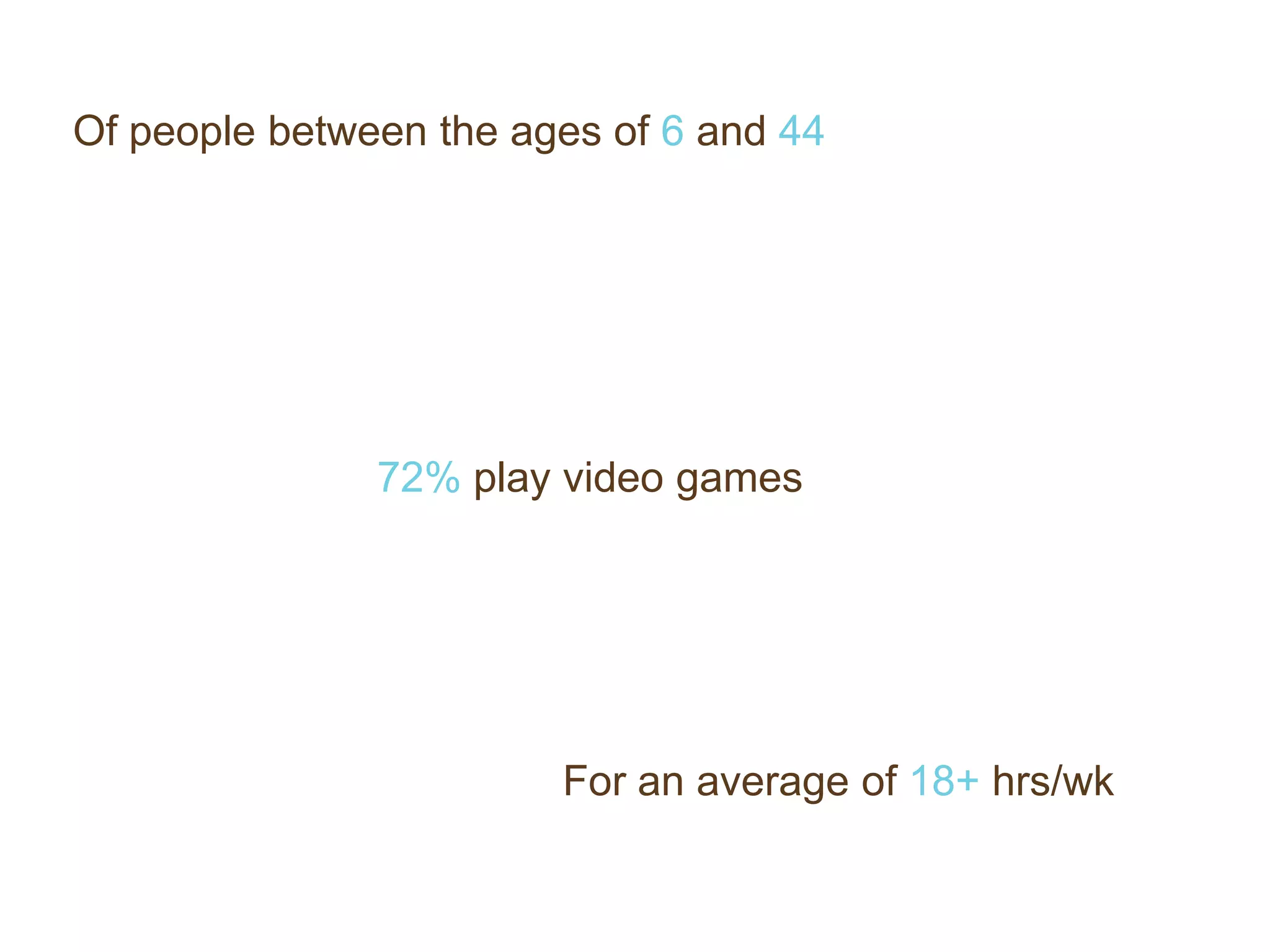
Of people between the ages of 6 and 4472% play video gamesFor an average of 18+hrs/wk
solving virtual problems5.93 billion yearsWoW players have collectively spent
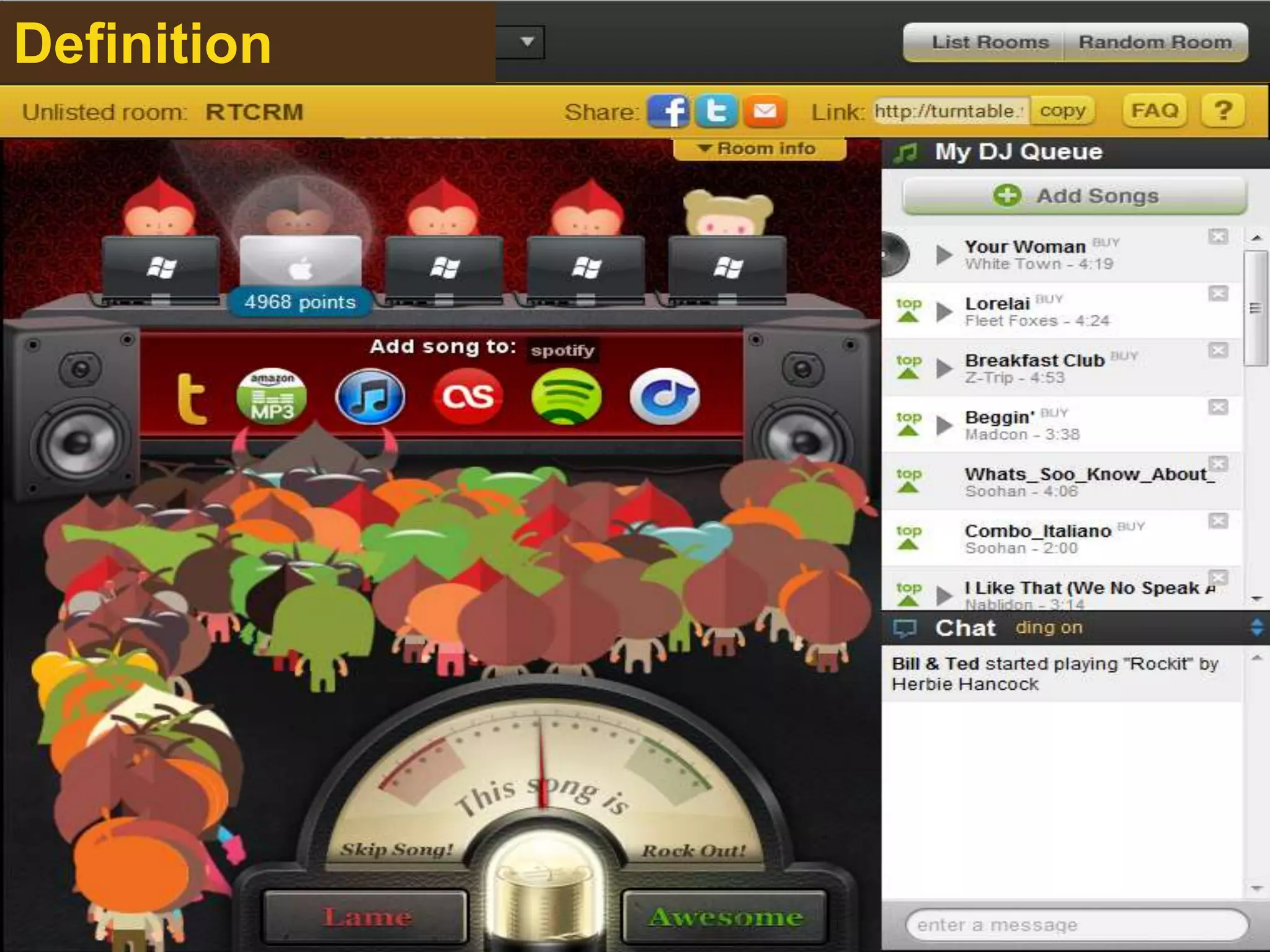
Definition
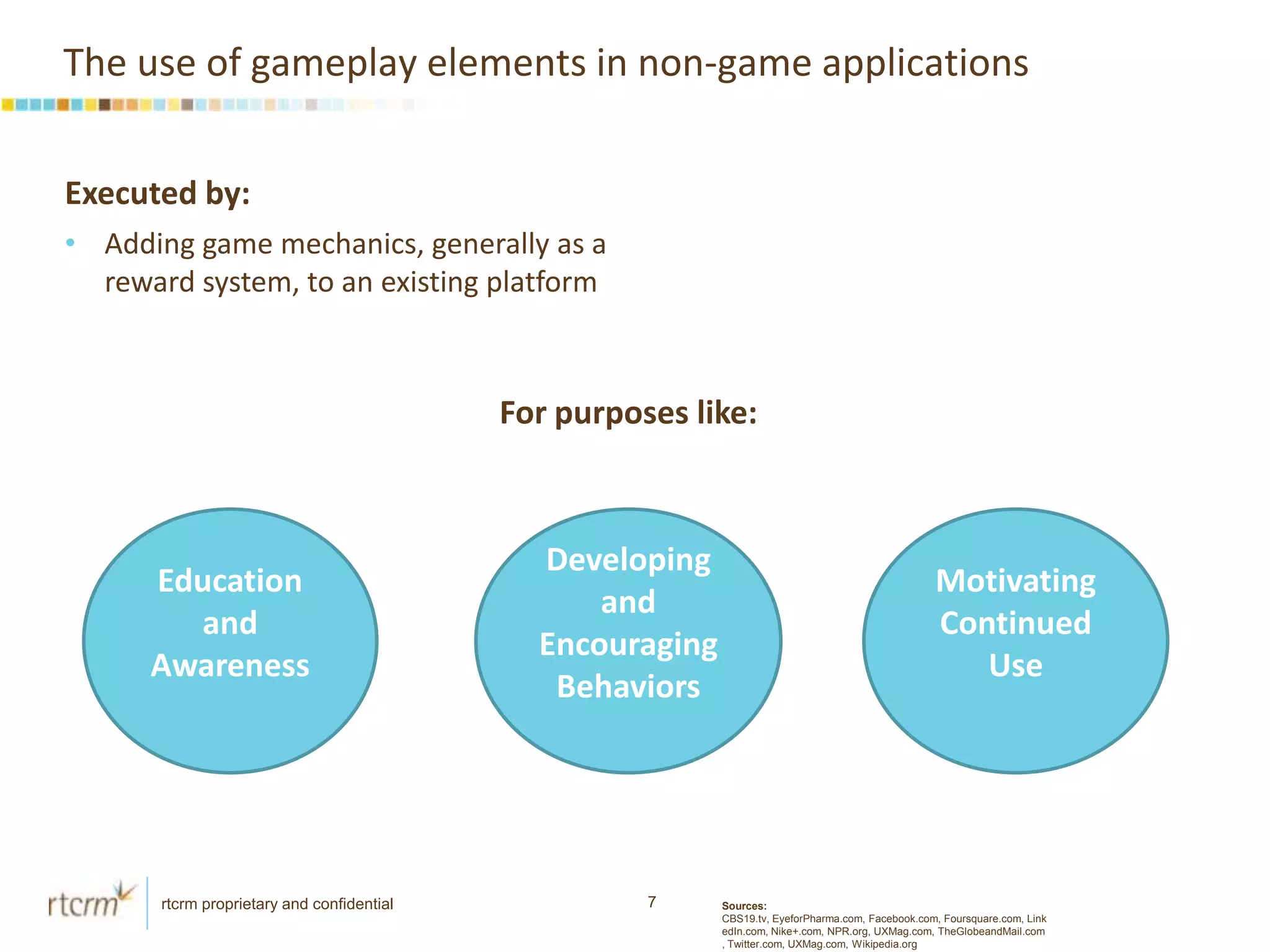
The use of gameplay elements in non-game applicationsExecuted by: Adding game mechanics, generally as a reward system, to an existing platform For purposes like:Education and AwarenessDeveloping and Encouraging BehaviorsMotivating Continued UseSources: CBS19.tv, EyeforPharma.com, Facebook.com, Foursquare.com, LinkedIn.com, Nike+.com, NPR.org, UXMag.com, TheGlobeandMail.com, Twitter.com, UXMag.com, Wikipedia.org
Psychology
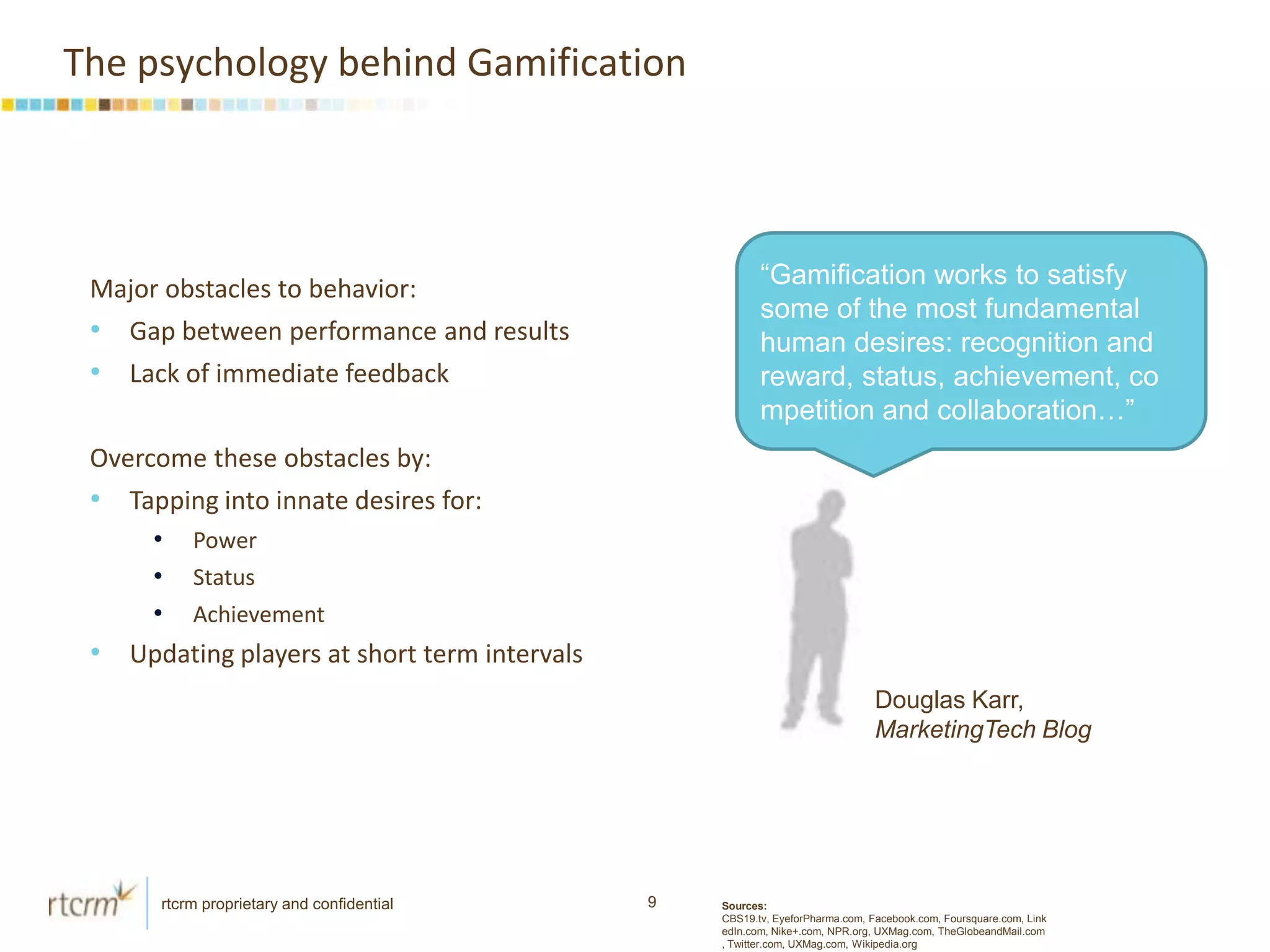
The psychology behind Gamification“Gamification works to satisfy some of the most fundamental human desires: recognition and reward, status, achievement, competition and collaboration…”Major obstacles to behavior:Gap between performance and results
Lack of immediate feedbackOvercome these obstacles by:Tapping into innate desires for:
Power
Status
Achievement
Updating players at short term intervalsDouglas Karr, MarketingTech BlogSources: CBS19.tv, EyeforPharma.com, Facebook.com, Foursquare.com, LinkedIn.com, Nike+.com, NPR.org, UXMag.com, TheGlobeandMail.com, Twitter.com, UXMag.com, Wikipedia.org
Motivation through reward“If you give people money, it often messes up their mentalities and encourages cheating…But if you challenge people and reward them for good behavior, it gives them self-esteem.”Esther Dyson,Investor – HealthCare 2.0
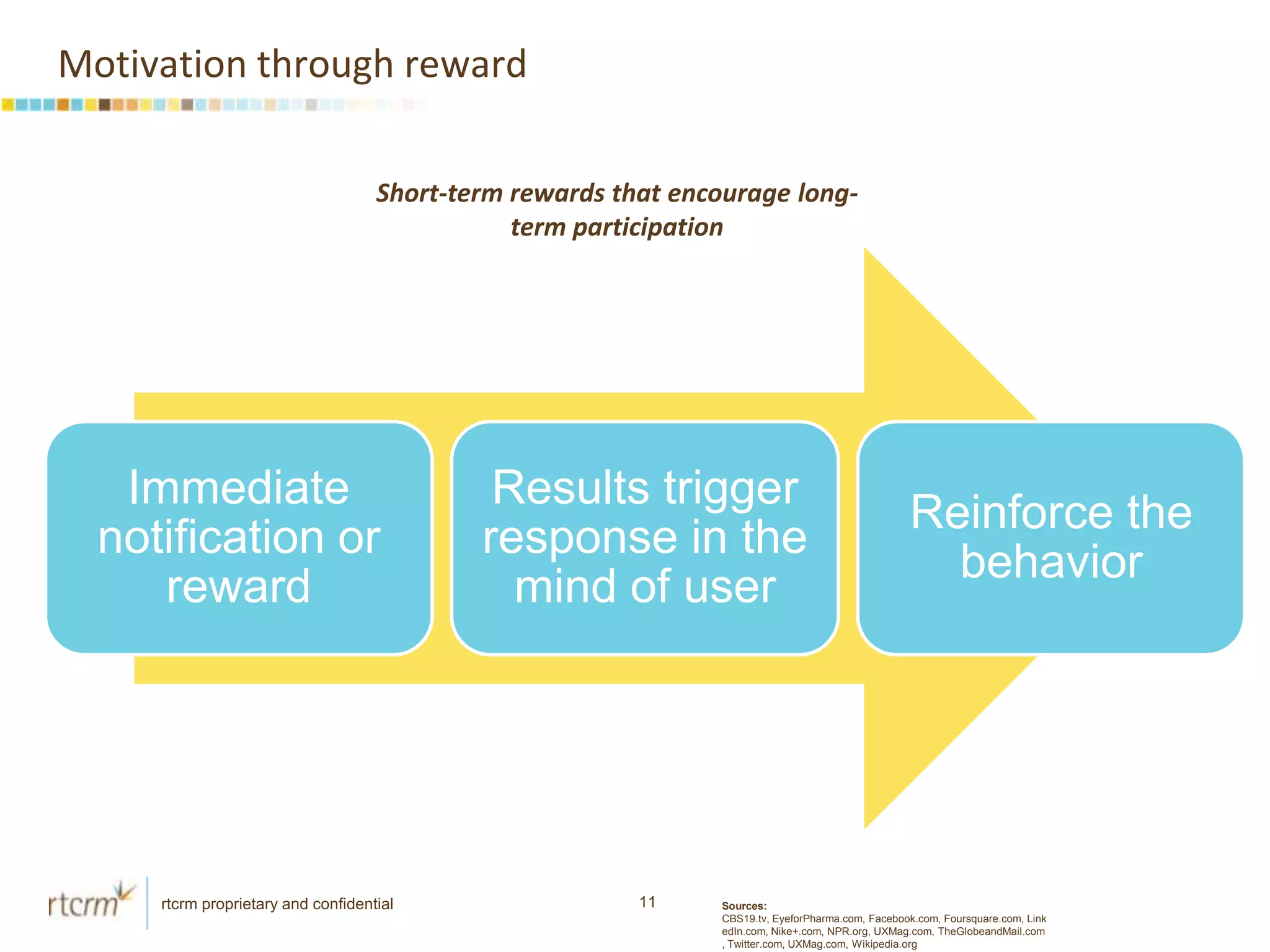
Motivation through rewardShort-term rewards that encourage long-term participation Sources: CBS19.tv, EyeforPharma.com, Facebook.com, Foursquare.com, LinkedIn.com, Nike+.com, NPR.org, UXMag.com, TheGlobeandMail.com, Twitter.com, UXMag.com, Wikipedia.org
Motivation through competition“Employees could contest each other to reach various statuses first, or they can motivate wellness initiative peers to get healthier by gifting an online calorie counter.”William Ng, Incentive Mag
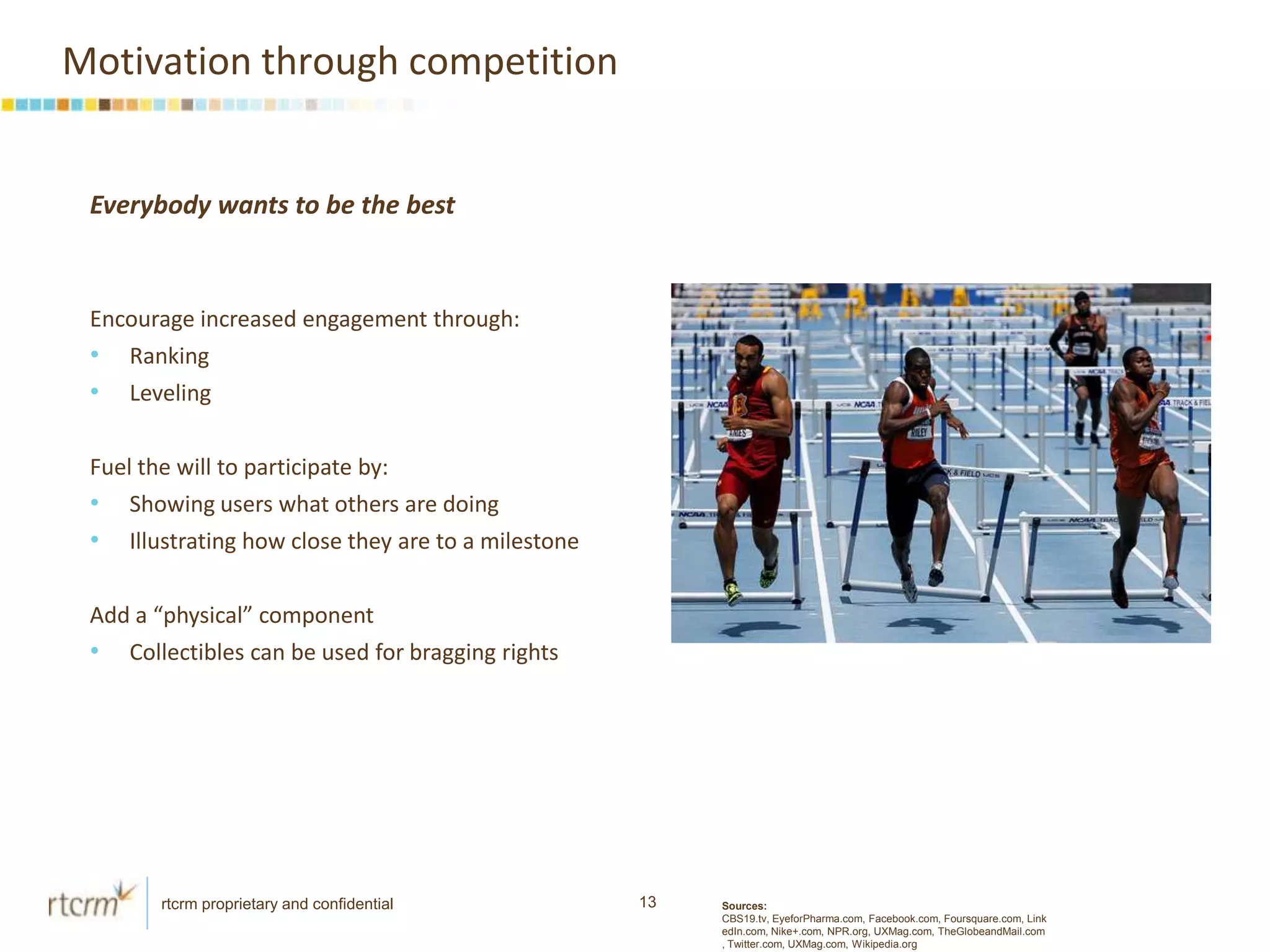
Motivation through competitionEverybody wants to be the bestEncourage increased engagement through:Ranking
LevelingFuel the will to participate by:Showing users what others are doing
Illustrating how close they are to a milestoneAdd a “physical” componentCollectibles can be used for bragging rights Sources: CBS19.tv, EyeforPharma.com, Facebook.com, Foursquare.com, LinkedIn.com, Nike+.com, NPR.org, UXMag.com, TheGlobeandMail.com, Twitter.com, UXMag.com, Wikipedia.org
Motivation through interactivity“it’s about creating a long-term engagement with the consumer that moves them along what we call, ‘the player journey’ – the long-term emotional engagement of the user with the brand.”Gabe Zichermann,“Game-Based Marketing”
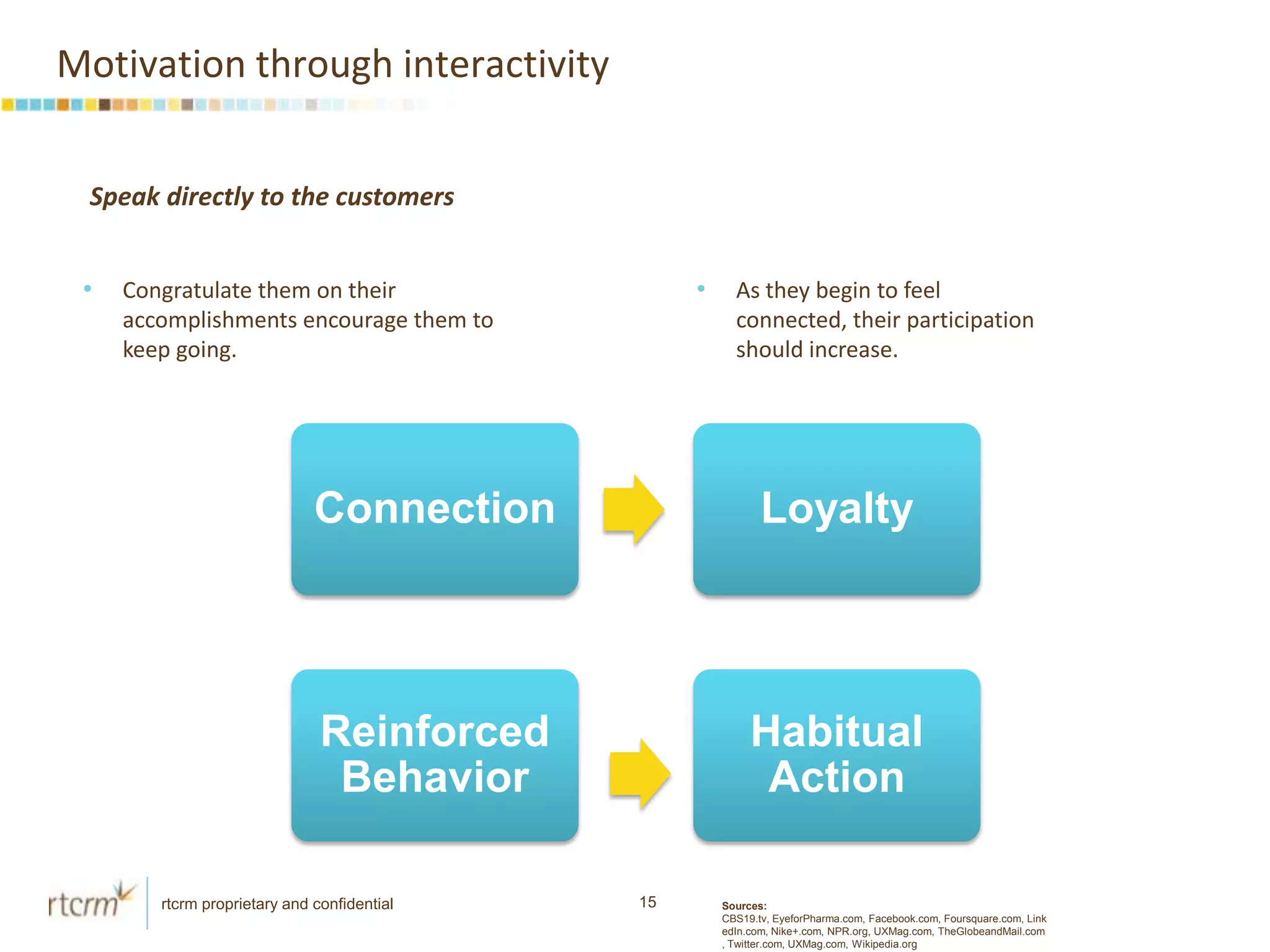
Motivation through interactivitySpeak directly to the customers Congratulate them on their accomplishments encourage them to keep going.
As they begin to feel connected, their participation should increase. Sources: CBS19.tv, EyeforPharma.com, Facebook.com, Foursquare.com, LinkedIn.com, Nike+.com, NPR.org, UXMag.com, TheGlobeandMail.com, Twitter.com, UXMag.com, Wikipedia.org
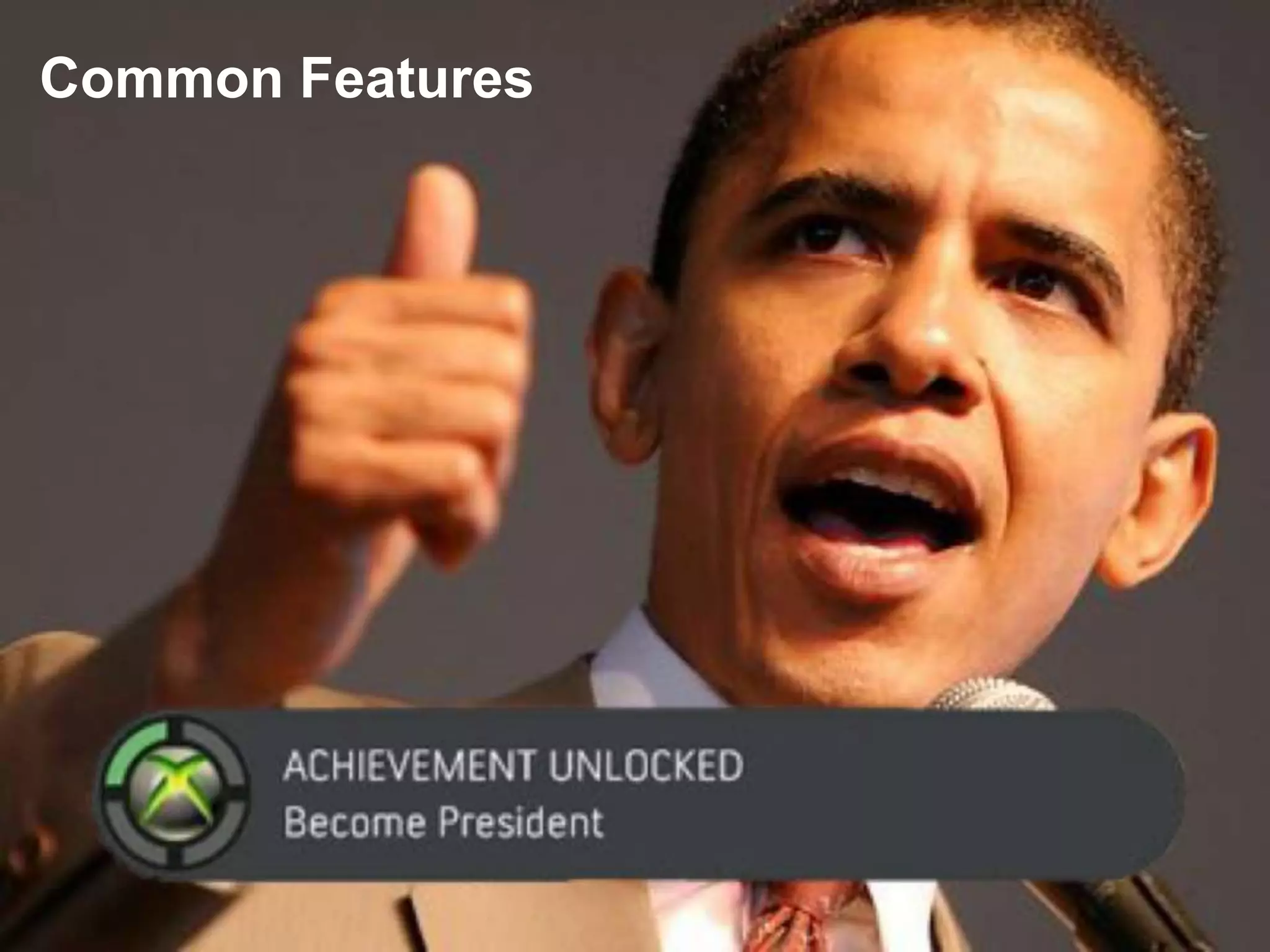
Common Features
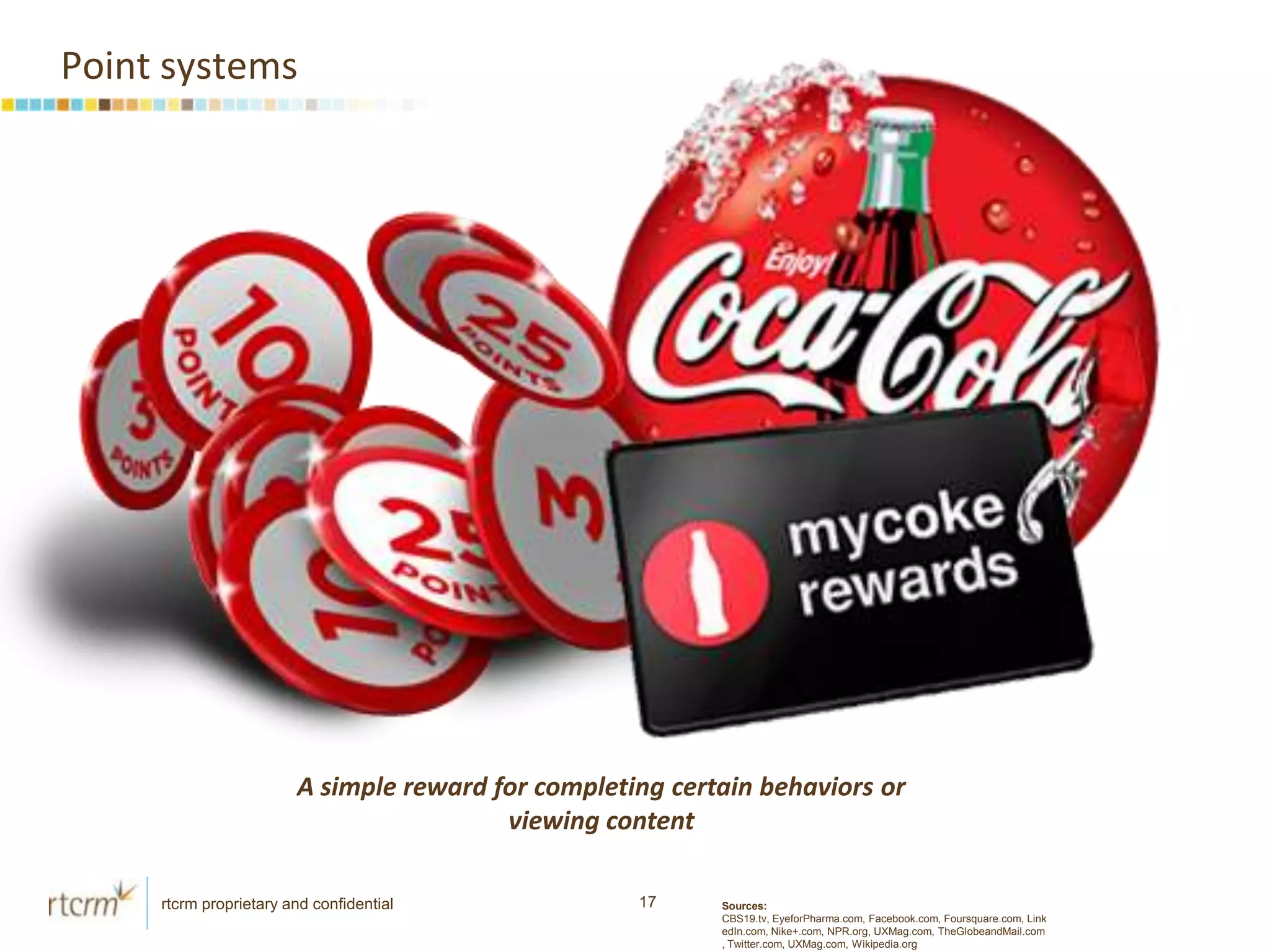
Point systemsA simple reward for completing certain behaviors or viewing contentSources: CBS19.tv, EyeforPharma.com, Facebook.com, Foursquare.com, LinkedIn.com, Nike+.com, NPR.org, UXMag.com, TheGlobeandMail.com, Twitter.com, UXMag.com, Wikipedia.org
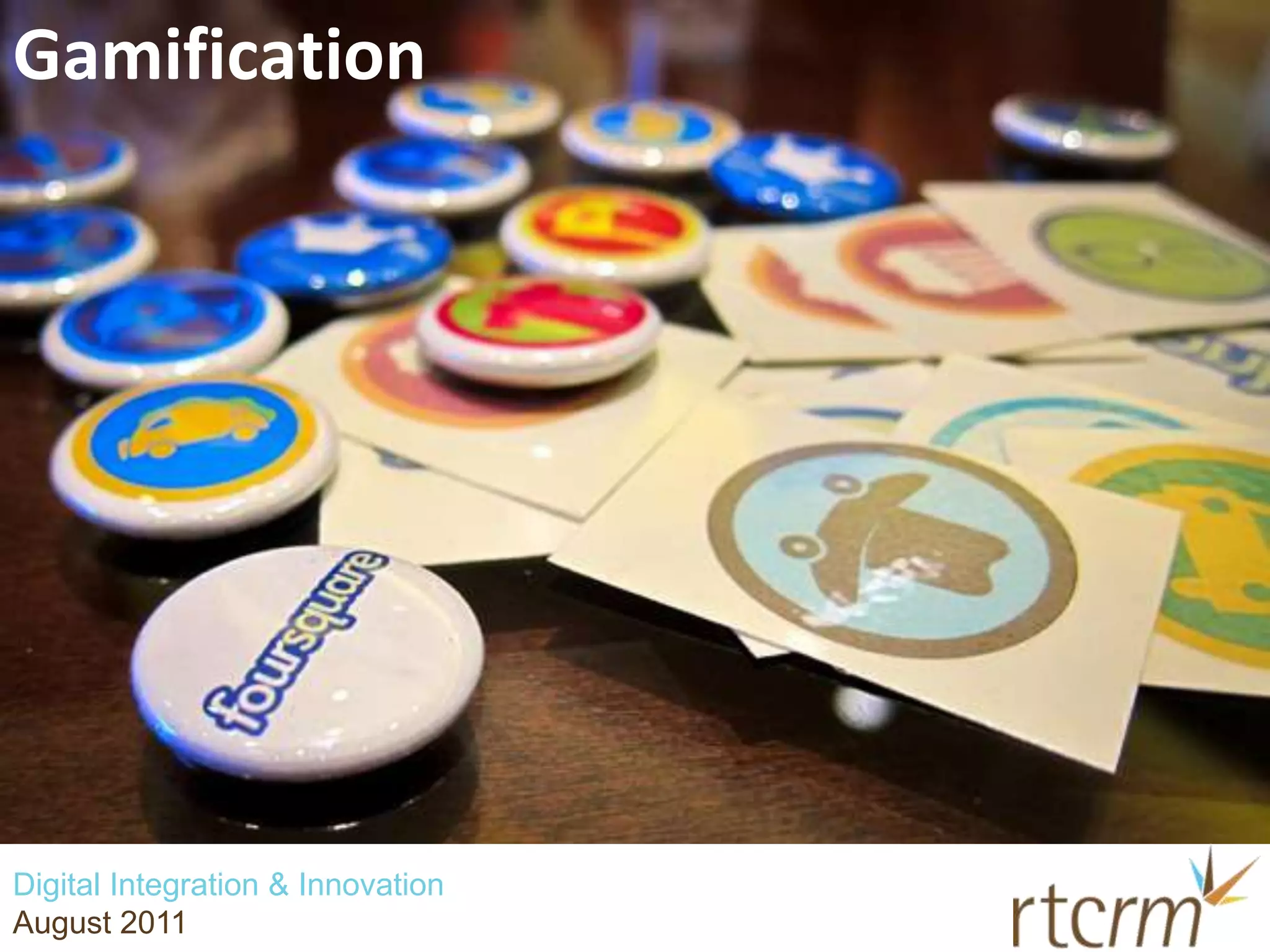
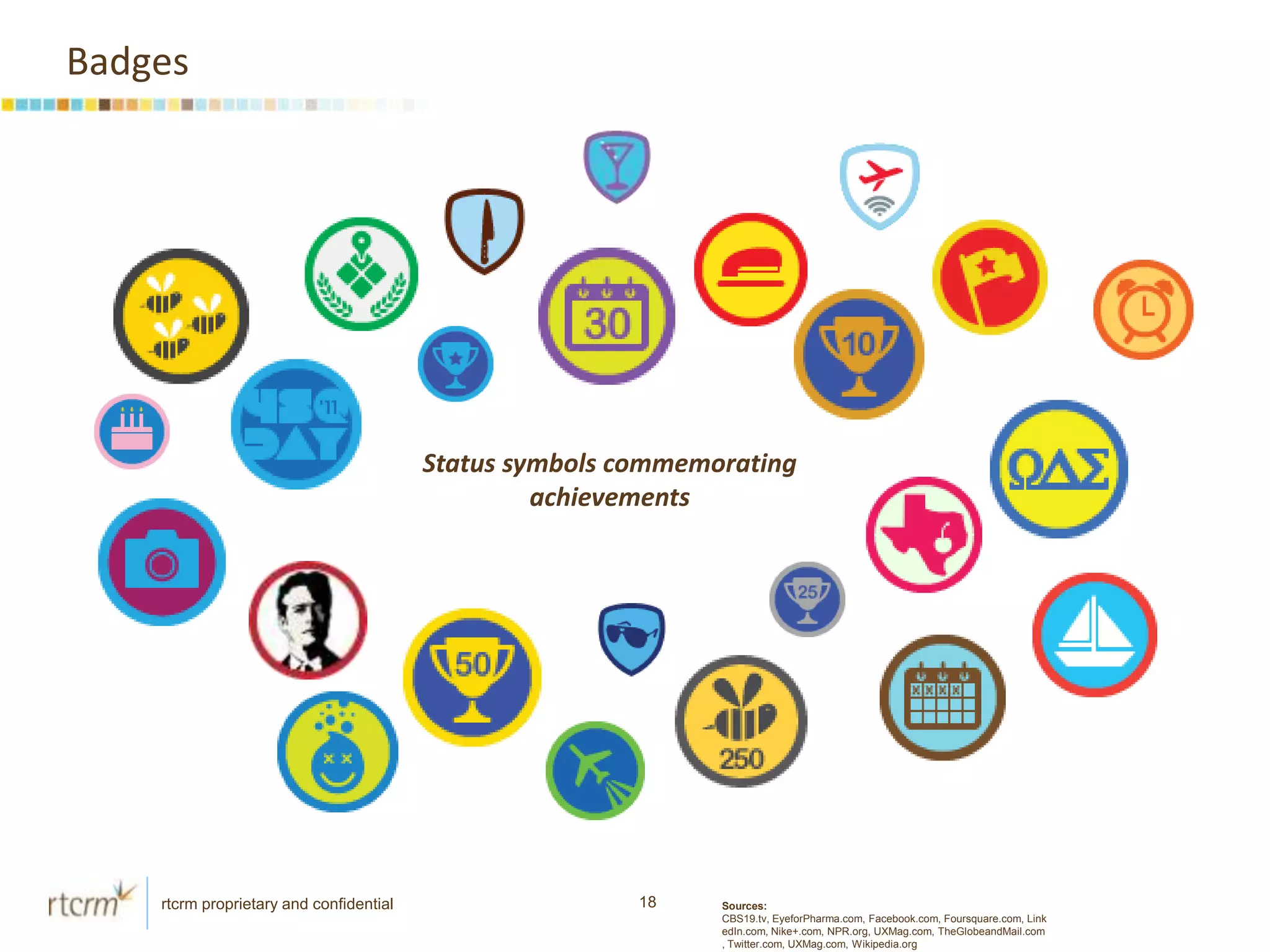
Badges Status symbols commemorating achievementsSources: CBS19.tv, EyeforPharma.com, Facebook.com, Foursquare.com, LinkedIn.com, Nike+.com, NPR.org, UXMag.com, TheGlobeandMail.com, Twitter.com, UXMag.com, Wikipedia.org

Gamification Brownbag

  • 1.
  • 2.
  • 3.
  • 4.
    Of people betweenthe ages of 6 and 4472% play video gamesFor an average of 18+hrs/wk
  • 5.
    solving virtual problems5.93billion yearsWoW players have collectively spent
  • 6.
  • 7.
    The use ofgameplay elements in non-game applicationsExecuted by: Adding game mechanics, generally as a reward system, to an existing platform For purposes like:Education and AwarenessDeveloping and Encouraging BehaviorsMotivating Continued UseSources: CBS19.tv, EyeforPharma.com, Facebook.com, Foursquare.com, LinkedIn.com, Nike+.com, NPR.org, UXMag.com, TheGlobeandMail.com, Twitter.com, UXMag.com, Wikipedia.org
  • 8.
  • 9.
    The psychology behindGamification“Gamification works to satisfy some of the most fundamental human desires: recognition and reward, status, achievement, competition and collaboration…”Major obstacles to behavior:Gap between performance and results
  • 10.
    Lack of immediatefeedbackOvercome these obstacles by:Tapping into innate desires for:
  • 11.
  • 12.
  • 13.
  • 14.
    Updating players atshort term intervalsDouglas Karr, MarketingTech BlogSources: CBS19.tv, EyeforPharma.com, Facebook.com, Foursquare.com, LinkedIn.com, Nike+.com, NPR.org, UXMag.com, TheGlobeandMail.com, Twitter.com, UXMag.com, Wikipedia.org
  • 15.
    Motivation through reward“Ifyou give people money, it often messes up their mentalities and encourages cheating…But if you challenge people and reward them for good behavior, it gives them self-esteem.”Esther Dyson,Investor – HealthCare 2.0
  • 16.
    Motivation through rewardShort-termrewards that encourage long-term participation Sources: CBS19.tv, EyeforPharma.com, Facebook.com, Foursquare.com, LinkedIn.com, Nike+.com, NPR.org, UXMag.com, TheGlobeandMail.com, Twitter.com, UXMag.com, Wikipedia.org
  • 17.
    Motivation through competition“Employeescould contest each other to reach various statuses first, or they can motivate wellness initiative peers to get healthier by gifting an online calorie counter.”William Ng, Incentive Mag
  • 18.
    Motivation through competitionEverybodywants to be the bestEncourage increased engagement through:Ranking
  • 19.
    LevelingFuel the willto participate by:Showing users what others are doing
  • 20.
    Illustrating how closethey are to a milestoneAdd a “physical” componentCollectibles can be used for bragging rights Sources: CBS19.tv, EyeforPharma.com, Facebook.com, Foursquare.com, LinkedIn.com, Nike+.com, NPR.org, UXMag.com, TheGlobeandMail.com, Twitter.com, UXMag.com, Wikipedia.org
  • 21.
    Motivation through interactivity“it’sabout creating a long-term engagement with the consumer that moves them along what we call, ‘the player journey’ – the long-term emotional engagement of the user with the brand.”Gabe Zichermann,“Game-Based Marketing”
  • 22.
    Motivation through interactivitySpeakdirectly to the customers Congratulate them on their accomplishments encourage them to keep going.
  • 23.
    As they beginto feel connected, their participation should increase. Sources: CBS19.tv, EyeforPharma.com, Facebook.com, Foursquare.com, LinkedIn.com, Nike+.com, NPR.org, UXMag.com, TheGlobeandMail.com, Twitter.com, UXMag.com, Wikipedia.org
  • 24.
  • 25.
    Point systemsA simplereward for completing certain behaviors or viewing contentSources: CBS19.tv, EyeforPharma.com, Facebook.com, Foursquare.com, LinkedIn.com, Nike+.com, NPR.org, UXMag.com, TheGlobeandMail.com, Twitter.com, UXMag.com, Wikipedia.org
  • 26.
    Badges Status symbolscommemorating achievementsSources: CBS19.tv, EyeforPharma.com, Facebook.com, Foursquare.com, LinkedIn.com, Nike+.com, NPR.org, UXMag.com, TheGlobeandMail.com, Twitter.com, UXMag.com, Wikipedia.org
  • 27.
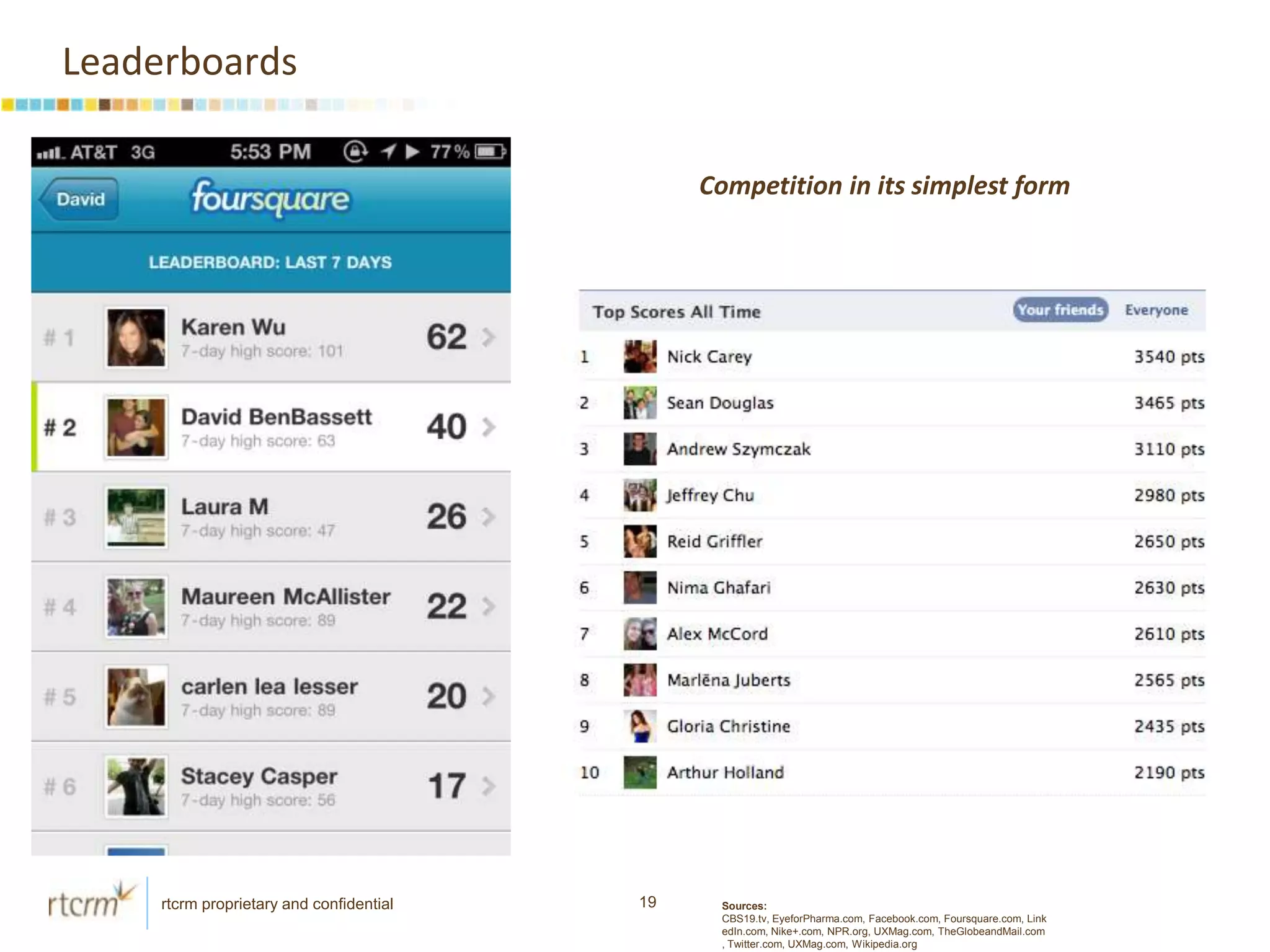
    Leaderboards Competition inits simplest formSources: CBS19.tv, EyeforPharma.com, Facebook.com, Foursquare.com, LinkedIn.com, Nike+.com, NPR.org, UXMag.com, TheGlobeandMail.com, Twitter.com, UXMag.com, Wikipedia.org
  • 28.
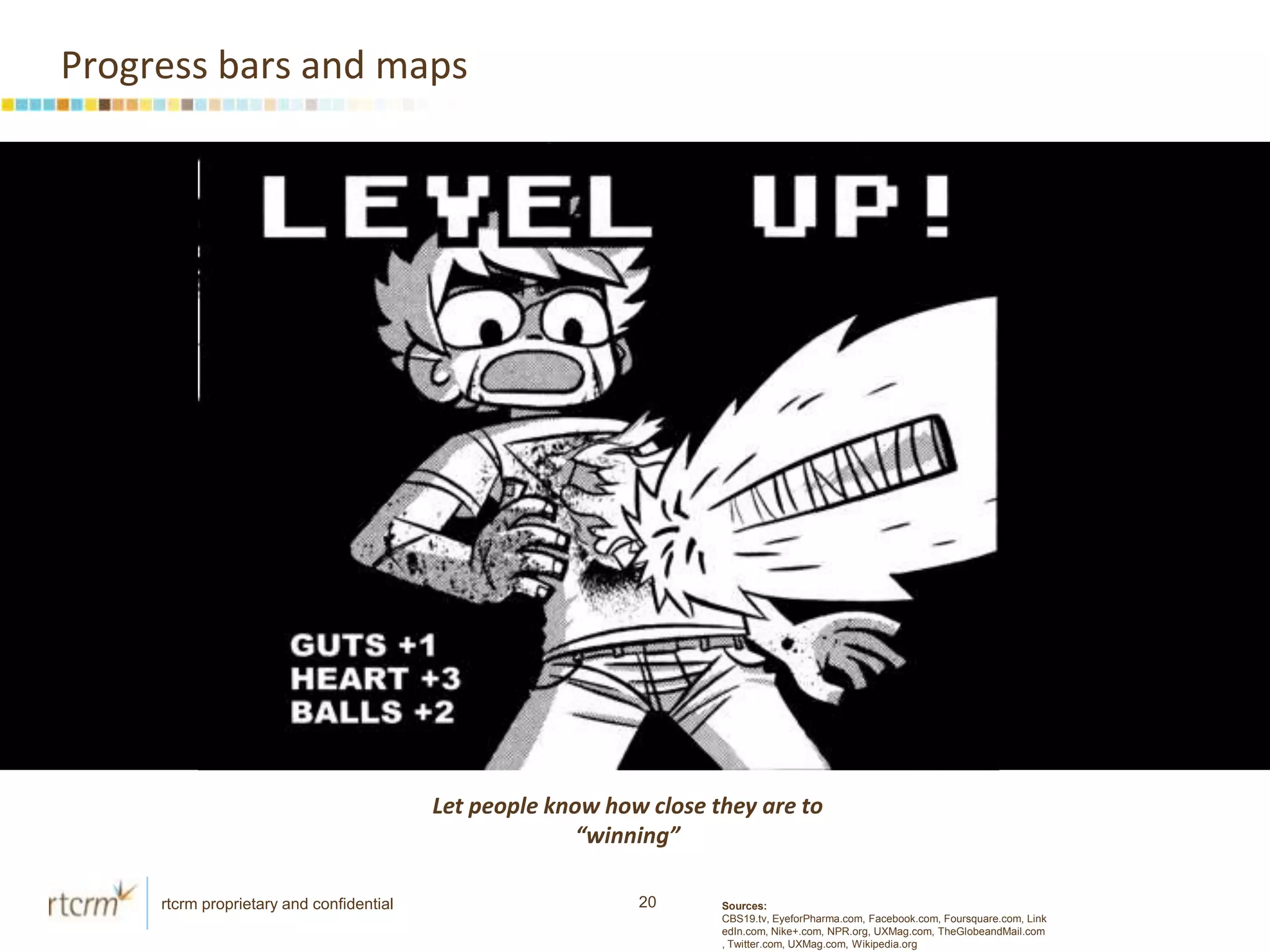
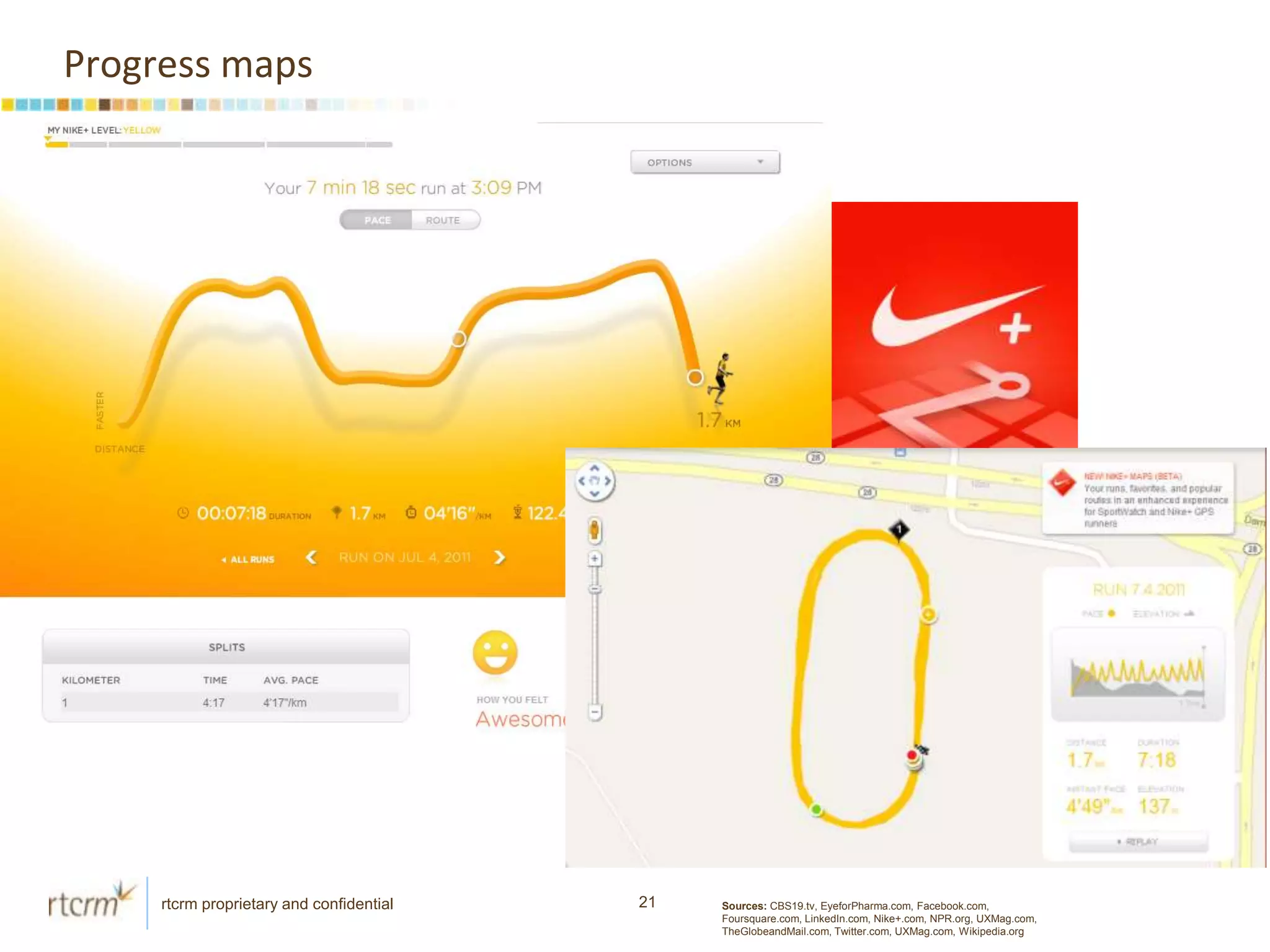
    Progress bars andmapsLet people know how close they are to “winning”Sources: CBS19.tv, EyeforPharma.com, Facebook.com, Foursquare.com, LinkedIn.com, Nike+.com, NPR.org, UXMag.com, TheGlobeandMail.com, Twitter.com, UXMag.com, Wikipedia.org
  • 29.
    Progress mapsSources: CBS19.tv,EyeforPharma.com, Facebook.com, Foursquare.com, LinkedIn.com, Nike+.com, NPR.org, UXMag.com, TheGlobeandMail.com, Twitter.com, UXMag.com, Wikipedia.org
  • 30.
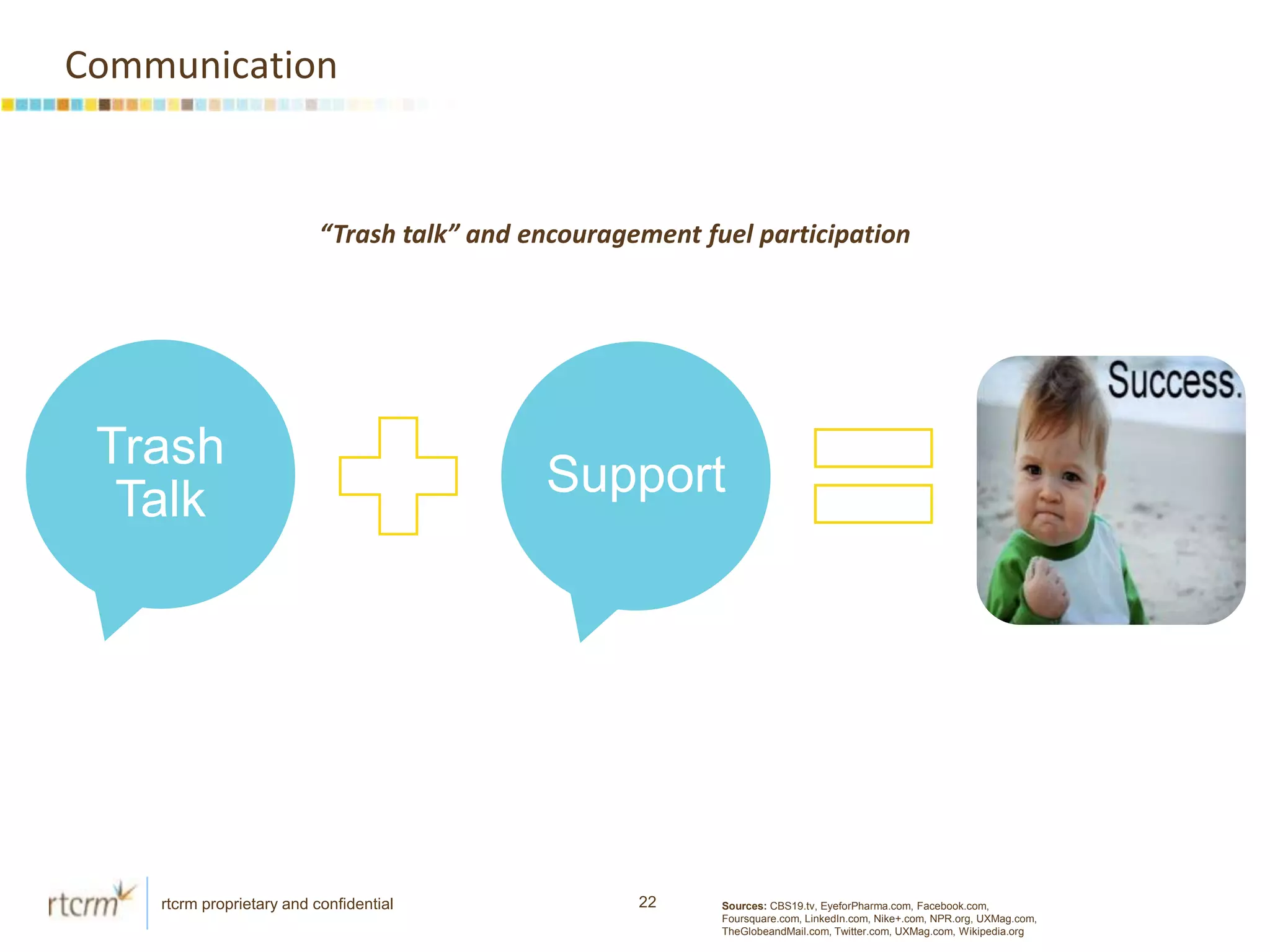
    Communication “Trash talk”and encouragement fuel participationSources: CBS19.tv, EyeforPharma.com, Facebook.com, Foursquare.com, LinkedIn.com, Nike+.com, NPR.org, UXMag.com, TheGlobeandMail.com, Twitter.com, UXMag.com, Wikipedia.org
  • 31.
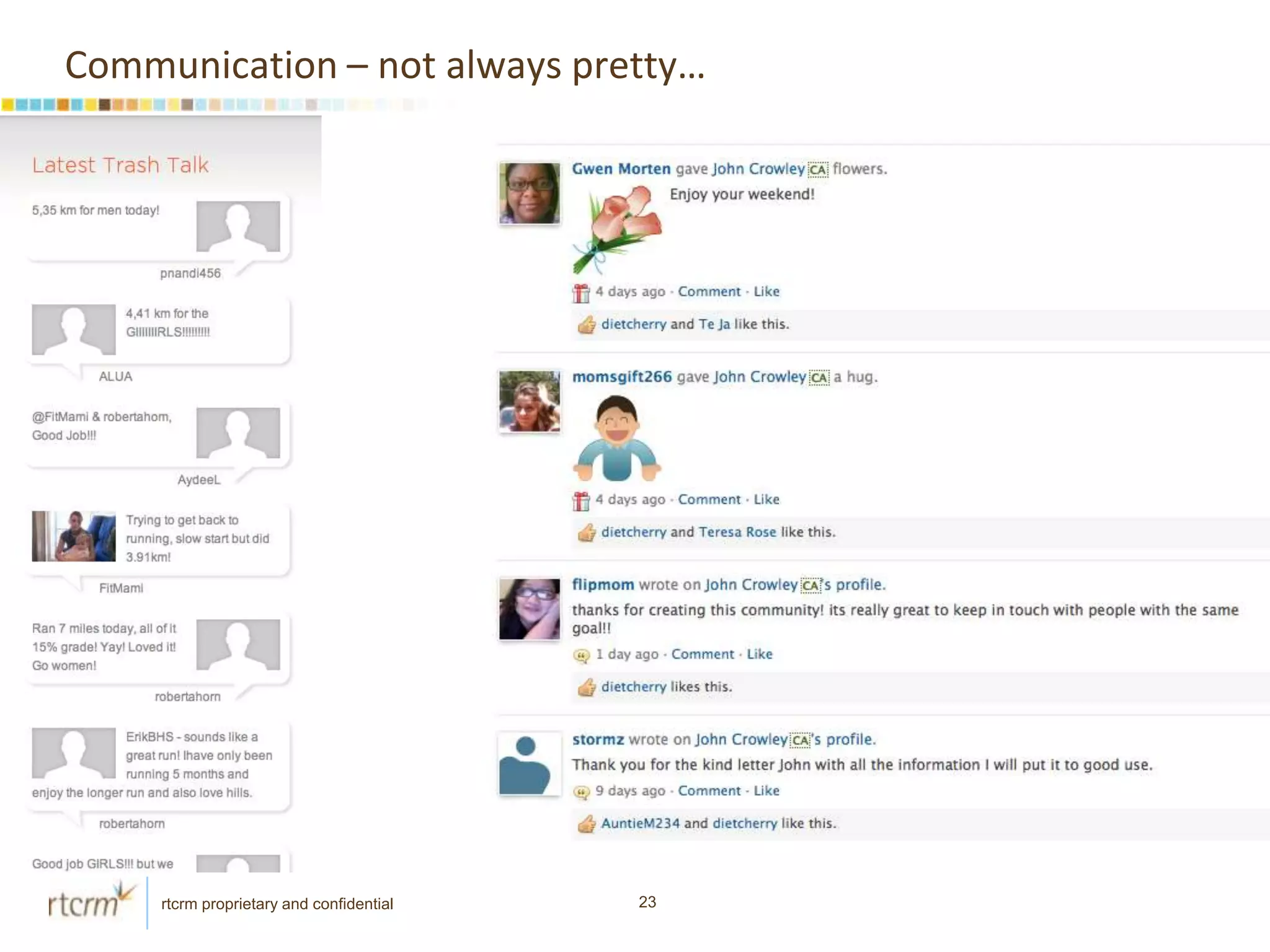
    Communication – notalways pretty…
  • 32.
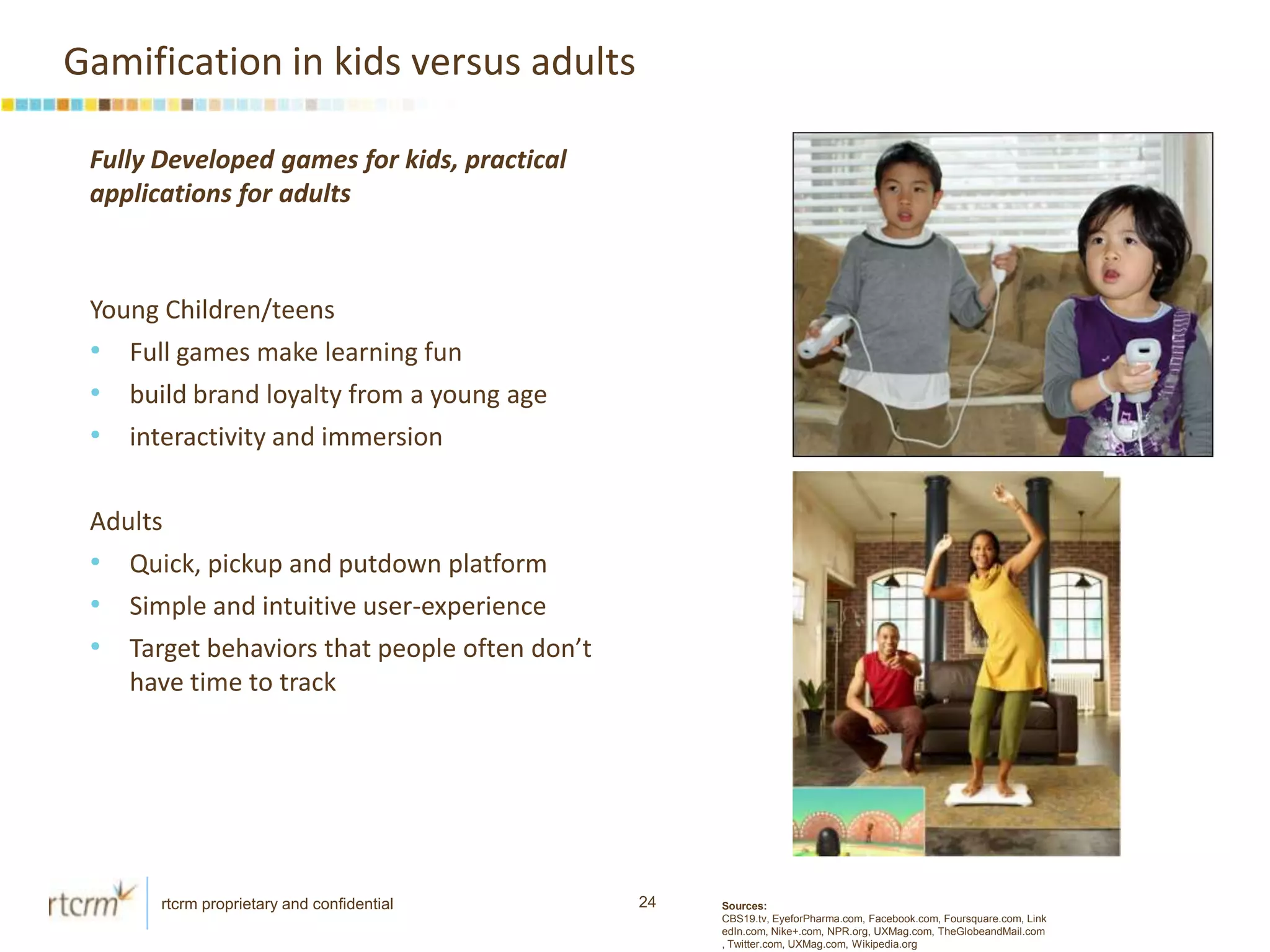
    Gamification in kidsversus adultsFully Developed games for kids, practical applications for adultsYoung Children/teensFull games make learning fun
  • 33.
    build brand loyaltyfrom a young age
  • 34.
    interactivity and immersionAdultsQuick,pickup and putdown platform
  • 35.
    Simple and intuitiveuser-experience
  • 36.
    Target behaviors thatpeople often don’t have time to track Sources: CBS19.tv, EyeforPharma.com, Facebook.com, Foursquare.com, LinkedIn.com, Nike+.com, NPR.org, UXMag.com, TheGlobeandMail.com, Twitter.com, UXMag.com, Wikipedia.org

Editor's Notes

  • #8 Gamification is a recent trend that stems from the popularity and replay value of console and social videogames. Simply put, gamification is the process of figuring out what elements of games keep players hooked over time and then applying those to regular tasks, scenarios, and problems – essentially turning the activity into a game.
  • #10 Gamification is all about motivating and encouraging continued behavior. However, there are two major obstacles to getting people to behave in a certain wayTo overcome these obstacles gamification uses the elements of games that tap into a person’s innate desire forCombined with the ease of digital communication, companies can easily update their players at short term progress intervals so that they realize the value in the product and come back for more.
  • #12 Gamification employs a system of short-term rewards that encourage long-term participation. Users are immediately notified and rewarded for an action whether it’s logging exercise, registering for a site, or checking-in to a location. These results trigger a response in the mind of the user that says “behavior x actually meant something, and I made progress”. Rewards can take many forms but when executed in sync with user activity they reinforce the behavior.
  • #14 Some of today’s best examples of gamification play toward people’s innate competitive nature. By pitting users against each other, gamification taps into our drive to be the best. Elements like ranking, and leveling can encourage increased engagement. Showing users what others are doing or illustrating how close they are to a milestone fuels their will to participate in a way that is fun for them on a deeper level.Popular console or social games often create collectibles that users can use for bragging rights. This reinforces the desire to be number-one with a “physical” component; something for users to show off to one another.
  • #16 When I say interactivity I’m not talking about the interface. Gamification allows the brand to speak directly to the customers (even if the messages are standard) and congratulate them on their accomplishments or encourage them to keep going. The feeling that the brand is following your progress and cares on a person by person basis resonates with consumers. As they begin to feel connected, their participation should increase. In time, the connection they feel becomes loyalty and the reinforced behaviors they had been acting out turn into habitual ones motivated by a desire to be a brand advocate.
  • #18 Points are generally applied to all actions large and small but do not have to be distributed equally. A higher number of points should be awarded for the actions you are trying to encourage or reinforce.Make it easy for users to track their points, that way they can be constantly aware how close they are to a goal, which inspires more activityPoints can be redeemable for other rewards, but often times just accumulating them is enough. For companies that sell a product, points can be a type of virtual currency that users can exchange for discounts
  • #19 Badges are awarded at user milestones, for example completing a certain number of tasks, making a significant improvement, or simply exploring a website.Badges are displayed on a user profile as achievements and used for bragging rights among other usersLike points, badges can also be used to unlock new features or deals. “Achieve this badge to earn X”
  • #20 Leaderboards rank members based on various attributes (points, participation, number of connections, etc)Ranking users relative to others targets a person’s innate desire to be the best. The goal is to make activity competitive and inspire users to participate more in order to rise up the ranksVirtually all fantasy sports sites have some type of leaderboard to show which team is in the lead. Showing a user that he is only a few points away from the next competitor spurs activity.
  • #21 Tracking users progress helps them visualize their accomplishments and encourages them to finish their task. In certain applications mapping out how a user has improved over time can be interactive and motivatingThis can become a “leveling” system where users can earn different titles based on how much they have done. Pair this with the leaderboards to really inspire competitionGive users tips on things they can do to increase their progress. Small (but important) actions that earn quick points
  • #23 Users see a lot of value in being able to communicate with others on the platform or via social mediaCommunicating can be both a way of boasting one’s own accomplishments and building self-esteem or keeping track of the competition and knowing when to pick up the paceCompetitive jibes fuel people to improve and increase their activity, while support and encouragement help build self-esteem and reinforce the benefits of the behavior
  • #25 Young children and teens are a good target for branded or unbranded games that stress education and awareness. Developing a full game for this market helps make the learning fun and builds brand loyalty from a young age. For this age group, a game provides interactivity and immersion that adds to the experience. Adults don’t have the time to become immersed into a deep experience. Practical tools with competitive elements and a reward system add value for the older age groups. Consider features like:Quick, pickup and putdown platform (play for five minutes here or there)Simple and intuitive user-experienceTarget behaviors that people often don’t have time to track like fitness, diet, schedules, etc.