Gamification 
Colin Simpson - CIT 
MoodlePosium 2012 
@gamerlearner
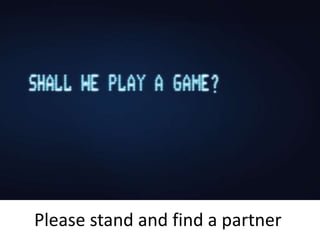
Please stand and find a partner
Concept overview 
• Gamification is about adding game mechanics 
and elements to things that aren’t generally 
considered to be games. 
• Points, leaderboards, badges, collection 
missions, appointment dynamics, customising 
avatars, rewards, rules, voluntary play, 
collaboration, competition, exploration, boss 
fights,
Why gamify? 
• Problem based learning 
• Stimulating emotions 
• Pedagogically sound 
• Fiero and Flow 
• Learning from mistakes 
• Motivation 
• Enlivening dull content
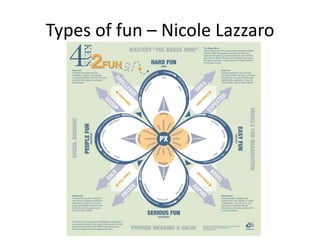
Types of fun – Nicole Lazzaro
Core principles 
• Motivation – feelings of competence, of being 
in control, that the outcome matters
Core principles 
• Rewards
Gamification Design Framework 
• Kevin Werbach – Associate Professor at The 
Wharton School, University of Pennsylvania 
• For The Win: How Game Thinking Can 
Revolutionise Your Business – Wharton Digital 
Press
Design process 
• Define business objectives. Why are you 
gamifying? How do you hope to benefit your 
business, or achieve some other goal such as 
motivating people to change their behavior?
Design process 
• Delineate target behaviors. What do you want 
your players to do? And what are the metrics 
that will allow you to measure them?
Design process 
• Describe your players. Who are the people 
who will be participating in your gamified 
activity? What is their relationship to you?
Design process 
• Devise your activity loops. Explore in greater 
detail how you will motivate your players 
using engagement and progression loops. 
First, describe the kinds of feedback your 
system will offer the players to encourage 
further action, and explain how this feedback 
will work to motivate the players
Design process 
• Don't forget the fun. Although more abstract 
than some of the other elements, ensuring 
that your gamified system is fun remains as 
important as the other aspects
Design process 
• Deploy the appropriate tools. By this point, 
you've probably identified several of the game 
elements and other specifics of your gamified 
system. If you haven’t already, you should 
explain in detail what your system would look 
like. What are some of the game elements 
involved and what will the experience be like 
for the players?
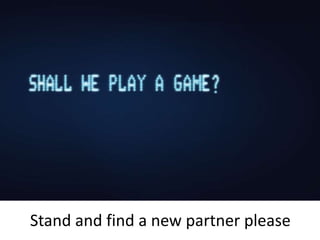
Stand and find a new partner please
Practical Examples 
• Moodle Dailies
Practical Examples 
• PLANE – Professional Learning Anywhere 
anytime, a Network for Educators
Moodle tools and plugins 
• Conditional Release 
• Stamps 
• GSB Medals 
• Mozilla OpenBadges
Links and references 
• Shall we play a game - http://fav.me/d2sl0es 
• Four types of fun - http://xeodesign.com/4k2f/4k2f.jpg

Gamification in education

  • 1.
    Gamification Colin Simpson- CIT MoodlePosium 2012 @gamerlearner
  • 2.
    Please stand andfind a partner
  • 3.
    Concept overview •Gamification is about adding game mechanics and elements to things that aren’t generally considered to be games. • Points, leaderboards, badges, collection missions, appointment dynamics, customising avatars, rewards, rules, voluntary play, collaboration, competition, exploration, boss fights,
  • 4.
    Why gamify? •Problem based learning • Stimulating emotions • Pedagogically sound • Fiero and Flow • Learning from mistakes • Motivation • Enlivening dull content
  • 5.
    Types of fun– Nicole Lazzaro
  • 6.
    Core principles •Motivation – feelings of competence, of being in control, that the outcome matters
  • 7.
  • 8.
    Gamification Design Framework • Kevin Werbach – Associate Professor at The Wharton School, University of Pennsylvania • For The Win: How Game Thinking Can Revolutionise Your Business – Wharton Digital Press
  • 9.
    Design process •Define business objectives. Why are you gamifying? How do you hope to benefit your business, or achieve some other goal such as motivating people to change their behavior?
  • 10.
    Design process •Delineate target behaviors. What do you want your players to do? And what are the metrics that will allow you to measure them?
  • 11.
    Design process •Describe your players. Who are the people who will be participating in your gamified activity? What is their relationship to you?
  • 12.
    Design process •Devise your activity loops. Explore in greater detail how you will motivate your players using engagement and progression loops. First, describe the kinds of feedback your system will offer the players to encourage further action, and explain how this feedback will work to motivate the players
  • 13.
    Design process •Don't forget the fun. Although more abstract than some of the other elements, ensuring that your gamified system is fun remains as important as the other aspects
  • 14.
    Design process •Deploy the appropriate tools. By this point, you've probably identified several of the game elements and other specifics of your gamified system. If you haven’t already, you should explain in detail what your system would look like. What are some of the game elements involved and what will the experience be like for the players?
  • 15.
    Stand and finda new partner please
  • 16.
    Practical Examples •Moodle Dailies
  • 17.
    Practical Examples •PLANE – Professional Learning Anywhere anytime, a Network for Educators
  • 18.
    Moodle tools andplugins • Conditional Release • Stamps • GSB Medals • Mozilla OpenBadges
  • 19.
    Links and references • Shall we play a game - http://fav.me/d2sl0es • Four types of fun - http://xeodesign.com/4k2f/4k2f.jpg