GALACTOSEMIA
• Galactose, a sugar in human and bovine milk and milk products as lactose
Hydrolyzed to glucose and galactose by the intestinal enzyme lactase
• The galactose then is converted to glucose for use as an energy source
• Free galactose is present in some fruits and vegetables, such as tomatoes,
Brussels sprouts, bananas, and apples
• Altered metabolism of galactose caused by deficient enzyme activity or impaired
liver function results in elevated blood galactose concentration and the condition
is known as galactosemia
• Alternative names:
Galactose-1-phosphate uridyl transferase deficiency – GALT – Classic galactosemia (I)
Galactokinase deficiency - GALK – Galactosemia II
Galactose-6-phosphate epimerase deficiency – GALE – Galactosemia III
• Incidence 1 of every 60, 000 births
• Galactosemia results from deficiencies of three different enzymes
each with a distinct phenotype
• Apart from the deficiency of these 3 enzymes, abnormal liver function
also results in galactosemia
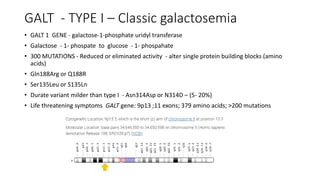
GALT - TYPE I – Classic galactosemia
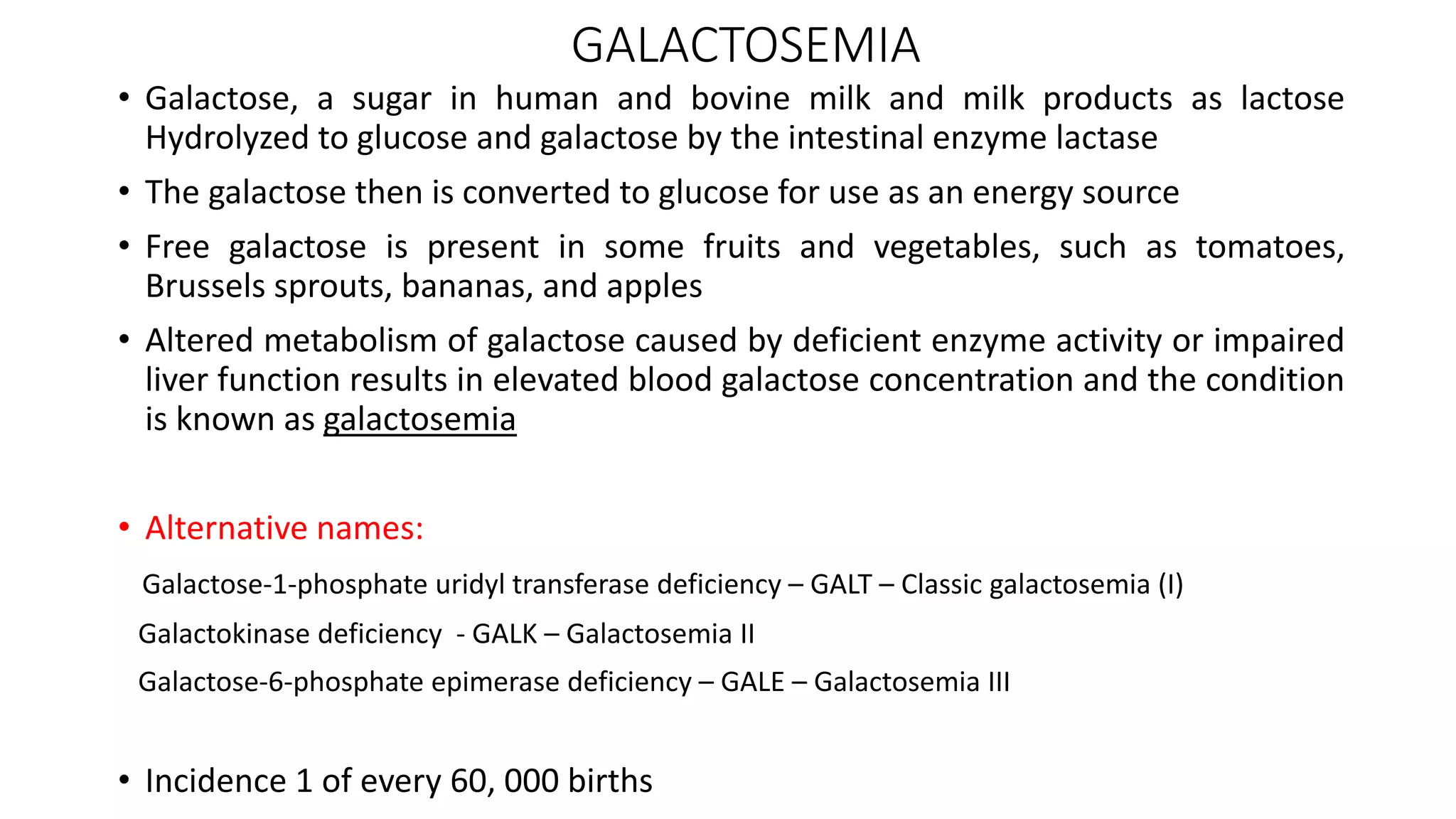
• GALT 1 GENE - galactose-1-phosphate uridyl transferase
• Galactose - 1- phospate to glucose - 1- phospahate
• 300 MUTATIONS - Reduced or eliminated activity - alter single protein building blocks (amino
acids)
• Gln188Arg or Q188R
• Ser135Leu or S135Ln
• Durate variant milder than type I - Asn314Asp or N314D – (5- 20%)
• Life threatening symptoms GALT gene: 9p13 ;11 exons; 379 amino acids; >200 mutations
Symptoms
food - no metabolism
no energy
weight gain less
no growth
yellowing of skin and whitening of the eyes
liver damage
abnormal bleeding
bacterial infection (sepsis)
cataract
speech difficulty
intellectual disability
premature ovarian problem
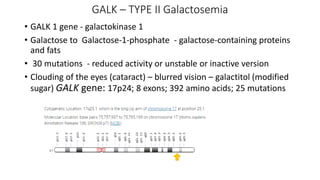
GALK – TYPE II Galactosemia
• GALK 1 gene - galactokinase 1
• Galactose to Galactose-1-phosphate - galactose-containing proteins
and fats
• 30 mutations - reduced activity or unstable or inactive version
• Clouding of the eyes (cataract) – blurred vision – galactitol (modified
sugar) GALK gene: 17p24; 8 exons; 392 amino acids; 25 mutations
GALE deficiency – type III –
• Uridine diphosphate galactose 4-epimerase (GALE) deficiency — Uridine
diphosphate galactose-4-epimerase (UDP galactose-4-epimerase, GALE) converts
UDP galactose to UDP glucose.
• Glucose very important – energy source
• Reverse reaction - UDP glucose to UDP galactose (chemical signaling, building
cellular structures, transporting molecules, and producing energy)
• 20 mutations - alter single protein building block
• Loss of enzyme activity – galactose builds up - damage tissues and organs
• Cataract , intellectual disability, damage to liver, brain and kidney
• Most patients with GALE (or epimerase) deficiency, the defect is localized to red
blood cells – peripheral form
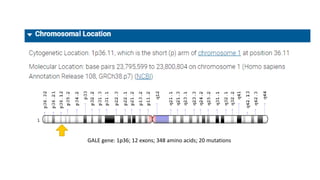
GALE gene: 1p36; 12 exons; 348 amino acids; 20 mutations
Symtoms
• Symptoms
• Infants with galactosemia can develop symptoms in the first few days of life if
they eat formula or breast milk that contains lactose. The symptoms may be due
to a serious blood infection with the bacteria E. coli .
• Convulsions
• Irritability
• Lethargy
• Poor feeding (baby refuses to eat formula containing milk)
• Poor weight gain
• Yellow skin and whites of the eyes (jaundice)
• Vomiting
Laboratory diagnosis
• Non-galactosemic: 5-49 mcg/g of hemoglobin (<1 mg/dL)
• Galactosemic on galactose restricted diet: 80-125 mcg/g of
hemoglobin (1-4 mg/dL)
• Galactosemic on unrestricted diet: >125 mcg/g of hemoglobin (>4
mg/dL)
Incurable
• Strict avoidance of all sources of galactose
• Diet - avoid milk, milk products
• Milk
• Casein
• Lactose (milk sugar)
• Dry milk solids
• Curds
• Whey
• Avoidance of non-milk products
• Fermented soy products
• Legumes
• Organ meats
• Hydrolyzed protein
• Treatment
• People with this condition must avoid all milk, milk-containing
products (including dry milk), and other foods that contain galactose
for life. It is essential to read product labels and be an informed
consumer.
• Infants can be fed with:
• Soy formula
• Meat-based formula or Nutramigen (a protein hydrolysate formula)
• Another lactose-free formula
• Calcium supplements are recommended.
• Researchers at Nationwide Children's Hospital and the University of
Utah have developed a method to treat Galactosemia disease by
delivering a codon-optimized version of the human galactose-1-
phosphate uridylyltransferase gene (GALT) to patient cells which
produces a functional GALT protein
• The vector produces high levels of GALT protein and is efficiently
delivered to most cells of the patient using Adeno-associated virus

Galactosemia

  • 1.
    GALACTOSEMIA • Galactose, asugar in human and bovine milk and milk products as lactose Hydrolyzed to glucose and galactose by the intestinal enzyme lactase • The galactose then is converted to glucose for use as an energy source • Free galactose is present in some fruits and vegetables, such as tomatoes, Brussels sprouts, bananas, and apples • Altered metabolism of galactose caused by deficient enzyme activity or impaired liver function results in elevated blood galactose concentration and the condition is known as galactosemia • Alternative names: Galactose-1-phosphate uridyl transferase deficiency – GALT – Classic galactosemia (I) Galactokinase deficiency - GALK – Galactosemia II Galactose-6-phosphate epimerase deficiency – GALE – Galactosemia III • Incidence 1 of every 60, 000 births
  • 4.
    • Galactosemia resultsfrom deficiencies of three different enzymes each with a distinct phenotype • Apart from the deficiency of these 3 enzymes, abnormal liver function also results in galactosemia
  • 5.
    GALT - TYPEI – Classic galactosemia • GALT 1 GENE - galactose-1-phosphate uridyl transferase • Galactose - 1- phospate to glucose - 1- phospahate • 300 MUTATIONS - Reduced or eliminated activity - alter single protein building blocks (amino acids) • Gln188Arg or Q188R • Ser135Leu or S135Ln • Durate variant milder than type I - Asn314Asp or N314D – (5- 20%) • Life threatening symptoms GALT gene: 9p13 ;11 exons; 379 amino acids; >200 mutations
  • 6.
    Symptoms food - nometabolism no energy weight gain less no growth yellowing of skin and whitening of the eyes liver damage abnormal bleeding bacterial infection (sepsis) cataract speech difficulty intellectual disability premature ovarian problem
  • 7.
    GALK – TYPEII Galactosemia • GALK 1 gene - galactokinase 1 • Galactose to Galactose-1-phosphate - galactose-containing proteins and fats • 30 mutations - reduced activity or unstable or inactive version • Clouding of the eyes (cataract) – blurred vision – galactitol (modified sugar) GALK gene: 17p24; 8 exons; 392 amino acids; 25 mutations
  • 8.
    GALE deficiency –type III – • Uridine diphosphate galactose 4-epimerase (GALE) deficiency — Uridine diphosphate galactose-4-epimerase (UDP galactose-4-epimerase, GALE) converts UDP galactose to UDP glucose. • Glucose very important – energy source • Reverse reaction - UDP glucose to UDP galactose (chemical signaling, building cellular structures, transporting molecules, and producing energy) • 20 mutations - alter single protein building block • Loss of enzyme activity – galactose builds up - damage tissues and organs • Cataract , intellectual disability, damage to liver, brain and kidney • Most patients with GALE (or epimerase) deficiency, the defect is localized to red blood cells – peripheral form
  • 9.
    GALE gene: 1p36;12 exons; 348 amino acids; 20 mutations
  • 10.
    Symtoms • Symptoms • Infantswith galactosemia can develop symptoms in the first few days of life if they eat formula or breast milk that contains lactose. The symptoms may be due to a serious blood infection with the bacteria E. coli . • Convulsions • Irritability • Lethargy • Poor feeding (baby refuses to eat formula containing milk) • Poor weight gain • Yellow skin and whites of the eyes (jaundice) • Vomiting
  • 11.
    Laboratory diagnosis • Non-galactosemic:5-49 mcg/g of hemoglobin (<1 mg/dL) • Galactosemic on galactose restricted diet: 80-125 mcg/g of hemoglobin (1-4 mg/dL) • Galactosemic on unrestricted diet: >125 mcg/g of hemoglobin (>4 mg/dL)
  • 12.
    Incurable • Strict avoidanceof all sources of galactose • Diet - avoid milk, milk products • Milk • Casein • Lactose (milk sugar) • Dry milk solids • Curds • Whey • Avoidance of non-milk products • Fermented soy products • Legumes • Organ meats • Hydrolyzed protein
  • 13.
    • Treatment • Peoplewith this condition must avoid all milk, milk-containing products (including dry milk), and other foods that contain galactose for life. It is essential to read product labels and be an informed consumer. • Infants can be fed with: • Soy formula • Meat-based formula or Nutramigen (a protein hydrolysate formula) • Another lactose-free formula • Calcium supplements are recommended.
  • 14.
    • Researchers atNationwide Children's Hospital and the University of Utah have developed a method to treat Galactosemia disease by delivering a codon-optimized version of the human galactose-1- phosphate uridylyltransferase gene (GALT) to patient cells which produces a functional GALT protein • The vector produces high levels of GALT protein and is efficiently delivered to most cells of the patient using Adeno-associated virus