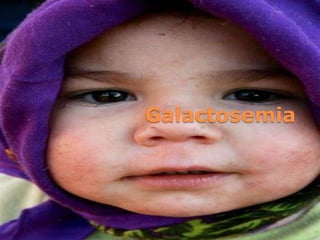
Galactosemia
Groups that have a high risk for
Galactosemia
 Galactosemia occurs in babies that do no
have enough of the GALT enzyme in there
body.
 This mutation affects all people, but
people with Romani decent have a higher
risk of getting this mutation.
The Symptoms and the effects of
Galactosemia are
 Failure to gain weight or grow in length
 Poor feeding and poor suck
 Lethargy
 Irritability
 Low blood sugar, called hypoglycemia
 Seizures
 Enlarged liver that does not work properly
 Jaundice (yellow color to the skin or whites of the
eyes)
 Serious blood infections that could lead to shock and
death
 Early cataracts which occur in about 10% of children
What happens in Galactosemia
 What happens in Galactosemia is that
people have problem the sugar called
Galactose from the food they eat. The
galactose does not break down and it
builds up in there blood.
Mutation
 This disease most commonly is caused by
a mutation in the gene called GALT. This
is mutation is know as a point mutation,
in which the amino acid is changed.
Explanation of how mutations
alter specific proteins.
 The GALT enzyme makes instructions for
an enzyme called galactose-1-phosphate
uridylyltransferase. If the GALT enzyme
was to stop function then Galactosemia
occurs because the body is then no able
to brake down galactose.
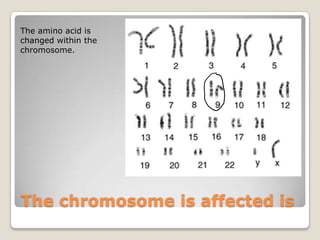
The chromosome is affected is
The amino acid is
changed within the
chromosome.
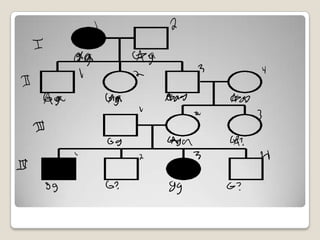
Autosomal Recessive
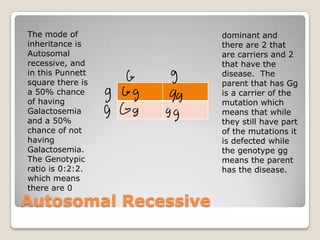
The mode of
inheritance is
Autosomal
recessive, and
in this Punnett
square there is
a 50% chance
of having
Galactosemia
and a 50%
chance of not
having
Galactosemia.
The Genotypic
ratio is 0:2:2.
which means
there are 0
dominant and
there are 2 that
are carriers and 2
that have the
disease. The
parent that has Gg
is a carrier of the
mutation which
means that while
they still have part
of the mutations it
is defected while
the genotype gg
means the parent
has the disease.
Autosomal Recessive explanation
 Autosomal Recessive means that both
males and females are equally likely to be
affected. Since the mutation is recessive
it tends to skip generations. The
mutation sometimes appears in siblings
without appearing in their parents.

Galactosemia

  • 1.
  • 2.
    Groups that havea high risk for Galactosemia  Galactosemia occurs in babies that do no have enough of the GALT enzyme in there body.  This mutation affects all people, but people with Romani decent have a higher risk of getting this mutation.
  • 3.
    The Symptoms andthe effects of Galactosemia are  Failure to gain weight or grow in length  Poor feeding and poor suck  Lethargy  Irritability  Low blood sugar, called hypoglycemia  Seizures  Enlarged liver that does not work properly  Jaundice (yellow color to the skin or whites of the eyes)  Serious blood infections that could lead to shock and death  Early cataracts which occur in about 10% of children
  • 4.
    What happens inGalactosemia  What happens in Galactosemia is that people have problem the sugar called Galactose from the food they eat. The galactose does not break down and it builds up in there blood.
  • 5.
    Mutation  This diseasemost commonly is caused by a mutation in the gene called GALT. This is mutation is know as a point mutation, in which the amino acid is changed.
  • 6.
    Explanation of howmutations alter specific proteins.  The GALT enzyme makes instructions for an enzyme called galactose-1-phosphate uridylyltransferase. If the GALT enzyme was to stop function then Galactosemia occurs because the body is then no able to brake down galactose.
  • 7.
    The chromosome isaffected is The amino acid is changed within the chromosome.
  • 8.
    Autosomal Recessive The modeof inheritance is Autosomal recessive, and in this Punnett square there is a 50% chance of having Galactosemia and a 50% chance of not having Galactosemia. The Genotypic ratio is 0:2:2. which means there are 0 dominant and there are 2 that are carriers and 2 that have the disease. The parent that has Gg is a carrier of the mutation which means that while they still have part of the mutations it is defected while the genotype gg means the parent has the disease.
  • 10.
    Autosomal Recessive explanation Autosomal Recessive means that both males and females are equally likely to be affected. Since the mutation is recessive it tends to skip generations. The mutation sometimes appears in siblings without appearing in their parents.