Innate immunity
Innate (non-specific) immunity
Immune barriers
Immune molecules
Intrinsic cells
Macrophage(MΦ); Natural Killer(NK
Recognition mechanisms
Pattern recognition receptors (PRR)
Pathogen associated molecular
pattern (PAMP
Key ContentsKey Contents
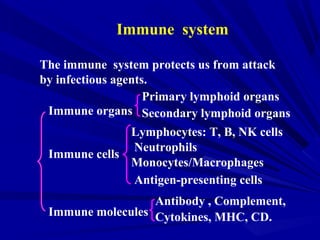
Immune organs
Immune cells
Immune molecules
Primary lymphoid organs
Secondary lymphoid organs
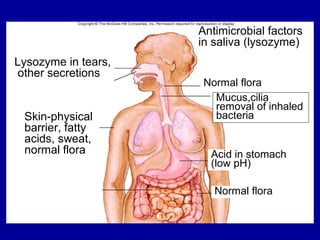
Lymphocytes: T, B, NK cells
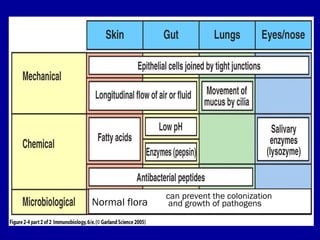
Neutrophils
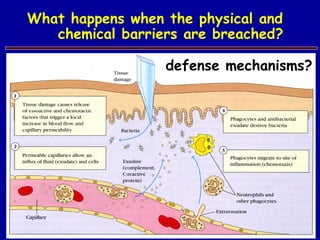
Monocytes/Macrophages
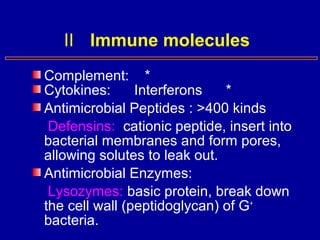
Antigen-presenting cells
Antibody , Complement,
Cytokines, MHC, CD.
The immune system protects us from attack
by infectious agents.
Immune system
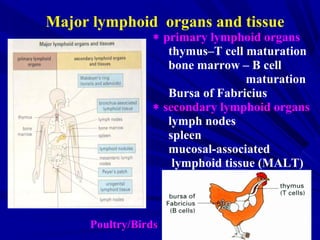
āˆ— primary lymphoid organs
thymus–T cell maturation
bone marrow – B cell
maturation
Bursa of Fabricius
āˆ— secondary lymphoid organs
lymph nodes
spleen
mucosal-associated
lymphoid tissue (MALT)
Poultry/Birds
Major lymphoid organs and tissue
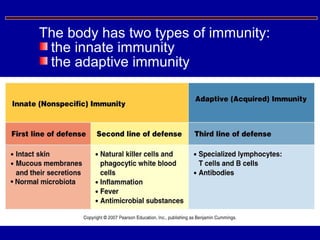
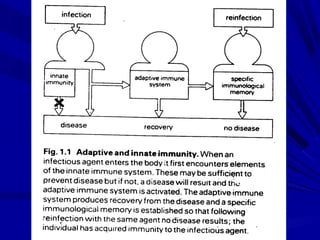
The body has two types of immunity:
the innate immunity
the adaptive immunity
Innate immunity refers to any inborn
resistance that is already present the first time
a pathogen is encountered; it doesn’t require
prior exposure and is not modified significantly
by repeated exposures to the pathogen over
the life of an individual.
the first defense line of against infection.
is the initial response by the body to
eliminate microbes and prevent infection.
Innate Immunity
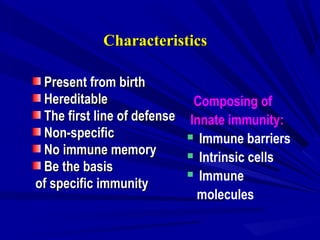
CharacteristicsCharacteristics
Present from birthPresent from birth
HereditableHereditable
The first line of defenseThe first line of defense
Non-specificNon-specific
No immune memoryNo immune memory
Be the basisBe the basis
of specific immunityof specific immunity
Composing of
Innate immunity:
 Immune barriers
 Intrinsic cells
 Immune
molecules
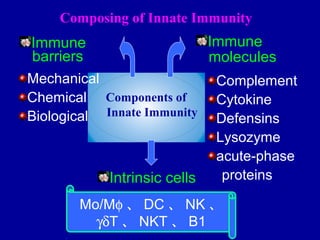
Components of
Innate Immunity
Mechanical
Chemical
Biological
Immune
barriers
Immune
molecules
Complement
Cytokine
Defensins
Lysozyme
acute-phase
proteins
Mo/Mφ 态 DC 态 NK 态
γΓT 态 NKT 态 B1
Intrinsic cells
Composing of Innate Immunity
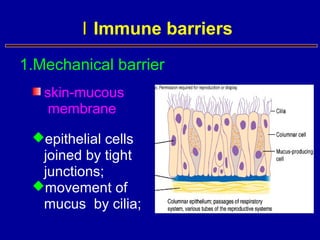
skin-mucous
membrane
epithelial cells
joined by tight
junctions;
movement of
mucus by cilia;
1.Mechanical barrier
ā… ā…  Immune barriers
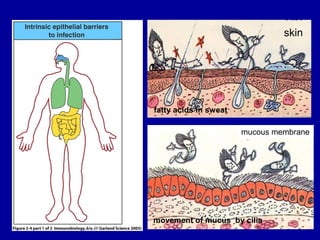
fatty acids in sweat
skin
movement of mucus by cilia
mucous membrane
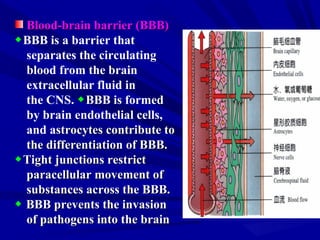
BloodBlood--brain barrier (BBB)brain barrier (BBB)
ā—†BBB is a barrier that
separates the circulating
blood from the brain
extracellular fluid in
the CNS. ā—†BBB is formed
by brain endothelial cells,
and astrocytes contribute tostrocytes contribute to
the differentiation of BBB.the differentiation of BBB.
ā—†Tight junctions restrictTight junctions restrict
paracellular movement ofparacellular movement of
substances across the BBB.substances across the BBB.
ā—† BBB prevents the invasionBBB prevents the invasion
of pathogens into the brainof pathogens into the brain
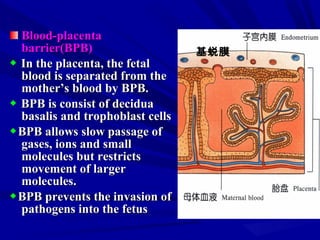
BloodBlood--placentaplacenta
barrier(BPB)barrier(BPB)
ā—† In the placenta, the fetalIn the placenta, the fetal
blood is separated from theblood is separated from the
mother’s blood by BPB.mother’s blood by BPB.
ā—† BPB is consist of deciduaBPB is consist of decidua
basalis and trophoblast cellsbasalis and trophoblast cells
ā—†BPB allows slow passage ofBPB allows slow passage of
gases, ions and smallgases, ions and small
molecules but restrictsmolecules but restricts
movement of largermovement of larger
molecules.molecules.
ā—†BPB prevents the invasion ofBPB prevents the invasion of
pathogens into the fetuspathogens into the fetus
åŸŗčœ•č†œ
Lactic acid and fatty acid in sweat:
inhibit the growth of bacteria.
Lysozyme, phospholypase A in secretions
(saliva, tears, milk)
break down the cell wall of bacteria.
Low pH (gastric acid) and pepsin in stomach:
prevents growth of bacteria.
2.Chemical barrier
The normal flora on the skin and in the
gastrointestinal tract
prevent the colonization of pathogens
–by secreting toxic substances
–by competing nutrition with pathogens
–by blocking the attachment of pathogens.
3.Biological barrier
Antimicrobial factors
in saliva (lysozyme)
Normal flora
Mucus,cilia
removal of inhaled
bacteria
Acid in stomach
(low pH)
Normal flora
Lysozyme in tears,
other secretions
Skin-physical
barrier, fatty
acids, sweat,
normal flora
Normal flora
can prevent the colonization
and growth of pathogens
What happens when the physical and
chemical barriers are breached?
defense mechanisms?
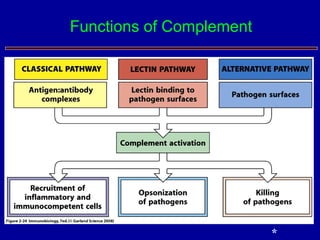
Complement: *
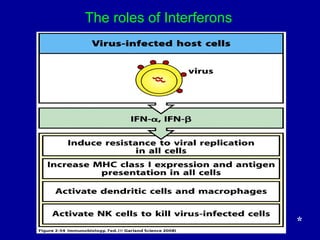
Cytokines: Interferons *
Antimicrobial Peptides : >400 kinds
Defensins: cationic peptide, insert into
bacterial membranes and form pores,
allowing solutes to leak out.
Antimicrobial Enzymes:
Lysozymes: basic protein, break down
the cell wall (peptidoglycan) of G+
bacteria.
ā…” Immune molecules
Functions of Complement
*
The roles of Interferons
*
ⅢⅢ Intrinsic cells
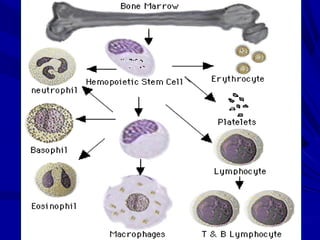
ļ¹”Immune cells: All kinds of cell associated
with immune response, including phagocytes,
lymphocytes, mast cells, antigen presenting
cells (APC) as well as their precusor cells.
Immune cells derive mainly from undiffe-ļ¹”
rentiated ā€˜self-renewing’ hemopoietic
stem cells (HSCs) through a process of
differentiation.
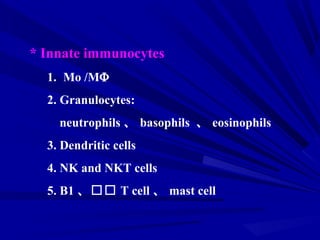
1. Mo /MΦ
2. Granulocytes:
neutrophils 态 basophils 态 eosinophils
3. Dendritic cells
4. NK and NKT cells
5. B1 、 T cell 态 mast cell
* Innate immunocytes
monocytes/macrophages
Pseudopodium
['sju:də'pə d əm]ʊ ÉŖ
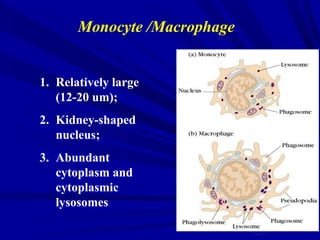
Monocyte /Macrophage
1. Relatively large
(12-20 um);
2. Kidney-shaped
nucleus;
3. Abundant
cytoplasm and
cytoplasmic
lysosomes
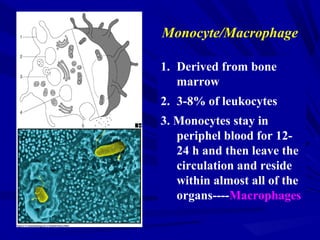
1. Derived from bone
marrow
2. 3-8% of leukocytes
3. Monocytes stay in
periphel blood for 12-
24 h and then leave the
circulation and reside
within almost all of the
organs----Macrophages
Monocyte/Macrophage
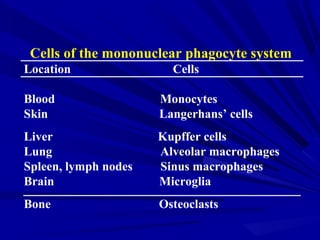
Cells of the mononuclear phagocyte system
Location Cells
Blood Monocytes
Skin Langerhans’ cells
Liver Kupffer cells
Lung Alveolar macrophages
Spleen, lymph nodes Sinus macrophages
Brain Microglia
Bone Osteoclasts
1. PRRs (pattern-recognition receptors)
1) MR (mannose receptors)
2) SR (scavenger receptors)
3) TLR (Toll like receptors)
PAMP: The ligand of PRRs
(pathogen associated molecular patterns)
2. IgG FcR (FcγR) 态 C3bR
3. MHC I/MHC II molecules; B7
4. CKR: IFN-rR, M-CSFR,GM-CSFR, MCP-1R
MCP-1(monocyte chemotactic protein 1)
1. The main surface receptors
Monocyte/Macrophage
2. Biological Functions
(1)(1) Kill and eliminate the microorganisms: *Kill and eliminate the microorganisms: *
* phagocytosis * opsonization* phagocytosis * opsonization
(2)(2) Kill tumor and virus-infected cell;Kill tumor and virus-infected cell;
(3)(3) Process and present Ag; *Process and present Ag; *
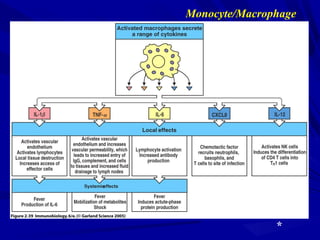
(4)(4) Mediate/promote inflammatory response; *Mediate/promote inflammatory response; *
IL-1, IL-6, TNF-a; IL-8, MCP-1IL-1, IL-6, TNF-a; IL-8, MCP-1
(5)(5) Modulate immune response.Modulate immune response.
IL-1 and IFN-r promote the APC to express MHC andIL-1 and IFN-r promote the APC to express MHC and
activate T and B cells; TNF-a promotes the activation,activate T and B cells; TNF-a promotes the activation,
proliferation and differentiation of CTL; IL-10 canproliferation and differentiation of CTL; IL-10 can
inhibit the activation of Mo/Mac.inhibit the activation of Mo/Mac.
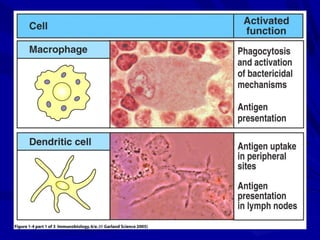
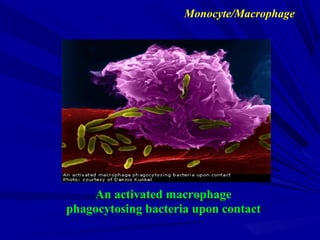
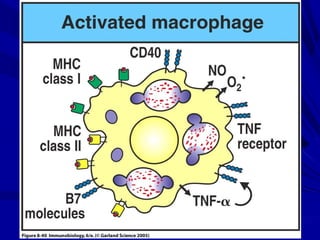
An activated macrophage
phagocytosing bacteria upon contact
Monocyte/Macrophage
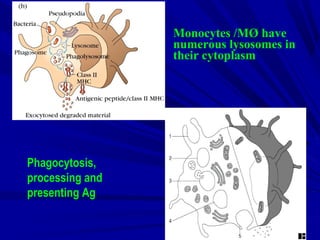
Phagocytosis,
processing and
presenting Ag
Monocytes /MƘ have
numerous lysosomes in
their cytoplasm
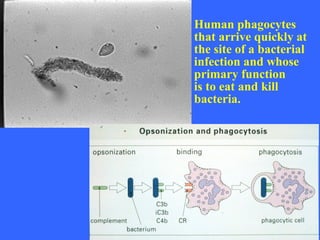
Human phagocytes
that arrive quickly at
the site of a bacterial
infection and whose
primary function
is to eat and kill
bacteria.
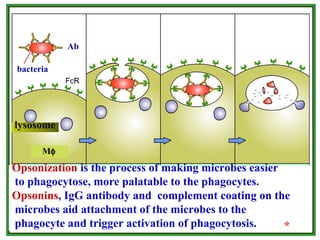
Opsonization is the process of making microbes easier
to phagocytose, more palatable to the phagocytes.
Opsonins, IgG antibody and complement coating on the
microbes aid attachment of the microbes to the
phagocyte and trigger activation of phagocytosis.
Ab
bacteria
Mφ
lysosome
*
*
Monocyte/Macrophage
*
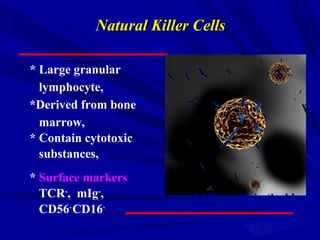
Natural Killer CellsNatural Killer Cells
* Large granular
lymphocyte,
*Derived from bone
marrow,
* Contain cytotoxic
substances,
* Surface markers
TCR-
, mIg-
,
CD56ļ¹¢
CD16ļ¹¢
Natural killer cells in the blood
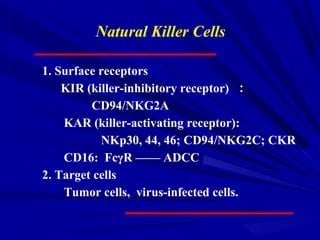
1. Surface receptors
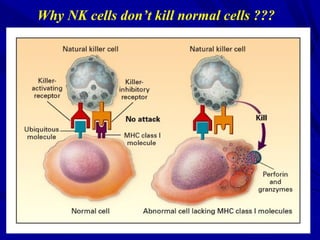
KIR (killer-inhibitory receptor) :
CD94/NKG2A
KAR (killer-activating receptor):
NKp30, 44, 46; CD94/NKG2C; CKR
CD16: FcγR —— ADCC
2. Target cells
Tumor cells, virus-infected cells.
Natural Killer Cells
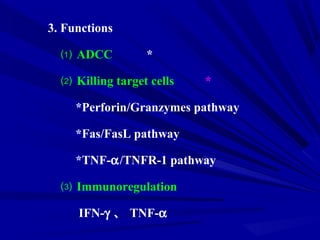
3. Functions
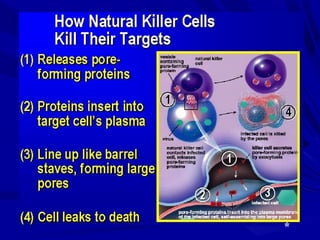
ā‘“ ADCC *
⑵ Killing target cells *
*Perforin/Granzymes pathway
*Fas/FasL pathway
*TNF-α/TNFR-1 pathway
ā‘¶ Immunoregulation
IFN-γ 态 TNF-α
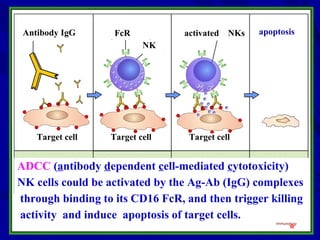
activated NKsFcRAntibody IgG
Target cell Target cellTarget cell
ADCC (antibody dependent cell-mediated cytotoxicity)
NK cells could be activated by the Ag-Ab (IgG) complexes
through binding to its CD16 FcR, and then trigger killing
activity and induce apoptosis of target cells.
NK
apoptosis
*
*
Why NK cells don’t kill normal cells ???
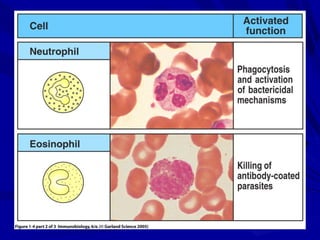
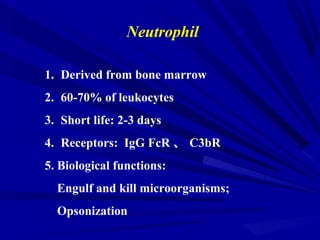
Neutrophil
1. Derived from bone marrow
2. 60-70% of leukocytes
3. Short life: 2-3 days
4. Receptors: IgG FcR 态 C3bR
5. Biological functions:
Engulf and kill microorganisms;
Opsonization
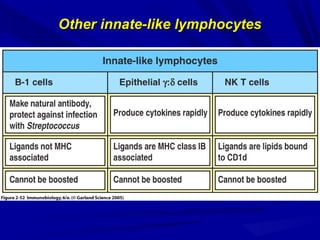
Other innate-like lymphocytesOther innate-like lymphocytes
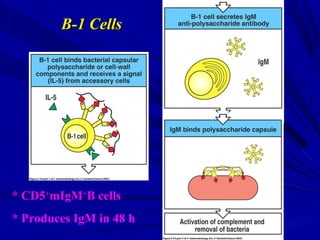
B-1 CellsB-1 Cells
* CD5+
mIgM+
B cells
* Produces IgM in 48 h
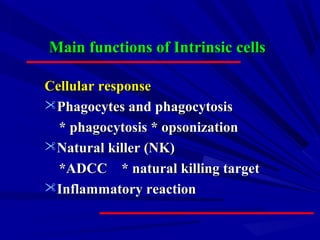
Main functions of Intrinsic cellsMain functions of Intrinsic cells
Cellular responseCellular response
Phagocytes and phagocytosisPhagocytes and phagocytosis
* phagocytosis * opsonization* phagocytosis * opsonization
Natural killer (NK)Natural killer (NK)
*ADCC * natural killing target*ADCC * natural killing target
Inflammatory reactionInflammatory reaction
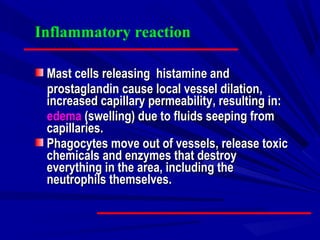
Inflammatory reaction
Mast cellsMast cells releasreleasinging histamine andhistamine and
prostaglandin cause local vessel dilationprostaglandin cause local vessel dilation,,
increased capillary permeabilityincreased capillary permeability,, resulting in:resulting in:
edemaedema (swelling) due to fluids seeping from(swelling) due to fluids seeping from
capillariescapillaries..
PPhagocytes move out of vesselshagocytes move out of vessels, release toxic, release toxic
chemicals and enzymes that destroychemicals and enzymes that destroy
everything in the area, including theeverything in the area, including the
neutrophils themselves.neutrophils themselves.
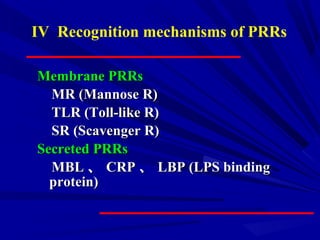
Membrane PRRsMembrane PRRs
MR (Mannose R)MR (Mannose R)
TLR (Toll-like R)TLR (Toll-like R)
SR (Scavenger R)SR (Scavenger R)
Secreted PRRsSecreted PRRs
MBLMBL 态态 CRPCRP 态态 LBP (LPS bindingLBP (LPS binding
protein)protein)
IV Recognition mechanisms of PRRs
1. Patterns Recognition Receptors1. Patterns Recognition Receptors
(PRR)(PRR)
PRRs: The receptors on intrinsic cells
which can recognize and bind specific
molecular structure on some pathogens,
injured or apoptotic cells.
Most of immune cells involved in
innate immunity can express PRR.
PRR recognizes microbes by PAMPs.
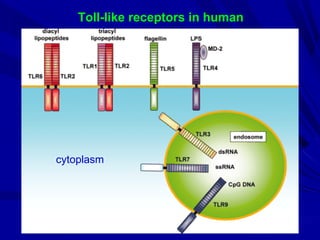
(1) Toll-like receptor (TLR)(1) Toll-like receptor (TLR)
﹔﹔name from a related protein calledname from a related protein called
Toll.Toll.
﹔﹔Intrinsic cells can detect and respond
to infection by recognizing
conserved motifs (LPS, flagellin(LPS, flagellin ,, etet
al.)al.) of microbes using TLRs and
initiate protective response.initiate protective response.
Toll-like receptors in human
cytoplasm
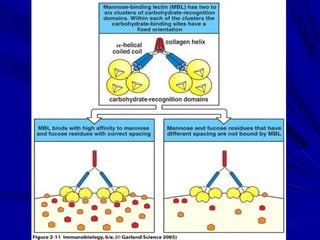
(2) Mannose binding lectin (MBL)(2) Mannose binding lectin (MBL)
﹔﹔liver-derivedliver-derived serum proteinserum protein
﹔﹔bind mannose on the surface ofbind mannose on the surface of
pathogenpathogen
﹔﹔the pathogens are captured andthe pathogens are captured and
destroyed by phagocytes throughdestroyed by phagocytes through
opsonization and complement.opsonization and complement.
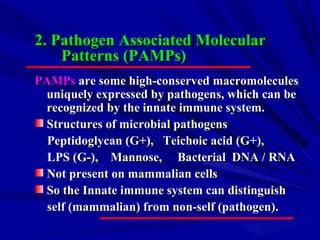
2. Pathogen Associated Molecular2. Pathogen Associated Molecular
Patterns (PAMPs)Patterns (PAMPs)
PAMPsPAMPs are some high-conserved macromoleculesare some high-conserved macromolecules
uniquely expressed by pathogens, which can beuniquely expressed by pathogens, which can be
recognized by the innate immune system.recognized by the innate immune system.
Structures of microbial pathogensStructures of microbial pathogens
Peptidoglycan (G+), Teichoic acid (G+),Peptidoglycan (G+), Teichoic acid (G+),
LPS (G-), Mannose, Bacterial DNA / RNALPS (G-), Mannose, Bacterial DNA / RNA
Not present on mammalian cellsNot present on mammalian cells
So the Innate immune system can distinguishSo the Innate immune system can distinguish
self (mammalian) from non-self (pathogen).self (mammalian) from non-self (pathogen).
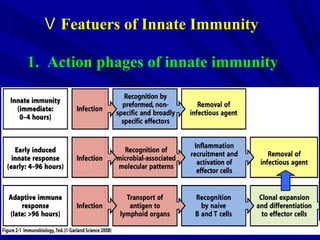
ā…¤ Featuers of Innate Immunity
1. Action phages of innate immunity
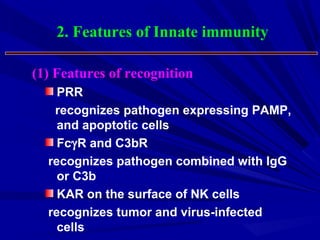
PRR
recognizes pathogen expressing PAMP,
and apoptotic cells
FcγR and C3bR
recognizes pathogen combined with IgG
or C3b
KAR on the surface of NK cells
recognizes tumor and virus-infected
cells
2. Features of Innate immunity
(1) Features of recognition
Rapid response
Nonspecific
No differentiation and replication
of immune cells
No memory
(2) Features of innate response
3. Relationship of innate immunity and
adaptive immunity
Is the first line of defense against
infections
Initiate adaptive immune response
Affect the types of adaptive immune
response
Regulate adaptive immune response

G.2014-immuno~ (7.innate immunity-wjy)

  • 1.
  • 2.
    Innate (non-specific) immunity Immunebarriers Immune molecules Intrinsic cells Macrophage(MΦ); Natural Killer(NK Recognition mechanisms Pattern recognition receptors (PRR) Pathogen associated molecular pattern (PAMP Key ContentsKey Contents
  • 3.
    Immune organs Immune cells Immunemolecules Primary lymphoid organs Secondary lymphoid organs Lymphocytes: T, B, NK cells Neutrophils Monocytes/Macrophages Antigen-presenting cells Antibody , Complement, Cytokines, MHC, CD. The immune system protects us from attack by infectious agents. Immune system
  • 4.
    āˆ— primary lymphoidorgans thymus–T cell maturation bone marrow – B cell maturation Bursa of Fabricius āˆ— secondary lymphoid organs lymph nodes spleen mucosal-associated lymphoid tissue (MALT) Poultry/Birds Major lymphoid organs and tissue
  • 5.
    The body hastwo types of immunity: the innate immunity the adaptive immunity
  • 7.
    Innate immunity refersto any inborn resistance that is already present the first time a pathogen is encountered; it doesn’t require prior exposure and is not modified significantly by repeated exposures to the pathogen over the life of an individual. the first defense line of against infection. is the initial response by the body to eliminate microbes and prevent infection. Innate Immunity
  • 8.
    CharacteristicsCharacteristics Present from birthPresentfrom birth HereditableHereditable The first line of defenseThe first line of defense Non-specificNon-specific No immune memoryNo immune memory Be the basisBe the basis of specific immunityof specific immunity Composing of Innate immunity:  Immune barriers  Intrinsic cells  Immune molecules
  • 9.
  • 10.
    skin-mucous membrane epithelial cells joined bytight junctions; movement of mucus by cilia; 1.Mechanical barrier ā… ā…  Immune barriers
  • 11.
    fatty acids insweat skin movement of mucus by cilia mucous membrane
  • 12.
    BloodBlood--brain barrier (BBB)brainbarrier (BBB) ā—†BBB is a barrier that separates the circulating blood from the brain extracellular fluid in the CNS. ā—†BBB is formed by brain endothelial cells, and astrocytes contribute tostrocytes contribute to the differentiation of BBB.the differentiation of BBB. ā—†Tight junctions restrictTight junctions restrict paracellular movement ofparacellular movement of substances across the BBB.substances across the BBB. ā—† BBB prevents the invasionBBB prevents the invasion of pathogens into the brainof pathogens into the brain
  • 13.
    BloodBlood--placentaplacenta barrier(BPB)barrier(BPB) ā—† In theplacenta, the fetalIn the placenta, the fetal blood is separated from theblood is separated from the mother’s blood by BPB.mother’s blood by BPB. ā—† BPB is consist of deciduaBPB is consist of decidua basalis and trophoblast cellsbasalis and trophoblast cells ā—†BPB allows slow passage ofBPB allows slow passage of gases, ions and smallgases, ions and small molecules but restrictsmolecules but restricts movement of largermovement of larger molecules.molecules. ā—†BPB prevents the invasion ofBPB prevents the invasion of pathogens into the fetuspathogens into the fetus åŸŗčœ•č†œ
  • 14.
    Lactic acid andfatty acid in sweat: inhibit the growth of bacteria. Lysozyme, phospholypase A in secretions (saliva, tears, milk) break down the cell wall of bacteria. Low pH (gastric acid) and pepsin in stomach: prevents growth of bacteria. 2.Chemical barrier
  • 15.
    The normal floraon the skin and in the gastrointestinal tract prevent the colonization of pathogens –by secreting toxic substances –by competing nutrition with pathogens –by blocking the attachment of pathogens. 3.Biological barrier
  • 16.
    Antimicrobial factors in saliva(lysozyme) Normal flora Mucus,cilia removal of inhaled bacteria Acid in stomach (low pH) Normal flora Lysozyme in tears, other secretions Skin-physical barrier, fatty acids, sweat, normal flora
  • 17.
    Normal flora can preventthe colonization and growth of pathogens
  • 18.
    What happens whenthe physical and chemical barriers are breached? defense mechanisms?
  • 19.
    Complement: * Cytokines: Interferons* Antimicrobial Peptides : >400 kinds Defensins: cationic peptide, insert into bacterial membranes and form pores, allowing solutes to leak out. Antimicrobial Enzymes: Lysozymes: basic protein, break down the cell wall (peptidoglycan) of G+ bacteria. ā…” Immune molecules
  • 20.
  • 21.
    The roles ofInterferons *
  • 22.
    ⅢⅢ Intrinsic cells ļ¹”Immunecells: All kinds of cell associated with immune response, including phagocytes, lymphocytes, mast cells, antigen presenting cells (APC) as well as their precusor cells. Immune cells derive mainly from undiffe-ļ¹” rentiated ā€˜self-renewing’ hemopoietic stem cells (HSCs) through a process of differentiation.
  • 24.
    1. Mo /MΦ 2.Granulocytes: neutrophils 态 basophils 态 eosinophils 3. Dendritic cells 4. NK and NKT cells 5. B1 、 T cell 态 mast cell * Innate immunocytes
  • 25.
  • 28.
    Monocyte /Macrophage 1. Relativelylarge (12-20 um); 2. Kidney-shaped nucleus; 3. Abundant cytoplasm and cytoplasmic lysosomes
  • 29.
    1. Derived frombone marrow 2. 3-8% of leukocytes 3. Monocytes stay in periphel blood for 12- 24 h and then leave the circulation and reside within almost all of the organs----Macrophages Monocyte/Macrophage
  • 30.
    Cells of themononuclear phagocyte system Location Cells Blood Monocytes Skin Langerhans’ cells Liver Kupffer cells Lung Alveolar macrophages Spleen, lymph nodes Sinus macrophages Brain Microglia Bone Osteoclasts
  • 31.
    1. PRRs (pattern-recognitionreceptors) 1) MR (mannose receptors) 2) SR (scavenger receptors) 3) TLR (Toll like receptors) PAMP: The ligand of PRRs (pathogen associated molecular patterns) 2. IgG FcR (FcγR) 态 C3bR 3. MHC I/MHC II molecules; B7 4. CKR: IFN-rR, M-CSFR,GM-CSFR, MCP-1R MCP-1(monocyte chemotactic protein 1) 1. The main surface receptors
  • 32.
    Monocyte/Macrophage 2. Biological Functions (1)(1)Kill and eliminate the microorganisms: *Kill and eliminate the microorganisms: * * phagocytosis * opsonization* phagocytosis * opsonization (2)(2) Kill tumor and virus-infected cell;Kill tumor and virus-infected cell; (3)(3) Process and present Ag; *Process and present Ag; * (4)(4) Mediate/promote inflammatory response; *Mediate/promote inflammatory response; * IL-1, IL-6, TNF-a; IL-8, MCP-1IL-1, IL-6, TNF-a; IL-8, MCP-1 (5)(5) Modulate immune response.Modulate immune response. IL-1 and IFN-r promote the APC to express MHC andIL-1 and IFN-r promote the APC to express MHC and activate T and B cells; TNF-a promotes the activation,activate T and B cells; TNF-a promotes the activation, proliferation and differentiation of CTL; IL-10 canproliferation and differentiation of CTL; IL-10 can inhibit the activation of Mo/Mac.inhibit the activation of Mo/Mac.
  • 33.
    An activated macrophage phagocytosingbacteria upon contact Monocyte/Macrophage
  • 34.
    Phagocytosis, processing and presenting Ag Monocytes/MƘ have numerous lysosomes in their cytoplasm
  • 35.
    Human phagocytes that arrivequickly at the site of a bacterial infection and whose primary function is to eat and kill bacteria.
  • 36.
    Opsonization is theprocess of making microbes easier to phagocytose, more palatable to the phagocytes. Opsonins, IgG antibody and complement coating on the microbes aid attachment of the microbes to the phagocyte and trigger activation of phagocytosis. Ab bacteria Mφ lysosome *
  • 37.
  • 38.
  • 39.
    Natural Killer CellsNaturalKiller Cells * Large granular lymphocyte, *Derived from bone marrow, * Contain cytotoxic substances, * Surface markers TCR- , mIg- , CD56ļ¹¢ CD16ļ¹¢ Natural killer cells in the blood
  • 40.
    1. Surface receptors KIR(killer-inhibitory receptor) : CD94/NKG2A KAR (killer-activating receptor): NKp30, 44, 46; CD94/NKG2C; CKR CD16: FcγR —— ADCC 2. Target cells Tumor cells, virus-infected cells. Natural Killer Cells
  • 41.
    3. Functions ā‘“ ADCC* ⑵ Killing target cells * *Perforin/Granzymes pathway *Fas/FasL pathway *TNF-α/TNFR-1 pathway ā‘¶ Immunoregulation IFN-γ 态 TNF-α
  • 42.
    activated NKsFcRAntibody IgG Targetcell Target cellTarget cell ADCC (antibody dependent cell-mediated cytotoxicity) NK cells could be activated by the Ag-Ab (IgG) complexes through binding to its CD16 FcR, and then trigger killing activity and induce apoptosis of target cells. NK apoptosis *
  • 43.
  • 44.
    Why NK cellsdon’t kill normal cells ???
  • 45.
    Neutrophil 1. Derived frombone marrow 2. 60-70% of leukocytes 3. Short life: 2-3 days 4. Receptors: IgG FcR 态 C3bR 5. Biological functions: Engulf and kill microorganisms; Opsonization
  • 46.
    Other innate-like lymphocytesOtherinnate-like lymphocytes
  • 47.
    B-1 CellsB-1 Cells *CD5+ mIgM+ B cells * Produces IgM in 48 h
  • 48.
    Main functions ofIntrinsic cellsMain functions of Intrinsic cells Cellular responseCellular response Phagocytes and phagocytosisPhagocytes and phagocytosis * phagocytosis * opsonization* phagocytosis * opsonization Natural killer (NK)Natural killer (NK) *ADCC * natural killing target*ADCC * natural killing target Inflammatory reactionInflammatory reaction
  • 49.
    Inflammatory reaction Mast cellsMastcells releasreleasinging histamine andhistamine and prostaglandin cause local vessel dilationprostaglandin cause local vessel dilation,, increased capillary permeabilityincreased capillary permeability,, resulting in:resulting in: edemaedema (swelling) due to fluids seeping from(swelling) due to fluids seeping from capillariescapillaries.. PPhagocytes move out of vesselshagocytes move out of vessels, release toxic, release toxic chemicals and enzymes that destroychemicals and enzymes that destroy everything in the area, including theeverything in the area, including the neutrophils themselves.neutrophils themselves.
  • 50.
    Membrane PRRsMembrane PRRs MR(Mannose R)MR (Mannose R) TLR (Toll-like R)TLR (Toll-like R) SR (Scavenger R)SR (Scavenger R) Secreted PRRsSecreted PRRs MBLMBL 态态 CRPCRP 态态 LBP (LPS bindingLBP (LPS binding protein)protein) IV Recognition mechanisms of PRRs
  • 51.
    1. Patterns RecognitionReceptors1. Patterns Recognition Receptors (PRR)(PRR) PRRs: The receptors on intrinsic cells which can recognize and bind specific molecular structure on some pathogens, injured or apoptotic cells. Most of immune cells involved in innate immunity can express PRR. PRR recognizes microbes by PAMPs.
  • 52.
    (1) Toll-like receptor(TLR)(1) Toll-like receptor (TLR) ﹔﹔name from a related protein calledname from a related protein called Toll.Toll. ﹔﹔Intrinsic cells can detect and respond to infection by recognizing conserved motifs (LPS, flagellin(LPS, flagellin ,, etet al.)al.) of microbes using TLRs and initiate protective response.initiate protective response.
  • 53.
    Toll-like receptors inhuman cytoplasm
  • 54.
    (2) Mannose bindinglectin (MBL)(2) Mannose binding lectin (MBL) ﹔﹔liver-derivedliver-derived serum proteinserum protein ﹔﹔bind mannose on the surface ofbind mannose on the surface of pathogenpathogen ﹔﹔the pathogens are captured andthe pathogens are captured and destroyed by phagocytes throughdestroyed by phagocytes through opsonization and complement.opsonization and complement.
  • 56.
    2. Pathogen AssociatedMolecular2. Pathogen Associated Molecular Patterns (PAMPs)Patterns (PAMPs) PAMPsPAMPs are some high-conserved macromoleculesare some high-conserved macromolecules uniquely expressed by pathogens, which can beuniquely expressed by pathogens, which can be recognized by the innate immune system.recognized by the innate immune system. Structures of microbial pathogensStructures of microbial pathogens Peptidoglycan (G+), Teichoic acid (G+),Peptidoglycan (G+), Teichoic acid (G+), LPS (G-), Mannose, Bacterial DNA / RNALPS (G-), Mannose, Bacterial DNA / RNA Not present on mammalian cellsNot present on mammalian cells So the Innate immune system can distinguishSo the Innate immune system can distinguish self (mammalian) from non-self (pathogen).self (mammalian) from non-self (pathogen).
  • 57.
    ā…¤ Featuers ofInnate Immunity 1. Action phages of innate immunity
  • 58.
    PRR recognizes pathogen expressingPAMP, and apoptotic cells FcγR and C3bR recognizes pathogen combined with IgG or C3b KAR on the surface of NK cells recognizes tumor and virus-infected cells 2. Features of Innate immunity (1) Features of recognition
  • 59.
    Rapid response Nonspecific No differentiationand replication of immune cells No memory (2) Features of innate response
  • 60.
    3. Relationship ofinnate immunity and adaptive immunity Is the first line of defense against infections Initiate adaptive immune response Affect the types of adaptive immune response Regulate adaptive immune response

Editor's Notes

  • #7Ā sufficient
  • #24Ā Platelet eosinophil basophil
  • #29Ā Pseudopodia phagosome
  • #32 伸出
  • #34 ↓
  • #35Ā Exocytosis degraded é™č§£ ę¶ˆåŒ–
  • #42 机制
  • #44Ā leak
  • #47Ā boosted
  • #59Ā Pathogen associated molecular pattern (PAMP) ē—…åŽŸē›øå…³åˆ†å­ęØ”å¼ ļ¹”
  • #60Ā Pathogen associated molecular pattern (PAMP) ē—…åŽŸē›øå…³åˆ†å­ęØ”å¼ ļ¹”