Pathology
---Cell Injury, Death And Adaptation
Xi’an Jiaotong University
2017.1.2017.1.
XI’AN JIAOTONG
UNIVERSITY
Page 2
Programmed Cell Death (PCD)
Refers to processes that are lethal to individual cells
and are regulated by pre-existing signaling pathways.
PCD is part of the balance between the life and
death of cells and determines that a cell dies when it is
no longer useful or when its survival may be harmful to
the larger organism.
XI’AN JIAOTONG
UNIVERSITY
Page 3
Apoptosis
A pathway of cell death that is induced by a tightly
regulated suicide program in which cells destined to die,
activate intrinsic enzymes that degrade the cells’own nuclear
DNA and nuclear and cytoplasmic proteins
Apoptosis is a form of PCD that relies exclusively on the
caspase cascade
Originally, PCD was synonymous with apoptosis. However, mutant
mice lacking the key elements of the apoptotic machinery develop almost
normally. This observation indicated that alternatives to apoptosis exist.
Thus, a number of mechanisms of PCD have been identified
XI’AN JIAOTONG
UNIVERSITY
Page 4
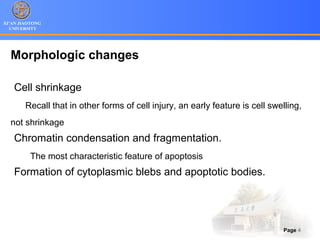
Morphologic changes
Cell shrinkage
Recall that in other forms of cell injury, an early feature is cell swelling,
not shrinkage
Chromatin condensation and fragmentation.
The most characteristic feature of apoptosis
Formation of cytoplasmic blebs and apoptotic bodies.
XI’AN JIAOTONG
UNIVERSITY
Page 5
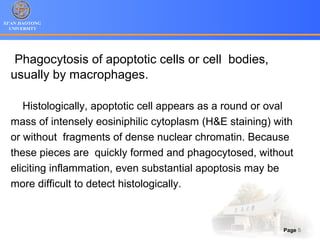
Phagocytosis of apoptotic cells or cell bodies,
usually by macrophages.
Histologically, apoptotic cell appears as a round or oval
mass of intensely eosiniphilic cytoplasm (H&E staining) with
or without fragments of dense nuclear chromatin. Because
these pieces are quickly formed and phagocytosed, without
eliciting inflammation, even substantial apoptosis may be
more difficult to detect histologically.
XI’AN JIAOTONG
UNIVERSITY
Page 6
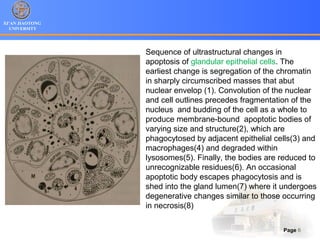
Sequence of ultrastructural changes in
apoptosis of glandular epithelial cells. The
earliest change is segregation of the chromatin
in sharply circumscribed masses that abut
nuclear envelop (1). Convolution of the nuclear
and cell outlines precedes fragmentation of the
nucleus and budding of the cell as a whole to
produce membrane-bound apoptotic bodies of
varying size and structure(2), which are
phagocytosed by adjacent epithelial cells(3) and
macrophages(4) and degraded within
lysosomes(5). Finally, the bodies are reduced to
unrecognizable residues(6). An occasional
apoptotic body escapes phagocytosis and is
shed into the gland lumen(7) where it undergoes
degenerative changes similar to those occurring
in necrosis(8)
XI’AN JIAOTONG
UNIVERSITY
Page 7
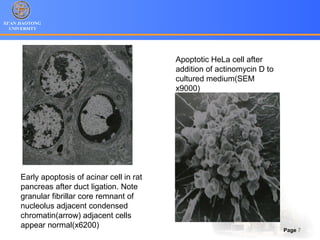
Early apoptosis of acinar cell in rat
pancreas after duct ligation. Note
granular fibrillar core remnant of
nucleolus adjacent condensed
chromatin(arrow) adjacent cells
appear normal(x6200)
Apoptotic HeLa cell after
addition of actinomycin D to
cultured medium(SEM
x9000)
XI’AN JIAOTONG
UNIVERSITY
Page 8
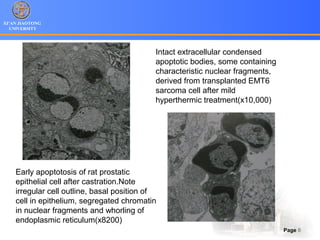
Early apoptotosis of rat prostatic
epithelial cell after castration.Note
irregular cell outline, basal position of
cell in epithelium, segregated chromatin
in nuclear fragments and whorling of
endoplasmic reticulum(x8200)
Intact extracellular condensed
apoptotic bodies, some containing
characteristic nuclear fragments,
derived from transplanted EMT6
sarcoma cell after mild
hyperthermic treatment(x10,000)
XI’AN JIAOTONG
UNIVERSITY
Page 9
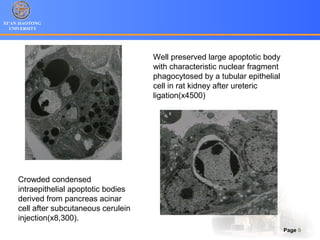
Crowded condensed
intraepithelial apoptotic bodies
derived from pancreas acinar
cell after subcutaneous cerulein
injection(x8,300).
Well preserved large apoptotic body
with characteristic nuclear fragment
phagocytosed by a tubular epithelial
cell in rat kidney after ureteric
ligation(x4500)
XI’AN JIAOTONG
UNIVERSITY
Page 10
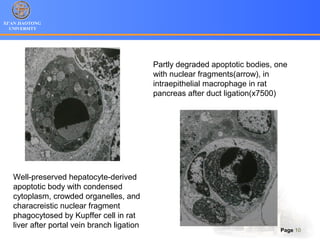
Partly degraded apoptotic bodies, one
with nuclear fragments(arrow), in
intraepithelial macrophage in rat
pancreas after duct ligation(x7500)
Well-preserved hepatocyte-derived
apoptotic body with condensed
cytoplasm, crowded organelles, and
characreistic nuclear fragment
phagocytosed by Kupffer cell in rat
liver after portal vein branch ligation
XI’AN JIAOTONG
UNIVERSITY
Page 11
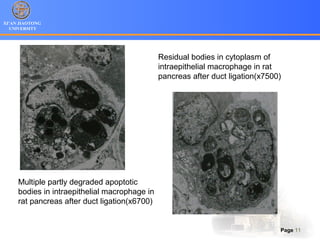
Multiple partly degraded apoptotic
bodies in intraepithelial macrophage in
rat pancreas after duct ligation(x6700)
Residual bodies in cytoplasm of
intraepithelial macrophage in rat
pancreas after duct ligation(x7500)
XI’AN JIAOTONG
UNIVERSITY
Page 12
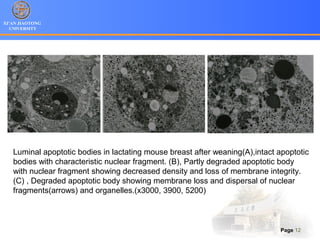
Luminal apoptotic bodies in lactating mouse breast after weaning(A),intact apoptotic
bodies with characteristic nuclear fragment. (B), Partly degraded apoptotic body
with nuclear fragment showing decreased density and loss of membrane integrity.
(C) , Degraded apoptotic body showing membrane loss and dispersal of nuclear
fragments(arrows) and organelles.(x3000, 3900, 5200)
XI’AN JIAOTONG
UNIVERSITY
Page 13
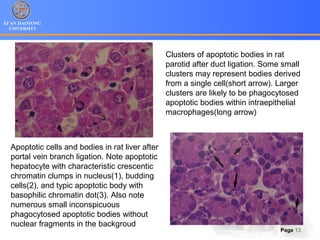
Apoptotic cells and bodies in rat liver after
portal vein branch ligation. Note apoptotic
hepatocyte with characteristic crescentic
chromatin clumps in nucleus(1), budding
cells(2), and typic apoptotic body with
basophilic chromatin dot(3). Also note
numerous small inconspicuous
phagocytosed apoptotic bodies without
nuclear fragments in the backgroud
Clusters of apoptotic bodies in rat
parotid after duct ligation. Some small
clusters may represent bodies derived
from a single cell(short arrow). Larger
clusters are likely to be phagocytosed
apoptotic bodies within intraepithelial
macrophages(long arrow)
XI’AN JIAOTONG
UNIVERSITY
Page 14
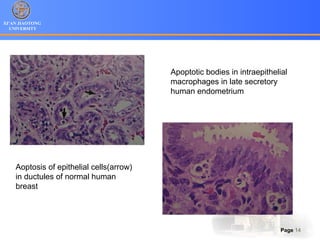
Aoptosis of epithelial cells(arrow)
in ductules of normal human
breast
Apoptotic bodies in intraepithelial
macrophages in late secretory
human endometrium
XI’AN JIAOTONG
UNIVERSITY
Page 15
Cause of apoptosis
Apoptosis in physiologic situations
Death by apoptosis is a normal phenomenon that serves
to eliminate cells that are no longer needed, and to maintain
a steady number of various cell populations in tissue
The destruction of cells during embryogenesis
Fetal development involves the sequential appearance and regression
of many evolutionary relics.
XI’AN JIAOTONG
UNIVERSITY
Page 16
Involution of hormone-dependent tissue upon hormone
withdrawal menstrual cycle, lactating breast after weaning
Cell loss in proliferating cell populations
turnover of intestinal crypt epithelia, bone marrow lymphocytes,
Elimination of potentially harmful self-reactive lymphocytes
either before or after they have completed their maturation
Death of host cells that have served their useful purpose
neutrophils, lymphocytes at the end of response
Cell death induced by cytotoxic T lymphocytes.
XI’AN JIAOTONG
UNIVERSITY
Page 17
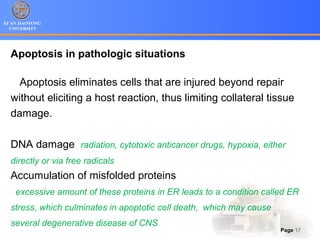
Apoptosis in pathologic situations
Apoptosis eliminates cells that are injured beyond repair
without eliciting a host reaction, thus limiting collateral tissue
damage.
DNA damage radiation, cytotoxic anticancer drugs, hypoxia, either
directly or via free radicals
Accumulation of misfolded proteins
excessive amount of these proteins in ER leads to a condition called ER
stress, which culminates in apoptotic cell death, which may cause
several degenerative disease of CNS
XI’AN JIAOTONG
UNIVERSITY
Page 18
Cell death in certain infections
Directly such as adenovirus –cytolysis,indirectly cell mediated
immune response ; Conversly, HPV infection
Pathologic atrophy in parenchymal organs after duct
obstruction, such as in pancreas, paroit gland, and kidney
XI’AN JIAOTONG
UNIVERSITY
Page 19
Mechanism of Apoptosis
Apoptosis results from the activation of enzymes called
caspase.
Two distinct pathways converge on caspase activation:
the mitochondrial pathway and the death receptor pathway
XI’AN JIAOTONG
UNIVERSITY
Page 20
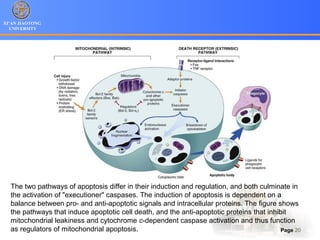
The two pathways of apoptosis differ in their induction and regulation, and both culminate in
the activation of "executioner" caspases. The induction of apoptosis is dependent on a
balance between pro- and anti-apoptotic signals and intracellular proteins. The figure shows
the pathways that induce apoptotic cell death, and the anti-apoptotic proteins that inhibit
mitochondrial leakiness and cytochrome c-dependent caspase activation and thus function
as regulators of mitochondrial apoptosis.
XI’AN JIAOTONG
UNIVERSITY
Page 21
Necroptosis
A hybrid form of cell death that shares aspects of both
necrosis and apoptosis ( programmed necrosis)
Morphologically, and to some extent biochemically, it
resembles necrosis, both characterized by loss of ATP,
swelling of the cell and organelles, generation of ROS,
release of lysosomal enzymes and ultimately rupture of
the plasma membrane as discussed early
XI’AN JIAOTONG
UNIVERSITY
Page 22
Mechanistically, it is triggered by genetically programmed
signal transduction events that culminate in cell death. In this
respect it resembles programmed cell death---the hallmark of
apoptosis. In sharp contrast to apoptosis, the genetic
program that drives necroptosis does not result in caspase
activation (caspase independent programmed cell death)
XI’AN JIAOTONG
UNIVERSITY
Page 23
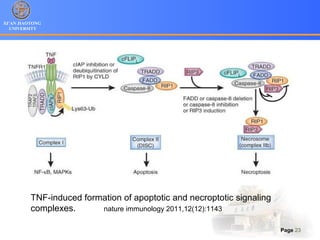
TNF-induced formation of apoptotic and necroptotic signaling
complexes. nature immunology 2011,12(12):1143
XI’AN JIAOTONG
UNIVERSITY
Page 24
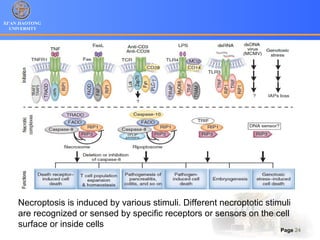
Necroptosis is induced by various stimuli. Different necroptotic stimuli
are recognized or sensed by specific receptors or sensors on the cell
surface or inside cells
XI’AN JIAOTONG
UNIVERSITY
Page 25
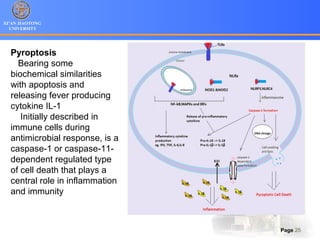
Pyroptosis
Bearing some
biochemical similarities
with apoptosis and
releasing fever producing
cytokine IL-1
Initially described in
immune cells during
antimicrobial response, is a
caspase-1 or caspase-11-
dependent regulated type
of cell death that plays a
central role in inflammation
and immunity
XI’AN JIAOTONG
UNIVERSITY
Page 26
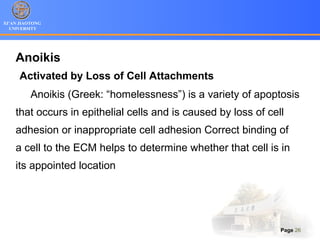
Anoikis
Activated by Loss of Cell Attachments
Anoikis (Greek: “homelessness”) is a variety of apoptosis
that occurs in epithelial cells and is caused by loss of cell
adhesion or inappropriate cell adhesion Correct binding of
a cell to the ECM helps to determine whether that cell is in
its appointed location
XI’AN JIAOTONG
UNIVERSITY
Page 27
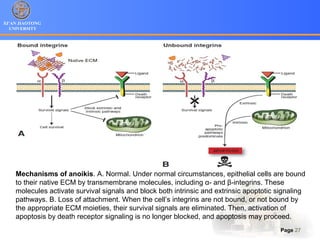
Mechanisms of anoikis. A. Normal. Under normal circumstances, epithelial cells are bound
to their native ECM by transmembrane molecules, including α- and β-integrins. These
molecules activate survival signals and block both intrinsic and extrinsic apoptotic signaling
pathways. B. Loss of attachment. When the cell’s integrins are not bound, or not bound by
the appropriate ECM moieties, their survival signals are eliminated. Then, activation of
apoptosis by death receptor signaling is no longer blocked, and apoptosis may proceed.
XI’AN JIAOTONG
UNIVERSITY
Page 28
Entosis Is a Cell-Eat-Cell Form of Cell Death
Entosis is a type of cellular cannibalism in which cells
that are not professional phagocytes engulf nearby living
cells. Aggressor cells may engulf cells of either the same or
other lineages. For example, hepatocytes may ingest and
destroy autoreactive T lymphocytes, thus inhibiting
experimental autoimmune liver disease. More often, Entosis
is seen in tumors
XI’AN JIAOTONG
UNIVERSITY
Page 29
SUMMARY:
Morphologic Alterations in Injured Cells
Reversible cell injury:
Cell swelling, fatty change, plasma membrane blebbing and
loss of microvilli, mitochondrial swelling, dilation of ER,
eosinophilia (due to decreased cytoplasmic RNA).
XI’AN JIAOTONG
UNIVERSITY
Page 30
Irreversible cell injury
Necrosis: increased eosinophilia; nuclear shrinkage,
fragmentation, and dissolution; breakdown of plasma
membrane and organellar membranes; leakage and
enzymatic digestion of cellular contents(tissue pattern/
inflammation).
Apoptosis: nuclear chromatin condensation; formation of
apoptotic bodies (fragments of nuclei and cytoplasm)
XI’AN JIAOTONG
UNIVERSITY
Page 31
Key concepts on apoptosis
● Regulated mechanism of cell death that serves to
eliminate unwanted and irreparably damaged cells, with the
least possible host reaction
● Characterized by enzymatic degradation of proteins and
DNA, initiated by caspases; and by recognition and removal
of dead cells by phagocytes
XI’AN JIAOTONG
UNIVERSITY
Page 32
● Initiated by two major pathways:
Mitochondrial (intrinsic) pathway is triggered by loss of
survival signals, DNA damage and accumulation of misfolded
proteins (ER stress); associated with leakage of pro-apoptotic
proteins from mitochondrial membrane into the cytoplasm, where
they trigger caspase activation; inhibited by anti-apoptotic
members of the Bcl family, which are induced by survival signals
including growth factors.
Death receptor (extrinsic) pathway is responsible for
elimination of self-reactive lymphocytes and damage by cytotoxic
T lymphocytes; is initiated by engagement of death receptors
(members of the TNF receptor family) by ligands on adjacent
cells.
XI’AN JIAOTONG
UNIVERSITY
Page 33
Key concepts on necroptosis and pyroptosis
● Necroptosis resembles necrosis morphologically and
apoptosis mechanistically as a form of programmed cell
death
● Necroptosis is triggered by ligation of TNFR1, and viral
proteins of RNA and DNA viruses
● Necroptosis is caspase-independent but dependent on
signalling by the RIP1 and RIP3 complex (receptor-interacting
protein 1/3, RIP1/3)
XI’AN JIAOTONG
UNIVERSITY
Page 34
● RIP1-RIP3 signally reduces mitochondria ATP generation,
cause production of ROS, and permeabilize lysosomal
membranes, thereby causing cellular swelling and membrane
damage as occurs in necrosis.
● Release of cellular contents evokes an inflammatory reaction
as in necrosis
● Pyroptosis occurs in cells infected by microbes. It involves
activation of caspase-1 which cleaves the precursor form of IL-
1 to generate biologically active IL-1. Caspase-1 along with
closely related caspase-11 also cause death of the infected
cell.
XI’AN JIAOTONG
UNIVERSITY
Page 35
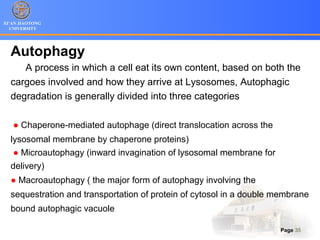
Autophagy
A process in which a cell eat its own content, based on both the
cargoes involved and how they arrive at Lysosomes, Autophagic
degradation is generally divided into three categories
● Chaperone-mediated autophage (direct translocation across the
lysosomal membrane by chaperone proteins)
● Microautophagy (inward invagination of lysosomal membrane for
delivery)
● Macroautophagy ( the major form of autophagy involving the
sequestration and transportation of protein of cytosol in a double membrane
bound autophagic vacuole
XI’AN JIAOTONG
UNIVERSITY
Page 36
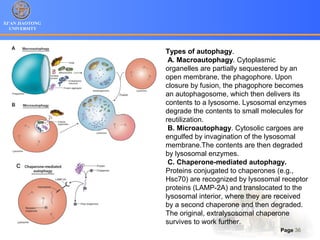
Types of autophagy.
A. Macroautophagy. Cytoplasmic
organelles are partially sequestered by an
open membrane, the phagophore. Upon
closure by fusion, the phagophore becomes
an autophagosome, which then delivers its
contents to a lysosome. Lysosomal enzymes
degrade the contents to small molecules for
reutilization.
B. Microautophagy. Cytosolic cargoes are
engulfed by invagination of the lysosomal
membrane.The contents are then degraded
by lysosomal enzymes.
C. Chaperone-mediated autophagy.
Proteins conjugated to chaperones (e.g.,
Hsc70) are recognized by lysosomal receptor
proteins (LAMP-2A) and translocated to the
lysosomal interior, where they are received
by a second chaperone and then degraded.
The original, extralysosomal chaperone
survives to work further.
XI’AN JIAOTONG
UNIVERSITY
Page 37
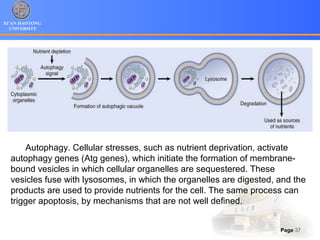
Autophagy. Cellular stresses, such as nutrient deprivation, activate
autophagy genes (Atg genes), which initiate the formation of membrane-
bound vesicles in which cellular organelles are sequestered. These
vesicles fuse with lysosomes, in which the organelles are digested, and the
products are used to provide nutrients for the cell. The same process can
trigger apoptosis, by mechanisms that are not well defined.
XI’AN JIAOTONG
UNIVERSITY
Page 38
XI’AN JIAOTONG
UNIVERSITY
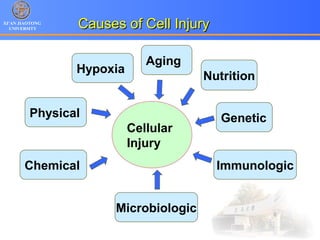
Cellular
Injury
Microbiologic
Immunologic
GeneticPhysical
Chemical
Hypoxia
Nutrition
Aging
Causes of Cell InjuryCauses of Cell Injury
XI’AN JIAOTONG
UNIVERSITY
Page 40
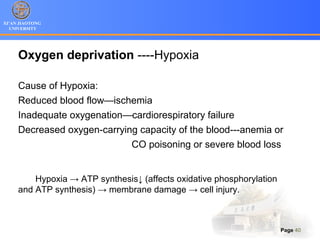
Oxygen deprivation ----Hypoxia
Cause of Hypoxia:
Reduced blood flow—ischemia
Inadequate oxygenation—cardiorespiratory failure
Decreased oxygen-carrying capacity of the blood---anemia or
CO poisoning or severe blood loss
Hypoxia → ATP synthesis↓ (affects oxidative phosphorylation
and ATP synthesis) → membrane damage → cell injury.
XI’AN JIAOTONG
UNIVERSITY
Page 41
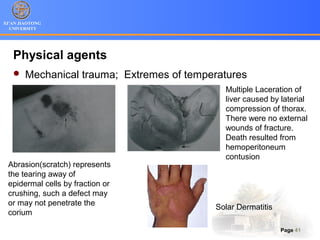
Physical agents
 Mechanical trauma; Extremes of temperatures
Abrasion(scratch) represents
the tearing away of
epidermal cells by fraction or
crushing, such a defect may
or may not penetrate the
corium
Multiple Laceration of
liver caused by laterial
compression of thorax.
There were no external
wounds of fracture.
Death resulted from
hemoperitoneum
contusion
Solar Dermatitis
XI’AN JIAOTONG
UNIVERSITY
Page 42
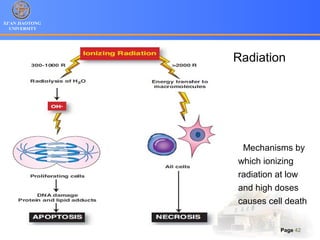
Mechanisms by
which ionizing
radiation at low
and high doses
causes cell death
Radiation
XI’AN JIAOTONG
UNIVERSITY
Page 43
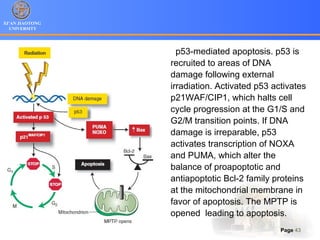
p53-mediated apoptosis. p53 is
recruited to areas of DNA
damage following external
irradiation. Activated p53 activates
p21WAF/CIP1, which halts cell
cycle progression at the G1/S and
G2/M transition points. If DNA
damage is irreparable, p53
activates transcription of NOXA
and PUMA, which alter the
balance of proapoptotic and
antiapoptotic Bcl-2 family proteins
at the mitochondrial membrane in
favor of apoptosis. The MPTP is
opened leading to apoptosis.
XI’AN JIAOTONG
UNIVERSITY
Page 44
Chemical agents
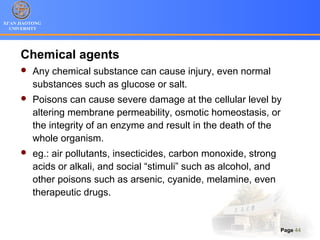
 Any chemical substance can cause injury, even normal
substances such as glucose or salt.
 Poisons can cause severe damage at the cellular level by
altering membrane permeability, osmotic homeostasis, or
the integrity of an enzyme and result in the death of the
whole organism.
 eg.: air pollutants, insecticides, carbon monoxide, strong
acids or alkali, and social “stimuli” such as alcohol, and
other poisons such as arsenic, cyanide, melamine, even
therapeutic drugs.
XI’AN JIAOTONG
UNIVERSITY
Page 45
Infectious agents
Virus, Rickettsiae, Bacteria, Fungi, Parasites.
Immunologic reactions
May be lifesaving or lethal.
Immune system defends against biologic agents; may lead to
cell injury.
e.g., hypersensitivity: anaphylaxis (asthma), autoimmune
diseases (systemic lupus erythematosus, SLE), etc.
XI’AN JIAOTONG
UNIVERSITY
Page 46
Nutritional imbalances
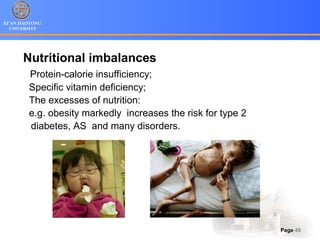
Protein-calorie insufficiency;
Specific vitamin deficiency;
The excesses of nutrition:
e.g. obesity markedly increases the risk for type 2
diabetes, AS and many disorders.
XI’AN JIAOTONG
UNIVERSITY
Page 47
Genetic abnormalities
Chromosome abnormality -Down syndrome
Single base pair mutation– sickle cell anemia
Mutations may cause alteration of functional proteins,
influencing metabolism
Somatic mutations involved in activation of proto-oncogene and deletion of
tumor suppressor gene may lead to cellular malignant transformation.
XI’AN JIAOTONG
UNIVERSITY
Page 48
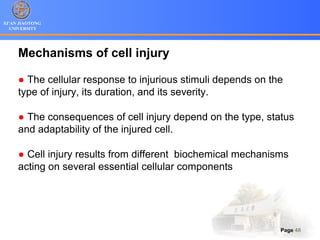
Mechanisms of cell injury
● The cellular response to injurious stimuli depends on the
type of injury, its duration, and its severity.
● The consequences of cell injury depend on the type, status
and adaptability of the injured cell.
● Cell injury results from different biochemical mechanisms
acting on several essential cellular components
XI’AN JIAOTONG
UNIVERSITY
Page 49
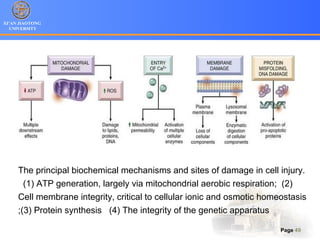
The principal biochemical mechanisms and sites of damage in cell injury.
(1) ATP generation, largely via mitochondrial aerobic respiration; (2)
Cell membrane integrity, critical to cellular ionic and osmotic homeostasis
;(3) Protein synthesis (4) The integrity of the genetic apparatus
XI’AN JIAOTONG
UNIVERSITY
Page 50
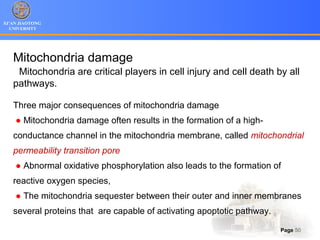
Mitochondria damage
Mitochondria are critical players in cell injury and cell death by all
pathways.
Three major consequences of mitochondria damage
● Mitochondria damage often results in the formation of a high-
conductance channel in the mitochondria membrane, called mitochondrial
permeability transition pore
● Abnormal oxidative phosphorylation also leads to the formation of
reactive oxygen species,
● The mitochondria sequester between their outer and inner membranes
several proteins that are capable of activating apoptotic pathway.
XI’AN JIAOTONG
UNIVERSITY
Page 51
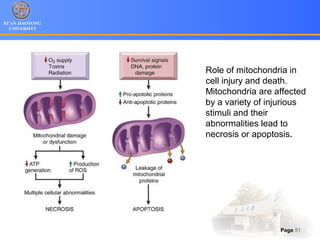
Role of mitochondria in
cell injury and death.
Mitochondria are affected
by a variety of injurious
stimuli and their
abnormalities lead to
necrosis or apoptosis.
XI’AN JIAOTONG
UNIVERSITY
Page 52
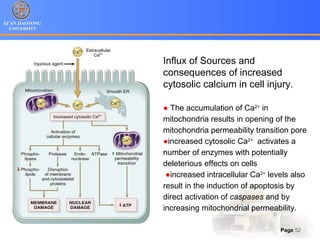
Influx of Sources and
consequences of increased
cytosolic calcium in cell injury.
● The accumulation of Ca2+
in
mitochondria results in opening of the
mitochondria permeability transition pore
●increased cytosolic Ca2+
activates a
number of enzymes with potentially
deleterious effects on cells
●increased intracellular Ca2+
levels also
result in the induction of apoptosis by
direct activation of caspases and by
increasing mitochondrial permeability.
XI’AN JIAOTONG
UNIVERSITY
Page 53
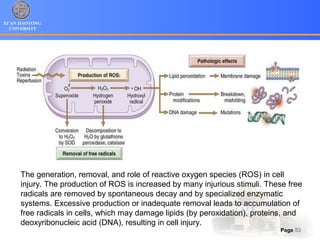
The generation, removal, and role of reactive oxygen species (ROS) in cell
injury. The production of ROS is increased by many injurious stimuli. These free
radicals are removed by spontaneous decay and by specialized enzymatic
systems. Excessive production or inadequate removal leads to accumulation of
free radicals in cells, which may damage lipids (by peroxidation), proteins, and
deoxyribonucleic acid (DNA), resulting in cell injury.
XI’AN JIAOTONG
UNIVERSITY
Page 54
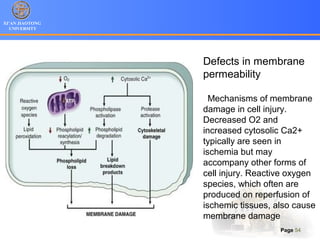
Defects in membrane
permeability
Mechanisms of membrane
damage in cell injury.
Decreased O2 and
increased cytosolic Ca2+
typically are seen in
ischemia but may
accompany other forms of
cell injury. Reactive oxygen
species, which often are
produced on reperfusion of
ischemic tissues, also cause
membrane damage
XI’AN JIAOTONG
UNIVERSITY
Page 55
Damage to DNA and proteins
Cells have mechanisms that repair damage to DNA,
but if DNA damage is too severe to be corrected(e.g.,
after exposure to DNA damaging drugs, radiation, or
oxidative stress), the cell initiates a suicide program
that results in death by apoptosis
XI’AN JIAOTONG
UNIVERSITY
Page 56
Aging
Biological aging can be defined as a constellation
of deleterious functional and structural changes that
are inevitable consequences of longevity.
Importantly, aging must be distinguished from disease.
Although the aging process may increase vulnerability to
many diseases, it is independent of the pathogenesis of any
specific illness.
Biological longevity is generally interpreted as the extension of life
well beyond the period of reproduction and childrearing
XI’AN JIAOTONG
UNIVERSITY
Page 57
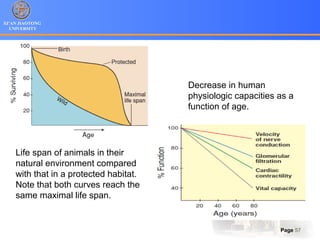
Life span of animals in their
natural environment compared
with that in a protected habitat.
Note that both curves reach the
same maximal life span.
Decrease in human
physiologic capacities as a
function of age.
XI’AN JIAOTONG
UNIVERSITY
Page 58
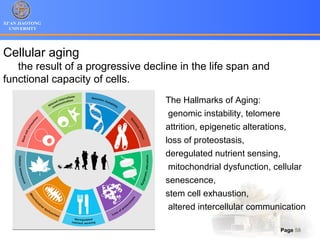
Cellular aging
the result of a progressive decline in the life span and
functional capacity of cells.
The Hallmarks of Aging:
genomic instability, telomere
attrition, epigenetic alterations,
loss of proteostasis,
deregulated nutrient sensing,
mitochondrial dysfunction, cellular
senescence,
stem cell exhaustion,
altered intercellular communication
XI’AN JIAOTONG
UNIVERSITY
Page 59
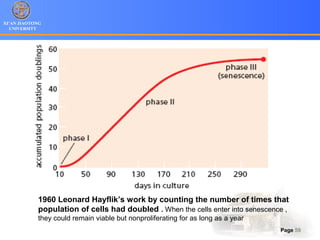
1960 Leonard Hayflik’s work by counting the number of times that
population of cells had doubled . When the cells enter into senescence ,
they could remain viable but nonproliferating for as long as a year
XI’AN JIAOTONG
UNIVERSITY
Page 60
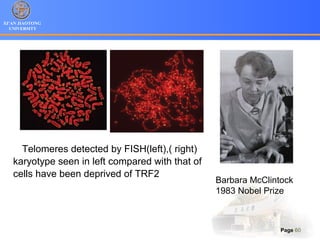
Barbara McClintock
1983 Nobel Prize
Telomeres detected by FISH(left),( right)
karyotype seen in left compared with that of
cells have been deprived of TRF2
XI’AN JIAOTONG
UNIVERSITY
Page 61
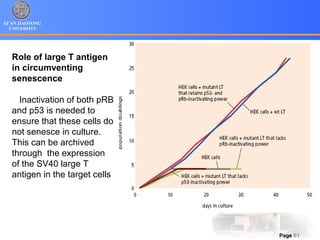
Role of large T antigen
in circumventing
senescence
Inactivation of both pRB
and p53 is needed to
ensure that these cells do
not senesce in culture.
This can be archived
through the expression
of the SV40 large T
antigen in the target cells
XI’AN JIAOTONG
UNIVERSITY
Page 62
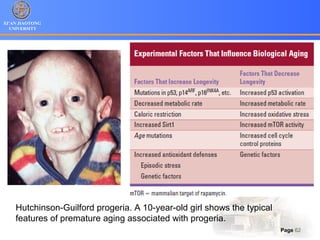
Hutchinson-Guilford progeria. A 10-year-old girl shows the typical
features of premature aging associated with progeria.
XI’AN JIAOTONG
UNIVERSITY
Page 63
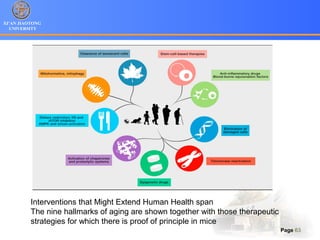
Interventions that Might Extend Human Health span
The nine hallmarks of aging are shown together with those therapeutic
strategies for which there is proof of principle in mice

4.pathology apoptosis2016

  • 1.
    Pathology ---Cell Injury, DeathAnd Adaptation Xi’an Jiaotong University 2017.1.2017.1.
  • 2.
    XI’AN JIAOTONG UNIVERSITY Page 2 ProgrammedCell Death (PCD) Refers to processes that are lethal to individual cells and are regulated by pre-existing signaling pathways. PCD is part of the balance between the life and death of cells and determines that a cell dies when it is no longer useful or when its survival may be harmful to the larger organism.
  • 3.
    XI’AN JIAOTONG UNIVERSITY Page 3 Apoptosis Apathway of cell death that is induced by a tightly regulated suicide program in which cells destined to die, activate intrinsic enzymes that degrade the cells’own nuclear DNA and nuclear and cytoplasmic proteins Apoptosis is a form of PCD that relies exclusively on the caspase cascade Originally, PCD was synonymous with apoptosis. However, mutant mice lacking the key elements of the apoptotic machinery develop almost normally. This observation indicated that alternatives to apoptosis exist. Thus, a number of mechanisms of PCD have been identified
  • 4.
    XI’AN JIAOTONG UNIVERSITY Page 4 Morphologicchanges Cell shrinkage Recall that in other forms of cell injury, an early feature is cell swelling, not shrinkage Chromatin condensation and fragmentation. The most characteristic feature of apoptosis Formation of cytoplasmic blebs and apoptotic bodies.
  • 5.
    XI’AN JIAOTONG UNIVERSITY Page 5 Phagocytosisof apoptotic cells or cell bodies, usually by macrophages. Histologically, apoptotic cell appears as a round or oval mass of intensely eosiniphilic cytoplasm (H&E staining) with or without fragments of dense nuclear chromatin. Because these pieces are quickly formed and phagocytosed, without eliciting inflammation, even substantial apoptosis may be more difficult to detect histologically.
  • 6.
    XI’AN JIAOTONG UNIVERSITY Page 6 Sequenceof ultrastructural changes in apoptosis of glandular epithelial cells. The earliest change is segregation of the chromatin in sharply circumscribed masses that abut nuclear envelop (1). Convolution of the nuclear and cell outlines precedes fragmentation of the nucleus and budding of the cell as a whole to produce membrane-bound apoptotic bodies of varying size and structure(2), which are phagocytosed by adjacent epithelial cells(3) and macrophages(4) and degraded within lysosomes(5). Finally, the bodies are reduced to unrecognizable residues(6). An occasional apoptotic body escapes phagocytosis and is shed into the gland lumen(7) where it undergoes degenerative changes similar to those occurring in necrosis(8)
  • 7.
    XI’AN JIAOTONG UNIVERSITY Page 7 Earlyapoptosis of acinar cell in rat pancreas after duct ligation. Note granular fibrillar core remnant of nucleolus adjacent condensed chromatin(arrow) adjacent cells appear normal(x6200) Apoptotic HeLa cell after addition of actinomycin D to cultured medium(SEM x9000)
  • 8.
    XI’AN JIAOTONG UNIVERSITY Page 8 Earlyapoptotosis of rat prostatic epithelial cell after castration.Note irregular cell outline, basal position of cell in epithelium, segregated chromatin in nuclear fragments and whorling of endoplasmic reticulum(x8200) Intact extracellular condensed apoptotic bodies, some containing characteristic nuclear fragments, derived from transplanted EMT6 sarcoma cell after mild hyperthermic treatment(x10,000)
  • 9.
    XI’AN JIAOTONG UNIVERSITY Page 9 Crowdedcondensed intraepithelial apoptotic bodies derived from pancreas acinar cell after subcutaneous cerulein injection(x8,300). Well preserved large apoptotic body with characteristic nuclear fragment phagocytosed by a tubular epithelial cell in rat kidney after ureteric ligation(x4500)
  • 10.
    XI’AN JIAOTONG UNIVERSITY Page 10 Partlydegraded apoptotic bodies, one with nuclear fragments(arrow), in intraepithelial macrophage in rat pancreas after duct ligation(x7500) Well-preserved hepatocyte-derived apoptotic body with condensed cytoplasm, crowded organelles, and characreistic nuclear fragment phagocytosed by Kupffer cell in rat liver after portal vein branch ligation
  • 11.
    XI’AN JIAOTONG UNIVERSITY Page 11 Multiplepartly degraded apoptotic bodies in intraepithelial macrophage in rat pancreas after duct ligation(x6700) Residual bodies in cytoplasm of intraepithelial macrophage in rat pancreas after duct ligation(x7500)
  • 12.
    XI’AN JIAOTONG UNIVERSITY Page 12 Luminalapoptotic bodies in lactating mouse breast after weaning(A),intact apoptotic bodies with characteristic nuclear fragment. (B), Partly degraded apoptotic body with nuclear fragment showing decreased density and loss of membrane integrity. (C) , Degraded apoptotic body showing membrane loss and dispersal of nuclear fragments(arrows) and organelles.(x3000, 3900, 5200)
  • 13.
    XI’AN JIAOTONG UNIVERSITY Page 13 Apoptoticcells and bodies in rat liver after portal vein branch ligation. Note apoptotic hepatocyte with characteristic crescentic chromatin clumps in nucleus(1), budding cells(2), and typic apoptotic body with basophilic chromatin dot(3). Also note numerous small inconspicuous phagocytosed apoptotic bodies without nuclear fragments in the backgroud Clusters of apoptotic bodies in rat parotid after duct ligation. Some small clusters may represent bodies derived from a single cell(short arrow). Larger clusters are likely to be phagocytosed apoptotic bodies within intraepithelial macrophages(long arrow)
  • 14.
    XI’AN JIAOTONG UNIVERSITY Page 14 Aoptosisof epithelial cells(arrow) in ductules of normal human breast Apoptotic bodies in intraepithelial macrophages in late secretory human endometrium
  • 15.
    XI’AN JIAOTONG UNIVERSITY Page 15 Causeof apoptosis Apoptosis in physiologic situations Death by apoptosis is a normal phenomenon that serves to eliminate cells that are no longer needed, and to maintain a steady number of various cell populations in tissue The destruction of cells during embryogenesis Fetal development involves the sequential appearance and regression of many evolutionary relics.
  • 16.
    XI’AN JIAOTONG UNIVERSITY Page 16 Involutionof hormone-dependent tissue upon hormone withdrawal menstrual cycle, lactating breast after weaning Cell loss in proliferating cell populations turnover of intestinal crypt epithelia, bone marrow lymphocytes, Elimination of potentially harmful self-reactive lymphocytes either before or after they have completed their maturation Death of host cells that have served their useful purpose neutrophils, lymphocytes at the end of response Cell death induced by cytotoxic T lymphocytes.
  • 17.
    XI’AN JIAOTONG UNIVERSITY Page 17 Apoptosisin pathologic situations Apoptosis eliminates cells that are injured beyond repair without eliciting a host reaction, thus limiting collateral tissue damage. DNA damage radiation, cytotoxic anticancer drugs, hypoxia, either directly or via free radicals Accumulation of misfolded proteins excessive amount of these proteins in ER leads to a condition called ER stress, which culminates in apoptotic cell death, which may cause several degenerative disease of CNS
  • 18.
    XI’AN JIAOTONG UNIVERSITY Page 18 Celldeath in certain infections Directly such as adenovirus –cytolysis,indirectly cell mediated immune response ; Conversly, HPV infection Pathologic atrophy in parenchymal organs after duct obstruction, such as in pancreas, paroit gland, and kidney
  • 19.
    XI’AN JIAOTONG UNIVERSITY Page 19 Mechanismof Apoptosis Apoptosis results from the activation of enzymes called caspase. Two distinct pathways converge on caspase activation: the mitochondrial pathway and the death receptor pathway
  • 20.
    XI’AN JIAOTONG UNIVERSITY Page 20 Thetwo pathways of apoptosis differ in their induction and regulation, and both culminate in the activation of "executioner" caspases. The induction of apoptosis is dependent on a balance between pro- and anti-apoptotic signals and intracellular proteins. The figure shows the pathways that induce apoptotic cell death, and the anti-apoptotic proteins that inhibit mitochondrial leakiness and cytochrome c-dependent caspase activation and thus function as regulators of mitochondrial apoptosis.
  • 21.
    XI’AN JIAOTONG UNIVERSITY Page 21 Necroptosis Ahybrid form of cell death that shares aspects of both necrosis and apoptosis ( programmed necrosis) Morphologically, and to some extent biochemically, it resembles necrosis, both characterized by loss of ATP, swelling of the cell and organelles, generation of ROS, release of lysosomal enzymes and ultimately rupture of the plasma membrane as discussed early
  • 22.
    XI’AN JIAOTONG UNIVERSITY Page 22 Mechanistically,it is triggered by genetically programmed signal transduction events that culminate in cell death. In this respect it resembles programmed cell death---the hallmark of apoptosis. In sharp contrast to apoptosis, the genetic program that drives necroptosis does not result in caspase activation (caspase independent programmed cell death)
  • 23.
    XI’AN JIAOTONG UNIVERSITY Page 23 TNF-inducedformation of apoptotic and necroptotic signaling complexes. nature immunology 2011,12(12):1143
  • 24.
    XI’AN JIAOTONG UNIVERSITY Page 24 Necroptosisis induced by various stimuli. Different necroptotic stimuli are recognized or sensed by specific receptors or sensors on the cell surface or inside cells
  • 25.
    XI’AN JIAOTONG UNIVERSITY Page 25 Pyroptosis Bearingsome biochemical similarities with apoptosis and releasing fever producing cytokine IL-1 Initially described in immune cells during antimicrobial response, is a caspase-1 or caspase-11- dependent regulated type of cell death that plays a central role in inflammation and immunity
  • 26.
    XI’AN JIAOTONG UNIVERSITY Page 26 Anoikis Activatedby Loss of Cell Attachments Anoikis (Greek: “homelessness”) is a variety of apoptosis that occurs in epithelial cells and is caused by loss of cell adhesion or inappropriate cell adhesion Correct binding of a cell to the ECM helps to determine whether that cell is in its appointed location
  • 27.
    XI’AN JIAOTONG UNIVERSITY Page 27 Mechanismsof anoikis. A. Normal. Under normal circumstances, epithelial cells are bound to their native ECM by transmembrane molecules, including α- and β-integrins. These molecules activate survival signals and block both intrinsic and extrinsic apoptotic signaling pathways. B. Loss of attachment. When the cell’s integrins are not bound, or not bound by the appropriate ECM moieties, their survival signals are eliminated. Then, activation of apoptosis by death receptor signaling is no longer blocked, and apoptosis may proceed.
  • 28.
    XI’AN JIAOTONG UNIVERSITY Page 28 EntosisIs a Cell-Eat-Cell Form of Cell Death Entosis is a type of cellular cannibalism in which cells that are not professional phagocytes engulf nearby living cells. Aggressor cells may engulf cells of either the same or other lineages. For example, hepatocytes may ingest and destroy autoreactive T lymphocytes, thus inhibiting experimental autoimmune liver disease. More often, Entosis is seen in tumors
  • 29.
    XI’AN JIAOTONG UNIVERSITY Page 29 SUMMARY: MorphologicAlterations in Injured Cells Reversible cell injury: Cell swelling, fatty change, plasma membrane blebbing and loss of microvilli, mitochondrial swelling, dilation of ER, eosinophilia (due to decreased cytoplasmic RNA).
  • 30.
    XI’AN JIAOTONG UNIVERSITY Page 30 Irreversiblecell injury Necrosis: increased eosinophilia; nuclear shrinkage, fragmentation, and dissolution; breakdown of plasma membrane and organellar membranes; leakage and enzymatic digestion of cellular contents(tissue pattern/ inflammation). Apoptosis: nuclear chromatin condensation; formation of apoptotic bodies (fragments of nuclei and cytoplasm)
  • 31.
    XI’AN JIAOTONG UNIVERSITY Page 31 Keyconcepts on apoptosis ● Regulated mechanism of cell death that serves to eliminate unwanted and irreparably damaged cells, with the least possible host reaction ● Characterized by enzymatic degradation of proteins and DNA, initiated by caspases; and by recognition and removal of dead cells by phagocytes
  • 32.
    XI’AN JIAOTONG UNIVERSITY Page 32 ●Initiated by two major pathways: Mitochondrial (intrinsic) pathway is triggered by loss of survival signals, DNA damage and accumulation of misfolded proteins (ER stress); associated with leakage of pro-apoptotic proteins from mitochondrial membrane into the cytoplasm, where they trigger caspase activation; inhibited by anti-apoptotic members of the Bcl family, which are induced by survival signals including growth factors. Death receptor (extrinsic) pathway is responsible for elimination of self-reactive lymphocytes and damage by cytotoxic T lymphocytes; is initiated by engagement of death receptors (members of the TNF receptor family) by ligands on adjacent cells.
  • 33.
    XI’AN JIAOTONG UNIVERSITY Page 33 Keyconcepts on necroptosis and pyroptosis ● Necroptosis resembles necrosis morphologically and apoptosis mechanistically as a form of programmed cell death ● Necroptosis is triggered by ligation of TNFR1, and viral proteins of RNA and DNA viruses ● Necroptosis is caspase-independent but dependent on signalling by the RIP1 and RIP3 complex (receptor-interacting protein 1/3, RIP1/3)
  • 34.
    XI’AN JIAOTONG UNIVERSITY Page 34 ●RIP1-RIP3 signally reduces mitochondria ATP generation, cause production of ROS, and permeabilize lysosomal membranes, thereby causing cellular swelling and membrane damage as occurs in necrosis. ● Release of cellular contents evokes an inflammatory reaction as in necrosis ● Pyroptosis occurs in cells infected by microbes. It involves activation of caspase-1 which cleaves the precursor form of IL- 1 to generate biologically active IL-1. Caspase-1 along with closely related caspase-11 also cause death of the infected cell.
  • 35.
    XI’AN JIAOTONG UNIVERSITY Page 35 Autophagy Aprocess in which a cell eat its own content, based on both the cargoes involved and how they arrive at Lysosomes, Autophagic degradation is generally divided into three categories ● Chaperone-mediated autophage (direct translocation across the lysosomal membrane by chaperone proteins) ● Microautophagy (inward invagination of lysosomal membrane for delivery) ● Macroautophagy ( the major form of autophagy involving the sequestration and transportation of protein of cytosol in a double membrane bound autophagic vacuole
  • 36.
    XI’AN JIAOTONG UNIVERSITY Page 36 Typesof autophagy. A. Macroautophagy. Cytoplasmic organelles are partially sequestered by an open membrane, the phagophore. Upon closure by fusion, the phagophore becomes an autophagosome, which then delivers its contents to a lysosome. Lysosomal enzymes degrade the contents to small molecules for reutilization. B. Microautophagy. Cytosolic cargoes are engulfed by invagination of the lysosomal membrane.The contents are then degraded by lysosomal enzymes. C. Chaperone-mediated autophagy. Proteins conjugated to chaperones (e.g., Hsc70) are recognized by lysosomal receptor proteins (LAMP-2A) and translocated to the lysosomal interior, where they are received by a second chaperone and then degraded. The original, extralysosomal chaperone survives to work further.
  • 37.
    XI’AN JIAOTONG UNIVERSITY Page 37 Autophagy.Cellular stresses, such as nutrient deprivation, activate autophagy genes (Atg genes), which initiate the formation of membrane- bound vesicles in which cellular organelles are sequestered. These vesicles fuse with lysosomes, in which the organelles are digested, and the products are used to provide nutrients for the cell. The same process can trigger apoptosis, by mechanisms that are not well defined.
  • 38.
  • 39.
  • 40.
    XI’AN JIAOTONG UNIVERSITY Page 40 Oxygendeprivation ----Hypoxia Cause of Hypoxia: Reduced blood flow—ischemia Inadequate oxygenation—cardiorespiratory failure Decreased oxygen-carrying capacity of the blood---anemia or CO poisoning or severe blood loss Hypoxia → ATP synthesis↓ (affects oxidative phosphorylation and ATP synthesis) → membrane damage → cell injury.
  • 41.
    XI’AN JIAOTONG UNIVERSITY Page 41 Physicalagents  Mechanical trauma; Extremes of temperatures Abrasion(scratch) represents the tearing away of epidermal cells by fraction or crushing, such a defect may or may not penetrate the corium Multiple Laceration of liver caused by laterial compression of thorax. There were no external wounds of fracture. Death resulted from hemoperitoneum contusion Solar Dermatitis
  • 42.
    XI’AN JIAOTONG UNIVERSITY Page 42 Mechanismsby which ionizing radiation at low and high doses causes cell death Radiation
  • 43.
    XI’AN JIAOTONG UNIVERSITY Page 43 p53-mediatedapoptosis. p53 is recruited to areas of DNA damage following external irradiation. Activated p53 activates p21WAF/CIP1, which halts cell cycle progression at the G1/S and G2/M transition points. If DNA damage is irreparable, p53 activates transcription of NOXA and PUMA, which alter the balance of proapoptotic and antiapoptotic Bcl-2 family proteins at the mitochondrial membrane in favor of apoptosis. The MPTP is opened leading to apoptosis.
  • 44.
    XI’AN JIAOTONG UNIVERSITY Page 44 Chemicalagents  Any chemical substance can cause injury, even normal substances such as glucose or salt.  Poisons can cause severe damage at the cellular level by altering membrane permeability, osmotic homeostasis, or the integrity of an enzyme and result in the death of the whole organism.  eg.: air pollutants, insecticides, carbon monoxide, strong acids or alkali, and social “stimuli” such as alcohol, and other poisons such as arsenic, cyanide, melamine, even therapeutic drugs.
  • 45.
    XI’AN JIAOTONG UNIVERSITY Page 45 Infectiousagents Virus, Rickettsiae, Bacteria, Fungi, Parasites. Immunologic reactions May be lifesaving or lethal. Immune system defends against biologic agents; may lead to cell injury. e.g., hypersensitivity: anaphylaxis (asthma), autoimmune diseases (systemic lupus erythematosus, SLE), etc.
  • 46.
    XI’AN JIAOTONG UNIVERSITY Page 46 Nutritionalimbalances Protein-calorie insufficiency; Specific vitamin deficiency; The excesses of nutrition: e.g. obesity markedly increases the risk for type 2 diabetes, AS and many disorders.
  • 47.
    XI’AN JIAOTONG UNIVERSITY Page 47 Geneticabnormalities Chromosome abnormality -Down syndrome Single base pair mutation– sickle cell anemia Mutations may cause alteration of functional proteins, influencing metabolism Somatic mutations involved in activation of proto-oncogene and deletion of tumor suppressor gene may lead to cellular malignant transformation.
  • 48.
    XI’AN JIAOTONG UNIVERSITY Page 48 Mechanismsof cell injury ● The cellular response to injurious stimuli depends on the type of injury, its duration, and its severity. ● The consequences of cell injury depend on the type, status and adaptability of the injured cell. ● Cell injury results from different biochemical mechanisms acting on several essential cellular components
  • 49.
    XI’AN JIAOTONG UNIVERSITY Page 49 Theprincipal biochemical mechanisms and sites of damage in cell injury. (1) ATP generation, largely via mitochondrial aerobic respiration; (2) Cell membrane integrity, critical to cellular ionic and osmotic homeostasis ;(3) Protein synthesis (4) The integrity of the genetic apparatus
  • 50.
    XI’AN JIAOTONG UNIVERSITY Page 50 Mitochondriadamage Mitochondria are critical players in cell injury and cell death by all pathways. Three major consequences of mitochondria damage ● Mitochondria damage often results in the formation of a high- conductance channel in the mitochondria membrane, called mitochondrial permeability transition pore ● Abnormal oxidative phosphorylation also leads to the formation of reactive oxygen species, ● The mitochondria sequester between their outer and inner membranes several proteins that are capable of activating apoptotic pathway.
  • 51.
    XI’AN JIAOTONG UNIVERSITY Page 51 Roleof mitochondria in cell injury and death. Mitochondria are affected by a variety of injurious stimuli and their abnormalities lead to necrosis or apoptosis.
  • 52.
    XI’AN JIAOTONG UNIVERSITY Page 52 Influxof Sources and consequences of increased cytosolic calcium in cell injury. ● The accumulation of Ca2+ in mitochondria results in opening of the mitochondria permeability transition pore ●increased cytosolic Ca2+ activates a number of enzymes with potentially deleterious effects on cells ●increased intracellular Ca2+ levels also result in the induction of apoptosis by direct activation of caspases and by increasing mitochondrial permeability.
  • 53.
    XI’AN JIAOTONG UNIVERSITY Page 53 Thegeneration, removal, and role of reactive oxygen species (ROS) in cell injury. The production of ROS is increased by many injurious stimuli. These free radicals are removed by spontaneous decay and by specialized enzymatic systems. Excessive production or inadequate removal leads to accumulation of free radicals in cells, which may damage lipids (by peroxidation), proteins, and deoxyribonucleic acid (DNA), resulting in cell injury.
  • 54.
    XI’AN JIAOTONG UNIVERSITY Page 54 Defectsin membrane permeability Mechanisms of membrane damage in cell injury. Decreased O2 and increased cytosolic Ca2+ typically are seen in ischemia but may accompany other forms of cell injury. Reactive oxygen species, which often are produced on reperfusion of ischemic tissues, also cause membrane damage
  • 55.
    XI’AN JIAOTONG UNIVERSITY Page 55 Damageto DNA and proteins Cells have mechanisms that repair damage to DNA, but if DNA damage is too severe to be corrected(e.g., after exposure to DNA damaging drugs, radiation, or oxidative stress), the cell initiates a suicide program that results in death by apoptosis
  • 56.
    XI’AN JIAOTONG UNIVERSITY Page 56 Aging Biologicalaging can be defined as a constellation of deleterious functional and structural changes that are inevitable consequences of longevity. Importantly, aging must be distinguished from disease. Although the aging process may increase vulnerability to many diseases, it is independent of the pathogenesis of any specific illness. Biological longevity is generally interpreted as the extension of life well beyond the period of reproduction and childrearing
  • 57.
    XI’AN JIAOTONG UNIVERSITY Page 57 Lifespan of animals in their natural environment compared with that in a protected habitat. Note that both curves reach the same maximal life span. Decrease in human physiologic capacities as a function of age.
  • 58.
    XI’AN JIAOTONG UNIVERSITY Page 58 Cellularaging the result of a progressive decline in the life span and functional capacity of cells. The Hallmarks of Aging: genomic instability, telomere attrition, epigenetic alterations, loss of proteostasis, deregulated nutrient sensing, mitochondrial dysfunction, cellular senescence, stem cell exhaustion, altered intercellular communication
  • 59.
    XI’AN JIAOTONG UNIVERSITY Page 59 1960Leonard Hayflik’s work by counting the number of times that population of cells had doubled . When the cells enter into senescence , they could remain viable but nonproliferating for as long as a year
  • 60.
    XI’AN JIAOTONG UNIVERSITY Page 60 BarbaraMcClintock 1983 Nobel Prize Telomeres detected by FISH(left),( right) karyotype seen in left compared with that of cells have been deprived of TRF2
  • 61.
    XI’AN JIAOTONG UNIVERSITY Page 61 Roleof large T antigen in circumventing senescence Inactivation of both pRB and p53 is needed to ensure that these cells do not senesce in culture. This can be archived through the expression of the SV40 large T antigen in the target cells
  • 62.
    XI’AN JIAOTONG UNIVERSITY Page 62 Hutchinson-Guilfordprogeria. A 10-year-old girl shows the typical features of premature aging associated with progeria.
  • 63.
    XI’AN JIAOTONG UNIVERSITY Page 63 Interventionsthat Might Extend Human Health span The nine hallmarks of aging are shown together with those therapeutic strategies for which there is proof of principle in mice