Today’s Agenda

                   Augmented Reality, BYOD, eBooks,
   Here Today
                   Cloud computing, Location, Tablets

                    Microlearning, Spaced
Future for Learning
                    learning, Personalized

     Future        Devices, Capabilities, Other


   Discussion      Questions
Future


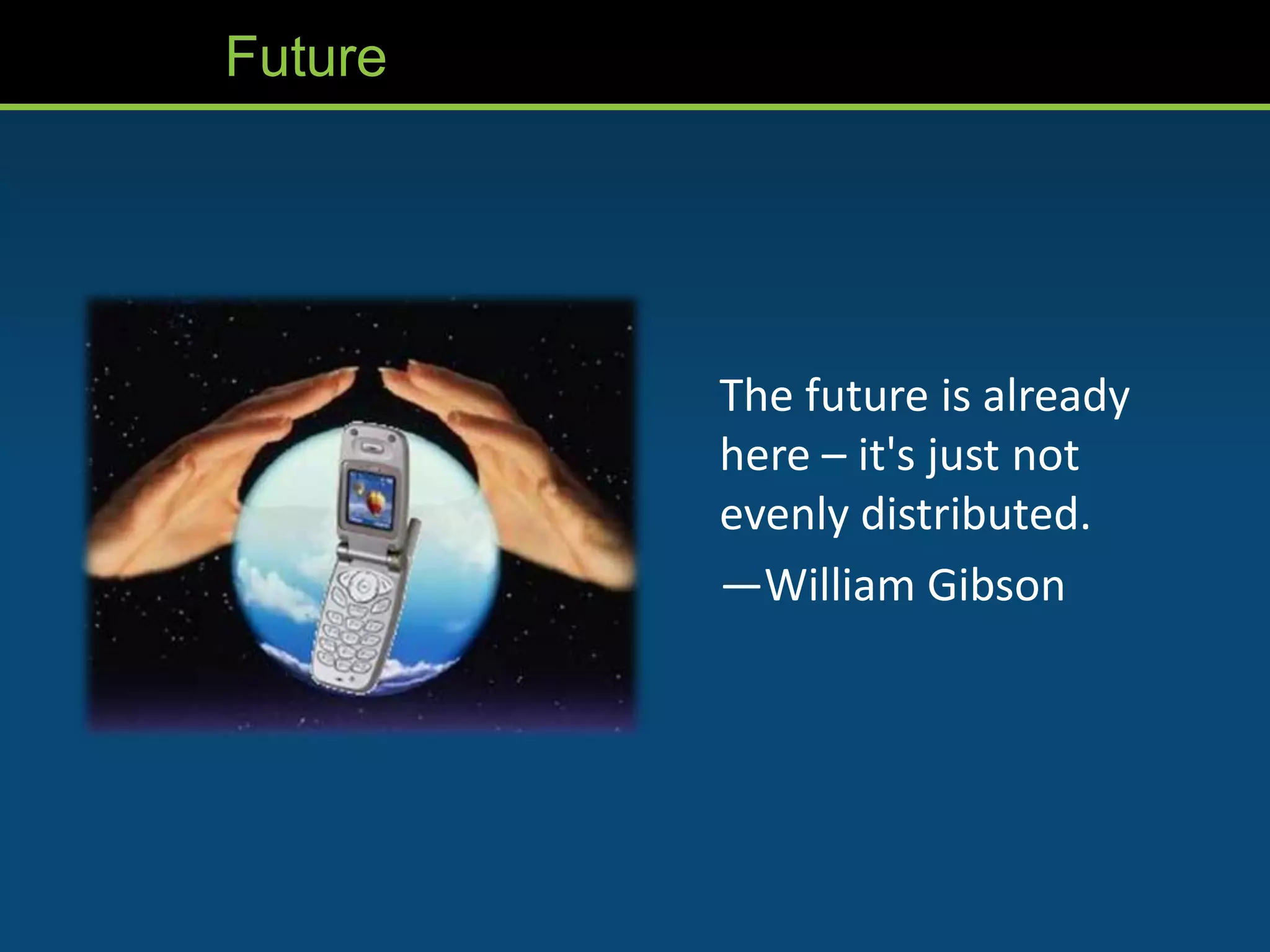
         The future is already
         here – it's just not
         evenly distributed.
         —William Gibson
Augmented Reality
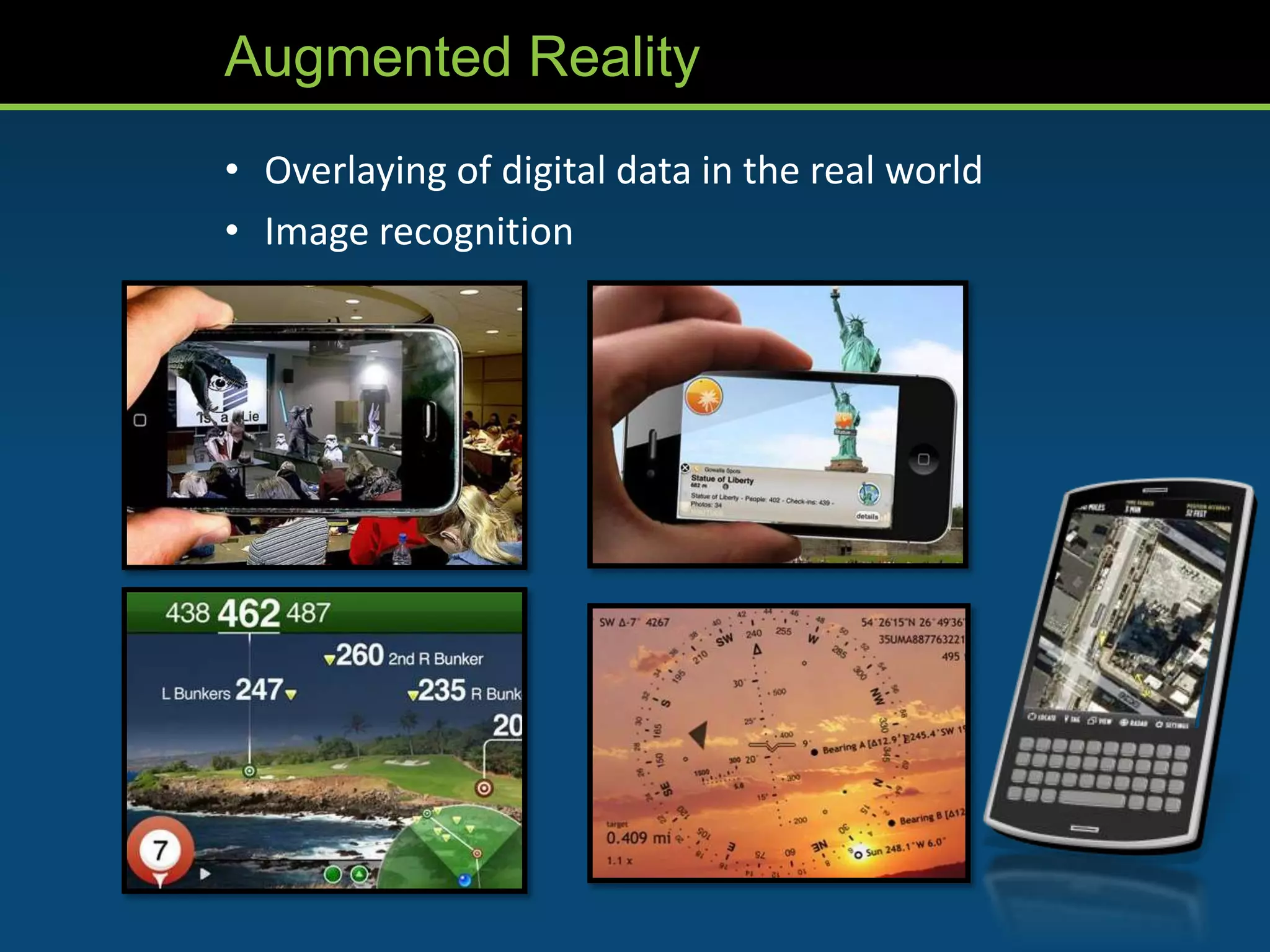
• Overlaying of digital data in the real world
• Image recognition
AR Coming


Video removed from this slide, but viewable at:
Window to the World (CIID/Toyota) –
http://vimeo.com/25547151
Bring Your Own Device (BYOD)
• Students bring their own Wi-Fi enabled devices
• Benefits
   •   Access
   •   Enhance learning experience
   •   Learners familiar
   •   Engagement
   •   Low cost
• Issues
   • Bandwidth (Wi-Fi access)
   • Cross platform issues
   • Equity
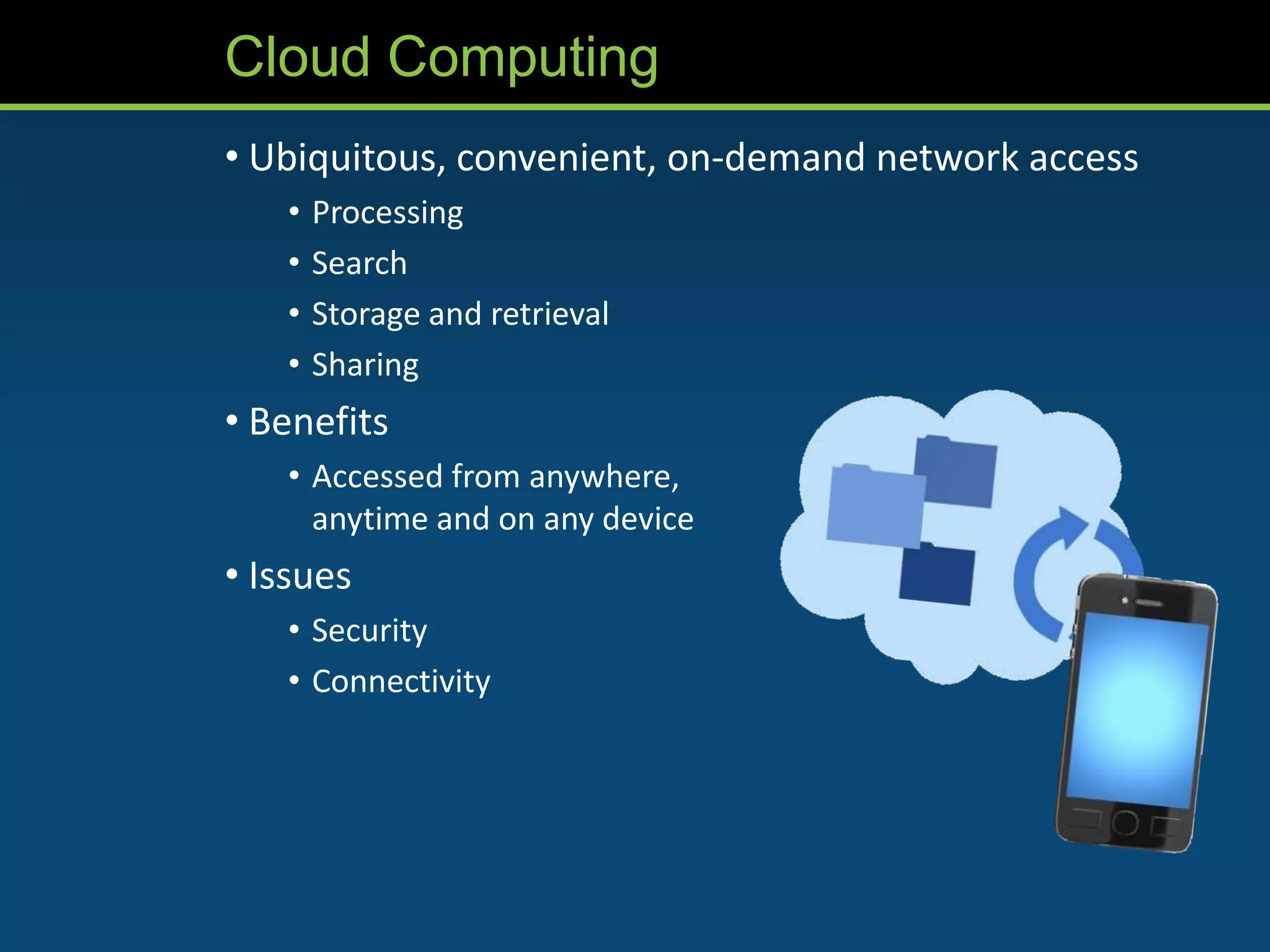
Cloud Computing
• Ubiquitous, convenient, on-demand network access
   •   Processing
   •   Search
   •   Storage and retrieval
   •   Sharing
• Benefits
   • Accessed from anywhere,
     anytime and on any device
• Issues
   • Security
   • Connectivity
eBooks
• Stats
    •   Amazon selling 105 ebooks to 100 print books
    •   Textbook rentals
    •   Library checkouts
    •   South Korea replacing all paper by 2015 (tablets)
• Benefits
    •   Interactivity
    •   Weight
    •   Access
    •   Cost
    •   Long tail
• Issues
    • Availability
    • Formats
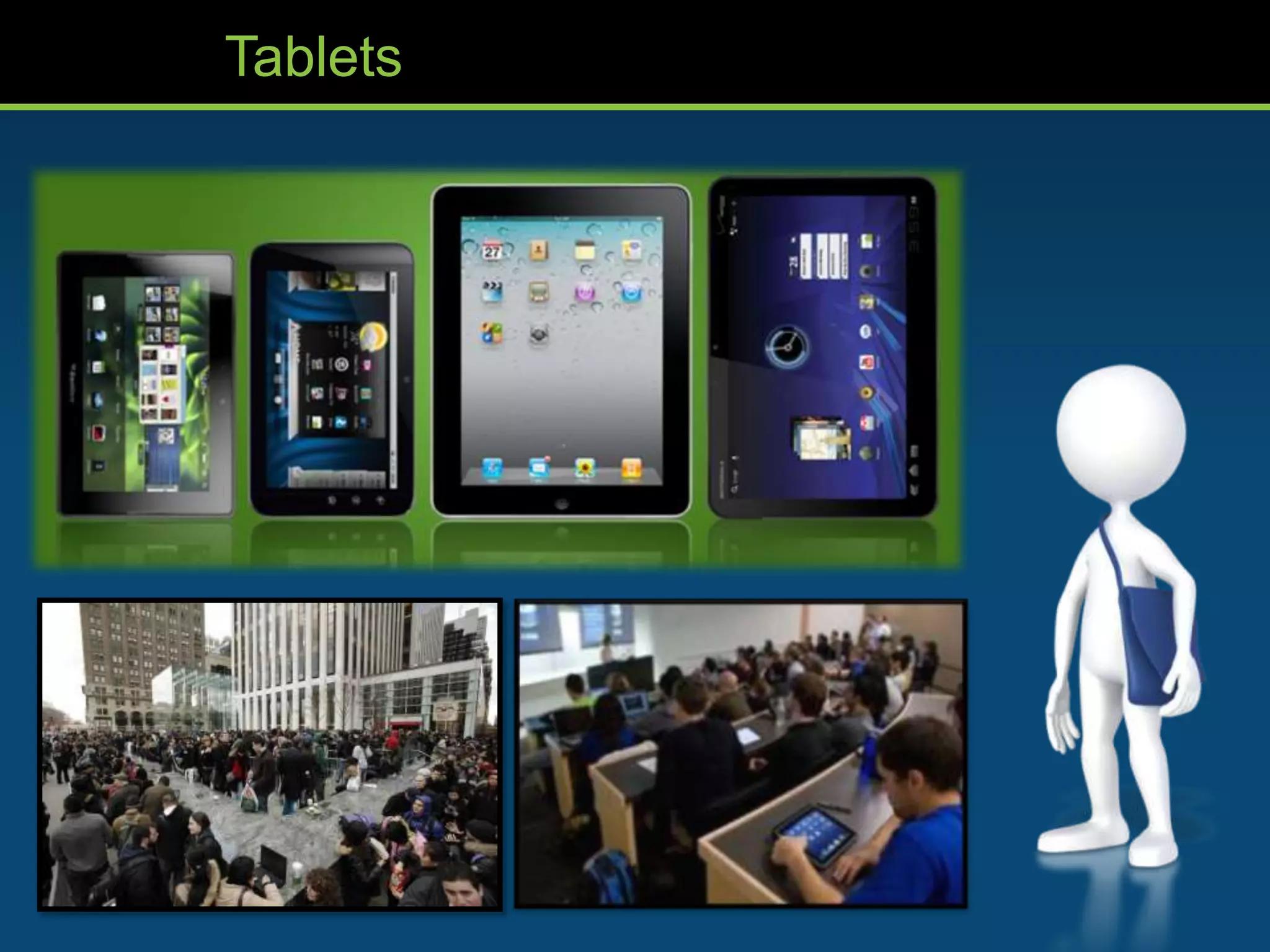
Tablets
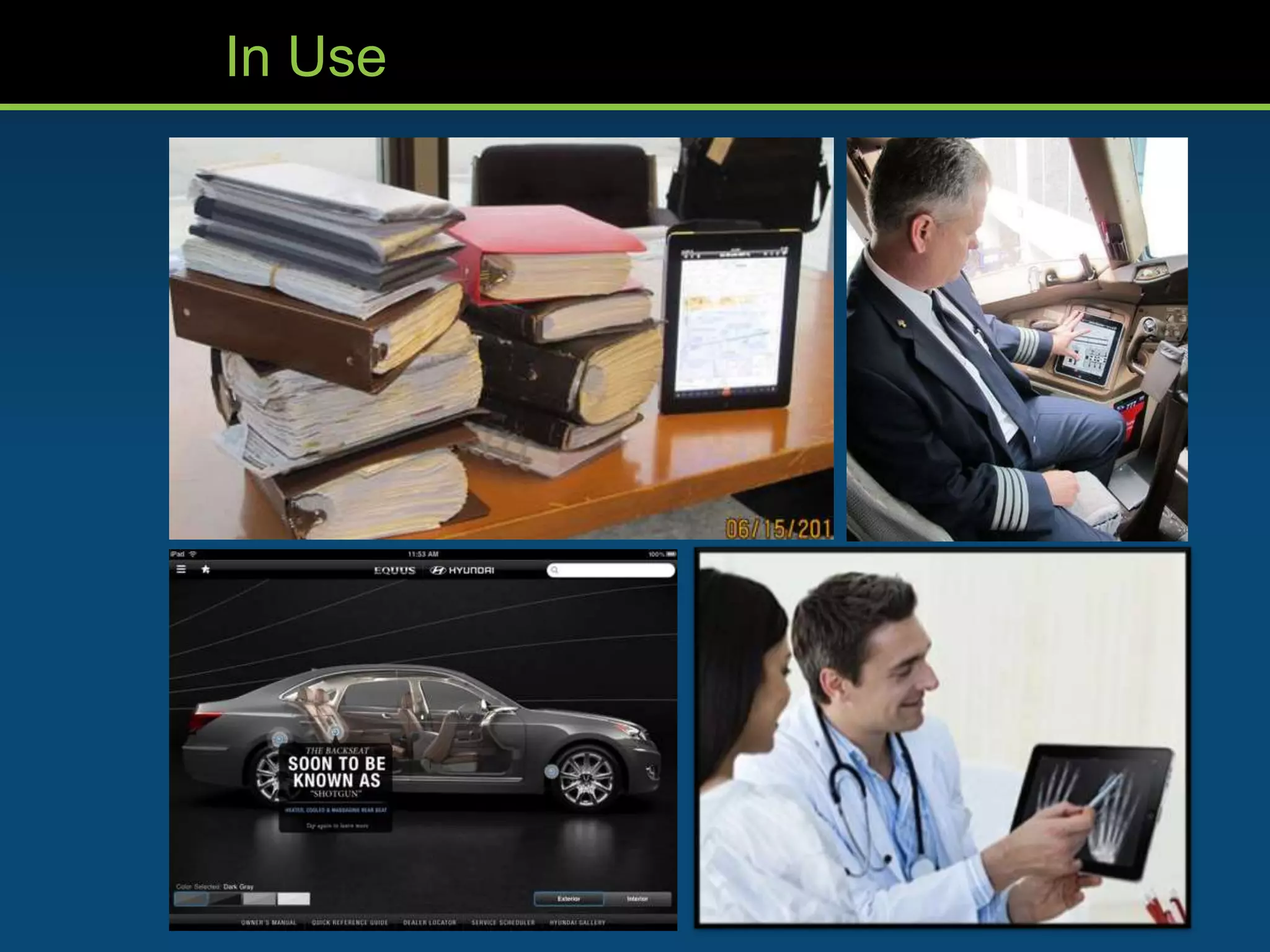
In Use
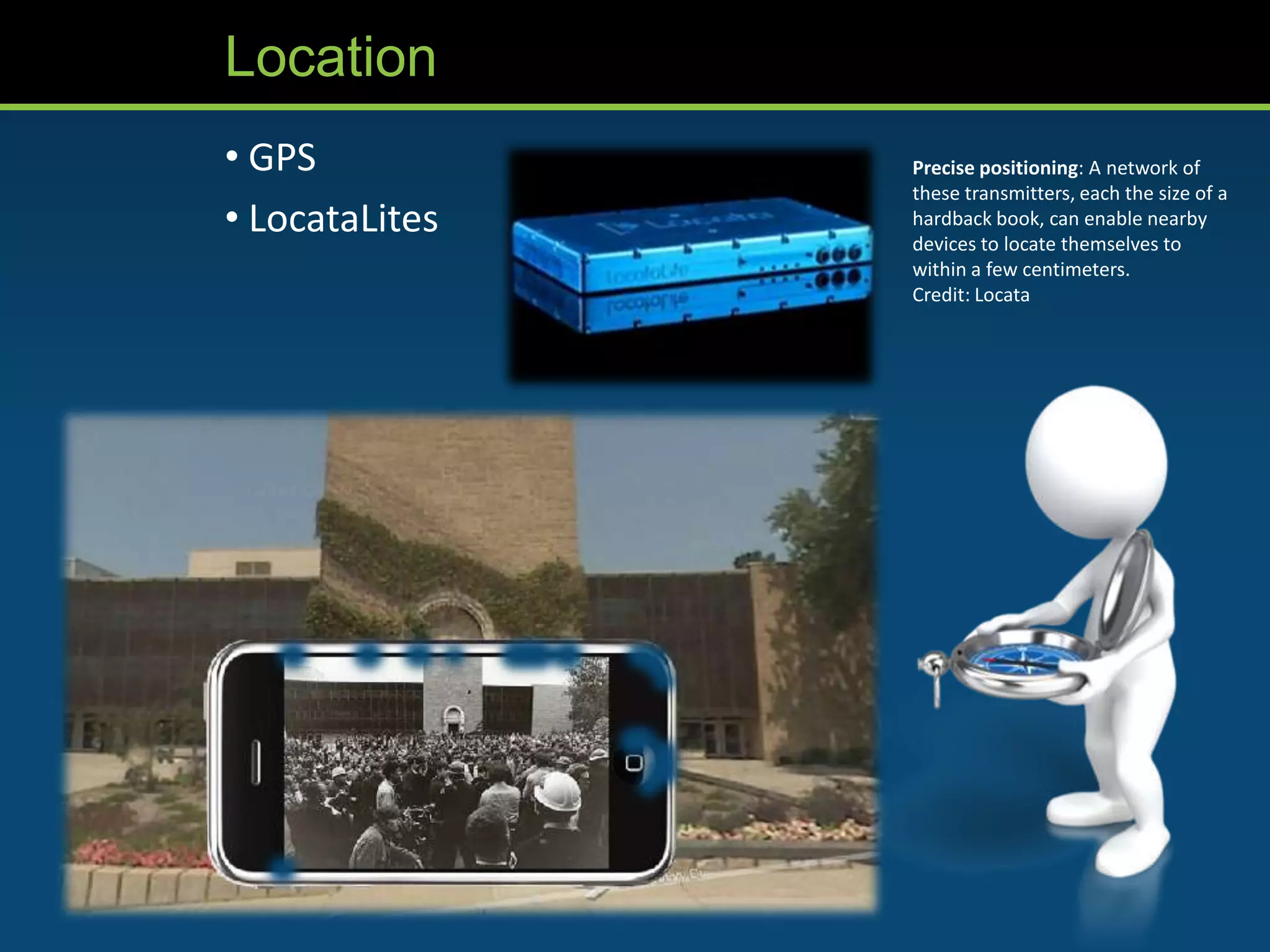
Location
• GPS           Precise positioning: A network of
                these transmitters, each the size of a
• LocataLites   hardback book, can enable nearby
                devices to locate themselves to
                within a few centimeters.
                Credit: Locata
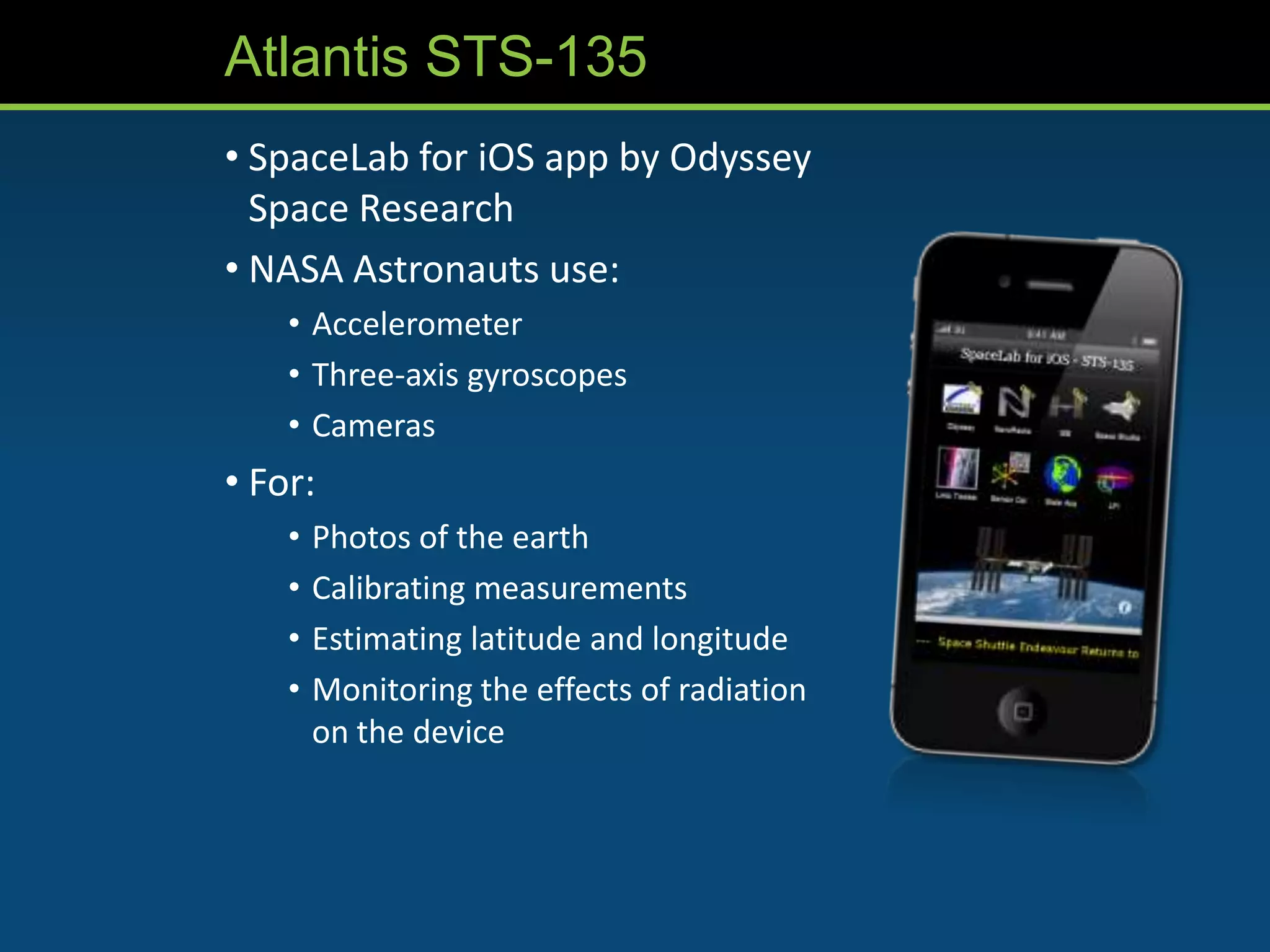
Atlantis STS-135
• SpaceLab for iOS app by Odyssey
  Space Research
• NASA Astronauts use:
    • Accelerometer
    • Three-axis gyroscopes
    • Cameras
• For:
    •   Photos of the earth
    •   Calibrating measurements
    •   Estimating latitude and longitude
    •   Monitoring the effects of radiation
        on the device
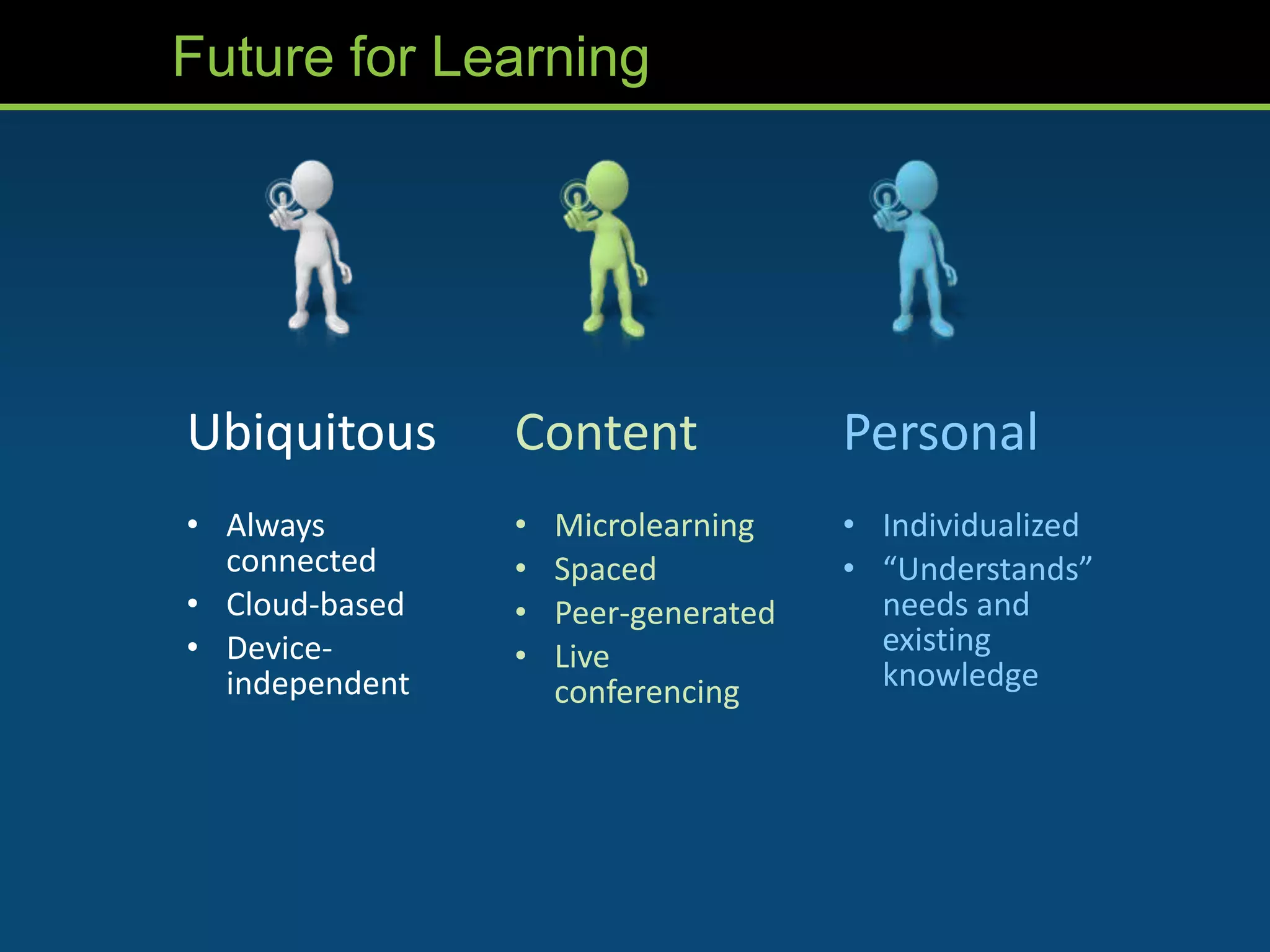
Future for Learning


Ubiquitous      Content              Personal
• Always        •   Microlearning    • Individualized
  connected     •   Spaced           • “Understands”
• Cloud-based   •   Peer-generated     needs and
• Device-       •   Live               existing
  independent       conferencing       knowledge
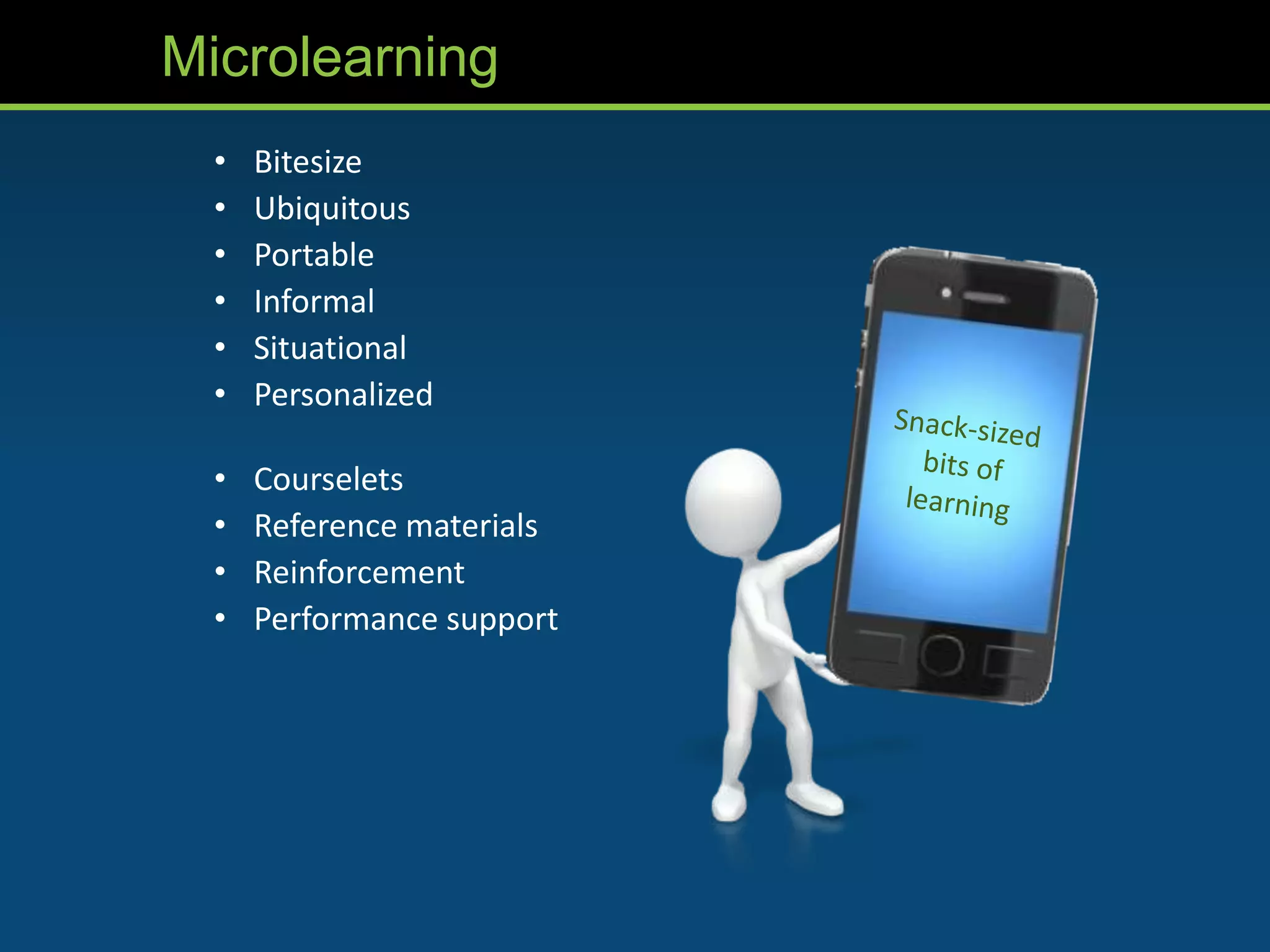
Microlearning
  •   Bitesize
  •   Ubiquitous
  •   Portable
  •   Informal
  •   Situational
  •   Personalized

  •   Courselets
  •   Reference materials
  •   Reinforcement
  •   Performance support
Tomi Ahonen on the Future


  Video removed from this slide, but viewable at:
  Mobile is the 7th Mass Media –
  http://www.youtube.com/watch?v=NmEyfugMajU
FUTURE
 Next Exit
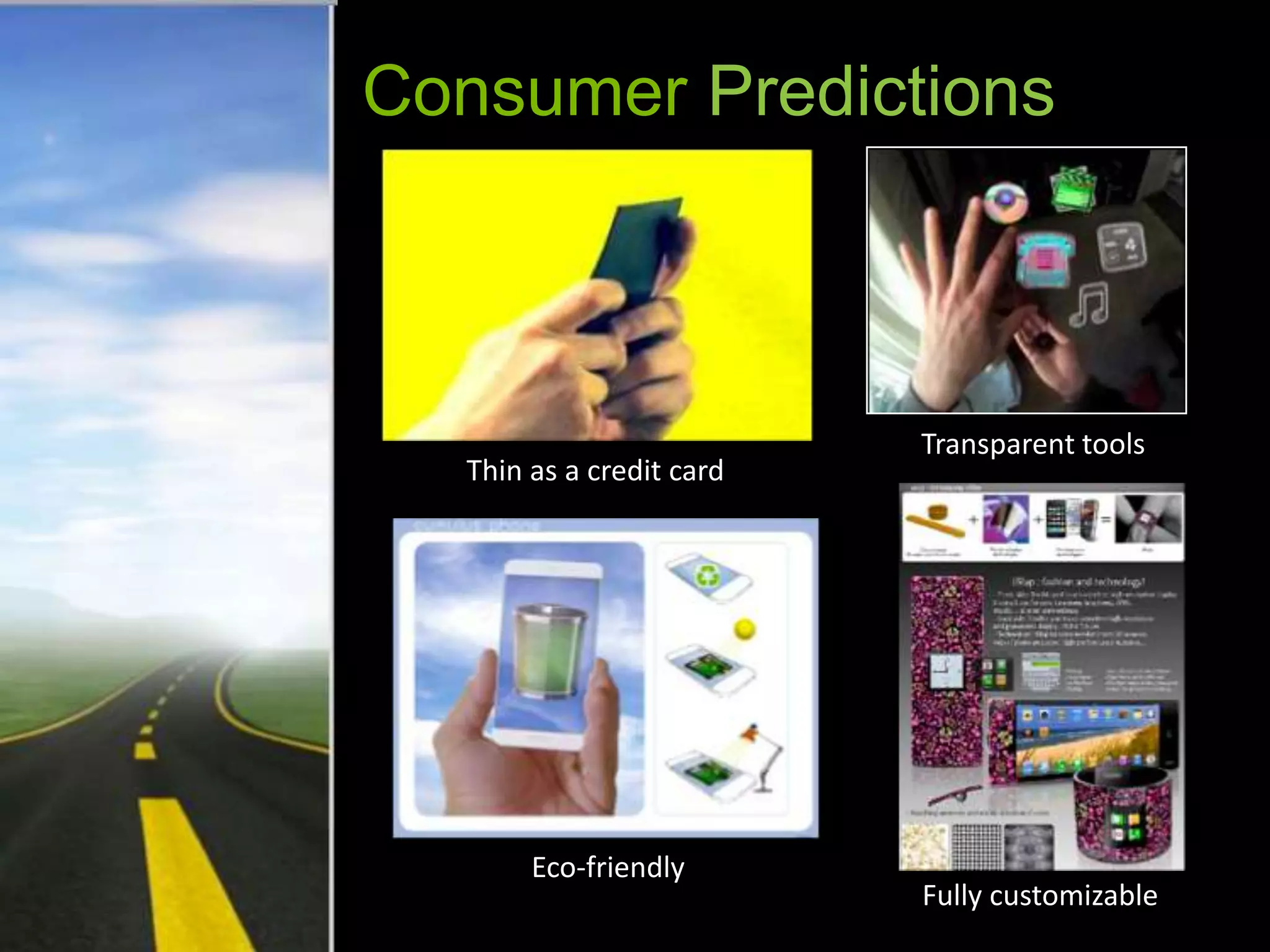
Consumer Predictions


                           Transparent tools
   Thin as a credit card


        Eco-friendly
                           Fully customizable
Mobile Phones Today
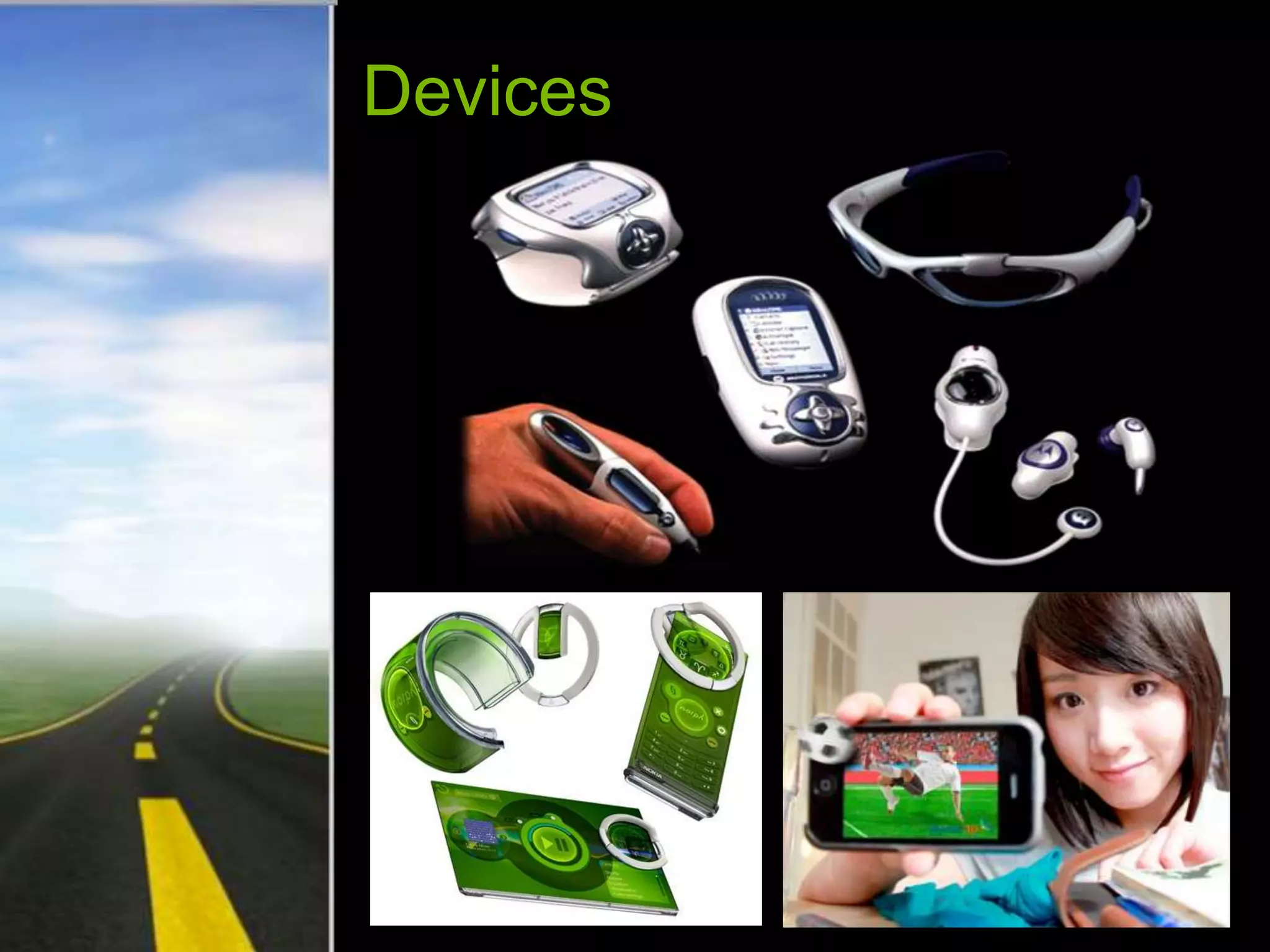
Devices
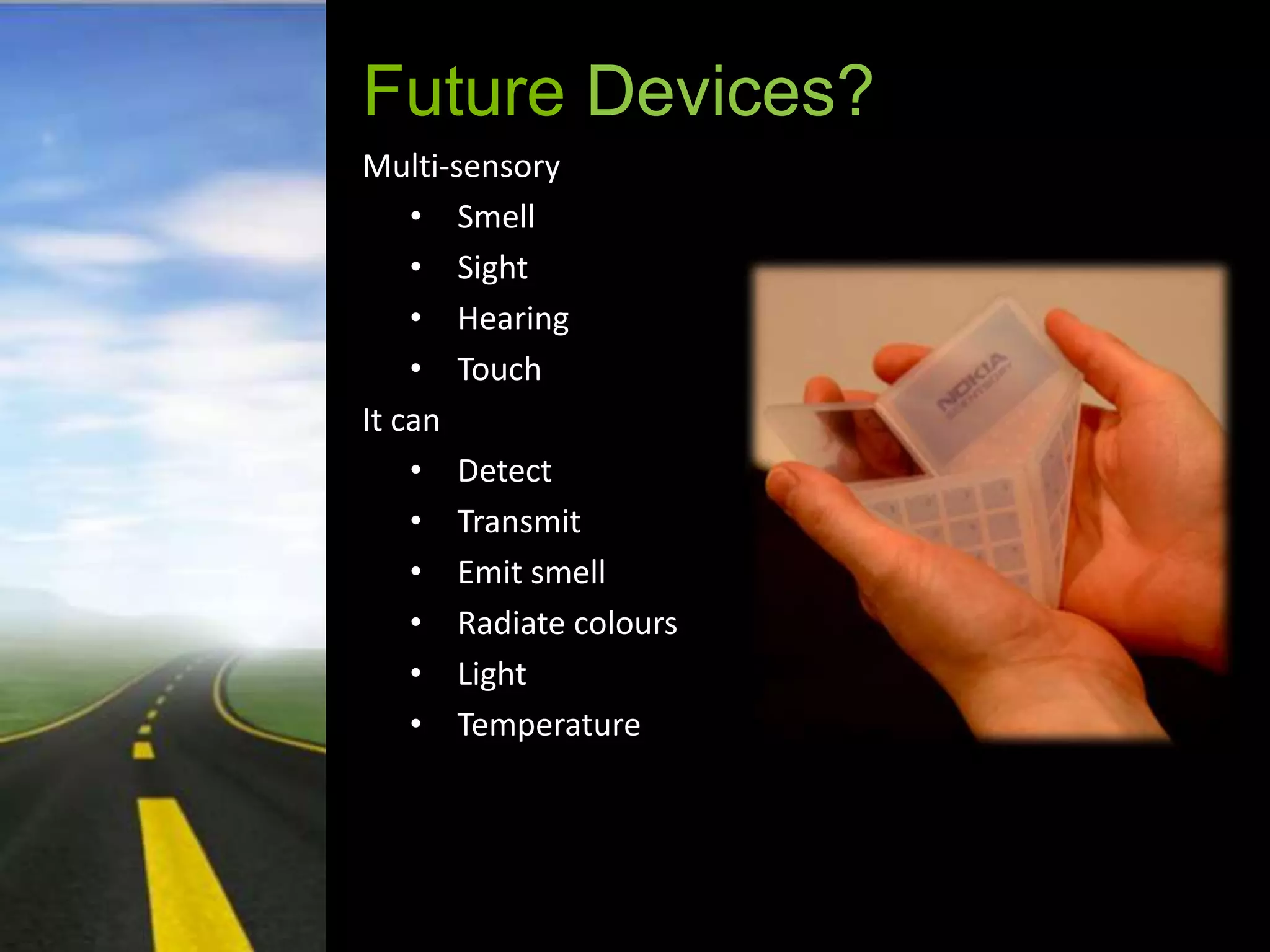
Future Devices?
Multi-sensory
    • Smell
    • Sight
    • Hearing
    • Touch
It can
    • Detect
    • Transmit
    • Emit smell
    • Radiate colours
    • Light
    • Temperature
Screens


Video removed from this slide, but viewable at:
Flexphone by Ikev on eYeka –
http://vimeo.com/22557348
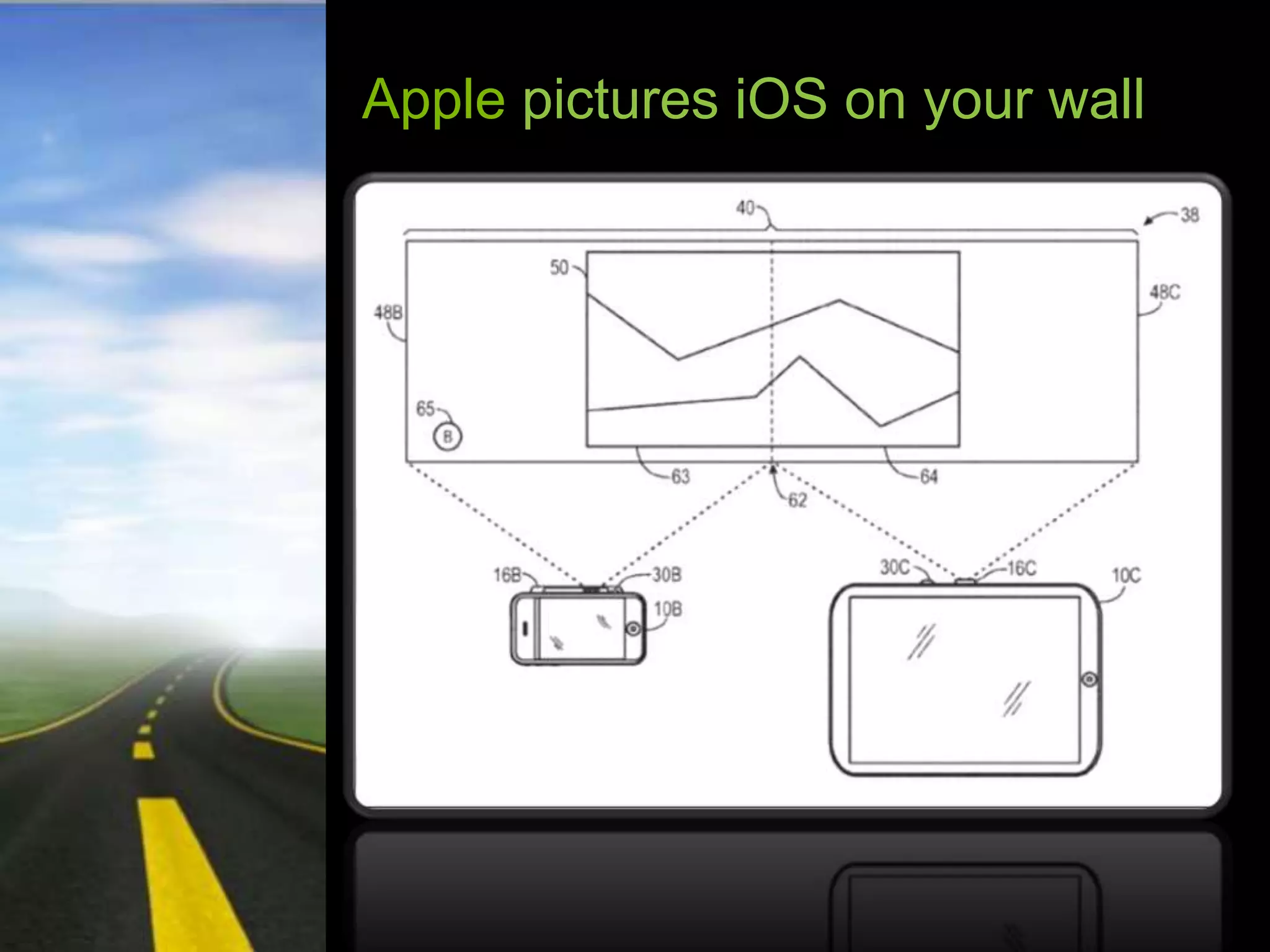
Apple pictures iOS on your wall
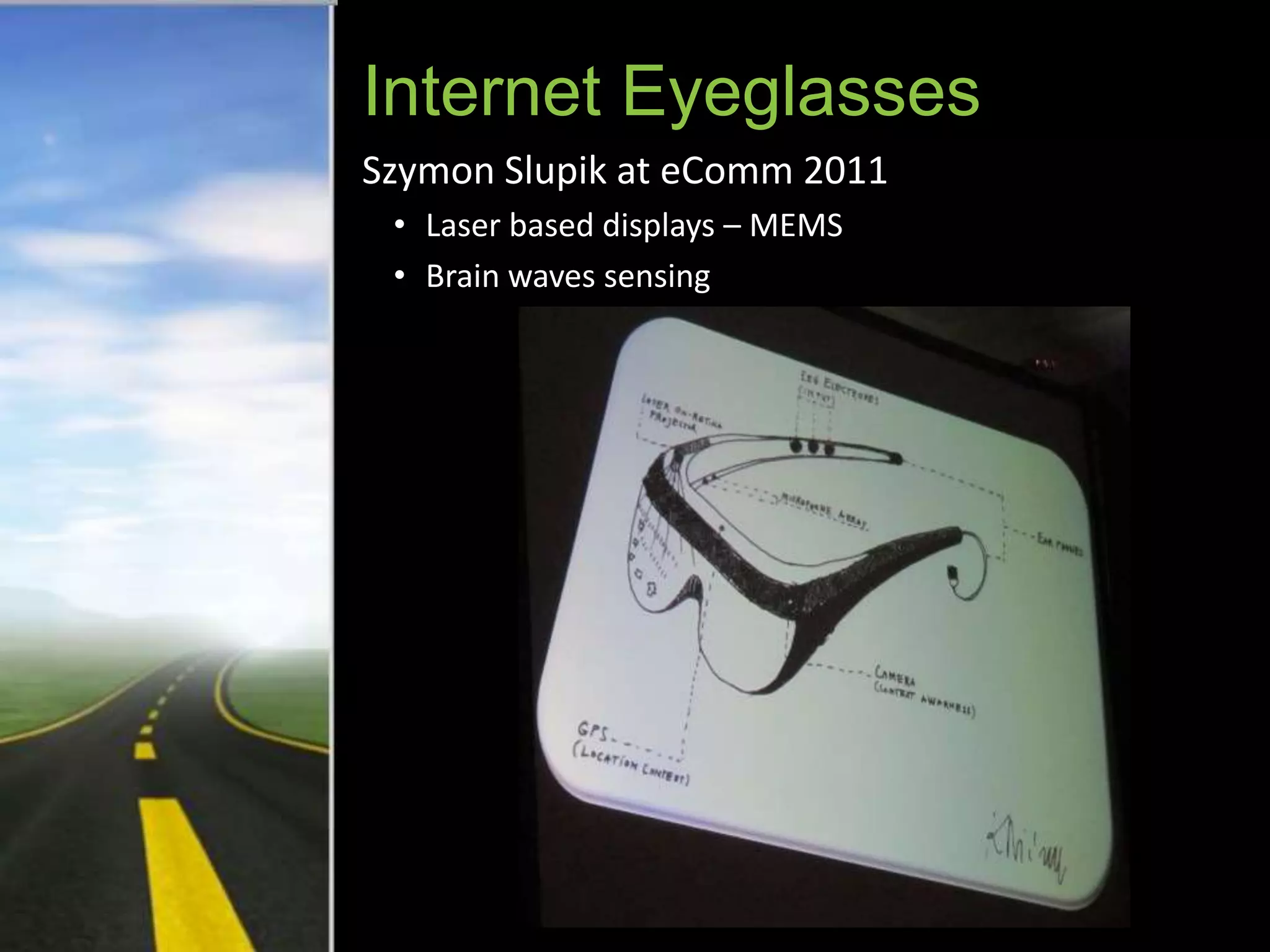
Internet Eyeglasses
Szymon Slupik at eComm 2011
 • Laser based displays – MEMS
 • Brain waves sensing
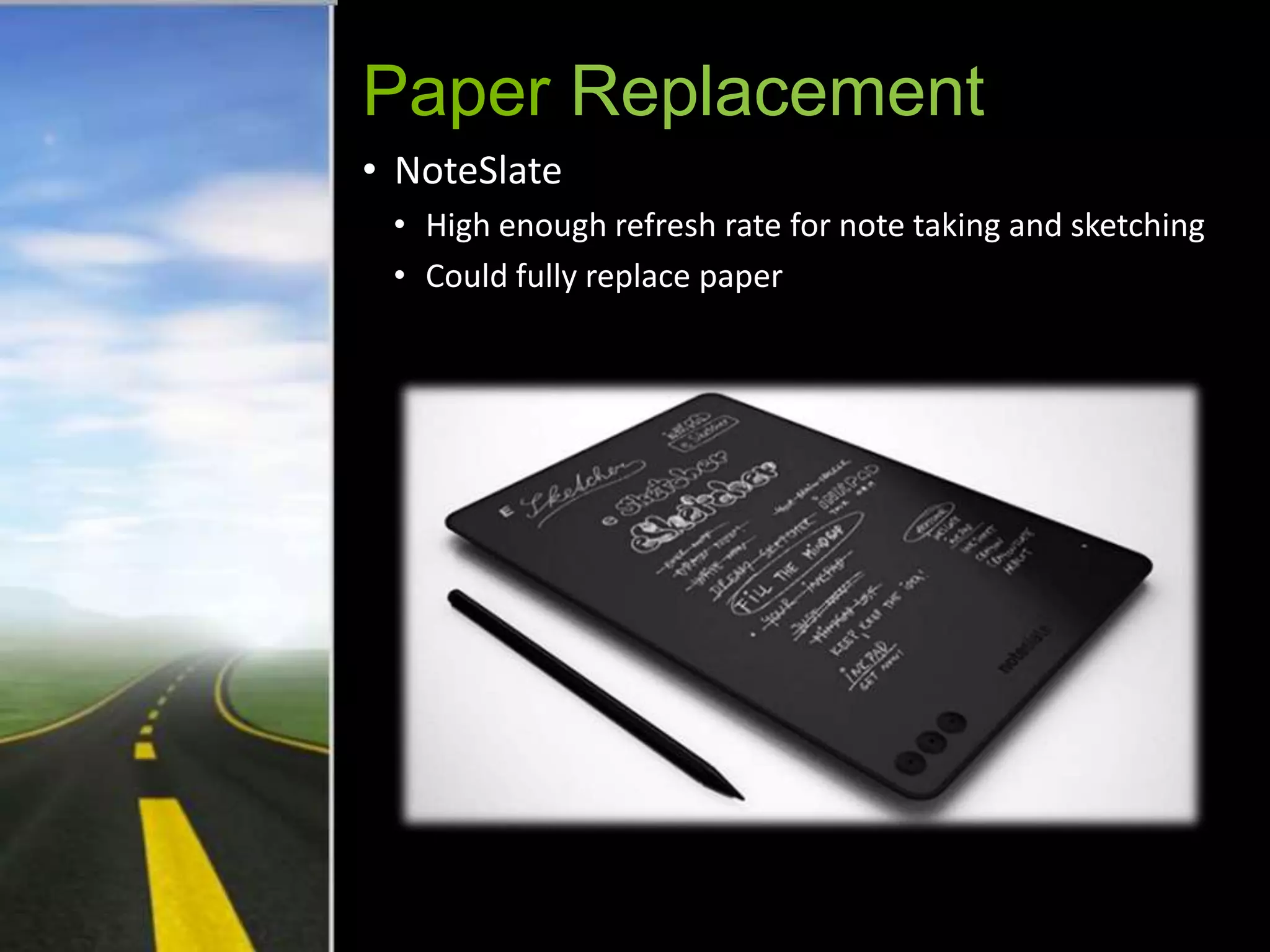
Paper Replacement
• NoteSlate
 • High enough refresh rate for note taking and sketching
 • Could fully replace paper
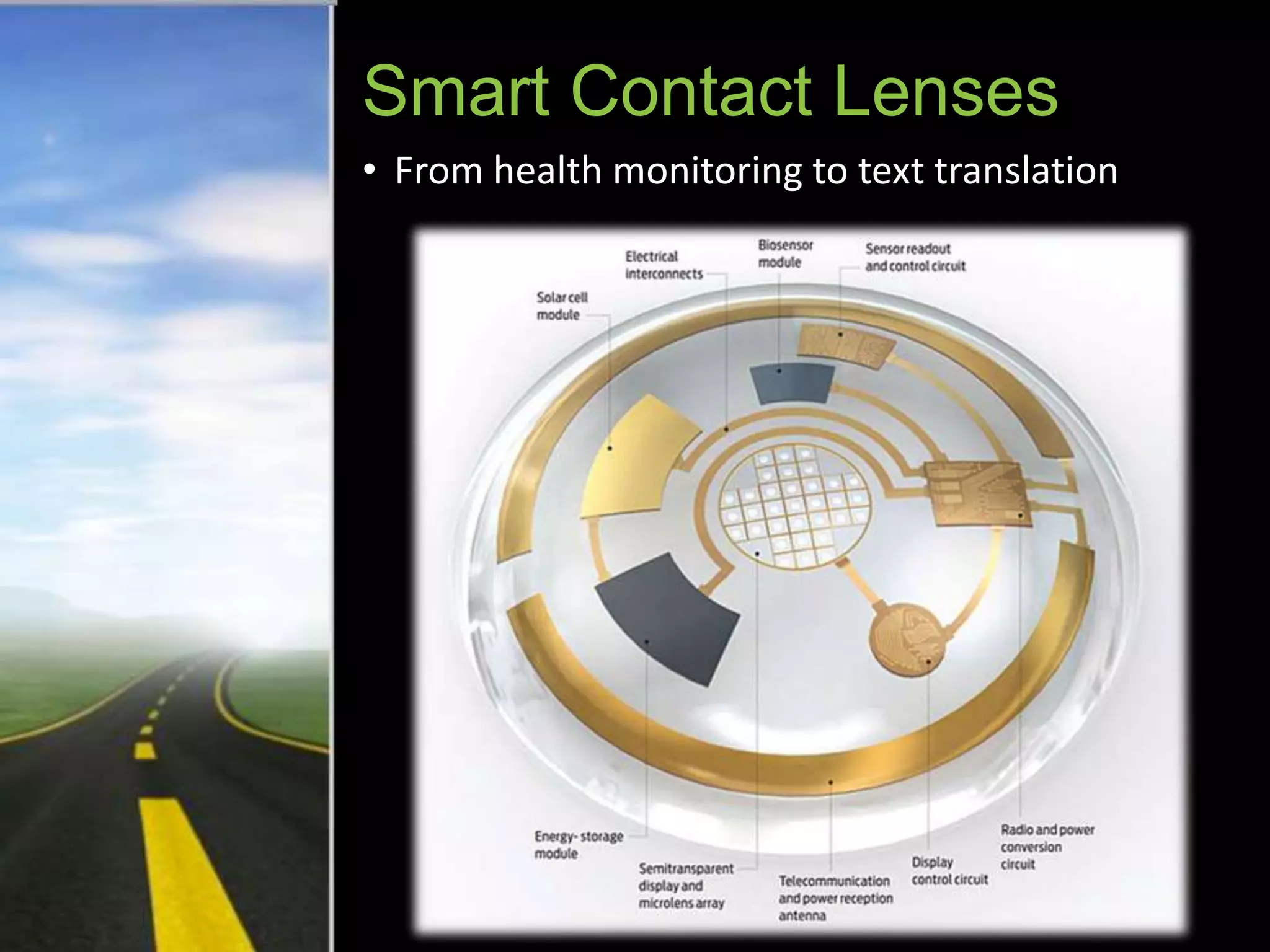
Smart Contact Lenses
• From health monitoring to text translation
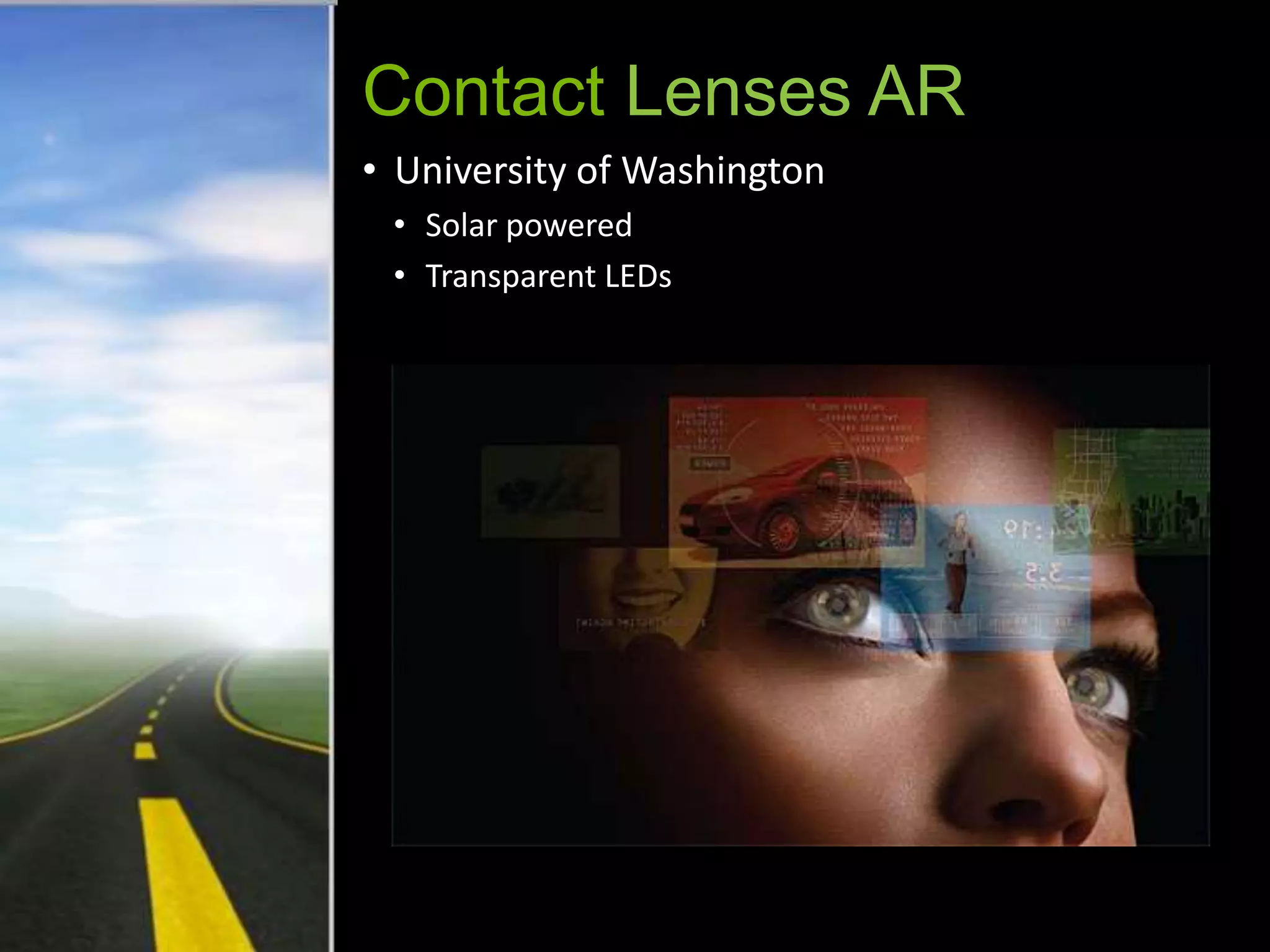
Contact Lenses AR
• University of Washington
 • Solar powered
 • Transparent LEDs
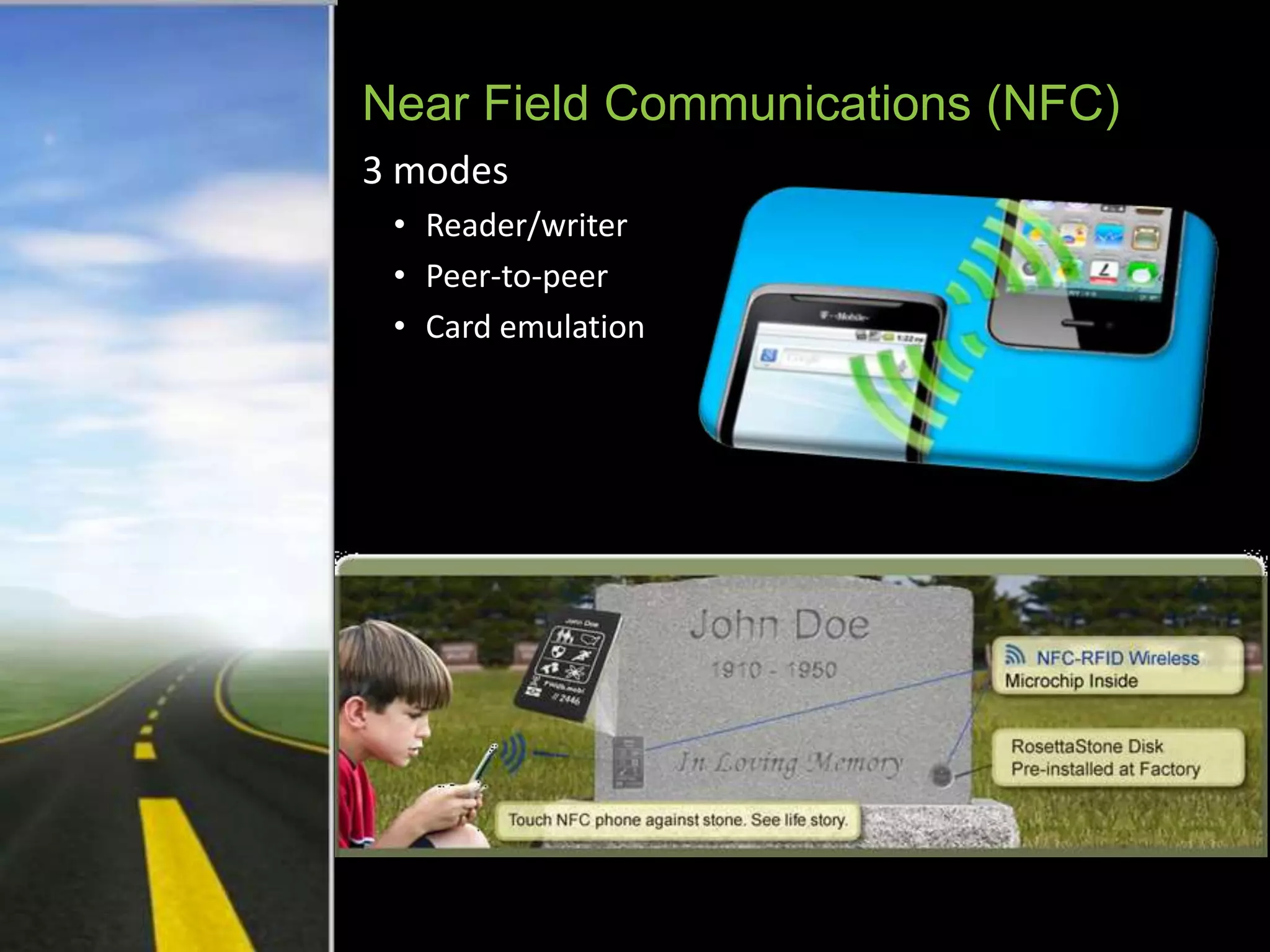
Near Field Communications (NFC)
3 modes
 • Reader/writer
 • Peer-to-peer
 • Card emulation
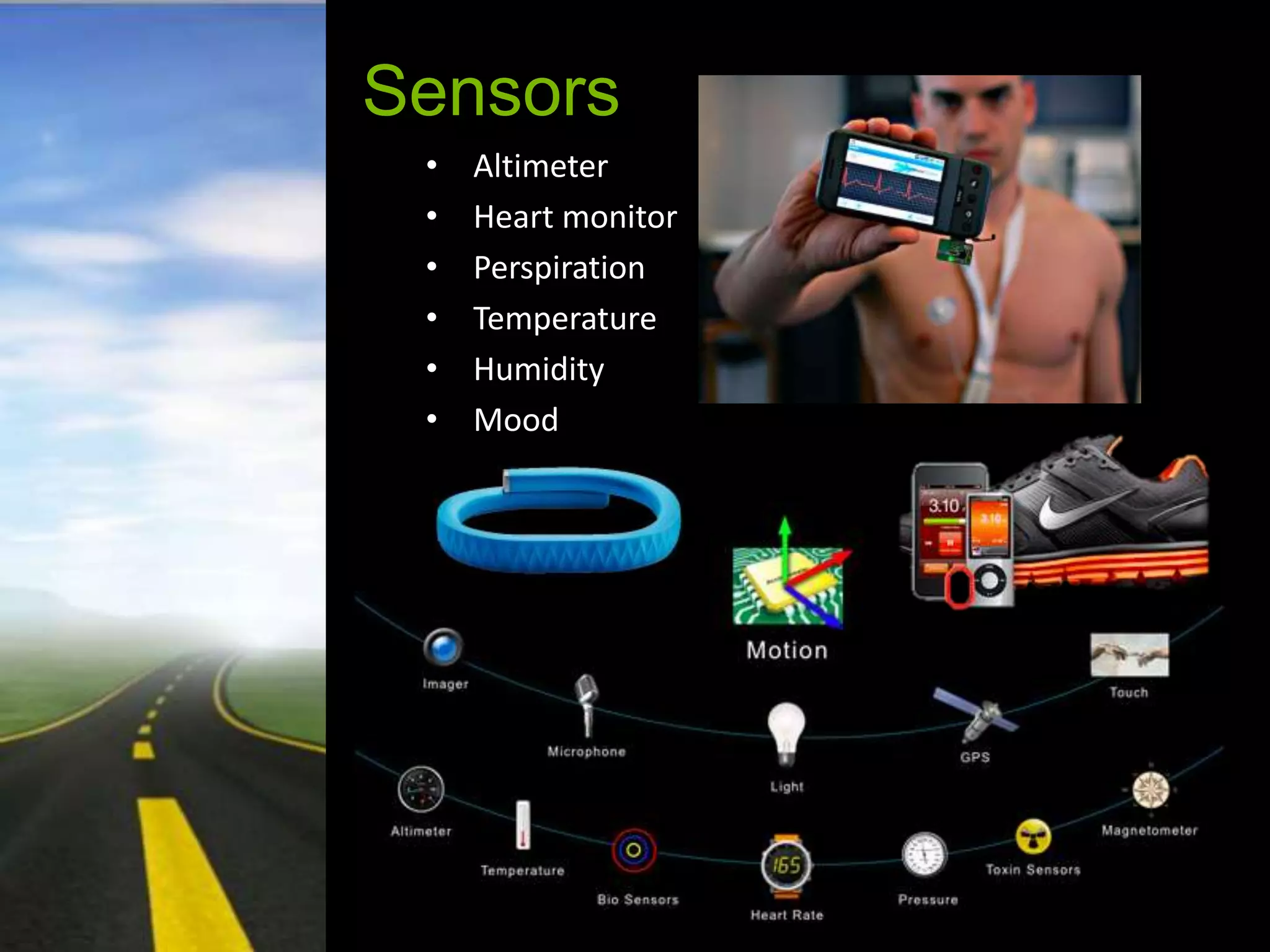
Sensors
 •   Altimeter
 •   Heart monitor
 •   Perspiration
 •   Temperature
 •   Humidity
 •   Mood
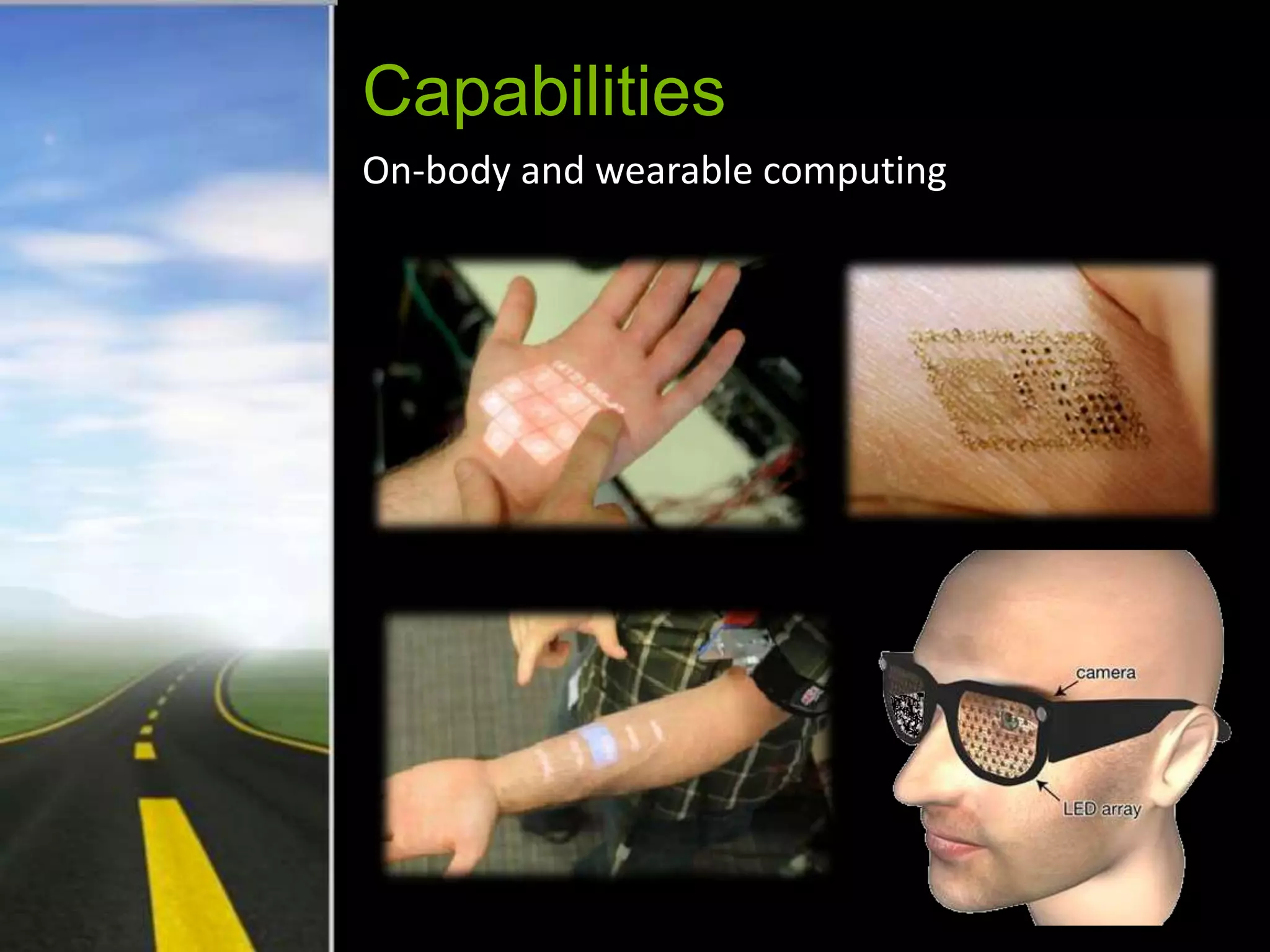
Capabilities
On-body and wearable computing
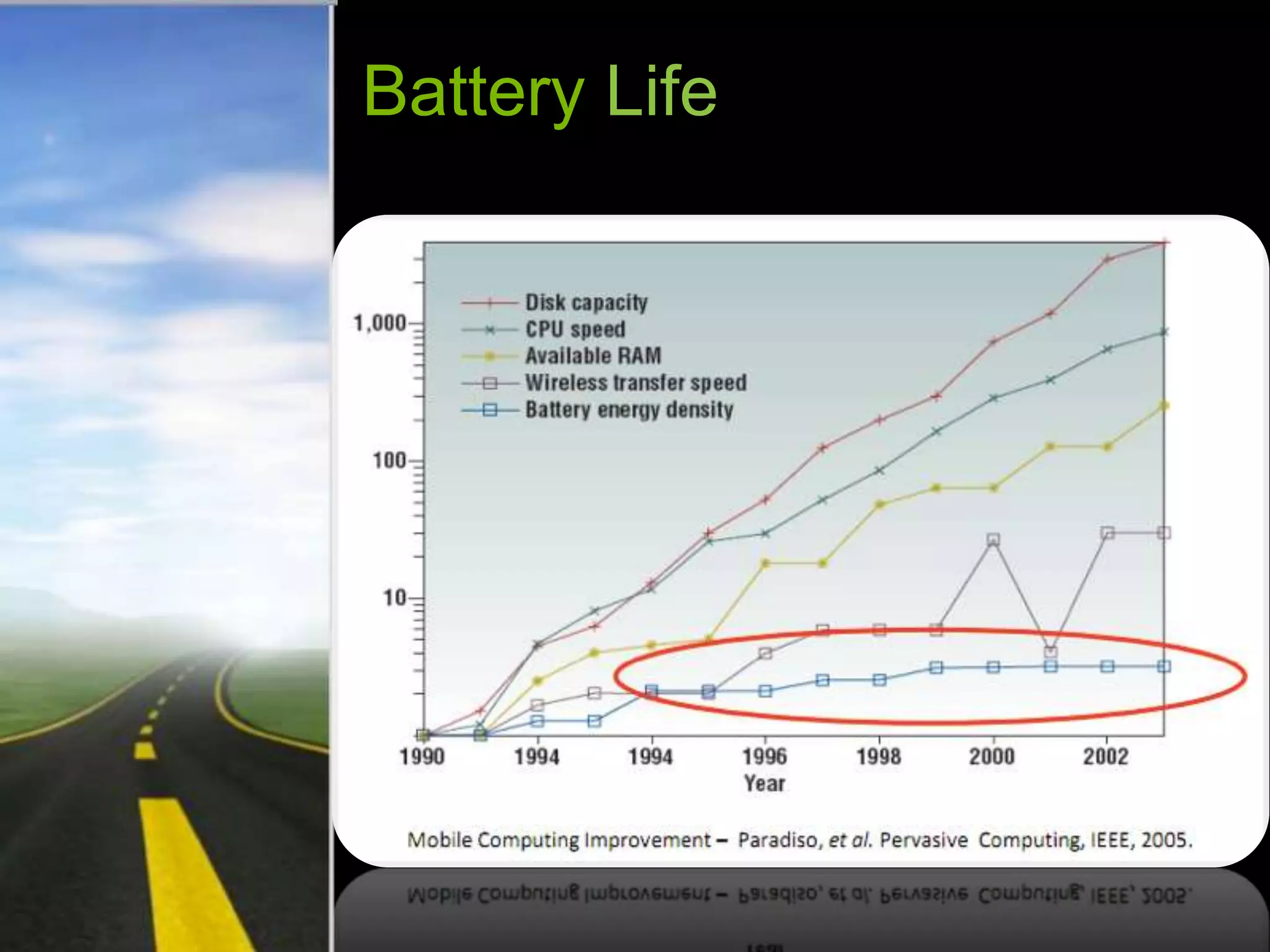
Battery Life
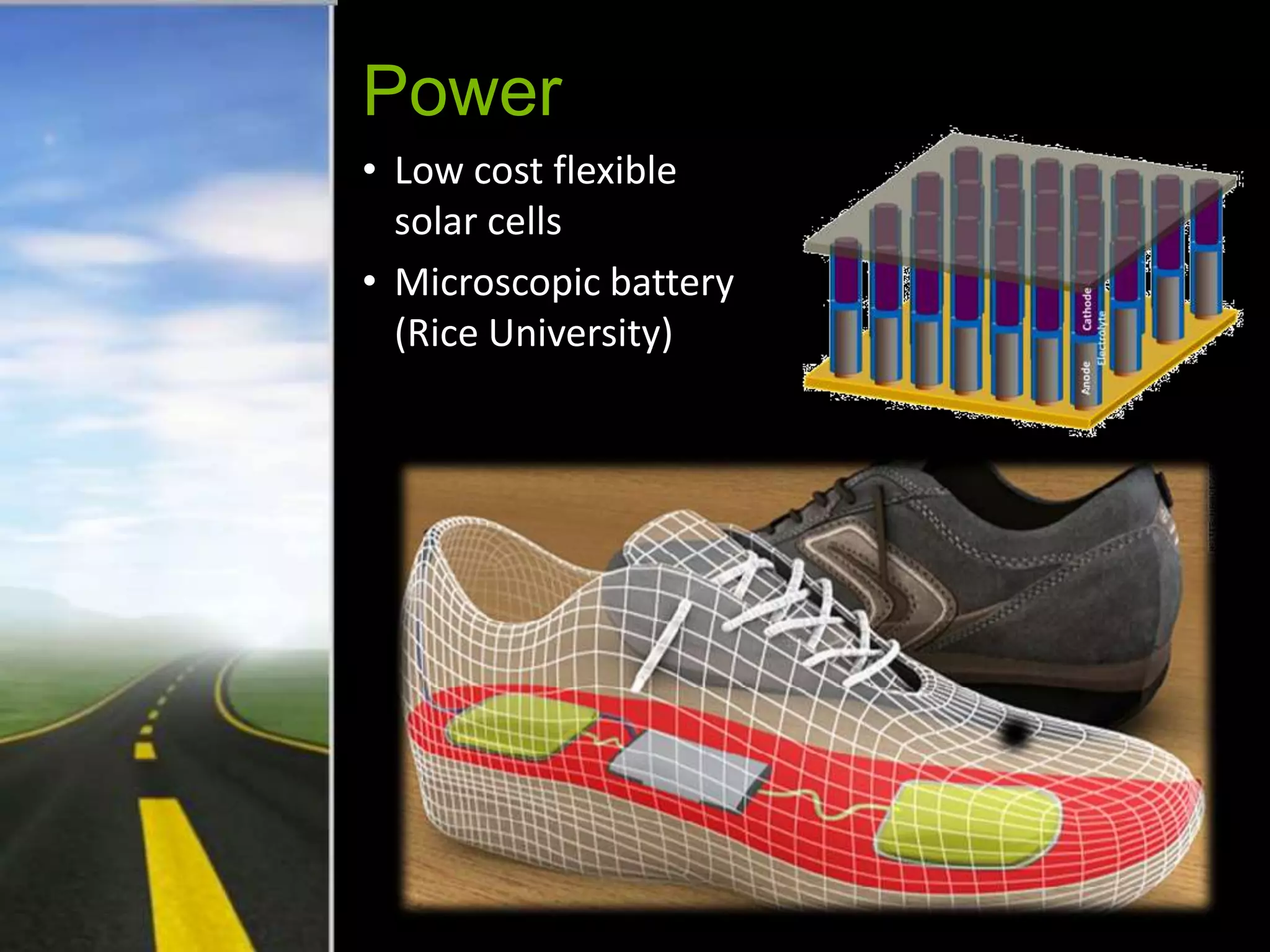
Power
• Low cost flexible
  solar cells
• Microscopic battery
  (Rice University)
Enhanced energy & power capacity
• Army Soldier Research, Development and
  Engineering Center (Natick, Mass.)
 • "Personal energy harvesters”
 • Kinetics-based solar
 • Wind power
• Apple and Samsung
 • Organic photovoltaic cells
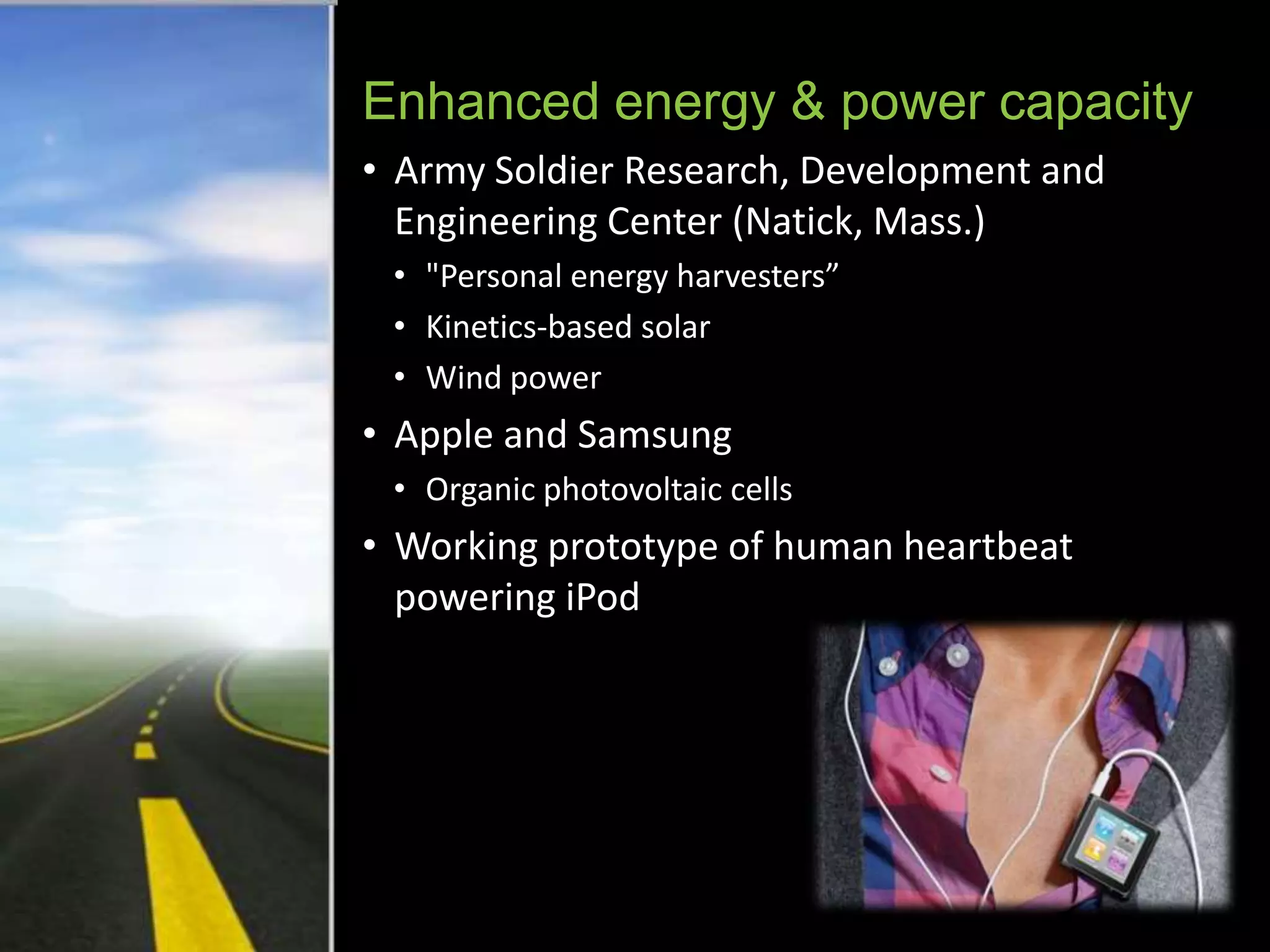
• Working prototype of human heartbeat
  powering iPod
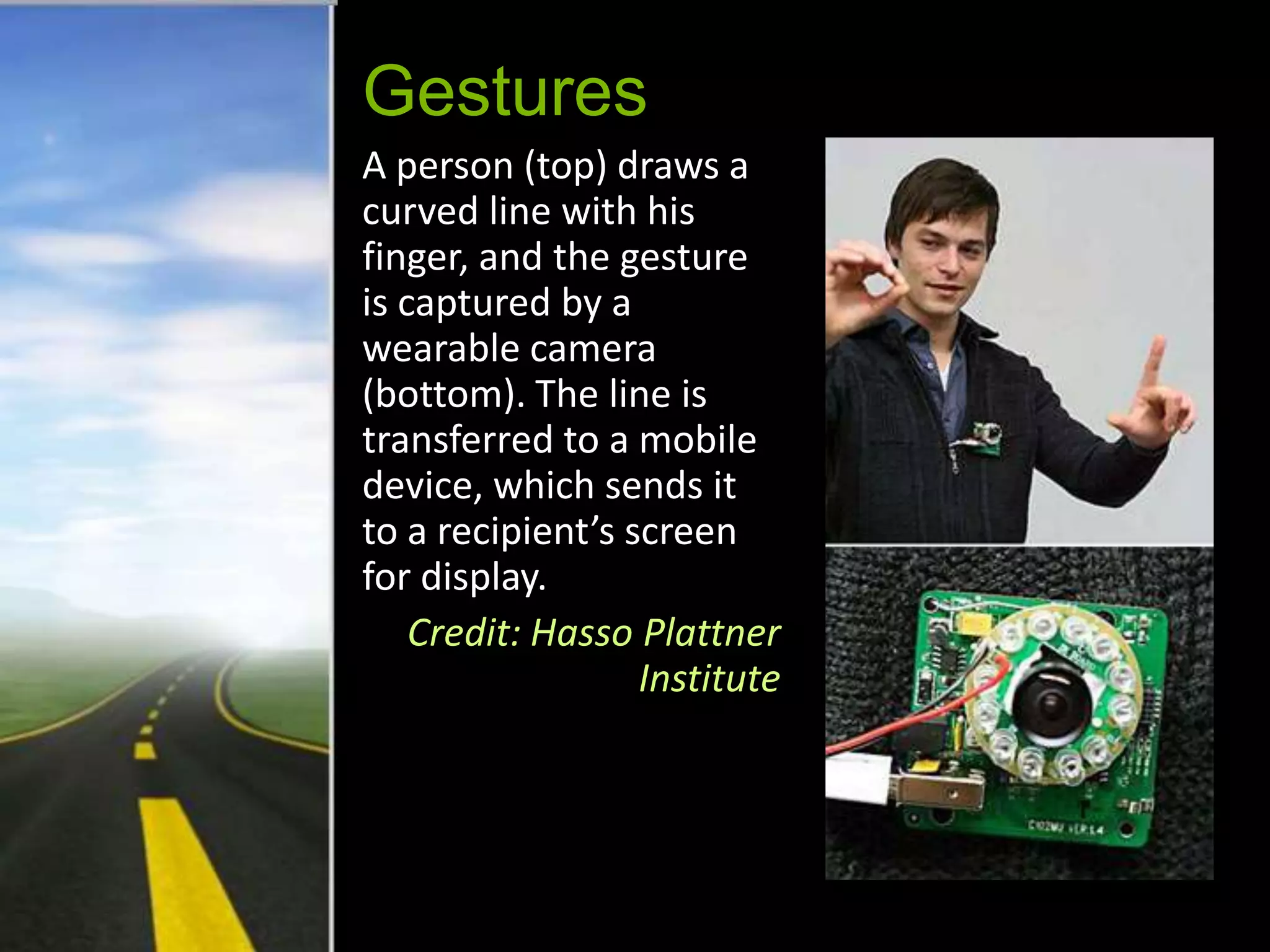
Gestures
A person (top) draws a
curved line with his
finger, and the gesture
is captured by a
wearable camera
(bottom). The line is
transferred to a mobile
device, which sends it
to a recipient’s screen
for display.
    Credit: Hasso Plattner
                  Institute
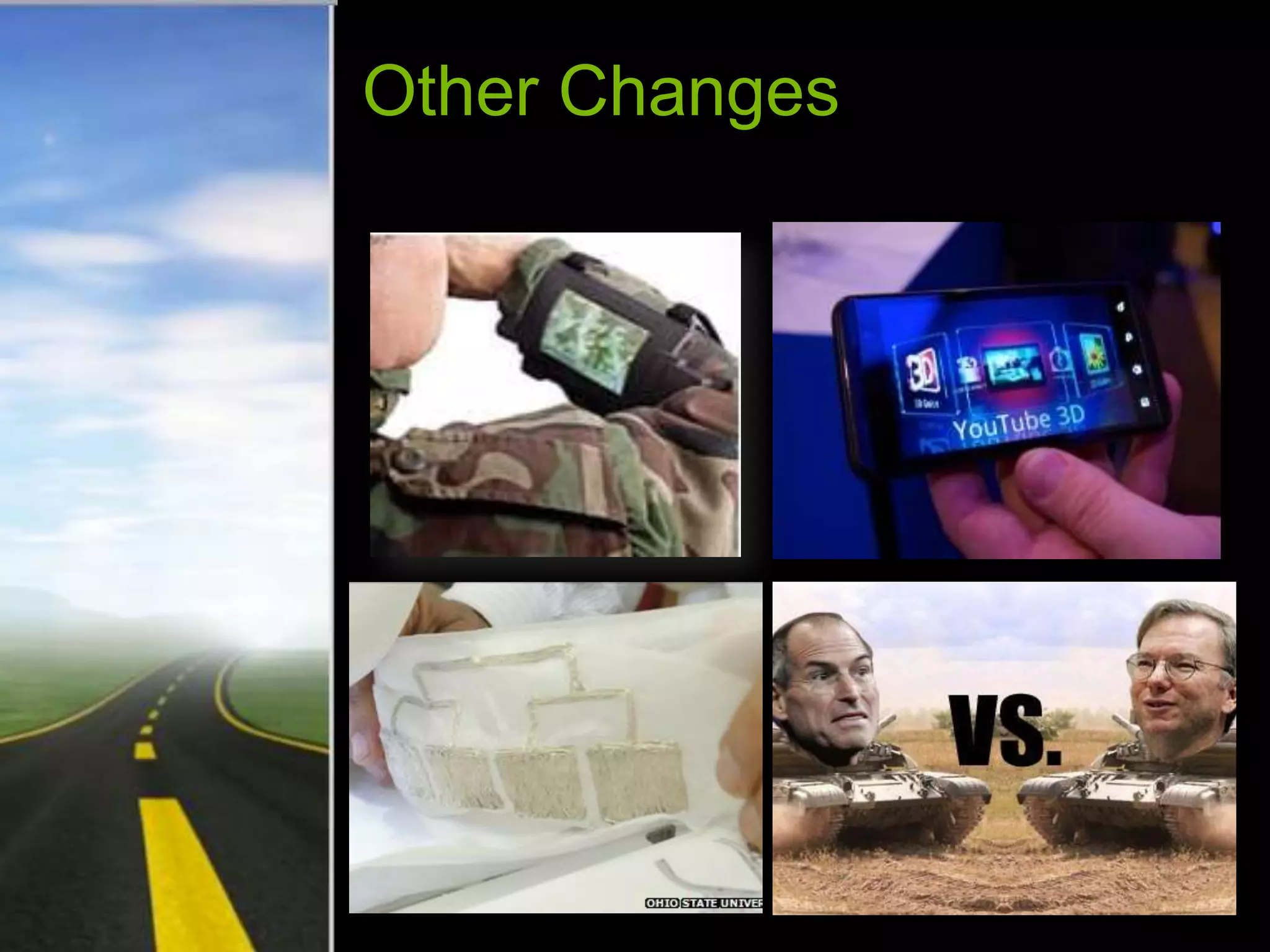
Other Changes
What will smartphones do for
us in 2020?

  “Coupled with the almost unlimited
  computing power from the cloud (e.g. data
  centers and server farms), available to
  smartphones through wireless
  connectivity, the capability to
  see, hear, feel, and even smell continuously
  will make our smartphones truly like a
  human companion.”
                      Lin Zhong, Rice University
In Labs Today
• Cars of the future will talk to each other by 2014
  (5/2011)
• Queen’s University Human Media Lab, the
  PaperPhone (5/2011)
• University of Illinois at Urbana-Champaign working
  on a lithium-ion battery that can be 90 percent
  charged in two minutes (4/2011)
• EyePhone, developed at Dartmouth College, tracks
  a person’s eye relative to a phone’s screen, letting
  users activate applications by blinking. (5/2010)
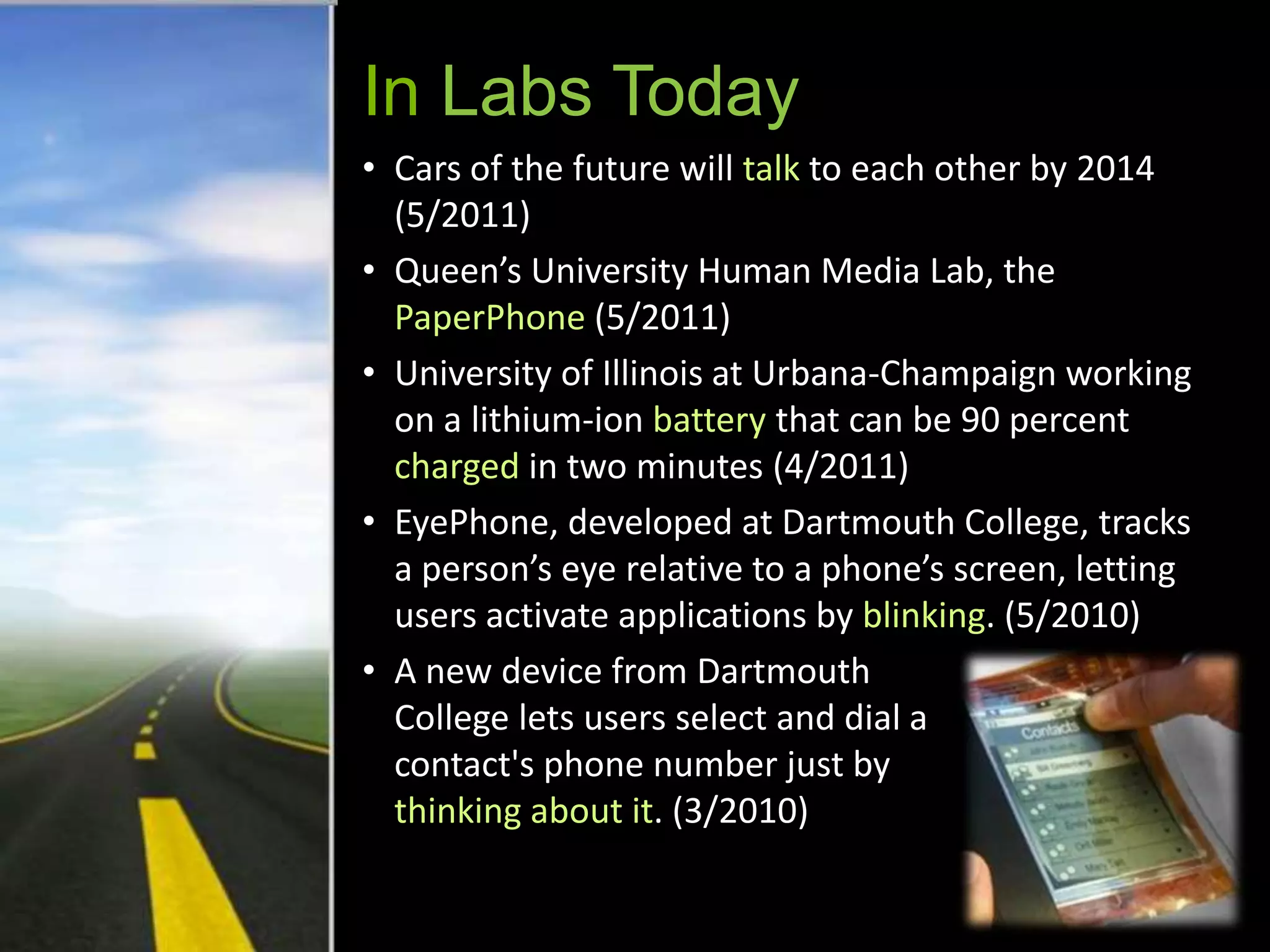
• A new device from Dartmouth
  College lets users select and dial a
  contact's phone number just by
  thinking about it. (3/2010)
• Augmented Reality - http://www.tripwiremagazine.com/2011/07/45-
                                                   brilliant-augmented-reality-iphone-apps.html and
                                                   http://www.businessinsider.com/best-augmented-reality-apps-for-
                                                   iphone-and-ios-2011-3?op=1
             Credits                             • Tablets - http://skattertech.com/2011/02/infographic-blackberry-
                                                   playbook-vs-dell-streak-7-vs-apple-ipad-vs-motorola-xoom/


•   Aviation stats - http://www.nytimes.com/2011/06/21/business/global/21iht-RAV-INFLIGHT21.html
•   Consumers - http://en.eyeka.net/2011/04/smartphone/
•   3D - http://www.networkworld.com/news/2010/040210-sharp-develops-a-3d-screen.html
•   Internet glasses - http://www.zdnet.com/blog/emergingtech/why-the-future-of-mobile-is-screenless-touchless/2608
•   Paper - http://www.technologyreview.com/blog/mimssbits/27018/
•   Contacts - http://spectrum.ieee.org/biomedical/bionics/augmented-reality-in-a-contact-lens/
•   Smart contacts - http://www.fastcompany.com/1623012/smart-contact-lens-bluetooth-future
•   Wristbands - http://www.technologyreview.com/computing/26537/page1/
•   Jawbone - http://mobihealthnews.com/11870/jawbone-to-challenge-fitbit-with-up-device/
•   Smartphone future - http://en.eyeka.net/2011/04/smartphone/
•   On body computing -
    http://www.ottawacitizen.com/technology/body%2Bcomputing%2Bcoming%2Bsoon/4039395/story.html
•   Glasses - http://www.popsci.com/science/article/2011-07/glasses-packed-smarphone-tech-could-help-visually-impaired-
    people-see-again
•   Rollphone - http://www.walyou.com/blog/2010/08/12/rollphone-cell-phone-concept/
•   Gestures - http://www.technologyreview.com/communications/25380/
•   Cars of future - http://www.pocket-lint.com/news/40083/nxp-car-2-car-wireless-technology-demo
•   EyePhone - http://www.technologyreview.com/computing/25369/
•   Mind control - http://www.technologyreview.com/blog/editors/24993/
•   Stick-On Tattoo - http://www.technologyreview.com/computing/38296/
•   NFC - http://mashable.com/2011/08/11/near-field-communication-guide/
•   2020 - http:///cblog.chron.comomputingatrice/2010/05/what-will-smartphones-do-for-us-in-2020/
•   Shoe power - http://www.cnn.com/2011/TECH/innovation/08/24/cellphone.walking.power/
Questions?
Discussion
Judy Brown
Judy.brown.ctr@adlnet.gov
@judyb

Future Mobile Learning (29 August 2011)

  • 2.
    Today’s Agenda Augmented Reality, BYOD, eBooks, Here Today Cloud computing, Location, Tablets Microlearning, Spaced Future for Learning learning, Personalized Future Devices, Capabilities, Other Discussion Questions
  • 3.
    Future The future is already here – it's just not evenly distributed. —William Gibson
  • 4.
    Augmented Reality • Overlayingof digital data in the real world • Image recognition
  • 5.
    AR Coming Video removedfrom this slide, but viewable at: Window to the World (CIID/Toyota) – http://vimeo.com/25547151
  • 6.
    Bring Your OwnDevice (BYOD) • Students bring their own Wi-Fi enabled devices • Benefits • Access • Enhance learning experience • Learners familiar • Engagement • Low cost • Issues • Bandwidth (Wi-Fi access) • Cross platform issues • Equity
  • 7.
    Cloud Computing • Ubiquitous,convenient, on-demand network access • Processing • Search • Storage and retrieval • Sharing • Benefits • Accessed from anywhere, anytime and on any device • Issues • Security • Connectivity
  • 8.
    eBooks • Stats • Amazon selling 105 ebooks to 100 print books • Textbook rentals • Library checkouts • South Korea replacing all paper by 2015 (tablets) • Benefits • Interactivity • Weight • Access • Cost • Long tail • Issues • Availability • Formats
  • 9.
  • 10.
  • 11.
    Location • GPS Precise positioning: A network of these transmitters, each the size of a • LocataLites hardback book, can enable nearby devices to locate themselves to within a few centimeters. Credit: Locata
  • 12.
    Atlantis STS-135 • SpaceLabfor iOS app by Odyssey Space Research • NASA Astronauts use: • Accelerometer • Three-axis gyroscopes • Cameras • For: • Photos of the earth • Calibrating measurements • Estimating latitude and longitude • Monitoring the effects of radiation on the device
  • 13.
    Future for Learning Ubiquitous Content Personal • Always • Microlearning • Individualized connected • Spaced • “Understands” • Cloud-based • Peer-generated needs and • Device- • Live existing independent conferencing knowledge
  • 14.
    Microlearning • Bitesize • Ubiquitous • Portable • Informal • Situational • Personalized • Courselets • Reference materials • Reinforcement • Performance support
  • 15.
    Tomi Ahonen onthe Future Video removed from this slide, but viewable at: Mobile is the 7th Mass Media – http://www.youtube.com/watch?v=NmEyfugMajU
  • 16.
  • 17.
    Consumer Predictions Transparent tools Thin as a credit card Eco-friendly Fully customizable
  • 18.
  • 19.
  • 20.
    Future Devices? Multi-sensory • Smell • Sight • Hearing • Touch It can • Detect • Transmit • Emit smell • Radiate colours • Light • Temperature
  • 21.
    Screens Video removed fromthis slide, but viewable at: Flexphone by Ikev on eYeka – http://vimeo.com/22557348
  • 22.
    Apple pictures iOSon your wall
  • 23.
    Internet Eyeglasses Szymon Slupikat eComm 2011 • Laser based displays – MEMS • Brain waves sensing
  • 24.
    Paper Replacement • NoteSlate • High enough refresh rate for note taking and sketching • Could fully replace paper
  • 25.
    Smart Contact Lenses •From health monitoring to text translation
  • 26.
    Contact Lenses AR •University of Washington • Solar powered • Transparent LEDs
  • 27.
    Near Field Communications(NFC) 3 modes • Reader/writer • Peer-to-peer • Card emulation
  • 28.
    Sensors • Altimeter • Heart monitor • Perspiration • Temperature • Humidity • Mood
  • 29.
  • 30.
  • 31.
    Power • Low costflexible solar cells • Microscopic battery (Rice University)
  • 32.
    Enhanced energy &power capacity • Army Soldier Research, Development and Engineering Center (Natick, Mass.) • "Personal energy harvesters” • Kinetics-based solar • Wind power • Apple and Samsung • Organic photovoltaic cells • Working prototype of human heartbeat powering iPod
  • 33.
    Gestures A person (top)draws a curved line with his finger, and the gesture is captured by a wearable camera (bottom). The line is transferred to a mobile device, which sends it to a recipient’s screen for display. Credit: Hasso Plattner Institute
  • 34.
  • 35.
    What will smartphonesdo for us in 2020? “Coupled with the almost unlimited computing power from the cloud (e.g. data centers and server farms), available to smartphones through wireless connectivity, the capability to see, hear, feel, and even smell continuously will make our smartphones truly like a human companion.” Lin Zhong, Rice University
  • 36.
    In Labs Today •Cars of the future will talk to each other by 2014 (5/2011) • Queen’s University Human Media Lab, the PaperPhone (5/2011) • University of Illinois at Urbana-Champaign working on a lithium-ion battery that can be 90 percent charged in two minutes (4/2011) • EyePhone, developed at Dartmouth College, tracks a person’s eye relative to a phone’s screen, letting users activate applications by blinking. (5/2010) • A new device from Dartmouth College lets users select and dial a contact's phone number just by thinking about it. (3/2010)
  • 37.
    • Augmented Reality- http://www.tripwiremagazine.com/2011/07/45- brilliant-augmented-reality-iphone-apps.html and http://www.businessinsider.com/best-augmented-reality-apps-for- iphone-and-ios-2011-3?op=1 Credits • Tablets - http://skattertech.com/2011/02/infographic-blackberry- playbook-vs-dell-streak-7-vs-apple-ipad-vs-motorola-xoom/ • Aviation stats - http://www.nytimes.com/2011/06/21/business/global/21iht-RAV-INFLIGHT21.html • Consumers - http://en.eyeka.net/2011/04/smartphone/ • 3D - http://www.networkworld.com/news/2010/040210-sharp-develops-a-3d-screen.html • Internet glasses - http://www.zdnet.com/blog/emergingtech/why-the-future-of-mobile-is-screenless-touchless/2608 • Paper - http://www.technologyreview.com/blog/mimssbits/27018/ • Contacts - http://spectrum.ieee.org/biomedical/bionics/augmented-reality-in-a-contact-lens/ • Smart contacts - http://www.fastcompany.com/1623012/smart-contact-lens-bluetooth-future • Wristbands - http://www.technologyreview.com/computing/26537/page1/ • Jawbone - http://mobihealthnews.com/11870/jawbone-to-challenge-fitbit-with-up-device/ • Smartphone future - http://en.eyeka.net/2011/04/smartphone/ • On body computing - http://www.ottawacitizen.com/technology/body%2Bcomputing%2Bcoming%2Bsoon/4039395/story.html • Glasses - http://www.popsci.com/science/article/2011-07/glasses-packed-smarphone-tech-could-help-visually-impaired- people-see-again • Rollphone - http://www.walyou.com/blog/2010/08/12/rollphone-cell-phone-concept/ • Gestures - http://www.technologyreview.com/communications/25380/ • Cars of future - http://www.pocket-lint.com/news/40083/nxp-car-2-car-wireless-technology-demo • EyePhone - http://www.technologyreview.com/computing/25369/ • Mind control - http://www.technologyreview.com/blog/editors/24993/ • Stick-On Tattoo - http://www.technologyreview.com/computing/38296/ • NFC - http://mashable.com/2011/08/11/near-field-communication-guide/ • 2020 - http:///cblog.chron.comomputingatrice/2010/05/what-will-smartphones-do-for-us-in-2020/ • Shoe power - http://www.cnn.com/2011/TECH/innovation/08/24/cellphone.walking.power/
  • 38.

Editor's Notes

  • #4 No one knows the future, but we can learn from yesterday and today.The following section is already here, but not evenly distributed. If you blinked you may have missed some.
  • #5 Tried?Google Goggles translates text
  • #7 Run with what you brungColgate Palmolive
  • #8 Storage & processing
  • #9 EPUBs
  • #10 BlackBerryPlayBook, Dell Streak, iPad, Motorola XoomUCI med students - http://healthcareitnews.com/news/ipad-program-prepares-med-students-wave-futureStrategy Analytics found that tablet use now makes up 20 percent of weekly digital media consumption. The average user spends 1.5 hours per day browsing content and other communication-based apps.
  • #11 American + United Continental – 11,000Hyundai equusToronto Hospital - The hospital network, a leader in clinical communication, is launching a pilot project to give some internal medicine patients computer tablets to update their health-care providers on their progress.An interactive computer software program appears to be effective in helping patients manage their Type 2 diabetes using their mobile phones, according to a new study by University of Maryland School of Medicine researchers.Hyundai equusRestaurants, book and document replacements, retail point of sale, NFL playbooks, According to the recent Innovations in Magazines report by FIPP, the international magazine media association, airlines could save about $440,000 a year for every 11.5 kilograms, or 25 pounds, of paper weight eliminated from an aircraft. With large, long-haul aircraft carrying as much as 400 kilograms, or more, of paper per flight , this could amount to tidy savings for an airline over the course of a year. - http://www.nytimes.com/2011/06/21/business/global/21iht-RAV-INFLIGHT21.html?_r=1
  • #12 http://www.technologyreview.com/communications/38163/Traffic, check in, directionsGPS for learning - context
  • #13 July 8
  • #17 Google – Motorola Mobility $12.5 billion
  • #20 Frog Design3D
  • #23 Apple has filed a patent application for an entirely new type of user interface that combines pico projectors, inter-device communications, and gesture recognition.The filing, "Projected display shared workspaces", envisions users interacting with displays projected by pico projector–equipped devices such as iPhones and iPads, or accessory projectors attached to laptops or desktops.http://www.theregister.co.uk/2011/08/11/apple_shared_projected_display_patent/
  • #24 “A phone today is a a value-added service, a ‘teleputer,’ a creature born with genes coming from a cell phone and a personal computer,” according to independent researcher Szymon Slupik.Speaking yesterday at the invitation-only Emerging Communications Conference & Awards (eComm), the Krakow-based futurist explained that by 2020, a mobile phone as we know it will disappear, evolving into a device linking our senses directly with senses of other people or with machines. What device will displace the role of today’s smartphone: Internet glasses.Think screenless rather than better screens – Touchless rather than better touchInternet eyeglasses concept presented by SzymonSlupik at eComm 2011“Voice was always organized in sessions with a beginning and an end. Today we have threads. So when a thread is started it never ends and we have many continuing in parallel. Think of your email, RSS feeds, Twitter, etc. So this is how our brain works. The phone of tomorrow will be telecoupling us and machines,” Slupik said. This is analogous to acoustic coupling, information will be transmitted directly to our brains via wireless gateways.So how do we get there and when? The key, said Slupik, is to bypass tiny screens and keyboards altogether and look to emerging technologies that can free up the bandwidth bottlenecks caused by aging paradigms. Think “screenless instead of better screens. Touchless instead of better touch.”  The two key technologies:Laser based displays - MEMS (microelectromechanical systems)-based laser projectors can display images directly on our retinas while not blocking our sight, enabling mixed reality vision. The beauty is that it is so small that it can already be integrated into eyeglasses.Brain waves sensing - We need to control the functions by the mind to become really hands free.  Aided by eye tracking, direct brain links will provide touchless input. Sound far fetched? It’s not. Major universities continually report progress with brain implants used in lab rats and humans, while commercial applications for noninvasive coupling with human brain signals are also emerging.  A Japanese company recently announced cat ears that can be worn on the human head and manipulated with nothing but the mind.Slupik believes that we are on the verge of a hardware revolution that will allow for computer senses and the brain to be networked by the end of this decade. The result will be an unleashing of unimaginable usage scenarios. Computers in the cloud will be fully aware of our context, receiving a continuous stream of what we hear and what we look at and, in turn, sending us back contextually-aware information, such as hints, translations, and guidance.After his talk, Slupik gave me another example. Imagine remotely flying a drone equipped with a camera somewhere in Australia and being able to see the image projected on your eyeglasses. In effect, you’ll will be able to hear with somebody else’s ears and see with somebody else’s eyes.eComm 2011 is underway at the San Francisco Airport Marriott and continues through tomorrow. You can follow the event on Twitter using the hashtag#eComm.
  • #25 Roll up screen
  • #28 http://mashable.com/2011/08/11/near-field-communication-guide/
  • #29 Jawbone Up – BlueToothWireless diapers are the brainchild of a startup called 24eight. Embedded with a cellular chip, they can send a "diaper wet" notification via text message to a cellphone. The company says they cost about two cents more apiece than normal diapers. David Schieffelin, chief executive of 24eight, says he's still searching for the right partner to help him commercialize the product.
  • #30 Stick-on electronic tattoo = http://www.technologyreview.com/computing/38296/
  • #32 http://news.cnet.com/8301-17938_105-20087240-1/worlds-smallest-battery-will-put-power-everywhere/#ixzz1U1IiAxNnUniversity of Wisconsin – Madison - CNN articlehttp://www.cnn.com/2011/TECH/innovation/08/24/cellphone.walking.power/typical cellphone battery could last 10 times longer
  • #33 body heat to generate electricityhttp://whatsbrewin.nextgov.com/2011/07/forget_radio_batteries_harvest_soldier_power.php
  • #35 3D - been tepid interestOhio State University created a prototype using plastic film and metallic thread - the system's range is four times greater than that of a conventional antenna worn on the body.Mozilla Boot 2 Decko
  • #36 http:///cblog.chron.comomputingatrice/2010/05/what-will-smartphones-do-for-us-in-2020/