FUNGI
An Overview
Damnjanović Ivana
Characteristics of Fungi
► Eukaryotic
► Nonphotosynthetic ( heterotrophic)
► Most are multicellular
► Microscopic (yeasts)
► Growth best in warm, moist environments
The study fungi is known as MYCOLOGY
Structure of Fungi
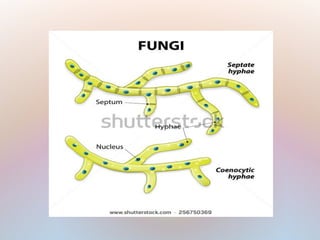
► Filaments of fungi are
called hyphae
► The cell walls contain
chitin
► The MYCELIUM is a
mat of hyphae
► Store food energy as
glycogen
Multicellular fungi
-mushroom
Unicellular fungi-yeastUnicellular fungi-yeast
Feeding

Heterotrophy - 'other food'

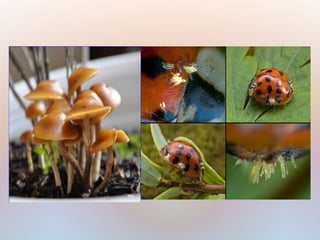
Saprophytes or saprobes - feed on dead
tissues or organic waste (decomposers)

Symbionts - mutually beneficial relationship
between a fungus and another organism

Parasites - feeding on living tissue of a host

Parasites that cause disease are called
pathogens
Reproduction
► Most fungi reproduce both sexually and asexually
Asexual reproduction – production of various types of
spores (When environmental conditions are
favorable)
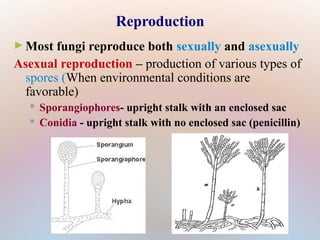
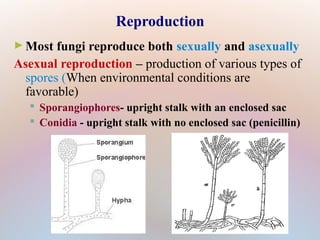
 Sporangiophores- upright stalk with an enclosed sac
 Conidia - upright stalk with no enclosed sac (penicillin)
Reproduction
► Most fungi reproduce both sexually and asexually
Asexual reproduction – production of various types of
spores (When environmental conditions are
favorable)
 Sporangiophores- upright stalk with an enclosed sac
 Conidia - upright stalk with no enclosed sac (penicillin)

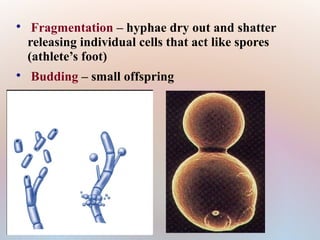
Fragmentation – hyphae dry out and shatter
releasing individual cells that act like spores
(athlete’s foot)

Budding – small offspring
► Sexual reproduction
 Used when environment conditions are poor (lack of
nutrients)
 No male or female fungi
 “plus and minus” mating types
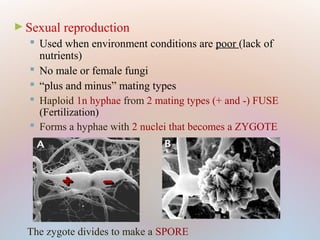
 Haploid 1n hyphae from 2 mating types (+ and -) FUSE
(Fertilization)
 Forms a hyphae with 2 nuclei that becomes a ZYGOTE
++ --
The zygote divides to make a SPORE
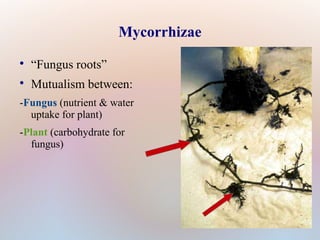
Mycorrhizae

“Fungus roots”

Mutualism between:
-Fungus (nutrient & water
uptake for plant)
-Plant (carbohydrate for
fungus)
Fungi decompose dead plant and animal
matter
► Called saprophytes, they act as recyclers of dead
organic matter, obtaining food from this material
► Hyphal tips release enzymes that eventually decompose
and release organic materials into the surrounding
environment
Fungi and Humans
► Many people have allergies triggered by mold
► Fungal skin infections – skin, nails and hair
 Athlete’s foot
Fungi in Industry
► Fungi produce many products used in the medical
field such as penicillin, cephalosporin antibotics,
cortisone
► Yeast are known for making breads rise
Fungi in the Food Industry
Mushrooms are widely
consumed by humans
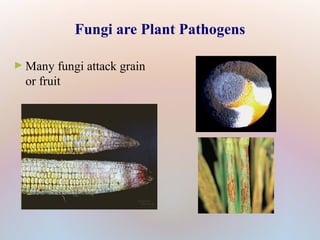
Fungi are Plant Pathogens
► Many fungi attack grain
or fruit
Fungi form beneficial partnerships
(symbiosis) with other organisms
Lichen – symbiotic
relationship between
algae and fungi
AlgaeAlgae
hyphaehyphae

Fungi

  • 1.
  • 3.
    Characteristics of Fungi ►Eukaryotic ► Nonphotosynthetic ( heterotrophic) ► Most are multicellular ► Microscopic (yeasts) ► Growth best in warm, moist environments The study fungi is known as MYCOLOGY
  • 4.
    Structure of Fungi ►Filaments of fungi are called hyphae ► The cell walls contain chitin ► The MYCELIUM is a mat of hyphae ► Store food energy as glycogen
  • 7.
  • 8.
  • 9.
    Feeding  Heterotrophy - 'otherfood'  Saprophytes or saprobes - feed on dead tissues or organic waste (decomposers)  Symbionts - mutually beneficial relationship between a fungus and another organism  Parasites - feeding on living tissue of a host  Parasites that cause disease are called pathogens
  • 11.
    Reproduction ► Most fungireproduce both sexually and asexually Asexual reproduction – production of various types of spores (When environmental conditions are favorable)  Sporangiophores- upright stalk with an enclosed sac  Conidia - upright stalk with no enclosed sac (penicillin)
  • 12.
    Reproduction ► Most fungireproduce both sexually and asexually Asexual reproduction – production of various types of spores (When environmental conditions are favorable)  Sporangiophores- upright stalk with an enclosed sac  Conidia - upright stalk with no enclosed sac (penicillin)
  • 14.
     Fragmentation – hyphaedry out and shatter releasing individual cells that act like spores (athlete’s foot)  Budding – small offspring
  • 15.
    ► Sexual reproduction Used when environment conditions are poor (lack of nutrients)  No male or female fungi  “plus and minus” mating types  Haploid 1n hyphae from 2 mating types (+ and -) FUSE (Fertilization)  Forms a hyphae with 2 nuclei that becomes a ZYGOTE ++ -- The zygote divides to make a SPORE
  • 18.
    Mycorrhizae  “Fungus roots”  Mutualism between: -Fungus(nutrient & water uptake for plant) -Plant (carbohydrate for fungus)
  • 19.
    Fungi decompose deadplant and animal matter ► Called saprophytes, they act as recyclers of dead organic matter, obtaining food from this material ► Hyphal tips release enzymes that eventually decompose and release organic materials into the surrounding environment
  • 20.
    Fungi and Humans ►Many people have allergies triggered by mold ► Fungal skin infections – skin, nails and hair  Athlete’s foot
  • 21.
    Fungi in Industry ►Fungi produce many products used in the medical field such as penicillin, cephalosporin antibotics, cortisone ► Yeast are known for making breads rise
  • 22.
    Fungi in theFood Industry Mushrooms are widely consumed by humans
  • 23.
    Fungi are PlantPathogens ► Many fungi attack grain or fruit
  • 24.
    Fungi form beneficialpartnerships (symbiosis) with other organisms Lichen – symbiotic relationship between algae and fungi AlgaeAlgae hyphaehyphae