LIZYL R. REBUSQUILLO
lizylrebusquillo@gmail.com
DEM 735 Ethical Leadership and HR
FUNDAMENTALS OF HUMAN
RELATIONS
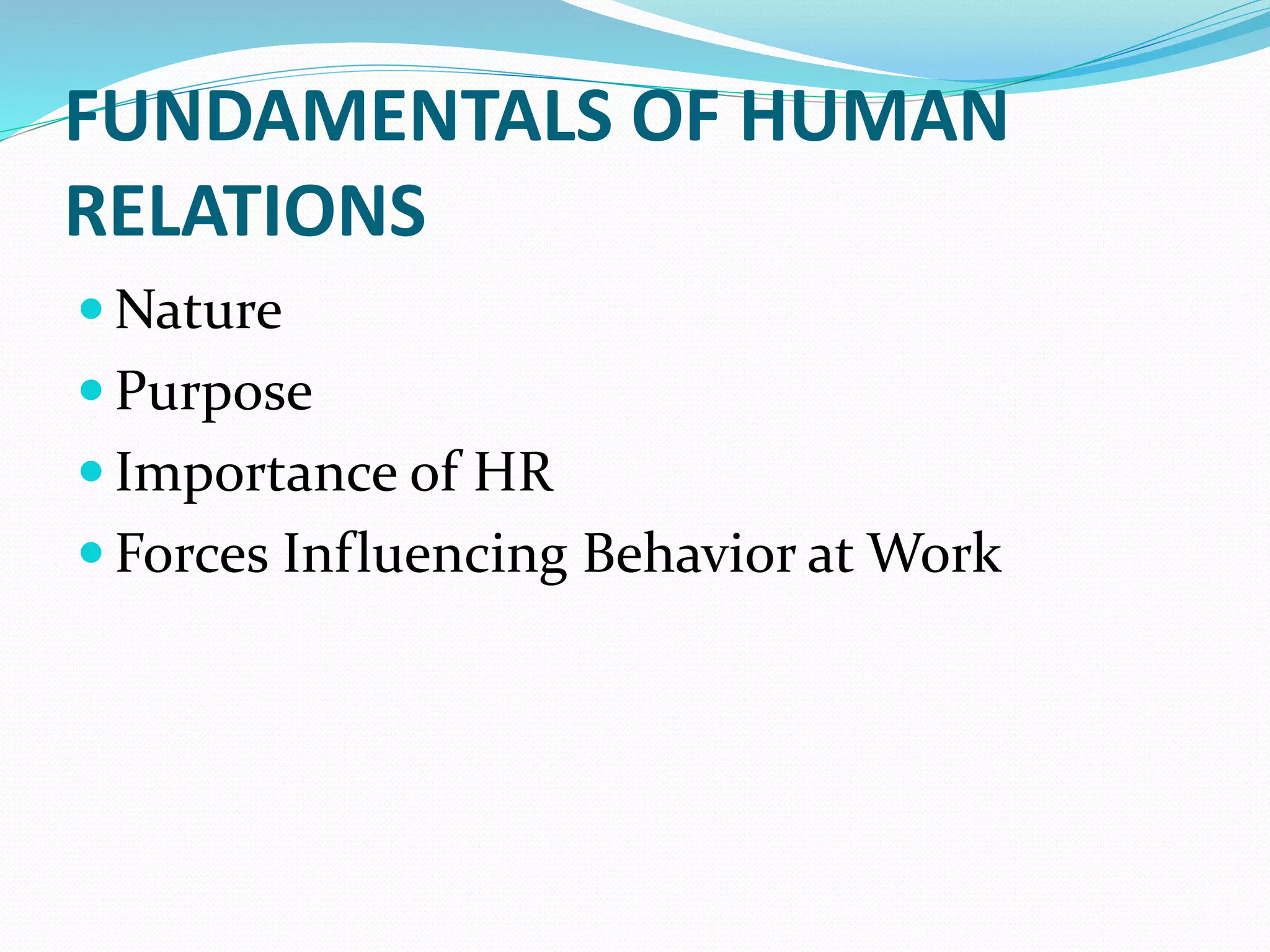
 Nature
 Purpose
 Importance of HR
 Forces Influencing Behavior at Work
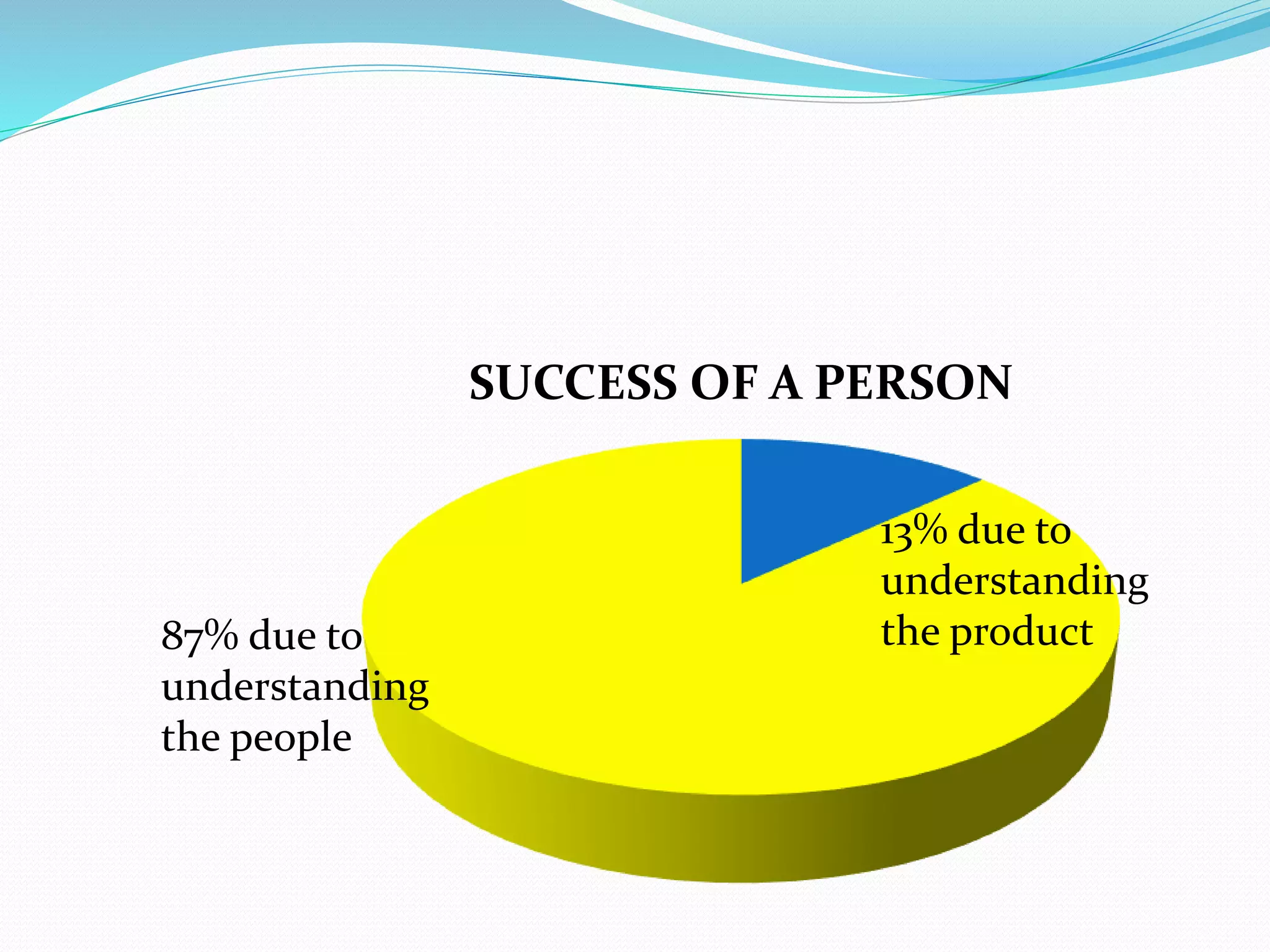
SUCCESS OF A PERSON
13% due to
understanding
the product87% due to
understanding
the people
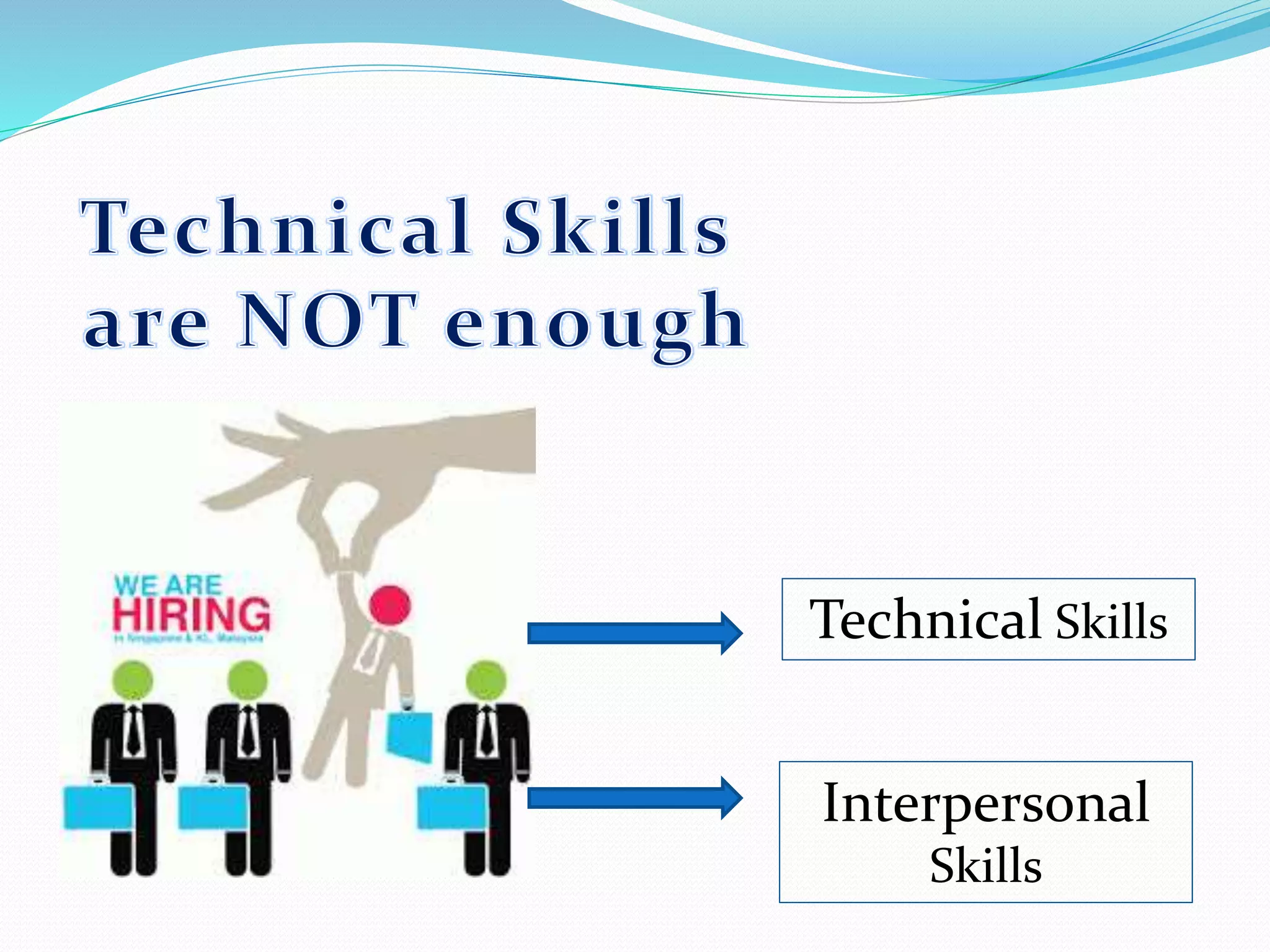
Technical Skills
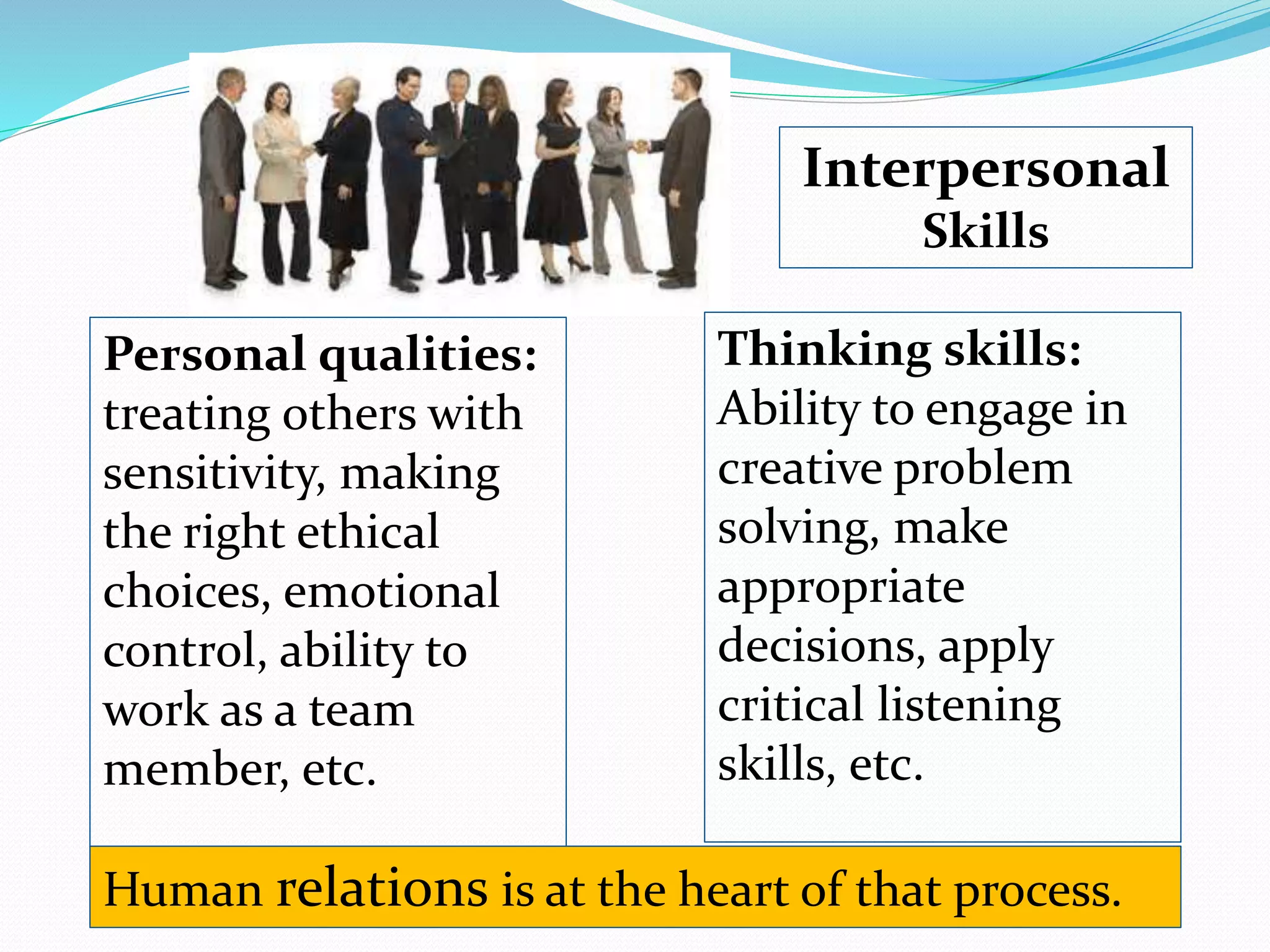
Interpersonal
Skills
Personal qualities:
treating others with
sensitivity, making
the right ethical
choices, emotional
control, ability to
work as a team
member, etc.
Thinking skills:
Ability to engage in
creative problem
solving, make
appropriate
decisions, apply
critical listening
skills, etc.
Human relations is at the heart of that process.
Interpersonal
Skills
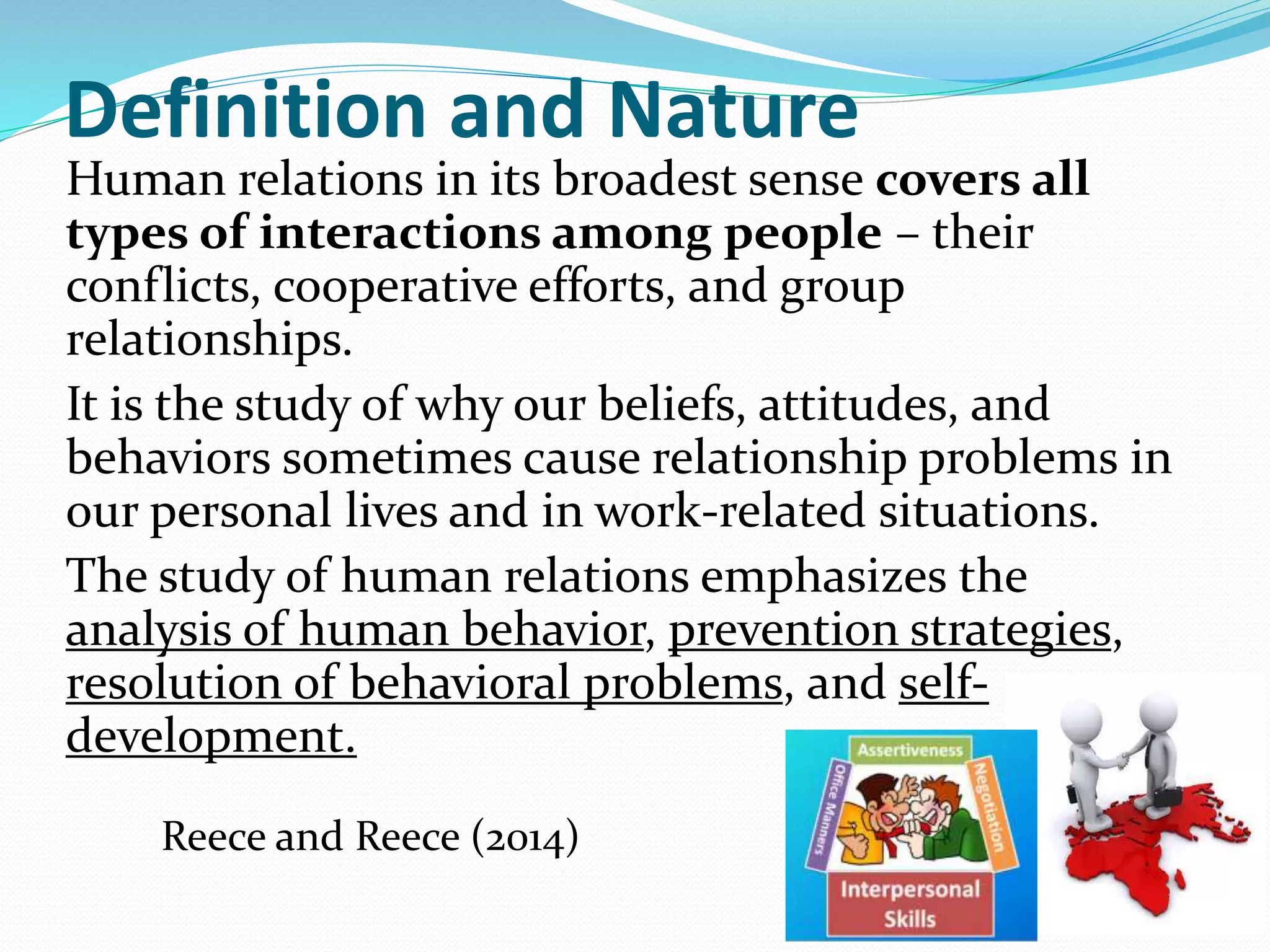
Definition and Nature
Human relations in its broadest sense covers all
types of interactions among people – their
conflicts, cooperative efforts, and group
relationships.
It is the study of why our beliefs, attitudes, and
behaviors sometimes cause relationship problems in
our personal lives and in work-related situations.
The study of human relations emphasizes the
analysis of human behavior, prevention strategies,
resolution of behavioral problems, and self-
development.
Reece and Reece (2014)
Dalton, et. Al (2010) described that effective human
relations is a combination of knowledge, experience,
skills and attributes. These traits enable you to perform
effectively. It involves:
 cognitive skills (decision making, problem solving,
critical thinking, creativity and innovation)
 relationship skills (influence and negotiation,
communication, listening and trust building)
 personal capabilities (adaptability, flexibility,
resilience, degree of integrity and honesty and
approach to self-development).
What Human Relations is NOT?
 Are strong and self-confident – but not overbearing
 Are modest - but not timid or self-effacing
 Are considerate of others – while keeping in mind both
your own and your organization’s needs
 Show an interest in other people and talk about topics that
interest them – without prying into their personal life.
 Listen – while still contributing your comments
 Are thoughtful – but not lazy or slow to action
 Are confident – but not unwilling to change or learn from
errors
 Are able to relax – but remain focused.
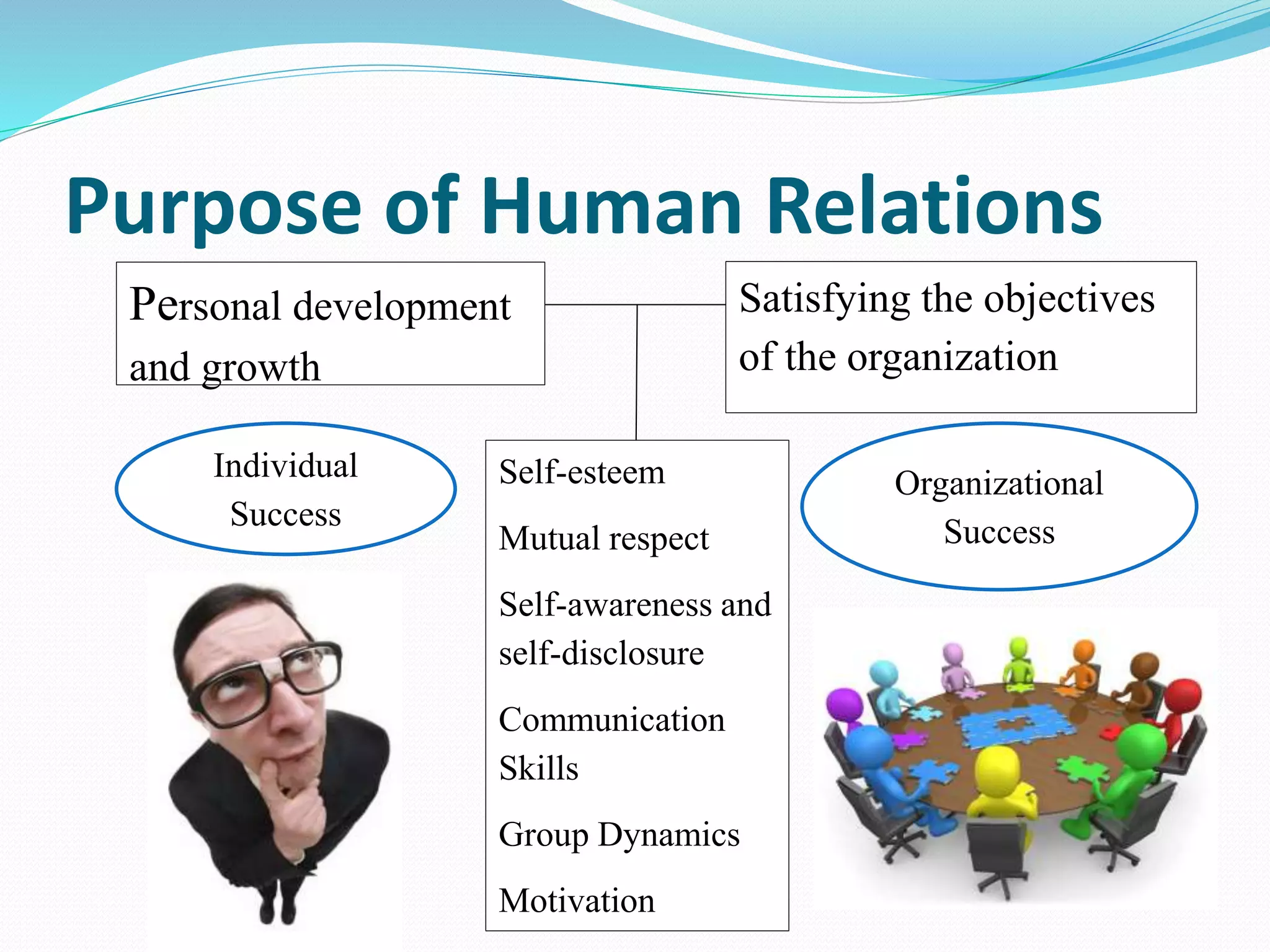
Purpose of Human Relations
Personal development
and growth
Satisfying the objectives
of the organization
Self-esteem
Mutual respect
Self-awareness and
self-disclosure
Communication
Skills
Group Dynamics
Motivation
Individual
Success
Organizational
Success
Importance of Human Relations
Skills
 To respect human rights in the organization –
Today, managers and employees have a greater
awareness of the rights of employees. This
awareness calls for more skillful relations among
employees, using tact, trust, and diplomacy with
greater skill.
 To give emphasis on people as human resources
- The two sets of behaviors now considered the
most important for new job applicants are
communication skills and human relations abilities.
This trend will likely continue in the future.
 Renewed emphasis on working groups. Today’s
employees tend to like working as teams and being
involved in making decisions as a group. Helping
groups work well together in such endeavors (as
either a team member or leader) requires a great
deal of human relations skill.
 Increasing diversity in the workplace. There are
organizations that contain the diversity of race,
religion, and culture.
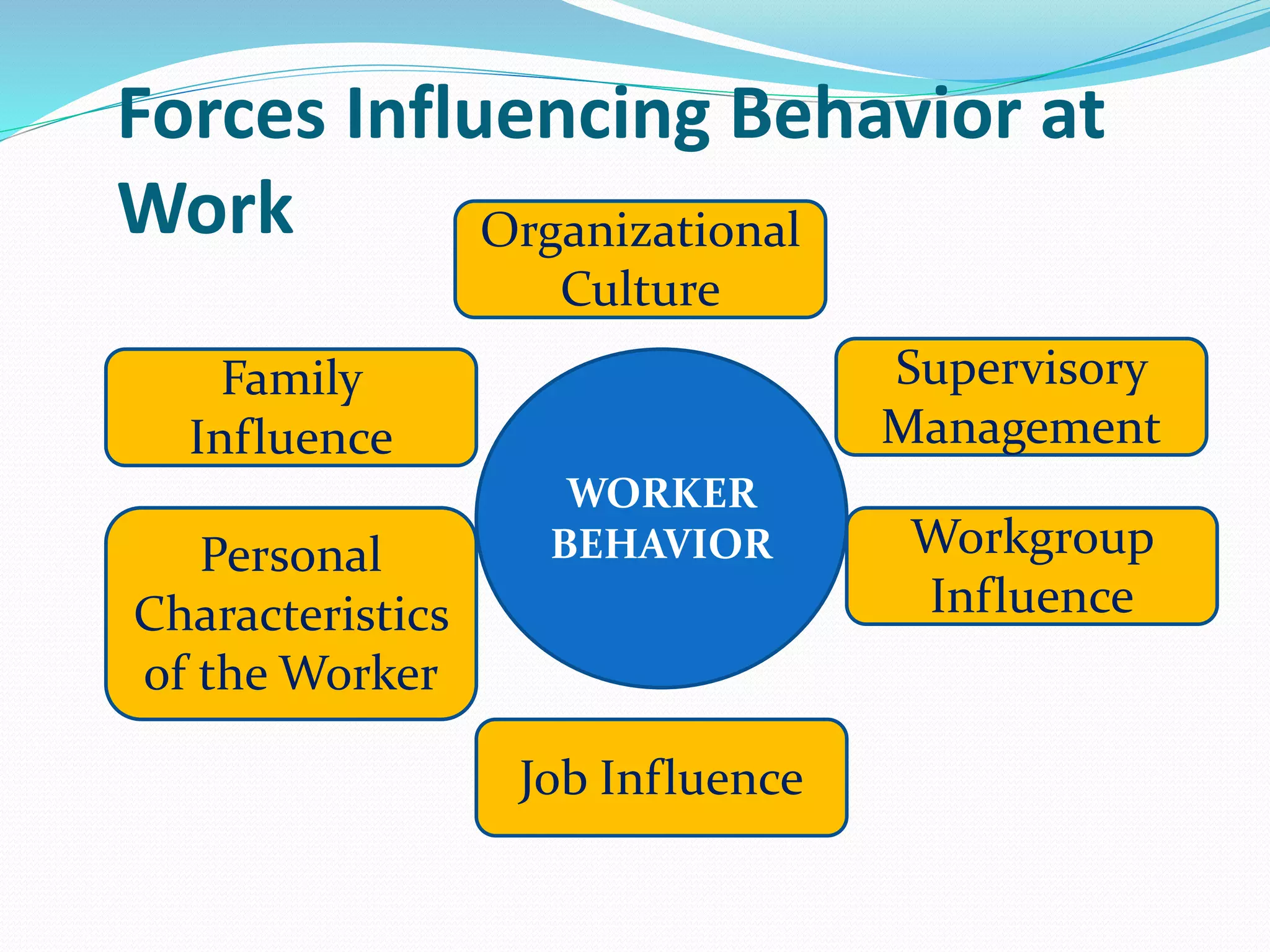
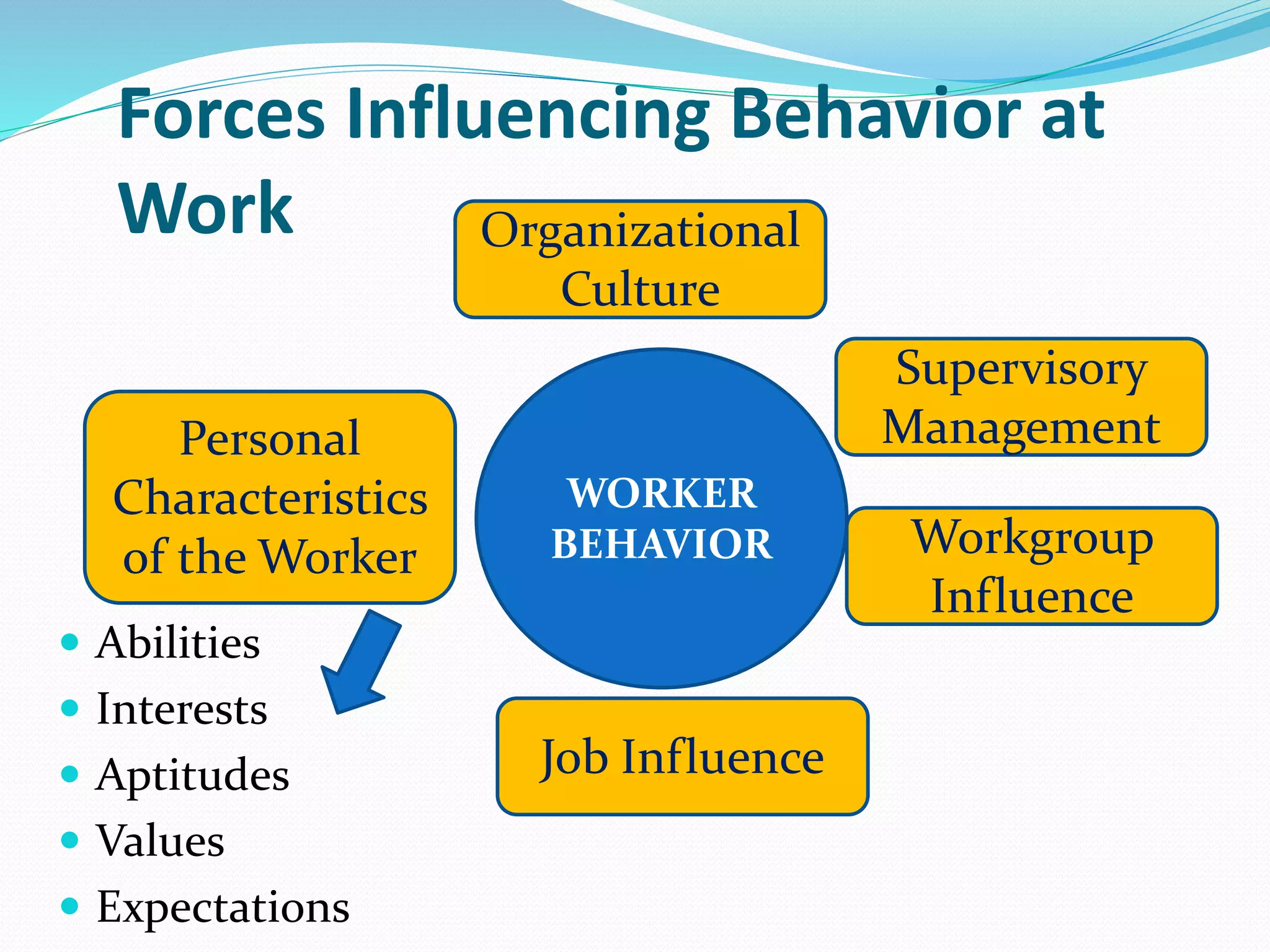
Forces Influencing Behavior at
Work
WORKER
BEHAVIOR
Organizational
Culture
Supervisory
Management
Workgroup
Influence
Job Influence
Personal
Characteristics
of the Worker
Family
Influence
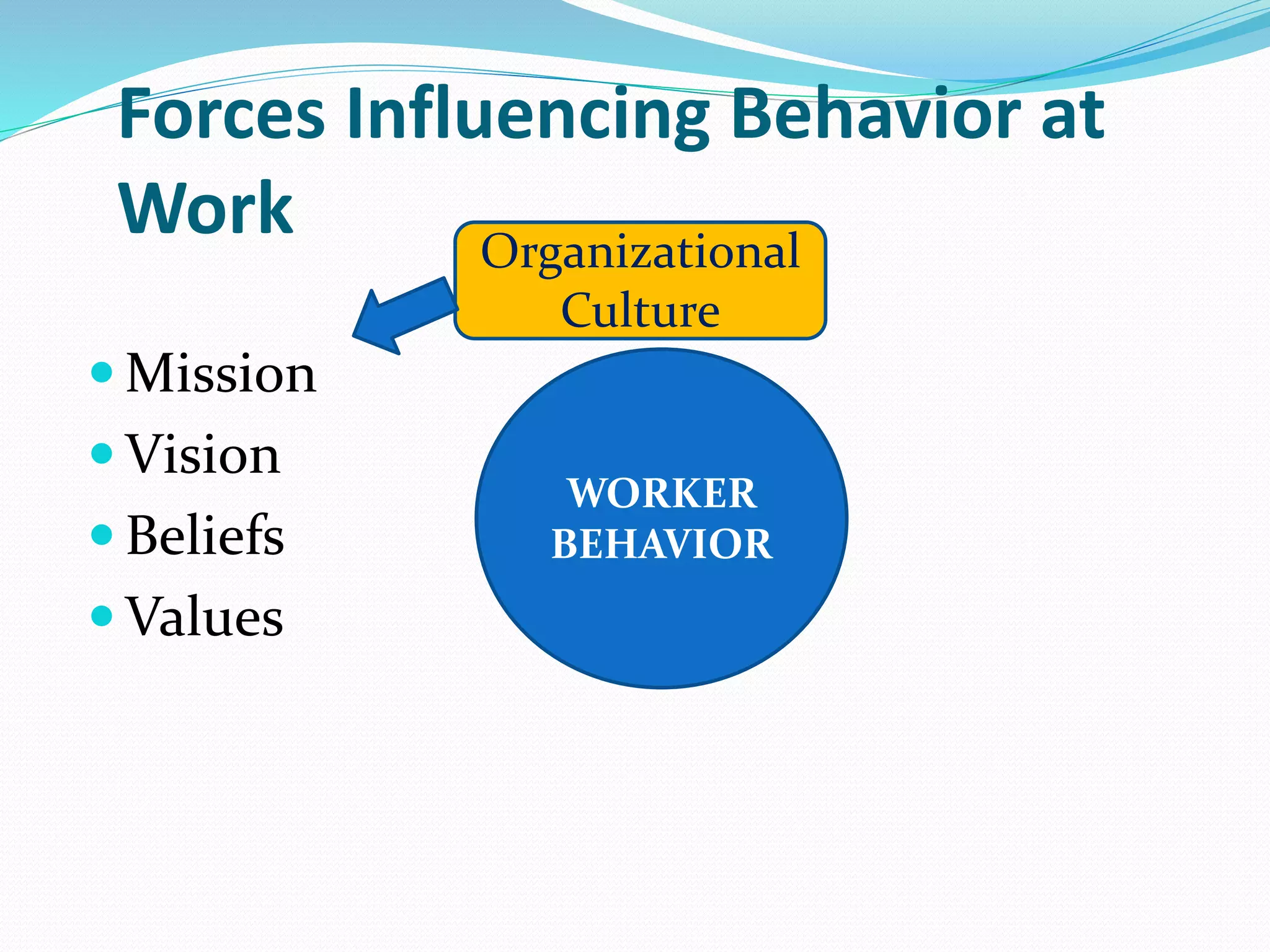
Forces Influencing Behavior at
Work
WORKER
BEHAVIOR
Organizational
Culture
 Mission
 Vision
 Beliefs
 Values
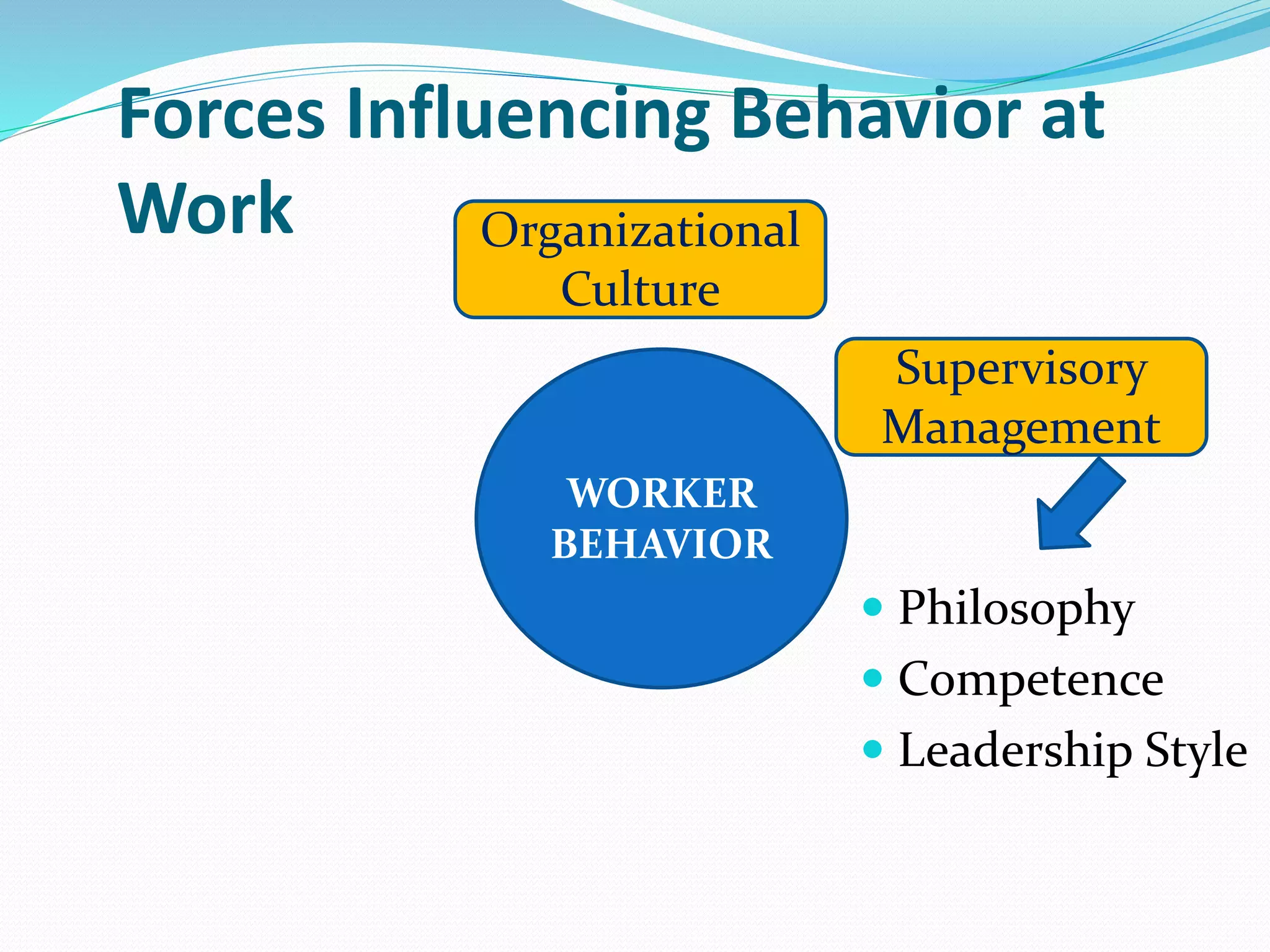
Forces Influencing Behavior at
Work
WORKER
BEHAVIOR
Organizational
Culture
Supervisory
Management
 Philosophy
 Competence
 Leadership Style
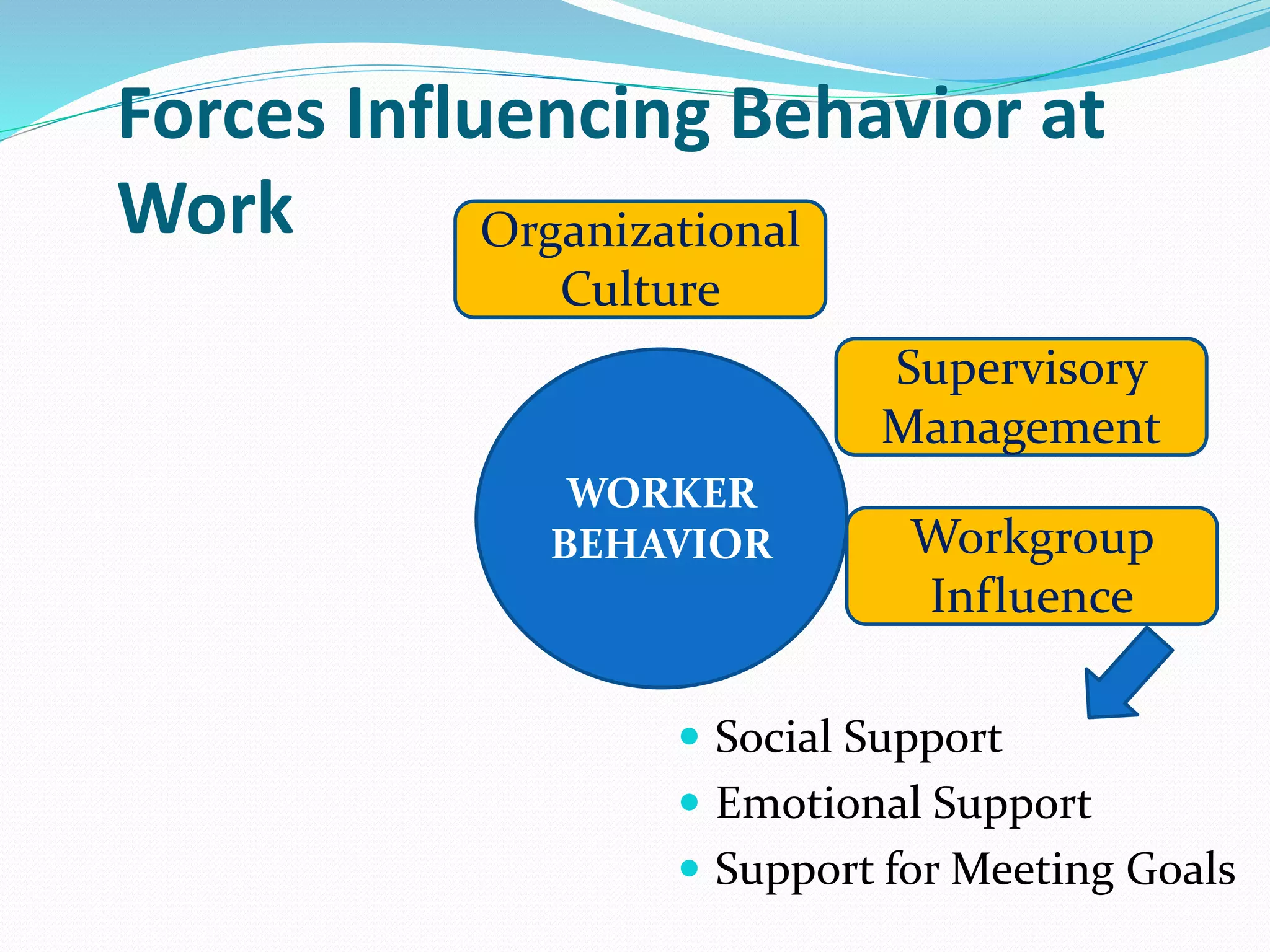
Forces Influencing Behavior at
Work
WORKER
BEHAVIOR
Organizational
Culture
Supervisory
Management
Workgroup
Influence
 Social Support
 Emotional Support
 Support for Meeting Goals
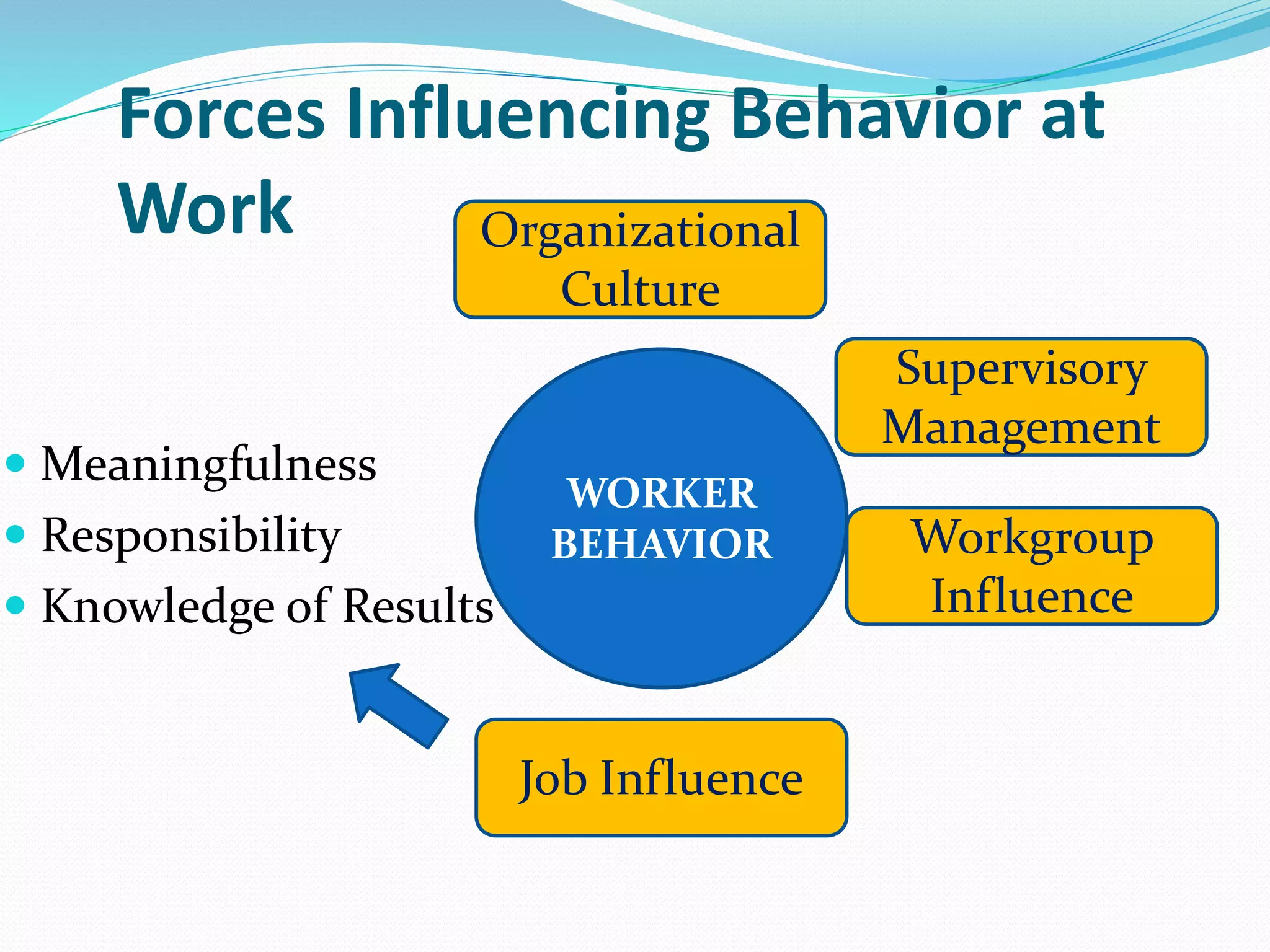
Forces Influencing Behavior at
Work
WORKER
BEHAVIOR
Organizational
Culture
Supervisory
Management
Workgroup
Influence
Job Influence
 Meaningfulness
 Responsibility
 Knowledge of Results
Forces Influencing Behavior at
Work
WORKER
BEHAVIOR
Organizational
Culture
Supervisory
Management
Workgroup
Influence
Job Influence
Personal
Characteristics
of the Worker
 Abilities
 Interests
 Aptitudes
 Values
 Expectations
Forces Influencing Behavior at
Work
WORKER
BEHAVIOR
Organizational
Culture
Supervisory
Management
Workgroup
Influence
Job InfluencePersonal
Characteristics
of the Worker
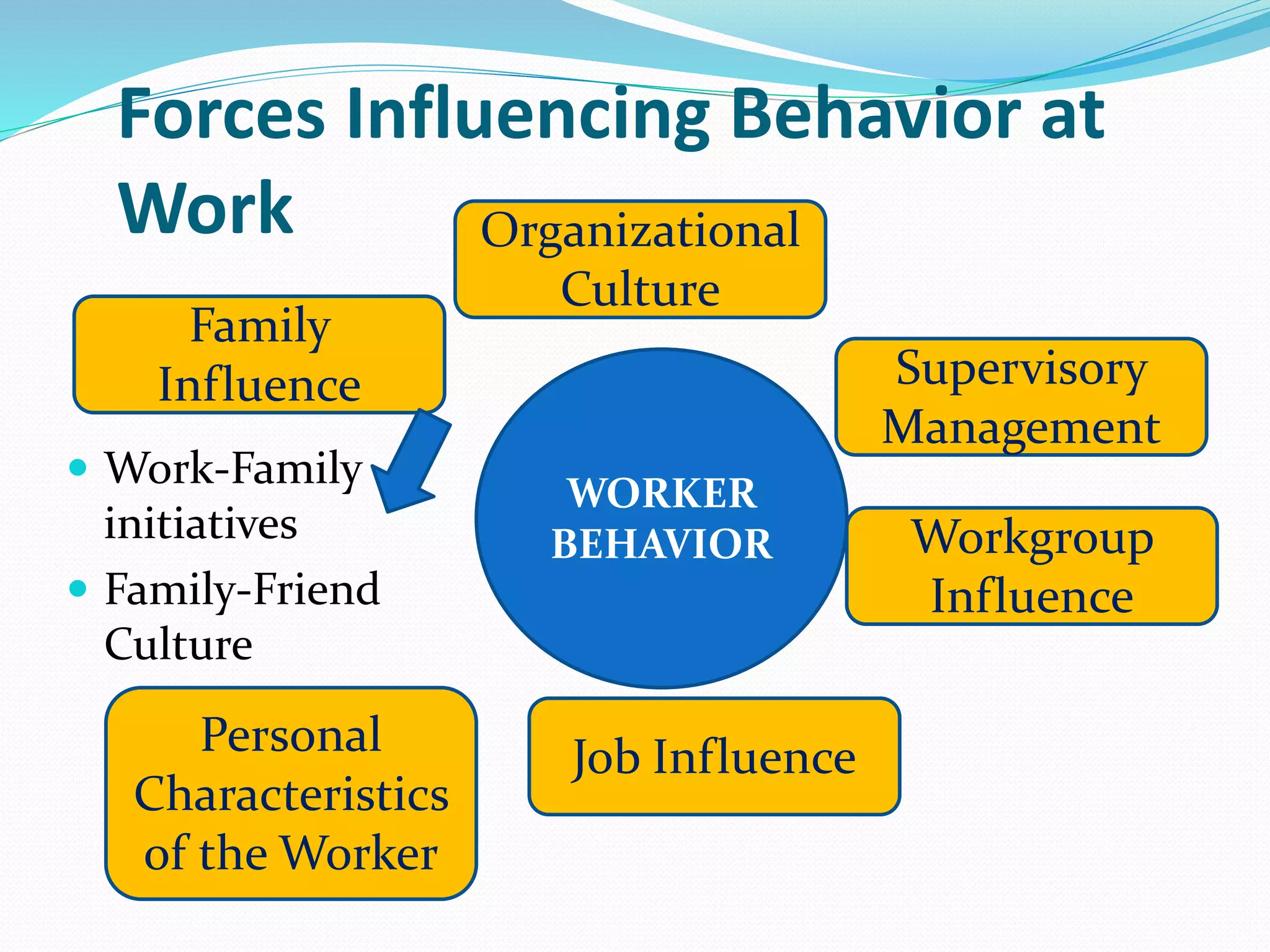
Family
Influence
 Work-Family
initiatives
 Family-Friend
Culture
References
 Barry Reece and Monique Reece (2014). Effective
Human Relations: Interpersonal and Organizational
Applications, 12th Edition. South-Western, Cengage
Learning. Available at http://books.google.com. Date
of Access: January 9, 2015
 Marie Dalton, Dawn Hoyle, Marie Vatts. (2011)
Cengage Learning. Cengage Learning. South-Western,
5191 Natorp Blvd., Mason, OH, USA. Available at
http://books.google.com. Date of Access: January 9,
2015

Fundamentals of Human Relations / Fundamentals of Human Behavior

  • 1.
  • 2.
    FUNDAMENTALS OF HUMAN RELATIONS Nature  Purpose  Importance of HR  Forces Influencing Behavior at Work
  • 3.
    SUCCESS OF APERSON 13% due to understanding the product87% due to understanding the people
  • 4.
  • 5.
    Personal qualities: treating otherswith sensitivity, making the right ethical choices, emotional control, ability to work as a team member, etc. Thinking skills: Ability to engage in creative problem solving, make appropriate decisions, apply critical listening skills, etc. Human relations is at the heart of that process. Interpersonal Skills
  • 6.
    Definition and Nature Humanrelations in its broadest sense covers all types of interactions among people – their conflicts, cooperative efforts, and group relationships. It is the study of why our beliefs, attitudes, and behaviors sometimes cause relationship problems in our personal lives and in work-related situations. The study of human relations emphasizes the analysis of human behavior, prevention strategies, resolution of behavioral problems, and self- development. Reece and Reece (2014)
  • 7.
    Dalton, et. Al(2010) described that effective human relations is a combination of knowledge, experience, skills and attributes. These traits enable you to perform effectively. It involves:  cognitive skills (decision making, problem solving, critical thinking, creativity and innovation)  relationship skills (influence and negotiation, communication, listening and trust building)  personal capabilities (adaptability, flexibility, resilience, degree of integrity and honesty and approach to self-development).
  • 8.
    What Human Relationsis NOT?  Are strong and self-confident – but not overbearing  Are modest - but not timid or self-effacing  Are considerate of others – while keeping in mind both your own and your organization’s needs  Show an interest in other people and talk about topics that interest them – without prying into their personal life.  Listen – while still contributing your comments  Are thoughtful – but not lazy or slow to action  Are confident – but not unwilling to change or learn from errors  Are able to relax – but remain focused.
  • 9.
    Purpose of HumanRelations Personal development and growth Satisfying the objectives of the organization Self-esteem Mutual respect Self-awareness and self-disclosure Communication Skills Group Dynamics Motivation Individual Success Organizational Success
  • 10.
    Importance of HumanRelations Skills  To respect human rights in the organization – Today, managers and employees have a greater awareness of the rights of employees. This awareness calls for more skillful relations among employees, using tact, trust, and diplomacy with greater skill.  To give emphasis on people as human resources - The two sets of behaviors now considered the most important for new job applicants are communication skills and human relations abilities. This trend will likely continue in the future.
  • 11.
     Renewed emphasison working groups. Today’s employees tend to like working as teams and being involved in making decisions as a group. Helping groups work well together in such endeavors (as either a team member or leader) requires a great deal of human relations skill.  Increasing diversity in the workplace. There are organizations that contain the diversity of race, religion, and culture.
  • 12.
    Forces Influencing Behaviorat Work WORKER BEHAVIOR Organizational Culture Supervisory Management Workgroup Influence Job Influence Personal Characteristics of the Worker Family Influence
  • 13.
    Forces Influencing Behaviorat Work WORKER BEHAVIOR Organizational Culture  Mission  Vision  Beliefs  Values
  • 14.
    Forces Influencing Behaviorat Work WORKER BEHAVIOR Organizational Culture Supervisory Management  Philosophy  Competence  Leadership Style
  • 15.
    Forces Influencing Behaviorat Work WORKER BEHAVIOR Organizational Culture Supervisory Management Workgroup Influence  Social Support  Emotional Support  Support for Meeting Goals
  • 16.
    Forces Influencing Behaviorat Work WORKER BEHAVIOR Organizational Culture Supervisory Management Workgroup Influence Job Influence  Meaningfulness  Responsibility  Knowledge of Results
  • 17.
    Forces Influencing Behaviorat Work WORKER BEHAVIOR Organizational Culture Supervisory Management Workgroup Influence Job Influence Personal Characteristics of the Worker  Abilities  Interests  Aptitudes  Values  Expectations
  • 18.
    Forces Influencing Behaviorat Work WORKER BEHAVIOR Organizational Culture Supervisory Management Workgroup Influence Job InfluencePersonal Characteristics of the Worker Family Influence  Work-Family initiatives  Family-Friend Culture
  • 19.
    References  Barry Reeceand Monique Reece (2014). Effective Human Relations: Interpersonal and Organizational Applications, 12th Edition. South-Western, Cengage Learning. Available at http://books.google.com. Date of Access: January 9, 2015  Marie Dalton, Dawn Hoyle, Marie Vatts. (2011) Cengage Learning. Cengage Learning. South-Western, 5191 Natorp Blvd., Mason, OH, USA. Available at http://books.google.com. Date of Access: January 9, 2015