Human Relations
  Movement

         Argued that
       workers respond
        primarily to the
       social context of
        the workplace
Theory X


A pessimistic and negative view of workers
 consistent with the views of scientific
 management
Theory Y


• A positive view of workers; it represents the
  assumptions that human relations advocates
  make about employees that employees are
  responsible and having positive attitude.
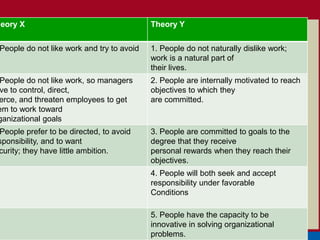
heory X                             Theory Y
                               Theory X and Y
People do not like work and try to avoid   1. People do not naturally dislike work;
                                           work is a natural part of
                                           their lives.
People do not like work, so managers       2. People are internally motivated to reach
ve to control, direct,                     objectives to which they
erce, and threaten employees to get        are committed.
em to work toward
ganizational goals
People prefer to be directed, to avoid     3. People are committed to goals to the
sponsibility, and to want                  degree that they receive
curity; they have little ambition.         personal rewards when they reach their
                                           objectives.
                                           4. People will both seek and accept
                                           responsibility under favorable
                                           Conditions

                                           5. People have the capacity to be
                                           innovative in solving organizational
                                           problems.
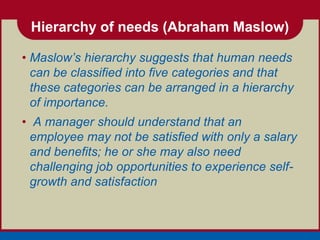
Hierarchy of needs (Abraham Maslow)

• Maslow’s hierarchy suggests that human needs
  can be classified into five categories and that
  these categories can be arranged in a hierarchy
  of importance.
• A manager should understand that an
  employee may not be satisfied with only a salary
  and benefits; he or she may also need
  challenging job opportunities to experience self-
  growth and satisfaction
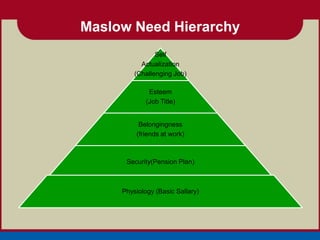
Maslow Need Hierarchy
                Self
           Actualization
         (Challenging Job)

              Esteem
             (Job Title)


          Belongingness
         (friends at work)


      Security(Pension Plan)


     Physiology (Basic Sallary)
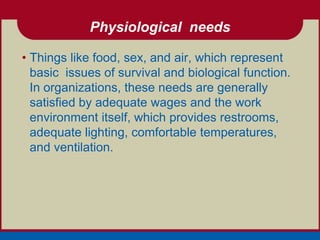
Physiological needs

• Things like food, sex, and air, which represent
  basic issues of survival and biological function.
  In organizations, these needs are generally
  satisfied by adequate wages and the work
  environment itself, which provides restrooms,
  adequate lighting, comfortable temperatures,
  and ventilation.
Security needs

• These needs can be satisfied in the workplace
  by job continuity (no layoffs), a grievance system
  (to protect against arbitrary supervisory actions),
  and an adequate insurance and retirement
  benefit package (for security against illness and
  provision of income in later life
Belongingness needs

• relate to social processes. They include the
  need for love and affection and the need to be
  accepted by one’s peers. These needs are
  satisfied for most people by family and
  community relationships outside of work and by
  friendships on the job. A manager can help
  satisfy these needs by allowing social interaction
  and by making employees feel like part of a
  team or work group
Esteem needs

comprise two different sets of needs: the need for
 a positive self-image and self-respect, and the
 need for recognition and respect from others. A
 manager can help address these needs by
 providing a variety of extrinsic symbols of
 accomplishment, such as job titles, nice
 offices, and similar rewards as appropriate. At a
 more intrinsic level, the manager can provide
 challenging job assignments and opportunities
 for the employee to feel a sense of
 accomplishment
Self- actualization Needs

• These involve realizing one’s potential for
  continued growth and individual development.
  needs must be met entirely from within the
  individual.
A manager can help by promoting a culture
 wherein self-actualization is possible. For
 instance, a manager could give employees a
 chance to participate in making decisions about
 their work and the opportunity to learn new
 things.
LOGO


THANK YOU


            YOUR SITE HERE

Human relations movement (2)

  • 1.
    Human Relations Movement Argued that workers respond primarily to the social context of the workplace
  • 2.
    Theory X A pessimisticand negative view of workers consistent with the views of scientific management
  • 3.
    Theory Y • Apositive view of workers; it represents the assumptions that human relations advocates make about employees that employees are responsible and having positive attitude.
  • 4.
    heory X Theory Y Theory X and Y People do not like work and try to avoid 1. People do not naturally dislike work; work is a natural part of their lives. People do not like work, so managers 2. People are internally motivated to reach ve to control, direct, objectives to which they erce, and threaten employees to get are committed. em to work toward ganizational goals People prefer to be directed, to avoid 3. People are committed to goals to the sponsibility, and to want degree that they receive curity; they have little ambition. personal rewards when they reach their objectives. 4. People will both seek and accept responsibility under favorable Conditions 5. People have the capacity to be innovative in solving organizational problems.
  • 5.
    Hierarchy of needs(Abraham Maslow) • Maslow’s hierarchy suggests that human needs can be classified into five categories and that these categories can be arranged in a hierarchy of importance. • A manager should understand that an employee may not be satisfied with only a salary and benefits; he or she may also need challenging job opportunities to experience self- growth and satisfaction
  • 6.
    Maslow Need Hierarchy Self Actualization (Challenging Job) Esteem (Job Title) Belongingness (friends at work) Security(Pension Plan) Physiology (Basic Sallary)
  • 7.
    Physiological needs • Thingslike food, sex, and air, which represent basic issues of survival and biological function. In organizations, these needs are generally satisfied by adequate wages and the work environment itself, which provides restrooms, adequate lighting, comfortable temperatures, and ventilation.
  • 8.
    Security needs • Theseneeds can be satisfied in the workplace by job continuity (no layoffs), a grievance system (to protect against arbitrary supervisory actions), and an adequate insurance and retirement benefit package (for security against illness and provision of income in later life
  • 9.
    Belongingness needs • relateto social processes. They include the need for love and affection and the need to be accepted by one’s peers. These needs are satisfied for most people by family and community relationships outside of work and by friendships on the job. A manager can help satisfy these needs by allowing social interaction and by making employees feel like part of a team or work group
  • 10.
    Esteem needs comprise twodifferent sets of needs: the need for a positive self-image and self-respect, and the need for recognition and respect from others. A manager can help address these needs by providing a variety of extrinsic symbols of accomplishment, such as job titles, nice offices, and similar rewards as appropriate. At a more intrinsic level, the manager can provide challenging job assignments and opportunities for the employee to feel a sense of accomplishment
  • 11.
    Self- actualization Needs •These involve realizing one’s potential for continued growth and individual development. needs must be met entirely from within the individual. A manager can help by promoting a culture wherein self-actualization is possible. For instance, a manager could give employees a chance to participate in making decisions about their work and the opportunity to learn new things.
  • 12.
    LOGO THANK YOU YOUR SITE HERE