SKILLS FOR EFFECTIVE
HUMAN RESOURCE
MANAGEMENT
PREPARED BY:
ALLORA MOLINA
RICKY UMBAN
Human relations skills are the skills we use
to interact with other people. It is the
capacity to connect with others so that
you can constructively collaborate and
achieve common goals. This includes
being able to understand and empathize
with others, as well as being able to
communicate effectively.
1.
Why do companies value good
human relations skills?
human relations skills when effectively employed in the
workplace
1. Improves employee creativity
2. Motivates employees
3. Employee engagement
4. Healthy relationships
5. Improves productivity
6. Increases loyalty
7. Mutual support
being able to multitask—that is, work on more
than one task at a time—is important in
managing human resources. A typical person
managing human resources may have to deal
with an employee issue one minute, then
switch and deal with recruiting. Unlike many
management positions, which only focus on
one task or one part of the business, human
resources focuses on all areas of the business,
where multitasking is a must.
2.
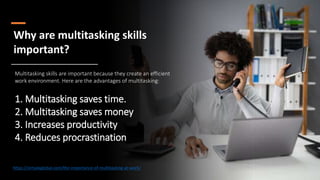
Why are multitasking skills
important?
Multitasking skills are important because they create an efficient
work environment. Here are the advantages of multitasking:
1. Multitasking saves time.
2. Multitasking saves money
3. Increases productivity
4. Reduces procrastination
https://virtuexglobal.com/the-importance-of-multitasking-at-work/
3.
Human Resource manager is the
paragon of orderly and seamless
organization. His staff is well organized.
Organized files, strong time
management skills and personal
efficiency are good indicators of a well-
organized human resource function.
Organizational skills HR
Professionals cultivate:
• Time management
• Records management
• Calendar management
4.
Employees expect human resources
professionals to advocate for their
concerns, yet you must also enforce
top management’s policies. The HR
professional who can pull off this
delicate balancing act wins trust from
all concerned.
There are times you must make
decisions to protect the individual and
other times when you protect the
organization, its culture, and values.
5.
The HR professionals are the custodian of
all personnel records which hold a lot of
individual personal secrets. If you hold all
these confidential information sacred and
inviolate, you win the trust and confidence
of management and employees.
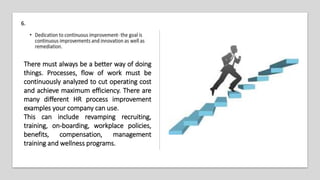
There must always be a better way of doing
things. Processes, flow of work must be
continuously analyzed to cut operating cost
and achieve maximum efficiency. There are
many different HR process improvement
examples your company can use.
This can include revamping recruiting,
training, on-boarding, workplace policies,
benefits, compensation, management
training and wellness programs.
6.
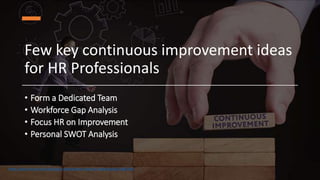
Few key continuous improvement ideas
for HR Professionals
• Form a Dedicated Team
• Workforce Gap Analysis
• Focus HR on Improvement
• Personal SWOT Analysis
https://work.chron.com/continuous-improvement-ideas-hr-professionals-3006.html
HR managers should display robust
negotiation capabilities to do well in
their job. An offer of employment is a
sensitive area, where the HR manager
must balance the best interests of
both employees and the company. HR
professionals who know individual
behavior and organizational outcomes
can achieve a mutually acceptable
solution for both candidates and the
organization.
7.
Examples Of
Negotiation Skills
• Communication
• Strategizing
• Planning
• Persuasion
• Listening
• Problem-solving
• Emotional intelligence
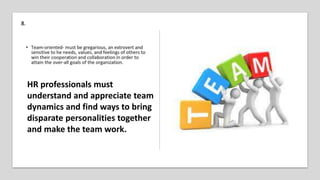
HR professionals must
understand and appreciate team
dynamics and find ways to bring
disparate personalities together
and make the team work.
8.
HOW HR CAN INFLUENCE EMPLOYEE TEAMWORK
With a mandate to develop successful team-working within your organization, you might first
address the high-level HR strategy that will guide it. Your approach to the following HR areas can
all influence teamwork.
• Recruitment and retention: There’s a reason top football
clubs spend millions on transfers — successful teams are made
up of self-motivated employees with excellent communication
skills. Identify the qualities your teams require and design your
recruitment drives accordingly.
• Learning and development: Specific skills are required to
work collaboratively, and to lead a team. More effective team-
working can be achieved by developing staff in areas such as
project management, communication, and leadership.
• Pay and reward: Employee incentive programs can promote
effective team-working by rewarding team achievement.
Examples might include performance-related team bonuses and
rewards such as group social events for top-performing teams.
Integrity requires honesty. Those with
integrity strive to be truthful. Integrity
in the workplace comes in many forms,
but above all refers to having
upstanding character traits and work
ethics including sound judgement,
honesty, dependability, and loyalty.
9.
Role of the HR department in promoting
ethics and integrity in the workplace
• The following tips will help HR professionals align their role with ethical practices, ensuring that decisions
place value on employees and honor their integral human rights.
• Create a code of conduct that matches your company’s and employees’ values
• Maintain confidentiality in all processes and documentation at all times
• Continuously evaluate your organization’s culture
SKILLS-FOR-EFFECTIVE-HUMAN-RESOURCE-MANAGEMENT.pptx

SKILLS-FOR-EFFECTIVE-HUMAN-RESOURCE-MANAGEMENT.pptx

  • 1.
    SKILLS FOR EFFECTIVE HUMANRESOURCE MANAGEMENT PREPARED BY: ALLORA MOLINA RICKY UMBAN
  • 2.
    Human relations skillsare the skills we use to interact with other people. It is the capacity to connect with others so that you can constructively collaborate and achieve common goals. This includes being able to understand and empathize with others, as well as being able to communicate effectively. 1.
  • 3.
    Why do companiesvalue good human relations skills? human relations skills when effectively employed in the workplace 1. Improves employee creativity 2. Motivates employees 3. Employee engagement 4. Healthy relationships 5. Improves productivity 6. Increases loyalty 7. Mutual support
  • 4.
    being able tomultitask—that is, work on more than one task at a time—is important in managing human resources. A typical person managing human resources may have to deal with an employee issue one minute, then switch and deal with recruiting. Unlike many management positions, which only focus on one task or one part of the business, human resources focuses on all areas of the business, where multitasking is a must. 2.
  • 5.
    Why are multitaskingskills important? Multitasking skills are important because they create an efficient work environment. Here are the advantages of multitasking: 1. Multitasking saves time. 2. Multitasking saves money 3. Increases productivity 4. Reduces procrastination https://virtuexglobal.com/the-importance-of-multitasking-at-work/
  • 6.
    3. Human Resource manageris the paragon of orderly and seamless organization. His staff is well organized. Organized files, strong time management skills and personal efficiency are good indicators of a well- organized human resource function.
  • 7.
    Organizational skills HR Professionalscultivate: • Time management • Records management • Calendar management
  • 8.
    4. Employees expect humanresources professionals to advocate for their concerns, yet you must also enforce top management’s policies. The HR professional who can pull off this delicate balancing act wins trust from all concerned. There are times you must make decisions to protect the individual and other times when you protect the organization, its culture, and values.
  • 9.
    5. The HR professionalsare the custodian of all personnel records which hold a lot of individual personal secrets. If you hold all these confidential information sacred and inviolate, you win the trust and confidence of management and employees.
  • 10.
    There must alwaysbe a better way of doing things. Processes, flow of work must be continuously analyzed to cut operating cost and achieve maximum efficiency. There are many different HR process improvement examples your company can use. This can include revamping recruiting, training, on-boarding, workplace policies, benefits, compensation, management training and wellness programs. 6.
  • 11.
    Few key continuousimprovement ideas for HR Professionals • Form a Dedicated Team • Workforce Gap Analysis • Focus HR on Improvement • Personal SWOT Analysis https://work.chron.com/continuous-improvement-ideas-hr-professionals-3006.html
  • 12.
    HR managers shoulddisplay robust negotiation capabilities to do well in their job. An offer of employment is a sensitive area, where the HR manager must balance the best interests of both employees and the company. HR professionals who know individual behavior and organizational outcomes can achieve a mutually acceptable solution for both candidates and the organization. 7.
  • 13.
    Examples Of Negotiation Skills •Communication • Strategizing • Planning • Persuasion • Listening • Problem-solving • Emotional intelligence
  • 14.
    HR professionals must understandand appreciate team dynamics and find ways to bring disparate personalities together and make the team work. 8.
  • 15.
    HOW HR CANINFLUENCE EMPLOYEE TEAMWORK With a mandate to develop successful team-working within your organization, you might first address the high-level HR strategy that will guide it. Your approach to the following HR areas can all influence teamwork. • Recruitment and retention: There’s a reason top football clubs spend millions on transfers — successful teams are made up of self-motivated employees with excellent communication skills. Identify the qualities your teams require and design your recruitment drives accordingly. • Learning and development: Specific skills are required to work collaboratively, and to lead a team. More effective team- working can be achieved by developing staff in areas such as project management, communication, and leadership. • Pay and reward: Employee incentive programs can promote effective team-working by rewarding team achievement. Examples might include performance-related team bonuses and rewards such as group social events for top-performing teams.
  • 16.
    Integrity requires honesty.Those with integrity strive to be truthful. Integrity in the workplace comes in many forms, but above all refers to having upstanding character traits and work ethics including sound judgement, honesty, dependability, and loyalty. 9.
  • 17.
    Role of theHR department in promoting ethics and integrity in the workplace • The following tips will help HR professionals align their role with ethical practices, ensuring that decisions place value on employees and honor their integral human rights. • Create a code of conduct that matches your company’s and employees’ values • Maintain confidentiality in all processes and documentation at all times • Continuously evaluate your organization’s culture