 Introduction
 Management

of human resource

 Recruitment
 Selection
 Employment

legislation
 Development
 Trade unions
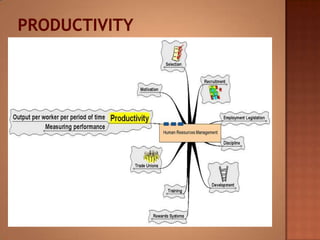
 Productivity
 conclusion




from the view point of an organization, human resources
represent the people at work.
They are the total sum of the inherent abilities, acquired
knowledge and skills as exemplified in the talents and
aptitudes of its employees.

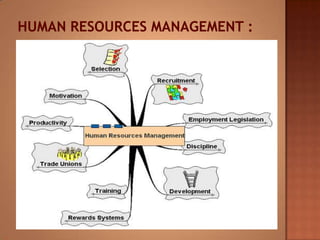
HUMAN RESOUCE MANAGEMENT :
human resource management is “the
planning , organizing, directing and controlling of the
procurement ,development , compensation , integration
, maintenance and reproduction of human resources to
the end that individual , organizational and social
objectives are accomplished ’’.
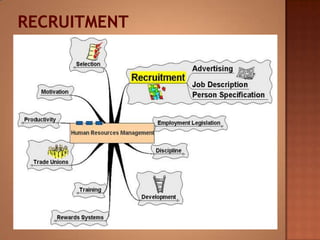
 The

process by which a job vacancy
is identified and potential employees are
notified.
 The nature of the recruitment process
is regulated and subject
to employment law.
 Main forms of recruitment through
advertising in newspapers, magazines,
trade papers and internal vacancy lists.
 Job

description – outline of the role

of the job holder
 Person

specification – outline

of the skills and qualities required
of the post holder
 Applicants may demonstrate their suitability
through application form, letter or curriculum
vitae (CV)
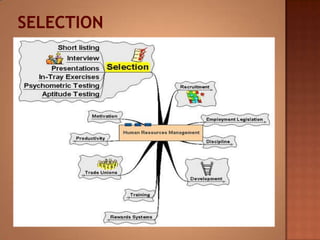
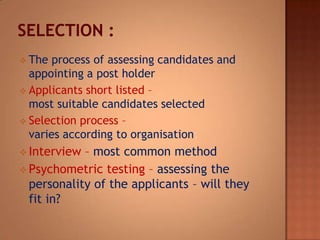
 The

process of assessing candidates and
appointing a post holder
 Applicants short listed –
most suitable candidates selected
 Selection process –
varies according to organisation:
 Interview

– most common method
 Psychometric testing – assessing the
personality of the applicants – will they
fit in?
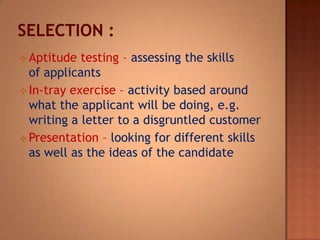
 Aptitude

testing – assessing the skills
of applicants
 In-tray exercise – activity based around
what the applicant will be doing, e.g.
writing a letter to a disgruntled customer
 Presentation – looking for different skills
as well as the ideas of the candidate
Increasingly
important aspect of
the HRM role
 Wide range
of areas for attention
 Adds to the cost of
the business


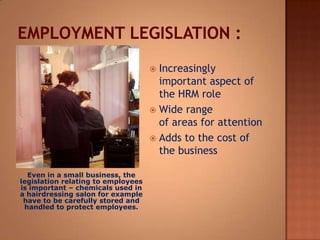
Even in a small business, the
legislation relating to employees
is important – chemicals used in
a hairdressing salon for example
have to be carefully stored and
handled to protect employees.


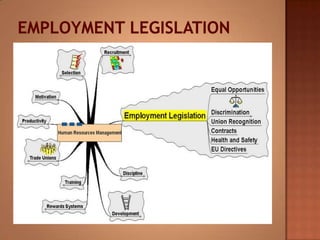
Crucial aspects
of employment
legislation:




Race
Gender
Disability

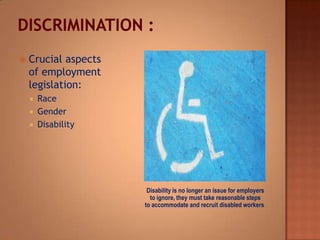
Disability is no longer an issue for employers
to ignore, they must take reasonable steps
to accommodate and recruit disabled workers.
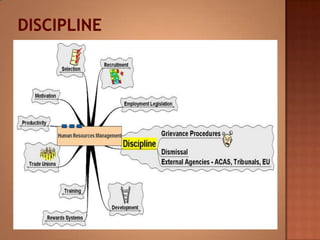
 Firms

cannot just ‘sack’ workers
 Wide range of procedures and steps
in dealing with workplace conflict
Informal meetings
 Formal meetings
 Verbal warnings
 Written warnings
 Grievance procedures
 Working with external agencies
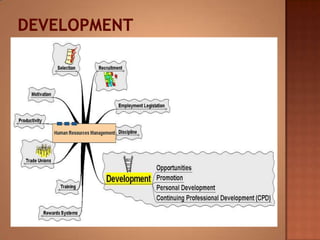
 Developing

the employee
can be regarded as investing
in a valuable asset



A source of motivation
A source of helping the employee fulfil potential
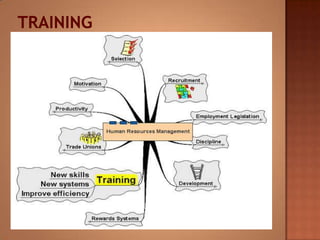
 Similar






to development:

Provides new skills for the employee
Keeps the employee up to date
with changes in the field
Aims to improve efficiency
Can be external or ‘in-house’
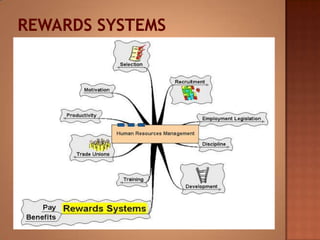
 The

system of pay and benefits used by the
firm to reward workers
 Money not the only method
 Fringe benefits
 Flexibility at work
 Holidays, etc.
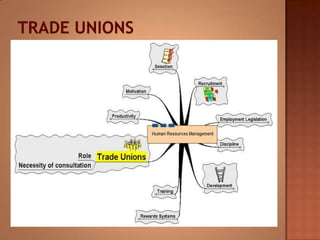
Importance of building relationships with
employee representatives
 Role of Trade Unions has changed
 Importance of consultation
and negotiation and working
with trade unions
 Contributes to smooth change management and
leadership.

 Measuring

performance:

How to value the workers contribution
 Difficulty in measuring some types of output –
especially in the service industry
 Appraisal






Meant to be non-judgmental
Involves the worker and a nominated appraiser
Agreeing strengths, weaknesses and ways forward
to help both employee and organisation
Human Resource Management should be seen as a strategic
function of an organization. It helps to build a competitive
edge for an organization by positively engaging its
employees. Key ingredients of effective Human Resource
Management are having in place an appropriate leadership
style and effective two-way communications with
employees. This creates an open and honest environment
where employees feel that their ideas are being listened to
and that they can make a contribution to decision making.
Engaged employees are more likely to be proud to work for
their organization and therefore will believe in and live out
the values of the organization.
ANY QUESTIONS ??

Human resource management

  • 2.
     Introduction  Management ofhuman resource  Recruitment  Selection  Employment legislation  Development  Trade unions  Productivity  conclusion
  • 3.
      from the viewpoint of an organization, human resources represent the people at work. They are the total sum of the inherent abilities, acquired knowledge and skills as exemplified in the talents and aptitudes of its employees. HUMAN RESOUCE MANAGEMENT : human resource management is “the planning , organizing, directing and controlling of the procurement ,development , compensation , integration , maintenance and reproduction of human resources to the end that individual , organizational and social objectives are accomplished ’’.
  • 6.
     The process bywhich a job vacancy is identified and potential employees are notified.  The nature of the recruitment process is regulated and subject to employment law.  Main forms of recruitment through advertising in newspapers, magazines, trade papers and internal vacancy lists.
  • 7.
     Job description –outline of the role of the job holder  Person specification – outline of the skills and qualities required of the post holder  Applicants may demonstrate their suitability through application form, letter or curriculum vitae (CV)
  • 9.
     The process ofassessing candidates and appointing a post holder  Applicants short listed – most suitable candidates selected  Selection process – varies according to organisation:  Interview – most common method  Psychometric testing – assessing the personality of the applicants – will they fit in?
  • 10.
     Aptitude testing –assessing the skills of applicants  In-tray exercise – activity based around what the applicant will be doing, e.g. writing a letter to a disgruntled customer  Presentation – looking for different skills as well as the ideas of the candidate
  • 12.
    Increasingly important aspect of theHRM role  Wide range of areas for attention  Adds to the cost of the business  Even in a small business, the legislation relating to employees is important – chemicals used in a hairdressing salon for example have to be carefully stored and handled to protect employees.
  • 13.
     Crucial aspects of employment legislation:    Race Gender Disability Disabilityis no longer an issue for employers to ignore, they must take reasonable steps to accommodate and recruit disabled workers.
  • 15.
     Firms cannot just‘sack’ workers  Wide range of procedures and steps in dealing with workplace conflict Informal meetings  Formal meetings  Verbal warnings  Written warnings  Grievance procedures  Working with external agencies
  • 17.
     Developing the employee canbe regarded as investing in a valuable asset   A source of motivation A source of helping the employee fulfil potential
  • 19.
     Similar     to development: Providesnew skills for the employee Keeps the employee up to date with changes in the field Aims to improve efficiency Can be external or ‘in-house’
  • 21.
     The system ofpay and benefits used by the firm to reward workers  Money not the only method  Fringe benefits  Flexibility at work  Holidays, etc.
  • 23.
    Importance of buildingrelationships with employee representatives  Role of Trade Unions has changed  Importance of consultation and negotiation and working with trade unions  Contributes to smooth change management and leadership. 
  • 25.
     Measuring performance: How tovalue the workers contribution  Difficulty in measuring some types of output – especially in the service industry  Appraisal     Meant to be non-judgmental Involves the worker and a nominated appraiser Agreeing strengths, weaknesses and ways forward to help both employee and organisation
  • 26.
    Human Resource Managementshould be seen as a strategic function of an organization. It helps to build a competitive edge for an organization by positively engaging its employees. Key ingredients of effective Human Resource Management are having in place an appropriate leadership style and effective two-way communications with employees. This creates an open and honest environment where employees feel that their ideas are being listened to and that they can make a contribution to decision making. Engaged employees are more likely to be proud to work for their organization and therefore will believe in and live out the values of the organization.
  • 27.