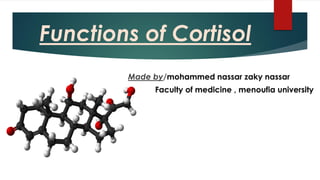
Functions of Cortisol
Made by/mohammed nassar zaky nassar
Faculty of medicine , menoufia university
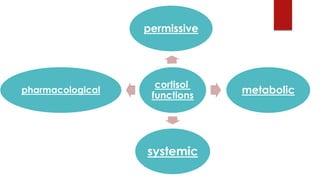
cortisol
functions
permissive
metabolic
systemic
pharmacological
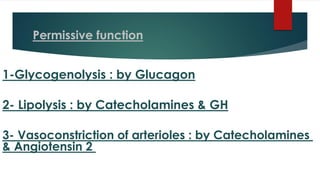
Permissive function
1-Glycogenolysis : by Glucagon
2- Lipolysis : by Catecholamines & GH
3- Vasoconstriction of arterioles : by Catecholamines
& Angiotensin 2
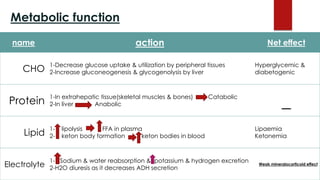
Metabolic function
Net effectactionname
Hyperglycemic &
diabetogenic
1-Decrease glucose uptake & utilization by peripheral tissues
2-Increase gluconeogenesis & glycogenolysis by liverCHO
_1-In extrahepatic tissue(skeletal muscles & bones) Catabolic
2-In liver AnabolicProtein
Lipaemia
Ketonemia
1- lipolysis FFA in plasma
2- keton body formation keton bodies in bloodLipid
Weak mineralocorticoid effect
1- Sodium & water reabsorption & potassium & hydrogen excretion
2-H2O diuresis as it decreases ADH secretionElectrolyte
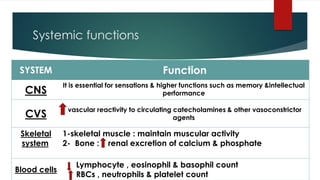
Systemic functions
FunctionSYSTEM
It is essential for sensations & higher functions such as memory &intellectual
performanceCNS
vascular reactivity to circulating catecholamines & other vasoconstrictor
agentsCVS
1-skeletal muscle : maintain muscular activity
2- Bone : renal excretion of calcium & phosphate
Skeletal
system
Lymphocyte , eosinophil & basophil count
RBCs , neutrophils & platelet count
Blood cells
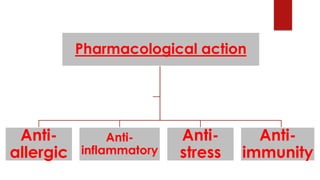
Pharmacological action
Anti-
allergic
Anti-
inflammatory
Anti-
stress
Anti-
immunity
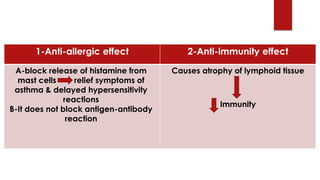
2-Anti-immunity effect1-Anti-allergic effect
Causes atrophy of lymphoid tissue
Immunity
A-block release of histamine from
mast cells relief symptoms of
asthma & delayed hypersensitivity
reactions
B-It does not block antigen-antibody
reaction
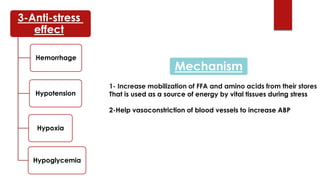
3-Anti-stress
effect
Hemorrhage
Hypotension
Hypoxia
Hypoglycemia
Mechanism
1- Increase mobilization of FFA and amino acids from their stores
That is used as a source of energy by vital tissues during stress
2-Help vasoconstriction of blood vessels to increase ABP
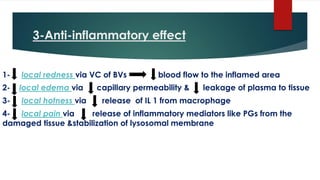
3-Anti-inflammatory effect
1- local redness via VC of BVs blood flow to the inflamed area
2- local edema via capillary permeability & leakage of plasma to tissue
3- local hotness via release of IL 1 from macrophage
4- local pain via release of inflammatory mediators like PGs from the
damaged tissue &stabilization of lysosomal membrane
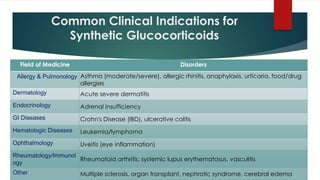
Common Clinical Indications for
Synthetic Glucocorticoids
DisordersField of Medicine
Asthma (moderate/severe), allergic rhinitis, anaphylaxis, urticaria, food/drug
allergies
Allergy & Pulmonology
Acute severe dermatitisDermatology
Adrenal insufficiencyEndocrinology
Crohn's Disease (IBD), ulcerative colitisGI Diseases
Leukemia/lymphomaHematologic Diseases
Uveitis (eye inflammation)Ophthalmology
Rheumatoid arthritis, systemic lupus erythematosus, vasculitis
Rheumatology/Immunol
ogy
Multiple sclerosis, organ transplant, nephrotic syndrome, cerebral edemaOther
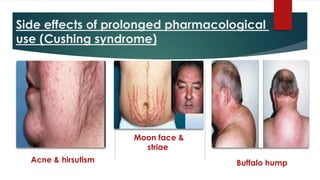
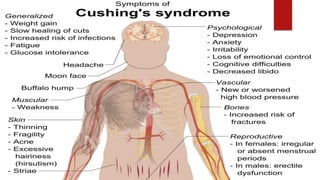
Side effects of prolonged pharmacological
use (Cushing syndrome)
Acne & hirsutism
Moon face &
striae
Buffalo hump
Functions of cortisol

Functions of cortisol

  • 1.
    Functions of Cortisol Madeby/mohammed nassar zaky nassar Faculty of medicine , menoufia university
  • 2.
  • 3.
    Permissive function 1-Glycogenolysis :by Glucagon 2- Lipolysis : by Catecholamines & GH 3- Vasoconstriction of arterioles : by Catecholamines & Angiotensin 2
  • 4.
    Metabolic function Net effectactionname Hyperglycemic& diabetogenic 1-Decrease glucose uptake & utilization by peripheral tissues 2-Increase gluconeogenesis & glycogenolysis by liverCHO _1-In extrahepatic tissue(skeletal muscles & bones) Catabolic 2-In liver AnabolicProtein Lipaemia Ketonemia 1- lipolysis FFA in plasma 2- keton body formation keton bodies in bloodLipid Weak mineralocorticoid effect 1- Sodium & water reabsorption & potassium & hydrogen excretion 2-H2O diuresis as it decreases ADH secretionElectrolyte
  • 5.
    Systemic functions FunctionSYSTEM It isessential for sensations & higher functions such as memory &intellectual performanceCNS vascular reactivity to circulating catecholamines & other vasoconstrictor agentsCVS 1-skeletal muscle : maintain muscular activity 2- Bone : renal excretion of calcium & phosphate Skeletal system Lymphocyte , eosinophil & basophil count RBCs , neutrophils & platelet count Blood cells
  • 6.
  • 7.
    2-Anti-immunity effect1-Anti-allergic effect Causesatrophy of lymphoid tissue Immunity A-block release of histamine from mast cells relief symptoms of asthma & delayed hypersensitivity reactions B-It does not block antigen-antibody reaction
  • 8.
    3-Anti-stress effect Hemorrhage Hypotension Hypoxia Hypoglycemia Mechanism 1- Increase mobilizationof FFA and amino acids from their stores That is used as a source of energy by vital tissues during stress 2-Help vasoconstriction of blood vessels to increase ABP
  • 9.
    3-Anti-inflammatory effect 1- localredness via VC of BVs blood flow to the inflamed area 2- local edema via capillary permeability & leakage of plasma to tissue 3- local hotness via release of IL 1 from macrophage 4- local pain via release of inflammatory mediators like PGs from the damaged tissue &stabilization of lysosomal membrane
  • 10.
    Common Clinical Indicationsfor Synthetic Glucocorticoids DisordersField of Medicine Asthma (moderate/severe), allergic rhinitis, anaphylaxis, urticaria, food/drug allergies Allergy & Pulmonology Acute severe dermatitisDermatology Adrenal insufficiencyEndocrinology Crohn's Disease (IBD), ulcerative colitisGI Diseases Leukemia/lymphomaHematologic Diseases Uveitis (eye inflammation)Ophthalmology Rheumatoid arthritis, systemic lupus erythematosus, vasculitis Rheumatology/Immunol ogy Multiple sclerosis, organ transplant, nephrotic syndrome, cerebral edemaOther
  • 11.
    Side effects ofprolonged pharmacological use (Cushing syndrome) Acne & hirsutism Moon face & striae Buffalo hump