VIDYA BHARTI EDUCATIONAL INSTITUTIONS
SCIENCE NOTES CLASS 6TH
FUN WITH MAGNETS
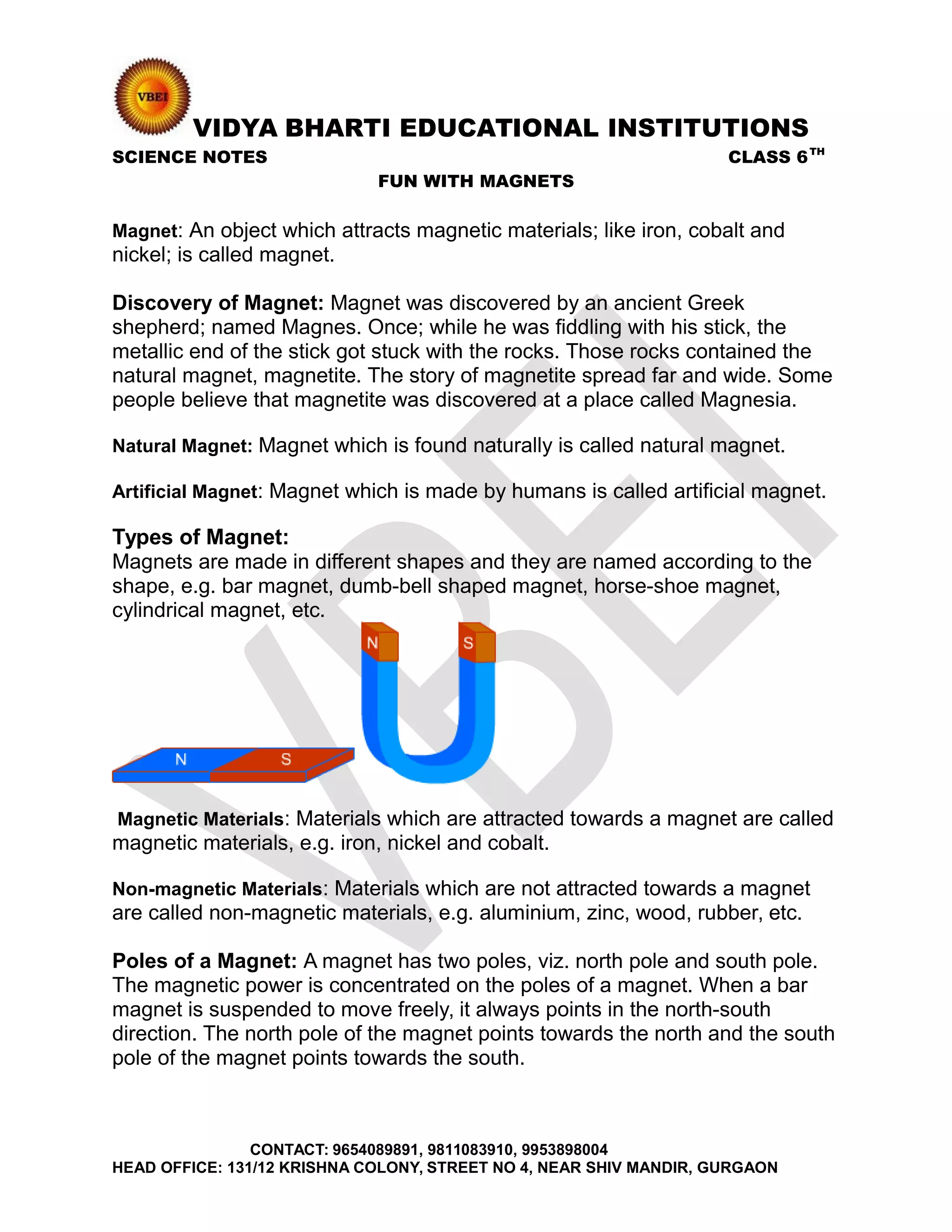
Magnet: An object which attracts magnetic materials; like iron, cobalt and
nickel; is called magnet.
Discovery of Magnet: Magnet was discovered by an ancient Greek
shepherd; named Magnes. Once; while he was fiddling with his stick, the
metallic end of the stick got stuck with the rocks. Those rocks contained the
natural magnet, magnetite. The story of magnetite spread far and wide. Some
people believe that magnetite was discovered at a place called Magnesia.
Natural Magnet: Magnet which is found naturally is called natural magnet.
Artificial Magnet: Magnet which is made by humans is called artificial magnet.
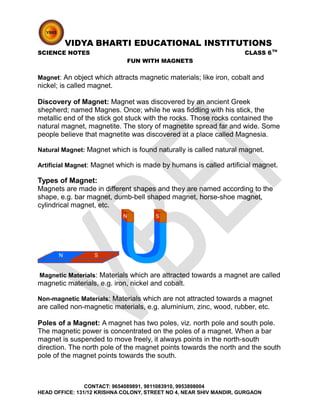
Types of Magnet:
Magnets are made in different shapes and they are named according to the
shape, e.g. bar magnet, dumb-bell shaped magnet, horse-shoe magnet,
cylindrical magnet, etc.
Magnetic Materials: Materials which are attracted towards a magnet are called
magnetic materials, e.g. iron, nickel and cobalt.
Non-magnetic Materials: Materials which are not attracted towards a magnet
are called non-magnetic materials, e.g. aluminium, zinc, wood, rubber, etc.
Poles of a Magnet: A magnet has two poles, viz. north pole and south pole.
The magnetic power is concentrated on the poles of a magnet. When a bar
magnet is suspended to move freely, it always points in the north-south
direction. The north pole of the magnet points towards the north and the south
pole of the magnet points towards the south.
CONTACT: 9654089891, 9811083910, 9953898004
HEAD OFFICE: 131/12 KRISHNA COLONY, STREET NO 4, NEAR SHIV MANDIR, GURGAON
VIDYA BHARTI EDUCATIONAL INSTITUTIONS
SCIENCE NOTES CLASS 6TH
FUN WITH MAGNETS
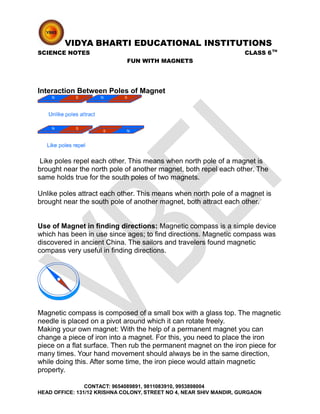
Interaction Between Poles of Magnet
Like poles repel each other. This means when north pole of a magnet is
brought near the north pole of another magnet, both repel each other. The
same holds true for the south poles of two magnets.
Unlike poles attract each other. This means when north pole of a magnet is
brought near the south pole of another magnet, both attract each other.
Use of Magnet in finding directions: Magnetic compass is a simple device
which has been in use since ages; to find directions. Magnetic compass was
discovered in ancient China. The sailors and travelers found magnetic
compass very useful in finding directions.
Magnetic compass is composed of a small box with a glass top. The magnetic
needle is placed on a pivot around which it can rotate freely.
Making your own magnet: With the help of a permanent magnet you can
change a piece of iron into a magnet. For this, you need to place the iron
piece on a flat surface. Then rub the permanent magnet on the iron piece for
many times. Your hand movement should always be in the same direction,
while doing this. After some time, the iron piece would attain magnetic
property.
CONTACT: 9654089891, 9811083910, 9953898004
HEAD OFFICE: 131/12 KRISHNA COLONY, STREET NO 4, NEAR SHIV MANDIR, GURGAON
VIDYA BHARTI EDUCATIONAL INSTITUTIONS
SCIENCE NOTES CLASS 6TH
FUN WITH MAGNETS
Storing a magnet:
Bar magnets should be kept in pairs. Their unlike poles should be kept on the
same side. A wooden piece must be placed between them. A piece of soft iron
should be placed at their ends.
For storing a horse-shoe magnet, you should place a piece of iron across the
two poles.
Magnets should be kept away from speakers, CD, television, music system,
computer, etc.
CONTACT: 9654089891, 9811083910, 9953898004
HEAD OFFICE: 131/12 KRISHNA COLONY, STREET NO 4, NEAR SHIV MANDIR, GURGAON

Chapter 11-Fun with Magnets

  • 1.
    VIDYA BHARTI EDUCATIONALINSTITUTIONS SCIENCE NOTES CLASS 6TH FUN WITH MAGNETS Magnet: An object which attracts magnetic materials; like iron, cobalt and nickel; is called magnet. Discovery of Magnet: Magnet was discovered by an ancient Greek shepherd; named Magnes. Once; while he was fiddling with his stick, the metallic end of the stick got stuck with the rocks. Those rocks contained the natural magnet, magnetite. The story of magnetite spread far and wide. Some people believe that magnetite was discovered at a place called Magnesia. Natural Magnet: Magnet which is found naturally is called natural magnet. Artificial Magnet: Magnet which is made by humans is called artificial magnet. Types of Magnet: Magnets are made in different shapes and they are named according to the shape, e.g. bar magnet, dumb-bell shaped magnet, horse-shoe magnet, cylindrical magnet, etc. Magnetic Materials: Materials which are attracted towards a magnet are called magnetic materials, e.g. iron, nickel and cobalt. Non-magnetic Materials: Materials which are not attracted towards a magnet are called non-magnetic materials, e.g. aluminium, zinc, wood, rubber, etc. Poles of a Magnet: A magnet has two poles, viz. north pole and south pole. The magnetic power is concentrated on the poles of a magnet. When a bar magnet is suspended to move freely, it always points in the north-south direction. The north pole of the magnet points towards the north and the south pole of the magnet points towards the south. CONTACT: 9654089891, 9811083910, 9953898004 HEAD OFFICE: 131/12 KRISHNA COLONY, STREET NO 4, NEAR SHIV MANDIR, GURGAON
  • 2.
    VIDYA BHARTI EDUCATIONALINSTITUTIONS SCIENCE NOTES CLASS 6TH FUN WITH MAGNETS Interaction Between Poles of Magnet Like poles repel each other. This means when north pole of a magnet is brought near the north pole of another magnet, both repel each other. The same holds true for the south poles of two magnets. Unlike poles attract each other. This means when north pole of a magnet is brought near the south pole of another magnet, both attract each other. Use of Magnet in finding directions: Magnetic compass is a simple device which has been in use since ages; to find directions. Magnetic compass was discovered in ancient China. The sailors and travelers found magnetic compass very useful in finding directions. Magnetic compass is composed of a small box with a glass top. The magnetic needle is placed on a pivot around which it can rotate freely. Making your own magnet: With the help of a permanent magnet you can change a piece of iron into a magnet. For this, you need to place the iron piece on a flat surface. Then rub the permanent magnet on the iron piece for many times. Your hand movement should always be in the same direction, while doing this. After some time, the iron piece would attain magnetic property. CONTACT: 9654089891, 9811083910, 9953898004 HEAD OFFICE: 131/12 KRISHNA COLONY, STREET NO 4, NEAR SHIV MANDIR, GURGAON
  • 3.
    VIDYA BHARTI EDUCATIONALINSTITUTIONS SCIENCE NOTES CLASS 6TH FUN WITH MAGNETS Storing a magnet: Bar magnets should be kept in pairs. Their unlike poles should be kept on the same side. A wooden piece must be placed between them. A piece of soft iron should be placed at their ends. For storing a horse-shoe magnet, you should place a piece of iron across the two poles. Magnets should be kept away from speakers, CD, television, music system, computer, etc. CONTACT: 9654089891, 9811083910, 9953898004 HEAD OFFICE: 131/12 KRISHNA COLONY, STREET NO 4, NEAR SHIV MANDIR, GURGAON