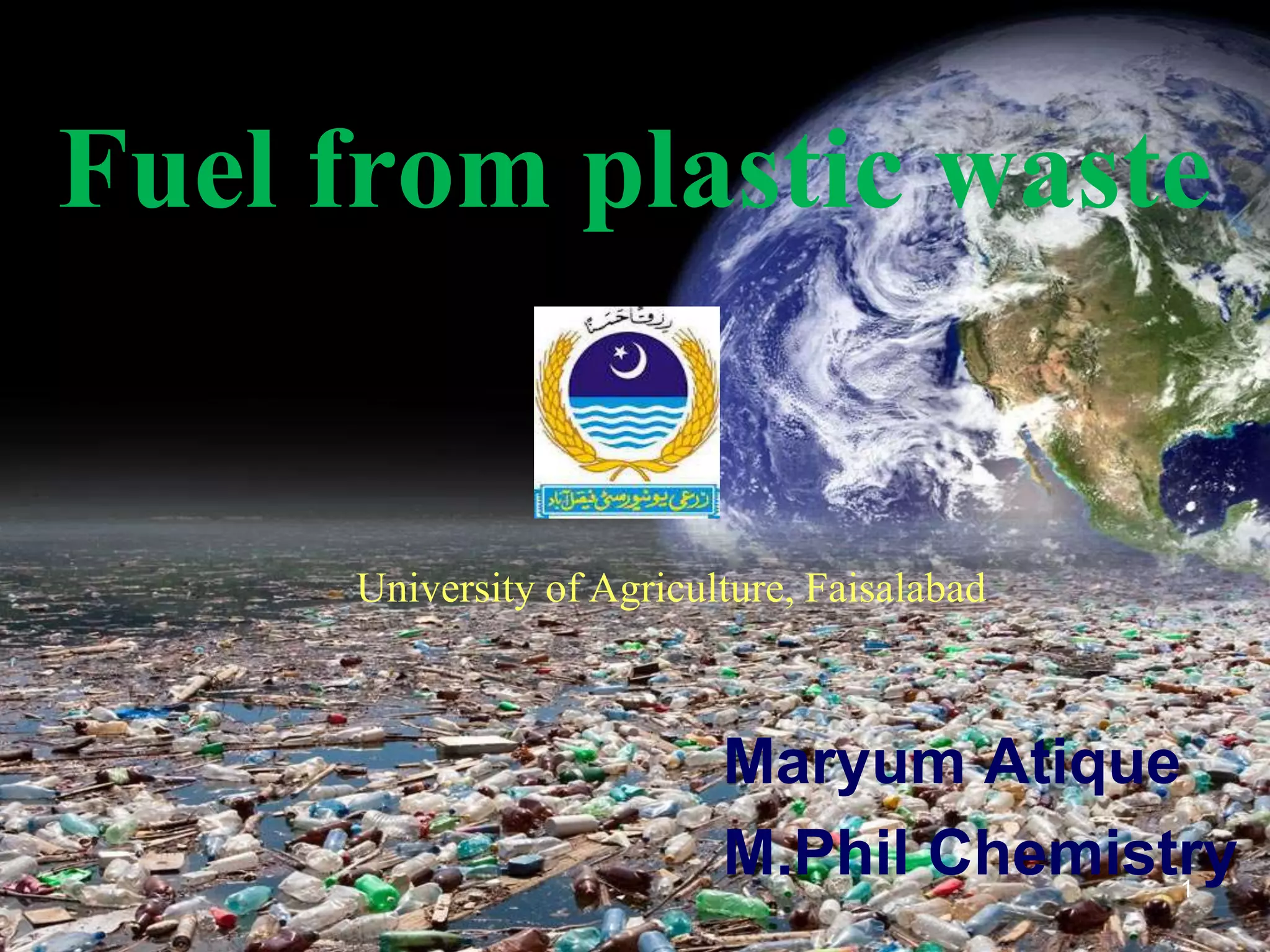
Fuel from plastic waste 
University of Agriculture, Faisalabad 
Maryum Atique 
M.Phil Chemistry 
1
THIS IS LIKE CASHING ON THE 
POLLUTION ITSELF .THIS 
PROJECT IF IMPLEMENT CAN 
TURN THE TIDES GLOBALLY BY 
PROVIDING A LONG TERM 
SOLUTION FOR THESE 
PROBLEMS. 
2
 IN THIS SCENARIO MY PRESENTATION AIMS TO 
SOLVE THE TWIN PROBLEM OF ENVIRONMENT 
POLLUTION DUE TO PLASTIC AND THE NEED FOR 
AN ALTERNATIVE FUEL SOURCE 
 THE MAIN AIM IS TO FIND A SOLUTION TO THE 
MOUNTINGS PROBLEM OF PLASTIC DISPOSAL , 
FOR WHICH THE PLASTICS ARE CONVERTED 
INTO VALUABLE FUEL 
3
INTRODUCTION 
• PLASTICS HAVE BECOME AN INDISPENSABLE 
PART IN TODAY’S WORLD DUE TO THEIR LIGHT-WEIGHT, 
DURABILITY, ENERGY, EFFICIENCY, 
COUPLED WITH A FASTER RATE OF PRODUCTION 
AND DESIGN FLEXIBILITY, THESE PLASTIC ARE 
EMPLOYED IN ENTIRE RANGE OF INDUSTRIAL 
AND DOMESTIC AREAS . 
4
INTRODUCTION 
 PLASTIC ARE NON DEGRADABLE POLYMERS OF 
MOSTLY CONTAINING CARBON, HYDROGEN AND 
FEW OTHERS ELEMENTS SUCH AS CHLORINE , 
NITROGEN ETC..,. 
 DUE TO ITS NON-BIODEGRADABLE NATURE, THE 
PLASTIC WASTE CONTRIBUTES SIGNIFICANTLY 
TO THE PROBLEM OF MUNICIPAL WASTE 
MANAGEMENT . 
5
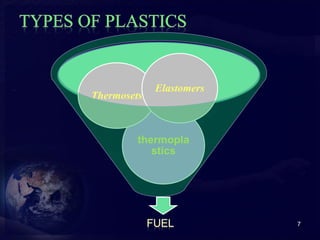
PLASTICS 
 Plastics are natural / synthetic materials. 
 They are produced by chemically modifying natural 
substances or are synthesized from inorganic and organic 
raw material. on the basis of their physical characteristics, 
plastics are usually divided into thermosets ,elastomers 
and thermoplastics . 
 These groups differ primarily with regard to molecular 
structure , which is what determines their differing 
thermal behavior . 
6
thermoplastics thermopla 
stics 
Thermosets 
Elastomers 
7
8
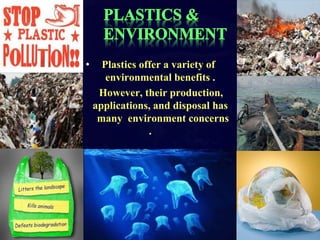
• Plastics offer a variety of 
environmental benefits . 
• However, their production, 
applications, and disposal has 
many environment concerns 
. 
9
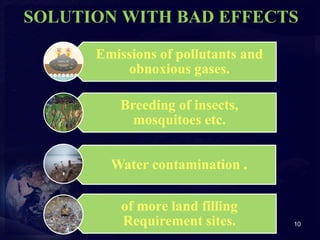
SOLUTION WITH BAD EFFECTS 
Emissions of pollutants and 
obnoxious gases. 
Breeding of insects, 
mosquitoes etc. 
Water contamination . 
of more land filling 
Requirement sites. 
10
WHAT ABOUT THE VALUE 
• The main thing which makes plastic wastes 
valuable is longer carbon chains than those 
in LPG, petrol, and diesel fuels. Therefore, 
it is possible to convert waste plastic into 
fuels. 
11
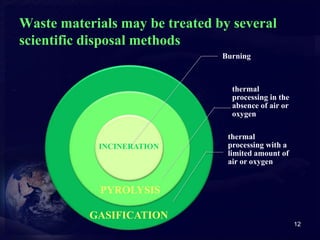
Waste materials may be treated by several 
scientific disposal methods 
Burning 
thermal 
processing in the 
absence of air or 
oxygen 
thermal 
processing with a 
limited amount of 
air or oxygen 
INCINERATION 
PYROLYSIS 
GASIFICATION 
12
13 
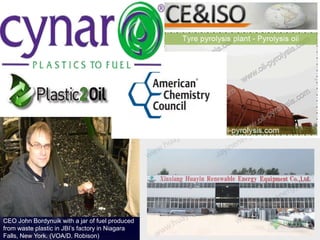
CEO John Bordynuik with a jar of fuel produced 
from waste plastic in JBI’s factory in Niagara 
Falls, New York. (VOA/D. Robison)
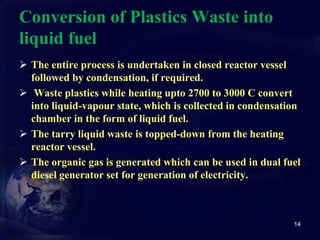
Conversion of Plastics Waste into 
liquid fuel 
 The entire process is undertaken in closed reactor vessel 
followed by condensation, if required. 
 Waste plastics while heating upto 2700 to 3000 C convert 
into liquid-vapour state, which is collected in condensation 
chamber in the form of liquid fuel. 
 The tarry liquid waste is topped-down from the heating 
reactor vessel. 
 The organic gas is generated which can be used in dual fuel 
diesel generator set for generation of electricity. 
14
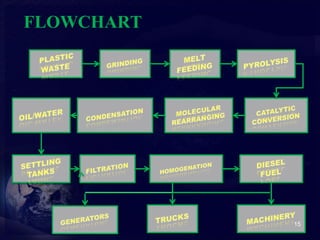
FLOWCHART 
15
16 
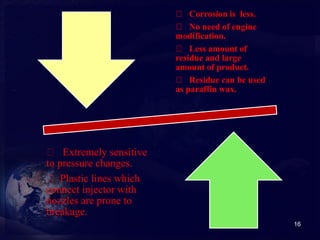
Corrosion is less. 
No need of engine 
modification. 
Less amount of 
residue and large 
amount of product. 
Residue can be used 
as paraffin wax. 
Extremely sensitive 
to pressure changes. 
Plastic lines which 
connect injector with 
nozzles are prone to 
breakage.
CONCLUSION 
• The production of thermofuel from 
waste plastics is one of the better 
methods to save the environment 
profitably. 
17
References 
• J., Aguado, D. P., Serrano, J. M., Escola. Fuels from waste plastics by 
thermal and catalytic processes: a review.Ind. Eng. Chem. Res.2008;47: 
7982-7992. 
• Sriningsih, W., Saerodji, M. G., Trisunaryanti, W., Armunanto, R., & 
Falah, I. I. (2014). Fuel Production from LDPE Plastic Waste over Natural 
Zeolite Supported Ni, Ni-Mo, Co and Co-Mo Metals. Procedia 
Environmental Sciences,20, 215-224. 
• plastic_diesel.html 
• http://www.biofuelsforum.com/general_biodiesel_discussion/658- 
• www.biofuel.com 
• www.thermofuel.com 
• www.envofuel.com 
• www.Cynarplc.com 
• http://www.ftns.wau.nl/agridata/apme/plastics.htm 
18
Thank You 
19

Fuel from plastic waste

  • 1.
    Fuel from plasticwaste University of Agriculture, Faisalabad Maryum Atique M.Phil Chemistry 1
  • 2.
    THIS IS LIKECASHING ON THE POLLUTION ITSELF .THIS PROJECT IF IMPLEMENT CAN TURN THE TIDES GLOBALLY BY PROVIDING A LONG TERM SOLUTION FOR THESE PROBLEMS. 2
  • 3.
     IN THISSCENARIO MY PRESENTATION AIMS TO SOLVE THE TWIN PROBLEM OF ENVIRONMENT POLLUTION DUE TO PLASTIC AND THE NEED FOR AN ALTERNATIVE FUEL SOURCE  THE MAIN AIM IS TO FIND A SOLUTION TO THE MOUNTINGS PROBLEM OF PLASTIC DISPOSAL , FOR WHICH THE PLASTICS ARE CONVERTED INTO VALUABLE FUEL 3
  • 4.
    INTRODUCTION • PLASTICSHAVE BECOME AN INDISPENSABLE PART IN TODAY’S WORLD DUE TO THEIR LIGHT-WEIGHT, DURABILITY, ENERGY, EFFICIENCY, COUPLED WITH A FASTER RATE OF PRODUCTION AND DESIGN FLEXIBILITY, THESE PLASTIC ARE EMPLOYED IN ENTIRE RANGE OF INDUSTRIAL AND DOMESTIC AREAS . 4
  • 5.
    INTRODUCTION  PLASTICARE NON DEGRADABLE POLYMERS OF MOSTLY CONTAINING CARBON, HYDROGEN AND FEW OTHERS ELEMENTS SUCH AS CHLORINE , NITROGEN ETC..,.  DUE TO ITS NON-BIODEGRADABLE NATURE, THE PLASTIC WASTE CONTRIBUTES SIGNIFICANTLY TO THE PROBLEM OF MUNICIPAL WASTE MANAGEMENT . 5
  • 6.
    PLASTICS  Plasticsare natural / synthetic materials.  They are produced by chemically modifying natural substances or are synthesized from inorganic and organic raw material. on the basis of their physical characteristics, plastics are usually divided into thermosets ,elastomers and thermoplastics .  These groups differ primarily with regard to molecular structure , which is what determines their differing thermal behavior . 6
  • 7.
    thermoplastics thermopla stics Thermosets Elastomers 7
  • 8.
  • 9.
    • Plastics offera variety of environmental benefits . • However, their production, applications, and disposal has many environment concerns . 9
  • 10.
    SOLUTION WITH BADEFFECTS Emissions of pollutants and obnoxious gases. Breeding of insects, mosquitoes etc. Water contamination . of more land filling Requirement sites. 10
  • 11.
    WHAT ABOUT THEVALUE • The main thing which makes plastic wastes valuable is longer carbon chains than those in LPG, petrol, and diesel fuels. Therefore, it is possible to convert waste plastic into fuels. 11
  • 12.
    Waste materials maybe treated by several scientific disposal methods Burning thermal processing in the absence of air or oxygen thermal processing with a limited amount of air or oxygen INCINERATION PYROLYSIS GASIFICATION 12
  • 13.
    13 CEO JohnBordynuik with a jar of fuel produced from waste plastic in JBI’s factory in Niagara Falls, New York. (VOA/D. Robison)
  • 14.
    Conversion of PlasticsWaste into liquid fuel  The entire process is undertaken in closed reactor vessel followed by condensation, if required.  Waste plastics while heating upto 2700 to 3000 C convert into liquid-vapour state, which is collected in condensation chamber in the form of liquid fuel.  The tarry liquid waste is topped-down from the heating reactor vessel.  The organic gas is generated which can be used in dual fuel diesel generator set for generation of electricity. 14
  • 15.
  • 16.
    16 Corrosion isless. No need of engine modification. Less amount of residue and large amount of product. Residue can be used as paraffin wax. Extremely sensitive to pressure changes. Plastic lines which connect injector with nozzles are prone to breakage.
  • 17.
    CONCLUSION • Theproduction of thermofuel from waste plastics is one of the better methods to save the environment profitably. 17
  • 18.
    References • J.,Aguado, D. P., Serrano, J. M., Escola. Fuels from waste plastics by thermal and catalytic processes: a review.Ind. Eng. Chem. Res.2008;47: 7982-7992. • Sriningsih, W., Saerodji, M. G., Trisunaryanti, W., Armunanto, R., & Falah, I. I. (2014). Fuel Production from LDPE Plastic Waste over Natural Zeolite Supported Ni, Ni-Mo, Co and Co-Mo Metals. Procedia Environmental Sciences,20, 215-224. • plastic_diesel.html • http://www.biofuelsforum.com/general_biodiesel_discussion/658- • www.biofuel.com • www.thermofuel.com • www.envofuel.com • www.Cynarplc.com • http://www.ftns.wau.nl/agridata/apme/plastics.htm 18
  • 19.