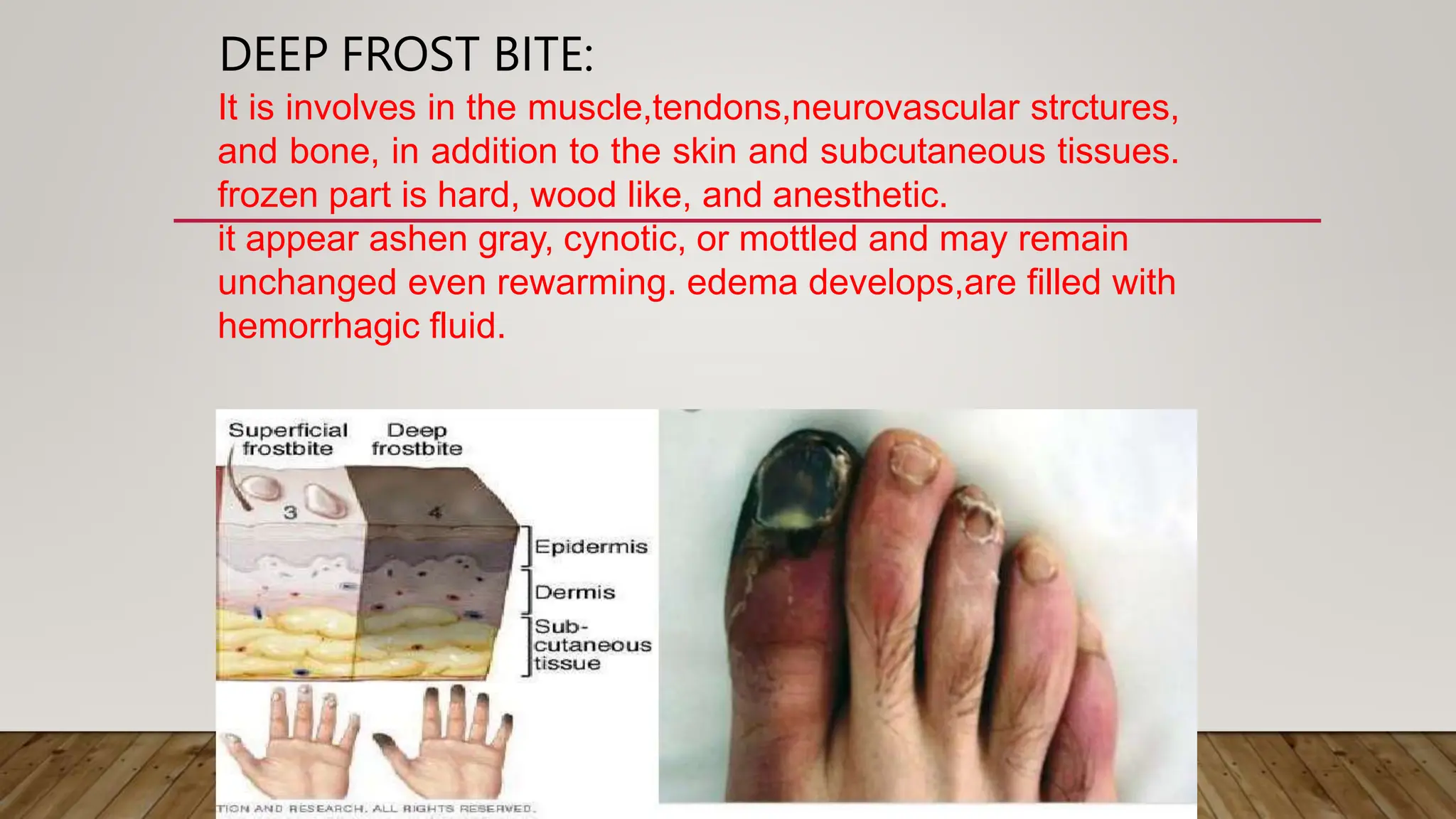
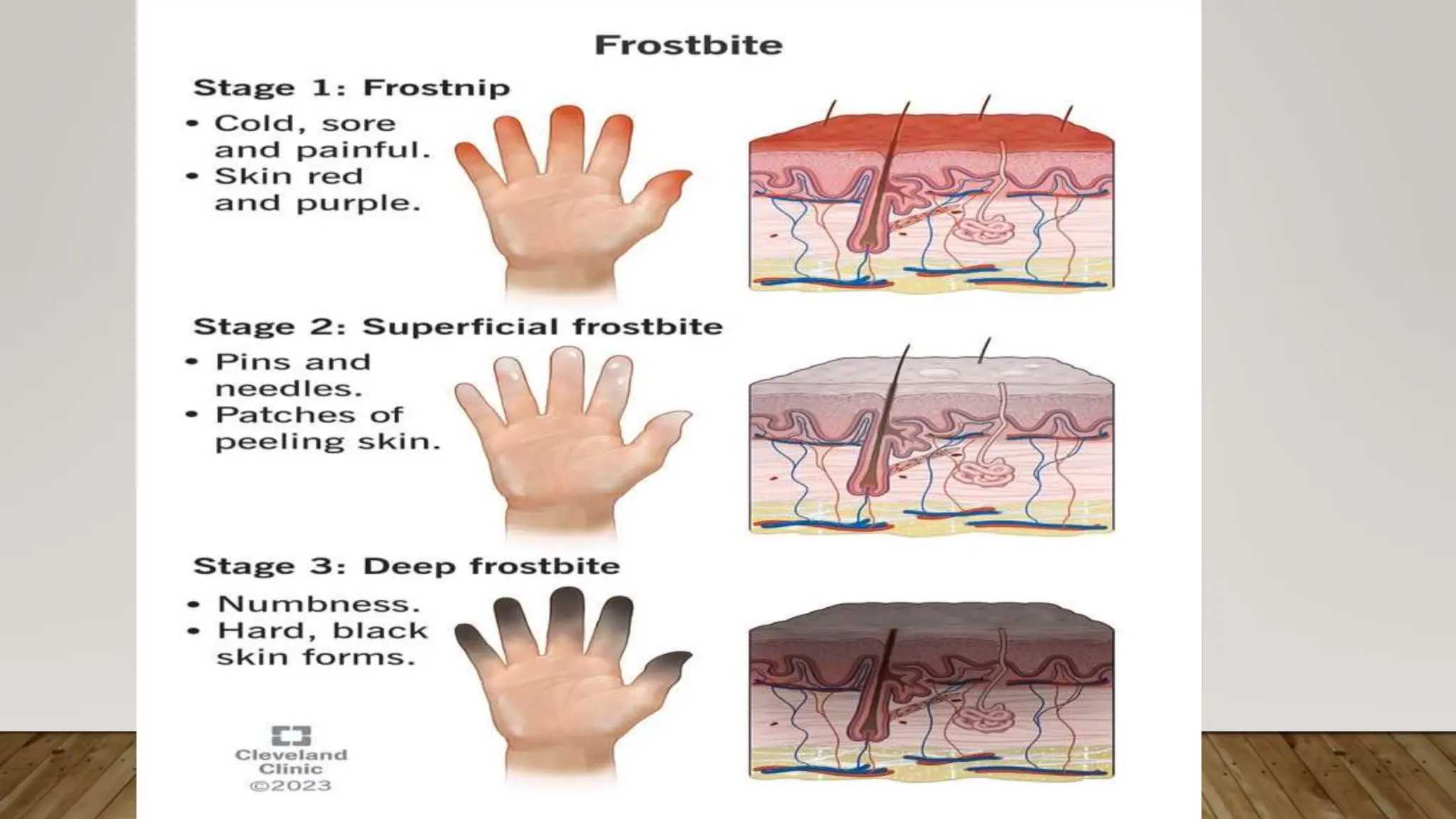
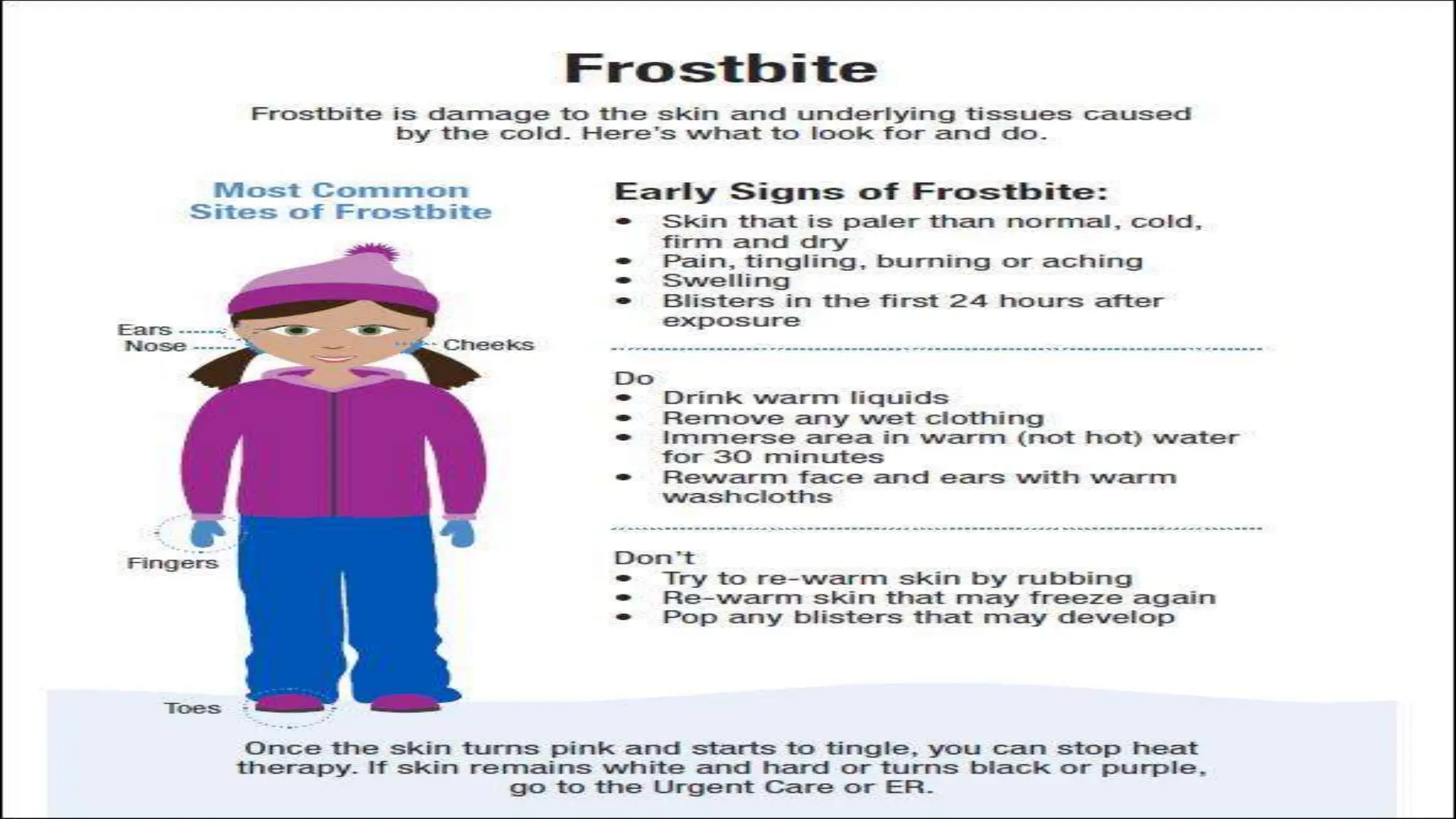
Frostbite occurs when body tissues freeze due to prolonged exposure to cold temperatures, most commonly affecting the extremities. Superficial frostbite involves freezing of the skin and subcutaneous tissues, appearing waxy white and numb, while deep frostbite extends to muscles, tendons and bones. Risk factors include alcohol intoxication, old or young age, pre-existing medical conditions, and activities in cold or wet weather. Symptoms range from initial numbness to pain, blistering and blackened skin as tissues die. Treatment focuses on rapidly rewarming the affected areas and preventing refreezing, along with pain medications and wound care if tissue damage occurs.







![Frostbite by insha_ur_rahman[1]](https://cdn.slidesharecdn.com/ss_thumbnails/frostbitebyinshaurrahman1-210220201843-thumbnail.jpg?width=640&height=640&fit=bounds)


![Understanding Parkinson’s Disease: Causes, Symptoms, and Treatment [2025]](https://cdn.slidesharecdn.com/ss_thumbnails/understandingparkinson-251208102525-80ba3223-thumbnail.jpg?width=640&height=640&fit=bounds)


