FROSTBITE
M U K E S H S U N D A R A R A J A N
What is Frostbite?
Injury to the skin caused by exposure to extreme cold is called
frostbite. This happens when you are exposed to temperatures
below the freezing point of your skin. Exposed skin in cold and
windy weather is most susceptible to frostbite, but it can also
occur on skin covered by clothing. Frostbites require immediate
medical attention, as it can damage the underlying tissues,
muscles, and bones. Severe frostbite may also cause infection
and nerve damage.
Symptoms of
Frostbite
• Cold skin.
• Prickling feeling.
• The skin turns red, white, blue, or
grayish-yellow.
• The skin becomes hard and waxy.
• The joint and muscle stiffen causing
clumsiness.
• Blisters are seen after rewarming
the skin.
Causes of Frostbite
• In icy conditions, the bo dy sends signals to the
bl o o d vessels in the extremities to constrict a n d
slow the bl o o d flow to them. This makes the body
able to carry more bl o o d a n d oxygen to the vital
organs of the b o dy a n d prevent further decrease
in bo dy temperature. When the brain senses t h a t
there is a danger of hypothermia, the bl o o d
vessels in the arms a n d legs stay constricted, thus
preventing them from pumpi ng cold b l o o d to
the internal organs. This is the beginning of
frostbite.
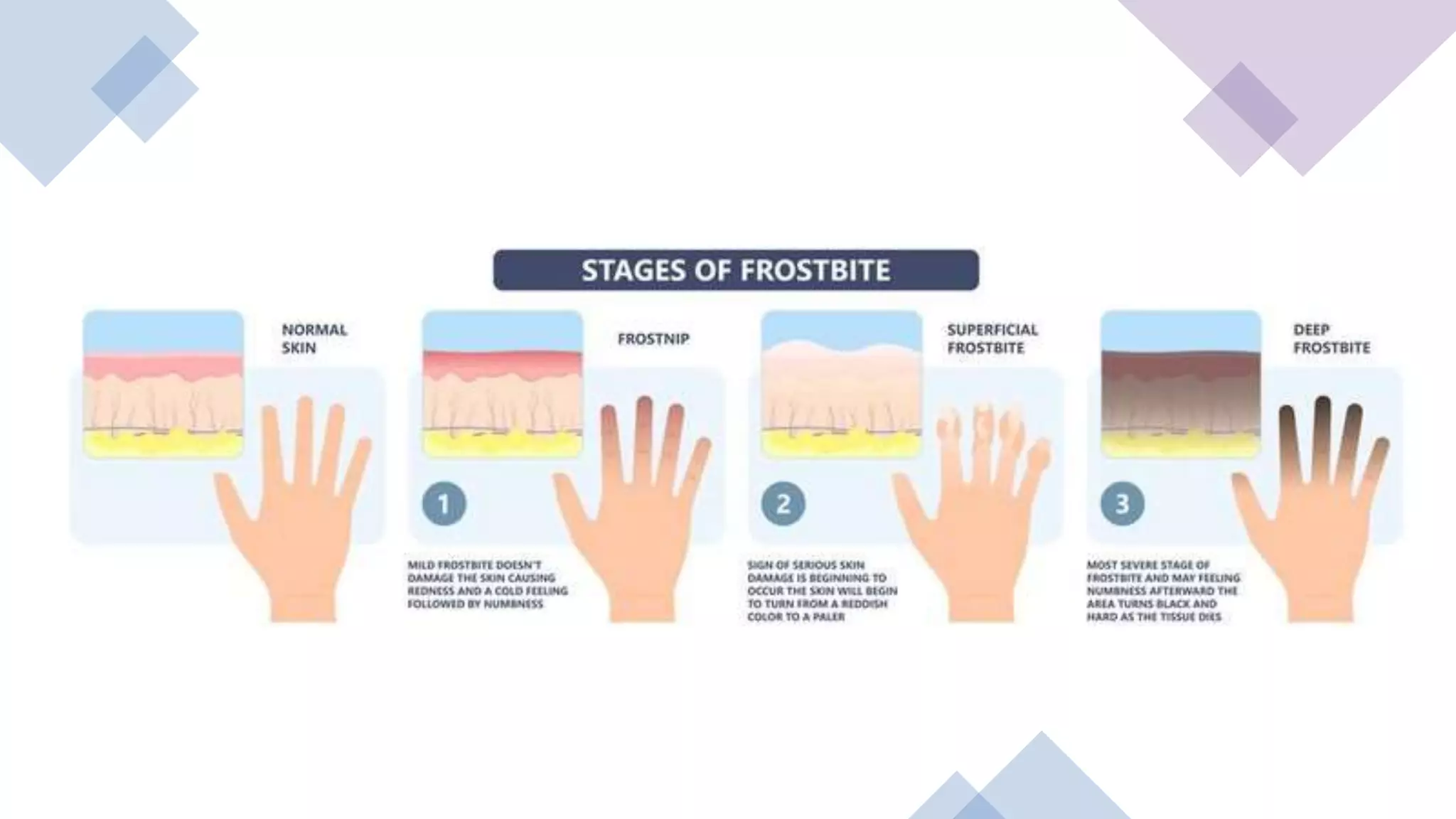
Stages of Frostbite
● Frostnip (First-Degree Frostbite) :
It is a milder form and does not cause any permanent damage. Here,
the skin turns red and cold to touch.
● Superficial (Second-Degree) Frostbite :
In this stage of frostbite, the skin turns pale or blue from red. The
affected area is hard and frozen to touch.
● Deep (Third-Degree) Frostbite:
It is the most severe form of frostbite, as it affects both the skin and
underlying tissues. In severe cases, blood-filled blisters can be seen.
Complications of
frostbite
• Persistent numbness of
the affected areas.
• Hyperhidrosis (excessive
sweating).
• Increases the chances of
future frostbites.
• Increased cold sensitivity.
Risk Factors of Frostbite
● Conditions like dehydration, diabetes, excessive sweating,
exhaustion, and poor blood circulation can affect one’s ability to
feel or respond to cold.
● Alcoholism and drug abuse make the body lose heat faster.
● Smoking.
● Mental conditions that hamper one’s ability to respond to cold.
THANK YOU

Frostbite.pptx

  • 1.
    FROSTBITE M U KE S H S U N D A R A R A J A N
  • 2.
    What is Frostbite? Injuryto the skin caused by exposure to extreme cold is called frostbite. This happens when you are exposed to temperatures below the freezing point of your skin. Exposed skin in cold and windy weather is most susceptible to frostbite, but it can also occur on skin covered by clothing. Frostbites require immediate medical attention, as it can damage the underlying tissues, muscles, and bones. Severe frostbite may also cause infection and nerve damage.
  • 3.
    Symptoms of Frostbite • Coldskin. • Prickling feeling. • The skin turns red, white, blue, or grayish-yellow. • The skin becomes hard and waxy. • The joint and muscle stiffen causing clumsiness. • Blisters are seen after rewarming the skin.
  • 4.
    Causes of Frostbite •In icy conditions, the bo dy sends signals to the bl o o d vessels in the extremities to constrict a n d slow the bl o o d flow to them. This makes the body able to carry more bl o o d a n d oxygen to the vital organs of the b o dy a n d prevent further decrease in bo dy temperature. When the brain senses t h a t there is a danger of hypothermia, the bl o o d vessels in the arms a n d legs stay constricted, thus preventing them from pumpi ng cold b l o o d to the internal organs. This is the beginning of frostbite.
  • 5.
    Stages of Frostbite ●Frostnip (First-Degree Frostbite) : It is a milder form and does not cause any permanent damage. Here, the skin turns red and cold to touch. ● Superficial (Second-Degree) Frostbite : In this stage of frostbite, the skin turns pale or blue from red. The affected area is hard and frozen to touch. ● Deep (Third-Degree) Frostbite: It is the most severe form of frostbite, as it affects both the skin and underlying tissues. In severe cases, blood-filled blisters can be seen.
  • 7.
    Complications of frostbite • Persistentnumbness of the affected areas. • Hyperhidrosis (excessive sweating). • Increases the chances of future frostbites. • Increased cold sensitivity.
  • 8.
    Risk Factors ofFrostbite ● Conditions like dehydration, diabetes, excessive sweating, exhaustion, and poor blood circulation can affect one’s ability to feel or respond to cold. ● Alcoholism and drug abuse make the body lose heat faster. ● Smoking. ● Mental conditions that hamper one’s ability to respond to cold.
  • 9.