Also known as ‘’Congelatio ‘’
Refers to damage of skin and
tissue caused by exposure to
freezing temperatures –
typically any temperature
below -0.55 oC (31oF).
people who spend a great deal of time
outdoors
who are exhausted or excessively
dehydrated
anyone stranded in extreme cold weather
conditions
the very young and very old
people with conditions that cause blood
vessel damage or circulation problems,
such as diabetes and Raynaud’s
phenomenon
Anyone taking medications that
constrict the blood
vessels, including beta blockers
Smoking can also constrict the blood
vessels)
Many cases of frostbite occur in
people who have taken drugs or
drunken alcohol and who fall asleep
outside in cold weather.
ETIOLOGY
 If the body is exposed to cold temperature
for too long, it begins to concentrate on
keeping you alive rather than functioning
correctly
 The blood vessels in the arms and legs start
to constrict and the blood flow to the skin
start to slow (exposing less blood to the
outside)
 The body prioritizes on keeping the core
warm so the vital organs can continue to
function and as a result the extremities
start to freeze
SIGNS and SYMPTOMS
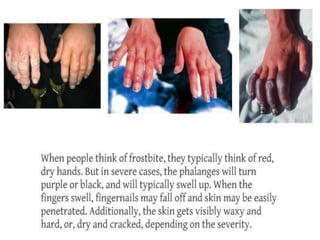
A. FIRST DEGREE (FROSTNIP)
Slight painful, prickly or itching
sensation
White, red, and grayish-yellow
patches of the skin
Numbness
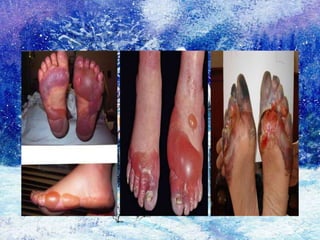
B. SECOND DEGREE
Blisters 1–2 days after becoming frozen.
The blisters may become hard and
blackened, but usually appear worse than
they are.
A cold or burning feeling
Most of the injuries heal in one month,
but the area may become permanently
insensitive to both heat and cold.
SIGNS and SYMPTOMS
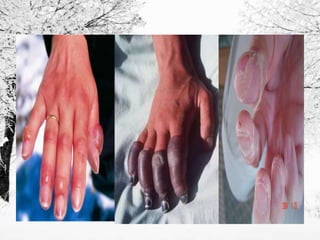
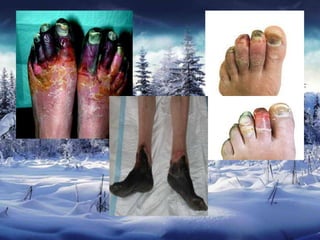
C. THIRD AND FOURTH DEGREES
 The muscles, tendons, blood vessels, and nerves all
freeze.
 The skin is hard, feels waxy, and use of the area
is lost temporarily, and in severe cases,
permanently.
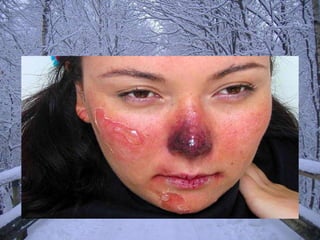
 Areas of purplish blisters which turn black and
which are generally blood-filled.
 Nerve damage in the area can result in a loss of
feeling.
 Area becomes infected with gangrene and fall off
SIGNS and SYMPTOMS
• It is important that a person with frostbite
is taken to a warm environment as soon as it is
safe to do so, as they are also likely to have
hypothermia.
• Protect your skin from further exposure. If
you're outside, warm frostbitten hands by
tucking them into your armpits. Protect your
face, nose or ears by covering the area with
dry, gloved hands. Don't rub the affected area
and never rub snow on frostbitten skin.
• Get out of the cold. Once you're indoors, remove
wet clothes.
 Don't walk on frostbitten feet or toes if possible.
This further damages the tissue
 Do not put pressure on the frostbitten area.
 Keep the affected body part elevated in order to
reduce swelling.
 The affected area should be re-warmed slowly by
immersing it in warm water at 40-42oC (104-
107.6oF) usually 15 to 30 minutes. However, do
this only if there is no possibility of refreezing. If
re-warmed tissue becomes frozen again, there will
be further tissue damage. Wrap them up so that
they don't become frozen again.
• Don't use direct heat, such as a stove, heat
lamp, fireplace or heating pad, because these
can cause burns before you feel them on
your numb skin.
• Apply a dry, sterile bandage, place cotton
between any involved fingers or toes (to
prevent rubbing), and take the person to a
medical facility as soon as possible.
• Get emergency medical help. If numbness or
sustained pain remains during warming or if
blisters develop, seek medical attention
• Narcotic pain medications may be given
because this process is very painful.
• Because dehydration is very common, IV
fluids may also be given.
• The clear blisters are debrided (dead
tissue is removed) while the bloody ones
are often left intact so as not to disturb
the underlying blood vessels.
• A tetanus booster is given if needed.
• People with frostbite are hospitalized
for at least 1 to 2 days to determine the
extent of injury and to receive further
treatment.
• Aloe vera cream is applied every 6
hours, and the area is elevated and
splinted.
• Ibuprofen or similar agents may be given
to combat inflammation
• For deep frostbite, daily water therapy in a
40 C (104 F) whirlpool bath will be performed
in order to remove any dead tissue
• Physical therapy in order to get circulation
regulated again
• amputation when there is a severe damage of
the affected area
• TPA (tissue plasminogen activator) may be
given into an artery to reduce the incidence of
blood clots. This can only be given to people
who are not at risk for significant bleeding
PREVENTING FROSTBITES
• Wearing appropriate clothing – Multiple
layers of clothing are best, and mittens are
better than gloves (keeps your warm fingers
together while warming each other).
• Clothes should fit loosely to avoid a decrease
in blood flow to the arms and legs.
• Shoes should be waterproof.
• Cover your head, face, nose, and ears at all
times, wearing a weatherproof hat
• Avoiding unnecessary exposure to cold
• Avoid smoking and alcohol
• Keeping dry – remove any wet clothing
• Planning for emergencies – for example
making sure you keep a warm blanket
and some spare clothes if driving in icy
conditions in case you break down
• Always travel with a friend in case help
is needed
PREVENTING FROSTBITES
COMPLICATIONS
• A life-threatening drop in body
temperature (hypothermia)
• The affected body part becoming
particularly vulnerable to
infections, such as tetanus
• Long-term pain
• Gangrene and tissue necrosis
• Permanent loss of sensation
• Paralysis
• Bone destruction
FROSBITE
FROSBITE

FROSBITE

  • 2.
    Also known as‘’Congelatio ‘’ Refers to damage of skin and tissue caused by exposure to freezing temperatures – typically any temperature below -0.55 oC (31oF).
  • 4.
    people who spenda great deal of time outdoors who are exhausted or excessively dehydrated anyone stranded in extreme cold weather conditions the very young and very old people with conditions that cause blood vessel damage or circulation problems, such as diabetes and Raynaud’s phenomenon
  • 5.
    Anyone taking medicationsthat constrict the blood vessels, including beta blockers Smoking can also constrict the blood vessels) Many cases of frostbite occur in people who have taken drugs or drunken alcohol and who fall asleep outside in cold weather.
  • 6.
    ETIOLOGY  If thebody is exposed to cold temperature for too long, it begins to concentrate on keeping you alive rather than functioning correctly  The blood vessels in the arms and legs start to constrict and the blood flow to the skin start to slow (exposing less blood to the outside)  The body prioritizes on keeping the core warm so the vital organs can continue to function and as a result the extremities start to freeze
  • 7.
    SIGNS and SYMPTOMS A.FIRST DEGREE (FROSTNIP) Slight painful, prickly or itching sensation White, red, and grayish-yellow patches of the skin Numbness
  • 8.
    B. SECOND DEGREE Blisters1–2 days after becoming frozen. The blisters may become hard and blackened, but usually appear worse than they are. A cold or burning feeling Most of the injuries heal in one month, but the area may become permanently insensitive to both heat and cold. SIGNS and SYMPTOMS
  • 9.
    C. THIRD ANDFOURTH DEGREES  The muscles, tendons, blood vessels, and nerves all freeze.  The skin is hard, feels waxy, and use of the area is lost temporarily, and in severe cases, permanently.  Areas of purplish blisters which turn black and which are generally blood-filled.  Nerve damage in the area can result in a loss of feeling.  Area becomes infected with gangrene and fall off SIGNS and SYMPTOMS
  • 16.
    • It isimportant that a person with frostbite is taken to a warm environment as soon as it is safe to do so, as they are also likely to have hypothermia. • Protect your skin from further exposure. If you're outside, warm frostbitten hands by tucking them into your armpits. Protect your face, nose or ears by covering the area with dry, gloved hands. Don't rub the affected area and never rub snow on frostbitten skin. • Get out of the cold. Once you're indoors, remove wet clothes.
  • 17.
     Don't walkon frostbitten feet or toes if possible. This further damages the tissue  Do not put pressure on the frostbitten area.  Keep the affected body part elevated in order to reduce swelling.  The affected area should be re-warmed slowly by immersing it in warm water at 40-42oC (104- 107.6oF) usually 15 to 30 minutes. However, do this only if there is no possibility of refreezing. If re-warmed tissue becomes frozen again, there will be further tissue damage. Wrap them up so that they don't become frozen again.
  • 18.
    • Don't usedirect heat, such as a stove, heat lamp, fireplace or heating pad, because these can cause burns before you feel them on your numb skin. • Apply a dry, sterile bandage, place cotton between any involved fingers or toes (to prevent rubbing), and take the person to a medical facility as soon as possible. • Get emergency medical help. If numbness or sustained pain remains during warming or if blisters develop, seek medical attention
  • 19.
    • Narcotic painmedications may be given because this process is very painful. • Because dehydration is very common, IV fluids may also be given. • The clear blisters are debrided (dead tissue is removed) while the bloody ones are often left intact so as not to disturb the underlying blood vessels. • A tetanus booster is given if needed.
  • 20.
    • People withfrostbite are hospitalized for at least 1 to 2 days to determine the extent of injury and to receive further treatment. • Aloe vera cream is applied every 6 hours, and the area is elevated and splinted. • Ibuprofen or similar agents may be given to combat inflammation
  • 21.
    • For deepfrostbite, daily water therapy in a 40 C (104 F) whirlpool bath will be performed in order to remove any dead tissue • Physical therapy in order to get circulation regulated again • amputation when there is a severe damage of the affected area • TPA (tissue plasminogen activator) may be given into an artery to reduce the incidence of blood clots. This can only be given to people who are not at risk for significant bleeding
  • 22.
    PREVENTING FROSTBITES • Wearingappropriate clothing – Multiple layers of clothing are best, and mittens are better than gloves (keeps your warm fingers together while warming each other). • Clothes should fit loosely to avoid a decrease in blood flow to the arms and legs. • Shoes should be waterproof. • Cover your head, face, nose, and ears at all times, wearing a weatherproof hat
  • 23.
    • Avoiding unnecessaryexposure to cold • Avoid smoking and alcohol • Keeping dry – remove any wet clothing • Planning for emergencies – for example making sure you keep a warm blanket and some spare clothes if driving in icy conditions in case you break down • Always travel with a friend in case help is needed PREVENTING FROSTBITES
  • 24.
    COMPLICATIONS • A life-threateningdrop in body temperature (hypothermia) • The affected body part becoming particularly vulnerable to infections, such as tetanus • Long-term pain • Gangrene and tissue necrosis • Permanent loss of sensation • Paralysis • Bone destruction