Policies 2.0:  Rules for the Social Web Discovery Educator Network March 21, 2007 Doug Johnson [email_address]
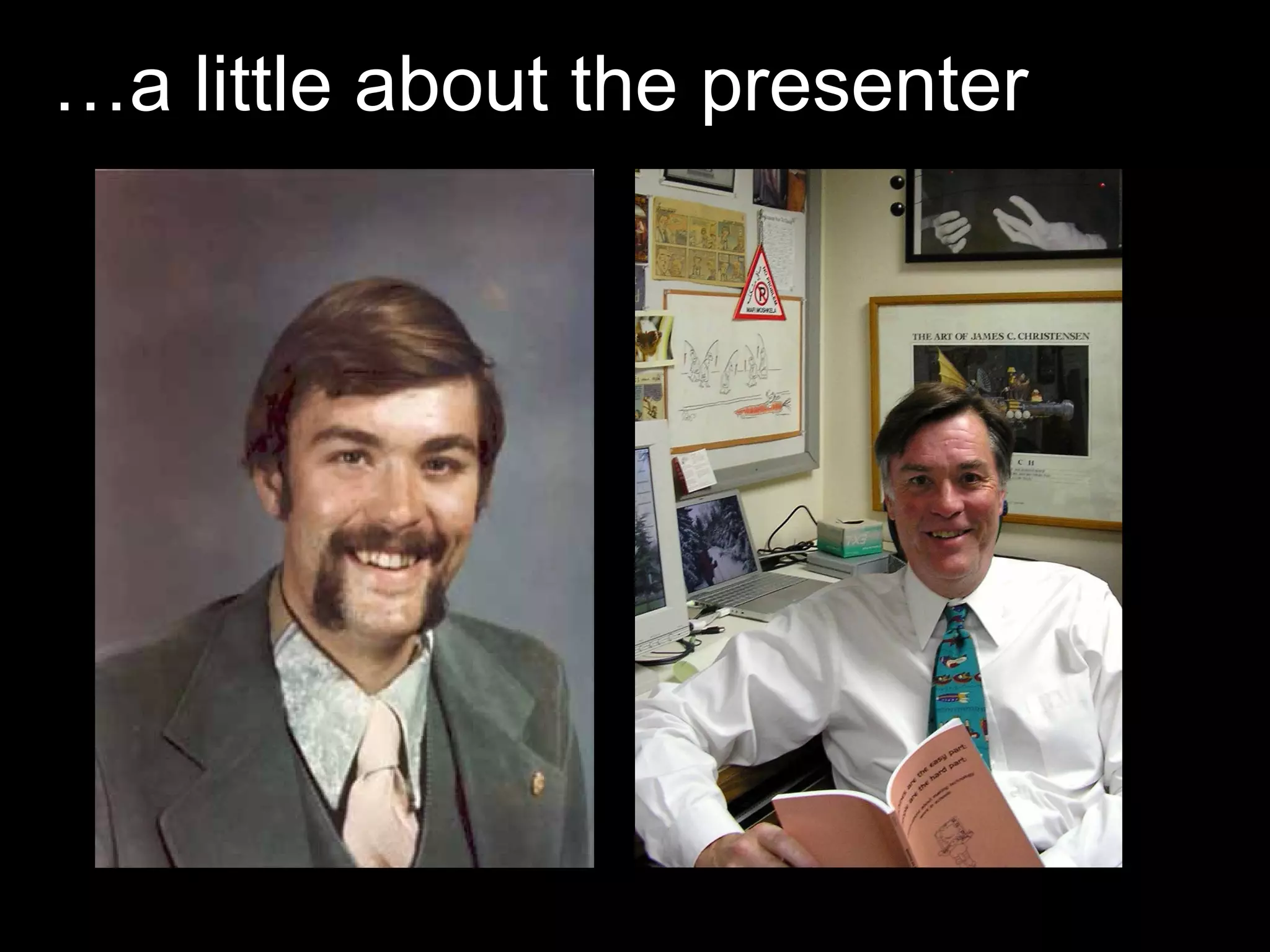
… a little about the presenter
Startling new finding Scot - 10 ft down -copper - telecommunications 100 years ago! Brit - 20 ft down - copper - telecommunications 200 years ago! Uncle Ole - 30 ft down - no copper…  wireless communications in Minnesota 300 years ago!
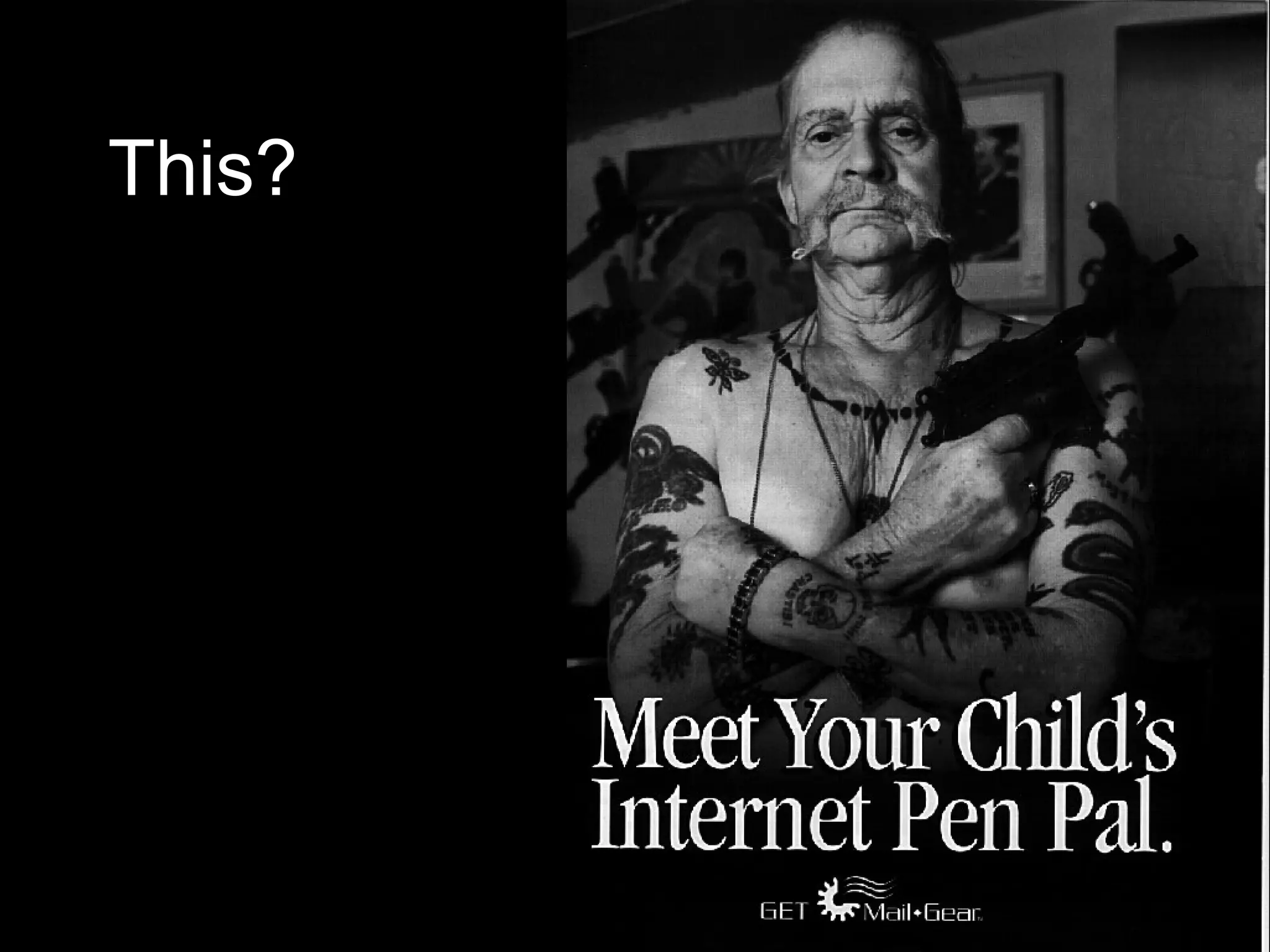
What do adults think of when they think of social networking?
This?
Dateline Spring 2006 Parents wake up DOPA Predators & cyberbullies: Reality check   www.blogsafety.com/  March 16, 2007 McCollam, The Shame Game Columbia Journalism Review , Jan/Feb 2007 www.cjr.org/issues/2007/1/McCollam.asp
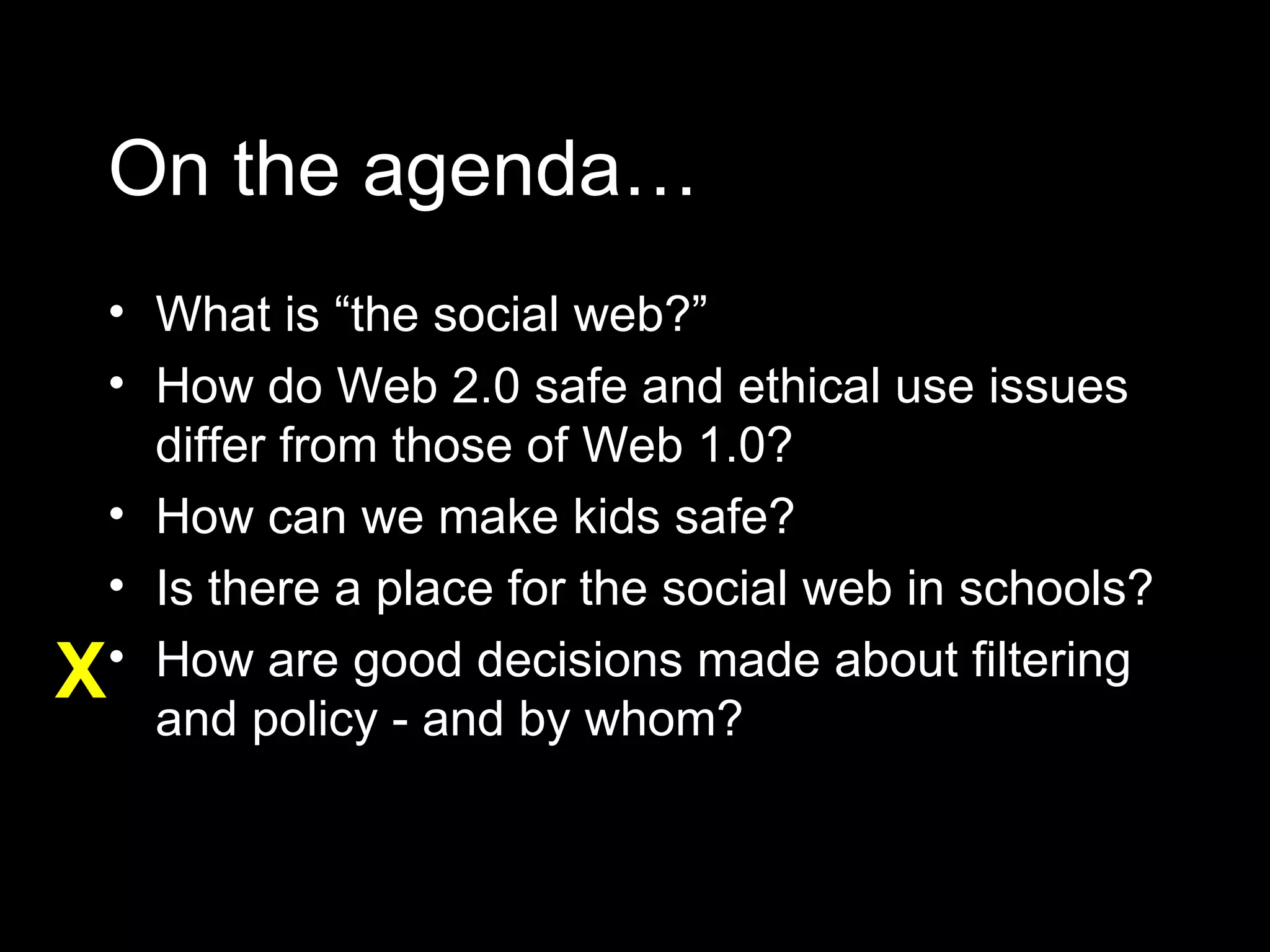
On the agenda… What is “the social web?” How do Web 2.0 safe and ethical use issues differ from those of Web 1.0? How can we make kids safe? Is there a place for the social web in schools? How are good decisions made about filtering and policy - and by whom? X
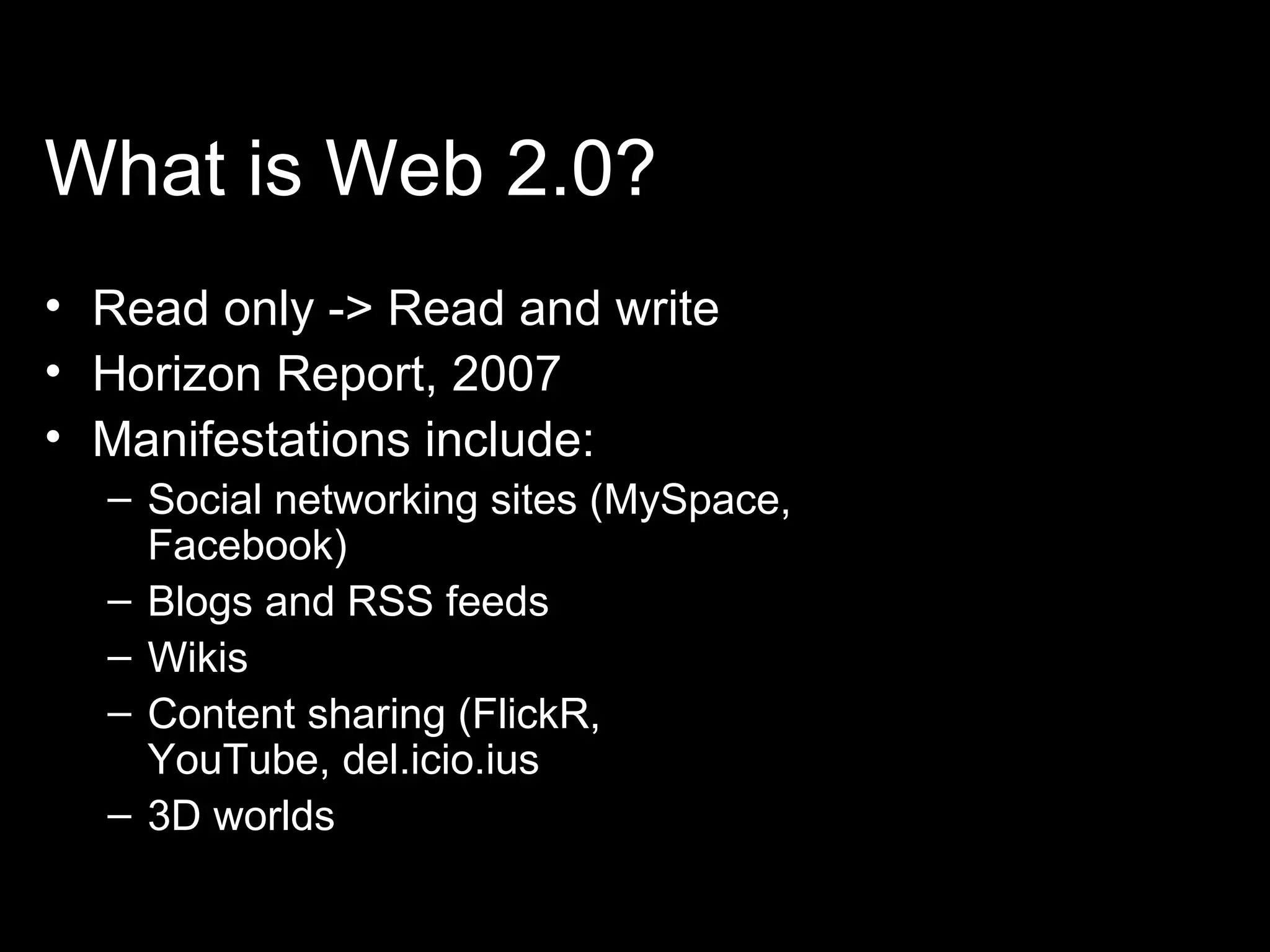
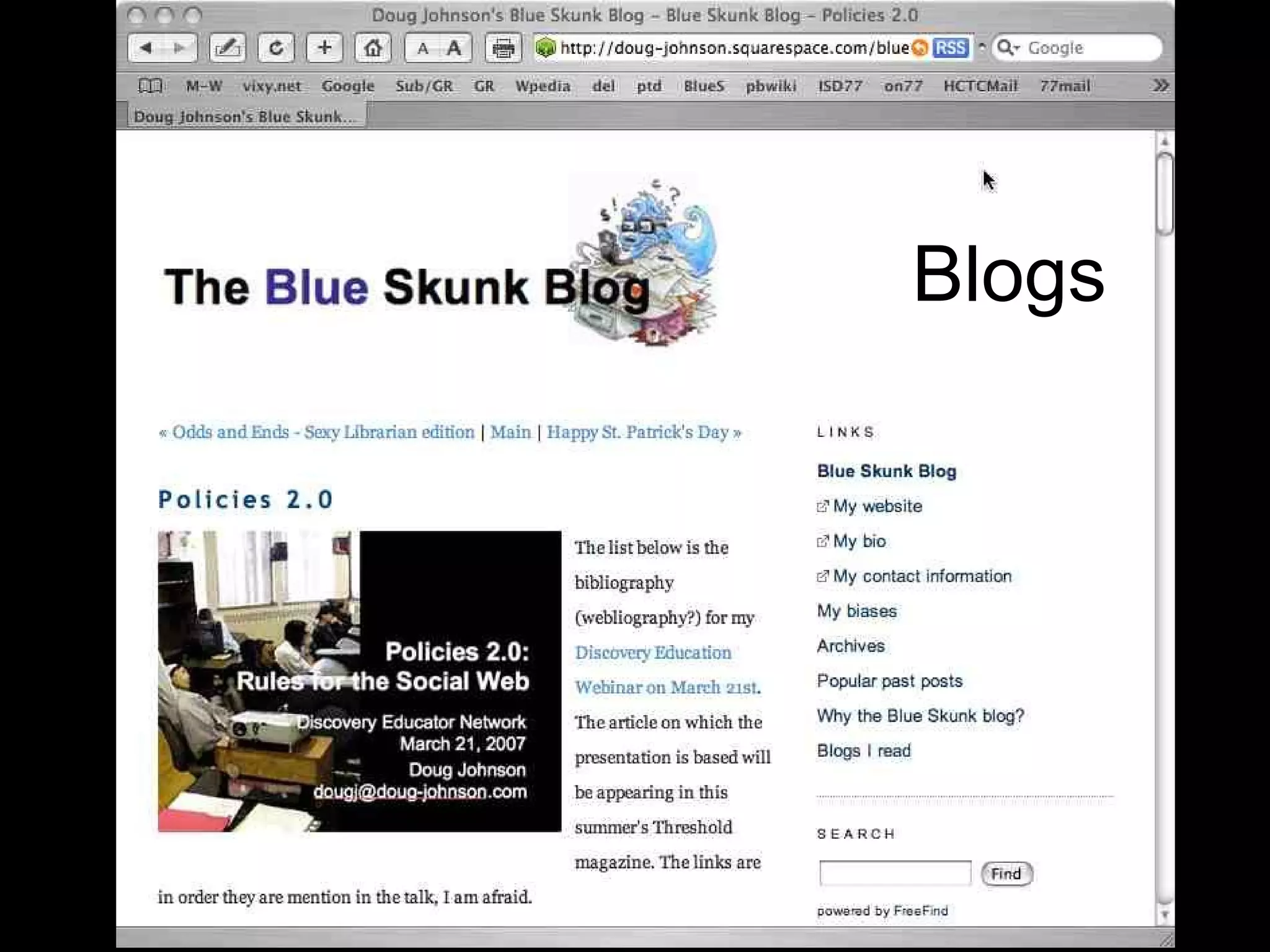
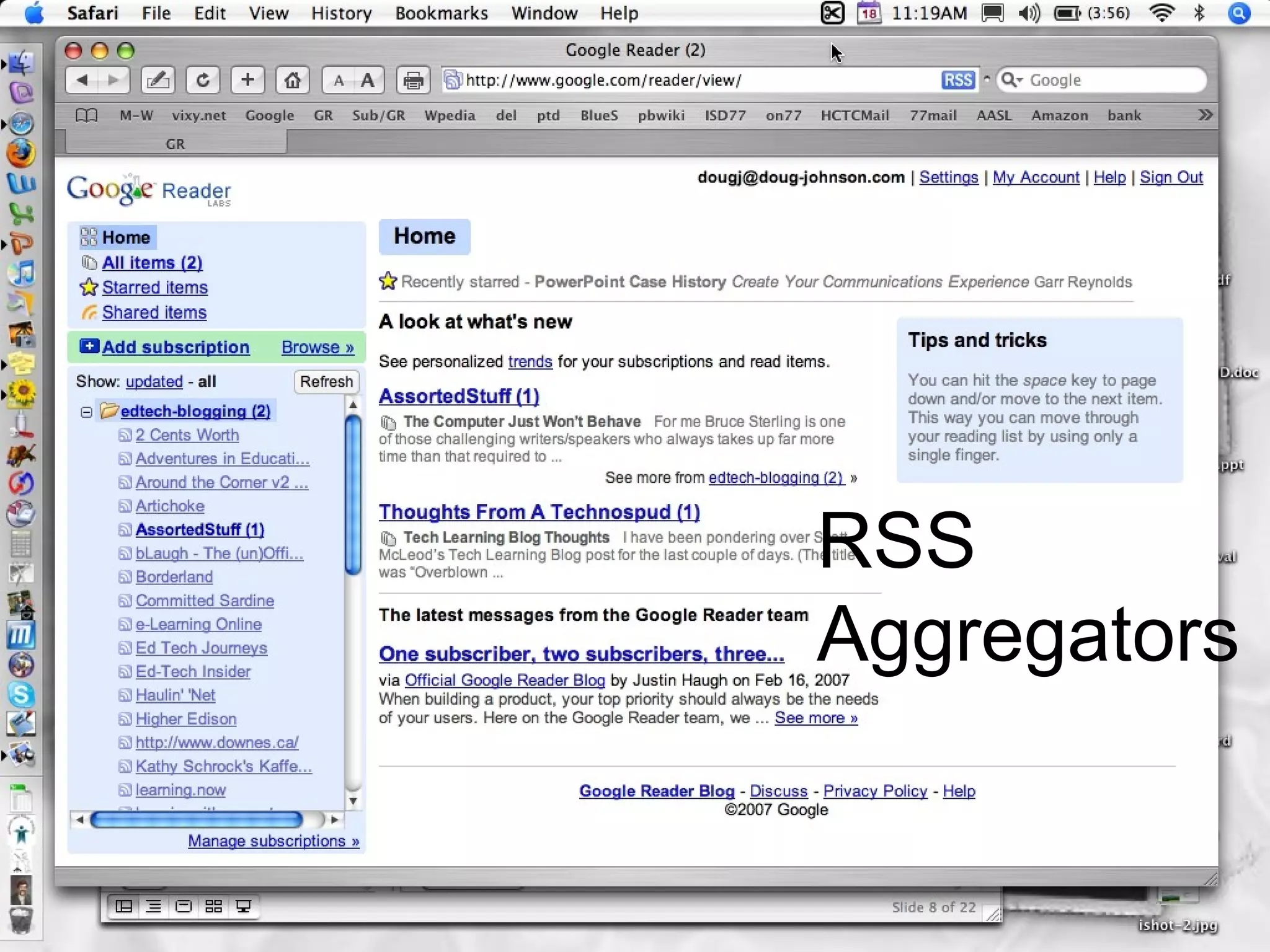
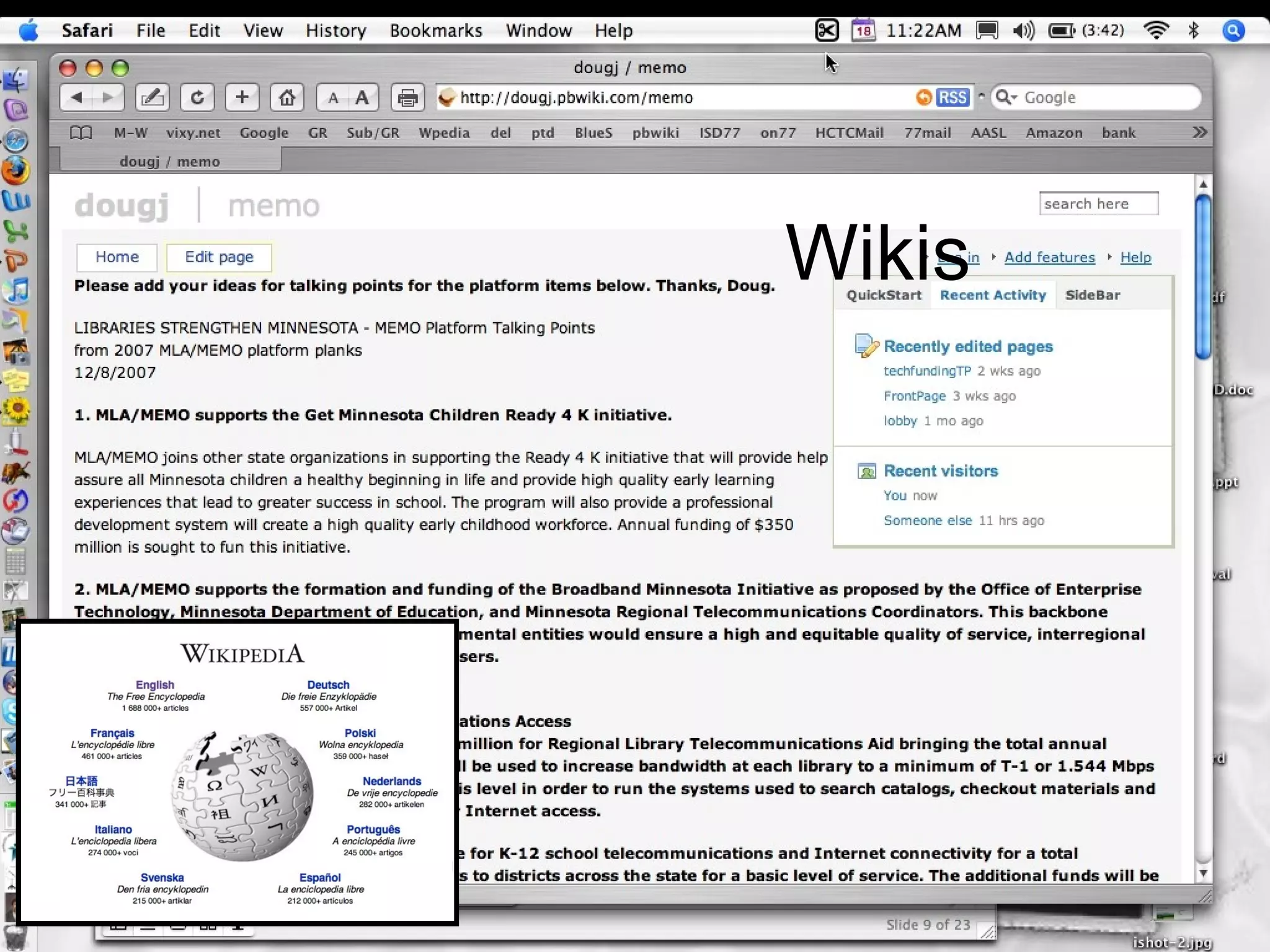
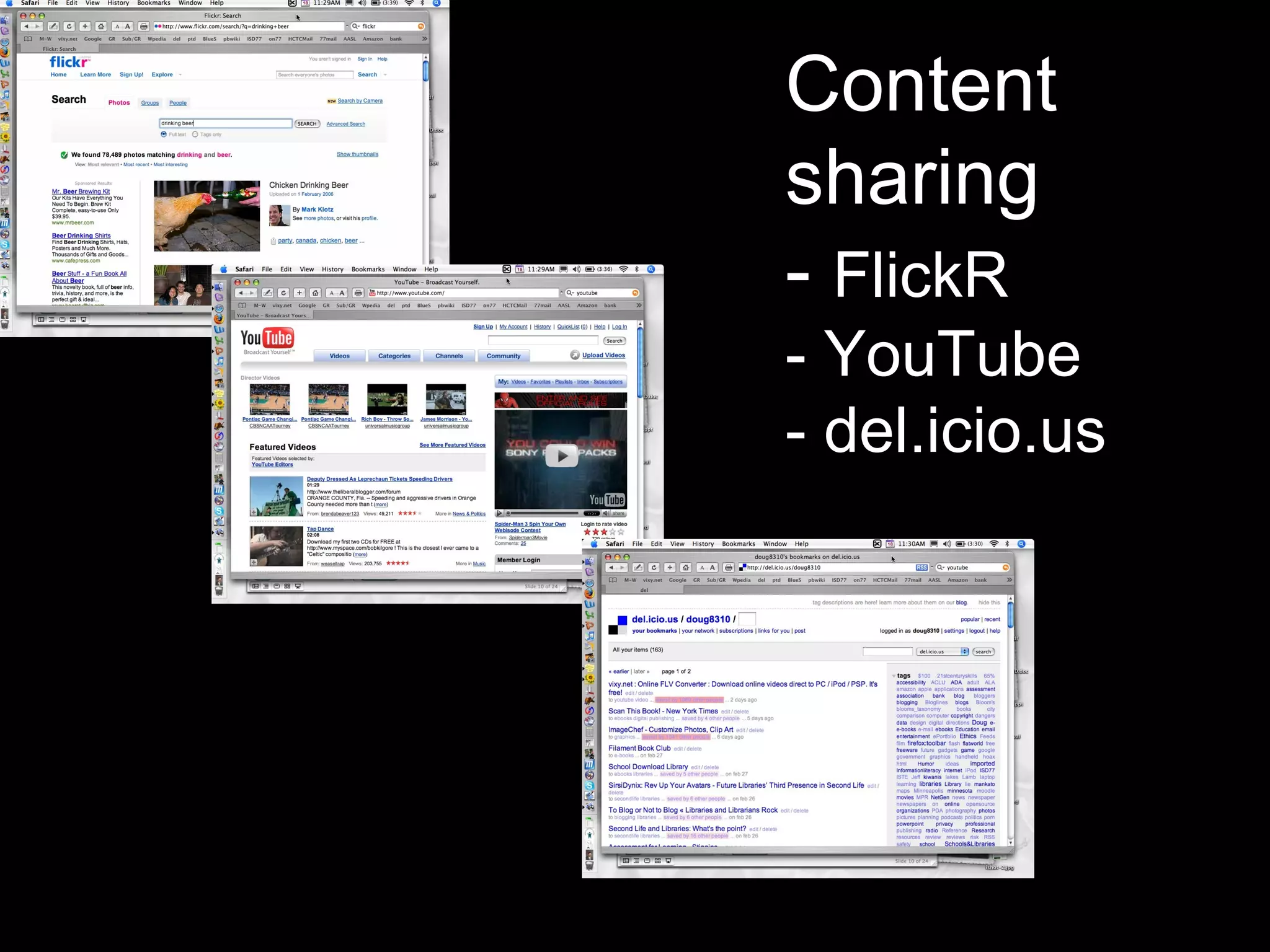
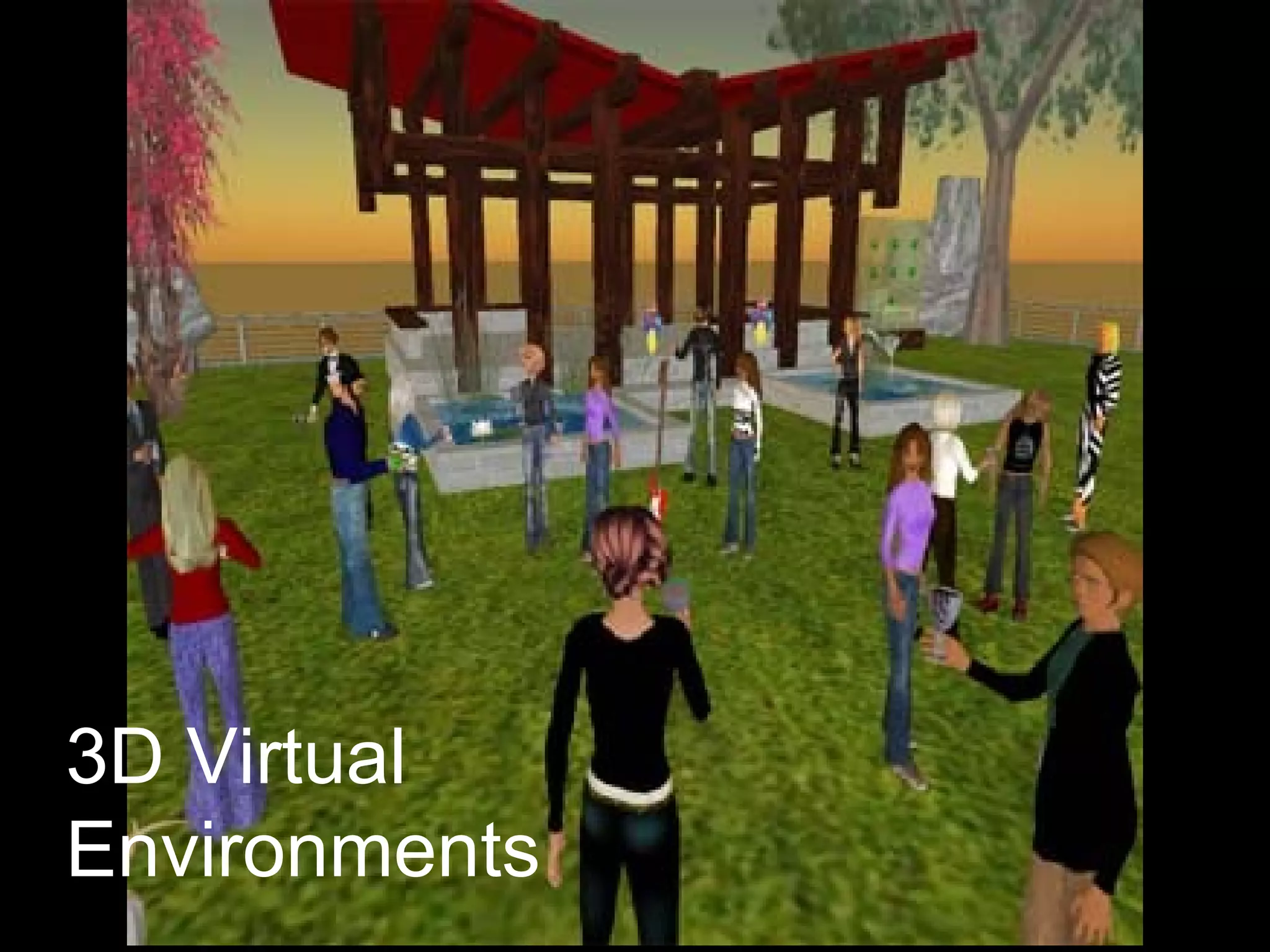
What is Web 2.0? Read only -> Read and write Horizon Report, 2007 Manifestations include: Social networking sites (MySpace, Facebook) Blogs and RSS feeds Wikis Content sharing (FlickR, YouTube, del.icio.ius 3D worlds
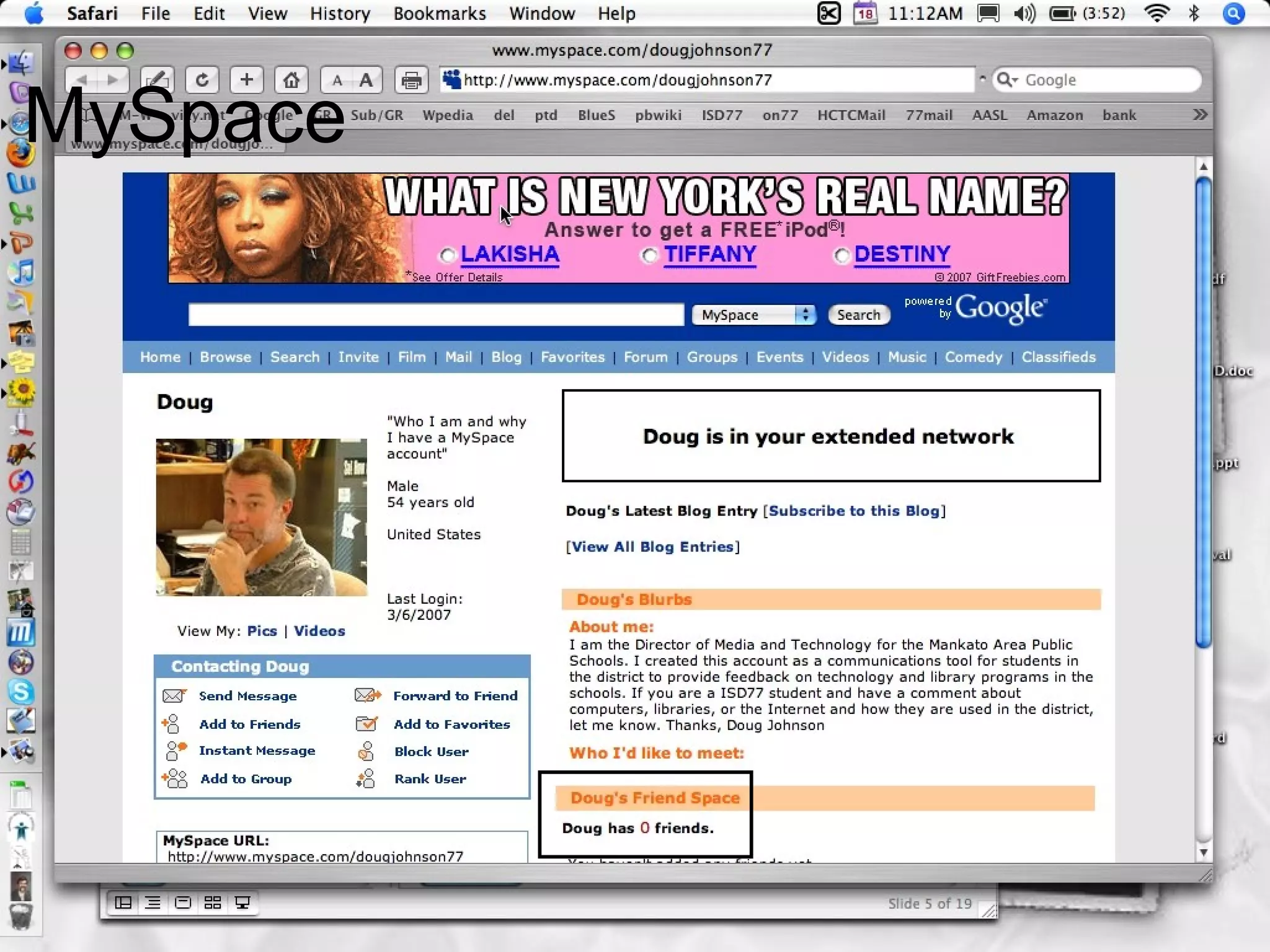
MySpace
Blogs
RSS Aggregators
Wikis
Content sharing  -  FlickR - YouTube - del.icio.us
3D Virtual Environments
On the agenda… What is “the social web?” How do Web 2.0 safe and ethical use issues differ from those of Web 1.0? How can we make kids safe? Is there a place for the social web in schools? How are good decisions made about filtering and policy - and by whom? X
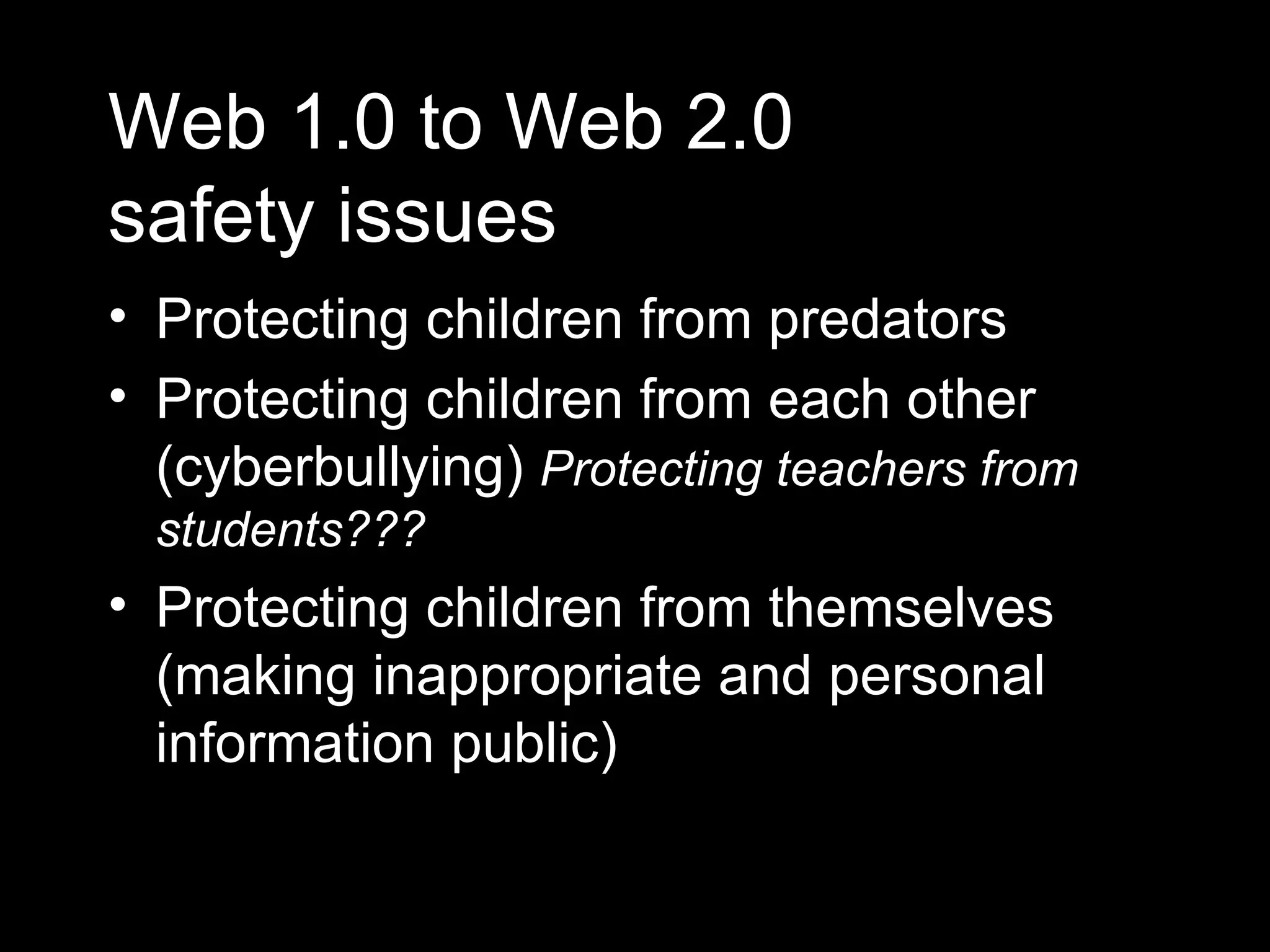
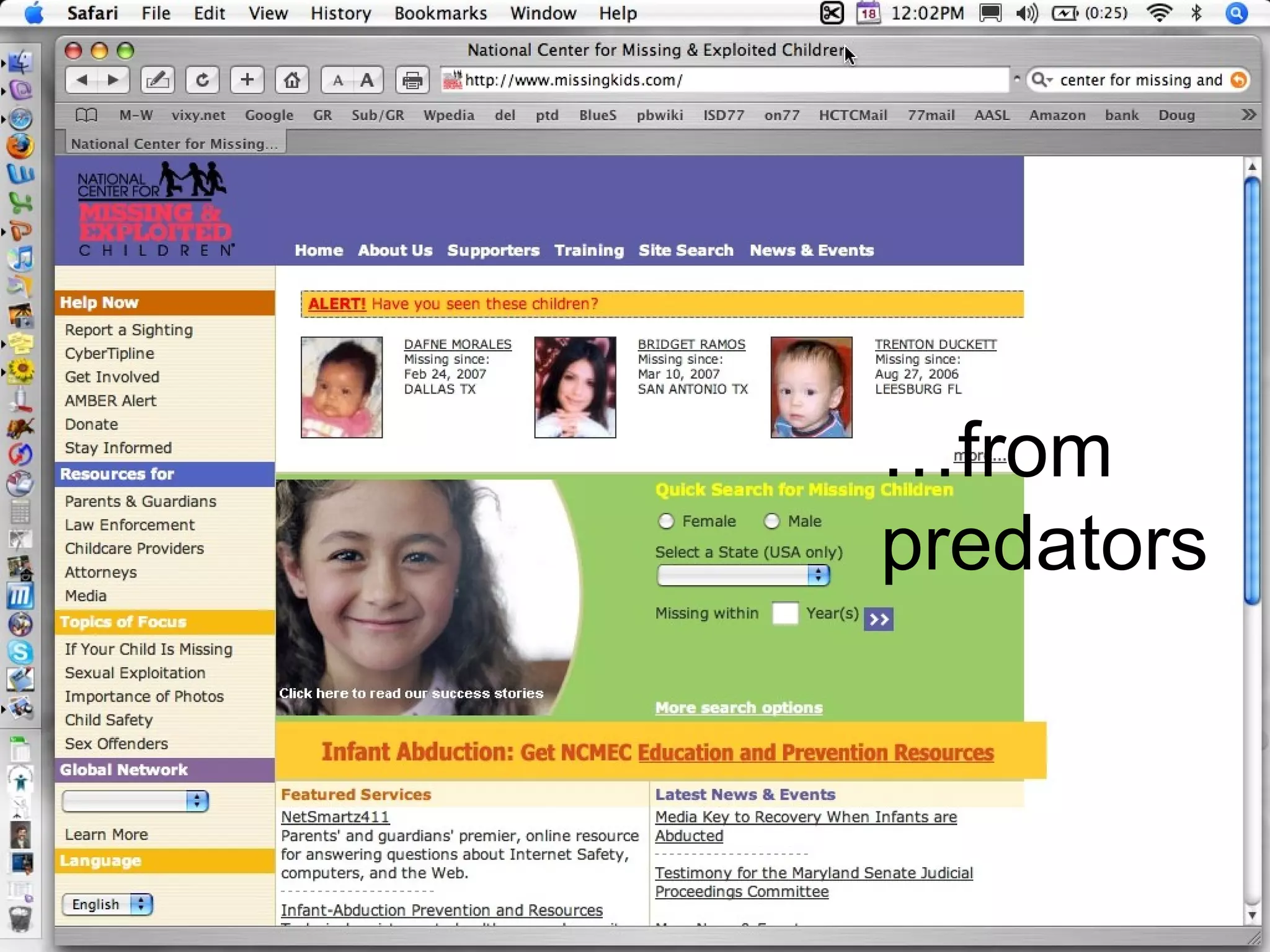
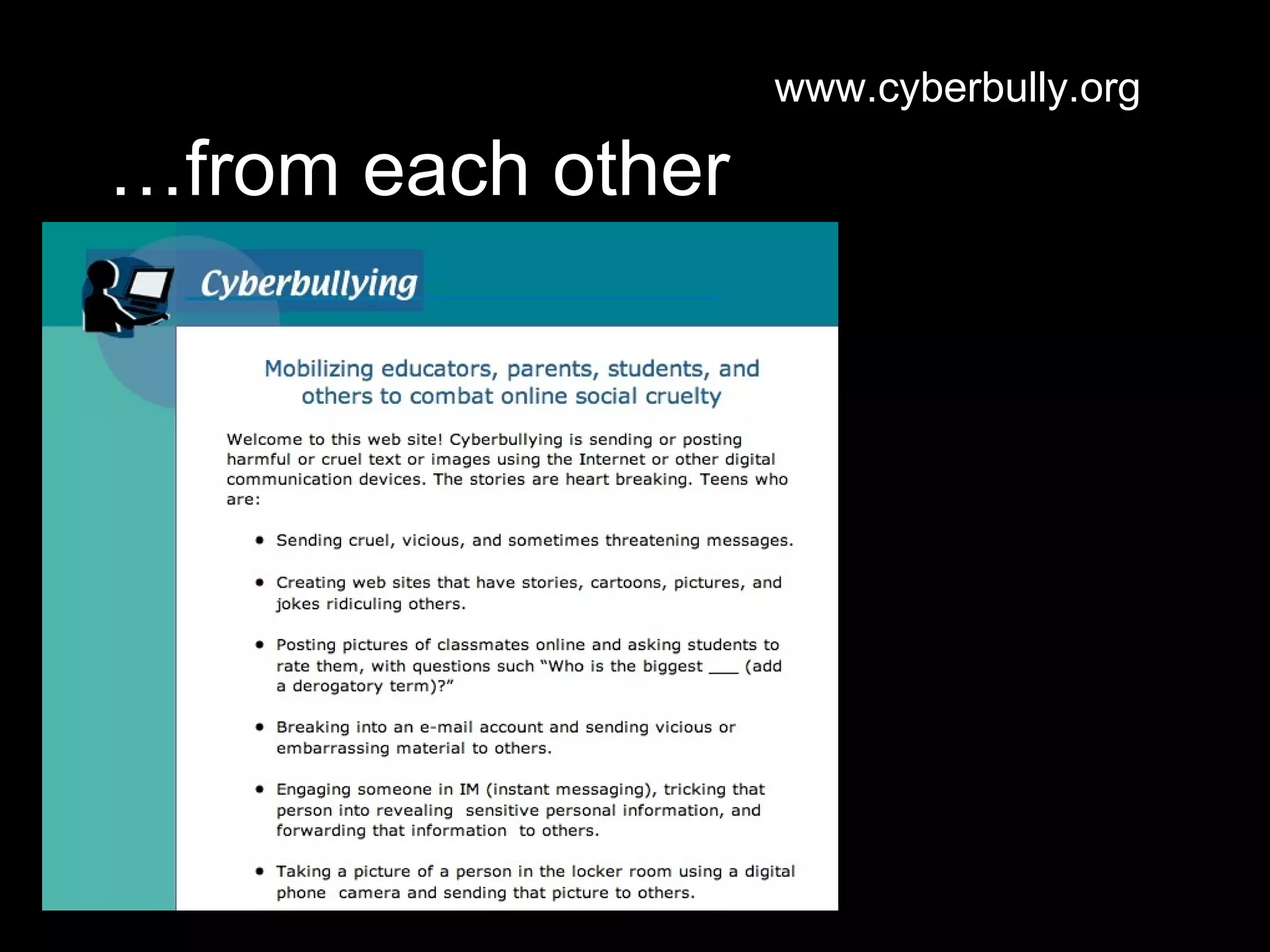
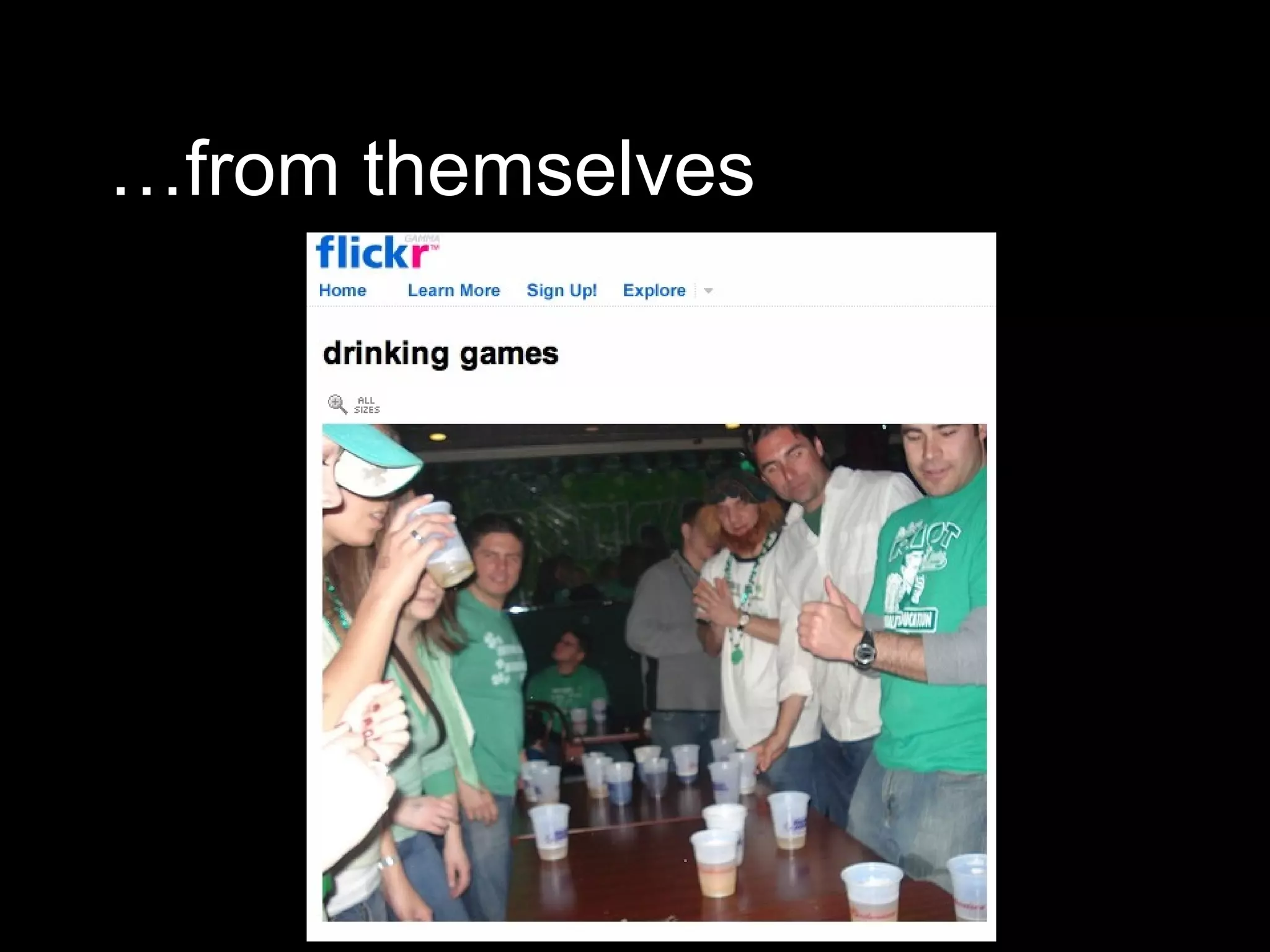
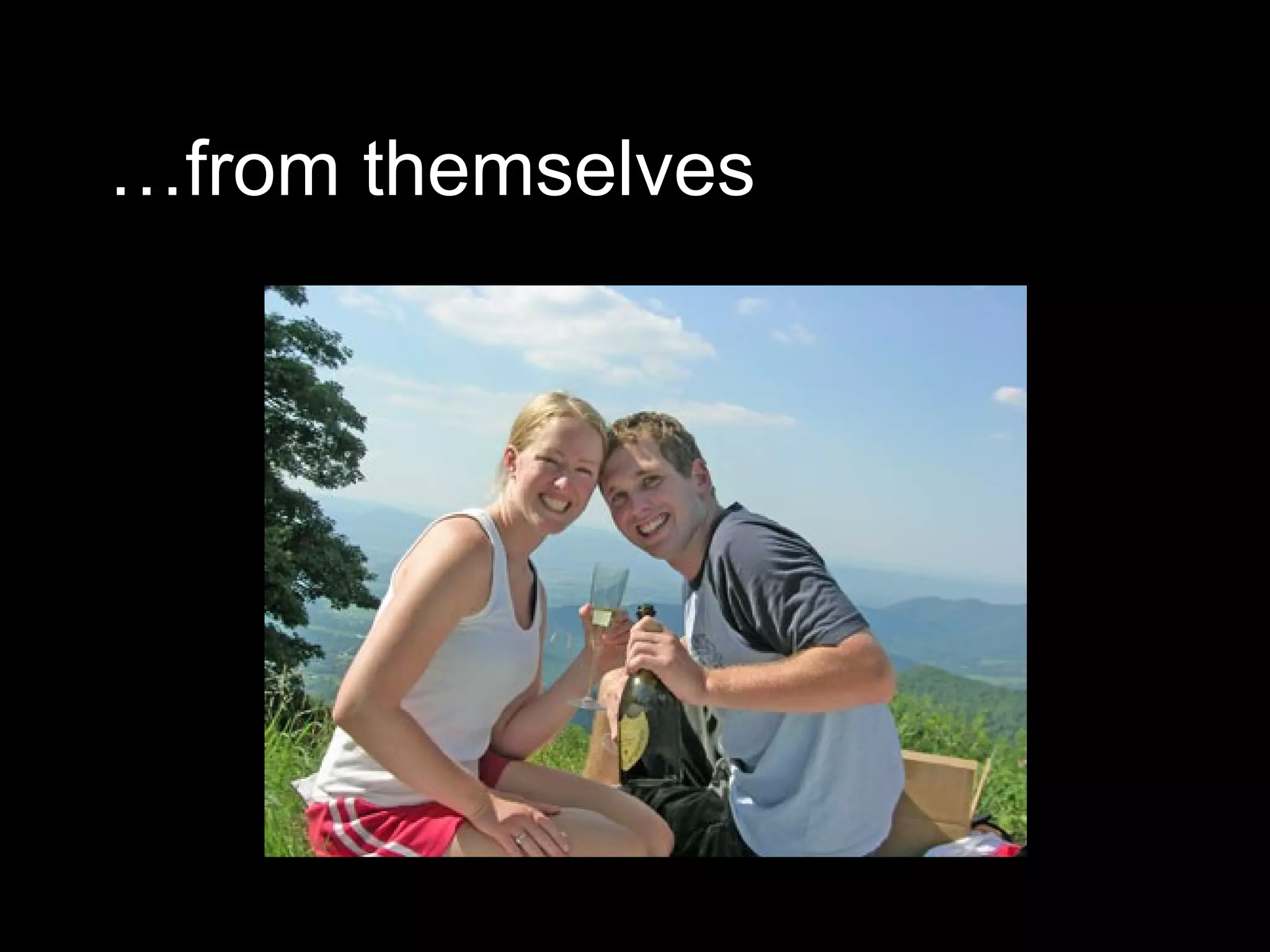
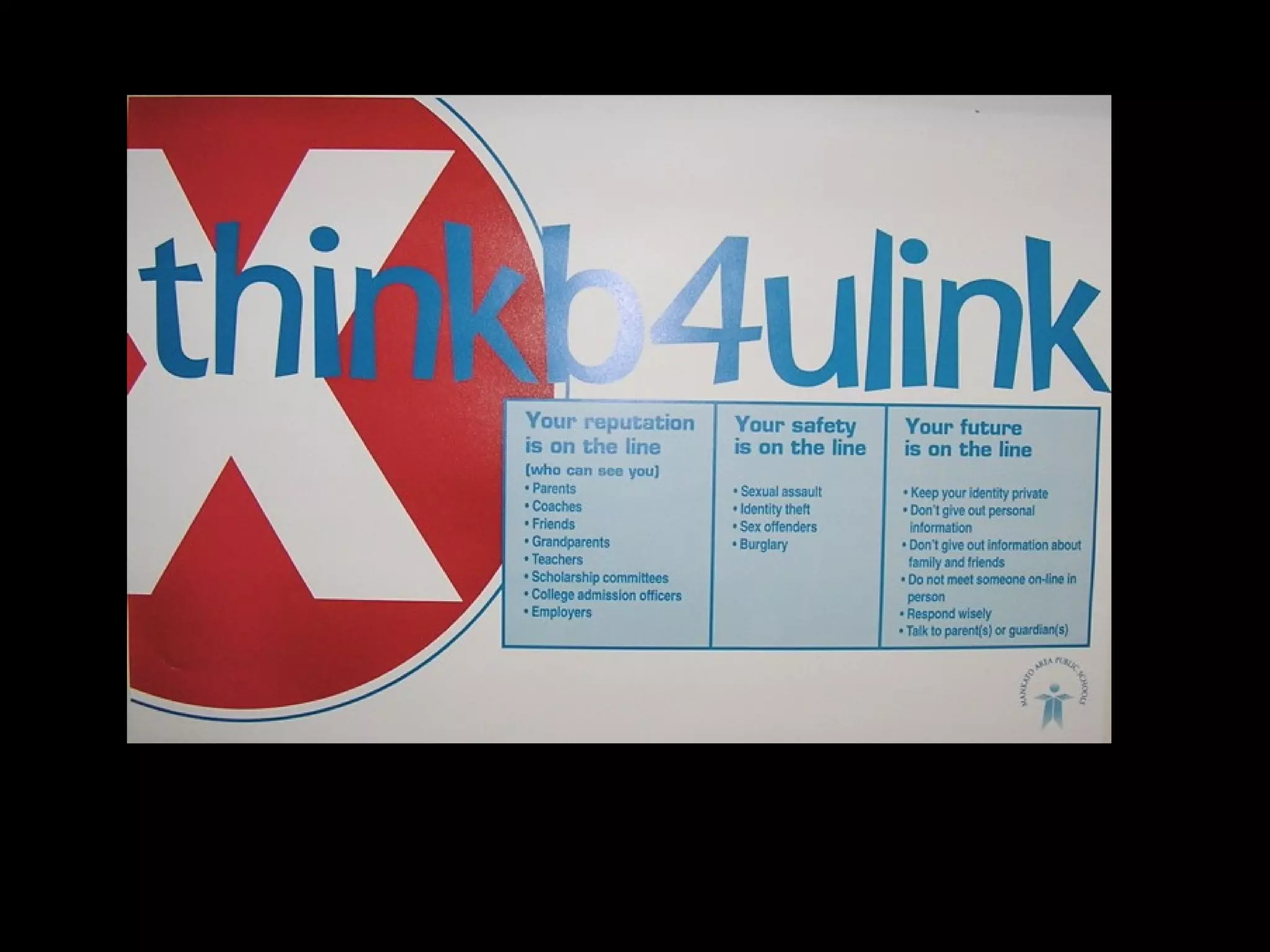
Web 1.0 to Web 2.0 safety issues Protecting children from predators Protecting children from each other (cyberbullying)  Protecting teachers from students??? Protecting children from themselves (making inappropriate and personal information public)
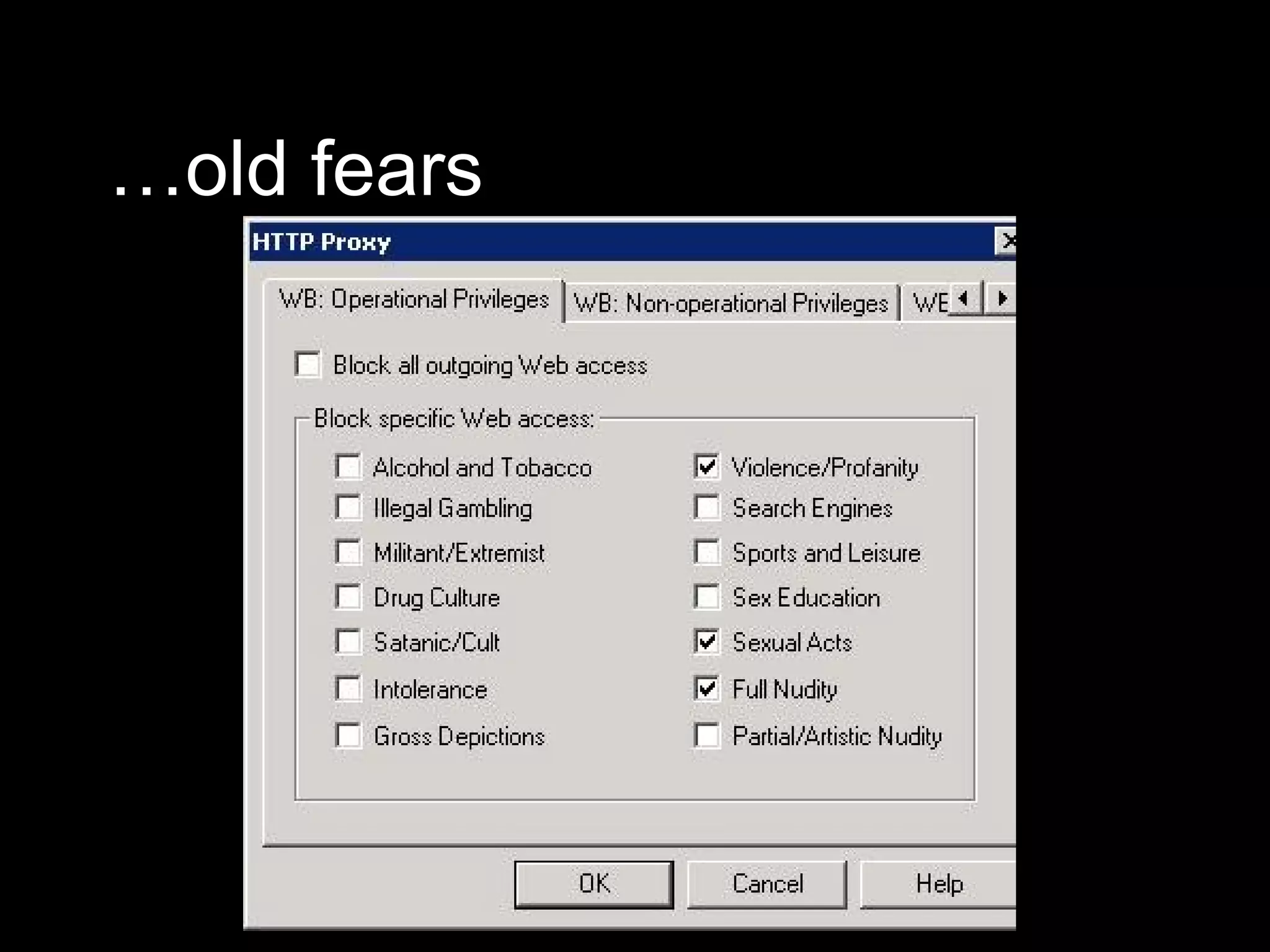
…old fears
… from  predators
…from each other www.cyberbully.org
…from themselves
…from themselves
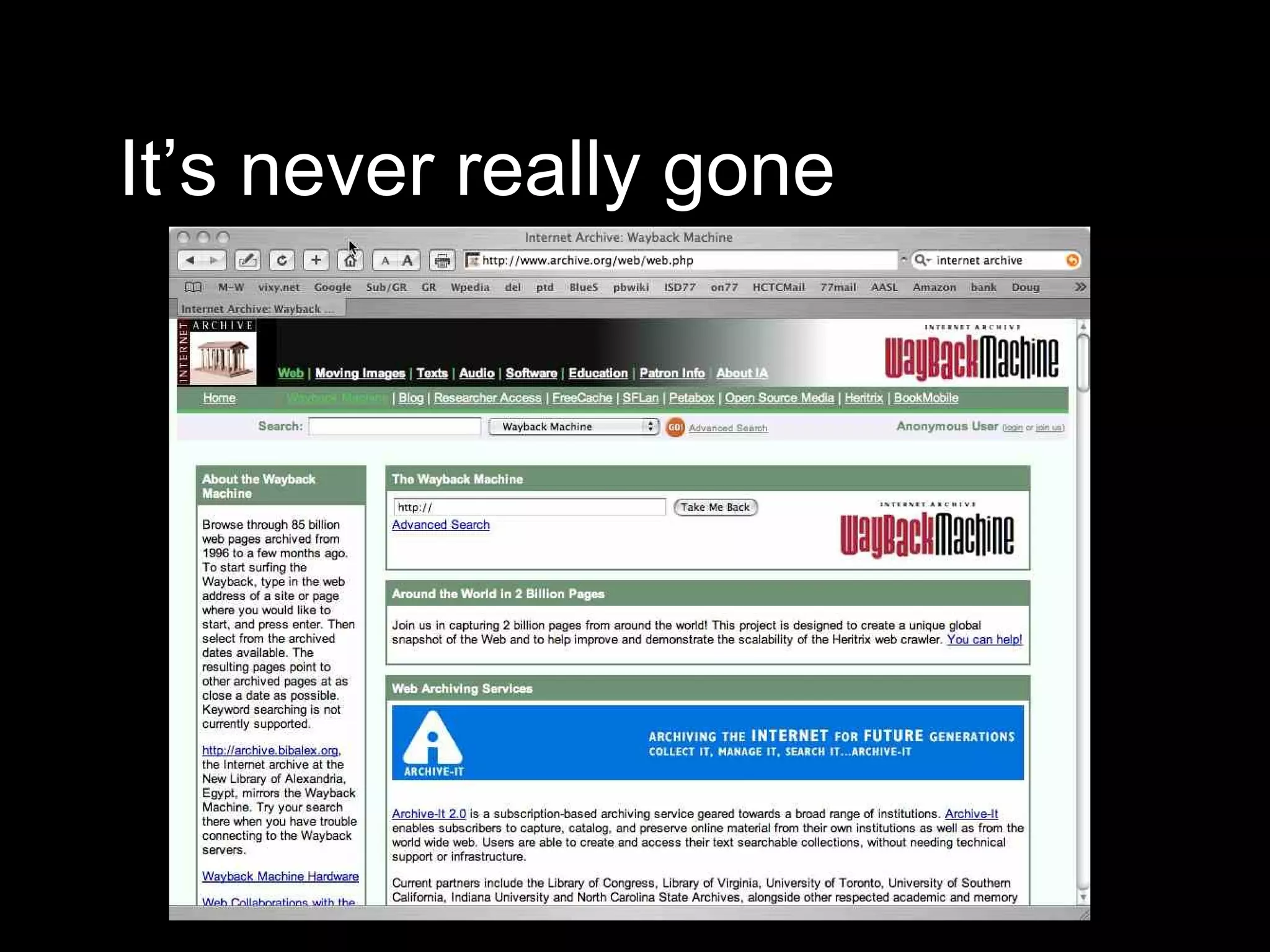
It’s never really gone
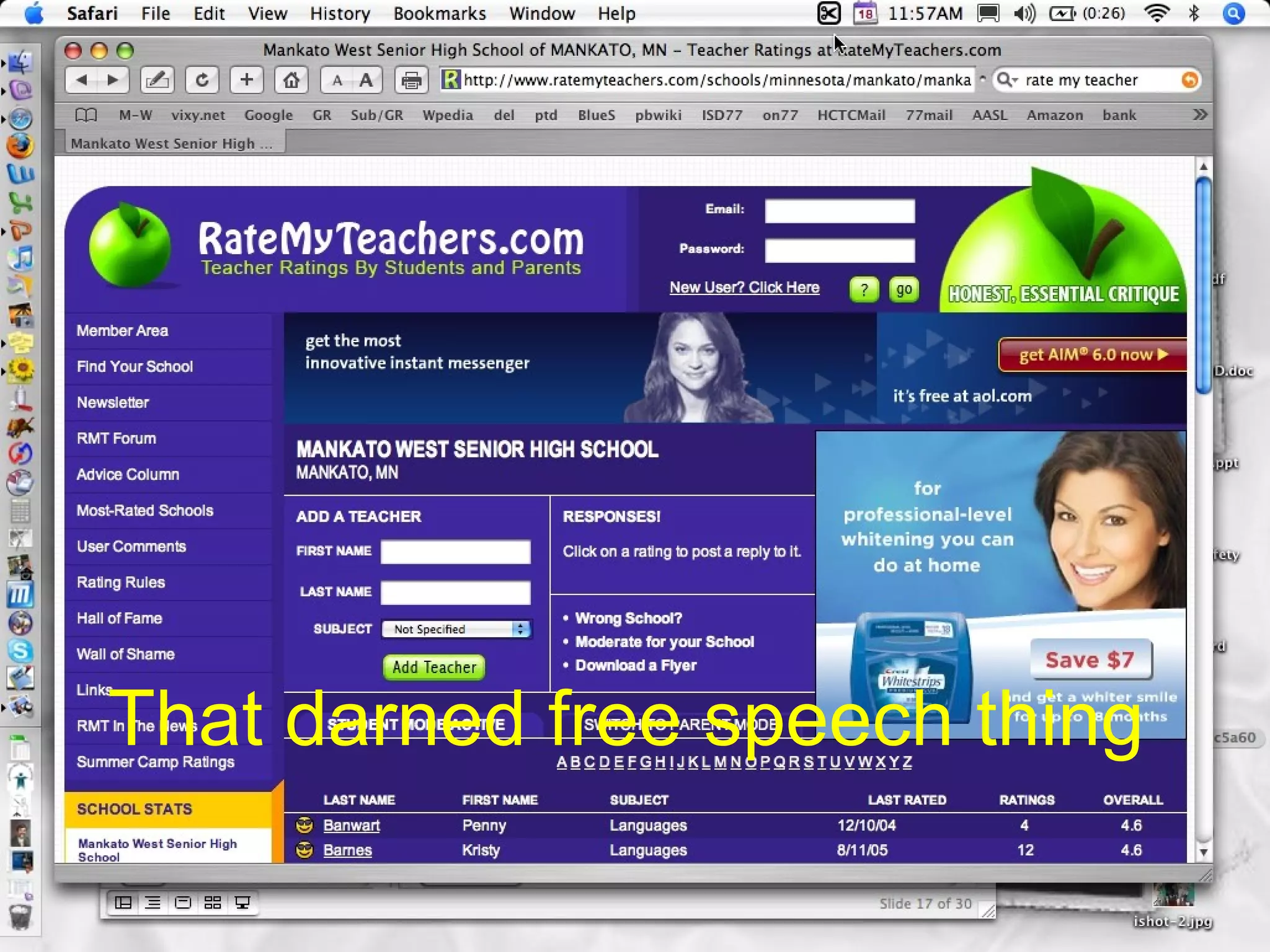
That darned free speech thing
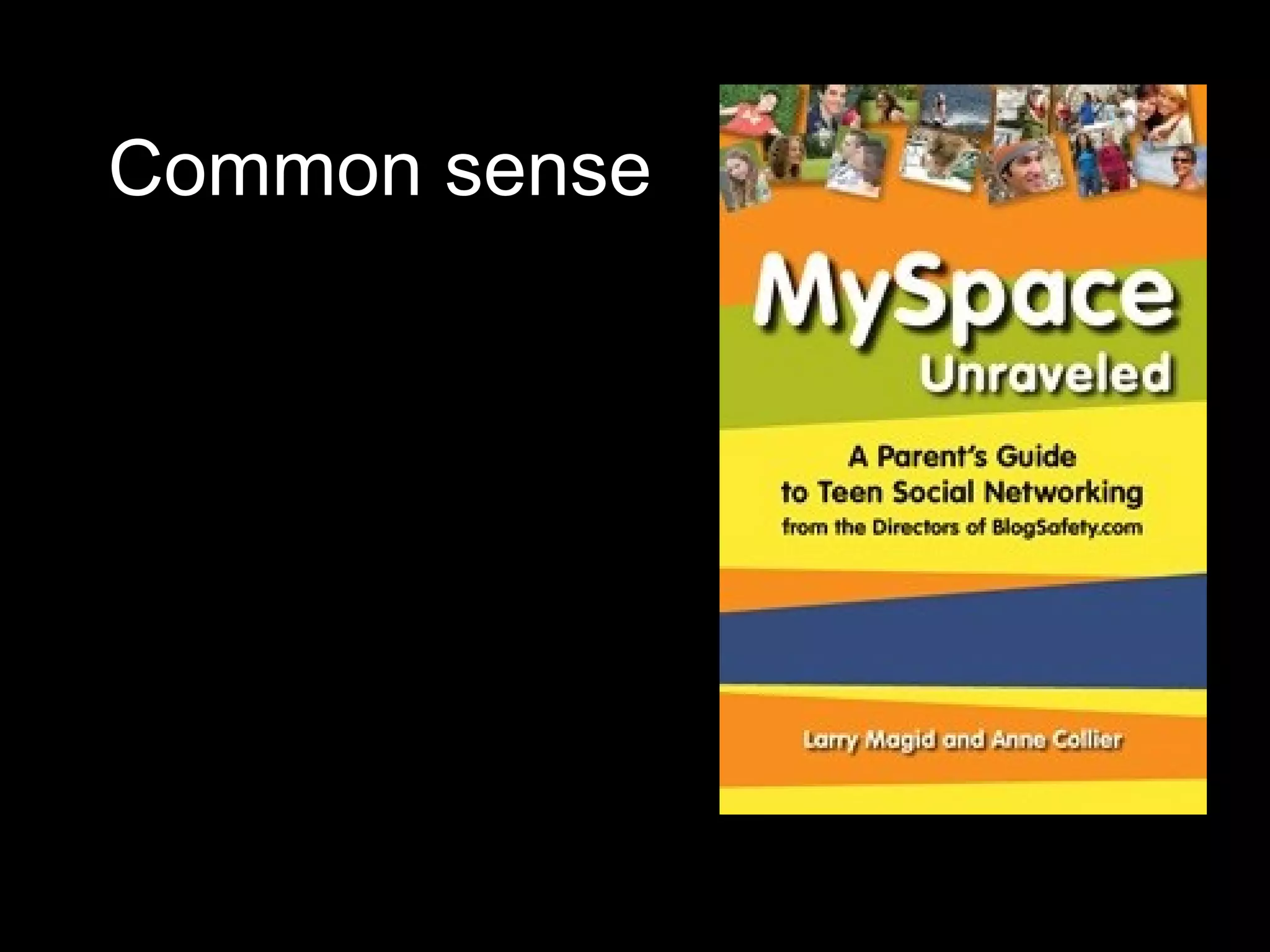
Common sense
The danger to kids in Web 2.0 comes not from what they may find online, but from what they themselves put online for others to access.
On the agenda… What is “the social web?” How do Web 2.0 safe and ethical use issues differ from those of Web 1.0? How can we make kids safe? Is there a place for the social web in schools? How are good decisions made about filtering and policy - and by whom? X
Let’s just block it all! DOPA, 2006 - passed the House with 96% in favor - requirement to filter out all interactive websites Today - DOPA Jr.
This unnecessary and overly broad legislation will hinder students’ ability to engage in distance learning and block library computer users from accessing a wide array of essential Internet applications including instant messaging, email, wikis and blogs. -  Leslie Burger, ALA President, 2006
Blocking formats not content. For every problem, there is a solution that is simple, neat, and wrong. H.L. Menken
Why filtering is ineffective Best filters not 100% Can’t filter what goes out Access from outside school Proxies Mobile devices
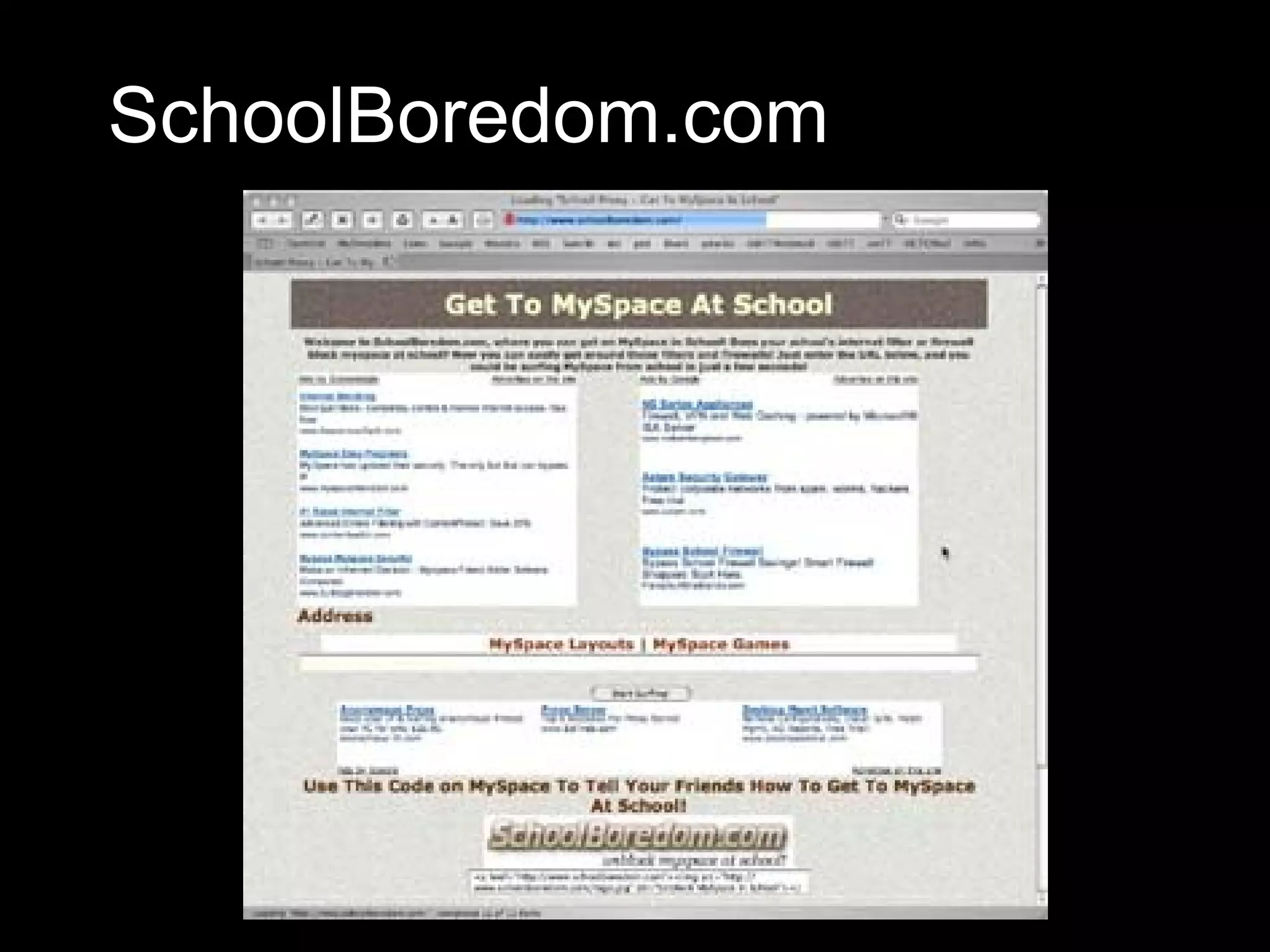
SchoolBoredom.com
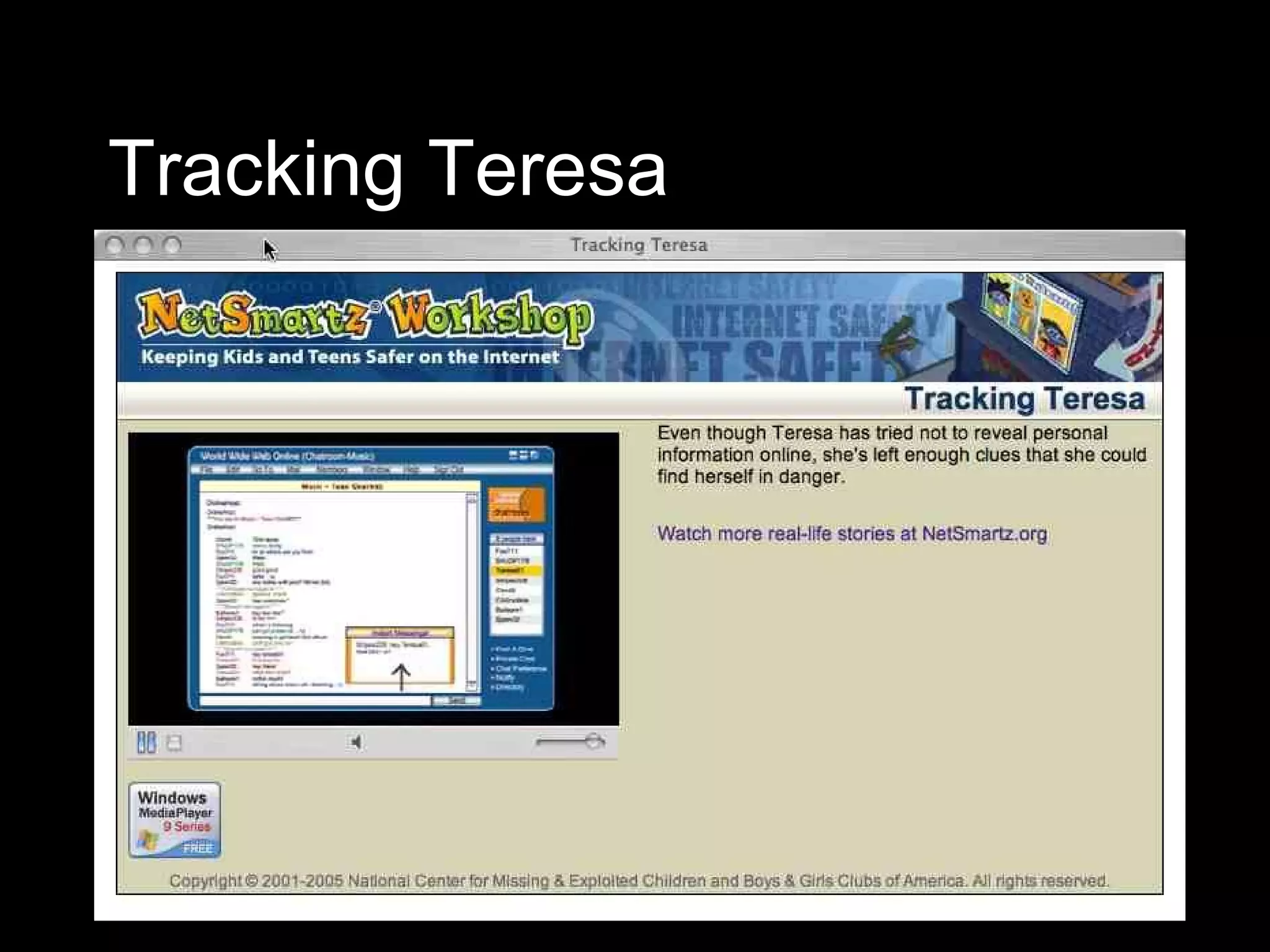
Education is imperative Dangers are real Schools must be proactive Schools must reach out Good resources on the web NetSmartz (movies) iLearn
Tracking Teresa
 
On the agenda… What is “the social web?” How do Web 2.0 safe and ethical use issues differ from those of Web 1.0? How can we make kids safe? Is there a place for the social web in schools? How are good decisions made about filtering and policy - and by whom? X
Education can be enhanced with the social web resources Social networking Blogs Wikis Game environments
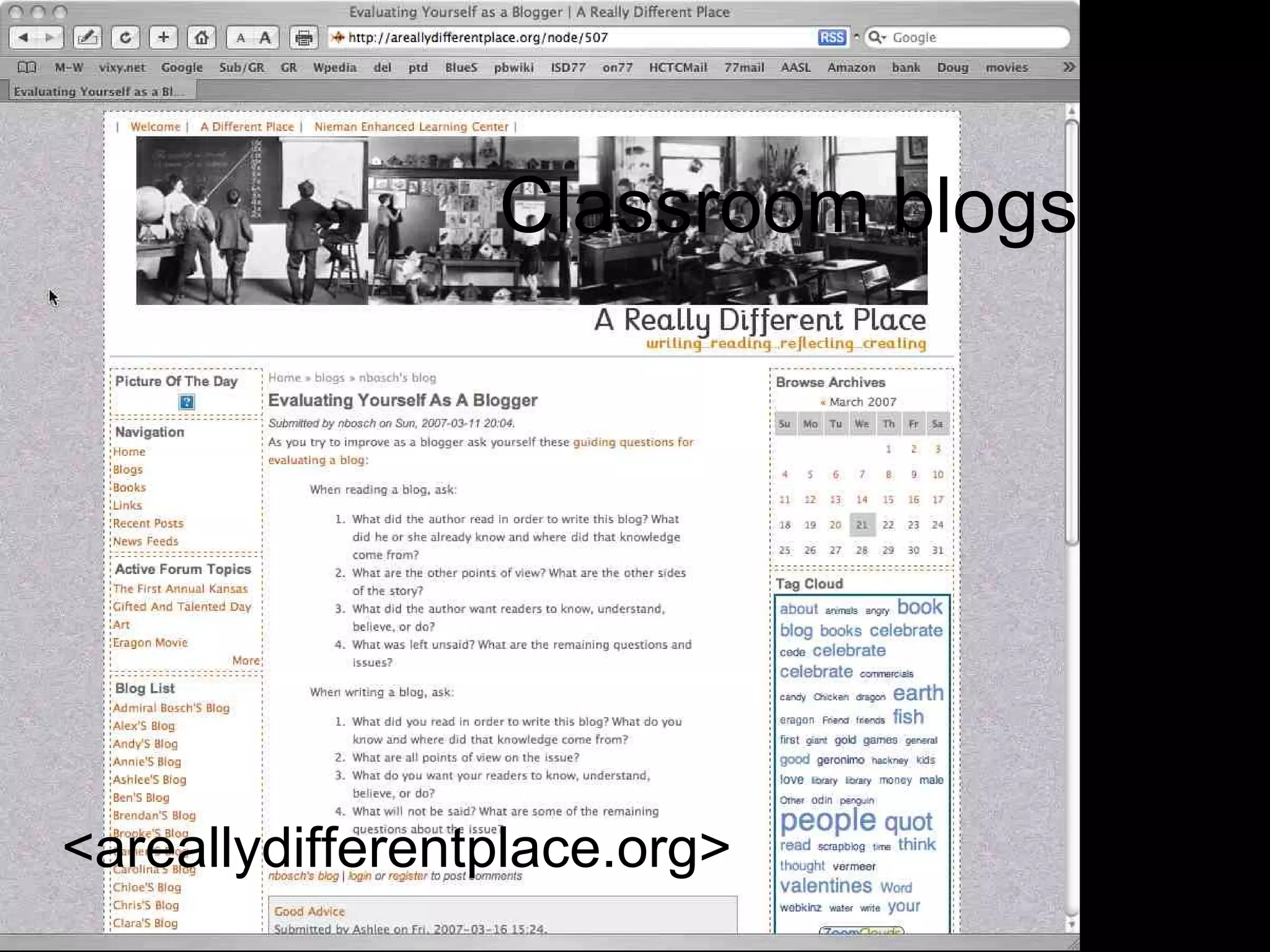
Classroom blogs <areallydifferentplace.org>
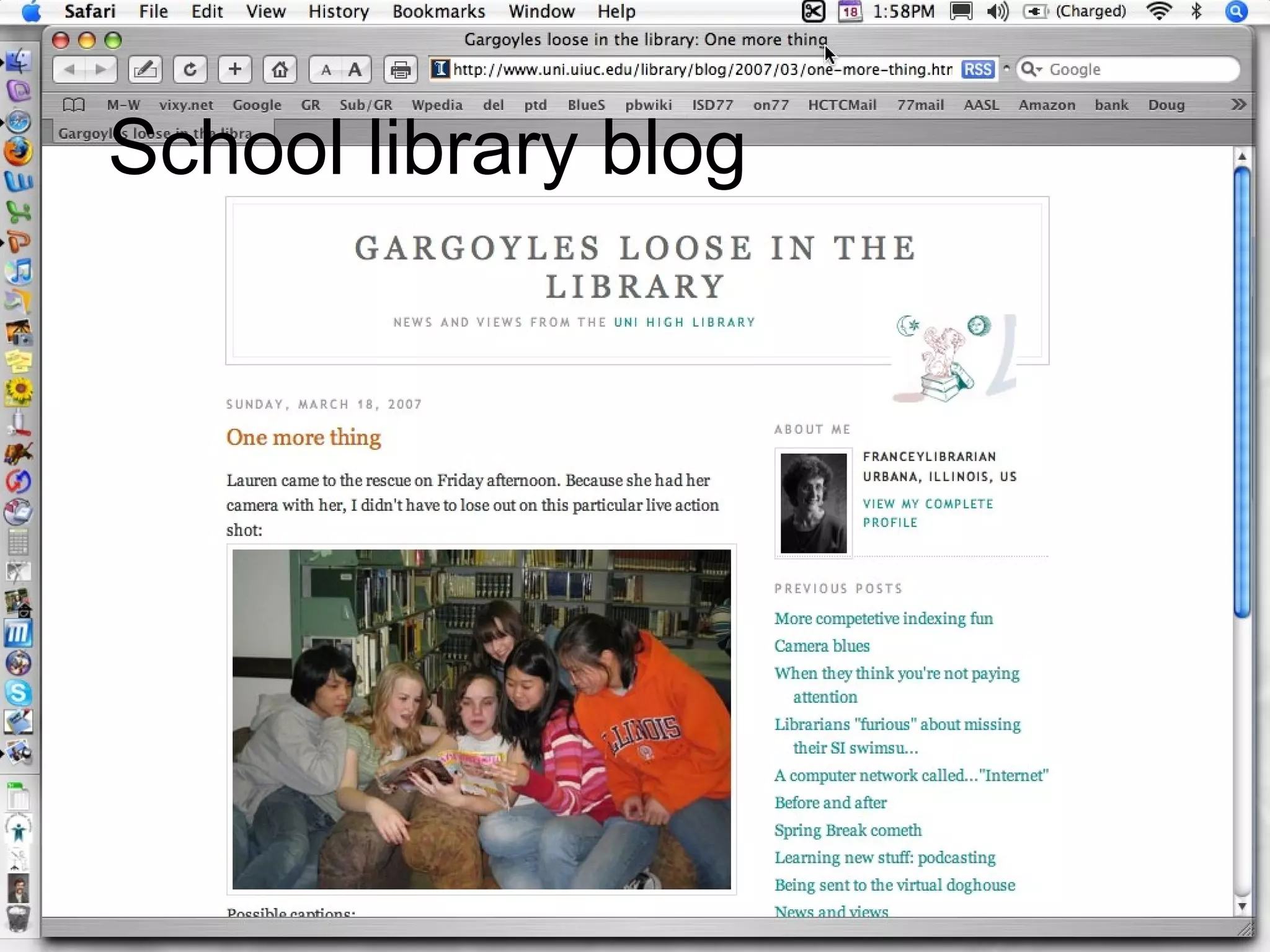
School library blog
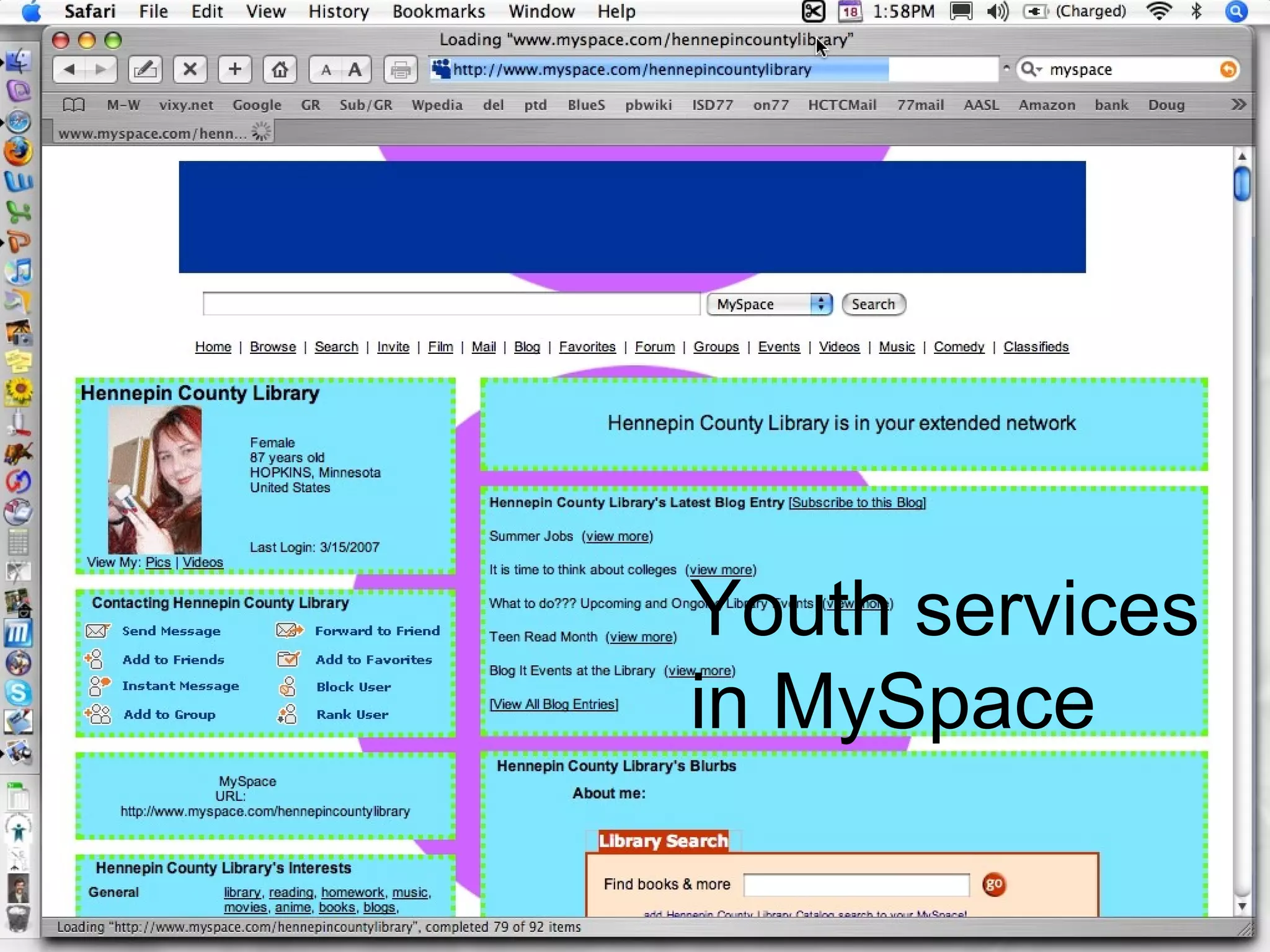
Youth services  in MySpace
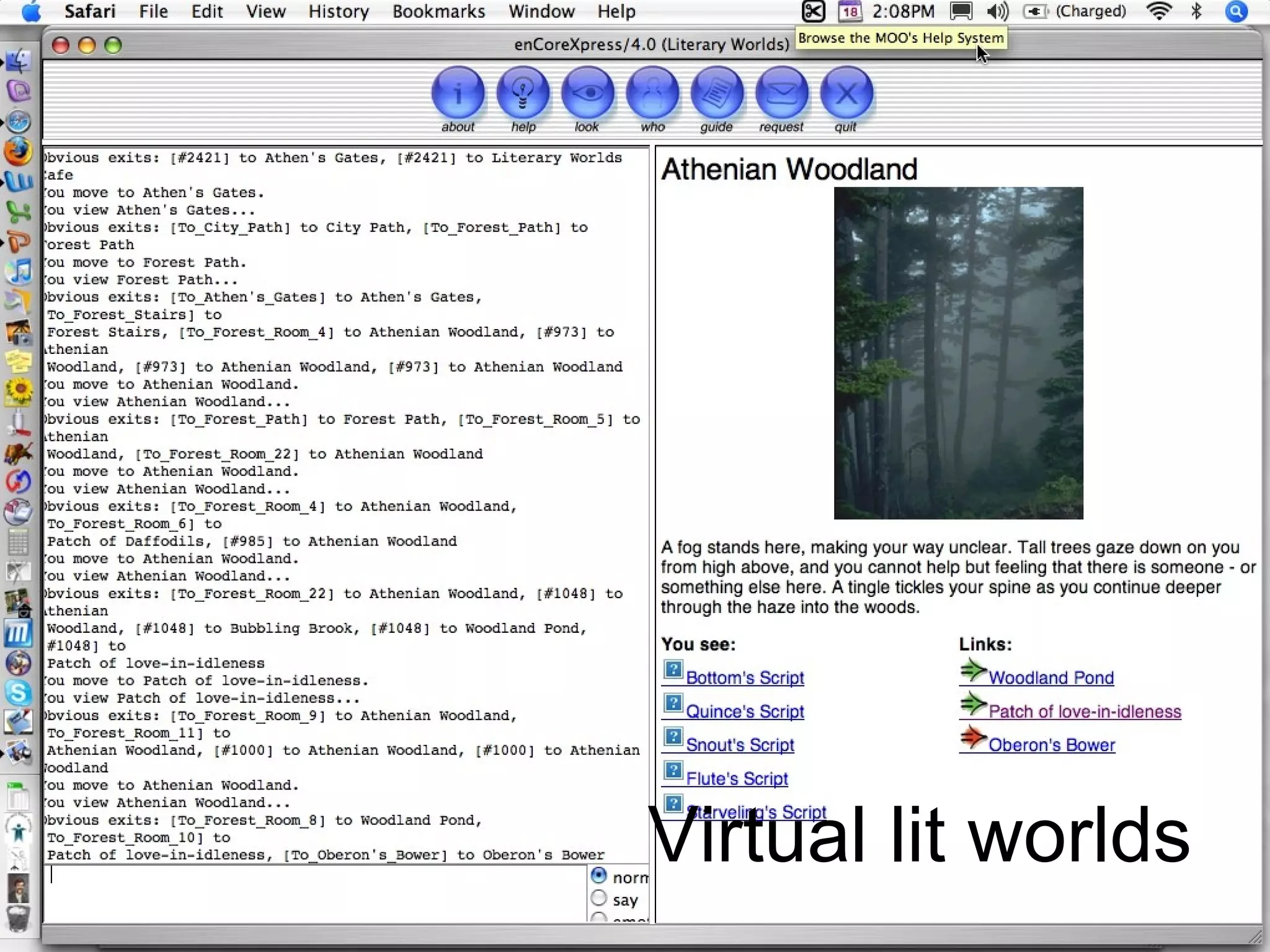
Virtual lit worlds
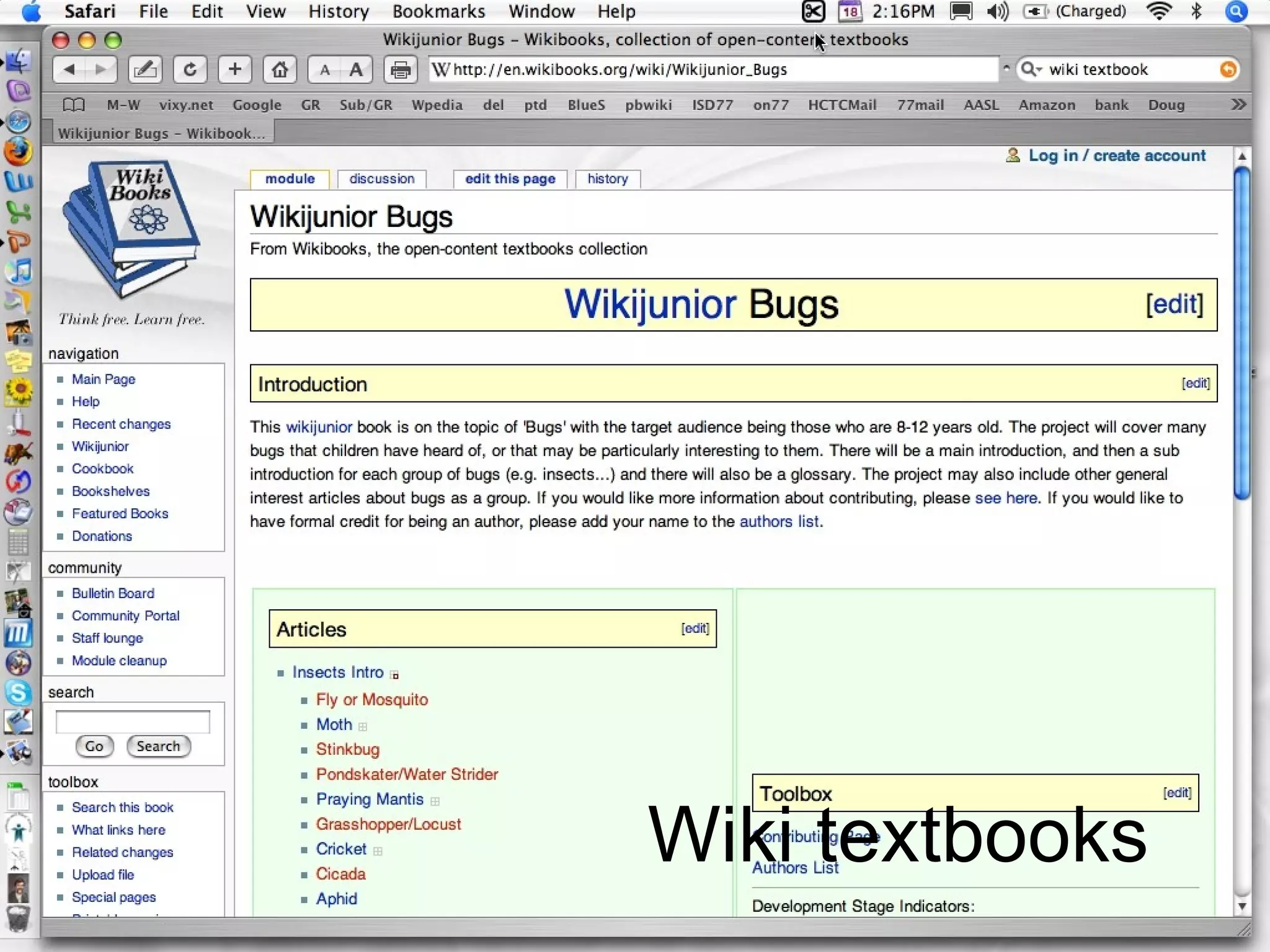
Wiki textbooks
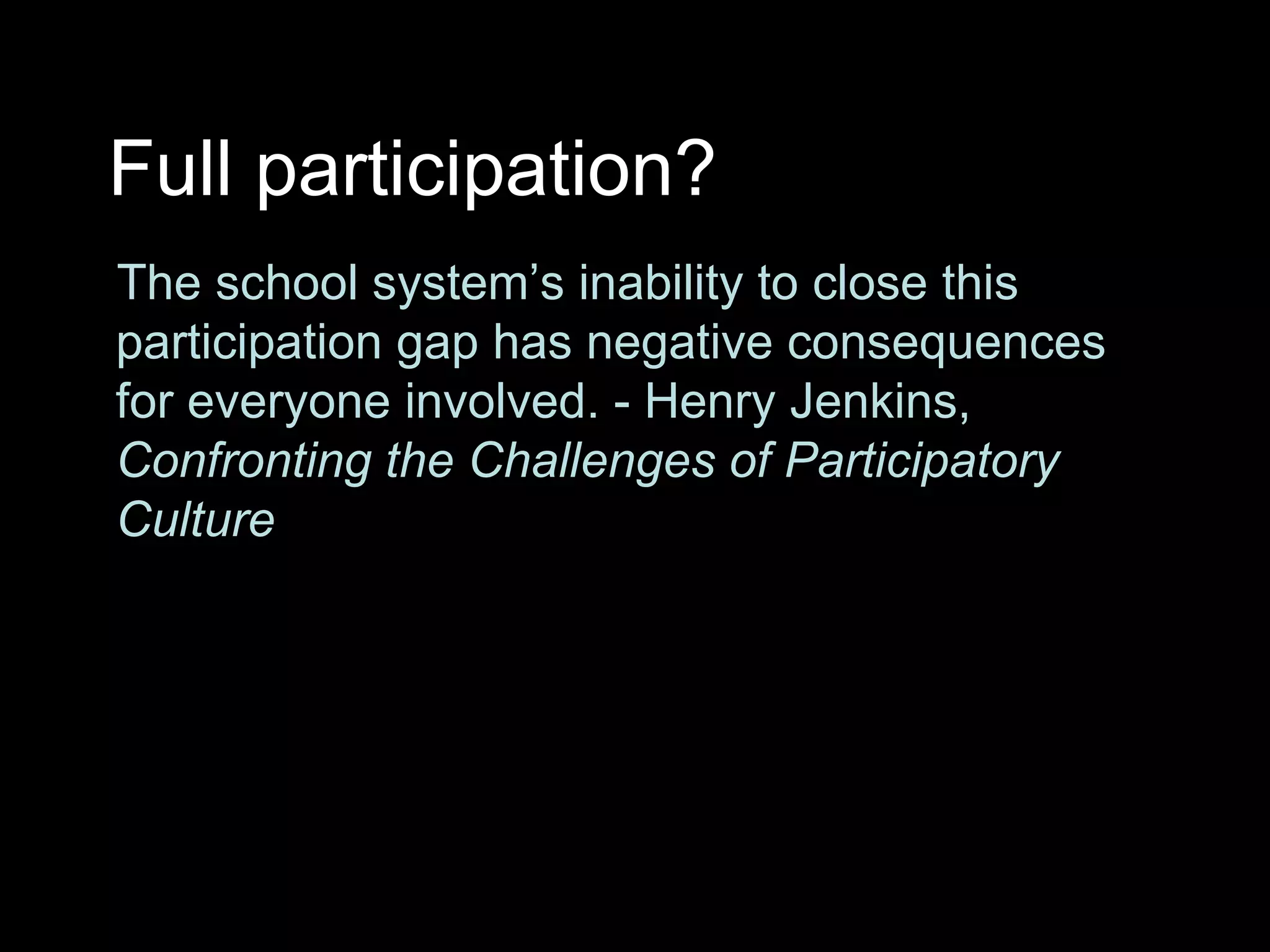
Full participation? The school system’s inability to close this participation gap has negative consequences for everyone involved. - Henry Jenkins,  Confronting the Challenges of Participatory Culture
On the agenda… What is “the social web?” How do Web 2.0 safe and ethical use issues differ from those of Web 1.0? How can we make kids safe? Is there a place for the social web in schools? How are good decisions made about filtering and policy - and by whom? X
Making good decisions Balance Current AUPs “ high-quality,”  “ inapropriate,”  “ reasonable” Open to interpretation?
District Advisory Committee Small Wide representation Few, but important, meetings Good agendas and minutes Defined responsibilities Budget Policy Goals Assessment
Due process for blocking Block the minimum required by CIPA Require that any request for blocking as site goes through reconsideration process Unblock any site at professional request Keep one unblocked computer in each library Make educators, not techs, responsible for safe and appropriate use
On the agenda… What is “the social web?” How do Web 2.0 safe and ethical use issues differ from those of Web 1.0? How can we make kids safe? Is there a place for the social web in schools? How are good decisions made about filtering and policy - and by whom?
… it is not the tools that are inherently good or evil but rather the use of the tools. A hammer can kill someone but it can also build a house. A nail can be driven through a hand but it can also hold the roof over your head. A fist can hit but a fist can also be clasped in your hand in love. We do not outlaw hammers, nails, or fists -- we teach people to use them properly.  So should we do with blogs, wikis, podcasts, Skype, and any other tool that becomes available for use in the human experience!  -Vicki Davis, Cool Cat Blog
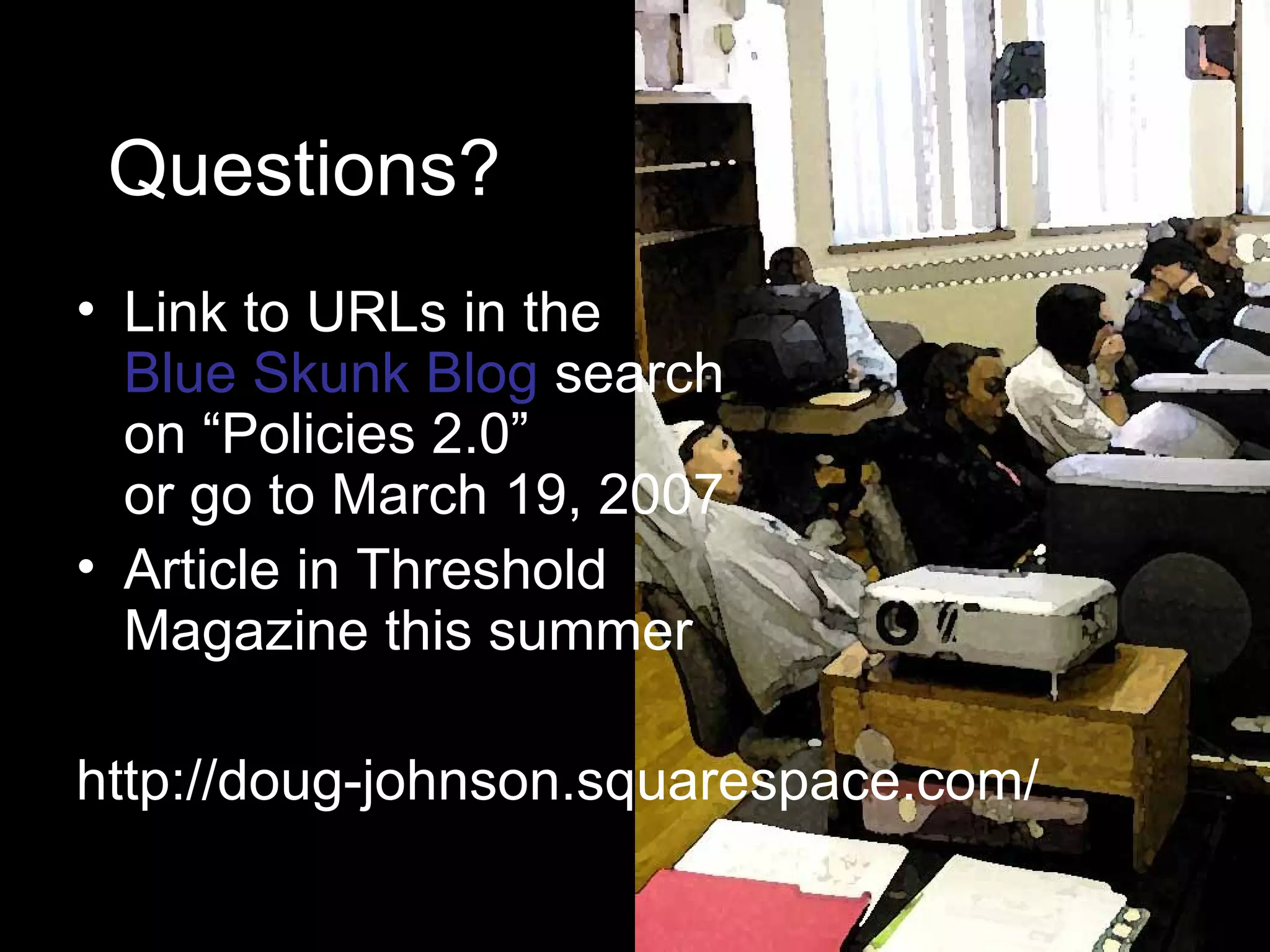
Questions? Link to URLs in the  Blue Skunk Blog  search  on “Policies 2.0”  or go to March 19, 2007 Article in Threshold Magazine this summer http://doug-johnson.squarespace.com/

Policies 2.0: Rules for the Social Web

  • 1.
    Policies 2.0: Rules for the Social Web Discovery Educator Network March 21, 2007 Doug Johnson [email_address]
  • 2.
    … a littleabout the presenter
  • 3.
    Startling new findingScot - 10 ft down -copper - telecommunications 100 years ago! Brit - 20 ft down - copper - telecommunications 200 years ago! Uncle Ole - 30 ft down - no copper… wireless communications in Minnesota 300 years ago!
  • 4.
    What do adultsthink of when they think of social networking?
  • 5.
  • 6.
    Dateline Spring 2006Parents wake up DOPA Predators & cyberbullies: Reality check www.blogsafety.com/ March 16, 2007 McCollam, The Shame Game Columbia Journalism Review , Jan/Feb 2007 www.cjr.org/issues/2007/1/McCollam.asp
  • 7.
    On the agenda…What is “the social web?” How do Web 2.0 safe and ethical use issues differ from those of Web 1.0? How can we make kids safe? Is there a place for the social web in schools? How are good decisions made about filtering and policy - and by whom? X
  • 8.
    What is Web2.0? Read only -> Read and write Horizon Report, 2007 Manifestations include: Social networking sites (MySpace, Facebook) Blogs and RSS feeds Wikis Content sharing (FlickR, YouTube, del.icio.ius 3D worlds
  • 9.
  • 10.
  • 11.
  • 12.
  • 13.
    Content sharing - FlickR - YouTube - del.icio.us
  • 14.
  • 15.
    On the agenda…What is “the social web?” How do Web 2.0 safe and ethical use issues differ from those of Web 1.0? How can we make kids safe? Is there a place for the social web in schools? How are good decisions made about filtering and policy - and by whom? X
  • 16.
    Web 1.0 toWeb 2.0 safety issues Protecting children from predators Protecting children from each other (cyberbullying) Protecting teachers from students??? Protecting children from themselves (making inappropriate and personal information public)
  • 17.
  • 18.
    … from predators
  • 19.
    …from each otherwww.cyberbully.org
  • 20.
  • 21.
  • 22.
  • 23.
    That darned freespeech thing
  • 24.
  • 25.
    The danger tokids in Web 2.0 comes not from what they may find online, but from what they themselves put online for others to access.
  • 26.
    On the agenda…What is “the social web?” How do Web 2.0 safe and ethical use issues differ from those of Web 1.0? How can we make kids safe? Is there a place for the social web in schools? How are good decisions made about filtering and policy - and by whom? X
  • 27.
    Let’s just blockit all! DOPA, 2006 - passed the House with 96% in favor - requirement to filter out all interactive websites Today - DOPA Jr.
  • 28.
    This unnecessary andoverly broad legislation will hinder students’ ability to engage in distance learning and block library computer users from accessing a wide array of essential Internet applications including instant messaging, email, wikis and blogs. - Leslie Burger, ALA President, 2006
  • 29.
    Blocking formats notcontent. For every problem, there is a solution that is simple, neat, and wrong. H.L. Menken
  • 30.
    Why filtering isineffective Best filters not 100% Can’t filter what goes out Access from outside school Proxies Mobile devices
  • 31.
  • 32.
    Education is imperativeDangers are real Schools must be proactive Schools must reach out Good resources on the web NetSmartz (movies) iLearn
  • 33.
  • 34.
  • 35.
    On the agenda…What is “the social web?” How do Web 2.0 safe and ethical use issues differ from those of Web 1.0? How can we make kids safe? Is there a place for the social web in schools? How are good decisions made about filtering and policy - and by whom? X
  • 36.
    Education can beenhanced with the social web resources Social networking Blogs Wikis Game environments
  • 37.
  • 38.
  • 39.
    Youth services in MySpace
  • 40.
  • 41.
  • 42.
    Full participation? Theschool system’s inability to close this participation gap has negative consequences for everyone involved. - Henry Jenkins, Confronting the Challenges of Participatory Culture
  • 43.
    On the agenda…What is “the social web?” How do Web 2.0 safe and ethical use issues differ from those of Web 1.0? How can we make kids safe? Is there a place for the social web in schools? How are good decisions made about filtering and policy - and by whom? X
  • 44.
    Making good decisionsBalance Current AUPs “ high-quality,” “ inapropriate,” “ reasonable” Open to interpretation?
  • 45.
    District Advisory CommitteeSmall Wide representation Few, but important, meetings Good agendas and minutes Defined responsibilities Budget Policy Goals Assessment
  • 46.
    Due process forblocking Block the minimum required by CIPA Require that any request for blocking as site goes through reconsideration process Unblock any site at professional request Keep one unblocked computer in each library Make educators, not techs, responsible for safe and appropriate use
  • 47.
    On the agenda…What is “the social web?” How do Web 2.0 safe and ethical use issues differ from those of Web 1.0? How can we make kids safe? Is there a place for the social web in schools? How are good decisions made about filtering and policy - and by whom?
  • 48.
    … it isnot the tools that are inherently good or evil but rather the use of the tools. A hammer can kill someone but it can also build a house. A nail can be driven through a hand but it can also hold the roof over your head. A fist can hit but a fist can also be clasped in your hand in love. We do not outlaw hammers, nails, or fists -- we teach people to use them properly. So should we do with blogs, wikis, podcasts, Skype, and any other tool that becomes available for use in the human experience! -Vicki Davis, Cool Cat Blog
  • 49.
    Questions? Link toURLs in the Blue Skunk Blog search on “Policies 2.0” or go to March 19, 2007 Article in Threshold Magazine this summer http://doug-johnson.squarespace.com/